Modern furniture assembly is no longer a simple matter of tightening a few screws. Flat-pack cabinets, beds, shelving systems, desks, office partitions, outdoor furniture, and modular storage units often combine wood panels, metal brackets, plastic connectors, threaded inserts, hinges, fasteners, and small electrical accessories. A practical furniture tool kit must therefore do more than provide one screwdriver and one wrench. It must help users measure accurately, drill cleanly, drive screws efficiently, grip hardware securely, test basic electrical conditions safely, organize small parts, and carry everything in a compact package. The 86-piece furniture suit tool is designed around that real-world requirement: it combines essential hand tools, power-tool support, bits, adapters, fasteners, measuring tools, lighting, cutting tools, and practical accessories in one portable plastic box.
This article presents the product as a complete furniture assembly and home maintenance solution. It also explains how professional hardware manufacturing, component control, stamping capability, fastener knowledge, packaging design, and supply-chain management contribute to the reliability of the final kit. Compared with many common tool assortments on the market, this 86-piece set offers a more balanced structure for furniture installation and repair because it does not focus on only one category of tool. Instead, it brings together the items most frequently needed at the work site: a wrench, hammer, pliers, electrical tape, flashlight, sockets, bits, measuring tape, electric drill, flexible extension, ratchet connecting rod, charger, magnetic rod, hardware accessories, multifunction shovel, voltage tester, multifunction scissors, and ball-head hex keys.
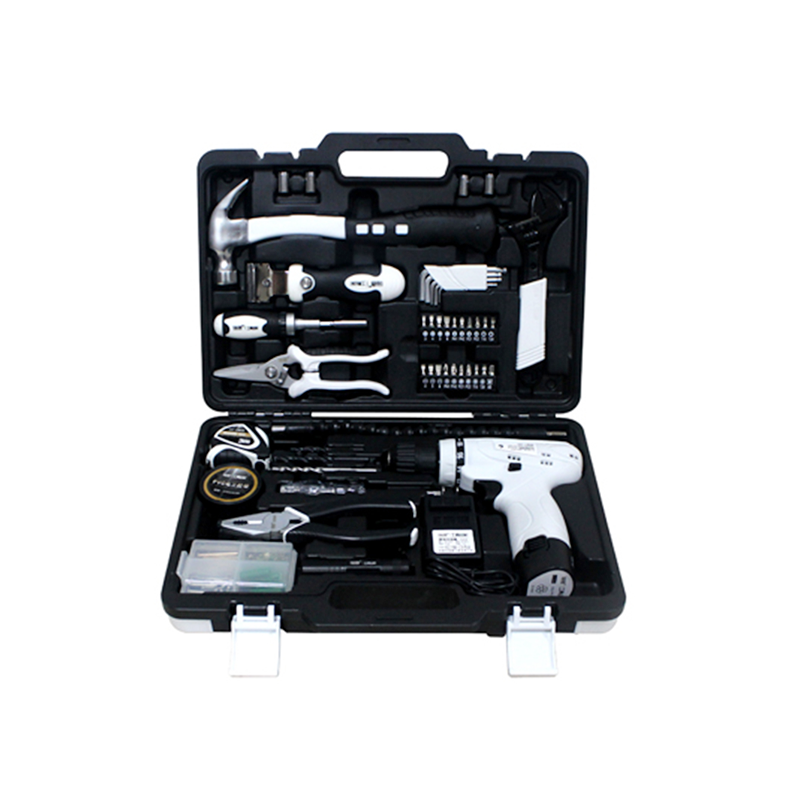
A Complete Kit Built Around Furniture Assembly Needs
The central advantage of the 86-piece furniture suit tool is its practical configuration. Many entry-level kits contain a large number of repeated driver bits or low-use accessories simply to increase the stated piece count. This kit is structured differently. It combines driving, gripping, measuring, cutting, checking, fastening, and auxiliary functions. For furniture installers, apartment owners, maintenance workers, warehouse operators, office fit-out teams, and general household users, this type of combination reduces the need to purchase separate tools one by one.
The plastic box is important because organization affects productivity. During furniture assembly, small screws, sockets, adapters, bits, and brackets are easily misplaced. A compact storage case helps keep all parts in visible positions and makes it easier to move from one room, project, or job site to another. When the user opens the kit, the required tools are not scattered across a toolbox or storage drawer. This is especially useful for furniture installation teams that need to complete multiple tasks in a day.
The wrench, hammer, and pliers form the manual tool foundation of the set. The 8-inch wrench can be used for tightening nuts, adjusting bolts, and handling various metal connectors. The hammer is useful for light positioning work, tapping components into place, and correcting small alignment issues without relying on excessive force. The 7-inch steel wire tongs or pliers assist with gripping, bending, holding, pulling, and cutting small wires or metal parts. Together, these items cover a wide range of mechanical tasks involved in furniture assembly and basic household repair.
The electric drill is one of the most valuable tools in the kit. In furniture assembly, manual screwdriving can be tiring and slow, especially when assembling cabinets, shelves, beds, or multiple office chairs. The drill speeds up repetitive fastening and helps maintain consistent driving performance. When used with the included bits, sockets, connecting rods, and magnetic rod, it can reach different screw positions and improve work efficiency. The charger supports continued use, making the kit more complete than manual-only alternatives.
The measuring tape, bits, sockets, hex keys, and hardware accessories make the kit more versatile. Furniture assembly often requires accurate measurement, correct alignment, and compatibility with different screw heads or connector types. The 3-meter scale helps users confirm spacing, height, depth, and diagonal measurements. The 1/4-inch sockets in common sizes support small nuts and bolts. The driver bits and 20-piece batch of bits provide compatibility with common fastening heads. The five ball-head hex keys help users approach hex socket screws at slight angles, which is valuable when working inside corners or tight cabinet spaces.
Product Configuration Overview
The following table summarizes the main components and their value in practical use. The exact naming of some items may vary by market or customer specification, but the kit is designed to provide a broad and efficient working range for furniture and home tool applications.
| Component | Quantity | Main Function | Practical Advantage |
|---|---|---|---|
| Plastic storage box | 1 piece | Tool organization and transport | Keeps tools and accessories together for mobile work |
| 8-inch wrench | 1 piece | Nut and bolt tightening | Useful for furniture frames, brackets, and adjustable parts |
| Small claw hammer | 1 piece | Light striking and positioning | Helps fit panels, pegs, and small components |
| 7-inch steel wire pliers | 1 piece | Gripping, bending, and cutting | Handles small hardware, wire, and repair tasks |
| Electrical insulation tape | 1 piece | Basic insulation and temporary fixing | Adds value for household maintenance |
| High-grade flashlight | 1 piece | Work lighting | Improves visibility inside cabinets and dark corners |
| 1/4-inch sockets, 7 mm to 10 mm | 4 pieces | Nut and bolt fastening | Covers common small fastener sizes |
| Driver bits | 3 pieces | Screwdriving | Supports common screw head types |
| 3-meter measuring tape | 1 piece | Measurement and layout | Supports accurate furniture positioning |
| Electric drill | 1 piece | Powered drilling and screwdriving | Improves speed and reduces user fatigue |
| Bit set | 20 pieces | Fastening compatibility | Works with multiple screw types |
| Flexible connecting rod | 1 piece | Access in difficult angles | Reaches hidden or offset screw positions |
| Ratchet connecting rod | 1 piece | Manual fastening support | Improves control in confined areas |
| Charger | 1 piece | Power supply for drill | Supports continued operation |
| Magnetic rod | 1 piece | Bit holding and screw positioning | Reduces dropped screws and improves accuracy |
| Hardware accessories | 40 pieces | Fastening and repair support | Provides immediate small-part availability |
| Multifunction shovel | 1 piece | Scraping, prying, and utility work | Useful for surface preparation and light repair |
| Dual-purpose electric pen | 1 piece | Basic electrical testing | Supports safer household maintenance |
| Multifunction scissors | 1 piece | Cutting packaging, tape, and light material | Convenient during unpacking and installation |
| Ball-head hex keys | 5 pieces | Hex socket screw fastening | Allows angled access to recessed screws |
Why This Kit Performs Better Than Ordinary Tool Assortments
A strong furniture tool kit should solve real work problems. The first difference between this 86-piece set and many competing kits is functional balance. Some kits are overloaded with sockets but lack measuring tools. Others provide a hammer and pliers but omit a powered drill or flexible adapter. Some low-cost sets include a large number of accessories but fail to address the most common furniture tasks: driving screws repeatedly, aligning panels, handling small nuts and bolts, checking tight spaces, and making minor adjustments. The 86-piece furniture suit tool is more practical because it combines several tool categories in a single system.
The second advantage is convenience. Furniture assembly often begins immediately after the furniture package is opened. Users may need scissors to cut packaging straps, a tape measure to confirm placement, a flashlight to inspect holes or fittings, a drill to drive screws, a hex key to tighten cam connectors, and pliers to adjust a bracket. When each of these items must be found separately, time is wasted. With this kit, the main tools are already organized in the plastic box. The user can move from unpacking to measuring, fastening, adjusting, and final inspection without leaving the work area.
The third advantage is compatibility with common furniture fasteners. Furniture hardware includes cross-head screws, hex socket screws, nuts, bolts, washers, connecting rods, brackets, hinges, handles, and other accessories. By including sockets, multiple bits, ball-head hex keys, a magnetic rod, a flexible connecting rod, and a ratchet connecting rod, the kit helps the user deal with different fastening positions and head types. This is especially important when assembling wardrobes, cabinets, desks, and beds where fasteners may be located inside narrow recesses.
The fourth advantage is reduced fatigue. Manual screwdrivers are useful, but repeated driving can strain the wrist. The electric drill helps users complete repetitive tasks faster and with less physical effort. When combined with the bit set, the drill becomes a central tool for efficient assembly. For commercial users such as furniture installation contractors, hotel maintenance teams, property managers, and office renovation crews, this can improve daily productivity.
The fifth advantage is emergency readiness. The inclusion of electrical tape, a dual-purpose electric pen, flashlight, scissors, and multifunction shovel expands the kit beyond furniture assembly. It can support small household tasks such as checking whether a socket or wire is live, cutting tape or packaging, scraping adhesive residue, temporarily insulating a connection, or working in dim spaces. Many competing furniture tool kits are limited to screwdriving only; this kit provides a broader home tool function.
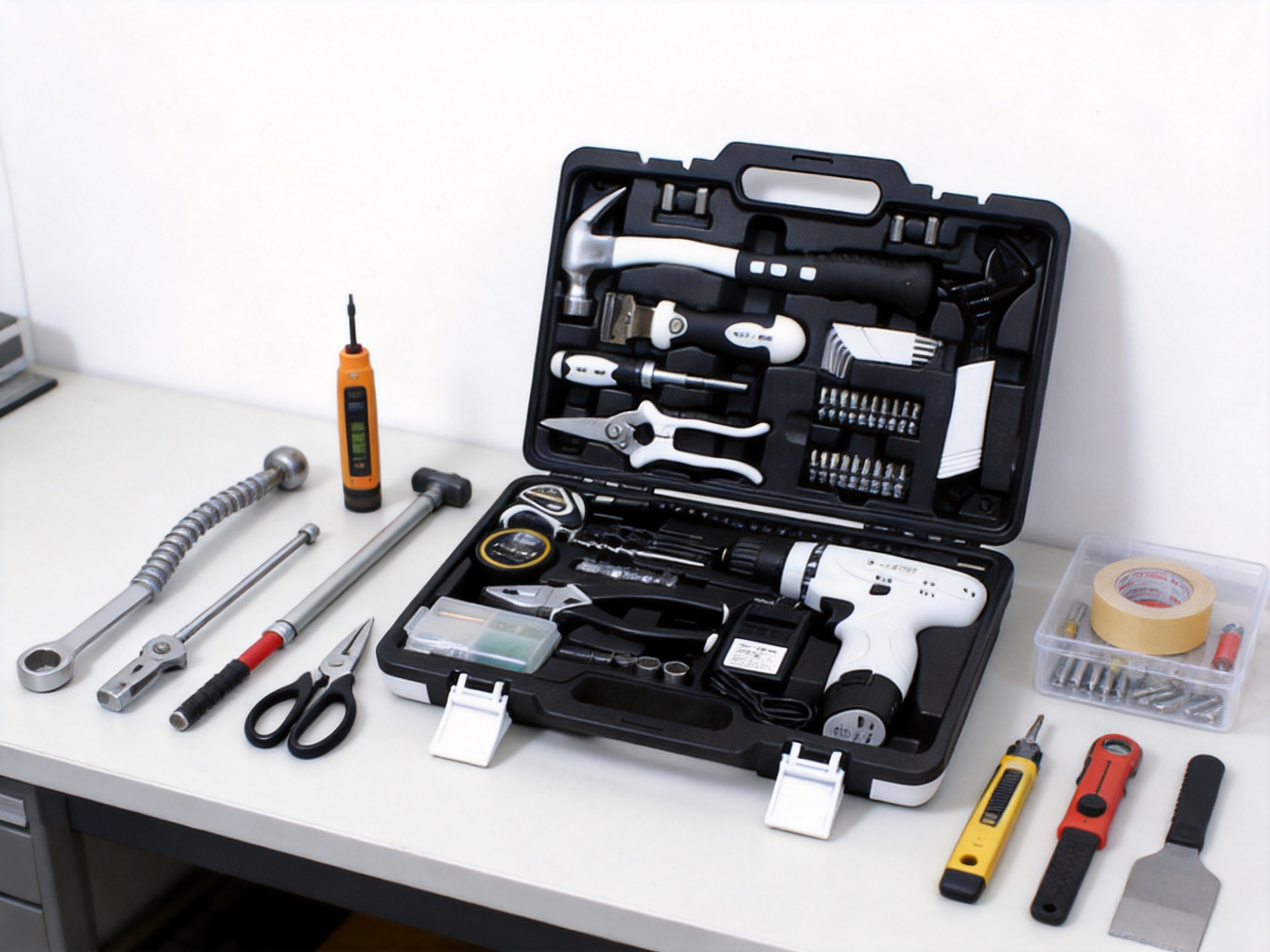
Manufacturing Strength Behind the Tool Kit
A tool kit is only as reliable as the manufacturing and quality control behind its components. Lizhan Hardware Co., Ltd. operates in the hardware industry with experience across fasteners, home tools, packaging, and stamping parts. This background matters because an integrated kit depends on many different product types. A company that understands screws, machine screws, furniture screws, stamped metal components, packaging organization, and hardware accessories is better positioned to design and supply a kit that works in actual use.
Advanced manufacturing strength begins with material control. For metal tools and accessories, steel selection affects strength, hardness, wear resistance, and durability. Wrenches, pliers, sockets, rods, bits, and hex keys must resist deformation under torque. Hardware accessories must have stable dimensions and suitable surface protection. Stamping parts need consistent thickness and clean edges. By managing material grades and supplier standards, a professional hardware manufacturer helps ensure that each tool in the box performs according to its purpose.
Fastener manufacturing knowledge is also a major advantage. Furniture assembly depends heavily on screws and small hardware. Machine screws and furniture screws require accurate head formation, stable thread geometry, controlled dimensions, and appropriate surface treatment. Processes such as cold heading, thread rolling, heat treatment, cleaning, plating, and inspection influence the final performance of fasteners. A company experienced in fastener production understands how small dimensional differences can affect assembly speed, holding power, and user satisfaction.
Stamping capability supports the production and sourcing of metal accessories, brackets, clips, cases, and other hardware elements. Stamping involves cutting, forming, bending, and shaping sheet metal with dies and presses. Precision stamping can produce repeatable parts with efficient material use. In a tool kit context, stamping knowledge supports better accessory development and consistent metal-part quality. It also allows the manufacturer to respond to customized requirements from customers, such as special hardware assortments, private-label packaging, or market-specific accessories.
Packaging is not an afterthought. In a tool kit, packaging is part of the product function. The plastic box must protect tools during transportation, resist reasonable impact, and keep parts organized. Internal layout affects how easily users can find tools and return them after use. A professional packaging process includes fit testing, drop simulation, compartment arrangement, labeling, and final packing inspection. The result is a kit that looks orderly, travels well, and presents value to retailers and end users.
Advanced Process Control for Consistent Quality
Reliable production requires more than having machines. It requires process control from raw material to final packaging. For metal hardware, dimensional stability is critical. A socket that is too loose can round a nut; a bit that is too soft can wear quickly; a hex key with poor dimensional control can damage a socket screw; a wrench with uneven jaws can slip. Therefore, quality planning must define target dimensions, tolerances, hardness ranges, torque expectations, surface finishes, and inspection methods.
In a modern hardware production environment, incoming materials are checked before they enter mass production. Steel wire, sheet metal, plastic materials, purchased electrical components, and packaging materials may be inspected for certification, appearance, size, and basic performance. For fasteners and small accessories, samples can be checked with calipers, gauges, thread gauges, hardness testers, and visual inspection tools. Early inspection prevents defects from moving into assembly.
Cold forming and heading processes are essential for many fasteners. In cold heading, metal wire is cut and shaped under pressure to form the screw head or other fastener geometry. This method improves production efficiency and can enhance mechanical performance by preserving material grain flow. After heading, thread rolling forms threads by pressing the blank between dies rather than cutting away material. Rolled threads usually have good surface finish and strength, which is valuable for furniture screws and machine screws.
Heat treatment may be applied to certain metal components to improve hardness and toughness. The goal is not simply to make a part hard; the part must also avoid brittleness. Bits, sockets, hex keys, and fastening accessories require a suitable balance between strength and durability. Controlled heat treatment, quenching, tempering, and verification testing help achieve that balance. Poorly controlled heat treatment is one of the reasons some low-cost tools fail quickly under load.
Surface treatment protects components and improves appearance. Zinc plating, blackening, polishing, coating, and other finishes may be used depending on the part type and customer requirement. Surface protection is especially important for hardware accessories stored in a box and used in different indoor environments. Clean, uniform finishing also improves customer confidence because the user can see that the kit is professionally produced rather than randomly assembled.
Assembly-line organization is another important strength. An 86-piece kit must be packed accurately. Missing bits, mixed sizes, poorly seated tools, or incorrect hardware counts can harm the user experience. Effective kit assembly uses counting procedures, compartment checks, sample audits, weight checks, and final visual inspection. For export and wholesale supply, consistency across cartons and batches is essential. A reliable manufacturer understands that every set must match the promised configuration.
How the Electric Drill Enhances Furniture Installation
The electric drill in the kit is a major productivity feature. Furniture assembly can involve dozens or even hundreds of screws. Without a powered driver, the user must turn each screw manually, which is slower and more tiring. A compact drill helps drive screws into pre-drilled holes, tighten connectors, and complete repetitive fastening steps with improved speed. For users assembling multiple furniture items, the time savings can be significant.
The drill also improves consistency when used correctly. Manual driving may vary greatly depending on user strength and fatigue. A powered tool helps maintain a steadier driving rhythm. With the right bit and controlled pressure, users can reduce cam-out and incomplete tightening. The magnetic rod supports screw positioning by holding screws more securely on the bit, helping users start screws in difficult positions.
The flexible connecting rod is especially valuable in furniture work. Many cabinets and shelving units place screws inside corners, behind panels, or near obstacles. A straight drill body may not fit into these spaces. The flexible rod allows torque transfer around slight bends, making it easier to reach awkward fasteners. This feature gives the kit an advantage over simpler drill-and-bit combinations that can only work in open spaces.
The ratchet connecting rod adds manual control where powered driving is not ideal. Some delicate furniture connectors should be tightened carefully to avoid stripping threads or damaging panels. A ratchet accessory allows controlled tightening in confined areas. It also helps when battery power is limited or when the user wants to make final adjustments by hand.
Hand Tools That Complement the Power Tool
Although the drill is important, a good kit cannot rely only on power. Furniture installation requires judgment, positioning, and adjustment. The 8-inch wrench supports metal frame assembly, adjustable feet, chair bases, bed frames, brackets, and nuts. A wrench is often necessary when a screw and nut must be tightened together, because one side needs to be held while the other side is driven.
The hammer provides controlled impact for light tasks. Furniture dowels, plastic plugs, small nails, or panel alignment may require gentle tapping. A small hammer is easier to control than an oversized construction hammer and is better suited to indoor furniture work. When used with care, it helps components seat correctly without damaging surfaces.
The pliers support gripping and adjustment. They can help remove bent nails, hold small parts, straighten light metal pieces, pull packaging staples, and manage wire or cable-related tasks. The presence of pliers in the kit makes it more complete than screw-only sets and helps users respond to unexpected assembly situations.
The multifunction scissors are practical from the beginning of the job. Furniture packages often include plastic straps, cardboard, foam, tape, and protective wrapping. Having scissors inside the kit means the user can open packaging cleanly and safely instead of using unsuitable sharp objects. Scissors also help cut insulation tape, cable ties, thin plastic, and other light materials.
The multifunction shovel or scraper-style tool adds utility for surface preparation and light repair. It can help remove labels, scrape residue, lift small parts, or assist with careful prying. This kind of tool is often missing from standard furniture kits, yet it is useful in real household maintenance.
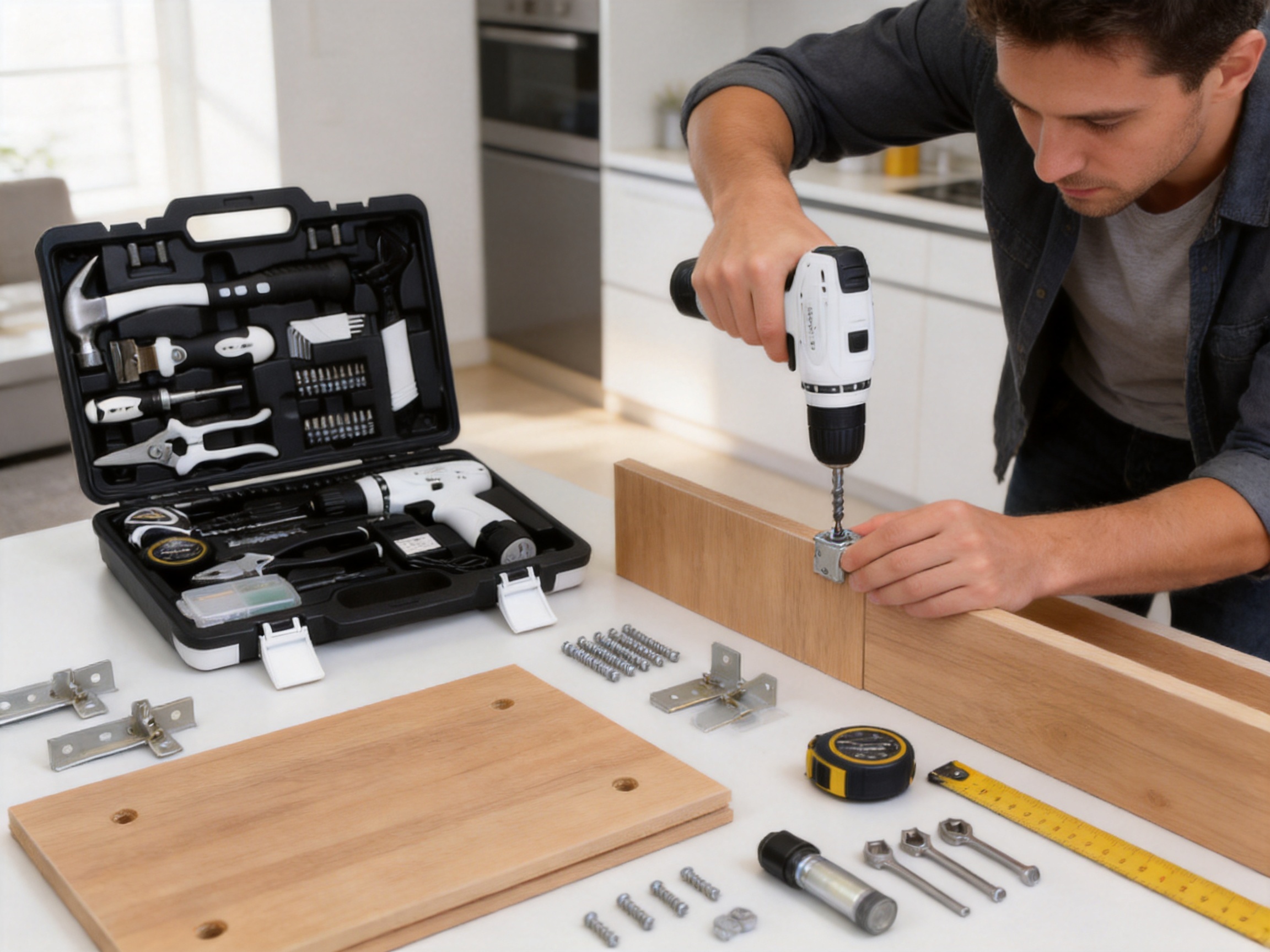
Measurement, Lighting, and Safety Support
Accurate measurement is essential for furniture placement and installation. The included 3-meter measuring tape helps users determine whether a desk fits a wall, whether cabinet spacing is correct, whether shelves are level by comparing distances, and whether installed components align with room dimensions. Even when furniture is pre-designed, room conditions vary. A measuring tape prevents mistakes before heavy items are assembled or moved.
The flashlight improves visibility. Many installation tasks occur inside cabinets, under desks, behind beds, or in rooms with limited light. A dedicated flashlight is more practical than relying only on room lighting or a mobile phone. It allows the user to inspect screw holes, locate dropped parts, check alignment, and work safely in dim spaces. This is particularly helpful for maintenance workers who may need to repair furniture in storage rooms, hotels, apartments, or offices.
The dual-purpose electric pen adds basic electrical awareness. Furniture installation often takes place near outlets, power strips, lighting systems, or cable channels. While the kit is not a professional electrical service set, the voltage tester can help users perform simple checks before touching certain components. Safety depends on correct use, but having this tool available increases the kit’s usefulness for general home maintenance.
Electrical rubber cloth or insulation tape is another valuable addition. It can be used for temporary insulation, bundling, marking, or minor household tasks. In many homes and workshops, tape is one of the most frequently needed small supplies. Including it in the kit saves time and increases readiness.
Fasteners and Hardware Accessories: Small Parts With Big Importance
The 40-piece hardware accessory selection is a key reason the kit is practical. Small hardware parts are often the missing link in repair work. A loose handle, broken bracket, missing screw, unstable shelf, or rattling connector can stop a project even when the user has good tools. By including a hardware assortment, the kit gives users immediate access to common small parts.
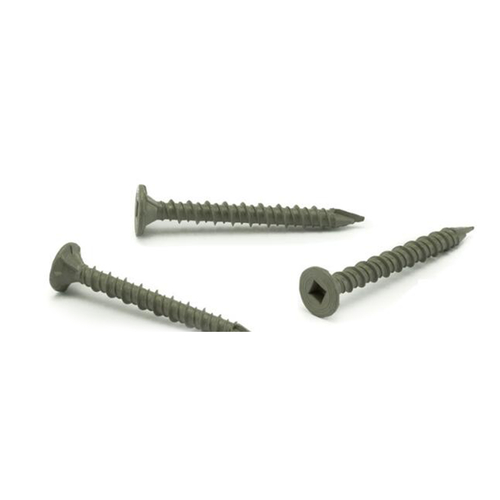
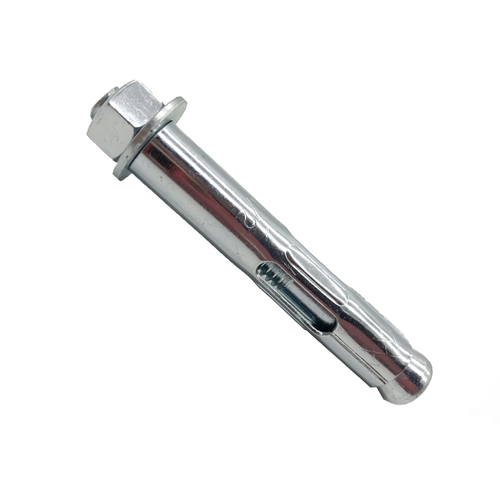
Fastener quality affects the entire furniture assembly experience. Screws must drive smoothly, hold securely, and resist head damage. Machine screws and furniture screws require precise threads and consistent head recesses. If the head recess is poorly formed, bits may slip. If threads are rough or inconsistent, assembly becomes difficult. If plating is weak, corrosion can appear prematurely. Professional fastener experience helps prevent these problems.
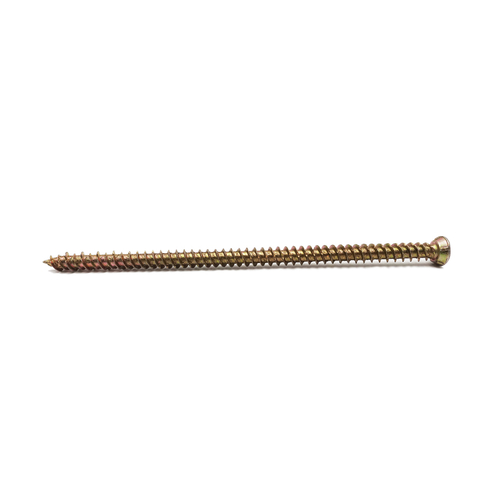
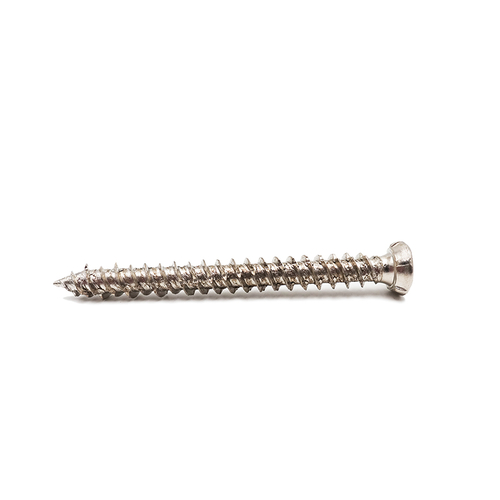
Furniture screws are often used in wood-based panels such as particleboard, MDF, plywood, and solid wood. The screw must balance penetration, holding strength, and surface finish. For metal furniture components, machine screws may be used with nuts, inserts, or threaded holes. The hardware supplier must understand these differences to provide suitable accessories.
The inclusion of sockets and bits supports these fasteners. A good fastener is only effective when the correct tool is used. The kit’s bit variety and socket sizes reduce the chance that users will damage screw heads or nuts by using the wrong tool. The ball-head hex keys are particularly useful because many furniture connectors use hex socket screws in recessed areas.
Designed for Multiple User Groups
The 86-piece furniture suit tool is suitable for several market segments. For homeowners, it is an all-in-one kit for assembling new furniture, tightening loose screws, hanging light accessories, measuring spaces, opening packages, and performing small repairs. Instead of storing many separate tools in different places, the user can keep one box ready for common tasks.
For renters and apartment residents, portability is a major advantage. Many renters do not want to purchase a large professional toolbox, but they still need tools for furniture assembly, repairs, moving, and decoration. The plastic box keeps the kit compact and easy to store in a closet, cabinet, or car.
For furniture installers, the set works as a practical secondary kit or a standard installation kit for basic jobs. Professional teams may use larger specialized tools, but a compact 86-piece kit is useful for quick tasks, customer service calls, and light assembly work. The combination of drill, bits, sockets, hex keys, measuring tape, and hand tools covers many common requirements.
For retailers and distributors, the kit offers strong shelf appeal because it presents a high-value combination in one package. The piece count is meaningful because it includes different tool categories and accessories. The product can be positioned in home tool, furniture assembly, hardware, fastener, package, and maintenance categories. It is suitable for hardware stores, home improvement retailers, online platforms, furniture suppliers, and promotional sales channels.
For property maintenance teams, the kit can support daily small repairs in apartments, hotels, dormitories, offices, and commercial spaces. Maintenance workers frequently need to tighten handles, adjust hinges, assemble replacement furniture, cut packaging, test simple electrical conditions, and work in dark corners. A portable set improves response time.
Customization and Supply Advantages
One of the strengths of working with a professional hardware company is the ability to support different customer needs. Tool kits can be customized by component selection, packaging style, accessory assortment, color, labeling, and market positioning. Customers may require different socket sizes, bit types, fastener combinations, instruction sheets, barcodes, carton markings, or display packaging. A supplier with experience in hardware, fasteners, stamping, and packaging can coordinate these changes more effectively.
Lizhan Hardware Co., Ltd. operates with a China factory and a Thailand warehouse address, which can support manufacturing coordination and regional logistics. For international buyers, supply reliability is as important as product design. Stable production, packaging control, export handling, and communication support help distributors maintain inventory and respond to market demand.
The company’s contact channels, including phone, WhatsApp, WeChat, and email communication, make it easier for buyers to discuss specifications, quotations, samples, packaging, order quantities, and delivery requirements. For business customers, clear communication reduces misunderstandings and supports faster product development.
Because the company is positioned in machine screws, furniture screws, fasteners, home tools, package solutions, and stamping parts, it can serve customers who need related products beyond a single tool kit. This is useful for furniture manufacturers and hardware distributors that want to source screws, accessories, and tool kits from one coordinated supplier.
Quality Inspection and Reliability Testing
A high-value tool kit should pass more than a visual check. Practical quality inspection may include dimensional inspection, function testing, torque testing, hardness testing, surface inspection, packing verification, and user-scenario evaluation. For example, bits should fit standard screw heads; sockets should fit corresponding nuts; hex keys should engage hex screws properly; the wrench should hold without excessive jaw deformation; the pliers should open and close smoothly; the flashlight should illuminate reliably; and the drill should operate properly with its charger.
Hardware accessories should be counted and checked for obvious defects. Surface finish should be reasonably uniform, without heavy burrs, rust, or deformation. Sharp edges should be controlled where user handling is expected. Plastic box hinges, locks, and compartments should be checked because packaging failure can result in lost parts and customer complaints.
Batch consistency matters for wholesale and retail orders. When a customer orders large quantities, each kit should match the approved sample. This requires controlled assembly instructions, trained packing workers, component storage management, and final inspection records. A professional supplier understands that one missing connector or one wrong bit can affect the perceived quality of the entire kit.
Transit protection is also important. Tool kits are heavy relative to their size because they contain metal parts. Cartons must be suitable for stacking and shipping. Internal components should remain secure during movement. Export packaging may need to consider moisture, labeling, palletization, and handling conditions. Strong packaging reduces damage and improves customer satisfaction.
Practical Use Scenario: Assembling a Cabinet
Consider a user assembling a storage cabinet. First, the user opens the furniture carton with the multifunction scissors and removes straps, tape, and protective film. The measuring tape is used to confirm that the cabinet will fit the intended wall space. The flashlight helps inspect the bottom panel and locate pre-drilled holes. Hardware accessories are placed in order so that screws, connectors, and brackets are easy to identify.
Next, the user selects the correct driver bit and installs it on the drill. The magnetic rod helps hold screws when starting them in side panels. The flexible connecting rod is used when the drill body cannot reach a recessed corner. The wrench holds a nut while the drill or ratchet tightens the matching screw. The hammer gently taps dowels into place, while the ball-head hex key tightens hidden hex socket connectors at an angle.
During final adjustment, the user checks handle screws, hinge screws, and bracket tightness. If a small part is missing or needs reinforcement, the included hardware accessories may provide a quick solution. If work continues into a darker area, the flashlight remains available. If the cabinet is installed near an outlet or cable, the electric pen provides basic checking support. The entire process demonstrates why a multi-function furniture tool kit is more efficient than a single screwdriver or scattered household tools.
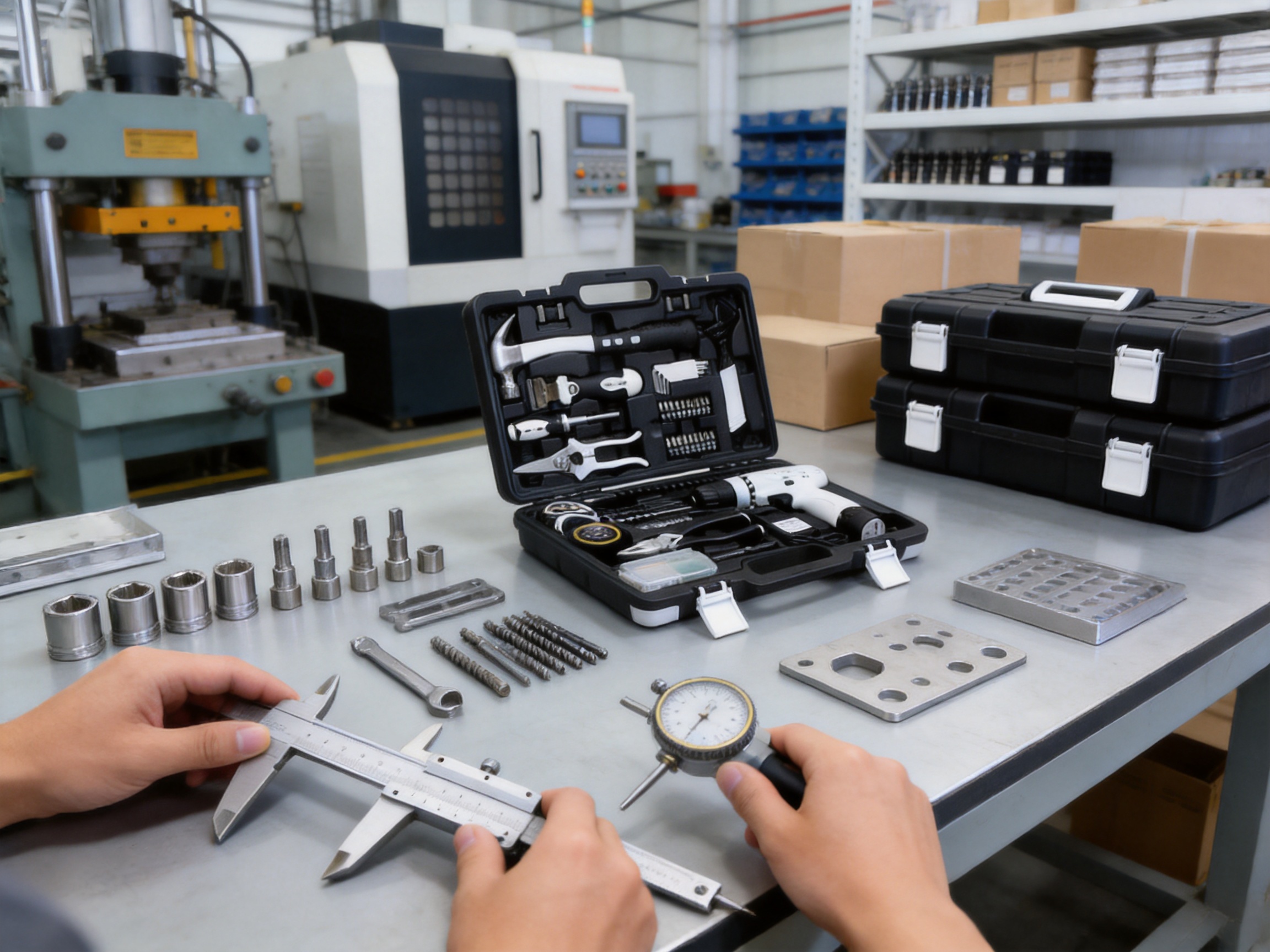
Practical Use Scenario: Home Repair and Maintenance
The kit also supports daily maintenance. A loose chair leg may require a hex key, wrench, or driver bit. A drawer handle may need a screwdriver bit and replacement screw. A shelf bracket may require drilling, measuring, and tightening. A small electrical accessory may require insulation tape and a voltage check. Packaging from new appliances or furniture can be cut with the scissors. Adhesive residue can be removed with the multifunction shovel. A dark corner behind a cabinet can be inspected with the flashlight.
This broad usefulness is a major advantage over single-purpose kits. Consumers appreciate products that remain useful after the first furniture assembly project. The 86-piece furniture suit tool continues to serve as a household maintenance kit, which increases its long-term value.
Competitive Positioning in the Home Tool Market
In the home tool market, buyers often compare products based on piece count, price, appearance, brand, and perceived quality. However, piece count alone can be misleading. A kit with many duplicate bits but few core tools may not perform well in real tasks. The 86-piece furniture suit tool is competitive because its piece count is supported by practical diversity. The inclusion of an electric drill, hand tools, measurement tool, lighting, adapters, hardware accessories, and safety-related items makes the set more complete.
The kit is also positioned well for furniture-related sales channels. Furniture buyers frequently need tools immediately after purchase. Retailers can sell this kit as an add-on product with flat-pack furniture, office furniture, storage systems, shelving, and home improvement goods. Online sellers can position it as a convenient household starter kit, moving kit, assembly kit, or repair kit.
Another competitive advantage is manufacturing integration. A supplier with experience in fasteners and hardware components can better control the small parts that many general trading kits treat as secondary. The screws, accessories, sockets, rods, and metal parts are not just filler; they are essential to performance. Manufacturing knowledge helps ensure the kit is not only visually complete but functionally reliable.
Cost performance is also important. The kit provides broad functionality without requiring users to buy a large professional set. For many households, a full mechanic’s toolbox is unnecessary and expensive. This 86-piece set provides a balanced middle ground: more capable than a basic screwdriver set, more portable than a workshop toolbox, and more relevant to furniture assembly than a general-purpose automotive kit.
Ergonomics, Storage, and User Experience
User experience begins when the kit is opened. A well-organized plastic box allows the user to see the available tools quickly. This reduces frustration and helps users choose the correct tool. When components have defined places, missing items are easier to notice, and the kit remains organized after repeated use.
Ergonomics are also important in tool selection. The included tools are sized for household and furniture work rather than heavy industrial use. This makes them easier to handle indoors and more suitable for users with different experience levels. The wrench, pliers, hammer, drill, and accessories are intended to cover common tasks without overwhelming the user.
The magnetic rod and flexible connecting rod improve user comfort by solving two common problems: dropped screws and awkward angles. Dropped screws waste time and can scratch floors or disappear under furniture. Awkward angles cause wrist strain and incomplete fastening. These accessories show that the kit was developed with actual assembly conditions in mind.
The ball-head hex keys provide another ergonomic advantage. Standard straight hex keys require exact alignment with the screw. Ball-head designs allow angled engagement, which is useful when space is limited. This feature is especially relevant for furniture because many connectors are recessed or placed close to panels.
Importance of Supplier Experience in Fasteners and Furniture Screws
Furniture assembly depends on fasteners more than many users realize. A beautiful cabinet or bed frame can fail if the screws are weak, the threads are poor, or the connectors do not fit correctly. Lizhan Hardware Co., Ltd. is positioned as a manufacturer and supplier associated with machine screws and furniture screws, which gives the company insight into the fastening requirements of furniture products.
Machine screws generally require consistent threading and compatibility with nuts or threaded holes. Furniture screws may need strong holding power in wood-based materials. Some applications require special heads, coatings, lengths, or drive types. Understanding these differences helps a supplier create tool kits and accessory packs that match market demand.
Fastener production also teaches discipline in tolerance control. Screws are small, but they must be accurate. This mindset carries over into tool kit assembly, where each bit, socket, adapter, and accessory must match expected sizes. A company that manages fastener tolerances is better prepared to manage kit consistency.
Environmental and Practical Packaging Considerations
Packaging affects sustainability, transportation efficiency, and user satisfaction. A plastic box provides long-term storage and reduces the need for disposable packaging after purchase. Instead of throwing away a carton and leaving tools loose, the user keeps the box and continues using it for organization. This extends the functional life of the packaging.
Efficient internal arrangement also reduces wasted space. Compact packaging can improve carton loading and transportation efficiency. For distributors, smaller and well-structured cartons can reduce warehouse burden and improve retail presentation. For end users, compact storage is valuable in apartments, utility rooms, and vehicles.
Clear labeling and organized compartments also reduce product returns caused by confusion. When users can easily identify parts and understand the kit’s contents, they are more likely to use it correctly. Professional packaging design therefore supports both sales and after-sales satisfaction.
Recommended Handling and Maintenance
To keep the kit in good condition, users should return tools to the plastic box after use. Metal parts should be kept dry to reduce the risk of corrosion. Bits and sockets should be matched to the correct fastener size to avoid damage. The drill should be charged according to the supplied charger requirements, and users should avoid overloading the drill beyond its intended household and furniture assembly function.
When using the voltage tester, users should follow basic electrical safety rules and avoid working on electrical systems beyond their knowledge. The tester is useful for simple checks, but professional electrical work should be handled by qualified personnel. When using the hammer, users should strike gently on furniture surfaces and protect finished panels from dents or scratches.
For best results, users should select the correct bit before driving screws. A poor bit-to-screw fit can strip the screw head. The magnetic rod should be used when screw placement is difficult. The flexible connecting rod should be used for access, not for excessive torque. The measuring tape should be locked and retracted carefully to avoid damage.
Q&A Section
What is the main purpose of the 86-piece furniture suit tool?
The main purpose is to provide a complete, portable tool kit for furniture assembly, household repair, and general maintenance. It includes manual tools, an electric drill, bits, sockets, measuring tape, lighting, adapters, hardware accessories, and other useful items.
How is this kit different from a basic screwdriver set?
A basic screwdriver set is limited to screwdriving. This kit supports measuring, drilling, tightening nuts and bolts, gripping, cutting, lighting dark work areas, testing basic electrical conditions, scraping, and replacing small hardware. It is more versatile for real furniture and home maintenance tasks.
Why is the electric drill important in a furniture tool kit?
The electric drill reduces time and fatigue when driving multiple screws. Furniture assembly often requires repetitive fastening, and a powered tool helps users work faster and more consistently than manual driving alone.
What is the value of the flexible connecting rod?
The flexible connecting rod helps reach screws located in corners, recessed areas, or positions where the drill body cannot fit. This is common in cabinets, wardrobes, shelves, and desks.
Why are ball-head hex keys included?
Ball-head hex keys allow users to tighten hex socket screws at slight angles. This makes them especially useful for furniture connectors installed in tight or recessed spaces.
Is the kit suitable for professional furniture installers?
Yes, it can be used by professional installers for basic assembly, service calls, and light-duty tasks. Professionals may also use specialized tools, but this kit provides a convenient portable set for many common situations.
Can homeowners use this kit safely?
Yes, the kit is suitable for household users when tools are used correctly. Users should choose the right bit or accessory for each task, avoid overloading tools, and follow basic safety precautions, especially when using the electric pen or drill.
What role do the hardware accessories play?
The 40-piece hardware accessory selection provides useful small parts for immediate assembly or repair. This can help when a screw, connector, or small fastener is missing or needs replacement.
How does manufacturing experience improve the product?
Manufacturing experience improves material selection, dimensional control, surface treatment, fastener quality, stamping consistency, packaging accuracy, and final inspection. These factors help the kit perform reliably and consistently.
Can the tool kit be customized for distributors or retailers?
Yes, professional hardware suppliers can often support customization in packaging, tool selection, accessory assortment, labeling, and market-specific requirements. This makes the product suitable for wholesale, retail, online sales, and private-label programs.
Conclusion
The 86-piece furniture suit tool is a practical and competitive solution for modern furniture assembly and home maintenance. Its strength lies in its balanced combination of tools: a plastic storage box, wrench, hammer, pliers, electrical tape, flashlight, sockets, bits, measuring tape, electric drill, flexible connecting rod, ratchet connecting rod, charger, magnetic rod, hardware accessories, multifunction shovel, voltage tester, scissors, and ball-head hex keys. This structure gives users the ability to measure, open packaging, drill, drive screws, tighten bolts, grip parts, work in dark spaces, reach awkward angles, and complete small repairs from one organized kit.
Compared with ordinary tool assortments, this kit offers stronger practical value because it is designed around real furniture tasks rather than piece count alone. The electric drill increases efficiency, the adapters improve access, the hardware accessories provide immediate repair support, and the organized plastic box improves portability. For homeowners, renters, installers, maintenance teams, retailers, and distributors, the product offers a convenient balance of function, cost performance, and usability.
The manufacturing background behind the kit is equally important. Lizhan Hardware Co., Ltd. brings experience in fasteners, furniture screws, machine screws, home tools, packaging, and stamping parts. This supports better component selection, production control, quality inspection, and supply coordination. Advanced processes such as cold heading, thread rolling, heat treatment, stamping, surface finishing, organized assembly, and packaging verification contribute to product reliability. A tool kit is not just a collection of items; it is a system that must be designed, produced, checked, packed, and delivered consistently.
For customers seeking a furniture-focused tool kit with broad household usefulness, the 86-piece furniture suit tool provides a strong option. It is compact enough for everyday storage, complete enough for common installation tasks, and supported by hardware manufacturing knowledge that strengthens quality and supply reliability.
References
1. Smith, R. Practical Hand Tool Selection for Home Maintenance. Industrial Workshop Press, 2021.
2. Johnson, M. Fastener Design and Application in Furniture Manufacturing. Mechanical Assembly Review, 2020.
3. Brown, T. Fundamentals of Cold Heading and Thread Rolling Processes. Metal Forming Handbook Series, 2019.
4. Williams, A. Quality Control Methods for Hardware and Tool Kit Assembly. Manufacturing Inspection Journal, 2022.
5. Davis, L. Packaging Design for Portable Tool Sets and Consumer Hardware Products. Retail Packaging Studies, 2021.
6. Miller, C. Ergonomics and Efficiency in Furniture Installation Tools. Home Improvement Technology Review, 2023.