In modern machine construction, fastening components are not minor accessories; they are structural elements that determine assembly speed, positioning accuracy, vibration resistance, maintenance convenience, and long-term equipment reliability. The Aluminium Extrusion M4-30 Diamond-Shaped Nut for Machine applications is designed for precisely this environment: modular frames, automation equipment, conveyor systems, machine guards, industrial workstations, renewable energy support structures, and other assemblies that depend on aluminium profile slots. With a diamond-shaped profile, compact geometry, and machine-oriented fastening performance, this nut offers a practical solution for builders who need secure grip, easy insertion, strong anti-loosening capability, and efficient production workflow.
Unlike ordinary square nuts, generic T-nuts, or standard hex nuts that may require additional washers, complex insertion procedures, or frequent retightening, the diamond-shaped nut is engineered to create stable multi-point contact in the extrusion channel. Its angular outline helps the part rotate into position and seat firmly inside the slot, while the threaded hole provides a reliable connection point for bolts, brackets, panels, sensors, actuators, and accessory hardware. For machine builders who work with 30 series aluminium extrusion systems and M4 threaded fasteners, this product provides a combination of compact size, positioning flexibility, and dependable clamping force.
Lizhan Hardware Co., Ltd. manufactures precision hardware and fastening components for industrial customers, with product categories covering new products, home tools, fasteners, packages, and stamping parts. The company’s production capabilities are supported by quality management, process control, material selection, stamping experience, surface treatment coordination, and customer-oriented service. For this diamond-shaped nut, the company focuses on producing a component that can be used confidently in both prototype development and batch production, helping machine manufacturers shorten assembly time while improving the reliability of their finished equipment.
Aluminium Extrusion M4-30 Diamond-Shaped Nut for Machine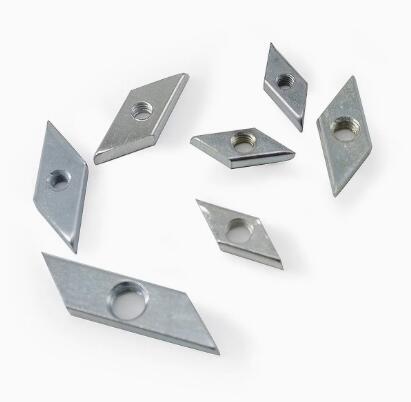
Product Overview and Application Positioning
The Aluminium Extrusion M4-30 Diamond-Shaped Nut is a fastening insert intended for aluminium extrusion profiles, particularly machine frames and modular assembly systems. The “M4” specification indicates compatibility with M4 threaded screws or bolts, while “30” commonly refers to aluminium profile systems with a 30 series slot or frame dimension. This makes the product especially suitable for compact to medium-duty industrial structures where lightweight design, adjustable positioning, and clean assembly are important.
In a typical machine-building scenario, engineers use aluminium extrusion profiles because they are easy to cut, assemble, modify, and expand. However, an aluminium profile alone is only as useful as the fastening system that connects accessories to it. A nut placed in the slot must grip well, align quickly, and resist loosening during vibration. The diamond-shaped nut addresses these needs by combining a profile-slot-friendly shape with a secure threaded fastening interface.
The product is categorized as a stamping part, but its practical role is that of a precision fastening component. Depending on customer requirements, manufacturing may involve stamping, forming, machining, tapping, deburring, surface finishing, and inspection. The final nut must maintain dimensional consistency because even a small variation in width, thickness, thread quality, or edge profile can affect insertion, rotation, grip, and load distribution inside the aluminium slot.
For users who build automation lines, inspection fixtures, protective fences, display equipment, testing platforms, and machine enclosures, this nut provides a repeatable connection point without requiring welding, drilling through the profile, or irreversible frame modifications. It supports the modular philosophy of aluminium extrusion systems: assemble quickly, adjust easily, and maintain efficiently.
Why the Diamond-Shaped Design Matters
The defining feature of this nut is its diamond-shaped geometry. A standard hex nut is excellent for open-access fastening, but it is not optimized for insertion into aluminium extrusion slots. A plain rectangular nut may sit in the groove, but it can be inconvenient to position and may not lock securely during installation. A diamond-shaped nut offers a more functional geometry for profile-slot applications.
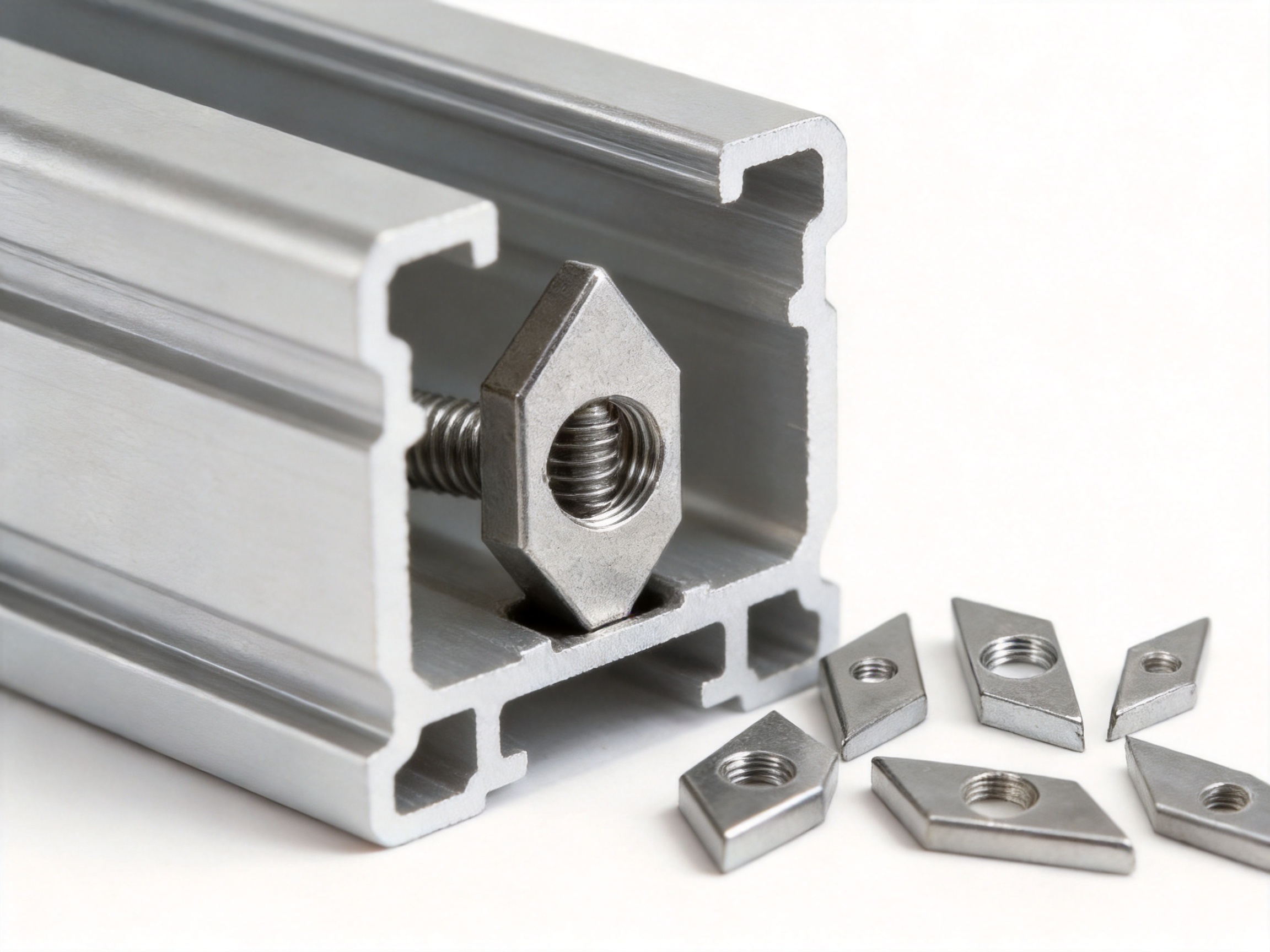
When the nut is inserted into the extrusion groove, its angled sides help it seat into the slot channel. The geometry can create multi-point contact with the internal slot surfaces, improving stability compared with a simple two-edge contact design. This can enhance grip and reduce unwanted movement during tightening. In dynamic machine applications, where motors, belts, cylinders, and moving assemblies produce vibration, better seating of the nut contributes to a more reliable fastening system.
The diamond shape also improves assembly efficiency. Installers often need to add components to an already-built frame. If a traditional sliding nut must be inserted from the end of the profile, the worker may need to partially disassemble the frame. A diamond-shaped slot nut can often be inserted and rotated into position at the desired location, reducing downtime and improving flexibility. This is particularly valuable for equipment that evolves during testing, where sensors, brackets, covers, and cable clips may need to be repositioned repeatedly.
Another advantage is alignment. The angular profile helps guide the nut into a stable orientation. Once tightened with a screw, the nut is pulled against the internal slot surfaces, creating a clamping connection. The result is a fastening point that is compact, discreet, and mechanically effective.
Core Advantages Compared with Competitor Products
Many competing fastening solutions can connect accessories to aluminium profiles, but they do not always offer the same balance of grip, ease of use, size efficiency, and manufacturing consistency. The Aluminium Extrusion M4-30 Diamond-Shaped Nut is positioned as a high-grip fastening solution for machine assemblies, offering several practical advantages over ordinary alternatives.
Improved Grip and Vibration Resistance
The diamond-shaped outline provides multiple contact points inside the aluminium extrusion channel. Compared with a conventional flat-sided insert, the angular edge contact can help distribute clamping forces more effectively. The supplied product information highlights an enhanced grip concept, with grip strength improved by up to 30% compared with standard hex-nut-style solutions in relevant mounting conditions. This advantage is meaningful for machinery exposed to vibration, repeated start-stop motion, thermal expansion, and operational shock.
In conveyor systems, for example, the frame may experience constant vibration from rollers, motors, and moving loads. In automated workstations, pneumatic cylinders and indexing tables may generate repeated dynamic loads. A fastening insert with better anti-loosening behavior helps reduce maintenance frequency and improves safety.
Faster Installation and Greater Field Adjustability
Competitor products that require end-loading from the aluminium profile may slow down installation. If the frame has already been assembled, an end-loaded nut may be difficult to add without removing end caps or dismantling connected sections. A diamond-shaped nut can support more flexible insertion and adjustment, depending on the slot design. This gives production technicians and maintenance engineers an advantage when adding accessories after the main machine frame is complete.
Fast installation reduces labor cost and helps machine builders deliver projects faster. It also improves serviceability because field technicians can modify equipment layouts with fewer tools and less disruption.
Compact Design for M4 Fastening
M4 fasteners are widely used for sensors, covers, light brackets, small panels, cable clamps, nameplates, compact hinges, and machine accessories. A properly designed M4 slot nut must be compact enough for the extrusion channel yet strong enough to provide secure engagement. Compared with oversized general-purpose hardware, this nut is designed for efficient use in 30 series aluminium profile systems, where space and slot compatibility matter.
Material and Finish Versatility
The product concept supports material options such as stainless steel, carbon steel, and titanium alloys, as well as protective treatments such as zinc plating or Dacromet coating for harsh environments. While the exact specification should be chosen according to the operating environment, this range gives customers flexibility. Competitor products may be available only in one material or a basic finish, limiting their usefulness in corrosive, outdoor, humid, or high-performance environments.
Precision Manufacturing and Reliable Repeatability
A low-cost nut may appear similar at first glance, but inconsistent thickness, poor thread quality, burrs, uneven plating, or inaccurate geometry can cause assembly problems. Lizhan Hardware Co., Ltd. emphasizes precision fastener production, controlled processes, and ISO 9001-certified manufacturing management. For customers purchasing in volume, consistency is as important as the design itself. A nut that works correctly in every batch reduces production delays and quality complaints.
Technical Characteristics
The following table summarizes important characteristics and value points of the Aluminium Extrusion M4-30 Diamond-Shaped Nut for Machine applications.
| Item | Description | Customer Value |
|---|---|---|
| Product Type | Diamond-shaped slot nut for aluminium extrusion machine frames | Provides a reliable fastening point inside profile channels |
| Thread Compatibility | M4 fastening interface | Suitable for compact machine accessories, covers, brackets, and sensors |
| Profile Application | Designed for 30 series aluminium extrusion systems, subject to slot confirmation | Supports modular frame assembly and adjustable mounting |
| Shape | Diamond-shaped body with angular contact edges | Improves seating, grip, and anti-rotation behavior during tightening |
| Performance Focus | High grip, vibration resistance, and non-slip fastening | Reduces loosening risks in dynamic machine environments |
| Material Options | Carbon steel, stainless steel, titanium alloy options depending on demand | Allows selection for strength, corrosion resistance, or weight-sensitive applications |
| Surface Protection | Zinc plating, Dacromet coating, or other customer-specified finishes | Improves corrosion resistance and service life |
| Manufacturing Category | Stamping part with precision forming and threaded processing | Supports efficient production with stable dimensions |
| Quality Management | ISO 9001-based manufacturing control | Enhances batch consistency and traceability |
| Customization | Dimensions and specifications can be customized for various fastener sizes | Supports special machine designs and OEM requirements |
Material Selection for Different Working Environments
The performance of any nut depends not only on its geometry but also on the material from which it is produced. For machine builders, material selection should be based on load requirements, corrosion exposure, temperature, weight limitations, and cost targets.
Carbon Steel
Carbon steel is a common choice for industrial fastening components because it offers good strength, reliable machinability, and cost efficiency. When combined with suitable surface treatment, carbon steel diamond-shaped nuts can be used in many indoor machinery applications, including production lines, jigs, fixtures, industrial racks, and conveyor frames. For customers seeking a strong and economical solution, carbon steel is often the practical default.
Stainless Steel
Stainless steel is preferred when corrosion resistance is a priority. Food processing equipment, laboratory devices, outdoor installations, humid workshops, and coastal-area machinery can benefit from stainless steel fastening components. Stainless steel also provides a clean appearance and can reduce maintenance needs where moisture or mild chemical exposure is present.
Titanium Alloy
Titanium alloy is not required for every application, but it can be valuable in specialized environments where high strength-to-weight ratio, corrosion resistance, or advanced engineering performance is required. Aerospace-related fixtures, high-value automation systems, or special equipment may justify the use of titanium alloy components. Offering such material versatility demonstrates a manufacturing capability beyond ordinary commodity fasteners.
Surface Treatments and Corrosion Protection
Surface protection is essential when fastening components are exposed to moisture, chemicals, temperature changes, or outdoor conditions. The Aluminium Extrusion M4-30 Diamond-Shaped Nut can be supplied with surface treatments such as zinc plating or Dacromet coating according to customer requirements.
Zinc plating is widely used for steel fasteners because it provides a protective sacrificial layer and improves appearance. It is suitable for many general industrial environments. Dacromet coating, meanwhile, is often chosen for stronger corrosion resistance and improved performance in harsh conditions. For machine builders exporting equipment to different regions, surface treatment selection can influence product reliability, warranty performance, and customer satisfaction.
A competitive advantage lies not simply in offering a finish, but in controlling the complete finishing process. Proper cleaning, coating thickness control, adhesion, thread protection, and post-treatment inspection are necessary to ensure that the nut remains functional after plating. If the coating is too thick, the M4 thread may become tight or inconsistent. If the coating is uneven, corrosion resistance may be reduced. A professional manufacturer understands these details and manages them through process specifications and inspection methods.
Manufacturing Process and Production Strength
Lizhan Hardware Co., Ltd. focuses on producing fastening and stamping components with a practical understanding of industrial customer needs. The company’s strengths include process planning, material preparation, forming capability, threading control, surface treatment coordination, inspection, packaging, and responsive service. For a small component such as a diamond-shaped nut, manufacturing discipline is critical because the end user depends on consistent geometry and thread quality across every piece.
Material Preparation
Production begins with material selection. Steel or other specified material must meet requirements for strength, ductility, thickness, and surface quality. Material certificates and incoming inspection help confirm that the raw material is suitable for stamping, forming, and threading. Poor raw material can lead to cracks, deformation, inconsistent threads, or premature failure.
Precision Stamping and Forming
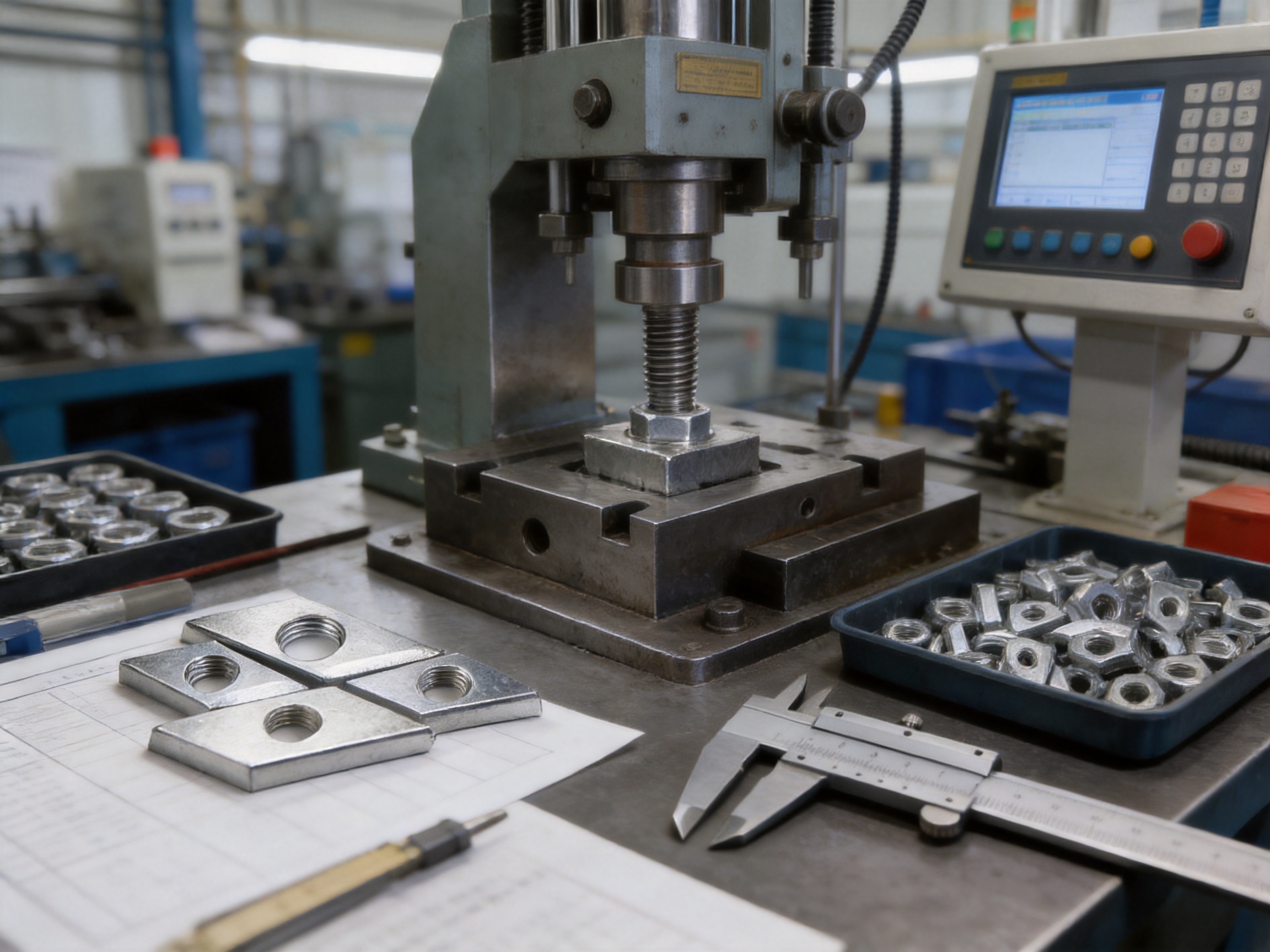
As a stamping part, the nut can be produced through controlled stamping and forming operations. Tooling accuracy determines the outline of the diamond shape, the flatness of the body, and the consistency of the part edges. Proper die design reduces burrs and ensures stable dimensions. Advanced stamping production also improves efficiency for high-volume orders, making the part cost-effective while preserving precision.
Hole Processing and Thread Formation
The M4 thread is the functional center of the nut. Thread quality affects tightening torque, screw engagement, clamping force, and service life. The manufacturing process must ensure proper hole size before tapping, accurate thread depth, clean thread flanks, and no damaging burrs. Thread gauges and torque-related checks may be used to verify usability. In machine assembly, a single defective thread can slow production, so thread consistency is a major quality priority.
Deburring and Edge Control
Because the nut is inserted into aluminium extrusion slots, edge quality is important. Sharp uncontrolled burrs could scratch the aluminium profile, interfere with insertion, or create safety issues for workers. Controlled deburring helps ensure smooth installation while preserving the functional angular geometry. This is one area where professional production can clearly outperform low-grade competitor products.
Heat Treatment When Required
Some applications may require enhanced mechanical strength or specific hardness. Heat treatment can be applied depending on material and performance requirements. However, heat treatment must be carefully controlled to prevent distortion, brittleness, or thread problems. A manufacturer with technical experience can recommend suitable specifications based on the application.
Surface Finishing
After forming and threading, surface finishing may be applied to improve corrosion resistance, appearance, and durability. Zinc plating, Dacromet coating, blackening, passivation, or other finishes may be selected according to customer needs. The surface treatment must be compatible with the material and thread tolerance.
Inspection and Quality Control
Inspection is integrated throughout production. Key checks can include external dimensions, thickness, thread quality, surface appearance, plating coverage, burr condition, and packaging quantity. ISO 9001-certified management supports standardized documentation, process traceability, and continuous improvement. For customers using these nuts in machine production, stable inspection standards reduce assembly risk and support consistent output.
Use in Machine Frames and Aluminium Profile Systems
Aluminium extrusion systems are widely used because they combine strength, low weight, modularity, and attractive appearance. They allow machine builders to create frames without welding, and they can be modified after installation. The diamond-shaped nut is an essential part of this ecosystem because it transforms the profile slot into a flexible fastening channel.
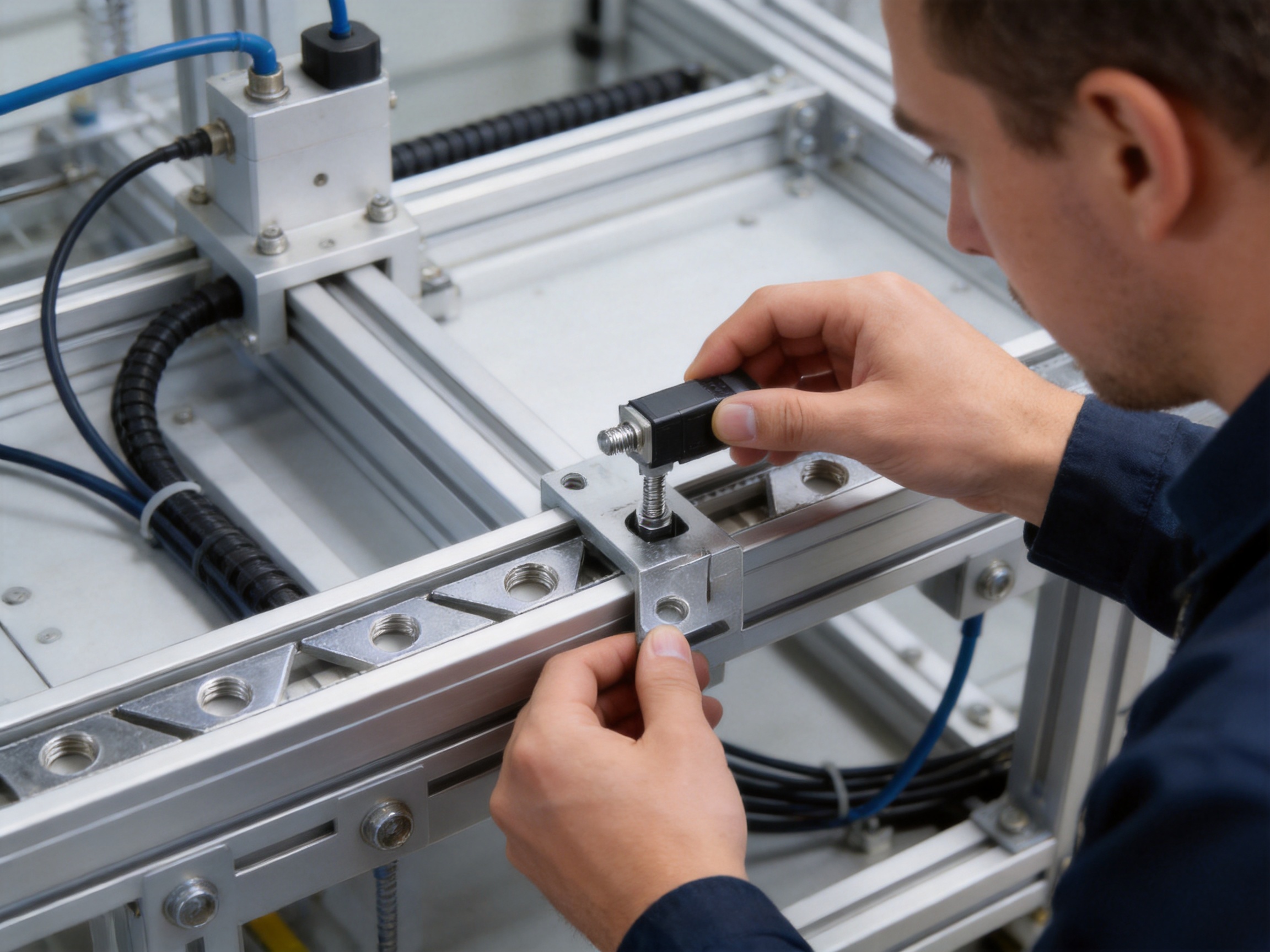
In machine frames, the nut can be used to mount brackets, gussets, joining plates, panel retainers, access doors, guards, adjustable feet, cable ducts, terminal blocks, sensors, pneumatic components, light curtains, small motors, control boxes, and measuring devices. Because M4 hardware is common for small accessories, this nut is especially useful where many lightweight components must be mounted cleanly and securely.
For example, a manufacturer building a conveyor inspection station may use 30 series aluminium extrusion for the frame. Sensors and guide rails may need to be adjusted during commissioning. By using diamond-shaped M4 slot nuts, the installation team can reposition components quickly without drilling new holes. This preserves the frame, accelerates setup, and allows fine-tuning of the machine.
In another example, a machine guard made from aluminium profiles and transparent panels may require many small brackets around the perimeter. The M4-30 diamond-shaped nut allows fast installation of panel clips and hinges. If a panel must be replaced, the hardware can be removed and reinstalled without damaging the frame.
Performance in Dynamic and Harsh Conditions
Many machines are not static. They vibrate, heat up, cool down, accelerate, stop, and carry variable loads. Fasteners in such environments must resist loosening. The diamond-shaped nut contributes to this requirement through improved seating and multi-point contact. When paired with an appropriate screw, washer, or locking feature, it can form a dependable fastening connection for dynamic applications.
Vibration resistance is especially important in automotive assembly equipment, conveyor systems, renewable energy equipment, packaging machinery, and automated production lines. In these industries, a loose sensor bracket or guard panel can create quality defects, downtime, or safety hazards. A fastening solution with enhanced grip helps reduce such risks.
Thermal expansion is another consideration. Aluminium profiles and steel fasteners expand at different rates under temperature variation. A well-seated nut helps maintain clamping integrity when equipment experiences heating and cooling cycles. Surface protection further helps preserve function where moisture or corrosive exposure may be present.
Compatibility and Customization
Although this article focuses on the Aluminium Extrusion M4-30 Diamond-Shaped Nut, customization is a major advantage for industrial buyers. The product information notes customizable dimensions across broader size ranges, and the company has experience in precision fastener production. Customers may request different thread sizes, body dimensions, material grades, finishes, packaging methods, or performance requirements.
Customization matters because aluminium profile systems are not completely identical across all suppliers. Slot width, internal geometry, wall thickness, and clearance can vary. A nut that fits one extrusion perfectly may not be ideal for another. By working with a capable manufacturer, customers can confirm samples, test fitment, and adjust dimensions before mass production.
For OEM projects, customization may include special marking, controlled packaging quantities, drawing-based production, inspection reports, and application-specific surface treatment. These services help customers integrate the nut into their own product system and supply chain.
Quality Standards and Compliance Considerations
Fastener quality is often evaluated through dimensional accuracy, mechanical performance, corrosion resistance, and thread reliability. The product information references DIN 980 and ISO 7043 standards in relation to locking nut performance. While the diamond-shaped extrusion nut has its own application-specific geometry, the design philosophy can be aligned with recognized fastener standards where applicable, especially regarding thread quality, locking behavior, and inspection discipline.
For international buyers, standards-based thinking is important. It helps ensure that components can be specified, inspected, and accepted consistently. A manufacturer with ISO 9001 quality management has a structured system for process control, corrective actions, customer feedback, and continuous improvement. This provides confidence to customers purchasing fasteners for machinery, automotive-related equipment, renewable energy structures, or industrial production systems.
Packaging, Logistics, and Supply Support
Small hardware components can create large problems if packaging is poorly managed. Mixed specifications, damaged threads, corrosion during storage, inaccurate counts, or weak cartons can delay production. Professional packaging is therefore part of product quality.
For diamond-shaped nuts, packaging can be customized according to customer needs, such as bulk packaging, small bags, cartons, labels, or production-line-ready quantities. Clear labeling helps warehouse teams identify thread size, material, finish, batch number, and order information. For export customers, stable packaging protects parts during long-distance transportation.
Lizhan Hardware Co., Ltd. supports customers from a China factory base and a Thailand warehouse location, improving service flexibility for international supply. The company also highlights 72-hour sample delivery and long-term technical support. For machine builders, fast samples are valuable because fitment testing should occur early in the design stage. Technical support helps customers solve application problems before they become production issues.
Comparison with Common Alternatives
To understand the value of the diamond-shaped nut, it is useful to compare it with common fastening alternatives used in aluminium extrusion systems.
Standard Hex Nuts
Hex nuts are inexpensive and widely available, but they are not optimized for aluminium profile slots. They may not fit correctly, may rotate during tightening, or may require external access. In many extrusion applications, a standard hex nut is a compromise rather than a proper solution.
Square Nuts
Square nuts can offer better seating than hex nuts in certain slots, but they may be less convenient to insert after assembly. Depending on dimensions, they can bind in the slot or fail to align smoothly. A diamond-shaped nut offers improved rotational insertion and positioning behavior.
Spring Nuts
Spring nuts can hold position in vertical slots and are useful in some systems. However, they may be more expensive or bulkier, and the spring element may not be necessary for every application. A diamond-shaped nut provides a simpler, compact solution where strong seating and threaded fastening are the main requirements.
Hammer Nuts
Hammer nuts are popular for post-assembly insertion, but quality varies widely. Poorly made hammer nuts may have inconsistent rotation, weak thread engagement, or unreliable locking. A precision diamond-shaped nut can offer a cleaner seating concept and stable fastening for M4-30 machine applications.
Industries That Benefit from the Product
The diamond-shaped nut is useful in a broad range of industries because aluminium extrusion systems are widely used across modern manufacturing.
Automation Equipment
Automation systems require frequent adjustment of sensors, brackets, cylinders, cable carriers, and safety devices. The nut supports flexible mounting and helps reduce commissioning time.
Conveyor Systems
Conveyors experience vibration from motors, rollers, belts, and transported goods. A high-grip fastening insert helps maintain secure attachment of guides, guards, and accessories.
Automotive Assembly
Automotive production fixtures and workstations need reliable, repeatable fastening. Modular aluminium frames with secure nuts allow fast reconfiguration as vehicle models and production requirements change.
Renewable Energy Equipment
Solar, battery, and energy storage equipment often uses aluminium structures and requires corrosion-resistant fastening. Material and coating options make the nut suitable for demanding environments.
Packaging Machinery
Packaging machines include guards, rails, sensors, and control components that must be adjusted for different products. The M4-30 diamond-shaped nut supports quick changeover and maintenance.
Laboratory and Testing Fixtures
Testing benches and laboratory frames often require clean, adjustable construction. Stainless steel or protected finishes can be selected for improved appearance and durability.
Installation Guidance and Best Practices
Correct installation improves fastening performance and service life. Before use, confirm that the nut is compatible with the aluminium profile slot size and that the screw length is appropriate. The screw should engage enough thread to provide secure clamping without bottoming out or damaging the profile.
During installation, place the nut into the slot at the desired location and rotate or align it according to the profile design. Insert the M4 screw through the bracket or accessory and tighten until the nut seats firmly against the internal slot surfaces. Avoid excessive torque that could damage the screw, thread, or aluminium extrusion. If the application experiences heavy vibration, consider using suitable locking methods such as thread-locking adhesive, lock washers, or locking screw designs, depending on engineering requirements.
For repeated adjustment, inspect the nut and screw thread for wear. Replace damaged components rather than reusing compromised hardware. In corrosive environments, select stainless steel or suitable coated carbon steel and inspect periodically for surface deterioration.
How Advanced Manufacturing Creates Customer Value
The advantage of a precision fastener is not only visible in its shape. It is built into every manufacturing decision: material control, tooling precision, thread formation, deburring, coating, inspection, and packaging. Advanced manufacturing creates value by reducing hidden costs for the customer.
If a low-quality nut has burrs, workers may spend extra time forcing it into the slot. If the thread is inaccurate, screws may jam. If the coating is poor, parts may rust in storage. If dimensions vary between batches, assembly fixtures may need adjustment. Each small problem increases cost. A professional manufacturer reduces these risks through controlled production.
Lizhan Hardware Co., Ltd. combines fastener manufacturing experience with customer support. The company’s ISO 9001-certified approach supports stable quality, while sample delivery and technical communication help customers confirm performance before committing to mass production. This is especially important for OEM customers who must maintain consistent product quality over long production cycles.
Design Value for Machine Builders
Machine builders often compete on delivery time, reliability, appearance, and serviceability. The fastening system contributes to all of these factors. A clean aluminium frame with properly fitted diamond-shaped nuts looks professional and can be assembled efficiently. Components can be moved or replaced without destructive modification. Maintenance teams can access parts quickly. The result is better equipment usability.
The M4-30 diamond-shaped nut is particularly valuable for small accessories mounted throughout a machine. These accessories may not carry the highest loads, but they are numerous and important. A loose cable clamp, sensor bracket, or guard fastener can interrupt production. By choosing a high-grip fastening insert, machine builders improve the reliability of many small connection points that collectively affect machine performance.
Purchasing Considerations
When purchasing this product, customers should provide key information such as thread size, aluminium profile series, slot dimensions, material preference, surface treatment, required quantity, packaging method, and application environment. Drawings or samples of the extrusion profile can help confirm fitment. If the equipment operates outdoors, in humid areas, or in chemical environments, corrosion protection should be discussed early.
Customers should also consider whether they need standard inventory parts or customized production. For prototype development, fast samples can help verify assembly. For mass production, stable batch supply, packaging consistency, and inspection standards become more important. Working with a manufacturer that understands both fastener production and machine assembly requirements can reduce project risk.
Q&A Section
Q1: What is the main purpose of the Aluminium Extrusion M4-30 Diamond-Shaped Nut?
A1: Its main purpose is to provide a secure M4 threaded fastening point inside a 30 series aluminium extrusion slot. It is used to mount machine accessories, brackets, panels, sensors, guards, cable clamps, and other components to aluminium profile frames.
Q2: Why is the diamond shape better than a standard nut for aluminium extrusion?
A2: The diamond shape is better suited to profile-slot installation. Its angular edges help the nut seat inside the channel and create multi-point contact, improving grip and reducing unwanted rotation or loosening compared with ordinary hex nuts in this type of application.
Q3: Is this nut suitable for machines with vibration?
A3: Yes. The product is designed as a high-grip fastening solution for machinery exposed to dynamic loads and vibration. For severe vibration, it should be paired with appropriate screw tightening methods or additional locking measures according to the machine design.
Q4: What materials are available?
A4: Material options can include carbon steel, stainless steel, and titanium alloys depending on customer requirements. Carbon steel is economical and strong, stainless steel improves corrosion resistance, and titanium alloy may be used for specialized high-performance applications.
Q5: What surface treatments can be selected?
A5: Surface treatments such as zinc plating and Dacromet coating are available for corrosion protection. The best option depends on the working environment, cost target, and durability requirements.
Q6: Can the product be customized?
A6: Yes. Dimensions, thread specifications, materials, finishes, and packaging can be customized according to customer drawings, samples, or application requirements. Fitment testing is recommended when working with specific aluminium extrusion profiles.
Q7: How does the product help reduce assembly time?
A7: The diamond-shaped profile supports convenient insertion and positioning in the aluminium slot. In many machine frame applications, it can reduce the need for disassembly when adding or adjusting accessories.
Q8: Why choose a professional manufacturer instead of generic low-cost parts?
A8: Professional manufacturing improves dimensional consistency, thread quality, burr control, surface treatment reliability, and packaging accuracy. These factors reduce assembly problems, maintenance issues, and hidden production costs.
Conclusion
The Aluminium Extrusion M4-30 Diamond-Shaped Nut for Machine applications is a compact but important component in modern modular construction. Its diamond-shaped geometry, M4 thread compatibility, suitability for 30 series aluminium profiles, and high-grip fastening performance make it valuable for machine builders who need reliable, adjustable, and efficient assembly solutions.
Compared with ordinary hex nuts, basic square nuts, and inconsistent low-cost slot inserts, this product offers better seating behavior, improved grip potential, faster installation, and stronger suitability for dynamic machinery environments. Material and surface treatment options further expand its use across indoor machinery, humid environments, renewable energy equipment, automotive assembly systems, conveyors, and automation platforms.
Behind the product is a manufacturing process that requires accuracy at every stage. Lizhan Hardware Co., Ltd. supports this product with precision stamping and forming capability, thread processing control, deburring, surface finishing, ISO 9001-based quality management, sample support, and technical service. For customers seeking a dependable aluminium extrusion fastening solution, this diamond-shaped nut provides a practical balance of performance, flexibility, and manufacturing reliability.
References
International Organization for Standardization. ISO 9001 Quality Management Systems: Requirements.
International Organization for Standardization. ISO 7043 Prevailing Torque Type Hexagon Nuts, Style 2, with Non-Metallic Insert.
Deutsches Institut für Normung. DIN 980 Prevailing Torque Type Hexagon Nuts.
Bickford, J. H. An Introduction to the Design and Behavior of Bolted Joints.
Budynas, R. G., and Nisbett, J. K. Shigley’s Mechanical Engineering Design.
Oberg, E., Jones, F. D., Horton, H. L., and Ryffel, H. H. Machinery’s Handbook.
ASM International. Metals Handbook: Properties and Selection of Irons, Steels, and High-Performance Alloys.