Modern photovoltaic structures, HVAC systems, marine assemblies, transportation equipment, and general industrial frameworks all depend on fastening components that look simple but perform critical work. Among these components, the aluminum tube hoop is a compact, lightweight, and highly practical hold-down fastener designed to secure round tubes, conduits, pipes, support members, and related structural elements. When produced with precision stamping technology and suitable corrosion-resistant materials, this type of hoop can improve installation efficiency, reduce maintenance requirements, and strengthen the long-term stability of the entire assembly.
The Aluminum Tube Hoop Photovoltaic Accessories Zinc Aluminum Magnesium Material Fastener Hold Hoop is designed for users who need a durable, easy-to-install, and cost-effective tube fastening solution. It is especially suitable for solar mounting structures, pipe positioning, light structural support, equipment fixing, and outdoor assemblies where weather resistance and repeatable performance matter. By combining lightweight aluminum performance with robust forming, accurate hole positioning, and corrosion-conscious material selection, the product offers a practical alternative to heavier, less adaptable, or less refined fastening options.
This article explains the product’s functions, application value, manufacturing advantages, design considerations, and competitive strengths. It also introduces the production capabilities and quality-oriented approach of Lizhan Hardware Co., Ltd., a manufacturer serving customers in fastening, stamping, and hardware-related sectors. The discussion focuses on why a well-made tube hoop is more than a simple metal strap: it is a key element in assembly reliability, installation speed, system safety, and long-term project economy.
Aluminum tube hoop Photovoltaic Accessories Zinc Aluminum Magnesium Material Fastener Hold Hoop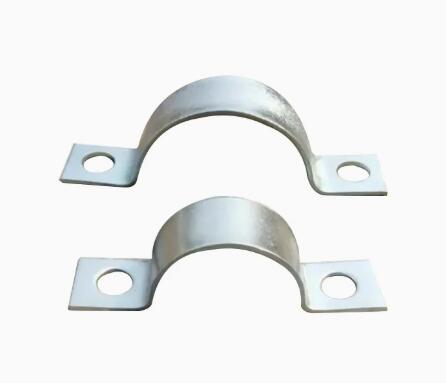
1. Product Overview: What Is an Aluminum Tube Hoop?
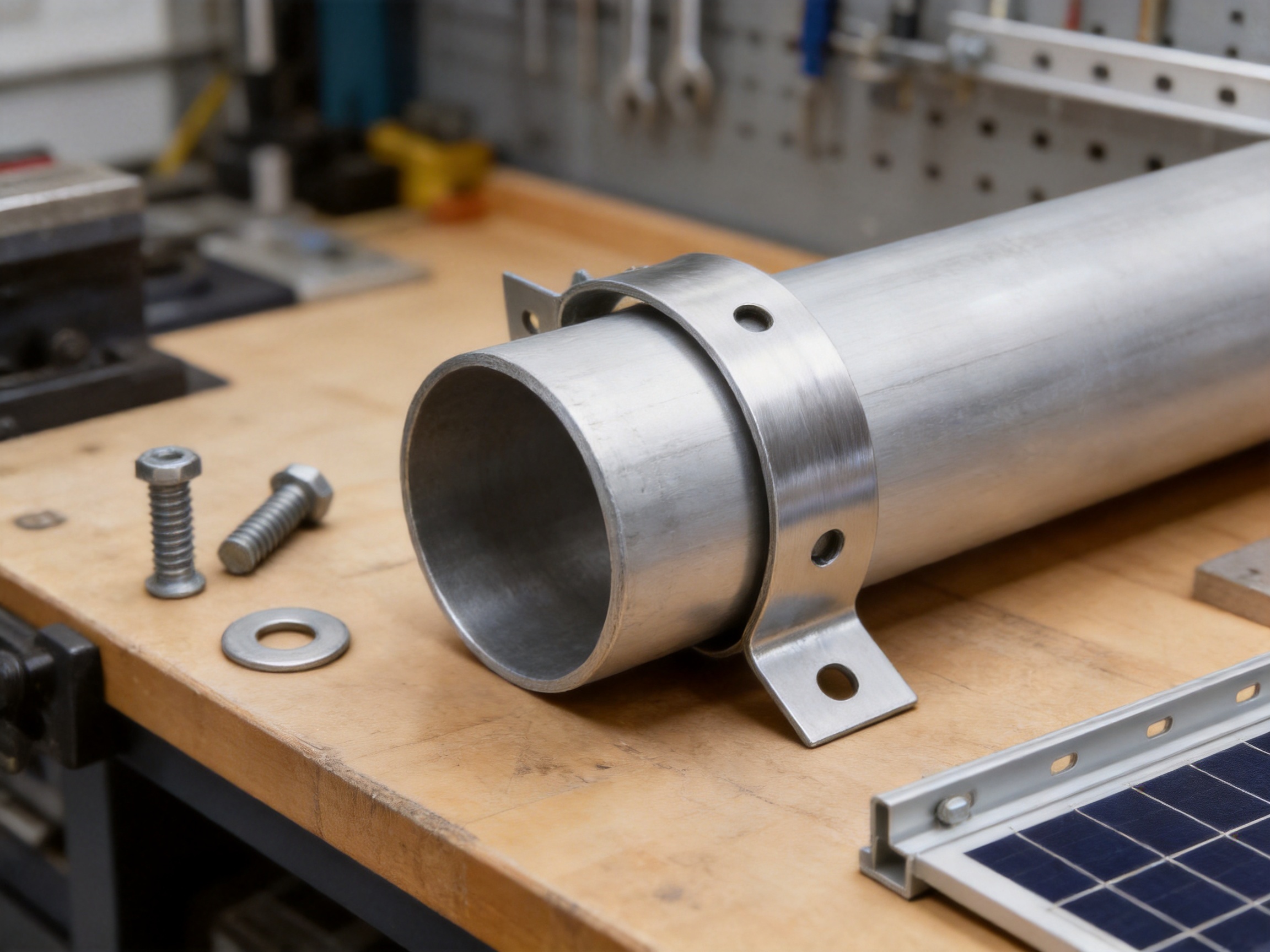
An aluminum tube hoop is a formed metal fastening component used to hold a tube, pipe, rod, cable conduit, or cylindrical structural member in place. It typically wraps around or partially surrounds the tube and includes one or more fixing holes for screws, bolts, rivets, or other fasteners. Depending on application requirements, it may be installed on metal frames, wooden substrates, concrete anchors, solar mounting rails, machinery housings, or support brackets.
The product featured here is positioned as a fastening hoop for photovoltaic accessories and industrial use. It can be used in solar panel mounting systems, pipe systems, marine equipment, structural supports, HVAC installations, automotive-related fixtures, and custom DIY assemblies. Its value comes from a combination of low weight, corrosion resistance, simple installation, and compatibility with multiple tube sizes.
Unlike complex clamping mechanisms that require multiple moving parts, a tube hoop is straightforward. Its simplicity is one of its greatest advantages. Fewer parts mean fewer failure points, less assembly confusion, reduced inventory complexity, and faster installation on site. For solar projects, where installers may need to mount hundreds or thousands of support and accessory components, the time saved by using a reliable pre-formed hoop can translate into meaningful labor savings.
In addition, the product can be supplied as a stamping part, allowing consistent shape, repeatable hole alignment, stable dimensions, and efficient mass production. Stamping is particularly effective for products that need reliable geometry at high volume. When the die is properly designed and maintained, the same component can be produced repeatedly with uniform quality, making it suitable for OEM projects, engineering procurement, and standardized installation kits.
2. Why Tube Hoops Matter in Photovoltaic Mounting Systems
Photovoltaic projects are exposed to demanding conditions. Solar mounting components must handle wind load, temperature change, rain, humidity, dust, ultraviolet exposure, and vibration caused by environmental forces. Although major structural parts such as rails, clamps, and posts receive much attention, accessory fasteners such as tube hoops also play important roles. A poorly selected or poorly manufactured hoop may loosen, corrode, deform, or fail to hold the tube securely, leading to repeated maintenance or even structural concerns.
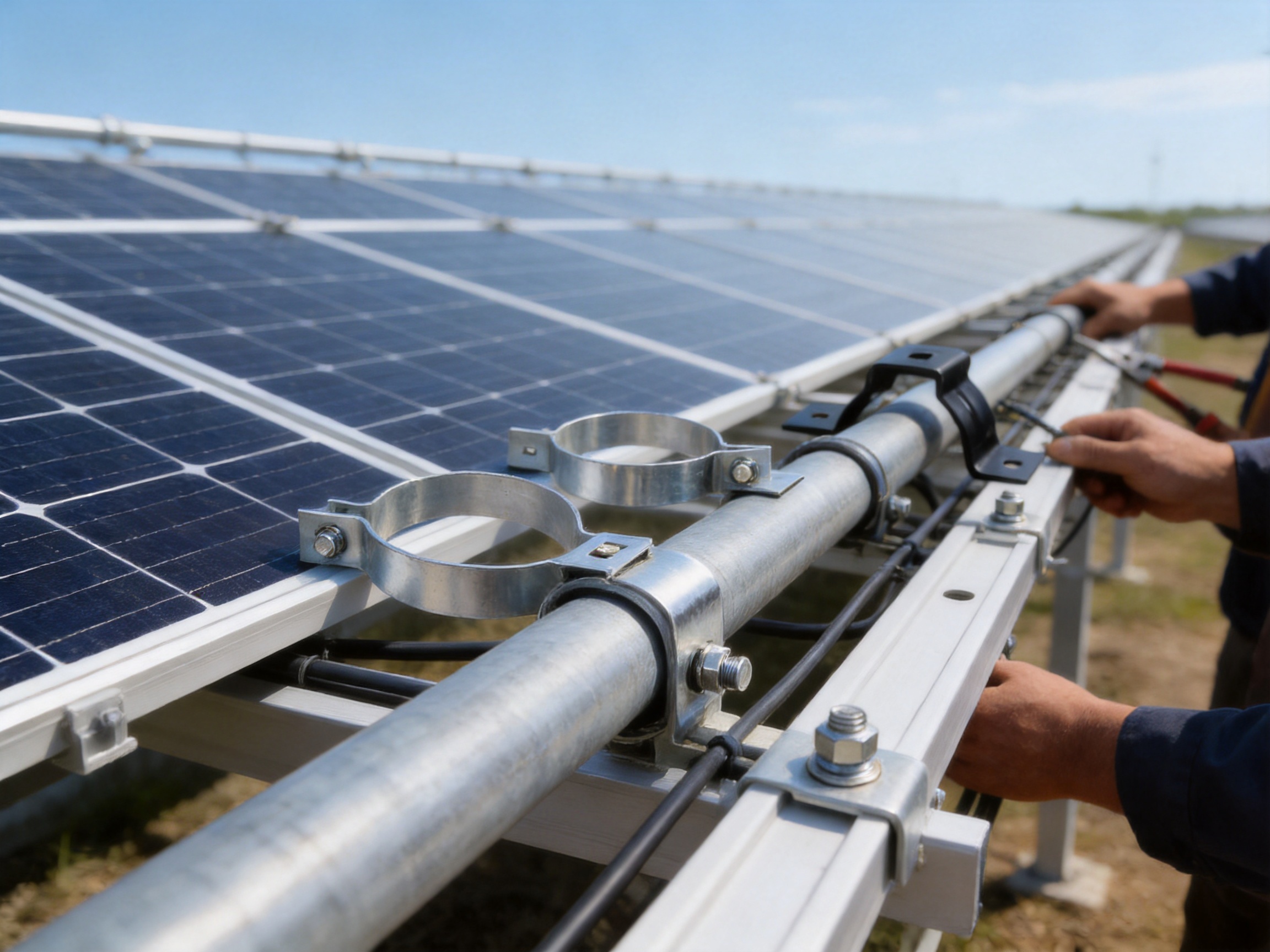
In photovoltaic applications, tube hoops can be used for securing supporting tubes, cable conduits, grounding-related pathways, auxiliary brackets, monitoring equipment supports, small frames, or other cylindrical elements. Their function is to maintain the correct position of the tube and prevent movement caused by wind, thermal expansion, handling, or vibration. A well-designed hoop distributes holding force over an appropriate area, reducing the chance of localized stress damage.
The lightweight nature of aluminum is beneficial in solar systems because total structural weight affects transportation, handling, roof loading, and installation convenience. On rooftops, lighter hardware can make manual handling easier and reduce installation fatigue. In ground-mounted arrays, lightweight accessories simplify logistics and enable faster assembly. When corrosion-resistant materials or coatings are used, the hoop can remain effective in outdoor environments for a longer service period.
Another advantage is adaptability. Solar projects vary in structure, tube size, and design standard. A tube hoop that can be produced in multiple sizes, thicknesses, hole configurations, and material options gives project designers more flexibility. Instead of forcing installers to adapt the project around an unsuitable fastener, the fastener can be matched to the project. This is where a manufacturer with stamping expertise and customized production capability can deliver value beyond ordinary catalogue supply.
3. Core Advantages of the Product
The Aluminum Tube Hoop Photovoltaic Accessories Zinc Aluminum Magnesium Material Fastener Hold Hoop offers several important advantages compared with common alternatives. These include lightweight construction, corrosion resistance, installation convenience, consistent manufacturing, and broad application compatibility.
3.1 Lightweight but Strong
Aluminum is widely valued for its strength-to-weight ratio. Compared with many steel components of similar geometry, an aluminum hoop can reduce weight while still providing reliable holding performance for light and medium-duty applications. This makes it easier for workers to carry, align, and install the component. In projects where large quantities of hoops are needed, the cumulative weight reduction can improve packaging efficiency, reduce handling difficulty, and support faster field deployment.
Lightweight does not mean fragile. A properly designed hoop uses suitable thickness, bend radius, hole geometry, and forming control to maintain stiffness and shape stability. The product is intended to provide a sturdy fastening solution that can hold tubes securely without unnecessary bulk. In many applications, this balance between weight and strength is more valuable than simply using the heaviest possible material.
3.2 Corrosion Resistance for Outdoor and Indoor Use
Corrosion resistance is essential for hardware exposed to moisture, outdoor weather, marine conditions, or humid industrial spaces. Aluminum naturally forms a protective oxide layer, which helps resist rust and degradation. Zinc-aluminum-magnesium material systems and coatings are also recognized for strong corrosion performance in outdoor environments. Depending on the final material specification required by the customer, the hoop can support projects where long-term surface durability is important.
Compared with untreated carbon steel straps, corrosion-resistant aluminum or zinc-aluminum-magnesium options can reduce staining, weakening, and replacement frequency. This is especially relevant for solar mounting systems because many photovoltaic projects are expected to operate for decades. Accessory fasteners should not become the weak point of an otherwise durable installation.
3.3 Easy Installation with Pre-Drilled Holes
Pre-drilled or pre-punched holes allow fast attachment using screws, bolts, rivets, or anchors. On job sites, time spent drilling holes manually can slow progress and create inconsistency. Factory-made holes produced by stamping or punching processes improve repeatability and reduce installation errors. The installer can position the hoop, align the hole, and tighten the fastener without additional preparation.
This simplicity is valuable for contractors, maintenance teams, OEM assembly lines, and DIY users. A well-punched hole with clean edges helps reduce burr-related handling risks and improves the seating of the mating fastener. Correct hole placement also supports better load distribution and a more stable connection.
3.4 Wide Compatibility
Tube hoops can be adapted for different tube diameters, wall thicknesses, mounting surfaces, and fastener sizes. The product can be used for piping systems, solar panel mounts, marine equipment, structural supports, and other assemblies. This versatility makes it a practical inventory item for distributors and project suppliers because one product family can serve multiple markets.
Compatibility is not limited to size. It also includes compatibility with installation methods, environmental exposure, and project requirements. The hoop may be designed with single-hole, double-hole, or custom fixing patterns. It may be supplied in different material thicknesses for different holding requirements. It may be finished with surfaces suitable for outdoor use, indoor equipment, or customer-specific assembly aesthetics.
4. Product Applications Across Industries
Although photovoltaic mounting is a major target application, the aluminum tube hoop is useful in many other fields. Its simple form and dependable function make it suitable for a broad range of industries that require tube or conduit retention.
4.1 Solar Panel Mounting and Photovoltaic Accessories
In solar mounting systems, tube hoops can help fix auxiliary tubes, support members, conduit runs, sensor brackets, and related accessories. Solar systems often require components that are corrosion resistant, consistent, and quick to install. Because photovoltaic installation sites can be large and labor-intensive, even small fastening improvements can support faster completion and better long-term performance.
4.2 HVAC and Piping Systems
HVAC systems often include tubes, ducts, drain lines, and conduits that need orderly positioning. A lightweight hoop can secure these elements to walls, frames, and support beams. For indoor HVAC work, neat installation and repeatable alignment are important. For outdoor air-conditioning units and rooftop equipment, corrosion resistance becomes more important because the hardware may be exposed to rain and sunlight.
4.3 Automotive and Transportation Equipment
Vehicles and transportation equipment may require tube fixing for auxiliary lines, protective guards, light supports, or structural accessories. Components used in this field must resist vibration and remain stable over time. A properly formed hoop provides a practical way to hold cylindrical parts without complex brackets.
4.4 Marine and Outdoor Equipment
Marine environments are challenging because salt, humidity, and moisture accelerate corrosion. Aluminum and suitable coated materials are often chosen for better resistance compared with ordinary untreated steel. Tube hoops can be used in small marine equipment, dock accessories, outdoor frames, and equipment supports where rust resistance and reduced weight are beneficial.
4.5 DIY, Furniture, and General Structural Supports
For builders, repair professionals, and DIY users, a reliable tube hoop is a useful fastening tool. It can be applied to shelving, frames, garden structures, temporary supports, furniture hardware, and small machinery. The component’s straightforward installation makes it accessible even for users who do not have specialized equipment.
5. Technical Characteristics and Selection Considerations
Choosing the right tube hoop involves more than selecting a visible shape. The buyer should consider tube diameter, hoop width, material thickness, hole size, installation surface, load conditions, environmental exposure, and fastener type. A manufacturer with engineering and stamping experience can help match product geometry to application requirements.
| Selection Factor | Why It Matters | Typical Consideration |
|---|---|---|
| Tube Diameter | Determines fit and holding stability | The hoop should match the tube closely without excessive stress |
| Material Thickness | Affects strength, stiffness, and forming behavior | Thicker material may support higher loads but requires proper forming |
| Material Type | Influences weight, corrosion resistance, and cost | Aluminum or zinc-aluminum-magnesium material may be selected based on environment |
| Hole Size | Controls fastener compatibility | Must match screw, bolt, rivet, or anchor specifications |
| Surface Finish | Improves appearance and environmental performance | May include cleaning, deburring, coating, or customer-specific finish |
| Installation Environment | Determines corrosion and load requirements | Outdoor, marine, rooftop, indoor, or industrial use may require different solutions |
| Production Tolerance | Ensures repeatable assembly | Important for OEM kits and large-scale project installation |
For photovoltaic accessories, corrosion resistance and consistency are often top priorities. For HVAC installations, ease of installation and compatibility may be more important. For machinery or vehicle applications, vibration resistance and secure fastening should be emphasized. For marine use, material selection and surface durability become especially important.
When selecting a tube hoop, it is also important to consider the mating fastener. The hoop is only one part of the connection. Screws, bolts, washers, nuts, anchors, and mounting surfaces all contribute to final performance. For example, a corrosion-resistant hoop should ideally be paired with suitable corrosion-resistant fasteners to avoid galvanic concerns or premature failure of the connection.
6. Advantages Over Competing Fastening Options
Tube fastening can be achieved with several competing methods, including plastic clips, heavy steel clamps, cable ties, custom welded brackets, and adjustable multi-piece clamps. Each method has value in certain situations, but a stamped aluminum tube hoop offers a strong combination of simplicity, durability, and economy.
6.1 Compared with Plastic Clips
Plastic clips are lightweight and inexpensive, but they may become brittle under ultraviolet exposure, high temperature, cold weather, or chemical contact. For outdoor photovoltaic systems, plastic components may degrade faster than metal components if not specifically engineered for long-term exposure. An aluminum tube hoop can provide better mechanical stability and improved resistance to weather-related aging.
6.2 Compared with Heavy Steel Clamps
Steel clamps can be strong, but they are often heavier and may require additional corrosion protection. If ordinary steel is used without suitable coating, rust can become a problem. Aluminum or zinc-aluminum-magnesium material solutions help reduce weight and improve environmental resistance. For many light and medium-duty tube holding applications, the extra mass of heavy steel is unnecessary.
6.3 Compared with Cable Ties
Cable ties are convenient for temporary or low-load bundling, but they are not always suitable for structural support or long-term outdoor tube fixing. They can loosen, degrade, or fail under load. A formed metal hoop creates a more defined mechanical connection and can be attached firmly with screws or bolts. It is more suitable where professional installation quality is required.
6.4 Compared with Welded Brackets
Welded brackets can be strong but require fabrication time, skilled labor, and post-weld finishing. They are less convenient for field adjustment and replacement. A stamped hoop is more standardized and easier to install. It can also be produced in large quantities with controlled geometry, helping reduce cost and lead time.
6.5 Compared with Adjustable Multi-Piece Clamps
Adjustable clamps can fit many sizes, but they may include screws, hinges, bands, or multiple parts. This increases assembly complexity and may introduce loosening points. A one-piece or simple formed hoop is easier to handle and faster to install. For standardized tube sizes, a dedicated stamped hoop can be the more efficient choice.
7. Manufacturing Strength: Precision Stamping and Forming
The performance of a tube hoop depends heavily on manufacturing quality. Even a simple component can fail if the stamping, punching, bending, or finishing process is poorly controlled. Lizhan Hardware Co., Ltd. focuses on hardware and fastening solutions, including stamping parts, screws, fasteners, and related components. The company’s manufacturing approach supports stable production, customization, and consistent product quality.
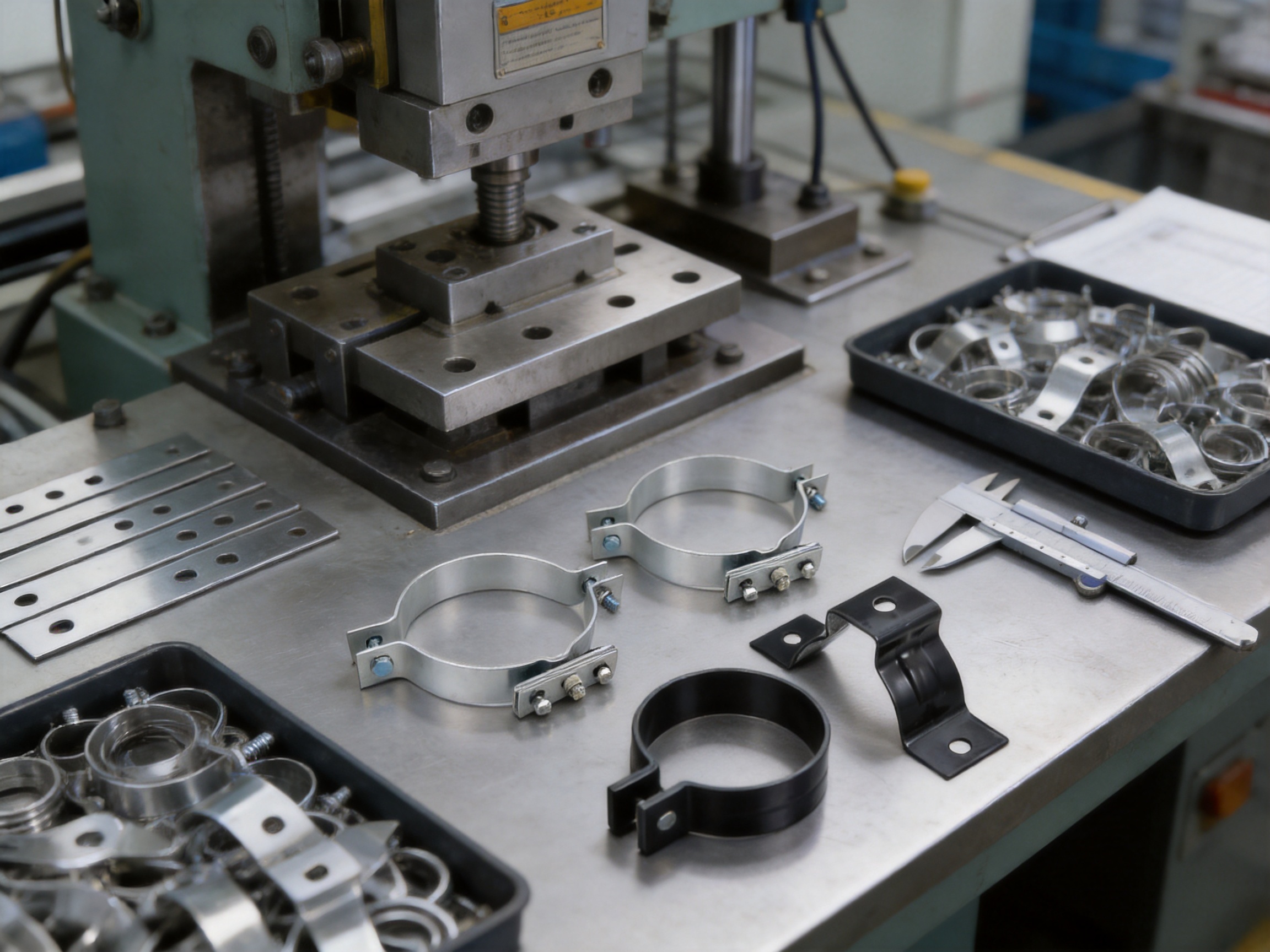
Stamping is an efficient method for producing metal components from sheet or strip material. The process may include blanking, punching, bending, forming, trimming, and surface finishing. For a tube hoop, the main requirements are clean edges, accurate hole location, consistent curvature, controlled width, and reliable surface quality. When these features are controlled, the final part is easier to install and more dependable in service.
7.1 Material Preparation
Manufacturing begins with material selection and preparation. Aluminum and zinc-aluminum-magnesium material options may be chosen based on project needs. Material thickness, mechanical properties, surface condition, and coil or sheet quality all affect final performance. Proper material inspection helps reduce defects such as cracks, uneven forming, surface scratches, or dimensional inconsistency.
7.2 Tooling and Die Design
Tooling is central to stamping quality. A well-designed die controls the product’s shape, hole position, bend radius, and repeatability. Die design must consider springback, material behavior, burr control, production volume, and maintenance. For a tube hoop, the curvature must match the intended tube size. If the die is inaccurate, the hoop may be too loose, too tight, or difficult to install.
Advanced tooling capability also allows customization. Customers may need different hole patterns, widths, lengths, or curvatures. By adjusting tooling or developing project-specific dies, the manufacturer can supply components that fit exact installation requirements. This capability is especially valuable for OEM customers and solar mounting system suppliers.
7.3 Punching and Hole Control
Hole quality is important because the hole interfaces with screws, bolts, or rivets. Poor punching can create burrs, deformation, or off-center holes. Controlled punching improves assembly quality and reduces the chance of fastener misalignment. Clean holes also support better surface contact and reduce installation resistance.
7.4 Forming and Bending
Forming transforms the flat stamped piece into a curved hoop shape. The bend radius and curvature must be controlled to avoid cracking and to create proper tube contact. Aluminum requires suitable forming parameters because excessive strain or improper tooling can cause surface marks or fractures. Experienced forming control helps produce a stable hoop with smooth geometry.
7.5 Deburring and Surface Treatment
After stamping and forming, edges may require deburring or finishing. Burr control improves safety for installers and helps the product fit neatly against the tube and mounting surface. Surface treatment may also be applied depending on customer requirements. Clean and consistent surfaces improve product appearance and can support corrosion resistance.
8. Quality Control and Reliability
Quality control is essential for fasteners and stamping parts because small dimensional errors can cause significant assembly problems. A tube hoop with inconsistent curvature may not grip the tube correctly. A hole that is shifted slightly may prevent fastener alignment. A rough edge may scratch the tube or create handling concerns. A weak material choice may deform under load.
Lizhan Hardware Co., Ltd. can support quality through process discipline, inspection procedures, and manufacturing experience. Key inspection points for this product may include dimensional measurement, hole diameter verification, curvature control, surface inspection, burr inspection, material confirmation, packaging review, and sample testing. For bulk orders, consistency across batches is particularly important.
Reliable production also involves communication with customers. Before mass production, it is often useful to confirm drawings, samples, installation conditions, required material, surface finish, packaging quantity, and tolerance expectations. This reduces misunderstanding and helps the manufacturer produce a component that fits the customer’s project accurately.
9. Company Strengths Supporting Product Value
A good product depends not only on design but also on the manufacturer behind it. Lizhan Hardware Co., Ltd. serves the hardware and fastener market with products that include screws, stamping parts, fasteners, and related components. The company provides manufacturing support from its China factory in Haiyan, Jiaxing City, Zhejiang, and also maintains a Thailand warehouse in Chonburi. This combination supports production capability and regional logistics flexibility.
9.1 Manufacturing Experience in Hardware and Fasteners
Experience in screws, machine screws, furniture screws, fasteners, and stamping parts gives the company a broad understanding of mechanical connections. This is useful when producing a tube hoop because the hoop must work together with screws, bolts, and mounting structures. Knowledge of fastening behavior helps improve product recommendations and supports practical solutions for customers.
9.2 Ability to Serve Bulk and Customized Orders
Many customers require competitive bulk pricing and consistent supply. A stamping part such as a tube hoop is well suited to high-volume production. Once tooling and specifications are confirmed, the manufacturer can produce large quantities efficiently. Customization can also be supported for customers who need special dimensions, materials, hole patterns, or packaging.
9.3 Practical Engineering Support
Engineering support can help customers choose suitable material thickness, hole configuration, and hoop size. Instead of supplying a generic part that may or may not fit the application, a manufacturing partner can help align the part with real installation conditions. This improves the final result and reduces the risk of costly rework.
9.4 Supply Chain and Packaging Awareness
Fasteners and small stamping parts must be packaged carefully to prevent damage, mixing, and loss during transportation. Proper packaging also improves efficiency for distributors and installers. Bulk packaging, labeled cartons, project kits, and customer-specific packaging can support smoother inventory handling.
10. Material Perspective: Aluminum and Zinc-Aluminum-Magnesium Options
The product title highlights aluminum tube hoop construction and references zinc-aluminum-magnesium material. These material concepts are important because they address two major customer concerns: weight and corrosion resistance.
Aluminum is favored for its light weight, natural corrosion resistance, and ease of forming. In applications where the load is moderate and corrosion exposure is important, aluminum is often a practical choice. It can be used indoors and outdoors and can contribute to a clean, professional appearance.
Zinc-aluminum-magnesium coated materials are known in the metal industry for enhanced corrosion protection compared with conventional zinc coatings in many environments. These materials are often used in construction, solar mounting, outdoor brackets, and structural accessories. The combination of zinc, aluminum, and magnesium in the coating can improve resistance to red rust and edge corrosion under suitable conditions. For photovoltaic accessories, this can be highly valuable because the components are exposed to weather for long periods.
The best material choice depends on the specific application. For very lightweight assemblies, aluminum may be ideal. For systems requiring coated steel strength with strong corrosion performance, zinc-aluminum-magnesium materials may be considered. A manufacturer with flexible production capability can discuss these options with customers and recommend a solution based on environment, load, cost, and installation needs.
11. Installation Benefits for Contractors and OEM Assemblers
Installation efficiency is a major advantage of the product. A pre-formed hoop with ready-to-use holes reduces the need for cutting, drilling, measuring, and bending on site. This benefits both field contractors and factory assemblers.
For contractors, faster installation means reduced labor time and easier project scheduling. Workers can carry a box of hoops, position them along the installation path, and fasten tubes quickly. This is particularly useful for solar projects, where installation teams must complete repetitive tasks across large areas.
For OEM assemblers, consistent parts support assembly line efficiency. If every hoop has the same curvature and hole location, jigs and fixtures can be designed around it. Workers do not need to adjust every part individually. This reduces assembly variation and improves production rhythm.
For maintenance teams, the simplicity of the hoop makes replacement or adjustment easy. If a tube must be repositioned, the fastener can be removed, the hoop adjusted, and the connection restored. This is more convenient than welded brackets or complex multi-piece clamps.
12. Design Details That Improve Performance
Several design details can improve the performance of a tube hoop. These details may seem small, but they influence fit, durability, and user experience.
12.1 Correct Curvature
The hoop should match the tube diameter closely enough to prevent movement while avoiding excessive stress. A hoop that is too flat may not hold securely. A hoop that is too tight may be hard to install or may scratch the tube.
12.2 Appropriate Width
Wider hoops can distribute force over a larger area, while narrower hoops may be more suitable for compact spaces. The best width depends on tube size, load, and installation environment.
12.3 Smooth Edges
Smooth edges reduce handling risk and protect the tube surface. Burrs can scratch protective coatings or create stress points. Deburring is therefore an important finishing step.
12.4 Accurate Hole Placement
Accurate holes ensure that screws or bolts align with the mounting surface. This reduces installation frustration and supports better fastening strength.
12.5 Suitable Thickness
Material thickness affects stiffness, strength, and formability. The product should be thick enough to hold the tube but not so thick that it becomes unnecessarily heavy or difficult to form.
13. Economic Value and Total Cost Considerations
When customers compare fasteners, unit price is often the first factor considered. However, the true cost of a fastening component includes purchase price, installation labor, maintenance frequency, replacement cost, downtime, and risk of failure. A low-quality hoop may appear inexpensive, but if it corrodes quickly, has inconsistent holes, or requires extra installation work, the total cost can be higher.
A well-made aluminum tube hoop can reduce total cost in several ways. It saves installation time because holes are already prepared. It reduces transport and handling burden because it is lightweight. It improves durability through corrosion-resistant material choices. It lowers rework risk through consistent dimensions. It supports large-scale procurement through efficient stamping production. For project buyers, these advantages can outweigh small differences in unit price.
For distributors, a dependable product also reduces customer complaints and returns. For OEMs, consistent quality helps protect brand reputation. For contractors, reliable fasteners help avoid callbacks and maintenance disputes. Therefore, choosing a quality manufacturer is not only a purchasing decision but also a risk-management decision.
14. Packaging, Logistics, and Bulk Supply
Fasteners and stamping parts are often ordered in bulk. Packaging must protect the parts from deformation, surface damage, and contamination. It should also make counting and distribution easy. Depending on customer needs, aluminum tube hoops can be packed in cartons, bags, bulk containers, or project-specific kits.
Because the product is lightweight, it can be packed efficiently. However, proper arrangement is still important to prevent bending or scratching during transportation. Clear labeling can include product size, material, batch information, quantity, and customer item code. For large photovoltaic projects, organized packaging can improve job-site efficiency because installers can quickly identify the correct part.
The company’s China factory and Thailand warehouse presence can support regional supply planning. For customers in different markets, warehousing and logistics awareness can help shorten response time and improve delivery coordination. Bulk pricing inquiries can be handled according to quantity, specification, material, finish, and packaging requirements.
15. Sustainability and Long-Term Use
Sustainability in hardware is not only about material recyclability. It also includes durability, reduced replacement frequency, efficient production, lightweight transportation, and compatibility with renewable energy infrastructure. The aluminum tube hoop supports photovoltaic systems, which are part of renewable energy deployment. By helping secure solar accessories reliably, the product contributes indirectly to the stability of clean energy installations.
Aluminum is widely recyclable, and its lightweight nature can reduce transportation burden. A durable corrosion-resistant fastening component also reduces waste by extending service life. In industrial procurement, selecting long-lasting components can be more sustainable than repeatedly replacing low-quality parts.
Efficient stamping production can also reduce waste when tooling is optimized and material utilization is planned carefully. Scrap material from stamping processes may be collected and recycled depending on production conditions. Precision manufacturing helps avoid defective batches and unnecessary rework.
16. Practical Buying Guidance
Customers considering this product should provide clear information when requesting a quotation. Useful details include tube outer diameter, hoop width, material preference, thickness, hole diameter, number of holes, surface finish, expected quantity, packaging requirement, application environment, and any drawing or sample reference. If the product will be used in photovoltaic systems, customers should also identify whether it will be installed on rooftops, ground structures, coastal sites, agricultural solar structures, or industrial facilities.
For standard use, a general aluminum hoop may be sufficient. For more demanding outdoor or corrosive environments, customers may ask about zinc-aluminum-magnesium material options or other corrosion-resistant solutions. For high-volume projects, sample confirmation before bulk production is recommended. This allows both customer and manufacturer to verify fit, installation method, and appearance before mass manufacturing.
Buyers should also consider whether they need related fasteners such as screws, machine screws, bolts, nuts, washers, or anchors. Since Lizhan Hardware Co., Ltd. operates in the fastener field, combined sourcing may simplify purchasing and improve compatibility between the hoop and mating hardware.
17. Frequently Asked Questions
Q1: What is the main purpose of an aluminum tube hoop?
An aluminum tube hoop is used to hold or secure tubes, pipes, conduits, rods, and cylindrical support elements to a mounting surface. It is widely used in photovoltaic accessories, piping systems, HVAC equipment, marine applications, structural supports, and DIY projects.
Q2: Why is aluminum a good material for tube hoops?
Aluminum offers a strong balance of low weight, corrosion resistance, and formability. It is easy to handle during installation and can perform well in many indoor and outdoor environments when properly designed and manufactured.
Q3: What does zinc-aluminum-magnesium material add to the product concept?
Zinc-aluminum-magnesium coated materials are valued for corrosion resistance, especially in outdoor construction and solar mounting applications. They may be selected when a project requires strong weather resistance and reliable long-term surface performance.
Q4: Can the hoop be customized for different tube sizes?
Yes. Tube hoops can be produced in different curvatures, widths, thicknesses, and hole patterns depending on the customer’s tube size and installation requirements. Drawings or samples help confirm the correct specification.
Q5: Is the product suitable for solar panel mounting systems?
Yes. The product is suitable for photovoltaic accessories and can help secure tubes, conduits, auxiliary supports, and related components in solar mounting structures. Its lightweight and corrosion-resistant characteristics make it useful for outdoor solar projects.
Q6: How does this product compare with plastic clips?
Plastic clips are lightweight but may degrade under ultraviolet exposure, temperature change, or long-term outdoor conditions. A metal tube hoop can provide stronger mechanical retention and better durability in many professional installations.
Q7: Why are pre-drilled or pre-punched holes important?
Pre-made holes reduce installation time and improve consistency. Installers do not need to drill holes manually, which helps avoid misalignment and supports faster assembly.
Q8: What information should be provided for a bulk quotation?
Customers should provide tube diameter, material, thickness, width, hole size, hole quantity, surface finish, order quantity, packaging requirements, and application environment. Drawings or physical samples are especially helpful.
Q9: Can the product be used in marine environments?
It can be used in certain marine and humid outdoor applications when an appropriate corrosion-resistant material and finish are selected. Customers should specify the exposure conditions so that the best material option can be recommended.
Q10: What makes a precision-stamped hoop better than a manually bent strap?
Precision stamping and forming provide more consistent dimensions, cleaner holes, smoother edges, and better repeatability. This improves installation speed and reduces the risk of poor fit or inconsistent performance.
18. Conclusion
The Aluminum Tube Hoop Photovoltaic Accessories Zinc Aluminum Magnesium Material Fastener Hold Hoop is a practical fastening solution for customers who need reliable tube retention, lightweight handling, corrosion-conscious material performance, and easy installation. Its value is especially clear in photovoltaic mounting systems, where long-term outdoor durability and installation efficiency are essential. It is also useful in HVAC, piping, marine equipment, automotive support, structural assemblies, and general hardware projects.
Compared with plastic clips, cable ties, heavy steel clamps, welded brackets, and complex multi-piece clamps, a well-designed stamped aluminum tube hoop offers a strong combination of simplicity, durability, adaptability, and cost efficiency. Pre-punched holes, controlled curvature, smooth edges, and appropriate material selection make it easier to install and more dependable in service.
Manufacturing quality is central to product performance. Through stamping expertise, material selection, tooling control, forming accuracy, deburring, quality inspection, and bulk production capability, Lizhan Hardware Co., Ltd. supports customers who require stable hardware supply and project-specific solutions. The company’s experience in fasteners and stamping parts gives it a practical understanding of how small components contribute to larger mechanical systems.
For project buyers, contractors, distributors, and OEM manufacturers, the right tube hoop can reduce installation time, improve assembly quality, lower maintenance risk, and support long-term project reliability. In industries where every connection matters, this small component delivers substantial practical value.
References
American Society for Metals. Metals Handbook: Properties and Selection of Nonferrous Alloys and Special-Purpose Materials.
International Organization for Standardization. ISO Standards for Mechanical Fasteners and Corrosion Testing Methods.
Solar Energy Industries Association. Best Practices for Solar Mounting and Balance-of-System Components.
Aluminum Association. Aluminum Design Manual.
European Convention for Constructional Steelwork. Recommendations for the Use of Metallic Coated Steel in Construction.
Society of Manufacturing Engineers. Metal Stamping and Die Design Fundamentals.