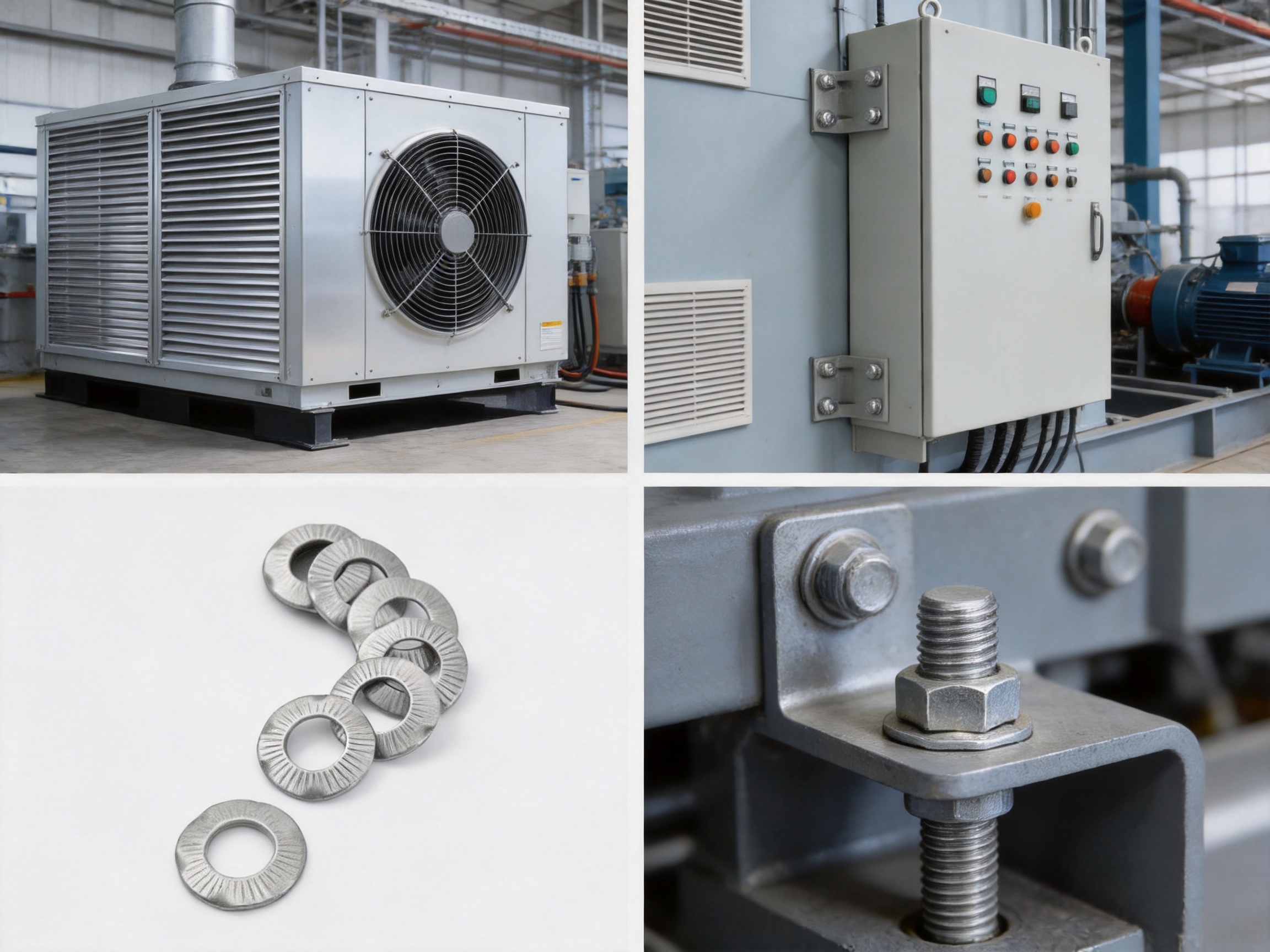
Butterfly washers are specialized fastening components designed to improve the reliability, stability, and service life of bolted connections. Their distinctive curved or wing-like profile allows them to distribute clamping pressure, maintain contact with the assembly, and provide additional resistance against loosening caused by vibration or movement. When manufactured from stainless steel or other carefully selected materials, these washers can perform effectively in industrial equipment, automotive systems, construction projects, electrical installations, HVAC assemblies, furniture hardware, and general maintenance applications.
Modern fastening systems require more than a simple bolt and nut. A threaded connection must maintain sufficient clamping force throughout its operating life, even when exposed to vibration, thermal cycling, impact, repeated loading, moisture, or corrosive environments. A properly selected washer helps protect the joined surfaces, improves load distribution, and contributes to the overall security of the connection. Butterfly washers are particularly useful where a compact, flexible, and vibration-resistant component is needed.
The butterfly washer, wedge lock washer, self-lock washer, and DIN washer categories include a wide range of designs and specifications. Although their shapes and locking mechanisms may differ, their shared purpose is to improve fastening performance. The product discussed in this article is intended for customers seeking a durable, precision-made washer solution with stainless steel and coated-material options, multiple sizes, and suitability for both standard and specialized assemblies.
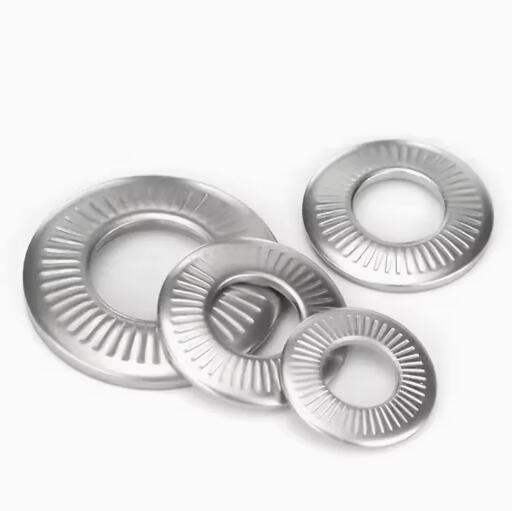
Butterfly Washer Wedge Lock Washer Stainless Steel DIN Washers Self-Lock Washer
What Is a Butterfly Washer?
A butterfly washer is a shaped washer with a curved, folded, or wing-like form. Unlike a completely flat washer, its profile can create spring action or controlled tension when compressed beneath a bolt head, screw head, or nut. This controlled deflection helps the washer remain engaged with the mating surfaces and can compensate for minor movement within the joint.
The term “butterfly washer” may be used in different markets to describe several related forms of stamped fastening washers. Some versions have two extended sides that resemble wings. Others have a curved profile or a special edge arrangement intended to resist rotation. Because product terminology can vary between industries and regions, buyers should confirm the exact dimensions, material, thickness, surface treatment, and locking function required for the application.
In practical use, the washer is installed between the fastener and the clamped material. As the fastener is tightened, the washer distributes the load over a wider area than the fastener head alone. The shaped profile may also create spring tension, improve surface contact, and reduce the likelihood that the fastener will loosen during operation.
Butterfly washers can be used with bolts, machine screws, furniture screws, panel fasteners, and other compatible threaded fasteners. Their final performance depends on the complete fastening system, including the bolt grade, thread condition, tightening torque, joint material, contact surface, and operating environment.
Why Washers Matter in a Bolted Joint
A threaded fastener creates a clamping force by stretching the bolt or screw and compressing the connected materials. This force holds the components together. If the load is concentrated on a small area beneath the fastener head, the surface may deform, crack, dent, or gradually embed. This loss of embedment can reduce the original clamping force.
A washer provides a bearing surface between the fastener and the assembly. By increasing the effective contact area, it helps distribute pressure over a broader region. This is especially important when the connected material is softer than the fastener, when the surface is painted or coated, or when the joint includes a thin sheet-metal component.
Washers can also help protect finished surfaces. Without a washer, tightening a nut or screw may scratch paint, damage a plated surface, or create an uneven mark around the hole. A suitable washer creates a controlled interface and can reduce surface damage during installation and maintenance.
In vibrating equipment, the washer may serve an additional function. Vibration can cause small transverse movements between mating surfaces. Over time, these movements may reduce friction in the joint and allow the fastener to rotate. A shaped or locking washer can help maintain engagement and reduce the risk of progressive loosening.
For these reasons, a washer should not be treated as an unimportant accessory. It is a functional part of the joint design. The correct washer can improve assembly consistency, reduce maintenance requirements, and help extend the service life of the connected equipment.
Key Product Advantages
Reliable Load Distribution
The primary advantage of a butterfly washer is its ability to spread clamping pressure across a larger bearing area. The shaped body contacts the fastener and the assembly in a controlled manner. This reduces localized stress and helps protect the material around the fastening hole.
Reliable load distribution is valuable in sheet-metal assemblies, electrical cabinets, HVAC equipment, automotive brackets, machinery covers, and furniture components. These applications often use relatively thin materials or finished surfaces that could be damaged by direct contact with a bolt head or nut.
By reducing pressure concentration, the washer can help minimize surface indentation and improve the repeatability of installation. It also gives the fastener a more stable seating surface, which is important when the joint must be opened and reassembled during maintenance.
Resistance to Vibration-Related Loosening
Vibration is one of the most common causes of fastener failure. Machinery, vehicles, compressors, fans, pumps, motors, and HVAC systems can generate continuous or intermittent vibration. If a conventional connection loses friction, the nut or screw may gradually turn out of its original position.
The curved or self-locking geometry of a butterfly washer can help maintain tension within the joint. Its spring effect may compensate for small changes in the clamped stack, while its contact arrangement can increase resistance to movement. This does not eliminate the need for correct torque and joint design, but it provides an additional layer of security.
Compared with a plain flat washer, a locking or spring-type butterfly design offers a functional benefit beyond surface protection. Compared with a low-quality stamped washer, a precision-made component provides more consistent geometry and more predictable spring behavior.
Stainless Steel Corrosion Resistance
Stainless steel is a preferred material for fastening components exposed to moisture, humidity, cleaning chemicals, outdoor conditions, and corrosive atmospheres. It provides a combination of strength, durability, and resistance to rust that is difficult to achieve with untreated carbon steel.
Stainless steel butterfly washers are suitable for many applications in food-processing support equipment, exterior enclosures, marine-adjacent installations, washdown areas, building services, and general industrial environments. The exact corrosion performance depends on the stainless steel grade, surface condition, exposure conditions, and contact with dissimilar metals.
For less demanding environments or cost-sensitive projects, zinc-plated and other coated options may be appropriate. Coatings can offer useful corrosion protection while maintaining an economical purchase price. The appropriate selection should be based on the expected humidity, chemical exposure, temperature, service life, and appearance requirements.
Compact and Versatile Design
A butterfly washer offers functional performance without requiring a complex assembly. It can be installed using standard tools and paired with commonly available bolts, nuts, and screws. Its compact design makes it useful where space is limited and where a larger locking mechanism would be impractical.
The washer can be used in permanent installations as well as serviceable assemblies. It is suitable for production lines, repair operations, equipment upgrades, and replacement programs. Multiple sizes allow purchasers to match the inner diameter, outer profile, thickness, and load capacity to the selected fastener.
Cost-Effective Maintenance Support
Fastener failure can result in equipment vibration, noise, component misalignment, surface damage, production interruption, and repeated service calls. A reliable washer is a low-cost component that can help reduce these risks when correctly specified and installed.
The cost benefit is not limited to the purchase price. A washer that improves joint stability may reduce inspection frequency, replacement labor, and unplanned downtime. In applications involving many fasteners, even a modest improvement in reliability can produce meaningful savings over the life of the equipment.
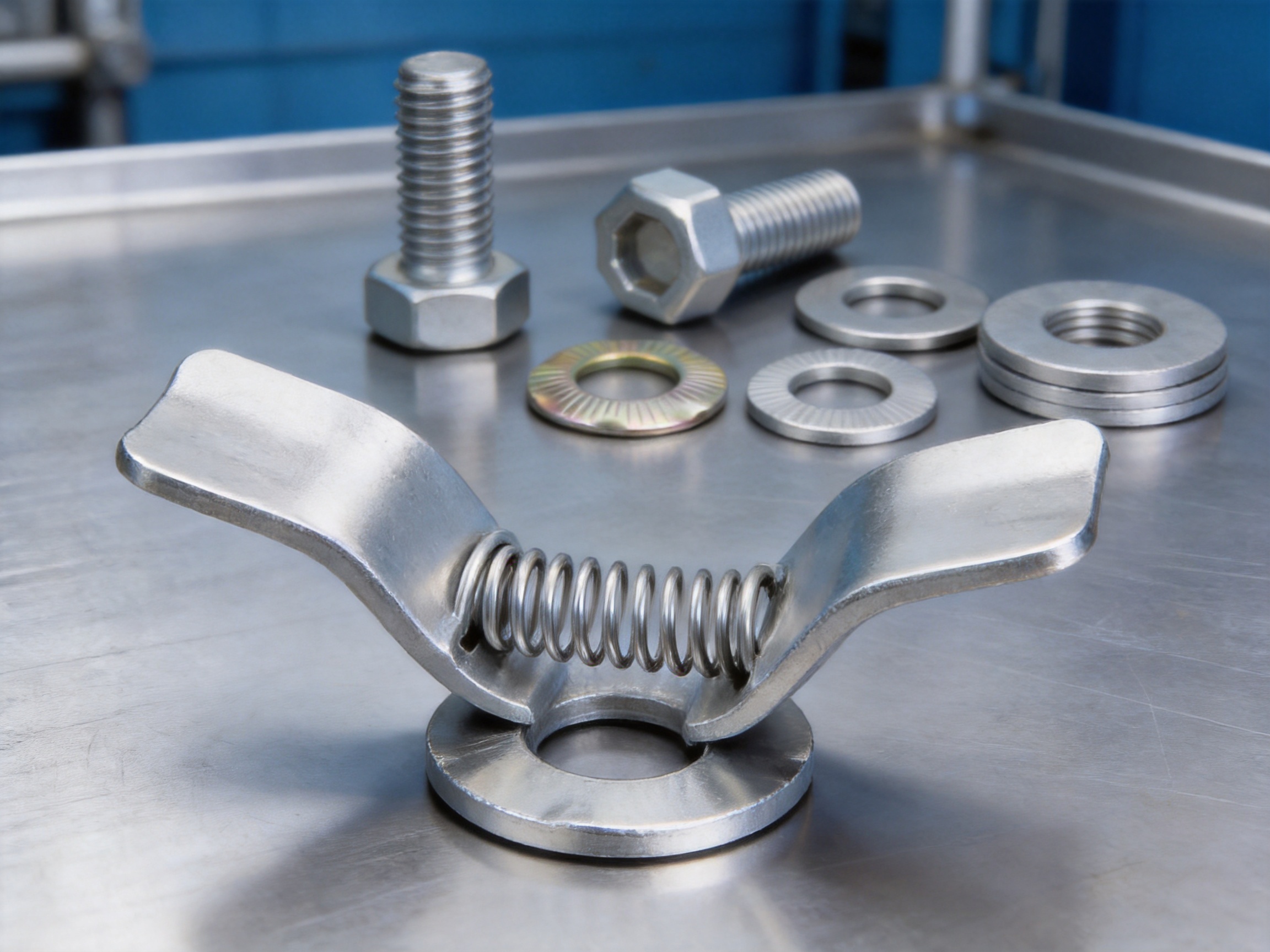
Material Options and Surface Finishes
The material selected for a butterfly washer affects strength, corrosion resistance, spring behavior, appearance, compatibility, and cost. The most suitable material depends on the complete application rather than on one performance characteristic alone.
Stainless Steel
Stainless steel is widely selected when corrosion resistance and long-term appearance are important. It is suitable for indoor and outdoor assemblies, industrial equipment, electrical panels, automotive components, and installations exposed to humidity or occasional water contact.
Stainless steel also provides a clean and professional appearance. This can be valuable in visible hardware, architectural equipment, cabinets, furniture fittings, and consumer-facing products. The chosen grade should be matched to the environment, especially where salt, chlorides, acids, or aggressive cleaning agents are present.
Zinc-Plated Steel
Zinc-plated steel provides a practical combination of strength and economical corrosion protection. It is frequently used in general industrial assemblies, construction hardware, machinery, racks, brackets, and indoor equipment.
The zinc layer protects the underlying steel by acting as a barrier and, in many conditions, providing sacrificial protection. However, the coating has limits. It may be less suitable than stainless steel for prolonged outdoor exposure, saltwater environments, or repeated chemical washing.
Other Coatings and Finishes
Depending on customer requirements, washers may be supplied with other surface treatments or protective finishes. The selected treatment can improve corrosion resistance, appearance, friction characteristics, or compatibility with the surrounding assembly.
Surface finish consistency is important in high-volume production. Uneven coating, bare edges, excessive buildup, or damaged surfaces can affect fit and appearance. Careful handling and inspection help maintain a uniform finished product.
Manufacturing Process for Precision Butterfly Washers
The quality of a stamped washer begins with material selection and continues through tooling, forming, deburring, finishing, inspection, and packaging. A professional manufacturing process must control each stage because small variations in a washer can affect installation and joint performance.
Material Preparation
Production begins with the selection of sheet or strip material suitable for the intended washer design. Material thickness, hardness, tensile characteristics, surface condition, and corrosion requirements are reviewed before production begins.
For stainless steel products, the material must be handled carefully to prevent contamination from unsuitable tooling or storage conditions. For coated steel products, the base material and coating specification must be compatible with the stamping process and final application.
Incoming material inspection may include dimensional verification, visual examination, certificate review, and checks for surface defects. Consistent raw material helps the forming process produce stable results from the first batch to the last.
Progressive and Precision Stamping
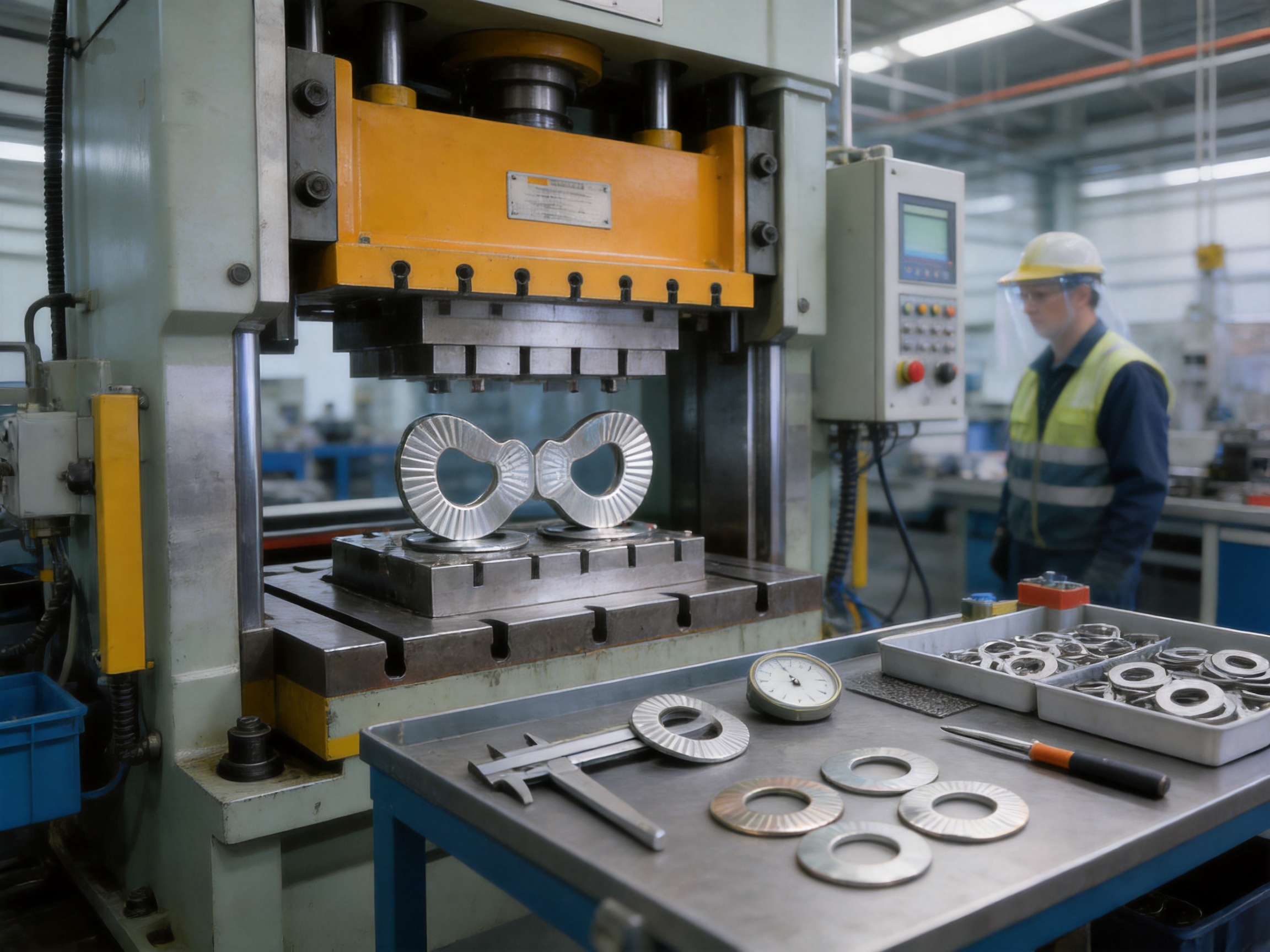
Stamping is an efficient method for manufacturing large quantities of washers with repeatable dimensions. A stamping press forms the washer from sheet or strip material using a purpose-designed die. Depending on the product geometry, the operation may include blanking, piercing, forming, bending, and cutoff steps.
For higher-volume production, progressive tooling can combine several operations within one production sequence. This improves throughput and reduces the need for repeated manual handling. Proper die design helps maintain the inner diameter, outer profile, wing shape, curvature, and overall flatness or spring form required by the product.
Tooling accuracy is essential. If the die clearance is incorrect, the cut edge may show excessive burrs, deformation, or cracking. If the forming station is not properly controlled, the washer may have inconsistent curvature or unequal spring tension. Skilled tooling maintenance and press setup are therefore important elements of manufacturing quality.
Forming the Locking or Curved Profile
The defining feature of a butterfly washer is its shaped profile. The forming operation must create the intended curvature without causing cracks, distortion, or excessive residual stress. The correct forming pressure depends on the material, thickness, geometry, and tooling design.
Consistent forming provides a more predictable contact pattern during installation. If one side is significantly higher than the other, the washer may sit unevenly beneath the fastener. Controlled forming helps ensure that the product can be installed efficiently and that the locking or spring action is reasonably consistent across the production batch.
Manufacturing teams may use trial runs, dimensional checks, sample assembly tests, and process adjustments to confirm that the profile meets the required design intent. These controls are particularly important when the product is supplied for automated assembly or when the customer has strict installation specifications.
Deburring and Edge Control
After stamping, the washer may have sharp edges or small burrs created during cutting. Deburring is used to improve handling safety, protect mating surfaces, and support smooth installation. Edge control is especially important for thin sheet-metal assemblies, painted components, electrical enclosures, and products handled by automated equipment.
Deburring must be controlled carefully. Excessive removal can change the washer dimensions or reduce the effective bearing area. Insufficient deburring can leave sharp edges that interfere with installation or damage coatings. A balanced process preserves the functional geometry while improving the finished edge condition.
Cleaning and Surface Treatment
Stamped parts may carry oil, residue, fine particles, or handling marks. Cleaning prepares the washer for subsequent surface treatment, inspection, and packaging. Stainless steel products may require careful cleaning to preserve their surface condition, while zinc-plated products must be protected against coating damage.
Where a coating is specified, the treatment process is selected according to the required corrosion resistance, appearance, and compatibility with the application. Proper process control helps maintain an even finish on the washer faces and edges.
Inspection and Quality Control
Quality control is not limited to checking the final appearance. A reliable washer program evaluates dimensional accuracy, material condition, profile consistency, edge quality, surface finish, and packaging condition.
Typical inspection points may include the inner diameter, outer diameter, thickness, height, wing dimensions, curvature, and burr level. Samples can be checked using gauges, calipers, optical equipment, or other suitable measuring tools. Where the application requires it, functional checks can evaluate fit with the intended fastener and contact behavior under compression.
Inspection records support batch traceability and help identify process trends. If a measurement begins to move toward a specification limit, production staff can adjust the tooling or press settings before nonconforming products become widespread.
Packaging and Protection
Packaging protects the washers during storage, transport, and handling. Proper packaging helps prevent scratches, contamination, mixing of different sizes, and damage to coated surfaces. Products can be packed according to order quantity, size, material, and customer labeling requirements.
Clear identification is especially important for fasteners because similar-looking parts may have different dimensions or materials. Organized packaging supports warehouse efficiency and reduces the risk of selecting the wrong component during assembly.
Manufacturing Strengths of an Experienced Fastener Supplier
Lizhan Hardware Co., Ltd. supplies stamped fastening components for customers requiring practical, repeatable, and cost-effective hardware solutions. Its product range includes fasteners, washers, screws, self-drilling screws, furniture screws, drywall screws, roofing screws, and other related hardware products.
A supplier with experience across several fastener categories can understand how washers interact with the complete assembly. This broader product knowledge helps customers select compatible parts instead of treating the washer as an isolated component. It also supports combined sourcing for projects that require screws, washers, and other hardware in coordinated specifications.
Production in a dedicated factory environment supports closer control over stamping, forming, finishing, inspection, and packing. The company’s China factory is located in Haiyan, Jiaxing City, Zhejiang, an area known for hardware and fastener manufacturing. A Thailand warehouse provides an additional distribution point for customers requiring regional inventory support and more convenient delivery coordination.
For customers purchasing in volume, supplier capability is measured not only by the first sample but also by the ability to maintain consistency over repeated orders. Stable tooling, documented specifications, experienced production personnel, and organized quality checks are important advantages in long-term procurement.
Bulk order support can also help manufacturers, contractors, distributors, and equipment producers manage purchasing costs. When washer sizes and specifications are standardized across a project, consolidated ordering can improve inventory control and reduce the administrative burden of buying from multiple sources.
Advantages Compared with Ordinary Washers
A plain flat washer is useful for distributing load and protecting a surface, but it does not normally provide the same spring action or locking contribution as a shaped butterfly washer. In an environment with little vibration, a flat washer may be fully adequate. In a dynamic assembly, however, the additional profile of a butterfly washer can provide a meaningful performance advantage.
Compared with low-quality generic washers, a precision-stamped product offers better dimensional consistency. Consistent inner diameters improve compatibility with the selected fastener. Consistent outer dimensions provide predictable bearing contact. Consistent forming improves installation behavior and reduces variation between units.
Compared with a washer made from unprotected carbon steel, stainless steel offers better resistance to rust and environmental deterioration. This can reduce replacement frequency and preserve the appearance of the assembly.
Compared with an overly complex locking system, a butterfly washer can be compact, economical, and easy to install. It may not replace every specialized locking method, but it can provide a practical balance of performance, cost, and simplicity for many common applications.
Application Areas
HVAC Equipment
Heating, ventilation, and air-conditioning systems contain fans, motors, duct supports, panels, brackets, and serviceable covers. Vibration from motors and fans can affect bolted connections, while condensation and humidity may create corrosion concerns.
Butterfly washers can help stabilize panel and bracket connections, distribute load across sheet-metal surfaces, and support easier maintenance. Stainless steel versions are useful where moisture exposure is a concern, while coated steel may be suitable for protected indoor equipment.
Electrical Panels and Enclosures
Electrical cabinets often use thin metal panels, mounting rails, covers, hinges, brackets, and grounding-related hardware. A washer can protect the panel surface and prevent the fastener head from pulling through or deforming the material.
Where the enclosure is installed in a humid or outdoor location, stainless steel may offer longer service life. The washer should be selected with attention to electrical compatibility, surface treatment, galvanic corrosion risk, and the specific requirements of the panel design.
Automotive Components
Vehicles and mobile equipment experience vibration, shock, thermal cycling, water exposure, and repeated service operations. Washers can be used in brackets, body hardware, interior fittings, covers, shields, and support assemblies.
Automotive applications require careful attention to material strength, temperature, corrosion exposure, installation torque, and space limitations. A butterfly washer may be useful where a compact anti-loosening and load-distribution component is required.
Heavy Machinery
Industrial machines often operate continuously and generate substantial vibration. Pumps, compressors, conveyors, motors, agricultural equipment, and processing machinery rely on stable bolted joints to maintain alignment and safety.
A washer with a shaped locking profile can support joint stability when used with a suitable fastener and correctly designed clamping arrangement. It should be included as part of a complete maintenance and inspection program rather than viewed as a substitute for proper torque control.
Construction and Building Services
Construction assemblies include brackets, supports, frames, panels, fixtures, and equipment mounts. Washers are used to spread load and protect surfaces during the installation of bolts and screws.
For indoor applications, zinc-plated products may offer a cost-effective solution. For exterior or moisture-prone installations, stainless steel may be preferred. The final selection should consider local environmental conditions and applicable project specifications.
Furniture and Cabinet Hardware
Furniture and cabinet assemblies often use thin panels, threaded inserts, screws, brackets, and concealed or semi-visible hardware. A washer can reduce surface damage, improve seating, and help maintain the stability of a joint that may be repeatedly assembled or adjusted.
The compact form of a butterfly washer can be useful where the available clearance is limited. Its finished appearance may also be appropriate for visible hardware, depending on the design and surface treatment.
Product Selection Guide
Choosing the correct butterfly washer begins with the fastener. The washer’s inner diameter must provide adequate clearance for the bolt, screw, or threaded component without excessive movement. If the hole is too small, installation may be difficult. If it is too large, the washer may not provide stable alignment.
The outer diameter should be sufficient to distribute the expected load over the supporting surface. Thin sheet materials and soft substrates generally benefit from a larger bearing area. The washer thickness and formed height should also be compatible with the available space and the desired spring effect.
Material selection follows the operating environment. Stainless steel is appropriate for many moisture-exposed or corrosion-sensitive applications. Zinc-plated steel may be selected for general indoor use and cost-sensitive projects. Other finishes can be considered where the customer has specific appearance or environmental requirements.
Buyers should also consider whether the washer is intended primarily for load distribution, surface protection, spring tension, vibration resistance, or a combination of these functions. If the application involves severe vibration, impact, high temperature, safety-critical loading, or unusual joint movement, engineering validation is recommended.
| Selection Factor | Recommended Consideration | Why It Matters |
|---|---|---|
| Fastener compatibility | Match the inner diameter to the bolt, screw, or nut size | Ensures smooth installation and stable seating |
| Bearing area | Choose an outer diameter suitable for the clamped material | Reduces local pressure and surface deformation |
| Material | Use stainless steel for higher corrosion resistance or coated steel for general applications | Supports service life and environmental compatibility |
| Profile | Confirm the curved, winged, or locking geometry required | Determines spring action and movement resistance |
| Thickness | Match the washer thickness to the load and available clearance | Balances strength, fit, and assembly space |
| Surface finish | Specify the required coating, appearance, and protection level | Improves corrosion performance and visual consistency |
| Quantity | Plan for production volume, maintenance stock, and replacement needs | Improves purchasing efficiency and inventory control |
Installation Recommendations
Before installation, confirm that the washer, fastener, and mating components are clean and free from excessive oil, dirt, burrs, and damage. Contamination between the washer and the joint can affect friction and seating.
Place the washer in the intended position beneath the fastener head or nut. Ensure that the washer sits flat or in the designed orientation and that the curved or winged profile is not trapped against an unintended obstruction.
Use the tightening torque specified for the fastener and joint. Over-tightening may flatten or permanently deform the washer, damage the connected material, or overload the fastener. Under-tightening may produce insufficient clamping force and reduce resistance to vibration.
Where the assembly is safety-critical or subject to intense vibration, conduct a trial installation and inspection. Confirm that the washer remains correctly seated and that the joint reaches the required clamping condition.
Do not automatically combine different locking methods without checking compatibility. For example, adding adhesives, multiple spring washers, or unrelated locking devices may change the torque relationship and affect the joint design. The complete fastening method should be evaluated as a system.
Quality, Consistency, and Customer Support
For manufacturers and distributors, product consistency is often more important than a one-time low purchase price. A washer that varies from batch to batch can create assembly problems, inconsistent torque readings, fitting issues, and customer complaints.
A dependable supplier should be able to discuss material, dimensions, finish, packaging, application, order quantity, and inspection expectations. Clear communication before production helps prevent misunderstandings about terms such as “butterfly washer,” “self-lock washer,” “wedge lock washer,” or “DIN washer,” which may be interpreted differently in different markets.
Lizhan Hardware Co., Ltd. supports customers seeking standard and customized hardware solutions. Customers can communicate product requirements such as size, material, finish, packing method, labeling, and estimated order volume. Technical information should be confirmed before purchase when the product is intended for a specialized or high-load application.
Supplier responsiveness is also important after delivery. If a customer identifies a dimensional concern, packaging issue, or application question, prompt communication can help determine whether the issue relates to the product, installation, or joint design.
Ordering for Production and Wholesale Use
When ordering butterfly washers in bulk, provide as much technical information as possible. The required information may include nominal fastener size, inner diameter, outer diameter, thickness, profile height, material grade, surface treatment, quantity, packaging preference, and intended application.
Samples are useful when the washer must fit an existing assembly. A physical sample or technical drawing can help confirm the geometry before mass production. For new designs, customers may provide a drawing, dimensional sketch, or application description.
Purchasers should distinguish between initial sample approval and ongoing production control. Once a sample is approved, the supplier should maintain the agreed material, dimensions, finish, and packaging requirements for subsequent batches.
For distributors, mixed-size packaging and clear labels can simplify warehouse management. For manufacturers, bulk packaging may reduce handling costs and support automated or semi-automated feeding systems. The best packaging format depends on the production environment and the customer’s internal processes.
Environmental and Service-Life Considerations
Environmental exposure has a direct effect on washer selection. Indoor dry locations generally place fewer demands on corrosion resistance than outdoor, coastal, industrial, or washdown environments. Temperature, chemicals, salt, humidity, and contact with other metals should all be considered.
Stainless steel can provide a durable solution in many challenging environments, but it is not immune to every form of corrosion. Chloride-rich conditions, crevices, deposits, and galvanic contact may still require careful material selection and design. The washer should be kept clean and installed in a way that avoids trapping corrosive contaminants.
Coated steel is often an economical choice where the coating remains intact and the environment is moderate. Scratches, cut edges, and prolonged exposure can eventually reduce the protection level. Regular inspection is useful when the assembly is important to equipment performance.
Service life also depends on mechanical factors. Repeated overloading, joint movement, incorrect torque, surface embedment, and fastener fatigue can affect performance regardless of washer material. Proper design and maintenance remain essential.
Why Precision Manufacturing Creates a Competitive Advantage
The competitive advantage of a precision-made butterfly washer comes from the combination of geometry, material, finish, and process control. A washer may appear simple, but its performance depends on how accurately these factors are maintained.
Consistent stamping reduces dimensional variation. Controlled forming provides more uniform spring behavior. Effective deburring improves handling and seating. Appropriate surface treatment supports corrosion resistance. Organized inspection and packaging protect the product until it reaches the customer.
These advantages become especially significant in high-volume applications. If thousands of washers are used in a production line, even a small dimensional variation can cause repeated assembly interruptions. Consistent products help reduce sorting, rework, tool adjustment, and warranty risk.
A supplier capable of manufacturing multiple fastener categories can also help customers coordinate related products. This can simplify sourcing, improve compatibility, and reduce the possibility of using mismatched materials or dimensions from different suppliers.
Lizhan Hardware Co., Ltd. combines stamping-part production with a broader fastener portfolio and regional warehouse support. This structure is useful for customers looking for a long-term hardware partner rather than an isolated one-time purchase.
Q&A: Common Questions About Butterfly Washers
What is the main purpose of a butterfly washer?
The main purpose is to distribute clamping pressure and help maintain fastening stability. Its shaped profile may also provide spring tension or resistance to vibration-related loosening, depending on the specific design.
Is a butterfly washer the same as a flat washer?
No. A flat washer primarily provides a bearing surface and protects the joint material. A butterfly washer has a shaped or curved profile that can provide additional tension, movement resistance, or locking support.
Can butterfly washers be used with standard bolts and screws?
Yes, provided the washer’s inner diameter, thickness, and profile are compatible with the selected fastener and assembly. The washer should be matched to the fastener size and the application load.
Are stainless steel butterfly washers suitable for outdoor use?
Stainless steel is suitable for many outdoor applications because it offers better corrosion resistance than untreated carbon steel. The correct stainless steel grade and surface condition should be selected for the actual environment, particularly in coastal or chloride-exposed locations.
When should zinc-plated steel be selected?
Zinc-plated steel is often suitable for general indoor applications, protected equipment, construction hardware, and projects where cost efficiency is important. It may not be the best choice for prolonged exposure to saltwater, aggressive chemicals, or severe outdoor conditions.
Do butterfly washers eliminate the need for correct tightening torque?
No. A washer supports joint performance but cannot compensate for incorrect installation. The fastener should be tightened according to the requirements of the joint, fastener material, and equipment design.
Can butterfly washers be reused?
Reusability depends on the design, material, amount of deformation, and application requirements. If the washer has been flattened, cracked, corroded, damaged, or permanently distorted, it should be replaced. For critical assemblies, follow the equipment manufacturer’s replacement guidance.
How can customers confirm the correct washer size?
Customers should confirm the fastener diameter, washer inner diameter, outer diameter, thickness, profile, material, and finish. A drawing, sample, or detailed application description can help the supplier recommend or produce the correct specification.
Are customized sizes available?
Custom production may be possible depending on the required geometry, tooling, material, quantity, and technical specification. Customers should provide drawings or samples when the washer does not match a standard catalog dimension.
What industries commonly use these washers?
Common applications include HVAC, electrical panels, automotive equipment, construction, heavy machinery, furniture, cabinets, industrial maintenance, and general mechanical assemblies.
What makes a precision-stamped washer better than a generic washer?
A precision-stamped washer is manufactured with greater attention to dimensional consistency, profile control, edge quality, material selection, and surface finish. This can improve installation repeatability and reduce variation across production batches.
Can the supplier provide bulk order support?
Yes. Bulk order planning can include quantity coordination, packaging, labeling, material selection, surface treatment, and delivery arrangements. Customers should discuss forecast volume and repeat-order requirements in advance.
Conclusion
Butterfly washers are compact but highly functional fastening components. Their curved or wing-like profile can improve load distribution, support resistance to vibration-related loosening, protect mating surfaces, and contribute to a more dependable bolted joint. Stainless steel versions offer strong corrosion resistance for demanding environments, while zinc-plated and other coated options provide economical protection for general applications.
The performance of a butterfly washer depends on more than its appearance. Material quality, stamping accuracy, forming consistency, edge control, surface treatment, inspection, and packaging all influence the finished product. A supplier with controlled manufacturing processes and experience across multiple fastener categories can provide advantages in consistency, compatibility, cost management, and long-term purchasing support.
For HVAC systems, electrical enclosures, automotive parts, heavy machinery, construction assemblies, furniture, and maintenance projects, the correct washer can improve joint reliability at a relatively low cost. By selecting the appropriate material, dimensions, profile, finish, and packaging method, customers can obtain a fastening solution suited to their operating conditions and production needs.
Lizhan Hardware Co., Ltd. offers butterfly washers and related stamped fastening products for manufacturers, contractors, distributors, and industrial buyers. Its factory production capabilities in Zhejiang, China, together with warehouse support in Thailand, provide a practical supply structure for customers seeking dependable hardware in standard or bulk quantities.
References
1. General principles of mechanical fastening and bolted-joint design.
2. Standard practices for washer dimensional inspection and fastener compatibility.
3. Technical guidance on stainless steel corrosion resistance in industrial environments.
4. Manufacturing principles for sheet-metal stamping, blanking, forming, and deburring.
5. Engineering guidance for vibration-resistant fastening systems.
6. Industrial recommendations for selecting coatings and finishes for steel hardware.
7. Product and manufacturing information supplied for butterfly washers, wedge lock washers, self-lock washers, stainless steel washers, and related stamping parts.