In modern mechanical assembly, a washer is not merely a thin piece of metal placed under a bolt or nut. The right washer can determine whether a connection stays tight under vibration, whether surface pressure is distributed evenly, whether corrosion begins at a joint, and whether maintenance teams can avoid repeated retightening. The butterfly washer, also known in many applications as a curved self-locking washer or butterfly wedge lock washer, is designed to answer these fastening challenges with a practical combination of elasticity, pressure distribution, and resistance to loosening.
Butterfly Washer Wedge Lock Washer Stainless Steel DIN Washers Self-Lock Washer products are developed for assemblies where ordinary flat washers may not provide enough security and where consistent clamping force is essential. Their distinctive curved or wing-like profile helps maintain tension in the joint, supports stable load distribution, and reduces the effect of vibration on bolted connections. In applications such as HVAC units, electrical panels, automotive components, machinery frames, metal enclosures, and construction equipment, these washers contribute to safer, more dependable fastening performance.
This article explains the technical value of butterfly wedge lock washers, their advantages over many conventional washer types, the role of stainless steel and other material options, and the manufacturing strengths that allow consistent quality in bulk production. It also highlights how Lizhan Hardware Co., Ltd. supports customers through precision stamping, material control, surface finishing, inspection, and supply capability from its manufacturing and warehousing network.
Butterfly Washer Wedge Lock Washer Stainless Steel DIN Washers Self-Lock Washer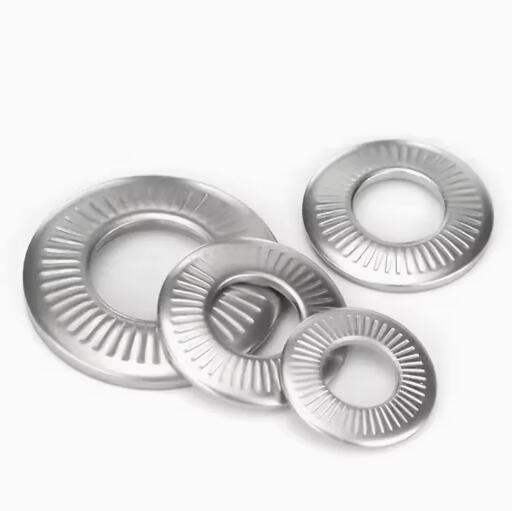
Understanding the Function of a Butterfly Washer
A butterfly washer is a specially formed washer with a curved, arched, or wing-like geometry. Unlike a flat washer, which primarily spreads load over a wider surface, a butterfly washer adds an elastic response. When tightened under a bolt head or nut, the washer compresses slightly and stores spring energy. This stored energy helps compensate for small changes in joint thickness, thermal expansion, vibration, and material settling. As a result, the fastener assembly is less likely to lose preload quickly.
The term “butterfly” is often associated with the washer’s visual form. Depending on design, it may show a symmetrical curved shape resembling wings. This shape is not decorative. It helps create controlled resistance during tightening and improves the ability of the washer to maintain pressure under dynamic conditions. In many assemblies, the washer acts as a small but important mechanical buffer between the clamping element and the workpiece.
In a bolted connection, preload is critical. A bolt works best when it clamps parts together with sufficient tension. If preload is lost, the joint can slip, rattle, fatigue, or fail. Flat washers help protect surfaces and distribute pressure, but they cannot always maintain tension if the assembly vibrates or relaxes. A butterfly self-lock washer improves this situation by adding elastic recovery. This makes it useful in machines, vehicle systems, brackets, housings, and equipment that operate under movement or fluctuating loads.
Butterfly wedge lock washers are also valued because they are easy to install. They do not require complicated tools, adhesives, or special assembly procedures. In most cases, they are used in the same position as a normal washer, under the bolt head or nut. This simplicity is one of the reasons they are attractive for mass production, field repair, and maintenance operations.
Why Self-Locking Performance Matters
Fasteners loosen for several reasons. Vibration can cause microscopic movement between threads. Repeated impact can reduce friction. Soft materials can compress after assembly. Temperature changes can expand or contract components. Paint, coatings, gaskets, or polymer layers may settle. When any of these occur, the original tightening force may decrease. Once preload falls below a safe level, the assembly becomes vulnerable.
Self-locking washers are designed to resist this loss of security. The butterfly washer does this by applying spring-like pressure against the bolt head or nut. The curved structure provides a more active role than a flat washer. It continually presses against the fastener and mating surface, helping to maintain contact pressure. This is especially important in assemblies where retightening is difficult, costly, or unsafe.
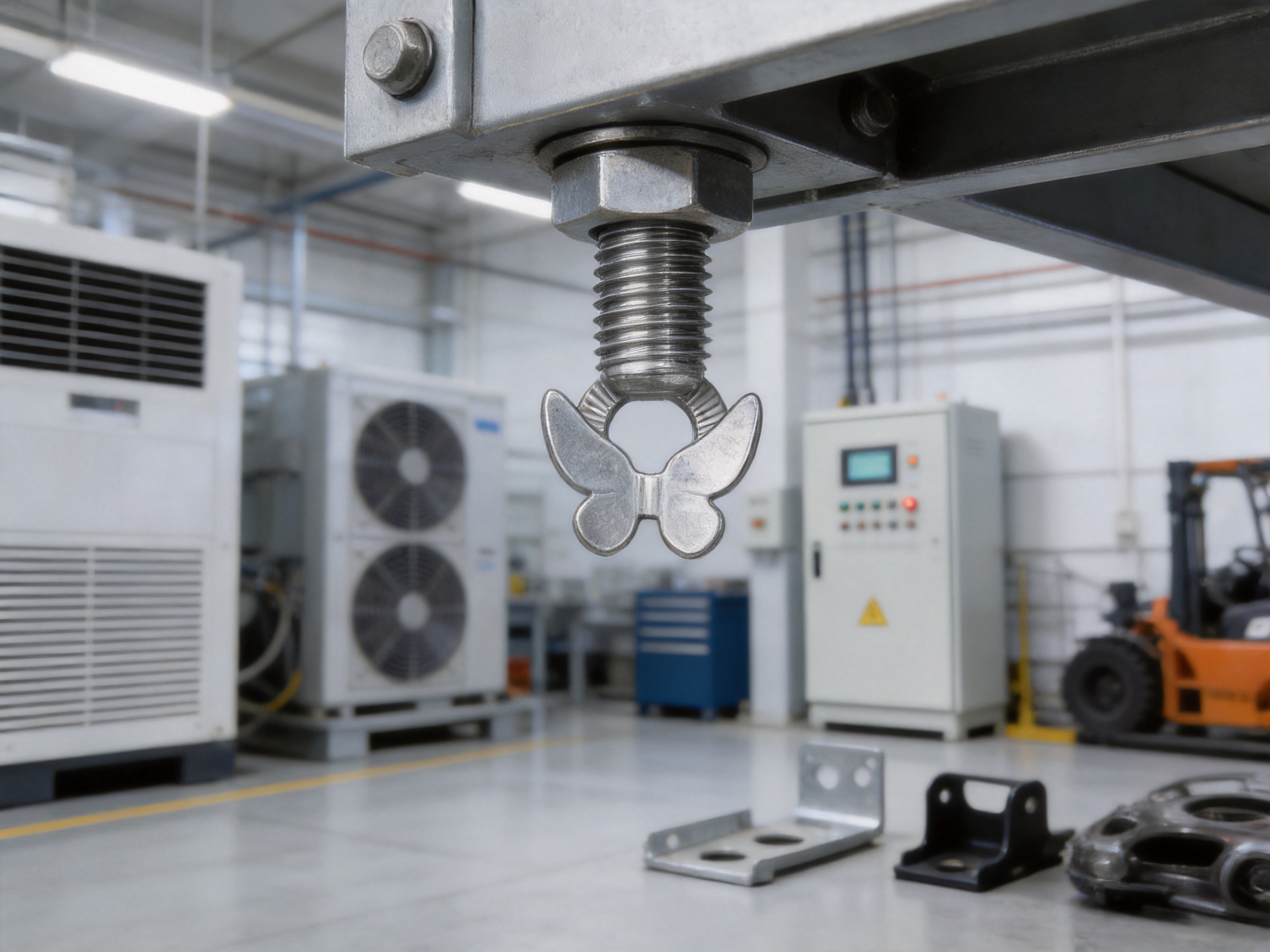
For example, in an HVAC system, fans and compressors create vibration. Loose fasteners can produce noise, misalignment, and equipment damage. In an electrical panel, a secure mechanical connection helps prevent movement of brackets, covers, or terminal supports. In automotive applications, washers must withstand road vibration, engine movement, and temperature variation. In heavy machinery, fasteners may be exposed to shock loads and continuous operation. In each case, a butterfly washer helps improve joint stability without adding complexity.
The self-locking effect does not mean the washer replaces proper torque control or correct fastener design. It should be selected according to bolt size, load, material, and environmental conditions. However, when used correctly, it offers an effective and economical way to improve fastening reliability.
Key Advantages Over Conventional Washers
The most direct competitor to a butterfly washer is the common flat washer. Flat washers are inexpensive and widely used, but their function is limited. They spread load and protect surfaces, yet they provide little active resistance to preload loss. Butterfly washers offer the same basic load-spreading benefit while adding elastic compression and tension support.
Another comparison can be made with split lock washers. Split washers are commonly used to resist loosening, but their performance can vary depending on surface hardness, torque, and vibration conditions. In some assemblies, split washers may flatten under load and lose much of their locking effect. Butterfly washers can provide more controlled elastic deformation and broader contact behavior, depending on design and material. Their curved profile can also be gentler on certain surfaces than aggressive biting edges.
Compared with serrated washers, butterfly washers may reduce the risk of surface damage. Serrated washers lock by biting into the mating surface, which can be useful but may compromise coatings, paint, or corrosion protection. Butterfly washers rely more on spring tension and pressure distribution. This makes them suitable where surface appearance, coating integrity, or controlled contact is important.
Thread-locking adhesives are another alternative. Adhesives can be effective, but they add curing time, require clean surfaces, may complicate disassembly, and can be affected by temperature or chemicals. Butterfly washers provide a mechanical locking function that is immediate after tightening and does not require chemical curing. They are also easier to inspect visually and replace during maintenance.
Wedge lock washer pairs, in the strict technical sense, often use cams and serrations to create a locking action based on wedge geometry. Butterfly wedge lock washers can be selected for applications that require self-locking behavior with a simpler one-piece washer form. The exact choice depends on joint design, but the butterfly washer offers an attractive balance of cost, ease of use, vibration resistance, and broad compatibility.
Stainless Steel as a Material Advantage
Stainless steel is one of the most important material options for butterfly washers. Its corrosion resistance makes it suitable for humid environments, outdoor assemblies, marine-adjacent conditions, HVAC installations, food-related equipment areas, electrical enclosures, and general industrial use. When a washer corrodes, it can lose strength, stain adjacent parts, seize against fasteners, or reduce the service life of the joint. Stainless steel reduces these risks.
Common stainless steel washer materials include austenitic grades such as 304 and 316, depending on application needs. Grade 304 stainless steel is widely used for general corrosion resistance and good formability. Grade 316 stainless steel offers improved resistance in chloride-containing environments, making it valuable for coastal, chemical, or more demanding service conditions. The right selection depends on exposure, load, and cost requirements.
Stainless steel also supports clean appearance and long service life. In equipment visible to users or installed in public, commercial, or architectural settings, corrosion-stained hardware can affect perceived quality. Stainless butterfly washers help maintain a professional appearance while delivering functional reliability.
In addition to stainless steel, butterfly washers may be produced in carbon steel with zinc plating or other coatings. Zinc-plated versions can provide cost-effective corrosion protection for indoor or moderate conditions. Other coatings may be used to meet customer requirements for friction, color, environmental resistance, or compatibility with mating components. This material and coating flexibility allows the washer to serve a wide range of markets.
DIN Compatibility and Standardized Assembly
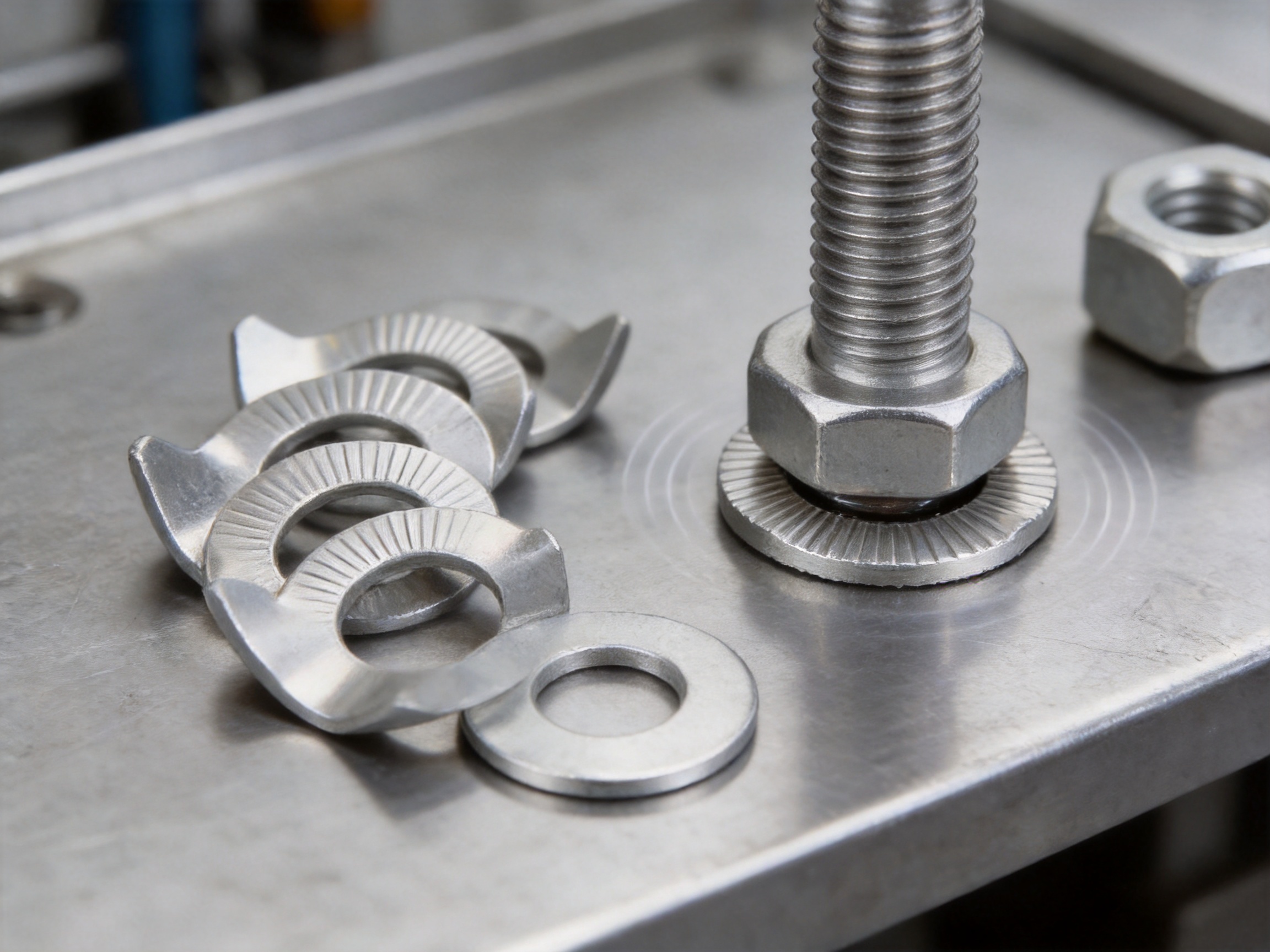
The product title references DIN washers, which indicates relevance to standardized metric fastening systems. DIN standards are widely recognized in global manufacturing and engineering. A washer compatible with standard bolt and nut dimensions supports efficient purchasing, predictable assembly, and easier replacement. For manufacturers producing equipment for international markets, standard compatibility reduces confusion and simplifies inventory management.
DIN-related washer selection typically considers inner diameter, outer diameter, thickness, material, hardness, surface finish, and functional form. While butterfly washers may have specific geometry beyond a standard flat washer, maintaining compatibility with standard bolts and nuts is essential. This means that the inner hole must fit the fastener properly, the outer diameter must suit the bearing surface, and the formed height must provide the desired locking behavior without interfering with nearby parts.
Standardization also helps quality control. When dimensions are defined clearly, production can be measured against consistent tolerances. Engineers can specify the washer confidently, purchasing teams can source it efficiently, and assembly workers can install it without special adaptation. For high-volume customers, this repeatability is often just as important as the washer’s locking performance.
Applications Across Industries
Butterfly wedge lock washers are used in numerous industries because vibration and preload loss are universal fastening problems. Their versatility comes from the combination of simple installation, compact size, elastic structure, and compatibility with common bolts and nuts.
In HVAC systems, washers are used in fan housings, compressor mounts, duct brackets, support frames, access panels, and vibration-prone assemblies. HVAC units often operate continuously, and even small fastener loosening can cause noise, leakage, misalignment, or service complaints. Butterfly washers help maintain stable joints and reduce maintenance frequency.
In electrical panels and enclosures, these washers can secure brackets, covers, grounding components, mounting rails, and control box hardware. Electrical installations often require dependable mechanical fastening because loose parts may create vibration noise, poor alignment, or safety concerns. Stainless steel options are especially valuable where condensation or humidity may occur.
Automotive and transportation applications benefit from washers that resist vibration, road shock, and thermal cycling. Butterfly washers can be used in brackets, body hardware, interior supports, accessory mounts, and non-critical assemblies where a reliable self-locking washer is desired. For vehicle manufacturers and parts suppliers, consistent washer dimensions are essential for automated or semi-automated assembly.
In construction equipment and heavy machinery, fasteners are exposed to impact, dirt, heavy loads, and continuous vibration. Washers used in these conditions must be strong, consistent, and resistant to deformation. A properly manufactured butterfly washer supports joint reliability in guards, covers, frames, brackets, and auxiliary assemblies.
Furniture, shelving, and hardware assemblies can also benefit from butterfly washers. Although the company’s broader product categories include machine screws and furniture screws, washer performance is equally relevant. Furniture joints, metal frames, adjustable brackets, and modular systems often require stable clamping without excessive surface damage. Butterfly washers provide a clean and practical solution.
Design Principles Behind the Butterfly Profile
The curved profile of a butterfly washer is a carefully engineered feature. The washer must be formed with the correct height, curvature, and material thickness to produce the desired spring effect. If the washer is too soft or too shallow, it may not provide sufficient tension. If it is too hard or too tall, it may be difficult to compress or may damage the mating surface. Successful design balances elasticity, contact area, strength, and manufacturability.
The central hole must be accurately produced so that the washer fits the intended fastener without excessive play. Too much clearance can reduce alignment and load distribution. Too little clearance can interfere with installation. The outer contour must be consistent to ensure stable contact and prevent uneven loading. Burrs must be controlled because sharp edges can damage coatings, injure workers, or interfere with seating.
Material thickness is another important variable. Thicker washers generally provide greater load capacity, but they may require more tightening force and may not suit compact assemblies. Thinner washers may fit tight spaces but must still provide enough elastic recovery. The optimal choice depends on bolt size, joint material, vibration level, and installation torque.
Because a butterfly washer is a formed stamping part, tooling precision has a direct impact on performance. A well-designed die creates consistent geometry across large production runs. Poor tooling can produce variation in height, hole position, edge quality, and spring response. This is why manufacturing capability is central to washer reliability.
Advanced Manufacturing by Precision Stamping
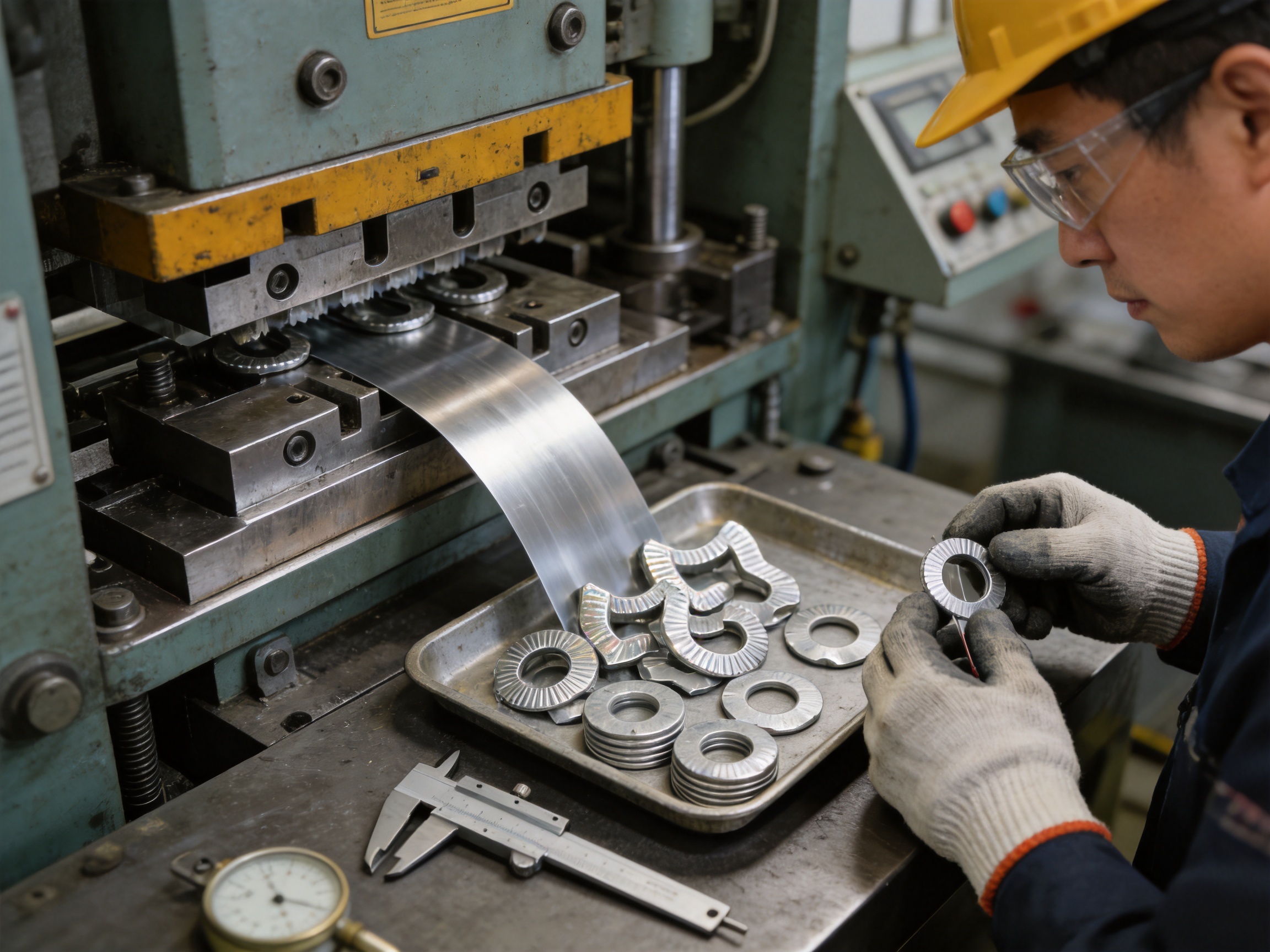
Butterfly washers are part of the stamping parts category, and precision stamping is one of the most efficient methods for producing them in volume. The process begins with controlled metal strip or sheet material. The material is fed into stamping equipment, where progressive dies or dedicated forming tools cut, pierce, shape, and form the washer. Each stage must be designed to maintain dimensional accuracy and material integrity.
Precision stamping offers several advantages. It provides repeatability, high productivity, clean profiles, and cost efficiency for large orders. Once the tooling is optimized, thousands or millions of washers can be produced with consistent dimensions. This is important for customers who require stable assembly behavior across many batches.
At Lizhan Hardware Co., Ltd., manufacturing strength is reflected in the ability to supply hardware products for industrial and commercial applications with attention to consistent quality. The company’s factory location in Haiyan, Jiaxing City, Zhejiang, supports access to established manufacturing resources, material supply chains, and logistics channels. Its Thailand warehouse further strengthens delivery flexibility for customers in Southeast Asia and surrounding regions.
Advanced stamping production involves more than simply pressing metal. It includes material inspection, tooling maintenance, die alignment, lubrication control, forming sequence design, deburring, cleaning, surface treatment, and final inspection. Each step affects the washer’s performance. For example, improper forming can introduce cracks, excessive stress, or inconsistent height. Poor deburring can leave sharp edges. Inadequate cleaning can affect passivation or plating. A reliable supplier controls the full process.
Material Selection and Incoming Quality Control
The quality of a washer starts with the quality of its raw material. Stainless steel strip must meet chemical composition, thickness, surface condition, and mechanical property requirements. Carbon steel material must also be selected according to strength, formability, and coating compatibility. If material thickness varies too widely, the washer’s spring response will vary. If the material surface is defective, finished washers may show flaws or corrosion risk.
Incoming inspection may include checking material certificates, measuring thickness, observing surface finish, and verifying grade information. For critical orders, additional testing can be arranged according to customer requirements. Controlling material at the beginning of production reduces defects later and supports stable performance.
For stainless steel butterfly washers, formability is important because the washer must be shaped without cracking. Austenitic stainless steels are generally known for good formability, but tool design and process control remain essential. For carbon steel versions, heat treatment or hardening requirements may vary depending on the desired spring performance. The manufacturing route must match the product’s function.
Tooling Accuracy and Die Engineering
The die is the heart of stamped washer production. A precision die determines hole accuracy, outer shape, formed height, edge quality, and production efficiency. Die engineering must account for material springback, wear, punching clearance, forming pressure, and part ejection. For a butterfly washer, forming accuracy is especially important because the curved shape directly influences locking performance.
High-quality tooling reduces variation. When washers from the same batch have consistent height and curvature, installers experience predictable tightening behavior. This helps manufacturers maintain assembly torque standards and reduces the risk of joint inconsistency. Tooling also affects cost. A robust die with proper maintenance can produce large quantities efficiently, supporting competitive pricing without sacrificing quality.
Tooling maintenance is equally important. Punches and dies wear over time, which can create burrs, dimensional drift, or poor edge conditions. A disciplined manufacturer monitors tooling condition, sharpens or replaces components when necessary, and checks parts during production. This prevents defective washers from reaching customers and ensures that bulk orders remain consistent from beginning to end.
Surface Finishing and Corrosion Protection
Surface finishing can improve washer performance, appearance, and environmental resistance. Stainless steel washers may be cleaned and passivated to enhance corrosion resistance by supporting the natural chromium oxide layer. Carbon steel washers may be zinc-plated or finished with other protective coatings. The correct surface treatment depends on where the washer will be used and what materials it will contact.
Corrosion protection is especially important in fastening systems because joints can trap moisture. If a washer corrodes, it may expand, stain, weaken, or seize. In some cases, corrosion products can reduce the clamping reliability of the assembly. Stainless steel and appropriate coatings help avoid these problems and extend maintenance intervals.
Surface finish also influences friction. Fastener tightening depends on friction between threads and bearing surfaces. If surface conditions vary greatly, the same torque may produce different clamp loads. Consistent finishing helps create more predictable assembly results. For customers with specific torque or friction requirements, washer finish should be discussed during specification.
Deburring, Cleaning, and Edge Safety
Stamped parts often require deburring because cutting and piercing can create sharp edges. Burr control is not only an appearance issue. Burrs can interfere with seating, damage mating surfaces, compromise coatings, or create safety hazards during handling. For butterfly washers, burrs around the hole or outer edge can also affect how the washer compresses under load.
Deburring methods may include mechanical tumbling, vibratory finishing, brushing, or other processes depending on material and part geometry. The goal is to remove sharp edges while preserving the washer’s functional shape. Excessive deburring force could distort thin parts, so process control is necessary.
Cleaning removes oil, metal particles, and residues from stamping and finishing. Clean washers are easier to package, inspect, and install. For stainless steel parts, cleaning is also important before passivation. For plated parts, surface cleanliness affects coating adhesion and appearance. A manufacturer that pays attention to deburring and cleaning delivers washers that are safer, more professional, and more reliable in assembly.
Inspection and Quality Assurance
Quality assurance for butterfly washers should include dimensional checks, visual inspection, material verification, and functional evaluation where needed. Important dimensions include inner diameter, outer diameter, thickness, formed height, curvature, and flatness after compression. Visual checks identify cracks, burrs, stains, plating defects, deformation, or mixed parts.
For high-volume production, inspection may be performed at multiple stages: incoming material, first article approval, in-process sampling, final inspection, and packaging verification. First article inspection confirms that tooling and machine settings produce parts according to specification. In-process inspection catches variation before large quantities are produced. Final inspection ensures that packaged goods meet customer expectations.
Functional testing can include compression checks or load response evaluation. While not every order requires advanced testing, the ability to evaluate spring behavior is valuable for self-locking washers. Customers with demanding applications may request samples for assembly trials, torque testing, vibration testing, or corrosion exposure evaluation.
Reliable quality assurance is one of the strongest advantages a professional supplier can offer over low-cost, inconsistent competitors. A washer is small and inexpensive, but failure can be costly. Consistent inspection reduces risk and builds confidence in every shipment.
Packaging for Protection and Efficiency
Packaging matters because washers are usually ordered in bulk. Poor packaging can lead to mixing, contamination, moisture exposure, or handling damage. Proper packaging keeps parts clean, organized, and easy to use on the assembly line or in maintenance storage.
Bulk packaging may be suitable for high-volume industrial users, while smaller bags or cartons may be preferred for distributors and workshops. Labels should identify size, material, finish, quantity, batch information, and other relevant details. Clear labeling reduces warehouse errors and supports traceability.
For export orders, packaging strength is especially important. Cartons must withstand transport, stacking, humidity changes, and handling. Inner bags or moisture-control measures may be used when appropriate. A company with experience in international hardware supply understands that good packaging is part of product quality.
Comparison Table: Butterfly Washer Versus Common Alternatives
| Washer or Locking Method | Main Function | Strengths | Limitations | Best Use Conditions |
|---|---|---|---|---|
| Butterfly Wedge Lock Washer | Distributes load and maintains tension through curved elastic form | Good vibration resistance, simple installation, reusable in many cases, broad compatibility | Requires correct size, material, and formed height for best performance | HVAC, machinery, electrical panels, automotive brackets, general industrial fastening |
| Flat Washer | Spreads load and protects surfaces | Low cost, widely available, easy to use | Limited self-locking or spring action | Static assemblies with low vibration |
| Split Lock Washer | Provides locking through split spring form | Common, inexpensive, familiar to installers | May flatten under load and may be less effective in severe vibration | General fastening where moderate locking is acceptable |
| Serrated Washer | Bites into surfaces to resist rotation | Strong grip on suitable surfaces | Can damage coatings or mating surfaces | Assemblies where surface marking is acceptable |
| Thread-Locking Adhesive | Chemically resists thread loosening | Effective in many threaded joints | Requires clean surfaces, curing time, and may complicate disassembly | Applications where chemical locking is preferred and process control is available |
Installation Best Practices
To achieve the full benefit of a butterfly washer, installers should select the correct size for the bolt or screw. The inner diameter should allow easy assembly without excessive looseness. The outer diameter should provide adequate bearing area on the mating surface. The washer material should be compatible with the fastener and environment.
The washer should be placed under the rotating element, usually the bolt head or nut, depending on joint design. The curved profile should seat properly as torque is applied. Installers should avoid using damaged, distorted, or heavily corroded washers. If the washer has a specified orientation, it should be installed accordingly. For many standard butterfly washer designs, the form itself guides seating, but customer drawings should always be followed.
Torque should be applied according to the fastener size, material, lubrication condition, and joint requirements. Over-tightening can flatten the washer excessively or damage the assembly. Under-tightening may not compress the washer enough to create the desired locking effect. For production environments, torque tools should be calibrated and assembly trials should confirm performance.
When used with stainless steel fasteners, galling should be considered. Stainless steel threads can seize under high friction. Lubrication or suitable fastener pairing may be needed in some assemblies. The washer itself contributes to bearing behavior, but the complete fastener system must be evaluated.
How to Select the Right Butterfly Washer
Selection begins with the fastener size. The washer must match the bolt or screw diameter. Next, consider the load and vibration level. Heavier loads and stronger vibration may require a washer with greater thickness, stronger material, or specific formed height. The joint material also matters. Soft materials may require broader load distribution, while hard metal surfaces can accept higher bearing pressure.
Environmental conditions are critical. For indoor dry conditions, zinc-plated carbon steel may be sufficient. For humid, outdoor, or corrosive environments, stainless steel is often preferred. For chloride exposure, 316 stainless steel may be considered. For electrical or special applications, material compatibility and conductivity requirements should be reviewed.
Space limitations may affect outer diameter and height. Some assemblies have recessed holes, narrow brackets, or limited clearance under covers. In such cases, sample testing is valuable. Customers can request sample washers to verify fit, compression, and assembly behavior before committing to bulk orders.
Cost should be evaluated over the full service life of the equipment, not only by unit price. A lower-cost washer that loosens, corrodes, or varies dimensionally can increase maintenance cost and failure risk. A consistent butterfly washer can be a cost-effective solution because it helps protect the larger assembly.
Competitive Advantages of a Professional Manufacturer
In the hardware market, washers may appear similar at first glance, but differences in manufacturing quality can be significant. Low-cost suppliers may use inconsistent material, worn tooling, weak inspection, poor surface treatment, or inadequate packaging. These issues may not be obvious until parts are installed. Once in service, inconsistent washers can cause loosening, uneven clamping, surface damage, or early corrosion.
A professional manufacturer offers advantages that go beyond price. These include stable raw material sourcing, precise stamping dies, controlled forming, burr management, surface finishing options, inspection procedures, packaging customization, and reliable delivery. For customers who produce equipment in volume, consistency is essential. A washer that changes from batch to batch can disrupt assembly processes and create quality problems.
Lizhan Hardware Co., Ltd. serves customers by combining hardware production experience with practical supply capability. Its product range covers fasteners, home tool products, package-related hardware, and stamping parts. This broad category experience allows the company to understand how washers interact with screws, bolts, nuts, brackets, and assembled products. Instead of treating washers as isolated items, the company can support customers with a fastening-system perspective.
The company’s manufacturing base in Zhejiang, China, provides production capability, while its Thailand warehouse strengthens regional supply responsiveness. For international buyers, this combination can reduce lead-time pressure, support bulk purchasing, and improve logistics planning. In competitive manufacturing, reliable delivery is often as important as product quality.
Precision, Consistency, and Bulk Order Capability
Butterfly washers are often purchased in large quantities because they are used repeatedly across assemblies. Bulk production requires a supplier that can maintain consistency over time. This includes consistent dimensions, material, finish, packaging, and documentation. If a customer orders the same washer several times, the new shipment should perform like the previous one.
Precision stamping supports this requirement. With properly maintained tooling and controlled production parameters, washers can be produced efficiently in large volumes. Bulk order discounts may also be available, helping customers reduce procurement cost while maintaining quality. However, bulk savings should never depend on reducing inspection or using inferior material. The best value comes from efficient production combined with dependable quality control.
For distributors, consistent bulk supply means fewer complaints and easier inventory management. For manufacturers, it means smoother assembly and fewer line interruptions. For maintenance teams, it means replacement parts fit and perform as expected. This is why washer quality matters at every level of the supply chain.
Role in Equipment Lifespan and Maintenance Reduction
A small washer can have a large effect on equipment lifespan. When fasteners loosen, components may move. Movement can enlarge holes, wear surfaces, crack brackets, damage coatings, create noise, and increase stress on nearby parts. Maintenance teams may need to inspect and retighten bolts repeatedly. In severe cases, loose parts can cause downtime or safety incidents.
Butterfly washers help reduce these risks by maintaining tension and resisting vibration-related loosening. They can also distribute pressure more evenly than a fastener head alone, reducing localized surface damage. In equipment designed for long service intervals, this contribution is valuable. The washer helps the joint remain stable so the larger system can operate as intended.
From a cost perspective, the washer is inexpensive compared with the labor and downtime associated with loose fasteners. Choosing a reliable self-locking washer is therefore a preventive maintenance strategy. It is a small investment that supports long-term reliability.
Environmental and Operational Considerations
Modern buyers increasingly consider sustainability, service life, and waste reduction. A washer that prevents loosening and extends equipment life contributes indirectly to sustainability by reducing replacement parts, maintenance trips, and premature equipment failure. Stainless steel washers also offer long service life in corrosive environments, reducing the need for frequent replacement.
Manufacturing efficiency also matters. Precision stamping minimizes waste when tooling layouts are optimized. Scrap metal can often be collected for recycling through appropriate channels. Controlled production reduces defective output, saving material and energy. Good packaging prevents transit damage and avoids unnecessary replacement shipments.
Operationally, butterfly washers support maintenance-friendly design. Unlike chemical locking methods, mechanical washers can often be inspected and replaced easily. In field service, technicians may prefer mechanical solutions because they are straightforward, immediate, and familiar. This improves repair efficiency and reduces downtime.
Customization Possibilities
Although standard sizes are widely used, some customers require customized butterfly washers. Customization may include special dimensions, non-standard hole sizes, different outer contours, material changes, surface finishes, packaging formats, or performance requirements. A stamping-focused manufacturer is well positioned to support such requests through tooling design and process adjustment.
Custom washers are useful when equipment has unique clearance limits, special load conditions, or brand-specific assembly standards. For example, a manufacturer may require a washer with a specific outside diameter to fit a recessed bracket, or a certain height to provide defined compression under torque. Another customer may need stainless steel for corrosion resistance but with a particular surface finish for appearance or friction control.
Custom production should begin with drawings, samples, or clear technical specifications. Important details include material grade, thickness, hardness if applicable, dimensions, tolerances, finish, quantity, inspection requirements, and packaging needs. Sample approval is recommended before mass production. This ensures that the washer meets both design and assembly expectations.
Quality Communication With Customers
Successful washer supply depends on clear communication. Customers should provide application information where possible, including bolt size, assembly material, vibration level, environment, torque conditions, and expected service life. The supplier can then recommend suitable material, finish, and size options. If the customer already has a drawing or standard number, production can be aligned accordingly.
For export customers, communication also includes packaging preferences, shipping method, labeling language, and documentation. Lizhan Hardware Co., Ltd. can be contacted through its business communication channels, with Shawn listed as a contact person. The company provides communication through email, phone, WhatsApp, and WeChat, supporting efficient discussion for international buyers.
Responsive communication is a competitive advantage because it reduces misunderstandings. Washers may be small, but technical details matter. A professional supplier helps clarify those details before production, preventing errors and delays.
Why This Washer Is a Strong Choice for Industrial Buyers
The Butterfly Washer Wedge Lock Washer Stainless Steel DIN Washers Self-Lock Washer is a strong choice because it combines multiple desirable features in one simple component. It distributes load, maintains tension, resists vibration, supports corrosion resistance when made from stainless steel, and fits standard fastening systems. It is suitable for both new product manufacturing and maintenance replacement.
Compared with ordinary flat washers, it offers active spring behavior. Compared with more aggressive locking methods, it can reduce surface damage. Compared with adhesives, it is immediate, mechanical, and easy to handle. Compared with inconsistent low-cost washers, a precisely stamped and inspected product provides greater confidence in assembly reliability.
For buyers sourcing large quantities, the manufacturer’s strengths are equally important. Precision stamping, controlled material selection, tooling accuracy, finishing capability, inspection, packaging, and logistics support all influence final value. Lizhan Hardware Co., Ltd. offers these practical advantages through its manufacturing experience and supply network.
In competitive markets, equipment manufacturers cannot afford small components that create large problems. Choosing a reliable butterfly washer helps protect product reputation, reduce maintenance issues, and improve customer satisfaction. It is a compact part with an important role in mechanical integrity.
Frequently Asked Questions
What is a butterfly washer?
A butterfly washer is a formed washer with a curved or wing-like profile. It is designed to distribute load and provide elastic tension in a bolted joint. This helps resist loosening caused by vibration, settling, or dynamic loads.
How does a butterfly wedge lock washer work?
When the fastener is tightened, the washer compresses and stores spring energy. This energy continues to apply pressure against the bolt head or nut, helping the joint maintain clamping force. The curved design supports self-locking behavior without requiring adhesives or complicated installation steps.
Is stainless steel a good material for butterfly washers?
Yes. Stainless steel is a strong choice when corrosion resistance, clean appearance, and long service life are important. Grade 304 stainless steel is suitable for many general applications, while grade 316 stainless steel may be selected for more corrosive environments.
Can these washers replace flat washers?
In many applications, they can be used instead of flat washers when additional tension maintenance or vibration resistance is needed. However, the correct washer must be selected according to bolt size, load, joint material, and installation requirements.
Are butterfly washers suitable for high-vibration equipment?
They are designed to improve fastening stability under vibration. They are commonly used in HVAC systems, machinery, automotive brackets, electrical panels, and other assemblies exposed to movement. For severe vibration or safety-critical applications, engineering testing is recommended.
Do butterfly washers damage surfaces?
Compared with serrated washers, butterfly washers generally rely more on spring tension than aggressive biting action. This can reduce the risk of surface damage. However, all washer behavior depends on material hardness, torque, finish, and joint design.
Can the washer be customized?
Yes. Custom dimensions, materials, thicknesses, finishes, and packaging formats may be developed based on drawings or samples. Custom tooling may be required for special designs, and sample approval is recommended before mass production.
What information should buyers provide when requesting a quotation?
Buyers should provide size, material, finish, quantity, drawing or standard reference, application environment, packaging requirements, and any inspection or documentation needs. If the washer will be used in a demanding assembly, details about vibration, load, and torque are also helpful.
Why choose a precision-stamped washer instead of a cheaper unknown alternative?
Precision-stamped washers provide better dimensional consistency, cleaner edges, more reliable spring behavior, and improved batch stability. Cheaper unknown alternatives may have inconsistent material, burrs, poor forming, or weak corrosion protection, increasing the risk of assembly problems.
Where are these washers commonly used?
They are suitable for HVAC systems, electrical panels, automotive components, machinery frames, construction equipment, metal enclosures, furniture hardware, brackets, and many general fastening applications requiring improved resistance to loosening.
Practical Purchasing Guidance
When purchasing butterfly wedge lock washers, buyers should avoid selecting only by price. The washer must match the application. Start by confirming the fastener size and the required standard compatibility. Then choose the material based on the environment. Select stainless steel for corrosion resistance, zinc-plated carbon steel for economical indoor use, or special coatings where required.
Next, review the washer geometry. Formed height, thickness, and diameter influence the locking effect. If the application is new, request samples for testing. Assemble the washer with the intended bolt, nut, and workpiece. Apply the expected torque and check seating, clearance, and joint stability. If vibration is significant, conduct a practical vibration trial or consult engineering guidance.
For recurring orders, establish an agreed specification. This can include drawings, tolerance requirements, material grade, finish, packaging, and inspection criteria. A clear specification allows the supplier to maintain consistent production and helps the buyer compare quality accurately between shipments.
Finally, consider logistics. If washers are needed for continuous production, delivery reliability matters. The availability of manufacturing capacity and regional warehousing can support stable supply. Lizhan Hardware Co., Ltd., with its China factory and Thailand warehouse, is positioned to support customers who require both production capability and practical distribution.
Conclusion
The butterfly washer is a small component with a significant mechanical role. Its curved self-locking form helps maintain tension, distribute load, and resist vibration-related loosening. When produced from stainless steel, it also provides strong corrosion resistance and long-term appearance. These features make it suitable for HVAC systems, electrical panels, automotive assemblies, heavy machinery, construction hardware, and general industrial fastening.
Its advantages over many conventional washers include better preload retention than flat washers, less surface damage than aggressive serrated options, and simpler handling than chemical locking methods. When manufactured with precision stamping, controlled material selection, proper deburring, reliable finishing, and careful inspection, the butterfly wedge lock washer becomes a dependable part of high-quality mechanical assemblies.
Lizhan Hardware Co., Ltd. supports this product with manufacturing experience, stamping capability, material and surface finish options, bulk supply capacity, and international communication support. For buyers who value reliability, consistency, and cost-effective fastening security, the Butterfly Washer Wedge Lock Washer Stainless Steel DIN Washers Self-Lock Washer is a practical and competitive solution.
References
1. Bickford, J. H. An Introduction to the Design and Behavior of Bolted Joints. CRC Press.
2. Shigley, J. E., Mischke, C. R., and Budynas, R. G. Mechanical Engineering Design. McGraw-Hill Education.
3. Oberg, E., Jones, F. D., Horton, H. L., and Ryffel, H. H. Machinery’s Handbook. Industrial Press.
4. DIN Standards for Metric Fasteners and Washers. Deutsches Institut für Normung.
5. ASM International. Stainless Steels for Design Engineers. ASM International.
6. Fastener Technology International. Technical Articles on Locking Fasteners and Vibration Resistance.