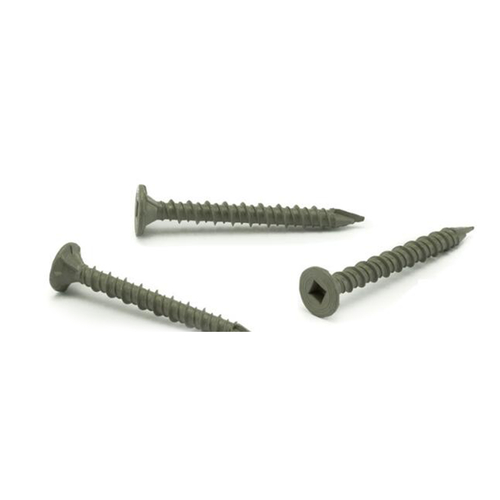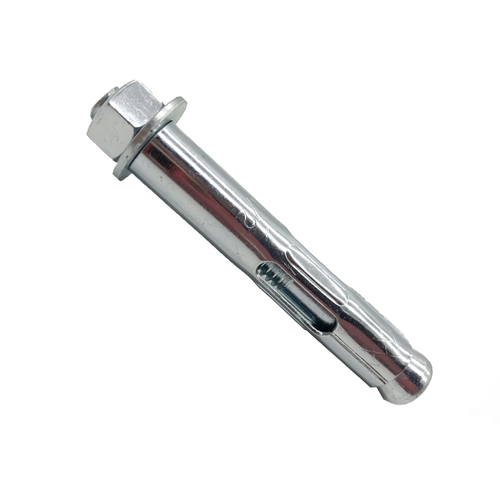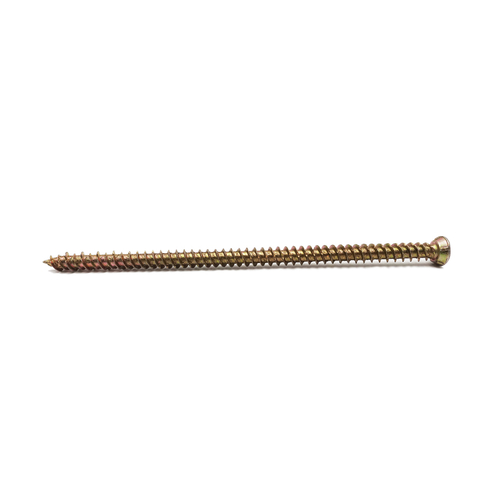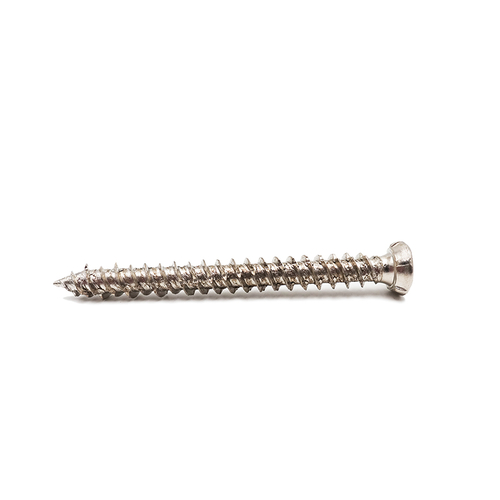
Color box packaging is more than a printed container. For hardware products, fasteners, home tools, stamped parts, machine screws, furniture screws, and other industrial items, a well-designed color box becomes a complete protection, presentation, identification, and distribution system. It helps products travel safely from the factory to the warehouse, from the warehouse to the retailer, and from the retailer to the final user while maintaining a professional appearance and reliable product information.
In competitive markets, packaging quality can directly influence customer trust. A strong color box gives buyers a clear first impression: the supplier understands product protection, visual communication, and supply chain efficiency. When a box has accurate printing, stable structure, smooth surface finishing, and clean folding, it shows that the product inside has also been handled with care. For screws, fastening kits, repair accessories, small tool sets, and hardware components, the box must resist weight, vibration, friction, moisture, stacking pressure, and repeated handling.
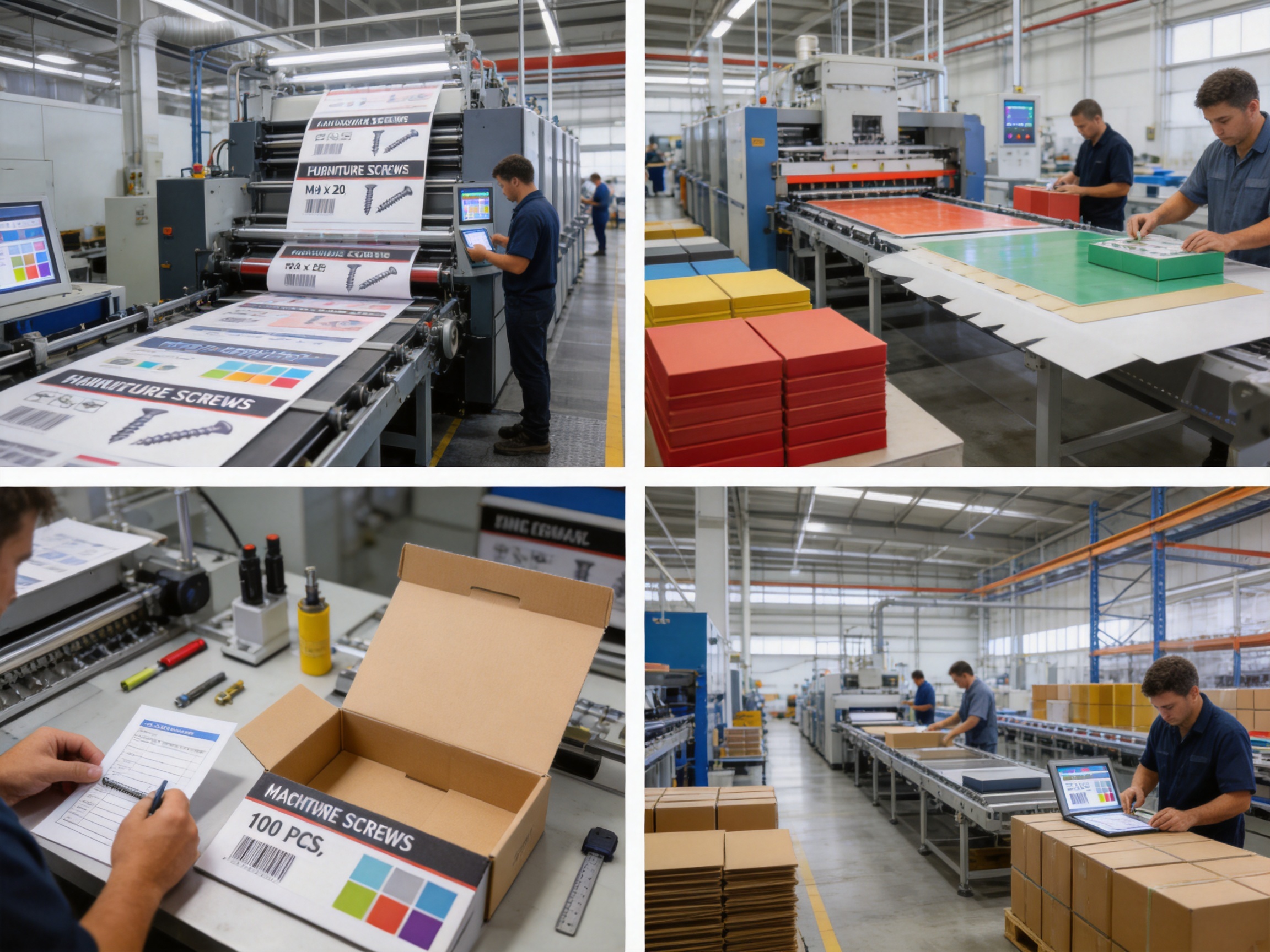
Modern color box manufacturing combines material selection, structural engineering, printing technology, die-cutting accuracy, surface treatment, folding, gluing, and inspection. The result is a customized packaging solution that can protect heavy or sharp metal components, display branding and technical data clearly, support retail shelf presentation, and reduce logistics loss. Compared with ordinary plain cartons or low-grade paper boxes, a high-quality color box offers better appearance, stronger functionality, and more reliable performance in real commercial environments.
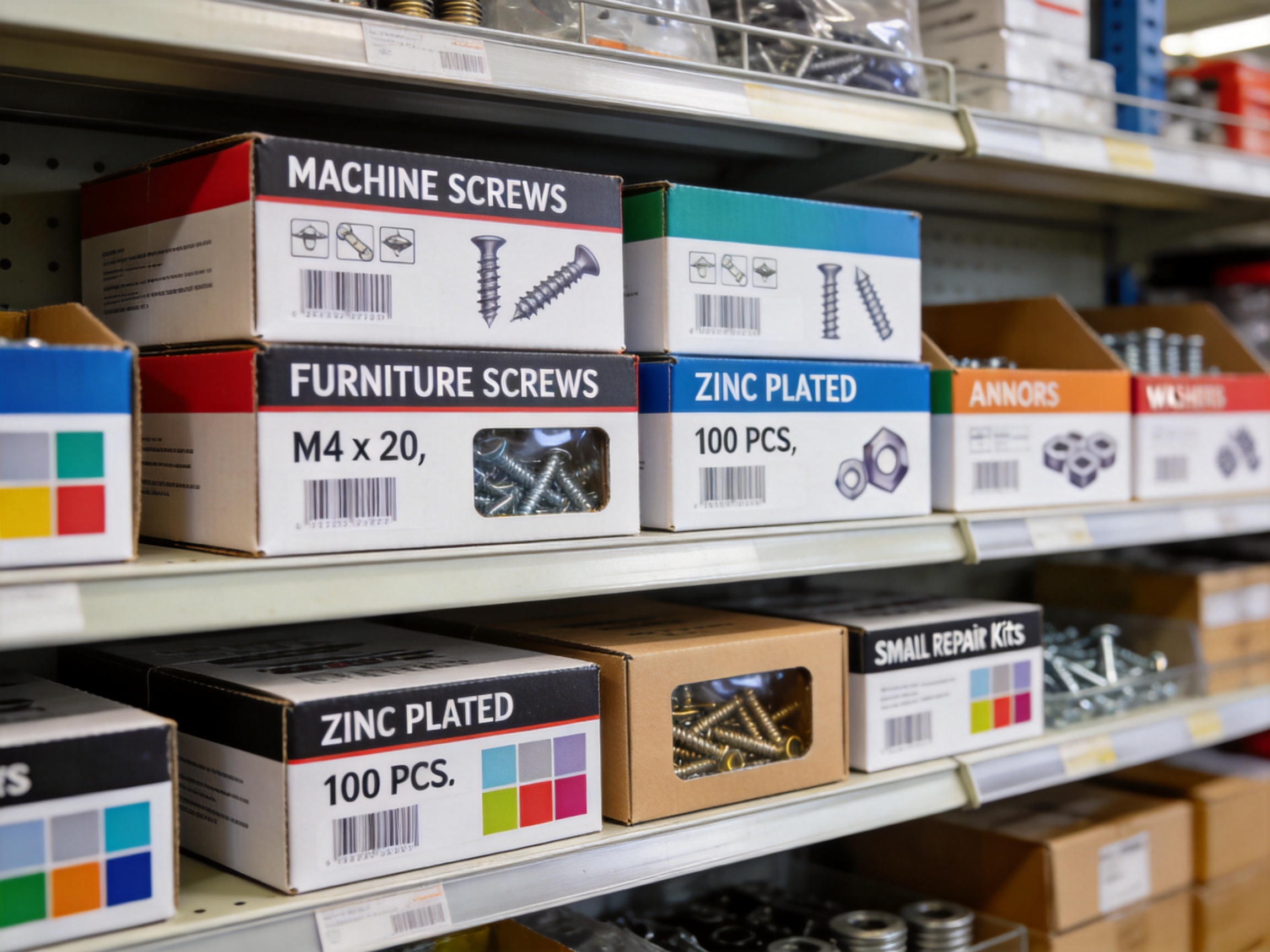
The Role of Color Box Packaging in Hardware and Fastener Markets
Hardware products often look simple, but they create specific packaging challenges. Screws, nuts, bolts, washers, anchors, stamped parts, and small tool accessories may be compact, but they can be dense, abrasive, oily, sharp-edged, or difficult to organize. A weak package can tear, deform, leak components, or lose printed information during transportation. A color box designed for these products must do more than look attractive. It must contain the correct quantity, prevent mixing, support barcode scanning, and allow the customer to identify the product quickly.
For retail sales, the package is often the first salesperson. Clear product names, sizes, specifications, surface treatments, material grades, application illustrations, safety information, and installation suggestions help buyers make decisions without confusion. A customer searching for furniture screws, machine screws, or general fastening solutions needs packaging that communicates compatibility, dimensions, and usage at a glance. If the information is unclear, the customer may choose a competing product even if the product quality is similar.
For wholesale and industrial supply, color boxes improve inventory control. Different colors, icons, batch codes, and printed part numbers make it easier for warehouse staff to classify products. A consistent box system also supports faster picking, packing, and delivery. When hundreds of screw sizes or hardware kits are stored together, packaging clarity becomes operational value. A well-printed color box reduces picking errors, customer complaints, and repacking costs.
For export businesses, packaging must withstand long-distance shipment. Products may move through multiple environments, including factory storage, container loading, ocean freight, customs inspection, regional warehousing, and final distribution. Temperature changes, humidity, vibration, and stacking pressure can damage low-quality packaging. A professionally manufactured color box uses suitable paperboard, laminated surfaces, moisture-resistant options, reinforced structures, and secure gluing to keep the package stable throughout the journey.
What Makes a High-Quality Color Box Different
A high-quality color box is defined by the balance of structure, material, printing, finishing, and manufacturing consistency. Competitors may focus only on low price, but low-cost packaging can create hidden costs through product loss, customer dissatisfaction, retail rejection, or brand damage. A stronger color box reduces those risks by improving both protective performance and market presentation.
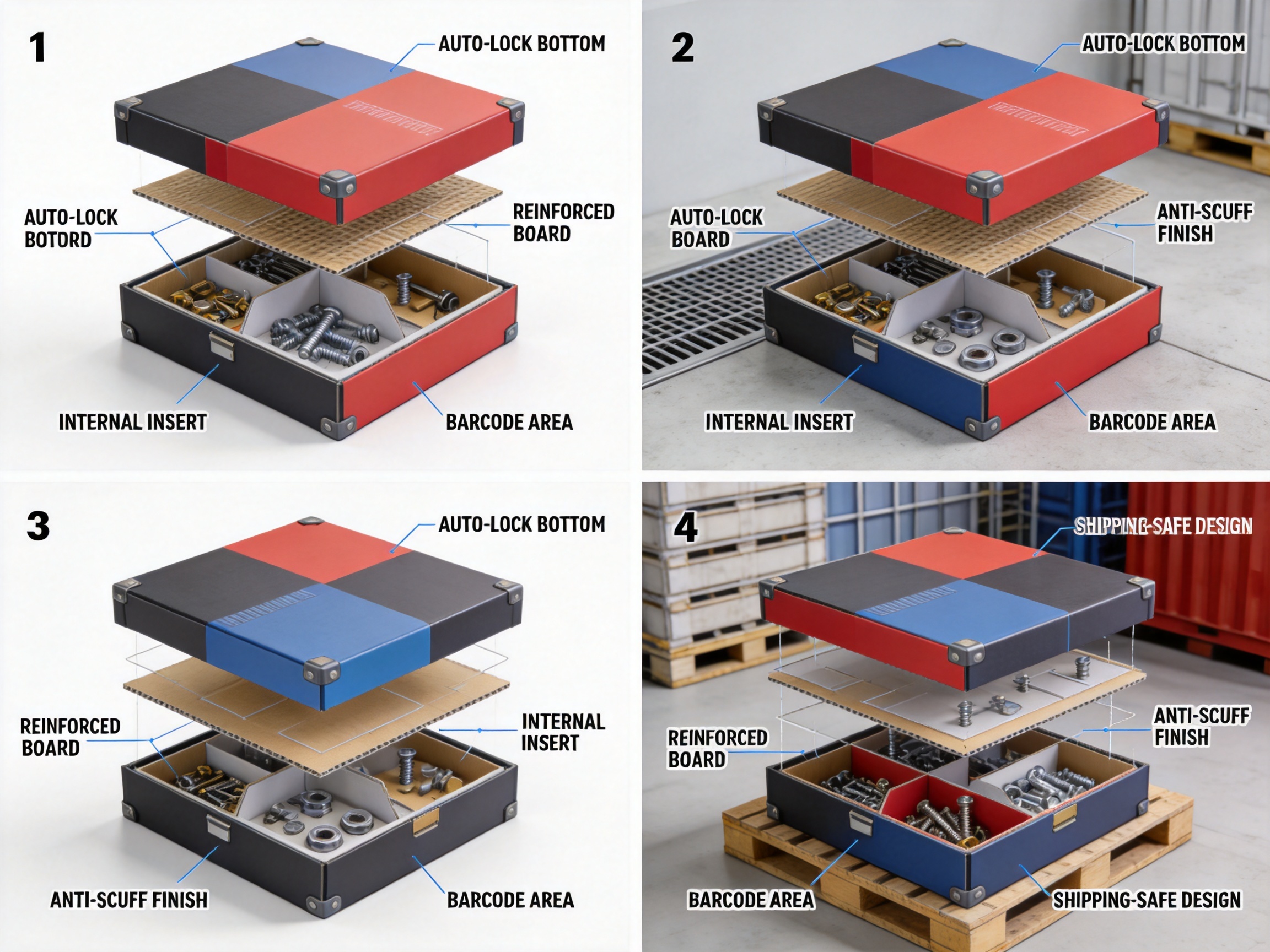
The first difference is structural precision. A good box is not simply folded paperboard. It is designed according to product weight, size, quantity, shape, and handling conditions. For heavier fasteners, the bottom must be strong enough to resist tearing. For sharp parts, the inside must avoid puncture. For assortments, internal partitions or trays may be used to prevent mixing. For retail display, hang tabs, window panels, tuck-end openings, or auto-lock bottoms may be added. Every crease, tab, and glue flap should support the intended use.
The second difference is material quality. Color boxes can be produced from folding boxboard, white card paper, corrugated board, kraft paper, recycled board, or specialty paperboard. The right selection depends on load capacity, print requirements, sustainability goals, and budget. For hardware packaging, the board must have enough stiffness, burst resistance, folding endurance, and surface smoothness. A strong paperboard keeps the box shape under pressure, while a smooth printable surface ensures clean graphics and readable text.
The third difference is printing accuracy. Color packaging relies on consistent color reproduction, sharp text, clean registration, and durable ink adhesion. Product specifications must remain readable, especially when small numbers, thread sizes, warning symbols, and barcodes are included. Poor printing can lead to scanning errors or misidentification. Advanced printing control helps ensure that every box in a batch matches the approved design.
The fourth difference is surface protection. Coatings, varnish, lamination, oil-resistant finishes, and anti-scuff treatments can extend the visual life of the box. Hardware products may be handled many times before purchase. Boxes may rub against each other inside cartons or on shelves. A protective finish keeps colors bright and prevents scratches from reducing perceived value.
The fifth difference is production consistency. A single good sample is not enough. Professional color box production requires stable performance across thousands or millions of units. Dimensional consistency ensures boxes can be assembled quickly. Glue consistency prevents opening during shipment. Cutting consistency avoids uneven edges. Batch consistency helps customers maintain a uniform packaging system across multiple product lines.
Advantages Over Ordinary Packaging and Competing Solutions
Color box packaging offers several advantages over plain cartons, plastic bags, blister packs, and low-end printed boxes. These advantages become especially important when the packaged products are dense hardware components or retail-ready fastener assortments.
Compared with plain cartons, color boxes create stronger visual appeal. A plain carton may protect the product, but it does little to communicate value. A color box can carry product photos, technical drawings, icons, specifications, and brand identity. It can explain the product clearly and improve shelf visibility. For retail hardware environments, where many similar products compete side by side, visual clarity is a major advantage.
Compared with plastic bags, color boxes offer better stacking and product protection. Plastic bags are flexible and lightweight, but they can be punctured by sharp screws or stamped parts. They also allow products to shift, which may cause noise, abrasion, or counting confusion. A rigid color box holds shape better and can be fitted with inserts or compartments. It also gives the customer a more professional unboxing experience.
Compared with blister packaging, color boxes can be more space-efficient and easier to customize for different quantities. Blister packs are useful for visibility, but they often require plastic forming molds and may increase packaging volume. Color boxes can be folded flat before filling, reducing storage space. They can be produced in many sizes and styles with shorter changeover flexibility, especially for diverse fastener lines.
Compared with low-grade printed boxes, premium color boxes provide better durability, cleaner folding, stronger glue bonding, and more consistent printing. Lower-grade boxes may look acceptable at first but fail under real supply chain stress. They may crack at fold lines, lose color, deform under stacking, or open at glued seams. A carefully engineered color box prevents these problems through controlled materials and manufacturing processes.
A well-made color box also improves customer confidence. When customers see accurate printing, neat construction, and clean finishing, they are more likely to believe the product inside meets the same standard. Packaging does not replace product quality, but it amplifies it. For industrial buyers, high-quality packaging demonstrates attention to detail. For retail buyers, it improves perceived value. For distributors, it reduces returns and handling problems.
Advanced Manufacturing Approach
Reliable color box production begins before printing. The manufacturing process starts with product analysis and packaging engineering. The product’s weight, shape, surface condition, quantity per box, shipping method, storage environment, and retail requirements are reviewed. For example, a box containing lightweight plastic accessories has different needs from a box containing steel screws. A machine screw assortment may require internal compartments, while a simple single-size screw pack may need only a strong tuck-end structure.
After product analysis, the structure is developed using packaging design software and sample-making equipment. The design team determines the box style, dimensions, crease lines, locking method, glue flaps, display features, and carton compatibility. Digital prototypes and physical samples help confirm whether the box can be filled efficiently, closed securely, stacked safely, and opened easily by the end user.
Material selection follows the structural design. Paperboard is chosen according to grammage, stiffness, surface whiteness, coating type, foldability, and environmental requirements. For heavier hardware products, reinforced board or micro-corrugated options may be recommended. For premium retail appearance, coated white board with high printability may be selected. For sustainability-focused customers, recyclable or recycled materials can be used when performance requirements allow.
Printing preparation includes artwork verification, color management, prepress processing, plate making, and proofing. Technical packaging artwork must be checked carefully because small mistakes in sizes, quantities, thread descriptions, material grades, or barcode data can create serious commercial problems. Professional prepress control ensures that files are ready for stable production and that colors can be repeated in future batches.
Printing may use offset printing, flexographic printing, digital printing, or other suitable methods depending on volume, design complexity, and material. Offset printing is often preferred for high-quality color graphics and sharp detail. Flexographic printing can be efficient for corrugated packaging and large runs. Digital printing supports fast sampling and flexible customization. The right technology is selected to match cost, speed, quality, and order requirements.
After printing, surface finishing is applied. Common options include gloss varnish, matte varnish, aqueous coating, UV coating, film lamination, soft-touch finish, anti-scratch coating, foil stamping, embossing, debossing, and spot UV. For hardware packaging, practical finishes such as anti-scuff coating, water-resistant varnish, and durable lamination can be especially valuable. The surface must remain attractive even after transportation and shelf handling.
Die-cutting and creasing are then performed using precision tooling. The die-cutting process determines the final shape of the box. Accurate die-cutting ensures that folding edges align correctly, tabs lock properly, and the finished box maintains its intended dimensions. Poor die-cutting can make boxes difficult to assemble, create gaps, or weaken corners. Professional tooling and machine calibration are essential for consistency.
Folding and gluing convert flat printed sheets into ready-to-use boxes. Glue application must be controlled carefully. Too little glue can cause the box to open, while too much glue can create stains, squeeze-out, or assembly problems. Automated folding-gluing machines improve speed and consistency, while quality checks verify bond strength, alignment, and appearance. For complex structures, manual inspection or semi-automatic handling may be added.
Final inspection covers printing quality, dimensions, folding accuracy, glue strength, quantity, packing condition, and label correctness. Packaging is then bundled and placed into outer cartons for shipment. Throughout production, traceability records can help control batches and support repeat orders. This process-based approach gives customers stable quality rather than occasional good results.
Company Strengths Behind Reliable Color Box Supply
A strong packaging supplier must understand both packaging production and the products being packaged. When color boxes are used for hardware and fasteners, this product knowledge becomes a clear advantage. A company experienced in fasteners, home tools, stamped parts, and related hardware products can design packaging around real industrial requirements rather than relying on generic assumptions.
Knowledge of screw dimensions, product weights, surface treatments, corrosion protection, packing quantities, and export handling conditions allows the packaging team to recommend appropriate structures. For example, zinc-plated screws may require clean, dry packaging conditions to prevent surface contamination. Heavy screw boxes may need stronger bottom locks. Mixed hardware kits may require internal organization. Sharp stamped parts may need extra puncture protection. These decisions come from practical experience with metal products and supply chain handling.
Manufacturing strength also includes coordination between product production and packaging supply. When a supplier can align packaging design with product specifications, filling methods, carton packing, palletization, and shipping schedules, the entire order becomes more efficient. Packaging is not treated as an afterthought. It becomes part of the production system.
Advanced process management helps reduce variation. Standard operating procedures, incoming material inspection, prepress approval, in-process checking, finished product inspection, and batch documentation support stable output. Customers benefit from fewer packaging defects, more predictable lead times, and easier reordering. For international buyers, consistency is often as important as price because packaging problems can delay shipments or create retail compliance issues.
Another important strength is customization capability. Different markets have different expectations. European hardware retail packaging may require multilingual text, recycling marks, CE-related information for certain products, or precise barcode placement. North American markets may prefer bold product images, imperial and metric dimensions, and shelf-ready designs. Southeast Asian markets may require moisture-resistant solutions due to climate conditions. A flexible supplier can adapt artwork, materials, box style, and packing method to the target market.
Efficient communication is also a practical advantage. Packaging projects often involve artwork revisions, sampling, product testing, shipping deadlines, and approval procedures. A responsive supplier can shorten development time and prevent misunderstandings. Clear communication helps customers confirm dimensions, printing colors, materials, lead times, and packing quantities before mass production begins.
Material Options and Their Practical Benefits
The right material is the foundation of color box performance. Paperboard selection should never be based only on appearance. It should be matched to the product’s weight, value, route to market, and handling environment.
Coated white card is widely used for retail color boxes because it offers a smooth printing surface and clean appearance. It is suitable for product lines where visual quality is important and the product weight is moderate. It supports detailed graphics, product photos, fine text, and bright colors.
Folding boxboard provides good stiffness and foldability. It is commonly used for consumer packaging and can be adapted for hardware items when the structure is engineered correctly. It works well for small fastener packages, accessory boxes, and light tool components.
Kraft paperboard provides a natural appearance and strong tear resistance. It is useful for customers who prefer an eco-friendly or industrial look. Kraft materials can communicate durability and simplicity, especially for workshop, construction, or utility products.
Micro-corrugated board is valuable when more strength is required. It provides cushioning and compression resistance while remaining suitable for printed surfaces. For heavier screws, small tool sets, or bulk hardware packs, micro-corrugated color boxes can offer stronger protection than single-layer paperboard.
Recycled paperboard supports sustainability goals and can reduce environmental impact when properly specified. However, recycled material must be evaluated for strength, surface quality, and consistency. For heavy hardware, recycled board may need reinforcement or a higher grammage to meet performance needs.
Specialty paperboard can be used for premium packaging, gift sets, promotional kits, or high-value tool accessories. Textured paper, metallic board, black card, or laminated board may improve appearance but should be balanced against cost and production requirements.
Common Color Box Structures for Hardware Products
Different hardware products require different box structures. Choosing the right style improves usability and reduces packaging failure.
A straight tuck-end box is a common option for lightweight to medium-weight items. It offers a clean appearance and is easy to open. It is suitable for small fastener quantities, accessories, and retail packs. However, for heavier products, additional bottom reinforcement may be needed.
A reverse tuck-end box is efficient for automated production and compact packaging. It is often used for small retail boxes and can be economical. Like the straight tuck-end style, it should be tested for product weight and handling conditions.
An auto-lock bottom box provides stronger bottom support and faster assembly. It is useful for heavier hardware items because the bottom locks automatically when the box is opened. This structure can reduce filling time and improve load resistance.
A crash-lock bottom box is similar in purpose and offers practical efficiency for manual or semi-automatic packing. It is well suited for products that require quick filling and dependable bottom strength.
A sleeve box can be used for premium presentation or product kits. It provides a sliding opening experience and allows strong visual impact. For hardware, it can be used for tool accessories, special fastener sets, or promotional packages.
A window box allows customers to see the product inside. A transparent window can increase trust, especially for retail products where customers want to verify the contents. However, the window material must be durable enough to resist tearing or detachment.
A display box or counter box is designed for retail presentation. It can hold multiple small packs and convert into a shelf-ready display. This is useful for hardware stores, supermarkets, repair shops, and promotional sales.
A compartment box or insert-supported box separates different components. For furniture screw kits or mixed fastener assortments, internal partitions reduce mixing and improve user convenience. This structure also creates a more organized customer experience.
Technical Comparison Table
| Packaging Feature | Premium Color Box | Ordinary Plain Carton | Plastic Bag | Low-Grade Printed Box |
|---|---|---|---|---|
| Retail Appearance | High visual impact with full-color graphics and clear product information | Limited appearance and minimal communication | Low to moderate, depending on labels | Moderate at first, but often inconsistent |
| Product Protection | Engineered structure, strong board, optional inserts, better stacking performance | Good for bulk shipment but less refined for retail units | Weak against puncture and deformation | Variable; may fail under weight or friction |
| Information Display | Supports specifications, barcodes, icons, warnings, and multilingual content | Usually limited to labels or simple printing | Limited printable area or label dependence | May include information but with lower print clarity |
| Supply Chain Efficiency | Consistent size, easy sorting, improved scanning and inventory control | Efficient for bulk but less effective for retail identification | Difficult to stack and organize | Can be efficient if quality is stable, but often inconsistent |
| Customer Perception | Professional, trustworthy, and value-enhancing | Functional but basic | Economical but less premium | Uncertain; quality issues reduce trust |
| Customization Potential | High, including structure, printing, finish, inserts, and market-specific design | Moderate | Low to moderate | Moderate, limited by process control |
| Best Use | Retail hardware, fastener assortments, branded products, export packaging | Bulk transport and secondary packaging | Low-cost small parts or temporary packaging | Budget retail packaging with lower performance expectations |
Printing and Visual Communication
Printing is one of the most visible parts of color box packaging, but it is also a technical process. Hardware customers need accurate information, and packaging must communicate that information quickly. A strong design should combine attractiveness with function.
Product names should be clear and easy to locate. Size information should be printed in a logical format. For screws, this may include diameter, length, head type, drive type, thread type, material, surface treatment, and quantity. For tool accessories, it may include compatible equipment, dimensions, application areas, and safety guidance. A color box that explains these details clearly reduces customer confusion and helps sales staff recommend products more easily.
Color coding can be used to separate product families. For example, one color may represent machine screws, another may represent furniture screws, another may represent anchors, and another may represent repair kits. This system is useful for both retail shoppers and warehouse staff. It also helps build a recognizable product range.
Icons improve quick understanding. Symbols for indoor use, outdoor use, wood application, metal application, corrosion resistance, drive type, and tool compatibility help customers identify the correct product quickly. Icons are especially helpful in multilingual markets because they reduce dependence on long text.
Barcodes and QR codes must be printed with precision. Poor contrast, incorrect size, or distortion can cause scanning failure. In retail and warehouse environments, scanning errors create delays and frustration. Professional printing control ensures that codes are clear, positioned correctly, and tested when required.
Product photos and illustrations should be accurate. Misleading images can cause customer dissatisfaction. If a box shows a screw with a certain head type or finish, the product inside should match. Technical line drawings can sometimes communicate dimensions better than photos. The best packaging often combines realistic images with clear diagrams.
Typography matters as well. Small text must remain readable after printing. Important information should not be hidden in decorative areas. The design should guide the eye from product name to key specification to usage information to quantity. Good packaging design is not only beautiful; it is organized.
Surface Finishing for Durability and Market Appeal
Surface finishing protects printing and creates the desired tactile and visual effect. For hardware packaging, durability is a priority because boxes may experience abrasion during shipment and repeated handling on shelves.
Gloss coating makes colors brighter and gives the box a polished look. It is suitable for products that need strong shelf impact. However, gloss surfaces may show scratches more easily in some conditions, so anti-scuff options should be considered for heavy handling.
Matte coating creates a refined and professional appearance. It reduces glare and can make technical information easier to read under bright retail lighting. Matte finishes are popular for premium or industrial-style packaging.
Aqueous coating is a practical option for general protection. It can improve rub resistance and is often considered more environmentally friendly than some solvent-based finishes. It is useful for high-volume packaging where performance and cost must be balanced.
UV coating provides strong shine and surface hardness. Spot UV can highlight logos, product images, or key features. For hardware boxes, full UV coating may improve visual impact, while spot UV can create a premium effect without overwhelming the design.
Film lamination adds an extra protective layer. It can improve moisture resistance, scuff resistance, and structural feel. Gloss lamination enhances brightness, while matte lamination creates a smoother premium appearance. For products exported through humid environments, lamination may help protect the box surface.
Embossing and debossing add texture. They can be used to emphasize important design elements. Foil stamping can create a high-end look for gift kits or premium tool accessories. However, these decorative processes should be used carefully for hardware packaging, where clarity and durability remain the main priorities.
Protection for Heavy, Sharp, and Dense Products
Hardware products create stress points that packaging must address. Screws and stamped parts are small but can be heavy in quantity. Their edges and points can damage weak packaging. If the box fails, the product may spill, causing loss, safety risks, and customer complaints.
One solution is to increase board strength. Higher grammage paperboard or micro-corrugated board can improve load capacity. However, material thickness should be balanced with folding accuracy and carton packing efficiency. A thicker board is not automatically better if it causes cracking or reduces assembly speed.
Another solution is structural reinforcement. Auto-lock bottoms, double side walls, reinforced corners, and additional inner flaps can increase strength without excessive material use. For very heavy contents, the structure should be tested under realistic conditions.
Internal inserts can prevent product movement. For mixed fastener kits, inserts keep components separated. For sharp stamped parts, liners can reduce puncture risk. For small tool accessories, trays or partitions improve presentation and protect finishes.
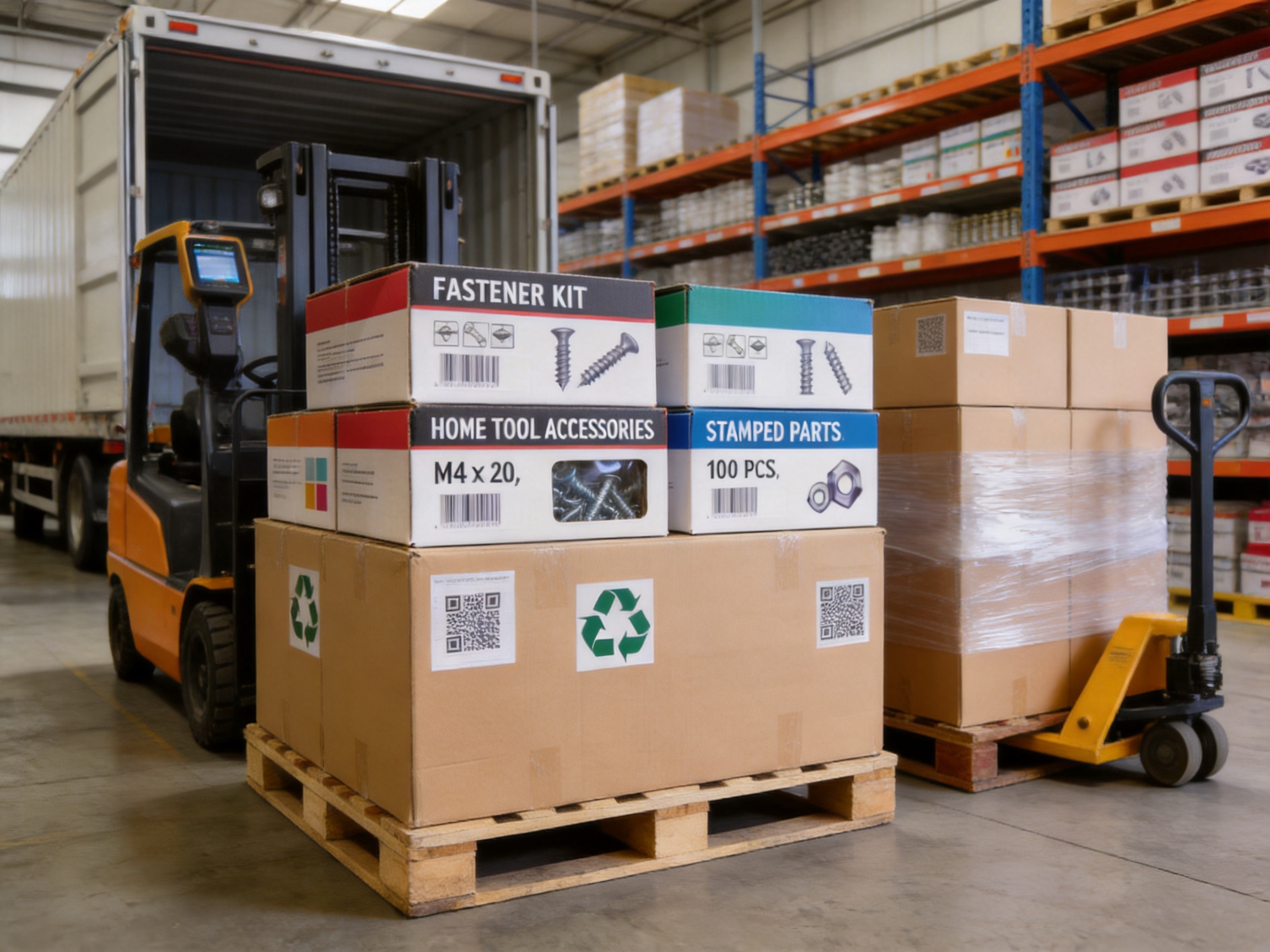
Outer carton compatibility is also important. Individual color boxes are usually packed into master cartons. If the color box dimensions are optimized for the outer carton, space is used efficiently and movement during transport is reduced. Poor dimension planning can cause boxes to shift, crush, or waste container space.
Moisture control should be considered for metal products. While the color box itself may not replace anti-corrosion packaging, it can be combined with inner bags, desiccants, vapor corrosion inhibitor materials, or coated paper when needed. Export shipments to humid regions may benefit from these added measures.
Drop testing, compression testing, vibration simulation, and real shipment trials help confirm performance. A supplier that tests packaging under realistic conditions can prevent problems before mass distribution. This is a major advantage over suppliers that rely only on visual inspection.
Sustainability and Responsible Packaging
Sustainability is now a major consideration in packaging decisions. Customers, retailers, and regulators increasingly expect packaging to reduce waste, support recycling, and avoid unnecessary materials. Color boxes can meet these expectations when designed responsibly.
Paper-based color boxes are generally easier to recycle than many mixed-material packages. When recyclable coatings and inks are selected, the package can better support circular material systems. Using paperboard from responsible sources can also improve environmental performance.
Right-sizing is one of the simplest sustainability strategies. A box that is too large wastes paperboard, increases shipping volume, and may require extra filling material. A properly sized color box reduces material use and improves logistics efficiency. For heavy hardware products, right-sizing also improves safety because less internal movement occurs.
Material reduction should not compromise protection. If packaging becomes too weak, product damage may increase, creating more waste than the material savings achieved. Sustainable packaging must balance reduced material with functional reliability. A damaged product, returned shipment, or repacked order has a much larger environmental impact than a carefully optimized box.
Replacing excessive plastic with paperboard structures can also support sustainability goals. For products traditionally packed in plastic blisters, a printed paperboard color box with a small window or clear product illustration may reduce plastic use. Where visibility is required, recyclable window materials can be considered.
Ink and coating selection matters. Water-based coatings, low-odor inks, and environmentally considerate finishing options can reduce environmental burden. Clear recycling symbols and disposal instructions printed on the box help end users handle packaging responsibly.
Bulk packing efficiency also contributes to sustainability. If individual color boxes are dimensioned to fit master cartons and pallets efficiently, transportation emissions per unit can be reduced. Smart packaging design considers the full journey, not only the appearance of a single box.
Customization for Different Sales Channels
Color box packaging should be adapted to the sales channel. A product sold in a hardware store may require different packaging from a product sold through e-commerce or industrial distribution.
Retail packaging must attract attention and provide information quickly. It should include strong product identification, clear specifications, shelf-friendly dimensions, and durable surface finishing. Hang holes or display openings may be added depending on store requirements. Retail boxes must look clean even after multiple customers handle them.
E-commerce packaging must survive parcel delivery. Individual packages may be shipped without the protection of full pallets or controlled retail distribution. The color box may need stronger board, reinforced corners, or an additional mailer. If the color box is also the customer-facing package, it must resist crushing and abrasion during last-mile delivery.
Wholesale packaging focuses on efficient handling and identification. Boxes should stack well, fit master cartons, and display product codes clearly. Large distributors may require standard label positions, barcode formats, and carton markings. Consistency is essential for warehouse automation and inventory accuracy.
Promotional packaging emphasizes visual impact and customer engagement. Special finishes, display trays, multipack structures, and seasonal designs can help increase sales. For hardware products, promotional packaging may be used for starter kits, furniture assembly packs, repair sets, or home improvement bundles.
Industrial packaging prioritizes durability and clarity. Buyers may care less about decorative effects and more about correct specifications, batch traceability, and easy storage. A clean, well-structured color box with strong labeling can meet these needs while still presenting a professional image.
Quality Control Throughout the Packaging Process
Quality control begins with material inspection. Paperboard thickness, stiffness, moisture content, surface quality, and coating condition should be checked before production. If raw materials vary too much, printing and folding quality may become unstable.
Prepress inspection ensures that artwork is correct. Text, images, barcodes, color references, dielines, bleed areas, safety margins, and folding directions must be verified. Hardware packaging often includes technical data, so accuracy is critical. A wrong screw size printed on a box can cause customer complaints even if the product inside is correct.
During printing, operators monitor color consistency, registration, ink density, dot quality, and surface defects. Samples are compared with approved proofs. Color control systems and standardized lighting can help reduce subjective judgment and improve repeatability.
After printing, finishing quality is checked. Coating coverage, lamination adhesion, surface scratches, bubbles, wrinkles, and gloss level should meet requirements. Finishing problems can reduce both appearance and durability.
Die-cutting inspection verifies dimensions, cutting cleanliness, crease depth, hole position, and waste removal. Creases must be deep enough to fold cleanly but not so deep that they crack. Cutting edges should be smooth and accurate.
Folding and gluing inspection checks alignment, glue strength, squareness, and opening performance. Boxes should open smoothly and close securely. Glue seams should not separate under normal stress. Finished boxes should be packed flat or assembled according to customer requirements.
Final inspection reviews the full order. Inspectors may check random samples or use more detailed sampling plans depending on customer requirements. The inspection can include dimension measurement, visual review, barcode scanning, assembly testing, and packing verification. This systematic control reduces the risk of defects reaching customers.
How Color Boxes Improve Brand and Product Value
Although packaging must protect the product, it also builds perceived value. In many hardware categories, products may appear similar to buyers. A screw is small, and many screws look alike. Packaging becomes the tool that explains why one product should be trusted over another.
A clean color box communicates professionalism. It tells the customer that the supplier has invested in clear presentation and reliable handling. This can be especially important for new products entering a market where buyers are not yet familiar with the supplier.
Good packaging also supports price stability. Products in weak packaging often compete mainly on price because they do not create a strong quality impression. Products in well-designed packaging can support a more confident market position. The packaging helps justify the product’s value by showing care, consistency, and technical clarity.
Color boxes also encourage repeat purchase. If customers can easily identify the product and remember the package design, they are more likely to buy it again. Consistent packaging systems across related products create shelf recognition and make reordering easier.
For distributors and retailers, good packaging reduces sales friction. Staff can organize products more easily, customers can select products faster, and returned items are less likely to result from confusion. This creates value beyond appearance.
Applications for Fasteners, Home Tools, and Stamped Parts
Color boxes are suitable for many product categories within hardware and industrial supply. For machine screws, the box can display thread size, length, head type, drive type, material, surface finish, and quantity. It can also include application suggestions for machinery, electronics, metal assemblies, or repair work.
For furniture screws, the box can show suitable materials such as wood, particleboard, MDF, or cabinet components. It can include illustrations for assembly use and mark whether the screws are suitable for indoor furniture, hinges, brackets, or connectors. Clear packaging is especially important for furniture assembly products because end users may not be professional installers.
For mixed fastener kits, compartment boxes or insert-supported color boxes help organize different sizes. The outside printing can show a contents chart, helping users find the correct part quickly. This improves the user experience and reduces frustration.
For home tool accessories, color boxes can combine visual appeal with practical information. Drill bits, driver bits, small repair tools, wall anchors, hooks, brackets, and installation kits all benefit from packaging that explains compatibility and use.
For stamped parts, packaging must consider shape and edge protection. A color box with internal dividers, wrapping, or reinforcement can prevent parts from scratching each other or puncturing the package. If the stamped parts are used in furniture, electronics, construction, or machinery, the package can include part numbers and application diagrams.
For new product launches, color boxes help create a professional market introduction. A new fastener or tool accessory can be presented with attractive graphics, key benefits, installation instructions, and retail-ready structure. Packaging helps transform a technical component into a complete commercial product.
Supply Chain Benefits
Color boxes contribute to supply chain efficiency in several ways. First, they standardize unit packaging. When every product type has a defined box size and label system, inventory becomes easier to manage. This is especially useful for companies handling many fastener specifications.
Second, they improve counting and distribution. Packaging a fixed quantity per box allows warehouses and retailers to handle units instead of loose parts. This reduces counting errors and speeds order fulfillment.
Third, they support batch traceability. Printed batch codes, production dates, or labels can help identify product history. If a quality issue occurs, traceability helps isolate affected batches and protect unaffected stock.
Fourth, they improve carton and pallet planning. Properly designed color boxes can be packed efficiently into master cartons, reducing wasted space. Efficient palletization reduces shipping costs and improves load stability.
Fifth, they reduce damage and returns. Stronger boxes protect contents and maintain presentation quality. Fewer damaged packages mean fewer complaints, fewer replacements, and lower total cost.
Sixth, they improve retail handling. Store employees can shelve products faster when packaging is consistent and easy to identify. Shelf-ready display boxes can further reduce labor and improve product visibility.
Why Manufacturing Process Strength Matters More Than Low Price
Low price is attractive, but packaging failure can be expensive. A cheaper box that opens during shipment, prints incorrect information, or fails barcode scanning may cost far more than the initial savings. The real value of color box packaging is measured by total performance.
Manufacturing process strength reduces risk. Stable material sourcing, accurate printing, precise die-cutting, reliable gluing, and strict inspection all contribute to predictable results. Customers need packaging that performs the same way in repeat orders. If every batch looks different or folds differently, the customer must spend extra time solving problems.
Advanced manufacturing also supports faster development. When the supplier has design, sampling, printing, finishing, and quality control capabilities, new packaging can move from concept to production more efficiently. This is important for new product launches and seasonal sales schedules.
Process strength also supports customization without sacrificing reliability. Many customers need different box sizes, languages, colors, and structures. A weaker supplier may struggle with changes, while a stronger manufacturing system can manage variations through controlled procedures.
For hardware products, supplier experience is especially important. Packaging must be tested against real product weight and handling conditions. A beautiful box that cannot hold screws is not successful. A strong manufacturing partner understands both appearance and function.
Best Practices for Developing a Custom Color Box
Customers planning a custom color box should begin by defining the product clearly. Important details include product dimensions, weight per unit, quantity per box, surface treatment, sharpness, oil content, and any corrosion protection needs. The more accurate the product information, the better the packaging recommendation.
The next step is to define the sales channel. Retail, wholesale, e-commerce, and industrial distribution each require different packaging priorities. A retail box may need strong graphics and shelf display features. An e-commerce box may need stronger protection. A wholesale box may need efficient labeling and stacking.
Customers should also provide artwork requirements early. This includes logos, product images, specifications, barcode data, language versions, regulatory marks, recycling symbols, and color references. Early artwork preparation prevents delays in prepress and sampling.
Sample testing is strongly recommended. A physical sample allows the customer to check product fit, assembly, appearance, and strength. For heavy hardware items, samples should be tested with actual contents. Drop, shake, and stacking tests can reveal improvements before mass production.
Packaging should be reviewed as a system. The individual color box, inner packaging, master carton, pallet pattern, and container loading plan should work together. Optimizing only the individual box may create inefficiency later. System-level design reduces cost and improves reliability.
Clear approval procedures help avoid misunderstandings. Customers should approve structure, material, printing proof, surface finish, sample performance, and packing method before mass production. Written specifications make future repeat orders easier.
Q&A Section
What is a color box used for in hardware packaging?
A color box is used to protect, organize, identify, and present hardware products such as screws, fasteners, tool accessories, stamped parts, and repair kits. It combines structural protection with printed product information and retail appeal.
Why is a color box better than a plastic bag for screws?
A color box provides better shape stability, stacking performance, printing space, and protection against puncture. It also looks more professional and helps customers identify product specifications more easily.
Can a color box hold heavy fasteners?
Yes, if it is designed with suitable paperboard, reinforced structure, and proper bottom support. For heavy fasteners, options such as auto-lock bottoms, micro-corrugated board, and internal inserts can improve performance.
What information should be printed on a fastener color box?
Important information includes product name, size, length, material, surface finish, head type, drive type, thread type, quantity, barcode, batch information, application guidance, safety warnings, and recycling marks when needed.
Is color box packaging suitable for export?
Yes. Export color boxes can be designed for long-distance transportation, humidity exposure, stacking pressure, and warehouse handling. They can also be combined with inner bags, desiccants, or corrosion-control materials when required.
How can color boxes support brand value?
Color boxes improve product presentation, communicate specifications clearly, create shelf recognition, and give customers confidence in product quality. A professional package makes the product appear more reliable and easier to choose.
What finishing options are useful for hardware packaging?
Useful finishing options include aqueous coating, gloss or matte varnish, UV coating, anti-scuff coating, and lamination. These finishes help protect printed graphics and improve shelf appearance.
Can color boxes be customized for different markets?
Yes. Box size, structure, language, color design, barcode format, icons, and material can be customized for retail, wholesale, e-commerce, or industrial markets.
How does quality control affect packaging performance?
Quality control ensures that materials, printing, die-cutting, folding, gluing, and final packing meet requirements. It reduces defects, improves repeatability, and prevents packaging problems during shipment or retail display.
What should buyers provide before requesting a custom color box?
Buyers should provide product dimensions, weight, quantity per box, photos or drawings, sales channel, artwork requirements, target market, shipping conditions, and any special protection needs.
Future Trends in Color Box Packaging
Color box packaging continues to evolve as markets demand better sustainability, smarter information, and improved customer experience. One major trend is the use of more recyclable and responsibly sourced materials. Customers want packaging that performs well without unnecessary environmental impact.
Another trend is digital integration. QR codes can connect customers to installation videos, technical documents, product certificates, or reorder pages. For hardware products, this can be very useful because users often need guidance on application, compatibility, or installation.
Short-run customization is also becoming more important. As product lines expand and markets become more segmented, customers may need smaller batches of customized packaging for different regions or promotions. Digital printing and flexible production planning can support this demand.
Improved logistics design is another growing focus. Packaging is increasingly evaluated by how it fits into master cartons, pallets, automated warehouses, and e-commerce delivery systems. A color box that looks good but wastes space may be redesigned for better supply chain efficiency.
Anti-counterfeiting and traceability features may also become more common. Security printing, batch coding, tamper-evident structures, and scannable verification systems can help protect products and customers.
For hardware and fastener suppliers, the future of packaging will be practical, data-rich, sustainable, and visually clear. The best color boxes will not simply decorate products; they will support the entire commercial journey from production to final use.
Conclusion
Color box packaging is a strategic product solution for hardware, fasteners, home tools, stamped parts, and related industrial items. It protects dense and sharp products, improves retail appearance, supports inventory control, communicates technical information, and strengthens customer confidence. Compared with plain cartons, plastic bags, blister packs, and low-grade printed boxes, a well-engineered color box offers a more complete balance of durability, presentation, customization, and supply chain value.
The advantages of a premium color box come from advanced manufacturing processes: product analysis, structural design, material selection, prepress control, high-quality printing, protective finishing, precision die-cutting, reliable folding and gluing, and strict quality inspection. These processes ensure that packaging is not only attractive but also dependable in real transportation and sales environments.
For machine screws, furniture screws, fastener kits, home tool accessories, and stamped parts, packaging must be designed around the product’s real requirements. Weight, sharpness, corrosion sensitivity, counting accuracy, retail display, and export conditions all influence the final design. A capable supplier with hardware knowledge and packaging manufacturing strength can create solutions that reduce risk and improve market performance.
In a competitive marketplace, the color box is more than a container. It is a protector, identifier, presenter, and value builder. When designed and manufactured correctly, it helps products arrive safely, sell more effectively, and leave customers with a stronger impression of quality.
References
International Organization for Standardization. Packaging and the Environment: General Requirements for the Use of ISO Standards in the Field of Packaging and the Environment.
Paperboard Packaging Council. Folding Carton Industry Guide and Best Practices.
Smithers. The Future of Folding Cartons and Color Packaging Markets.
International Safe Transit Association. Packaged-Products Test Procedures and Performance Guidelines.
Packaging Technology and Science. Research Articles on Paperboard Packaging Performance, Compression Strength, and Distribution Testing.
Printing Industries of America. Color Management and Print Quality Control Guidelines.
European Federation of Corrugated Board Manufacturers. Technical References on Corrugated Packaging Performance.