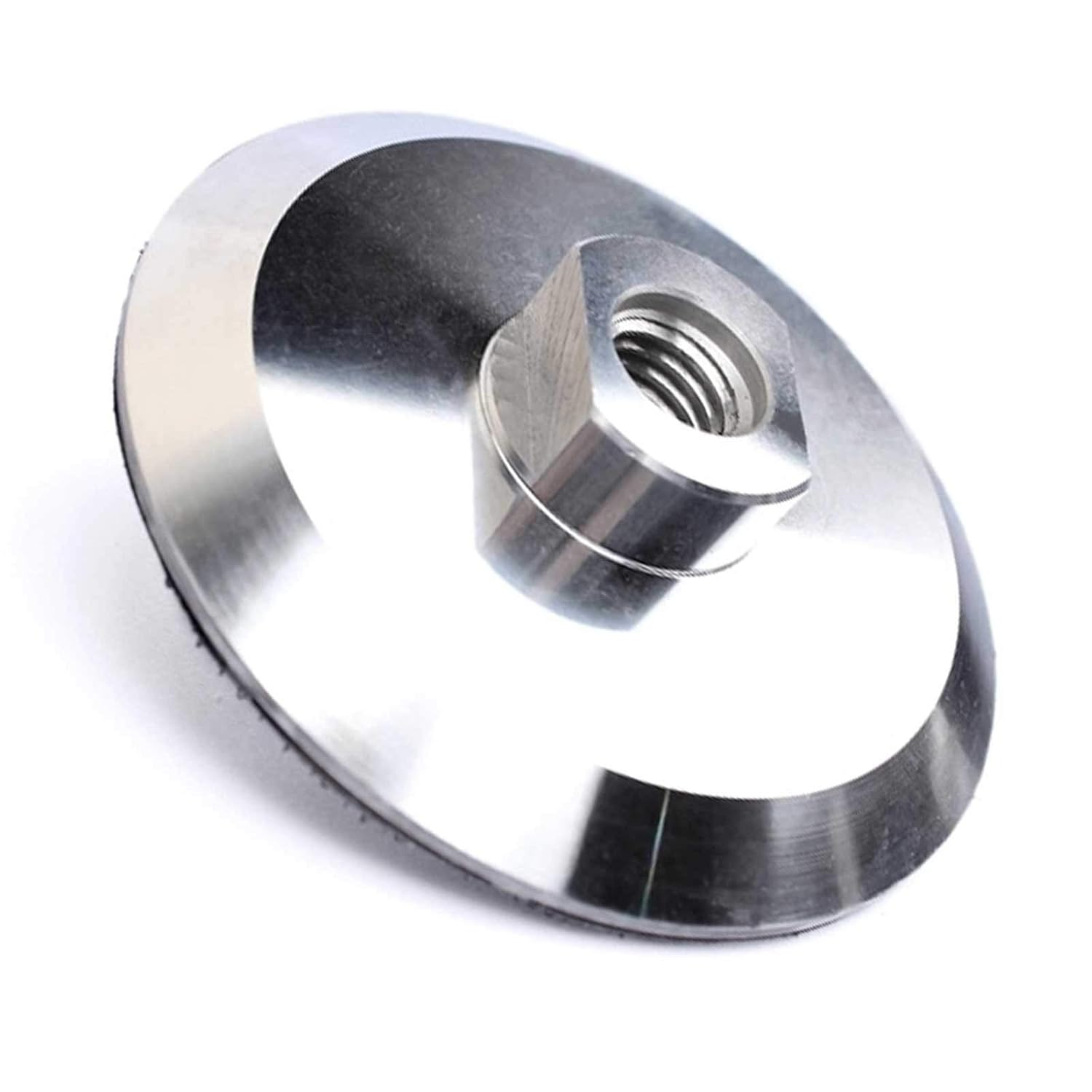
In modern finishing work, the quality of the polishing result is determined not only by the polishing machine or the abrasive pad, but also by the backing pad that transfers power, controls contact pressure, and stabilizes the polishing surface. A heavy-duty aluminium backing pad for diamond polishing pads is a critical accessory for professionals who require smooth operation, consistent surface contact, durability, and repeatable finishing quality. Designed for demanding use in metalworking, stone processing, woodworking, composite finishing, and industrial maintenance, this polishing machine accessory provides a reliable foundation for diamond polishing pads and hook-type pad holders.
This article presents a detailed technical and commercial overview of the heavy-duty aluminium backer, explaining its construction, performance benefits, competitive advantages, manufacturing quality, application range, and selection value for professional workshops, factories, distributors, and end users. It also highlights the advanced manufacturing strengths behind the product, including precision stamping, machining, surface finishing, quality control, and supply-chain capabilities that support stable long-term procurement.
Product Overview: A Strong Foundation for Professional Polishing
The heavy-duty aluminium polishing backing pad is engineered to serve as the connection and support structure between a polishing machine and a diamond polishing pad. While the abrasive pad performs the direct cutting, smoothing, or finishing action, the backing pad plays an equally important role by ensuring even pressure distribution, reduced vibration, strong attachment, and stable rotation. Without a reliable backing pad, even a premium diamond pad may produce uneven results, premature wear, heat buildup, or surface scratches.
This product is built around a durable aluminium backer, offering a strong yet relatively lightweight structure compared with heavier steel alternatives. Aluminium provides an excellent balance of rigidity, corrosion resistance, heat dissipation, and machinability. For polishing applications where repetitive rotation, pressure, and friction are constant, these characteristics help the accessory maintain accuracy and structural stability over time.
The product is designed for use with diamond polishing pads, especially in applications requiring controlled finishing on hard surfaces. Depending on the polishing system, it may be used with hook-and-loop attachments, pad holder hook connections, spindle adapters, or other compatible machine interfaces. Its heavy-duty construction makes it suitable for professional workshops, industrial production lines, fabrication shops, maintenance teams, and contractors who expect long service life from their tools.
Why the Backing Pad Matters in Polishing Performance
Many users focus mainly on the polishing machine and abrasive pad, but the backing pad is the part that determines how effectively torque and pressure are transferred. A poor-quality backing pad can bend, vibrate, overheat, lose grip, or wear unevenly. These problems directly affect surface finish quality and increase labor time, material waste, and replacement costs.
A well-made aluminium backing pad improves polishing performance in several ways. First, it stabilizes the abrasive pad during rotation, helping prevent wobble and uneven cutting patterns. Second, it distributes operator pressure across the polishing surface, preventing localized over-polishing. Third, it supports heat transfer away from the abrasive interface, which can help reduce thermal stress on the pad and workpiece. Fourth, it preserves the shape and alignment of the polishing system, supporting more predictable results from one job to the next.
For professionals, the difference is measurable. A stable backing pad can reduce swirl marks, prevent edge digging, extend abrasive pad life, and improve the consistency of mirror finishing. In production environments, these improvements translate into fewer rework cycles and better productivity. In manual operations, they reduce user fatigue by making the machine feel smoother and more controlled.
Key Advantages of the Heavy-Duty Aluminium Backer
The heavy-duty aluminium backer has several advantages over common low-cost backing plates made from thin metal, soft plastic, low-grade composite, or poorly machined cast material. These advantages are especially important when polishing hard materials, working for long periods, or using diamond pads under demanding conditions.
High Strength with Practical Lightweight Handling
Aluminium offers an ideal combination of strength and reduced weight. Compared with steel, it reduces rotational mass and can make the polishing system easier to control during extended use. Compared with plastic, it provides much better rigidity and dimensional stability. The result is a backing pad that feels solid in operation while helping reduce unnecessary operator fatigue.
Improved Heat Dissipation
Polishing generates heat, especially when working with dense materials such as stone, metal, engineered surfaces, or composites. Aluminium conducts heat more effectively than many alternative backing materials. This helps disperse heat away from the central polishing interface, supporting longer pad life and more stable performance. Better heat management is especially valuable during intensive polishing sessions where stopping frequently is not practical.
Stable Rotation and Reduced Vibration
Precision manufacturing and balanced geometry reduce vibration during use. Vibration-free or low-vibration polishing is essential for surface quality and operator comfort. Excessive vibration can leave inconsistent marks, damage the abrasive pad, loosen attachments, and increase wear on the polishing machine. A rigid, well-balanced aluminium backer supports smoother operation and more predictable contact between the diamond pad and the workpiece.
Strong Attachment for Diamond Polishing Pads
The backing pad is designed to work with diamond polishing pads and pad holder hook systems. A reliable holding surface keeps the abrasive pad firmly in position during rotation. Strong attachment reduces the risk of pad shifting, edge lifting, or accidental detachment. This is particularly important when polishing edges, contours, or vertical surfaces where alignment control is more difficult.
Long Service Life in Professional Use
Professional users need accessories that can withstand repeated daily use. The heavy-duty aluminium construction resists deformation and fatigue better than many low-cost alternatives. When combined with proper surface treatment and quality-controlled production, the backer provides a long working life, lowering replacement frequency and reducing total operating cost.
Competitive Comparison: Why This Backing Pad Stands Out
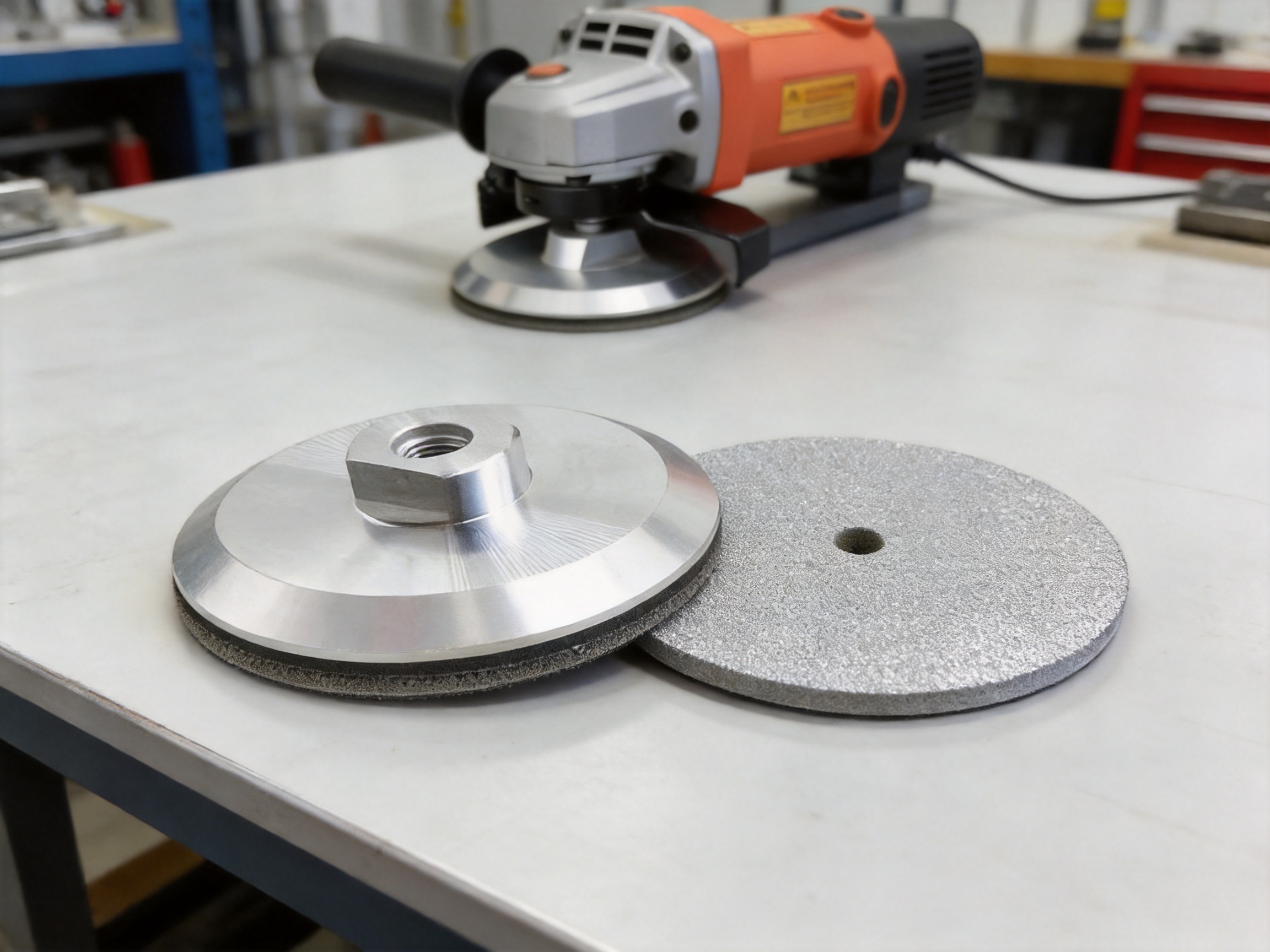
The market includes a wide range of polishing backing pads, from inexpensive general-purpose plates to specialized professional accessories. The heavy-duty aluminium backer stands out because it is designed for performance, durability, and stable production quality rather than short-term cost reduction. For distributors and workshop buyers, this distinction is important because a slightly cheaper accessory can become more expensive if it fails early, causes pad waste, or produces inconsistent finishing quality.
| Feature | Heavy-Duty Aluminium Backing Pad | Typical Low-Cost Plastic Pad | Thin Metal Backing Plate |
|---|---|---|---|
| Structural rigidity | High rigidity for stable polishing pressure | May flex under load | Moderate, but may deform if too thin |
| Heat performance | Good heat dissipation during long sessions | Poor to moderate heat resistance | Moderate, depending on material thickness |
| Vibration control | Precision construction supports smooth rotation | Often less stable at higher speed | Can vibrate if not accurately formed |
| Service life | Designed for heavy-duty professional use | Shorter life under demanding conditions | Variable, often affected by bending |
| Pad support | Even support for diamond polishing pads | May cause uneven wear | Can be stable if thick and balanced |
| Operator comfort | Stable feel with manageable weight | Light but less controlled | May feel harsh or unstable if unbalanced |
| Total value | Lower long-term cost through durability and finish consistency | Low purchase price but higher replacement risk | Depends on quality; inconsistent in low-grade versions |
The table shows that the key advantage is not a single specification, but the balance of strength, heat resistance, precision, and compatibility. This balance is what makes the aluminium backer suitable for professional finishing operations where quality and repeatability matter.
Applications Across Multiple Materials and Industries
The heavy-duty aluminium backing pad is suitable for a wide variety of polishing environments. Its compatibility with diamond polishing pads makes it especially valuable for hard or demanding surfaces, while its stable construction also supports general workshop finishing tasks.
Stone and Engineered Surface Polishing
Diamond polishing pads are widely used on granite, marble, quartz, concrete, and engineered stone. In these applications, pressure stability and pad control are essential. The aluminium backing pad helps keep the diamond pad evenly supported, making it easier to achieve smooth transitions between grit stages and reducing the risk of uneven gloss. Contractors and stone fabricators benefit from a backing pad that can endure repetitive edge work, countertop finishing, and on-site repair polishing.
Metal Surface Finishing
Metal polishing requires stable contact and controlled abrasive action. Whether working on stainless steel, aluminium components, brass fittings, hardware parts, or fabricated assemblies, the backing pad helps maintain even pressure. This supports cleaner surface preparation, reduced vibration marks, and better final brightness. For workshops producing decorative or functional metal parts, consistent polishing can improve both appearance and customer acceptance.
Wood and Composite Finishing
Although diamond pads are mainly associated with hard materials, polishing machine accessories are also used in wood and composite finishing systems. A rigid backer can support polishing and finishing pads used for smoothing, gloss enhancement, or surface preparation. In furniture manufacturing, marine composites, and custom fabrication, a stable backing pad contributes to more controlled results.
Industrial Maintenance and Repair
Maintenance teams often work with varied surfaces and unpredictable conditions. A heavy-duty aluminium backing pad provides reliability when repairing worn surfaces, polishing machine components, restoring equipment panels, or preparing surfaces for coating. Its durability makes it suitable for field use, where tool failure can delay work and increase costs.
Workshop and Production Line Use
In a production setting, the accessory must perform repeatedly with minimal variation. Consistent pad support reduces process instability. When multiple operators use the same type of backing pad, finishing outcomes become easier to standardize. This is valuable for manufacturers who need predictable quality across batches.
Design Features That Improve User Experience
A professional polishing accessory should not only be strong; it should also be practical. The heavy-duty aluminium backing pad is designed to improve the user experience during extended polishing work.
The rigid structure helps the operator maintain control with less corrective effort. When a backing pad wobbles, the user often compensates by gripping the machine more tightly, increasing fatigue. A stable backer allows smoother movement across the work surface. This helps reduce strain on the hands, wrists, and shoulders, especially during long polishing sessions.
The attachment interface supports fast pad changes, allowing users to move through polishing stages efficiently. In many finishing processes, operators must use several grit levels, from coarse grinding to fine polishing. A dependable hook-style holding system helps make these transitions faster while maintaining pad alignment.
The aluminium body also supports durability in tough environments. Workshops can expose tools to dust, water, slurry, metal particles, and impact. A well-made aluminium backer resists many of these conditions better than lower-grade materials. When maintained properly, it remains a dependable part of the polishing system.
Advanced Manufacturing Strength Behind the Product
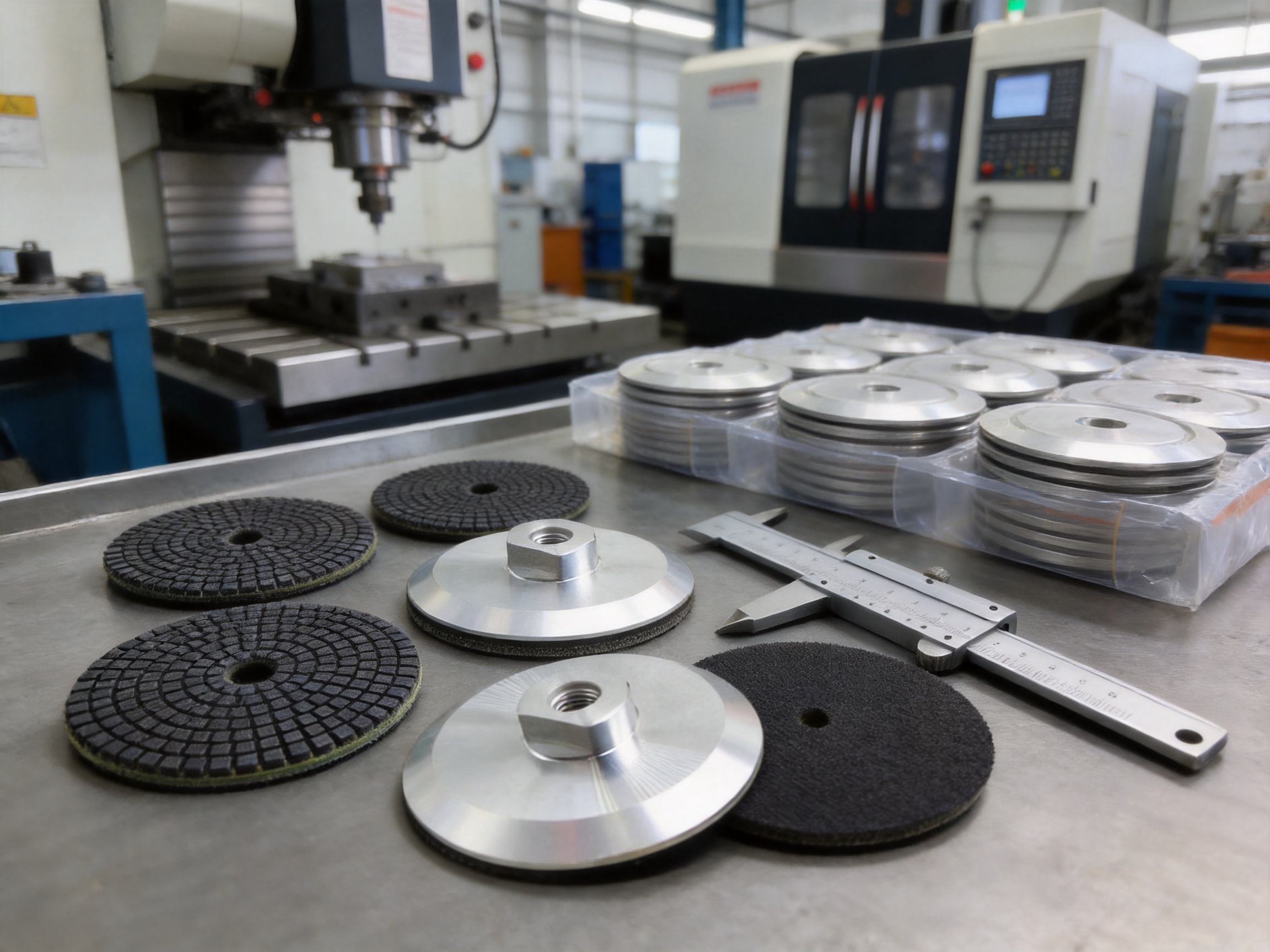
The performance of a backing pad depends heavily on the manufacturing process. Even the right material can fail to perform if it is poorly formed, machined, balanced, or finished. Lizhan Hardware Co., Ltd. supports this product with manufacturing capabilities rooted in hardware production, stamping parts, precision components, and industrial accessory supply. The company operates with a manufacturing base in Zhejiang, China, and a warehouse presence in Thailand, supporting both production capacity and regional supply flexibility.
The company’s strengths include precision forming, metal processing, fastening and hardware experience, quality inspection, and the ability to support bulk workshop and distributor orders. These capabilities are important because polishing accessories must meet both dimensional and practical performance requirements. A backing pad that is slightly out of tolerance may still look acceptable, but it can produce vibration, poor pad fit, or uneven polishing results. Professional manufacturing reduces that risk.
Material Selection and Incoming Inspection
Production quality begins with material selection. Aluminium used for backing pads must provide suitable strength, machinability, and corrosion resistance. Incoming material inspection helps verify that raw material meets required standards before processing begins. This may include checks for thickness, flatness, surface condition, hardness, and material consistency. Reliable raw material reduces the chance of deformation, cracking, or unstable performance during use.
Precision Stamping and Forming
As a manufacturer involved in stamping parts, the company understands the importance of controlled forming processes. Stamping and forming operations require accurate tooling, stable press parameters, and consistent material behavior. For backing pad components, precise forming helps create stable geometry and reduces the need for excessive correction later. Good tooling design also improves repeatability, which is important for large-volume production.
Machining for Dimensional Accuracy
After forming, machining operations may be used to refine critical surfaces, holes, connection points, or mounting interfaces. Accurate machining helps ensure that the backing pad fits polishing machines and adapters correctly. It also supports rotational stability by maintaining symmetry and proper alignment. In polishing accessories, dimensional accuracy directly affects smoothness during operation.
Surface Treatment and Finishing
Surface finishing improves both function and appearance. A clean, well-treated aluminium surface resists corrosion, reduces burr-related risks, and improves handling safety. Surface finishing can also help prepare the backing pad for attachment layers or interfaces. Burr removal is especially important because sharp edges may damage polishing pads, gloves, or workpieces.
Assembly and Attachment Quality
If the backing pad includes hook-style material, adhesive bonding, threaded inserts, or other attachment features, assembly quality becomes essential. The attachment surface must be secure enough to withstand repeated pad changes and rotational force. Bonding strength, alignment, and surface preparation all affect service life. A professional assembly process helps ensure that the pad holder hook performs reliably during demanding use.
Dynamic Stability and Quality Control
Rotating accessories must be stable. Quality control should include inspection of dimensions, flatness, concentricity, attachment strength, and visual finish. For high-performance use, dynamic balance or rotation-related checks are valuable because they help identify parts that may vibrate at working speed. The company’s emphasis on quality inspection helps provide customers with accessories that perform consistently, not merely products that pass a basic appearance check.
How Manufacturing Quality Creates Real Customer Value
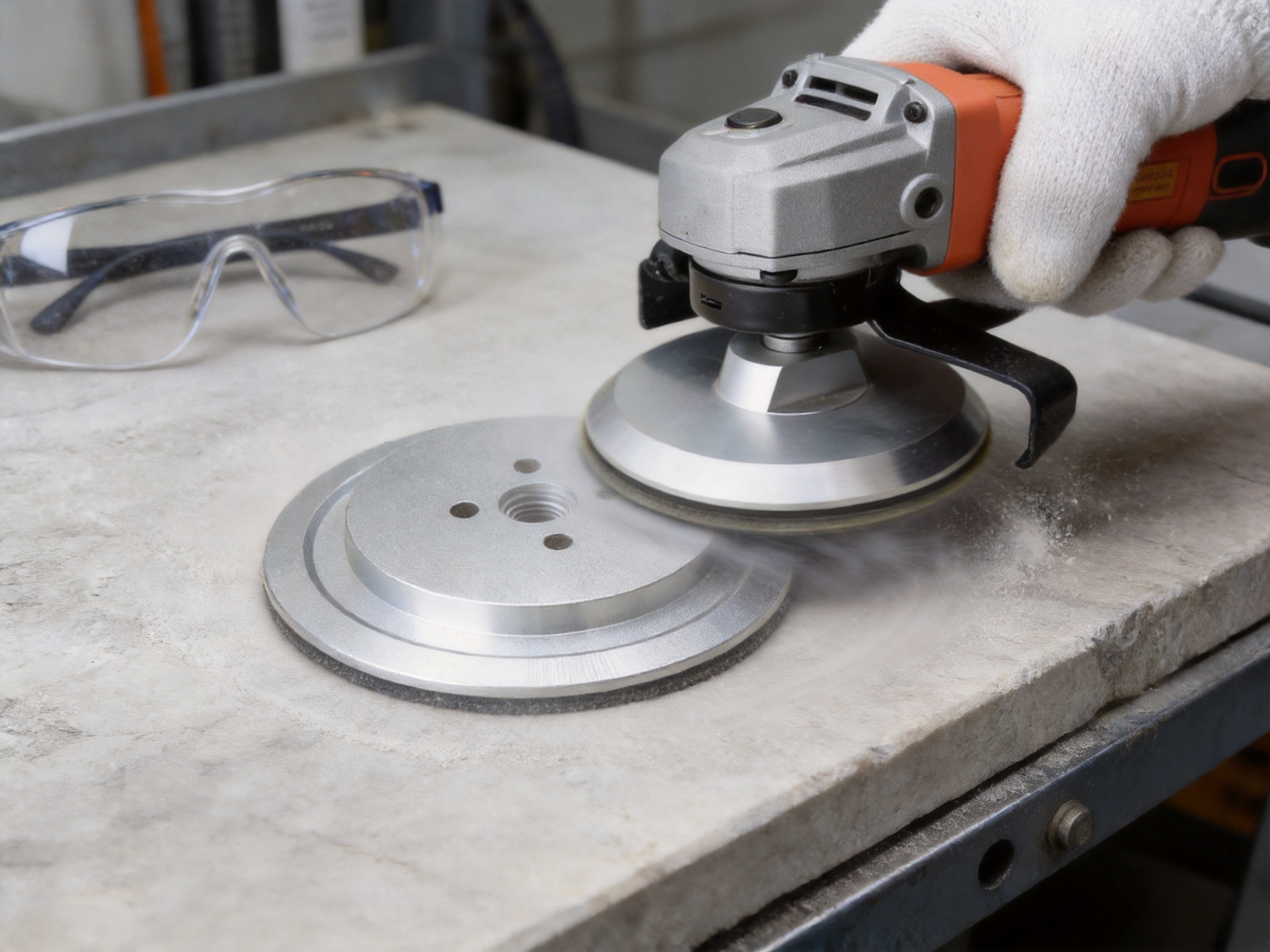
Manufacturing strength is not just a factory claim; it affects daily work in measurable ways. A precisely manufactured backing pad can help reduce pad waste because abrasive pads wear more evenly. It can reduce machine stress because vibration is lower. It can improve finishing speed because users do not need to repeat work as often. It can also support safer operation because pads are held more securely and the accessory remains stable under load.
For wholesalers and distributors, stable manufacturing quality reduces after-sales problems. When a product is supplied in consistent batches, customers are more likely to reorder. For workshops, reliability means fewer interruptions and less tool-related frustration. For industrial buyers, quality consistency supports process control and predictable production output.
This is where the heavy-duty aluminium backing pad has a strong advantage over competitors that rely only on low-cost materials or uncontrolled outsourcing. A lower initial price may attract attention, but inconsistent dimensions, weak bonding, thin construction, and poor balance can quickly eliminate any savings. A professional-grade accessory offers better total value because it protects the productivity of the entire polishing process.
Compatibility and Versatility
The backing pad is designed to complement a broad range of polishing machines and workshop systems. Universal compatibility is a valuable feature because many users operate machines from different manufacturers or maintain multiple tool types in the same workshop. A versatile backing pad reduces the need to keep many specialized accessories in stock.
Compatibility depends on size, mounting thread or adapter, pad attachment type, and operating speed. Users should always confirm the machine interface and recommended speed before installation. When properly matched, the aluminium backer can support diamond polishing pads used in wet or dry polishing processes, depending on the pad and machine system.
The availability of multiple attachment options also allows the accessory to be integrated into different finishing workflows. Some users may need fast pad changes for multi-step polishing. Others may prioritize a strong holding surface for aggressive work. The product’s design supports these practical needs by offering a robust foundation for pad attachment.
Performance in Intensive Polishing Sessions
Long polishing sessions place heavy demands on accessories. Heat, pressure, rotational force, water or slurry exposure, and continuous pad changes all test the quality of the backing pad. Under these conditions, the aluminium backer demonstrates its value through rigidity, heat resistance, and stable handling.
Heat-resistant performance is important because overheating can soften adhesives, deform low-quality pads, or reduce abrasive effectiveness. Aluminium helps manage heat more effectively than many plastic or low-grade composite alternatives. While no backing pad eliminates heat entirely, a conductive metal structure helps reduce localized temperature buildup.
Heavy-duty construction also helps preserve flatness and alignment. If a backing pad bends or warps, the polishing surface becomes inconsistent. This can cause visible defects, especially in final finishing stages. A rigid aluminium body resists this problem and supports consistent contact across the pad surface.
During extended operation, operator comfort matters. Reduced vibration and stable rotation make the machine easier to guide. This can improve work quality because a less fatigued operator can maintain steadier movement and better pressure control. In this way, the product supports both technical performance and human productivity.
Advantages for Bulk Buyers, Workshops, and Distributors
Bulk buyers evaluate products differently from individual users. They need stable quality, predictable supply, competitive pricing, packaging reliability, and support for repeat orders. The heavy-duty aluminium backing pad is well suited for workshops and distributors because it combines professional performance with scalable manufacturing support.
Workshops benefit from equipping multiple operators with the same reliable accessory. This standardization simplifies training and reduces variation in finishing results. Distributors benefit from a product with clear practical value and broad application range. Since polishing accessories are consumable or semi-consumable tools, customers who are satisfied with performance are likely to reorder.
The company supports worldwide shipping and can work with bulk order requirements. The presence of a Thailand warehouse also provides regional supply advantages for some markets, helping reduce logistical uncertainty. Technical support from polishing and hardware specialists can help customers choose suitable accessories based on machine type, material, and application.
Quality Assurance and Customer Confidence
Customer confidence is built through product reliability and responsive support. The company emphasizes satisfaction, technical support, and professional service. For buyers, this means they are not simply purchasing a metal disc; they are purchasing a component backed by manufacturing knowledge and customer assistance.
Quality assurance for this type of product should cover several key points. The backing pad should be visually clean and free of harmful burrs. The attachment surface should be secure and evenly applied. The mounting interface should match the specified size. The pad should rotate smoothly when properly installed. Packaging should protect the product during transport. These details are practical but important because they determine the customer’s first experience and long-term satisfaction.
A 30-day satisfaction approach shows confidence in the product and gives buyers additional reassurance. For industrial buyers, trial orders can be used to verify compatibility before larger procurement. Once approved, bulk ordering can support workshop standardization and inventory planning.
Installation and Use Guidelines
Correct installation improves safety and performance. Before installing the backing pad, the user should inspect the polishing machine, spindle, adapter, and pad interface. The machine should be disconnected from power or air supply during installation. The backing pad should be mounted securely according to the machine’s instructions, ensuring that threads or adapters are properly engaged.
After installation, the user should check that the diamond polishing pad is centered and firmly attached. A pad that is off-center can cause vibration, uneven wear, and poor finish quality. Before applying the pad to the workpiece, the user should run the machine briefly at a safe speed to confirm smooth rotation. If abnormal vibration, noise, or wobble occurs, operation should stop immediately and the assembly should be checked.
During polishing, the operator should use moderate and even pressure. Excessive force does not always improve performance; it can generate heat, overload the machine, and wear the abrasive pad prematurely. The backing pad is designed to provide stable support, but good technique remains essential for best results. Users should also follow the abrasive pad manufacturer’s recommendations for wet or dry use, speed range, and grit sequence.
Maintenance for Longer Service Life
Proper maintenance helps the backing pad deliver long service life. After use, the pad should be cleaned to remove dust, slurry, abrasive particles, or metal debris. If used in wet polishing, it should be dried before storage to reduce corrosion risk on any non-aluminium components or attachment materials. The hook surface or pad holding interface should be kept free of clogged particles to maintain gripping strength.
The backing pad should be stored flat or in a protected position to prevent damage. Heavy objects should not be placed on the attachment surface. Before each use, the operator should inspect for cracks, deformation, loose attachment layers, damaged threads, or excessive wear. Any damaged accessory should be replaced rather than forced into use, because rotating tools must be treated with caution.
Good maintenance practices are simple but effective. They protect the accessory, the polishing pad, the machine, and the workpiece. For workshops, maintenance routines also help reduce tool consumption and improve workplace safety.
Safety Considerations
Polishing tools operate at high rotational speeds, so safety is essential. Users should wear appropriate personal protective equipment, including eye protection, gloves suitable for the task, respiratory protection when dust is present, and hearing protection when necessary. The backing pad should never be used above the recommended speed of the machine or abrasive pad system.
The operator should avoid using damaged pads, incorrect adapters, or poorly fitted accessories. Workpieces should be secured when possible. Hands, clothing, and cables should be kept clear of rotating parts. In wet polishing applications, electrical safety must be carefully managed, and machines designed for wet use should be used according to their instructions.
A high-quality backing pad contributes to safety by improving stability and attachment reliability, but safe operation also depends on correct user behavior. Professional workshops should train operators and establish inspection routines for all rotating accessories.
Environmental and Economic Value
Durable accessories support more sustainable workshop operations. A longer-lasting backing pad reduces waste compared with cheap accessories that must be replaced frequently. Even wear of diamond polishing pads also reduces consumable waste. In addition, improved finishing efficiency can reduce energy use per completed workpiece by shortening polishing time and minimizing rework.
From an economic perspective, the value of the backing pad is best measured by total cost of ownership rather than initial purchase price alone. A reliable aluminium backer can reduce replacement purchases, protect expensive diamond pads, improve work quality, and save labor time. These benefits are especially meaningful in professional settings where labor and rework costs are much higher than the cost of the accessory itself.
Packaging, Supply, and Export Readiness
Polishing accessories must arrive in good condition. Proper packaging protects the aluminium body, attachment surface, and mounting interface during transport. For bulk orders, packaging should also support efficient storage and distribution. Clear labeling helps warehouse staff identify sizes and specifications quickly.
The company’s experience in hardware and fastener-related export supports reliable order handling. With manufacturing operations in China and warehouse capability in Thailand, buyers can benefit from flexible supply arrangements depending on destination and order volume. Worldwide shipping availability makes the product suitable for distributors, e-commerce sellers, industrial suppliers, and workshop procurement teams in multiple regions.
Bulk order discounts can help workshops and distributors control costs while maintaining quality. For buyers who need customized packaging, volume planning, or specification support, direct communication with the sales and technical team can help define the best procurement solution.
How to Select the Right Backing Pad
Selecting the correct backing pad requires attention to several factors. The first factor is machine compatibility. The mounting thread, adapter type, and maximum speed must match the polishing machine. The second factor is pad size. The backing pad should properly support the diamond polishing pad without excessive overhang or undersized contact. The third factor is application intensity. Heavy-duty aluminium construction is recommended for demanding work, frequent use, or hard materials.
The fourth factor is polishing method. Wet polishing and dry polishing may place different demands on heat management, attachment strength, and cleaning. The fifth factor is finish requirement. Fine finishing and mirror polishing require better stability than rough work because small vibration patterns may become visible in the final surface. For high-end finishing, choosing a precision aluminium backer is especially important.
Customers who are unsure should consult technical support and provide details about machine type, pad size, material, and application. This helps ensure the selected accessory matches the real working conditions.
Why Professionals Choose This Aluminium Backer
Professionals choose this backing pad because it solves practical problems in polishing work. It provides strength without unnecessary bulk. It improves stability without complicating installation. It supports demanding diamond pad applications while helping reduce vibration and heat-related issues. It is suitable for varied industries and can be supplied for individual, workshop, or bulk distribution needs.
Compared with competitors that prioritize low price over durability, this product offers better long-term value. Compared with overly specialized accessories, it offers practical versatility. Compared with low-grade plastic or thin metal alternatives, it delivers a stronger foundation for consistent finishing. These advantages make it a smart choice for users who measure success by final surface quality, productivity, and reliability.
The company behind the product adds further value through manufacturing experience, quality control, export capability, technical support, and customer-focused service. This combination of product engineering and supply reliability is what makes the heavy-duty aluminium backing pad a dependable option in the global polishing accessory market.
Frequently Asked Questions
What is the main purpose of an aluminium polishing backing pad?
The main purpose is to support the diamond polishing pad and transfer rotational force from the polishing machine to the abrasive surface. It helps maintain even pressure, stable rotation, and secure pad attachment, which improves polishing consistency and surface finish quality.
Why choose aluminium instead of plastic?
Aluminium provides better rigidity, heat dissipation, and durability than many plastic alternatives. Plastic pads can be useful for light work, but heavy-duty polishing often requires a stronger structure that resists flexing, overheating, and premature wear.
Is this backing pad suitable for diamond polishing pads?
Yes. The product is designed for use with diamond polishing pads and pad holder hook systems. Users should confirm size, attachment type, and machine compatibility before use.
Can it be used for metal polishing?
Yes. It can support polishing work on metal surfaces when matched with the appropriate polishing pad or abrasive system. Its stable structure helps reduce vibration marks and supports consistent finishing.
Can it be used for stone polishing?
Yes. Diamond polishing pads are commonly used for stone, concrete, quartz, marble, granite, and engineered surfaces. The aluminium backer helps keep the pad stable and evenly supported during these applications.
Does the backing pad reduce operator fatigue?
It can help reduce fatigue by improving balance, reducing vibration, and making the polishing machine easier to control. A stable accessory allows the operator to guide the machine with less corrective effort.
How does it compare with thin metal backing plates?
Thin metal backing plates may deform or vibrate under demanding conditions. A heavy-duty aluminium backer offers stronger rigidity, better heat behavior, and more stable performance when manufactured with accurate dimensions and proper finishing.
What should users check before installation?
Users should check machine compatibility, thread or adapter fit, maximum speed, pad size, attachment condition, and overall product integrity. The machine should be disconnected from power during installation.
How should the backing pad be maintained?
It should be cleaned after use, dried if exposed to water, inspected for wear or damage, and stored in a protected location. The attachment surface should be kept free of dust and debris to maintain holding strength.
Is bulk ordering available?
Yes. Bulk order support is available for workshops, distributors, and industrial buyers. Bulk purchasing can help reduce unit costs and standardize polishing accessories across teams.
What makes the product a good value for professional workshops?
Its value comes from durability, stable rotation, heat resistance, secure pad support, and reduced replacement frequency. It also helps protect diamond polishing pads and improve finishing consistency, which can reduce labor and rework costs.
Conclusion
The heavy-duty aluminium backing pad for diamond polishing pads is a vital accessory for achieving professional polishing results. Its strong aluminium construction, stable rotation, heat dissipation, secure pad attachment, and broad compatibility make it superior to many low-cost alternatives. Whether used in stone fabrication, metal finishing, woodworking, composite polishing, maintenance, or production work, it provides the reliable support needed for smooth, consistent, and efficient surface finishing.
Behind the product is a manufacturing system with experience in hardware production, stamping parts, precision processing, quality inspection, and international supply. These strengths help ensure that customers receive a backing pad that is not only durable but also consistent from order to order. For professionals who want better finishing performance, longer accessory life, and dependable supply, this aluminium backer is a practical and valuable choice.
References
1. Society of Manufacturing Engineers. Fundamentals of Manufacturing Processes and Materials.
2. ASM International. Metals Handbook: Properties and Selection of Nonferrous Alloys and Special-Purpose Materials.
3. Kalpakjian, S., and Schmid, S. Manufacturing Engineering and Technology.
4. Marinescu, I. D., Hitchiner, M., Uhlmann, E., Rowe, W. B., and Inasaki, I. Handbook of Machining with Grinding Wheels.
5. Bralla, J. G. Handbook of Manufacturing Processes: How Products, Components and Materials Are Made.
6. American National Standards Institute. Safety Requirements for Abrading Materials and Rotating Tool Accessories.
7. Degarmo, E. P., Black, J. T., and Kohser, R. A. Materials and Processes in Manufacturing.