In professional polishing, the quality of the backing pad often determines the quality of the final surface. A polishing machine may provide speed, torque, and stability, and a diamond polishing pad may provide cutting power and finishing capability, but the backing pad is the critical interface that transfers machine energy to the work surface. The Heavy-Duty Aluminium Polishing Backing Pad for Diamond Polishing Pad Holder Hook is designed for demanding users who need consistent pressure distribution, long service life, secure pad holding, and reliable performance across metal, stone, wood, composite, and industrial finishing applications.
This product is not a simple accessory. It is a precision support component engineered to improve polishing efficiency, reduce vibration, protect consumable pads, and help operators achieve cleaner, more uniform results. For workshops, fabricators, stone processing plants, metal finishing departments, furniture production facilities, and maintenance teams, the right backing pad can reduce rework, increase pad life, and improve overall productivity.
Manufactured with a heavy-duty aluminium backer and designed for compatibility with diamond polishing pads, the product supports stable operation under intensive polishing conditions. Its strong structure, heat-resistant performance, and secure hook-style holding surface make it suitable for professional use where standard plastic or low-grade backing plates may deform, loosen, or fail prematurely.
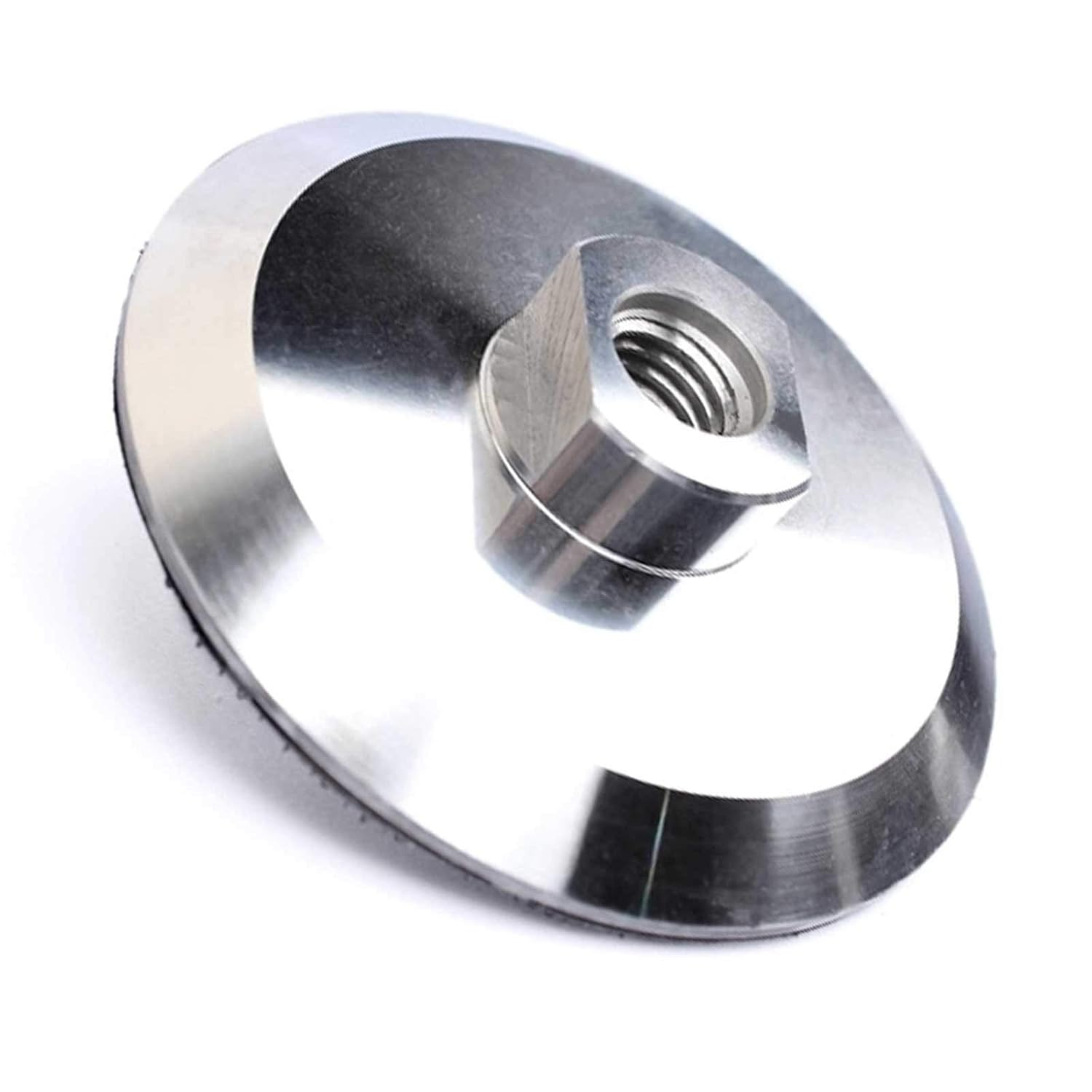
Polishing machine accessorie Polishing Backing Pad Heavy-Duty Aluminium Backer for Diamond Polishing Pad Holder Hook
Product Overview
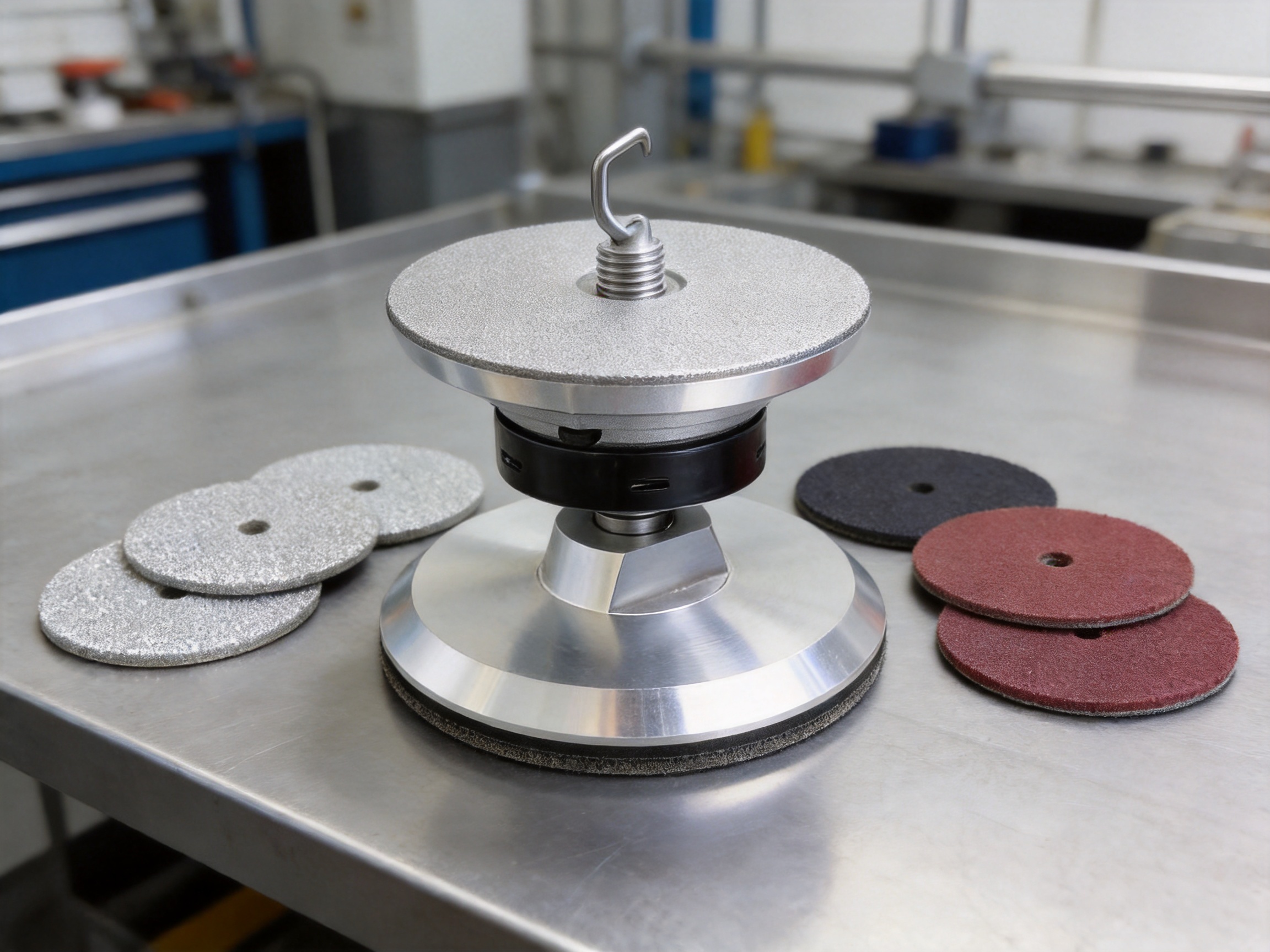
The Heavy-Duty Aluminium Polishing Backing Pad is a professional polishing machine accessory designed to hold diamond polishing pads securely during surface preparation, grinding refinement, and final finishing. It is especially suitable for applications requiring flatness, balance, strength, and controlled pressure. The aluminium construction offers a combination of rigidity and manageable weight, making it a practical choice for heavy-duty use without creating unnecessary operator fatigue.
Unlike low-cost backing pads made from thin plastic, weak alloy, or poorly balanced materials, this aluminium backer is built to withstand demanding polishing sessions. It supports stable pad rotation, helps reduce vibration, and maintains consistent contact between the abrasive pad and the working surface. The result is improved surface uniformity, better control, and a more professional finish.
The product can be used with polishing machines in workshops, factories, construction sites, and repair environments. It is suitable for working with metal surfaces, stone slabs, concrete edges, wood panels, composite parts, and other materials where diamond polishing pads are commonly used. Its universal design and multiple attachment compatibility make it a valuable accessory for technicians who need flexible, dependable equipment.
Why the Backing Pad Matters in Polishing
Many users focus on polishing machines and abrasive pads but underestimate the importance of the backing plate. In reality, the backing pad affects almost every aspect of the polishing process. It influences pressure transfer, surface flatness, heat generation, tool stability, abrasive pad wear, and operator comfort. A poor-quality backing pad can cause uneven marks, premature pad failure, vibration, poor adhesion, unstable rotation, and inconsistent surface finish.
A high-quality aluminium backing pad solves these problems by providing a strong, stable platform. When the machine rotates, the backing pad must remain balanced. When pressure is applied, it must resist distortion. When heat builds up during extended use, it must maintain structural integrity. When abrasive pads are changed repeatedly, the holding surface must remain secure. This product is engineered with these real working conditions in mind.
For professional polishing, consistent energy transfer is essential. If the backing pad flexes too much, the diamond polishing pad may not maintain full contact with the workpiece. If the pad is unbalanced, the operator may experience vibration and fatigue. If the holding surface is weak, the polishing pad can shift or detach. A reliable aluminium backing pad minimizes these risks and helps create smoother, more predictable results.
Key Advantages Over Common Competitor Products
This product offers several advantages compared with ordinary backing pads available in the market. Many competing products are designed primarily for low-cost use, while this aluminium backer is designed for strength, stability, and long-term value. The difference is clear during continuous operation, high-speed polishing, and work on hard materials.
First, the heavy-duty aluminium structure provides superior rigidity. Plastic backing pads may be suitable for light-duty applications, but they can deform under pressure or soften when exposed to heat. Low-grade metal pads may lack balance or corrode easily. Aluminium offers a strong yet lightweight solution, helping operators maintain control while still benefiting from a durable support plate.
Second, the product is engineered for improved balance. A well-balanced backing pad reduces vibration, which is one of the main causes of poor polishing quality and operator discomfort. Excessive vibration can leave uneven marks, reduce pad contact, and increase machine wear. By supporting stable rotation, the aluminium backer helps maintain consistent polishing pressure and a cleaner finish.
Third, the product provides enhanced heat resistance. Polishing generates friction, and friction creates heat. During long polishing sessions, heat can weaken adhesives, damage foam layers, and affect the holding strength of inferior backing pads. Aluminium naturally helps dissipate heat better than many non-metallic materials, making it a practical option for extended use.
Fourth, the holding interface is designed for convenient pad attachment and removal. Professional users often need to switch between different grit levels, from coarse grinding to fine polishing. A secure hook-style holder enables faster pad changes while maintaining strong attachment during operation. This improves workflow efficiency and reduces downtime.
Fifth, the product is compatible with a wide range of polishing machines and diamond pads. Workshops often use machines from different sources, and a versatile accessory reduces the need for multiple specialized components. This universal compatibility makes the backing pad suitable for both industrial users and professional tradespeople.
Heavy-Duty Aluminium Construction
The core of the product is its aluminium backer. Aluminium is widely used in high-performance tooling components because it offers an excellent balance between strength, weight, machinability, and corrosion resistance. For a polishing backing pad, these characteristics are especially valuable.
The aluminium body gives the pad the rigidity needed to distribute pressure evenly across the abrasive surface. This helps prevent localized pressure points that can create swirl marks, uneven scratches, or inconsistent gloss. When paired with diamond polishing pads, the stable base allows the abrasive surface to work efficiently and predictably.
At the same time, aluminium is lighter than many other metals, helping reduce the total rotating mass of the accessory. This matters because excessive weight can increase operator fatigue, place additional load on the machine spindle, and reduce control during detailed polishing. The heavy-duty design provides strength without unnecessary bulk.
Another benefit is heat management. Aluminium conducts heat effectively, helping move heat away from the pad interface. While no backing pad can eliminate heat entirely, better heat distribution reduces the risk of localized overheating. This can contribute to longer pad life, better adhesive performance, and safer operation during intensive polishing.
Precision Engineering for Stable Performance
Precision engineering is essential for any rotating accessory. Even a small imbalance can become noticeable at operating speed. An unbalanced backing pad may vibrate, produce noise, reduce finish quality, and accelerate wear on the polishing machine. The product is designed with attention to dimensional accuracy, surface consistency, and reliable fit.
Lizhan Hardware Co., Ltd. applies manufacturing discipline developed through the production of hardware, fasteners, stamping parts, and industrial components. This background supports the company’s ability to control tolerances, material consistency, and production repeatability. For a polishing backing pad, these capabilities translate into better concentricity, smoother operation, and dependable quality from batch to batch.
The manufacturing process may involve material selection, precision forming, machining, surface finishing, inspection, and packaging controls. Each step contributes to the final performance of the product. A precisely produced backing pad allows diamond polishing pads to rotate evenly, maintain contact, and perform according to their intended grit level.
Manufacturing Strength and Process Control
A strong product depends on a strong manufacturing system. Lizhan Hardware Co., Ltd. operates with a foundation in hardware production, including fasteners, home tool components, package-related hardware, and stamping parts. This experience gives the company practical knowledge in forming, shaping, finishing, and quality control for metal products.
For aluminium backing pads, manufacturing control begins with raw material evaluation. Aluminium quality affects strength, machining response, surface finish, and durability. Selecting suitable material helps ensure that the finished backer resists deformation and performs consistently during polishing.
After material preparation, the component must be formed or machined to the required geometry. Proper geometry is critical because the backing pad must rotate concentrically. The pad surface must support the abrasive disc evenly, and the attachment area must connect securely with the machine or adapter. Precision processing helps achieve these requirements.
Surface treatment is also important. A smooth, clean, and properly finished aluminium surface improves durability and appearance. Depending on customer requirements, surface processes may include deburring, polishing, cleaning, or protective finishing. Careful edge finishing reduces the risk of damage to pads, workpieces, or operators.
Inspection is another major strength. Dimensional checks, visual inspection, fit verification, and functional testing can all be applied to ensure that the backing pad meets expected performance standards. Consistency is especially important for bulk orders, where workshops and distributors need reliable products across many units.
Technical Features
The Heavy-Duty Aluminium Polishing Backing Pad combines practical design with professional-grade performance. Its features are intended to support demanding polishing work while remaining easy to use in everyday production environments.
| Feature | Practical Benefit | Professional Value |
|---|---|---|
| Heavy-duty aluminium backer | Provides rigidity, strength, and heat dissipation | Improves durability during intensive polishing |
| Balanced rotating structure | Reduces vibration and improves machine control | Supports smoother surface finishes |
| Hook-style pad holder | Allows secure attachment and quick pad changes | Reduces downtime between grit stages |
| Universal compatibility | Works with many polishing machines and diamond pads | Increases flexibility for workshops and contractors |
| Heat-resistant performance | Maintains stability under friction and extended use | Helps protect pads and maintain finishing quality |
| Precision manufacturing | Supports accurate fit and stable rotation | Reduces rework and improves productivity |
Applications Across Industries
This aluminium backing pad is suitable for a wide range of industries and polishing tasks. In metalworking, it can be used for polishing stainless steel, aluminium components, hardware parts, fabricated structures, decorative panels, and repair surfaces. Its rigidity helps maintain even contact, which is important when working toward a smooth or mirror-like finish.
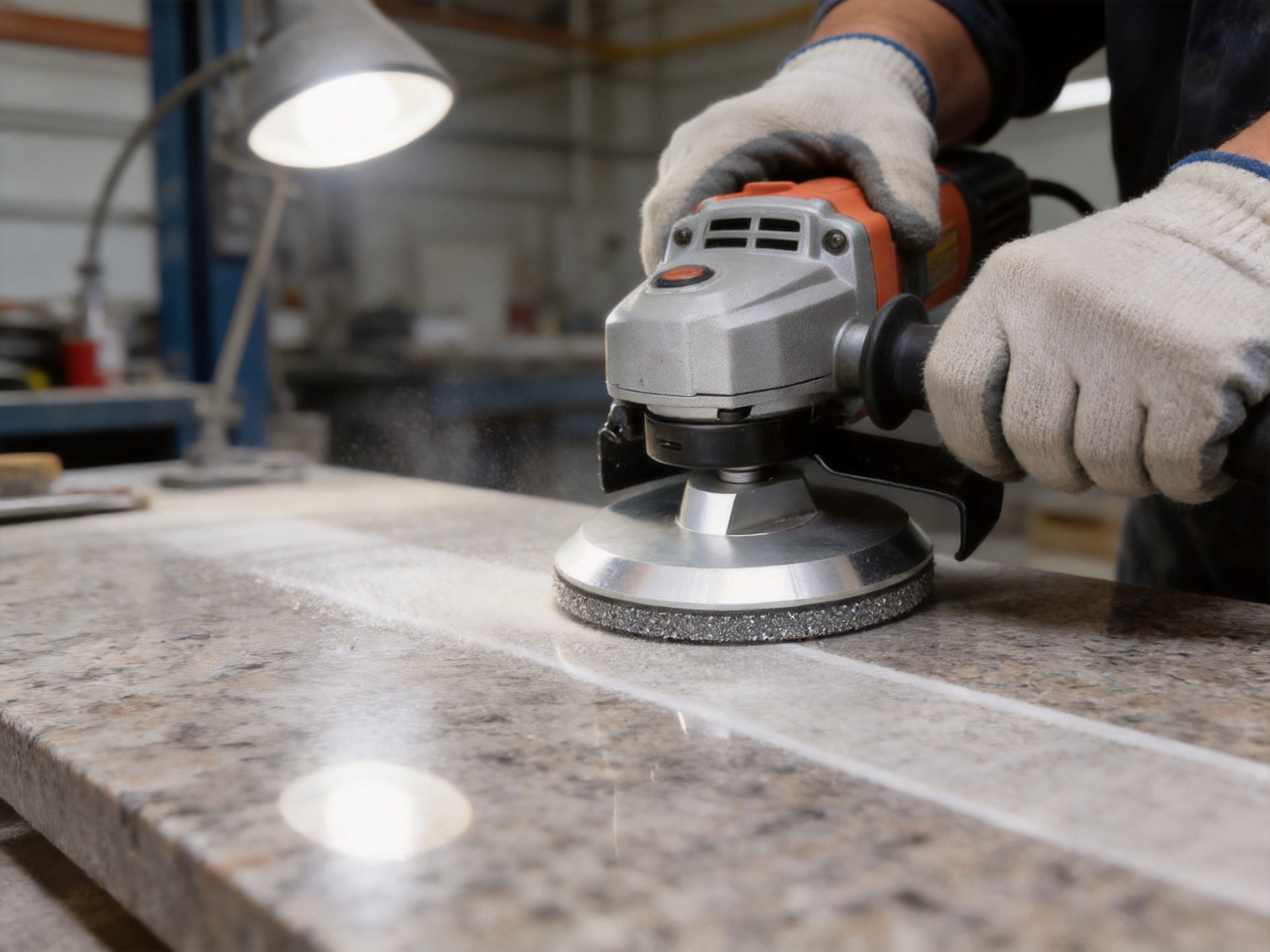
In stone and concrete polishing, the backing pad can support diamond pads used for granite, marble, engineered stone, terrazzo, and concrete edges. Stone polishing often requires multiple grit stages, and fast pad changes are essential. A secure holder makes the process more efficient while maintaining stable pad contact.
In woodworking and furniture manufacturing, polishing accessories may be used for surface refinement, coating preparation, and finishing tasks. Although diamond pads are more commonly associated with hard materials, stable backing support is also important for fine surface preparation on wood or composite panels.
In composite manufacturing, consistent pressure distribution is valuable because composite materials can be sensitive to uneven finishing. The aluminium backing pad helps technicians maintain a controlled polishing action, reducing the risk of surface irregularities.
The product is also useful in maintenance and repair operations. When technicians need to restore surfaces, remove marks, refine edges, or prepare parts for coating, a dependable backing pad improves control and reduces tool-related problems.
Improving Finish Quality
Surface finishing is a combination of abrasive performance, machine control, operator skill, and accessory quality. A premium backing pad contributes directly to finish quality by stabilizing the abrasive pad. When the diamond pad remains flat and secure, the abrasive particles can work evenly across the surface.
Uneven pressure is one of the most common causes of polishing defects. It may create high-gloss areas next to dull areas, visible swirl marks, or inconsistent scratch patterns. A rigid aluminium backer helps reduce these issues by providing a firm support structure. This is especially important for flat surfaces and edges where uniform appearance matters.
Vibration reduction also improves finish quality. Excessive vibration can cause the pad to bounce or chatter, leaving marks that require additional polishing steps. By supporting smoother rotation, the backing pad helps operators achieve the desired finish faster and with fewer corrections.
For high-end finishing, such as mirror polishing or decorative metalwork, small improvements in accessory quality can have a major impact. A stable backing pad can reduce rework, save consumable pads, and help produce more predictable results.
Reducing Operator Fatigue
Professional polishing often involves long working hours, repetitive movements, and sustained tool control. Operator fatigue can reduce productivity and increase the chance of mistakes. A backing pad with poor balance or excessive vibration forces the operator to work harder to maintain control. Over time, this can cause discomfort and reduce finishing accuracy.
The aluminium backing pad is designed to support smoother operation. Its balance and structural stability help reduce unnecessary vibration, allowing operators to guide the machine with greater confidence. The manageable weight of aluminium also helps prevent the tool from becoming overly heavy.
Ergonomic performance is not only about handle design or machine weight. Every rotating accessory contributes to how the tool feels during use. A well-made backing pad helps create a more controlled and comfortable polishing experience, especially during extended sessions.
Durability and Long-Term Value
Professional buyers often evaluate accessories based on total value rather than initial price alone. A low-cost backing pad may appear economical, but if it fails quickly, damages polishing pads, produces poor finishes, or causes downtime, the real cost becomes much higher. The heavy-duty aluminium design is intended to deliver better long-term value.
Durability comes from material strength, precise processing, and reliable construction. Aluminium resists many forms of wear and environmental exposure better than ordinary plastic components. It also maintains shape under pressure, helping preserve polishing consistency over time.
Long-term value also comes from improved consumable efficiency. Diamond polishing pads can be expensive, and poor support may cause them to wear unevenly or detach prematurely. A secure and stable backing pad helps the abrasive pad perform as intended, potentially extending its usable life.
For workshops and production environments, tool reliability affects scheduling and output. Accessories that fail during production interrupt workflow and may delay delivery. A durable backing pad supports smoother operations and reduces unexpected replacement needs.
Universal Compatibility and Flexible Use
Modern workshops often use different polishing machines for different tasks. Some machines are designed for heavy grinding, others for fine finishing, and others for edge polishing or detail work. A versatile backing pad simplifies accessory management by working with commonly used equipment and diamond polishing pad formats.
The product is designed to complement many industrial and workshop polishing machines. Its attachment options allow users to adapt it to different setups, depending on machine spindle type, pad size, and application requirements. This flexibility is valuable for distributors, contractors, and fabrication shops that serve diverse customers.
Compatibility also matters when changing between grit stages. Diamond polishing often proceeds through a sequence, such as coarse, medium, fine, and final polish. A secure hook-style system allows quick pad changes without complicated tools. This helps operators maintain workflow momentum and complete jobs more efficiently.
Role in Diamond Polishing Systems
Diamond polishing pads are valued for their ability to cut and refine hard materials. However, their performance depends heavily on support. If the backing pad is too soft, uneven, or unstable, the diamond pad may not produce the intended scratch pattern. If the backing pad does not hold securely, the pad may shift during use, creating safety and quality concerns.
The aluminium backing pad provides the stable foundation needed for diamond polishing systems. It helps keep the pad aligned with the rotating axis and supports consistent contact pressure. This is especially useful when working with hard stone, concrete, metal, or other materials that require strong abrasive action.
For wet or dry polishing environments, the backing component must remain dependable. Although operating conditions vary, aluminium offers strong performance in many workshop settings. Proper use, cleaning, and storage can further extend service life.
Quality Assurance and Inspection
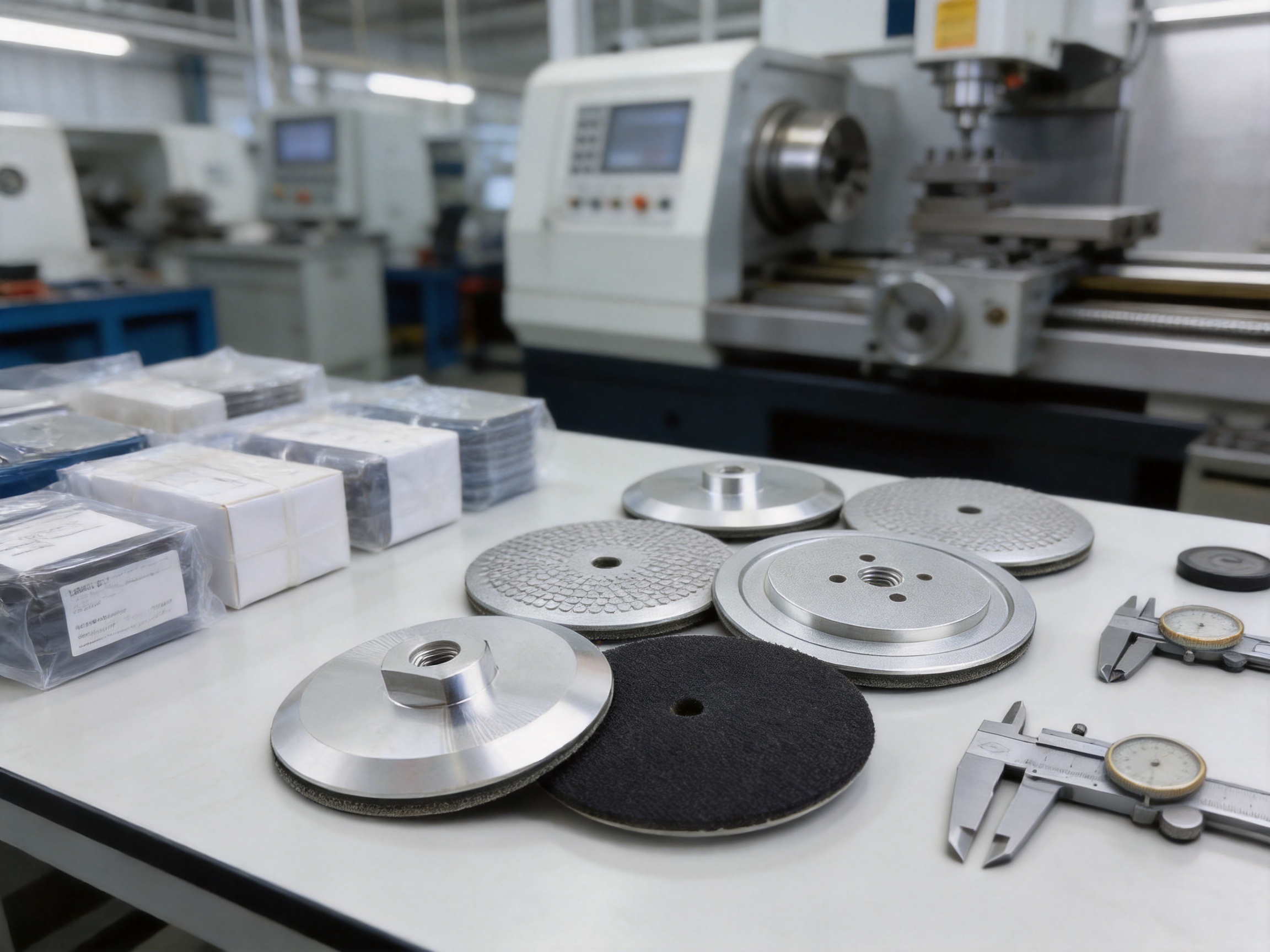
Quality assurance is central to professional manufacturing. Lizhan Hardware Co., Ltd. emphasizes consistency and practical performance in its hardware and metal component production. For backing pads, quality control may include inspection of size, shape, balance, surface condition, attachment integrity, and packaging condition.
Dimensional inspection ensures that the backing pad fits properly with the intended machine and polishing pad. Even small deviations may affect rotation or attachment. Visual inspection helps identify surface defects, burrs, or damage that could interfere with safe use. Functional checks help confirm that the pad holder performs reliably.
Packaging control is also important. Polishing accessories can be damaged during shipping if not protected properly. Suitable packaging helps preserve product condition from factory to customer, especially for international shipping and bulk orders.
For business customers, consistent quality reduces after-sales problems and strengthens customer trust. Distributors and workshops need products that perform reliably without constant sorting or replacement. A disciplined inspection process supports that expectation.
Company Manufacturing Advantages
Lizhan Hardware Co., Ltd. brings practical manufacturing experience from multiple hardware categories, including fasteners, home tools, package hardware, and stamping parts. This broad production background gives the company a strong understanding of metal forming, precision processing, and industrial quality expectations.
The company’s manufacturing strength is supported by its China factory and Thailand warehouse arrangement, allowing it to serve international customers with production capability and logistics flexibility. For buyers who require stable supply, bulk order support, and responsive communication, this structure provides meaningful advantages.
Advanced production capability is not only about machinery; it is also about process management. From material procurement to final shipment, each step must be coordinated. Lizhan Hardware Co., Ltd. can apply its experience in hardware production to maintain consistent product output, manage custom requirements, and support customers in selecting suitable accessories.
The company’s familiarity with screws, fasteners, and stamped components also supports precision thinking. Fastener manufacturing requires attention to thread accuracy, material strength, surface finish, and batch consistency. These same manufacturing principles are valuable when producing polishing machine accessories that must rotate accurately and withstand mechanical stress.
Advanced Manufacturing Processes
The production of a professional aluminium backing pad involves several controlled manufacturing stages. Although exact processes may vary by specification, the core principles include material control, forming or machining, surface finishing, attachment integration, inspection, and packaging.
Material control begins with selecting aluminium suitable for strength, weight, and finishing quality. The material must be stable enough to resist deformation while remaining workable for precision processing. Proper material selection helps ensure that the backing pad performs reliably under pressure and speed.
Precision machining or forming creates the required dimensions and structure. This stage determines the flatness, concentricity, and attachment geometry of the product. Accurate processing is essential because the backing pad must rotate smoothly. Poor machining can lead to wobble, vibration, or uneven pad contact.
Deburring and edge finishing remove sharp edges and improve safety. A clean edge protects polishing pads from unnecessary wear and reduces handling risks for operators. Surface cleaning removes residues that could affect assembly or appearance.
Attachment surface preparation ensures that the hook-style holder or pad interface functions correctly. The holding surface must be secure enough to keep the diamond pad in place during use, while still allowing convenient removal when changing pads.
Final inspection checks the product before packaging. This may include verifying dimensions, surface condition, attachment security, and general workmanship. For bulk orders, sampling and batch checks help maintain consistency.
Customization and Bulk Supply
Professional customers may require different sizes, attachment formats, thicknesses, packaging options, or order quantities. A manufacturer with broad hardware experience can respond more effectively to such requirements. Lizhan Hardware Co., Ltd. supports customers who need practical recommendations and bulk order solutions for workshops, distributors, and industrial users.
Customization can help customers match the backing pad to specific polishing machines, diamond pad types, and target materials. For example, a stone polishing shop may prioritize strong pad holding and heat resistance, while a metal finishing workshop may prioritize balance and surface flatness. Understanding these differences helps produce accessories that better fit real applications.
Bulk supply capability is important for businesses that need stable inventory. Workshops cannot afford frequent shortages of essential accessories. Distributors need products that can be shipped reliably and presented professionally to end users. A manufacturer with organized production and packaging processes can support these needs.
Worldwide Shipping and Customer Support
International buyers need more than a good product. They need communication, order coordination, shipping support, and after-sales assistance. Lizhan Hardware Co., Ltd. provides worldwide shipping availability and technical support from polishing and hardware professionals. This helps customers choose suitable accessories and resolve application questions.
Technical support is especially valuable because polishing conditions vary widely. Machine speed, material hardness, pad grit, pressure, wet or dry use, and operator technique all affect results. A knowledgeable supplier can help customers select appropriate backing pads and understand best-use practices.
For bulk purchasers, support may include quotation assistance, product specification discussion, packaging preferences, and logistics planning. This service-oriented approach gives the product an advantage over anonymous low-cost alternatives that offer little guidance or consistency.
Best Practices for Use
To get the best performance from the aluminium backing pad, users should follow practical operating guidelines. Before installation, inspect the backing pad for damage, debris, or attachment wear. Make sure the polishing machine is disconnected from power before mounting or changing accessories.
Install the backing pad securely according to the machine’s requirements. Check that the attachment is tight and properly aligned. An improperly mounted backing pad can cause vibration or safety risks. After installation, run the machine briefly at low speed to confirm stable rotation before applying it to the workpiece.
Select the correct diamond polishing pad for the material and finishing stage. Coarse grits are used for material removal or scratch refinement, while finer grits are used for gloss development. Ensure that the pad is centered on the backing plate to maintain balance.
Use appropriate pressure. Excessive force does not always improve polishing speed and may create heat, increase pad wear, or reduce surface quality. Let the abrasive do the work while maintaining steady, controlled movement.
During extended polishing, monitor heat buildup. If the workpiece, pad, or backing plate becomes too hot, pause to allow cooling. For suitable applications, wet polishing may help manage heat and dust, but users should always follow machine and pad manufacturer recommendations.
After use, clean the backing pad and remove slurry, dust, or abrasive residue. Proper cleaning helps maintain holding strength and extends service life. Store the accessory in a dry, protected location to prevent damage.
Safety Considerations
Safety is essential when using any rotating polishing accessory. Operators should wear appropriate personal protective equipment, including eye protection, gloves when suitable, hearing protection, and respiratory protection if dust is generated. Work areas should be clean, stable, and well ventilated.
Never exceed the recommended operating speed of the polishing pad, backing plate, or machine. High-speed rotation creates significant force, and using damaged or incompatible accessories can be dangerous. Always confirm compatibility before operation.
Do not use a backing pad that is cracked, heavily worn, bent, or visibly damaged. Do not use pads that do not attach securely. If vibration is unusual, stop immediately and inspect the machine, backing pad, and polishing disc.
Good safety practices protect operators, equipment, and workpieces. A high-quality backing pad contributes to safer operation, but it must still be used correctly.
Comparison With Lower-Grade Backing Pads
Lower-grade backing pads often fail in predictable ways. Plastic pads may warp from heat, causing uneven contact. Thin metal pads may bend under pressure. Poorly balanced pads may vibrate excessively. Weak hook surfaces may lose grip after repeated pad changes. Inconsistent manufacturing may create fit problems from one unit to another.
The heavy-duty aluminium backing pad is designed to address these weaknesses. Its rigid structure resists deformation, while its controlled manufacturing supports better balance. The heat-resistant characteristics of aluminium help during long polishing sessions. The secure holder improves pad retention, and the professional design supports repeated use.
Although low-cost accessories may seem attractive for occasional use, professional operations benefit from reliability. Reduced vibration, longer service life, better finish consistency, and fewer interruptions can outweigh a small difference in purchase price. For serious polishing work, the backing pad should be treated as a performance component, not a disposable afterthought.
Environmental and Efficiency Benefits
Durable tools can contribute to more efficient and responsible production. When backing pads last longer, fewer replacements are needed. This reduces material waste, packaging consumption, and downtime. When polishing pads wear more evenly, consumable use may also decrease.
Efficiency also comes from fewer rework cycles. If a stable backing pad helps produce the desired finish in fewer passes, operators save time, electricity, abrasive pads, and labor. In production environments, these savings can become significant over repeated jobs.
Aluminium is also a widely recyclable material. While product recycling depends on local practices and product condition, the use of durable metal components supports a longer service life compared with weak disposable alternatives.
Purchasing Considerations
When selecting a polishing backing pad, buyers should consider machine compatibility, pad size, attachment type, intended material, operating speed, and work intensity. A backing pad used for heavy stone polishing may require different characteristics than one used for light surface finishing. However, strength, balance, and secure holding are valuable in nearly all professional applications.
Buyers should also consider supplier reliability. Product quality, order consistency, packaging, technical support, and shipping capability all affect the purchasing experience. Lizhan Hardware Co., Ltd. offers direct communication, bulk order support, and experience in hardware manufacturing, making it a practical partner for customers who need stable supply.
For distributors, a product like this aluminium backing pad can be positioned as a professional-grade accessory for customers who want better results than ordinary low-cost options. For workshops, it can become a standard tool that improves daily polishing performance.
Quality in Packaging and Delivery
Packaging plays a practical role in protecting precision accessories. A backing pad with a clean surface and accurate structure should arrive in good condition. Proper packaging helps prevent scratches, deformation, contamination, and impact damage during transport.
For international shipping, packaging strength becomes even more important because goods may pass through multiple handling stages. Organized packaging also improves warehouse management and resale presentation. A supplier experienced in package-related hardware understands the importance of product protection and order accuracy.
Customers placing bulk orders can discuss packaging preferences, labeling needs, and shipping arrangements. This flexibility helps align the product with different market requirements and distribution channels.
How This Backing Pad Supports Professional Results
Professional results depend on repeatability. A technician must be able to repeat the same process and achieve similar results from one workpiece to another. A high-quality backing pad supports repeatability by providing consistent pad support, stable rotation, and reliable attachment.
In practical terms, this means fewer unexpected marks, fewer pad changes caused by failure, less vibration, and more predictable polishing behavior. When paired with suitable diamond pads and proper technique, the aluminium backing pad helps users move efficiently from surface preparation to final finishing.
For companies delivering finished products to customers, appearance matters. A polished surface may represent craftsmanship, product quality, and brand reputation. Investing in reliable polishing accessories helps protect that reputation.
Q&A Section
What is the main purpose of this aluminium polishing backing pad?
The main purpose is to hold and support diamond polishing pads during polishing, grinding refinement, and surface finishing. It transfers machine power to the abrasive pad while helping maintain stable rotation, even pressure, and secure attachment.
Why choose aluminium instead of plastic?
Aluminium provides better rigidity, durability, and heat dissipation than many plastic backing pads. It is less likely to deform under pressure or heat, making it more suitable for professional and heavy-duty polishing applications.
Can this backing pad improve surface finish quality?
Yes. A stable and balanced backing pad helps the diamond polishing pad maintain even contact with the work surface. This can reduce swirl marks, uneven scratches, and inconsistent gloss, especially when used with proper polishing technique.
Is the product suitable for diamond polishing pads?
Yes. The product is designed as a backing pad holder for diamond polishing pads. Its secure holder and strong aluminium backer make it suitable for diamond polishing systems used on hard and demanding materials.
What materials can be polished with this accessory?
It can be used in polishing systems for metal, stone, concrete, wood, composite materials, and other surfaces, depending on the polishing machine, abrasive pad, and operating method selected by the user.
Does the backing pad fit all polishing machines?
It is designed for broad compatibility with many industrial and workshop polishing machines. However, users should confirm size, spindle connection, thread type, and operating speed requirements before purchase and use.
How does it compare with low-cost backing pads?
Compared with many low-cost alternatives, this heavy-duty aluminium backer offers stronger construction, better heat resistance, improved stability, and longer service potential. It is designed for users who value performance and reliability rather than only the lowest initial price.
How should the backing pad be maintained?
After use, remove dust, slurry, or polishing residue. Inspect the holder surface and aluminium body for damage. Store it in a clean, dry place and avoid impacts that could affect balance or flatness.
Can it be used for long polishing sessions?
Yes, it is intended for intensive polishing work. Its aluminium structure supports heat dissipation and durability. However, users should still monitor heat buildup and follow safe operating practices.
Can bulk orders be supported?
Yes. Lizhan Hardware Co., Ltd. supports bulk order requirements for workshops, distributors, and industrial customers. Customers can discuss specifications, packaging, and shipping needs according to their market or production requirements.
Conclusion
The Heavy-Duty Aluminium Polishing Backing Pad for Diamond Polishing Pad Holder Hook is a practical, professional accessory for users who demand reliable polishing performance. Its aluminium construction, stable rotation, secure pad holding, and heat-resistant characteristics make it a strong alternative to ordinary backing pads that may deform, vibrate, or wear quickly.
For metal finishing, stone polishing, composite work, woodworking, and industrial maintenance, the product helps improve surface quality, reduce operator fatigue, support pad life, and increase workflow efficiency. It is especially valuable in environments where polishing quality and production consistency matter.
Backed by the manufacturing experience of Lizhan Hardware Co., Ltd., the product benefits from hardware production knowledge, precision processing capability, quality control discipline, and international supply support. For professionals seeking a dependable polishing machine accessory, this aluminium backing pad offers a strong combination of durability, performance, and long-term value.
References
1. Smith, J. Industrial Surface Finishing: Principles of Abrasion, Polishing, and Buffing. Manufacturing Press.
2. Brown, A. Metalworking Tooling and Accessory Design for Rotating Equipment. Technical Engineering Publications.
3. Miller, R. Practical Guide to Diamond Abrasive Systems in Stone and Concrete Polishing. Construction Materials Handbook.
4. Johnson, P. Aluminium Components in Industrial Tooling: Material Properties and Applications. Materials Engineering Review.
5. Davis, L. Quality Control Methods for Precision Hardware Manufacturing. Industrial Production Series.