A dependable hand shear is one of the most practical cutting tools for workshops, construction sites, repair stations, small fabrication shops, packaging departments, and hardware distributors. The hand shear introduced here is designed for users who need a simple, strong, and efficient manual cutting solution for metal sheet work. With a 300 mm blade length, a rated steel plate cutting capacity of 3 mm, a compact packing size of 44 x 32 x 20 cm, and a case quantity of 2 pieces, this product is built for professional handling, stable logistics, and repeated use in demanding environments.
In industries where sheet metal, hardware components, stamping blanks, packaging straps, and repair plates are processed every day, operators often need a cutting tool that is faster than handheld snips, more economical than powered machinery, and easier to maintain than hydraulic systems. A well-made hand shear fills this gap. It offers mechanical leverage, straight cutting control, low operating cost, and dependable performance without relying on electricity, compressed air, or complex installation. This makes it especially useful for workshops that need flexibility, distributors supplying mixed tool categories, and buyers seeking practical equipment for metal processing and maintenance.
The product is positioned in the AT Tool category and also fits naturally into home tool, fastener, package, and stamping parts application scenarios. Although simple in appearance, a quality hand shear depends on precise blade geometry, durable steel selection, stable assembly, and strict quality control. Its competitive value does not only come from the listed dimensions. It also comes from the manufacturing discipline behind the tool: controlled material selection, blade grinding, surface treatment, assembly alignment, packing protection, and inspection before shipment.
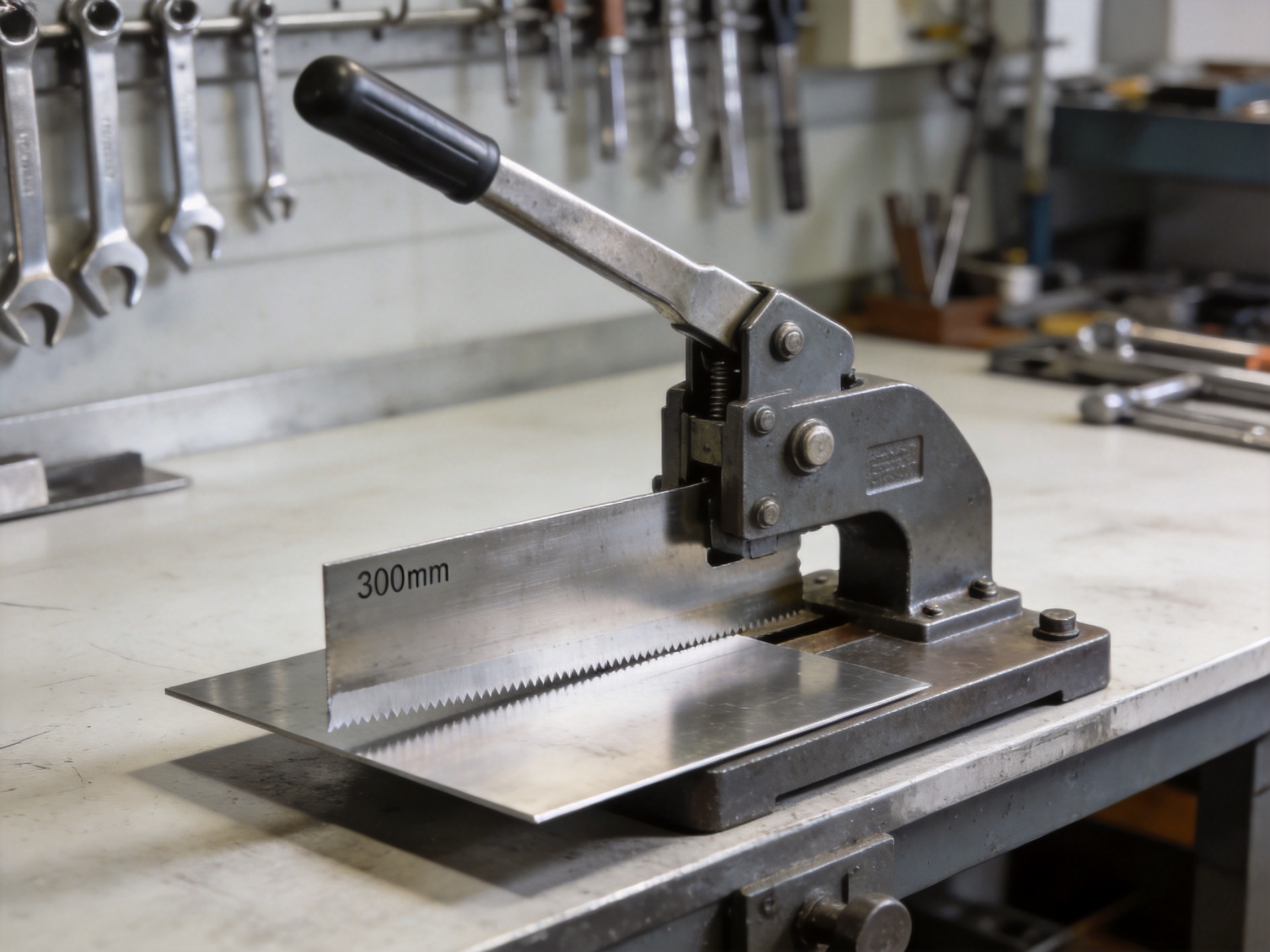
Product Overview
The hand shear is a manually operated cutting tool intended for cutting metal sheet and related flat materials within its designed capacity. Its 300 mm blade length provides an effective cutting span for common workshop tasks, while the 3 mm steel plate capacity makes it suitable for many medium-duty cutting requirements. Unlike small hand snips, this product is built to use leverage and a fixed cutting base to improve control, reduce operator fatigue, and deliver cleaner cuts on suitable materials.
Because the tool does not require power, it is particularly valuable in locations where electricity is inconvenient, where sparks must be minimized, or where quick cutting work must be completed without setting up a larger machine. Users can place the shear on a stable bench, prepare the workpiece, align the cutting line, and operate the handle with controlled force. This straightforward workflow is one of the reasons manual shears remain widely used even in modern factories that already own automated equipment.
The tool is also attractive for resellers and wholesalers because of its practical case configuration. With 2 pieces per case and packing dimensions of 44 x 32 x 20 cm, the product is compact enough for warehouse storage, mixed-container shipments, and retail distribution. The packing size is suitable for hardware tool channels where shelf management, carton handling, and transport efficiency matter. For importers and distributors, these details help reduce unnecessary logistics complications.
Key Specifications
| Item | Specification | Practical Meaning |
|---|---|---|
| Product Name | Hand shear | Manual metal cutting tool for workshop and fabrication use |
| Blade Length | 300 mm | Provides a useful cutting span for common sheet metal work |
| Steel Plate Capacity | 3 mm | Suitable for cutting steel plate within rated thickness and proper operating conditions |
| Quantity per Case | 2 pieces | Convenient for wholesale, storage, and distribution |
| Packing Dimension | 44 x 32 x 20 cm | Compact packaging for efficient transport and warehouse handling |
| Product Category | AT Tool | Suitable for hardware tool supply and workshop use |
Why a Manual Hand Shear Still Matters
Modern manufacturing environments use many types of cutting equipment, including laser cutters, plasma cutters, hydraulic shears, electric nibblers, and CNC punching lines. However, not every cutting task justifies the time, cost, and setup required for powered machinery. In many cases, the workpiece is small, the cut is simple, the production quantity is limited, or the operator needs an immediate solution. In these situations, a hand shear remains an efficient and economical choice.
A manual shear offers several advantages. It is easy to understand, easy to operate, and easy to maintain. There are no motors to burn out, no electronic boards to replace, no hydraulic seals to leak, and no cutting sparks produced by abrasive wheels. The user can perform quick trimming, sample preparation, repair work, and small-batch sheet cutting with minimal preparation. This combination of simplicity and productivity makes the hand shear a practical tool for metalworking shops, hardware stores, farm maintenance rooms, packaging plants, and installation teams.
For companies that work with fasteners, stamping parts, and packaging accessories, sheet trimming is often required during sample development, fixture preparation, storage rack repair, and small accessory manufacturing. A 300 mm hand shear can be kept near the production line or maintenance bench, ready for occasional cutting work. Because it is compact and mechanically driven, it does not occupy the space or require the safety perimeter associated with larger cutting machines.
Advantages Over Common Competing Tools
Compared with ordinary tin snips, this hand shear provides better leverage, a more stable cutting position, and greater capacity. Tin snips are useful for thin sheet, but they depend heavily on hand strength and can cause uneven cutting if the material is thick or stiff. A bench-style hand shear allows the operator to use a longer handle motion and a fixed blade structure, helping maintain better alignment through the cut. For users who frequently cut sheet metal near the rated range, this difference can significantly improve comfort and cutting consistency.
Compared with low-cost manual shears that use weak blades or imprecise pivots, a professionally manufactured shear delivers better service life. Blade material, heat treatment, edge grinding, and assembly tolerance all affect performance. A competitor product may look similar from a distance, but if the cutting edge chips easily, if the blades do not meet properly, or if the pivot loosens after repeated operation, the user will experience rough cutting and frequent adjustment. A carefully made shear reduces these problems by using controlled production processes and inspection steps.
Compared with electric cutting tools, the hand shear offers lower operating cost and easier portability within the workshop. Electric shears and grinders can be fast, but they require a power supply, generate noise, and may require replacement blades, discs, or maintenance. In some work areas, sparks and dust from abrasive cutting are undesirable. A manual hand shear performs clean mechanical cutting and is ready for use immediately. It is also less sensitive to voltage differences or jobsite power conditions, which is useful for international buyers and mixed-use environments.
Compared with hydraulic shearing machines, the hand shear is much more compact and affordable. A hydraulic machine may be ideal for high-volume production, but it requires floor space, professional installation, maintenance knowledge, and a larger purchasing budget. For small workshops and distributors serving practical users, a manual shear provides a strong balance between capability and cost. It can be stocked, shipped, installed, and used with far fewer barriers.
Cutting Performance and Blade Design
The 300 mm blade length is a practical specification because it supports a wide range of sheet cutting tasks while keeping the tool compact enough for bench use. In hand shears, blade length is not merely a dimension; it directly affects the size of material that can be handled, the cutting line length, and the operator’s ability to position the workpiece accurately. A longer blade can cover more material in one stroke, while a properly supported structure helps prevent flexing during operation.
The rated steel plate capacity of 3 mm should be understood as a performance guideline under suitable material conditions. Actual cutting results can depend on the hardness, grade, and surface condition of the steel, as well as operator technique, blade condition, and mounting stability. For best results, users should ensure the tool is secured on a stable surface, the material is aligned correctly, and the blade edges are maintained. When used properly, the shear can deliver clean cuts for common metalworking and maintenance tasks.
Blade quality is one of the most important factors separating a good hand shear from a poor one. A blade must be hard enough to resist wear but not so brittle that it chips easily. The cutting edge must be ground to a consistent angle, and the mating blades must be aligned with an appropriate clearance. If the clearance is too large, the material may bend or tear instead of cutting cleanly. If the clearance is too tight, the blades may rub excessively and become difficult to operate. Precision in blade processing and assembly is therefore essential.
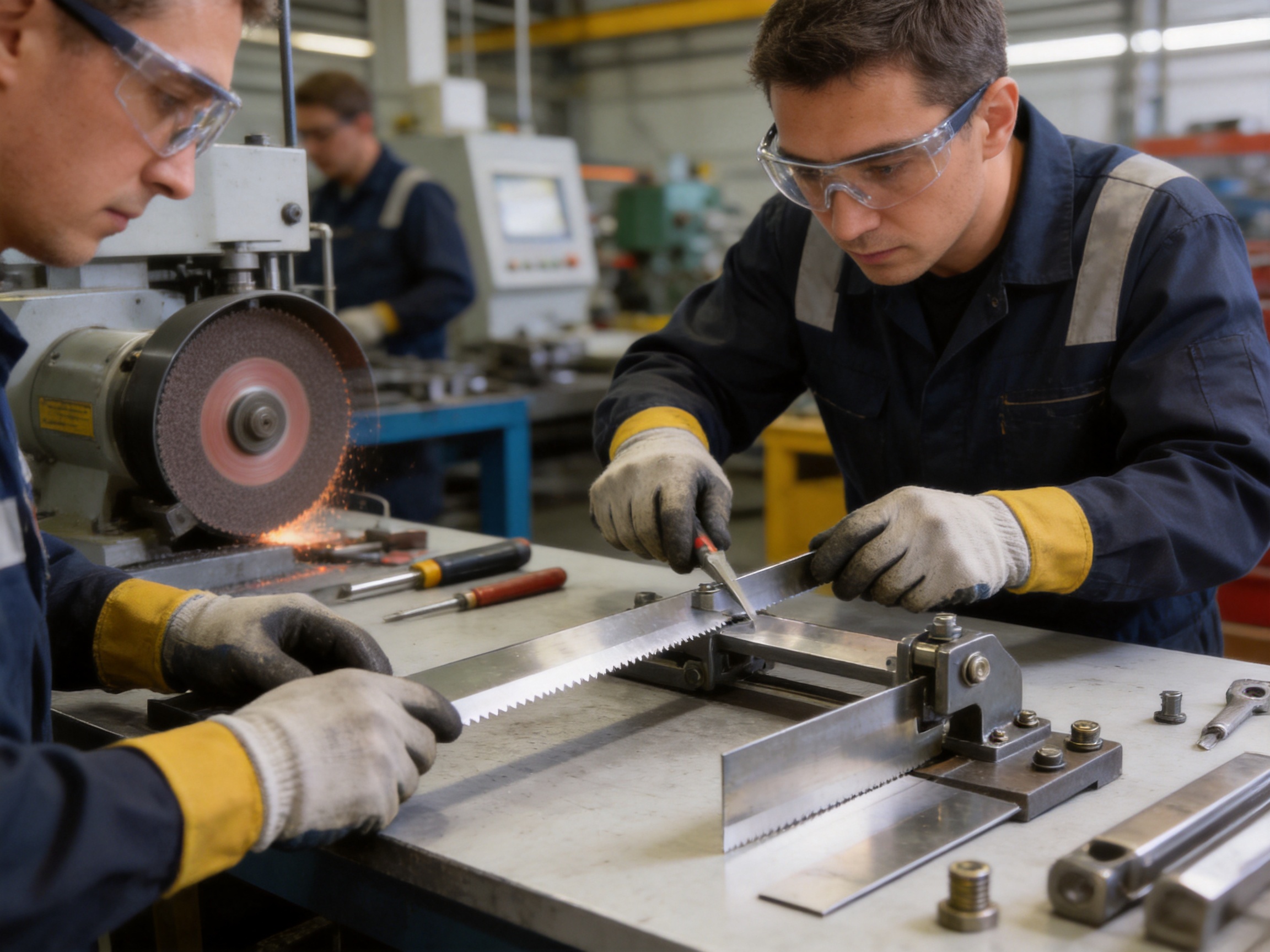
The manufacturer’s approach to blade preparation can include steel selection, cutting, rough machining, heat treatment, straightening, grinding, inspection, and final fitting. Each step affects the final user experience. A reliable hand shear should cut with controlled resistance, hold its edge through repeated use, and maintain alignment under reasonable operating loads. This is why advanced manufacturing management matters even for a manual tool.
Manufacturing Strength Behind the Tool
Lizhan Hardware Co., Ltd. operates as a hardware manufacturer with product experience across fasteners, tools, packaging-related products, and stamping parts. This background is important because a hand shear is not only a tool; it is also a metal assembly that requires knowledge of steel behavior, component forming, mechanical fit, and practical packaging. Experience in hardware manufacturing helps the company understand how products are used in real working environments and how durability, accuracy, and cost must be balanced.
The company’s manufacturing strength can be understood through several key areas: material sourcing, component processing, forming and stamping capability, machining control, blade treatment, assembly accuracy, surface finishing, inspection, and export packing. Each of these areas contributes to the final product quality. A buyer evaluating a hand shear should not only ask whether the blade is 300 mm or whether the tool can cut 3 mm steel plate. The buyer should also consider whether the manufacturer has the process discipline to deliver consistent quality from one batch to the next.
In hardware production, consistency is often more valuable than a single impressive sample. A sample may cut well, but regular shipment quality depends on stable process control. The manufacturer must maintain repeatable blade hardness, reliable pivot alignment, consistent handle movement, and strong packaging protection. When production is managed carefully, distributors receive products that require fewer after-sales corrections, fewer customer complaints, and less warehouse sorting.
Material Selection and Structural Reliability
A hand shear must withstand repeated mechanical stress. The blade encounters cutting pressure, the pivot area carries shear force, and the handle transfers operator input into the cutting action. Poor material selection can lead to bending, cracking, rapid dulling, or unstable operation. For this reason, material selection is one of the earliest and most important steps in manufacturing.
Reliable production begins with choosing suitable steel for the blade and body components. Blade steel must support hardness and edge retention. Structural components must provide strength, stability, and resistance to deformation. Fasteners and pivot elements must hold the assembly together without loosening prematurely. Because the company also works in fastener-related product categories, it has practical understanding of mechanical joining, thread reliability, and assembly security.
Material inspection may include checking dimensions, surface condition, chemical compliance according to purchasing standards, and suitability for processing. When raw material is controlled properly, later production steps become more predictable. Heat treatment results are more stable, machining dimensions are easier to maintain, and finished products show fewer defects. This foundation is especially important for products that must perform under manual force and repeated operation.
Blade Processing and Heat Treatment
The blade is the working heart of the hand shear. Its performance depends on the relationship between material, heat treatment, grinding accuracy, and final alignment. Heat treatment improves hardness and wear resistance, but it must be controlled carefully. Excessive hardness can make a blade brittle, while insufficient hardness leads to fast wear and poor cutting performance. A balanced heat treatment process helps the blade maintain a sharp edge while resisting operational impact.
After heat treatment, blade flatness and edge geometry must be controlled. Grinding must create a clean cutting surface with a consistent bevel. A rough or uneven edge increases cutting resistance and may leave burrs on the workpiece. A precisely ground edge improves cutting quality and helps the tool feel smoother in operation. In competitive markets, buyers may not immediately see these details in a product photo, but they will notice them during use.
The final blade fitting process is equally important. The moving blade and fixed blade must interact at the correct angle and clearance. Proper clearance allows the material to shear cleanly rather than fold. This is one reason a professionally assembled hand shear can outperform cheaper alternatives that rely only on general shaping without careful final adjustment. The better the blade alignment, the more predictable the cut.
Stamping, Machining, and Assembly Capability
The company’s connection with stamping parts is relevant because stamped and formed components often require control of shape, thickness, hole position, and surface finish. A hand shear includes parts that must fit together with mechanical reliability. Holes must align, pivots must seat correctly, and the handle must move without unnecessary friction. Manufacturing experience in metal forming and stamping contributes to a stronger understanding of these requirements.
Machining control also matters. Pivot holes, blade mounting surfaces, and fastening points should be processed with sufficient accuracy. If these points are inaccurate, the tool may feel loose, the blades may not meet evenly, or the cutting line may wander. Precision in machining reduces assembly problems and improves service performance. Even when a product is manually operated, mechanical accuracy remains essential.
Assembly is the stage where all previous process controls come together. Skilled workers must install parts in the correct sequence, tighten fasteners properly, check blade movement, verify cutting action, and ensure that the tool is safe and stable. The quality of assembly can determine whether a hand shear feels solid or unreliable. An advanced manufacturer treats assembly not as a casual final step, but as a controlled operation with inspection points.
Surface Treatment and Corrosion Resistance
Hand tools are frequently stored in workshops, warehouses, trucks, and retail shelves. They may be exposed to humidity, dust, oil, and handling marks. Surface treatment helps protect the product, improve appearance, and extend storage life. A clean and durable finish also strengthens the buyer’s perception of quality.
Surface finishing may include cleaning, polishing, coating, painting, or other protective treatments depending on the component. The goal is to reduce corrosion risk while providing a professional appearance. For distributors, a consistent surface finish is important because products may remain in cartons or on shelves before sale. For end users, corrosion resistance helps maintain smooth operation and reduces maintenance effort.
A competitor product with poor surface preparation may show rust quickly, especially during sea transport or warehouse storage. Rust on blade surfaces can affect cutting quality, while rust on pivots can make operation stiff. Proper finishing and packaging reduce these risks. This is another area where manufacturing discipline creates visible value beyond the basic specification list.
Quality Control and Inspection
Quality control for a hand shear should include both dimensional inspection and functional testing. Dimensional checks confirm that critical parts meet required specifications. Functional checks confirm that the tool opens, closes, cuts, and aligns properly. For a product designed to cut steel plate up to 3 mm, inspection should pay special attention to blade condition, blade clearance, handle action, fastener tightness, and overall structure.
Batch consistency is essential for international buyers. When products are packed 2 pieces per case, each unit should meet the expected standard. If one tool works well and another performs poorly, the distributor faces customer dissatisfaction. A structured quality control system reduces this variation. The manufacturer’s experience in hardware categories supports a practical inspection approach because many hardware items require reliable fit, strength, and finish.
Inspection also protects the manufacturer’s reputation. A tool that fails quickly in the user’s workshop can damage buyer trust. By checking products before shipment, the company reduces avoidable defects and improves long-term business relationships. Good quality control is not simply a cost; it is an investment in stable market performance.
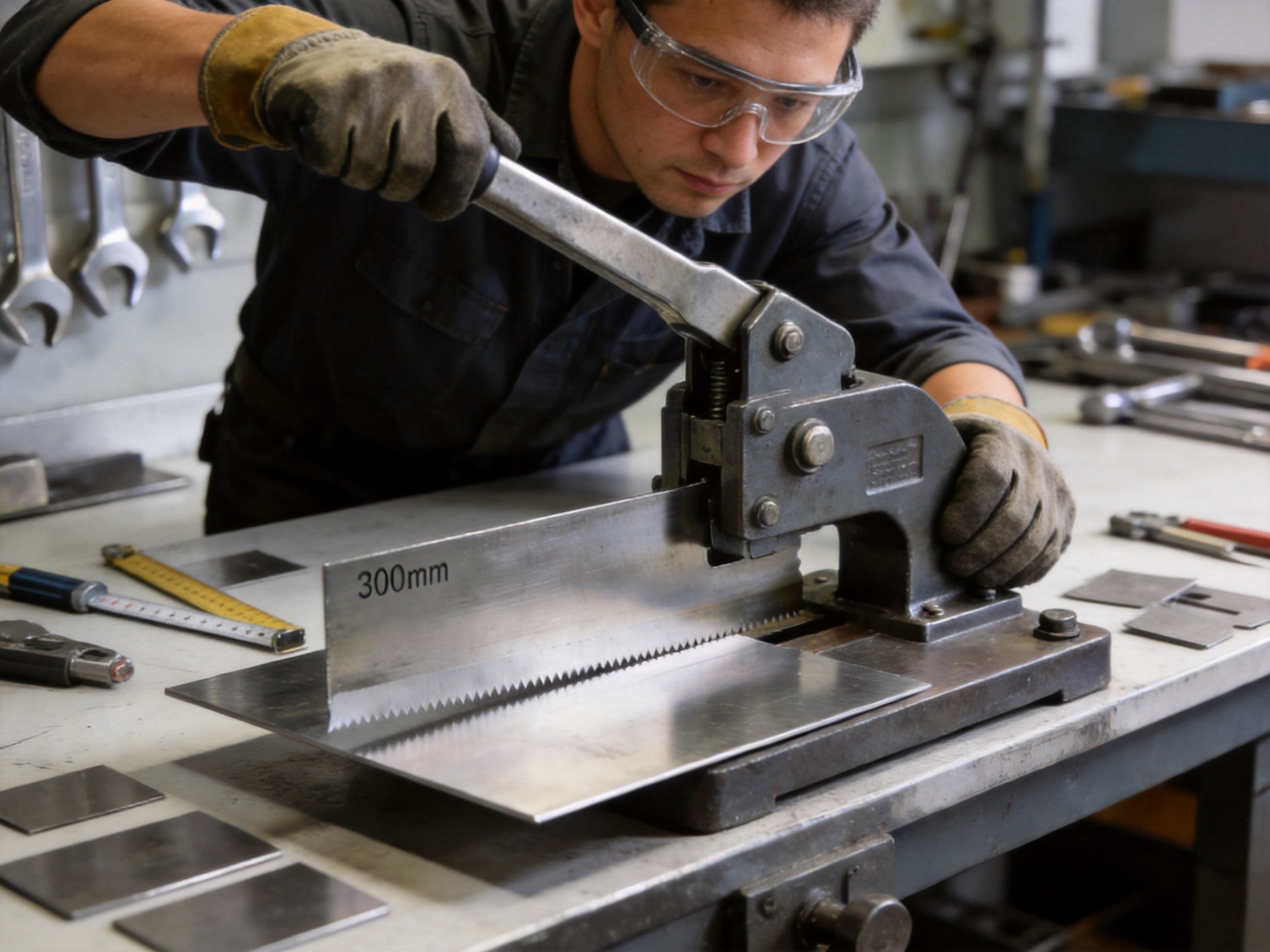
Applications in Metalworking and Maintenance
The hand shear is suitable for a wide range of practical applications. In a metalworking shop, it can be used for trimming sheet, cutting sample pieces, preparing small blanks, and adjusting metal plates before further processing. In a maintenance workshop, it can help workers cut repair plates, brackets, covers, and small panels. In packaging operations, it may be used to cut metal strips, thin plates, or support materials according to the tool’s rated capacity and safe operating instructions.
In fastener and hardware-related businesses, the shear can assist with fixture preparation, display rack repair, and workshop modifications. Hardware distributors often sell a mix of tools and consumables, and a manual shear is a practical addition to such product lines. It complements screws, fasteners, stamping components, and general hand tools by giving customers a way to cut metal materials used with those products.
In home tool and farm maintenance contexts, the shear can be useful for users who regularly repair gates, shelves, metal boxes, enclosures, and equipment covers. While professional safety practices are still required, a manual shear can be easier for trained users to manage than powered cutting equipment. It creates less noise than grinders and does not require abrasive wheels. This makes it practical for small repair jobs where convenience matters.
Operator Benefits
Operators value tools that are predictable, comfortable, and easy to maintain. A well-designed hand shear provides these benefits through mechanical leverage and stable cutting action. The user can position the workpiece, apply force through the handle, and complete the cut with controlled motion. When the blades are properly aligned, the tool reduces unnecessary tearing and helps produce cleaner edges.
The manual operation also gives the user tactile feedback. Unlike some powered tools that can remove material quickly but aggressively, a hand shear allows the operator to feel resistance and adjust the workpiece as needed. This is useful when cutting small pieces or when accuracy is more important than speed. For one-off cuts, repair jobs, and sample preparation, this level of control is valuable.
Maintenance is straightforward. Users should keep the blades clean, protect the tool from heavy corrosion, lubricate moving points as appropriate, check fasteners periodically, and avoid cutting materials beyond the rated capacity. These simple practices help maintain performance. Because the tool has no complicated electronics or hydraulic components, maintenance can usually be performed by workshop staff without specialized service equipment.
Safety Considerations
Any cutting tool must be used responsibly. Operators should wear appropriate protective gloves, eye protection, and work clothing. The tool should be mounted or placed on a stable surface according to the working method. Hands should be kept away from the blade path, and the workpiece should be supported to prevent sudden movement. Users should never exceed the rated cutting capacity or attempt to cut hardened materials not suitable for the tool.
Before operation, the user should inspect the blade condition and handle movement. If the blades are damaged, loose, or misaligned, the tool should be adjusted or serviced before use. After cutting, the edges of the workpiece may be sharp and should be handled carefully. Good safety habits protect the operator and also help preserve the tool.
Compared with powered cutting tools, a manual hand shear can reduce certain risks such as sparks, high-speed debris, and electrical hazards. However, it still produces high mechanical force at the cutting edge. Therefore, safe use depends on training, attention, and correct handling. A simple tool should never be treated carelessly.
Packaging and Logistics Advantages
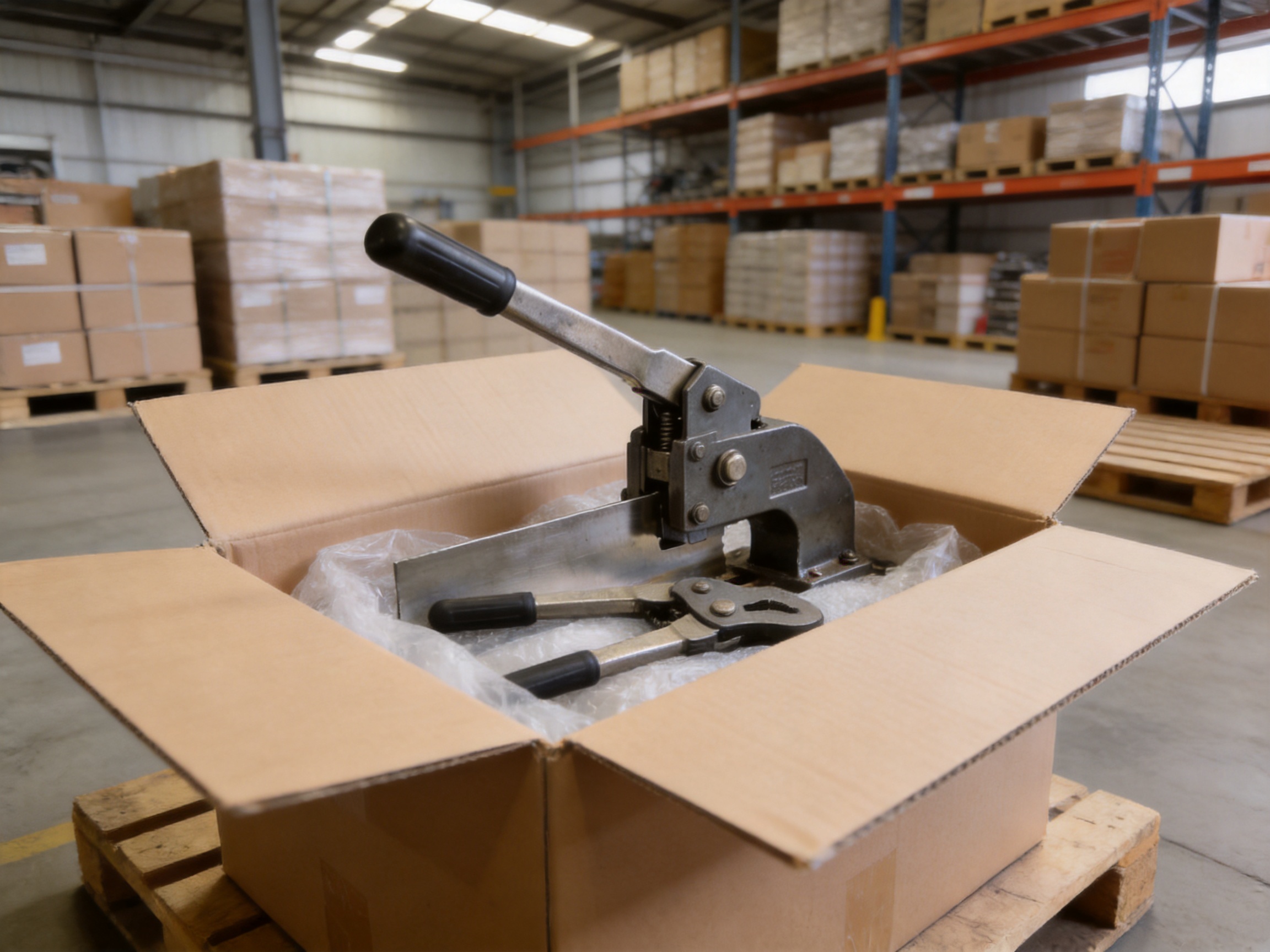
The hand shear is supplied with 2 pieces per case and packing dimensions of 44 x 32 x 20 cm. These logistics details are important for importers, wholesalers, and retail tool suppliers. A compact carton size helps optimize storage space and makes handling easier for warehouse workers. The case quantity of 2 pieces provides a practical balance between protection and distribution flexibility.
Good packaging protects the blade, handle, surface finish, and adjustment points during transport. Metal tools can be damaged if they move inside the carton, contact each other directly, or are exposed to moisture. Proper packing reduces scratching, impact damage, and corrosion risk. For export shipments, packaging reliability is especially important because products may pass through multiple handling stages before reaching the final buyer.
Distributors benefit when cartons are easy to count, stack, and manage. The listed packing dimension supports efficient planning for purchase orders and container loading. A product that is strong but poorly packed can still create commercial problems. Therefore, packaging should be considered part of the product value.
Competitive Value for Distributors and Buyers
For professional buyers, value is not only the lowest price. True value combines product performance, stable quality, reliable packing, supplier communication, and long-term availability. A hand shear that cuts well, arrives in good condition, and performs consistently will create fewer after-sales issues than a low-cost tool with unstable quality. This is especially important for distributors building a reliable hardware product range.
The manufacturer’s broader product background supports supply integration. Since the company is connected with categories such as new products, home tools, fasteners, packaging products, and stamping parts, buyers can communicate about related hardware needs through one supplier. This may simplify sourcing, reduce coordination time, and support mixed product orders. For international buyers, supplier capability and responsiveness are often as important as the tool itself.
Another advantage is the practical specification set. The 300 mm blade length and 3 mm steel plate capacity cover common manual cutting needs without making the tool excessively large. The compact packing and 2-piece case quantity support flexible distribution. Together, these characteristics make the hand shear suitable for wholesale hardware supply, professional tool channels, and workshop equipment catalogs.
How This Hand Shear Supports Small-Batch Production
Small-batch production often requires flexible tools. A factory may need to cut a few test pieces before confirming a stamping die. A packaging department may need to prepare a small metal support strip. A maintenance technician may need to trim a plate for immediate equipment repair. In these cases, waiting for a large machine schedule can slow down work. A hand shear allows quick action.
Because it is manual, the tool can be placed close to the work area. Operators do not need to program a machine or prepare a cutting table for every simple job. This saves time for low-volume tasks. When combined with marking tools, measuring tools, clamps, and deburring tools, the hand shear becomes part of an efficient small-workshop workflow.
For stamping-related operations, the shear can help prepare trial blanks or trim sample material. For fastener-related work, it can assist in making small plates or brackets used in testing or installation. For packaging-related work, it can support the preparation of metal pieces or strips within its rated capability. The tool’s value increases when it is seen not as a single-use item, but as a flexible support tool across departments.
Maintenance Guidelines for Longer Service Life
Proper maintenance helps preserve cutting quality and extends the life of the hand shear. Users should clean the blades after operation, especially if the material leaves dust, oil, or coating residue. A light protective oil may be applied to exposed metal surfaces when the tool is stored in humid conditions. Moving points should be lubricated periodically to reduce friction and wear.
Fasteners and pivot points should be checked regularly. If the tool develops excessive play, cutting quality may decline. If the pivot is too tight, operation may become difficult and cause unnecessary wear. Adjustments should be made carefully, following proper mechanical practice. Blade edges should be inspected for chips, rolling, or dullness. A damaged blade should be serviced or replaced according to the supplier’s recommendations.
Users should avoid cutting materials beyond the intended capacity. Attempting to cut overly thick, hardened, or unsuitable material can damage the blade and structure. It can also create safety hazards. The rated steel plate thickness of 3 mm should be respected, and users should consider material hardness before cutting. A tool used within its design limits will provide more reliable service.
Purchasing Considerations
When selecting a hand shear, buyers should evaluate more than appearance. Important factors include blade length, cutting capacity, blade hardness, structural strength, pivot stability, handle design, surface finish, packaging, supplier reliability, and quality consistency. A good supplier should be able to provide clear specifications and maintain stable production standards.
Buyers should also consider their target users. If the product is intended for professional workshops, cutting performance and durability are especially important. If it is intended for retail hardware stores, packaging appearance and carton handling may also matter. If it is intended for export distribution, batch consistency and communication efficiency become critical. This hand shear’s specifications and packaging make it suitable for a broad range of these sales channels.
It is also wise to consider after-sales expectations. Manual tools are generally easier to support than powered machines, but customers may still ask about blade care, cutting limits, and safe operation. Providing correct product information helps reduce misuse and improves customer satisfaction. A supplier with hardware experience can support clearer communication about these practical issues.
Frequently Asked Questions
What is the blade length of this hand shear?
The blade length is 300 mm. This size provides a practical cutting span for many sheet metal trimming, repair, and workshop cutting tasks while keeping the tool compact enough for bench use and efficient packing.
What thickness of steel plate can it cut?
The rated steel plate cutting capacity is 3 mm. Actual performance can depend on the steel grade, hardness, blade condition, tool mounting, and operator technique. Users should avoid exceeding the rated capacity.
Is this hand shear suitable for professional use?
Yes, it is designed for workshop, maintenance, hardware, and fabrication applications. Its manual structure, 300 mm blade, and 3 mm steel plate capacity make it suitable for many professional cutting tasks when used correctly.
How does it compare with tin snips?
Compared with ordinary tin snips, this hand shear offers stronger leverage, a more stable cutting action, and better suitability for thicker sheet material within its rated range. Tin snips are useful for thin sheet, but they require more hand strength and may be less consistent on heavier material.
Does the tool require electricity?
No. It is a manual tool and does not require electricity, compressed air, or hydraulic power. This makes it useful in workshops, maintenance areas, and job locations where simple setup and immediate use are important.
How many pieces are packed in one case?
Each case contains 2 pieces. This case quantity is convenient for wholesale distribution, warehouse management, and hardware tool sales.
What is the packing dimension?
The packing dimension is 44 x 32 x 20 cm. This compact carton size supports efficient storage, handling, and shipment planning.
What maintenance is recommended?
Users should keep the blades clean, protect the tool from corrosion, lubricate moving parts periodically, inspect fasteners and pivot points, and avoid cutting materials beyond the rated capacity. Proper maintenance helps extend service life and preserve cutting quality.
Can it be used in home workshops?
Yes, trained users in home workshops can use the hand shear for suitable metal cutting tasks. However, safety protection and correct operating methods are necessary. The tool should be used on appropriate materials and within the rated capacity.
Why is manufacturing quality important for a manual tool?
Manufacturing quality determines blade alignment, cutting edge durability, structural strength, handle movement, surface protection, and batch consistency. Even though the tool is manual, precise production and inspection are essential for dependable cutting performance.
Conclusion
A hand shear may appear simple, but a dependable model is the result of careful design, suitable materials, accurate blade processing, controlled assembly, and responsible quality inspection. This 300 mm hand shear with 3 mm steel plate capacity offers a practical combination of strength, efficiency, and simplicity. It serves users who need a reliable cutting tool without the cost and complexity of powered machines.
Its advantages over competing options are clear. It provides more leverage and stability than ordinary snips, lower cost and simpler operation than electric or hydraulic tools, and greater practicality for small-batch cutting than large production equipment. The compact packing of 44 x 32 x 20 cm and 2 pieces per case also make it suitable for distributors, wholesalers, and hardware retailers seeking a manageable and useful tool product.
Behind the tool is a manufacturing approach grounded in hardware production experience, metal processing knowledge, blade preparation, assembly control, surface treatment, and export-oriented packing. For buyers, this means the value of the product extends beyond its specifications. It includes consistency, usability, durability, and supplier capability.
For workshops, maintenance teams, small manufacturers, and tool distributors, this hand shear is a practical product that supports daily metal cutting needs. When used within its rated capacity and maintained properly, it can become a reliable part of the working environment, helping users complete cutting tasks quickly, safely, and economically.
References
Boljanovic, V. Sheet Metal Forming Processes and Die Design. Industrial Press.
Kalpakjian, S., and Schmid, S. Manufacturing Engineering and Technology. Pearson.
Groover, M. P. Fundamentals of Modern Manufacturing: Materials, Processes, and Systems. Wiley.
ASM International. Metals Handbook: Machining and Metalworking Processes.
Oberg, E., Jones, F. D., Horton, H. L., and Ryffel, H. H. Machinery’s Handbook. Industrial Press.