Why Fastener Selection Determines Sheet Metal Longevity
Sheet metal assemblies fail less often because of the panel material itself and more often because of the fastener holding it together. A mismatched screws thread, an undersized pilot point, or a coating that cannot survive outdoor exposure will loosen a joint long before the metal panel shows any sign of wear. Contractors working on roofing, siding, HVAC ductwork, and gutter systems routinely report that callback repairs trace back to fastener selection rather than panel defects.
Two families of fasteners dominate this work: self-tapping screws and drilling screws. They look similar at a glance, but their thread geometry, point design, and ideal applications differ enough that choosing the wrong one can add hours to a job or shorten the service life of an entire structure.
What Separates a Self-Tapping Screw from a Drilling Screw
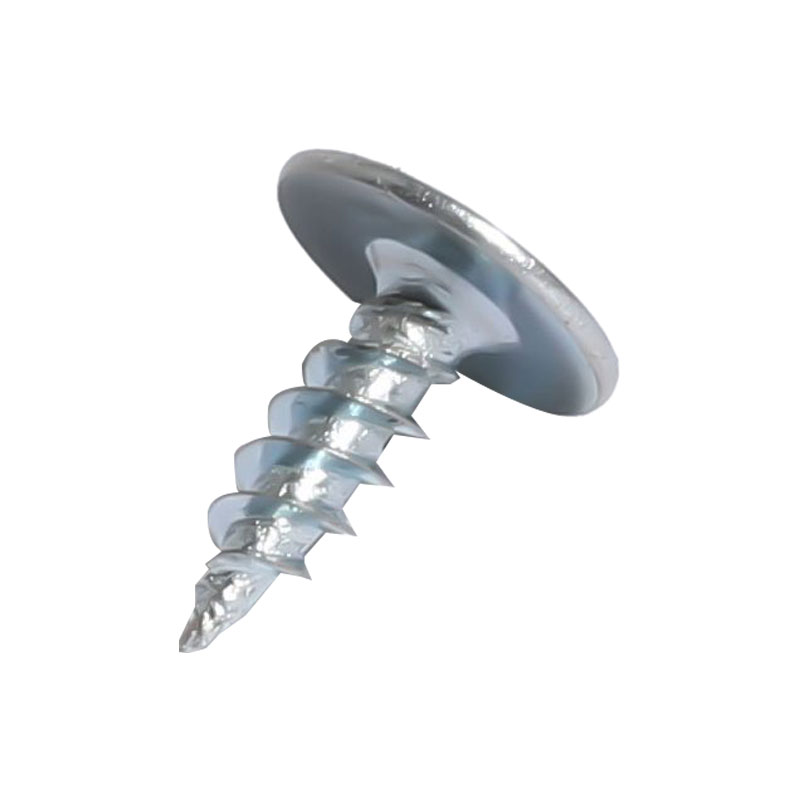
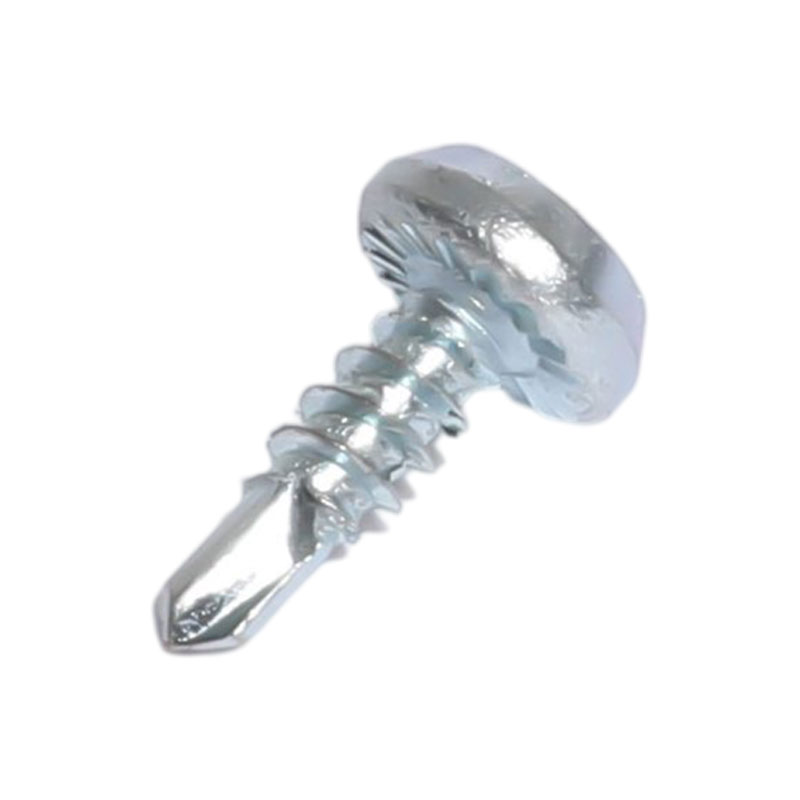
The core distinction lies in how each fastener creates its own mating thread. A self-tapping screws relies on a sharpened or gimlet point that cuts or forms threads as it advances into a pre-drilled or soft pilot hole. A drilling screws, sometimes called a self-drilling screws, carries a fluted drill point that bores through the base material and cuts threads in a single motion, eliminating the pilot-hole step entirely.
| Attribute | Self-Tapping Screws | Drilling Screws |
|---|---|---|
| Point type | Sharp or blunt gimlet point | Fluted drill point |
| Pilot hole needed | Usually yes, for metal 18 gauge or thicker | No, drills its own hole |
| Typical base material | Thin sheet metal, plastic, wood-backed panels | Structural steel, thicker gauge metal framing |
| Installation speed | Slower when pre-drilling is required | Faster, single-step driving |
| Common thread style | Coarse or fine machine-style thread | Coarse thread with unthreaded shank near the drill tip |
Within the self-tapping category, self piercing screws are a specific subtype designed to punch through very thin gauge sheet without any pilot hole at all, relying on a sharpened point and high driving speed rather than a drill flute. They suit light-gauge cladding and duct closures where a drill point would be unnecessary overkill.
Head Styles and Coatings That Match Real Job Conditions
Head Style Options
Head geometry affects both the tool needed for driving and the finished appearance of the joint. Hex washer head self-tapping screws are the most common choice for metal-to-metal framing because the integrated washer distributes clamping load and resists over-driving. Pan head drilling screws sit lower and suit applications where a flush, low-profile finish matters, such as electrical enclosures or appliance panels.
- Hex washer head: high torque tolerance, wide bearing surface, common in structural steel framing
- Pan head: low profile, moderate torque tolerance, used where clearance is limited
- Wafer head: broad flat bearing surface for very thin sheet, reduces panel deformation
- Trim head: minimal head diameter for cosmetic exterior trim work
Coating and Corrosion Considerations
Corrosion resistant metal screws are not a single category but a spectrum of coating technologies, each rated for a different exposure environment. Zinc plating handles dry interior framing. A heavier zinc-aluminum or ceramic-based coating is appropriate for coastal siding, gutter systems, or any application exposed to repeated moisture cycles. Black sheet metal screws typically use a black oxide or black phosphate finish, chosen for cosmetic matching with dark roofing or trim rather than for maximum corrosion protection, so they are best reserved for covered or interior applications unless paired with an additional sealant.
| Coating Type | Typical Salt Spray Rating | Best Use Environment |
|---|---|---|
| Zinc plated | Roughly 96 to 150 hours | Dry interior framing, general fabrication |
| Black oxide or black phosphate | Roughly 24 to 72 hours without added sealant | Interior trim, cosmetic matching |
| Zinc-aluminum alloy | Roughly 500 to 1000 hours | Roofing, siding, coastal exposure |
| Ceramic-enhanced coating | 1000 hours or more | Marine adjacent, high humidity industrial sites |
Matching Fasteners to Common Sheet Metal Applications
Roofing, Siding, and Gutter Systems
Downspout screws are a purpose-built variant, generally a short, wafer-head or hex-head self-tapping screws sized to join thin aluminum or galvanized steel downspout sections without punching through the opposite wall of the channel. Because downspouts flex with thermal expansion, an oversized or overdriven screws here is a common source of leaks at the seam.
Steel Framing and Structural Panels
Steel framing screws used in load-bearing stud walls almost always fall into the drilling screws category because the base material is thicker gauge steel that a self-tapping point cannot penetrate cleanly. A typical steel framing screws carries a self-drilling point rated by the number of drill flutes it can penetrate, often expressed as a maximum steel thickness in the low millimeter range.
Ductwork and Tex Screws
Tex screws, named for their hexagonal drive head, are a common designation for hex washer head drilling screws used across HVAC ductwork, metal building panels, and light structural connections. Their hex head allows a nut driver to seat quickly and consistently, which matters on repetitive production runs where hundreds of fasteners are driven per shift.
Light Gauge Cladding
Self piercing or self-tapping wafer head, zinc coating, no pilot hole under 22 gauge
Structural Steel Framing
Drilling screws, hex washer head, drill point rated for base steel thickness
Gutters and Downspouts
Short self-tapping screws, wafer or hex head, zinc-aluminum coating for exterior life
HVAC Ductwork
Tex screws configuration, hex drive, coarse thread for sheet-to-sheet joints
A Practical Selection Workflow
Rather than choosing by habit, a short decision sequence prevents most fastener mismatches on site.
- Measure the base metal gauge with calipers rather than estimating by eye
- Select self-tapping for thin sheet and drilling screws for framing-grade steel
- Match coating to the expected moisture and UV exposure of the finished assembly
- Confirm head style against the driver tool available on site
- Test-drive one fastener into scrap material before committing to a full run
Installation Practices That Prevent Common Failures
Setting the Correct Driving Speed
Overdriving is the single most frequent installation error with both fastener types. A driver set too fast can strip the pilot hole in thin sheet or snap the head off a hardened drilling screws before it fully seats. Clutch-adjustable drivers set to stop at a consistent torque produce far more uniform results than a fixed-speed drill.
Spacing and Edge Distance
Fasteners placed too close to a panel edge create a stress riser that can tear the sheet under thermal cycling or wind load. A general guideline keeps screws at least three screws diameters from any cut edge, with wider spacing at corners where two panel edges meet.
| Panel Thickness | Recommended Screw Type | Minimum Edge Distance |
|---|---|---|
| Up to 22 gauge | Self-tapping or self piercing | Approximately 10 mm |
| 18 to 20 gauge | Self-tapping with pilot hole | Approximately 12 mm |
| 14 to 16 gauge structural | Drilling screws | Approximately 15 mm |
Consistent torque control and correct edge distance prevent more field failures than any single fastener upgrade.
Frequently Asked Questions
Q1: Can a self-tapping screws be used in place of a drilling screws?
Only on thinner gauge material. Once the base steel exceeds roughly 18 gauge, a self-tapping point struggles to start cleanly, and a drilling screws with a proper drill flute becomes the more reliable choice.
Q2: Are black sheet metal screws weaker than zinc plated versions?
The base strength depends on the steel core and heat treatment, not the coating color. Black oxide finishes generally offer less corrosion protection than zinc-aluminum coatings, so the color itself is a cosmetic and environmental consideration rather than a strength indicator.
Q3: What makes tex screws different from standard drilling screws?
Tex screws are essentially hex washer head drilling screws optimized for repetitive ductwork and panel assembly, valued for the speed and grip a hex driver provides during high-volume installation.
Q4: How is downspout screws sizing different from general sheet metal screws?
Downspout screws are shorter and often use a wafer or low-profile head to avoid punching through the opposite wall of a narrow downspout channel, a risk that longer general-purpose screws carry.
Q5: Do self piercing screws require a pilot hole?
No, they are engineered specifically to eliminate the pilot hole step on light gauge sheet, relying on a sharpened point and adequate driving speed to penetrate cleanly.