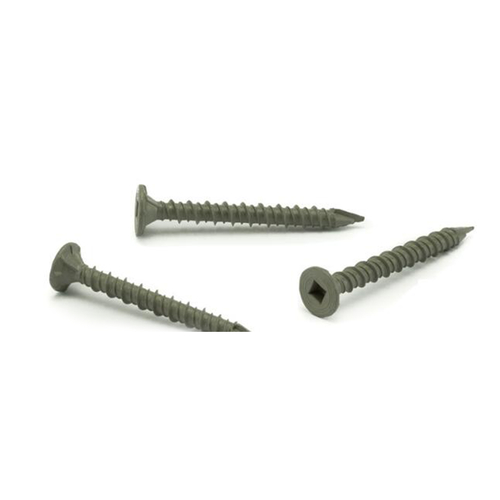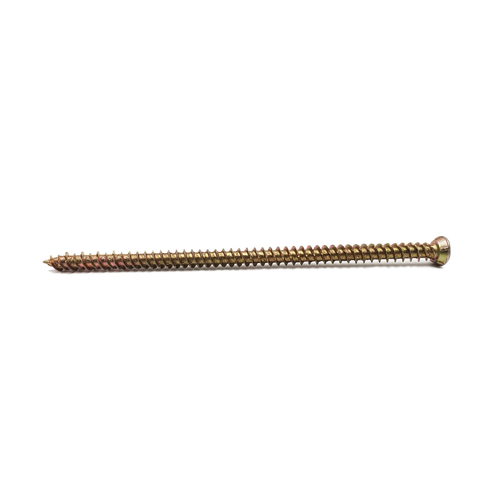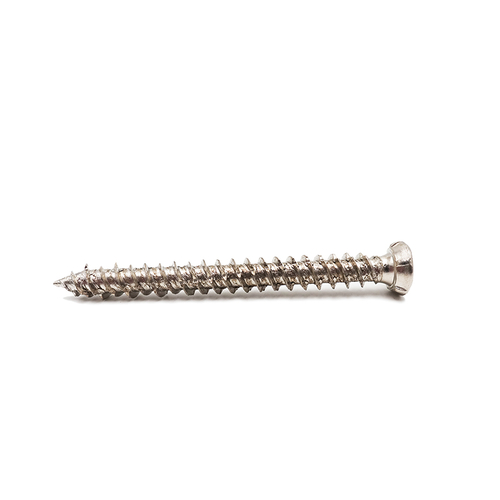
A 1-1/4 in. coarse-thread drywall screw and a 1-1/4 in. fine-thread drywall screw look almost identical in the box. Drive the coarse one into a 25-gauge steel stud and it spins, strips the hole, and the board pops loose. Drive the fine-thread screw and it seats clean. Nothing about quality changed. The specification did.
That is why choosing drywall screws is rarely a question about brands. It is a question about four variables decided in a fixed order: substrate, board thickness, fastener geometry, and moisture exposure.
Set the order once and it stops being guesswork. The framing material picks the thread, the board thickness picks the length, the assembly picks the point and drive, and moisture exposure picks the coating. Price and brand come last, not first.
Get it wrong and the cost is not the screw. It is the labor: stripped holes, re-driven screws, torn face paper, and callbacks on a wall that was already taped.
Start With the Three Facts You Already Know
Before opening a catalog, settle three facts: what the framing is made of, how thick the board is, and how much moisture the wall will see. Each one removes options, and after three questions you are usually down to one or two part numbers.
Fact 1 - Framing
Wood studs take coarse thread. Steel studs from 25 to 20 gauge take fine thread.
Fact 2 - Board
1/2 in. board takes 1-1/4 in. screws. 5/8 in. board takes 1-5/8 in. screws.
Fact 3 - Moisture
Dry interior: phosphate. Damp or exterior: zinc, ceramic, or stainless.
The order matters because a wrong thread cannot be rescued with extra length. A 2 in. coarse-thread screw in a 25-gauge stud will strip every bit as fast as a 1-1/4 in. one. Length solves reach. It does not solve grip.
Coarse Thread or Fine Thread: Let the Stud Decide
ASTM C1002 classifies these fasteners by use: Type W for wood studs, Type S for steel studs, and Type G for board to board. The type fixes the thread and the point together, and blending the types in one box is the most common purchasing error in the category.
Coarse thread is single-lead, with deep, widely spaced threads and a sharp point. It cuts into softwood fibers, pulls the board tight to the stud, and drives quickly in a production setting.
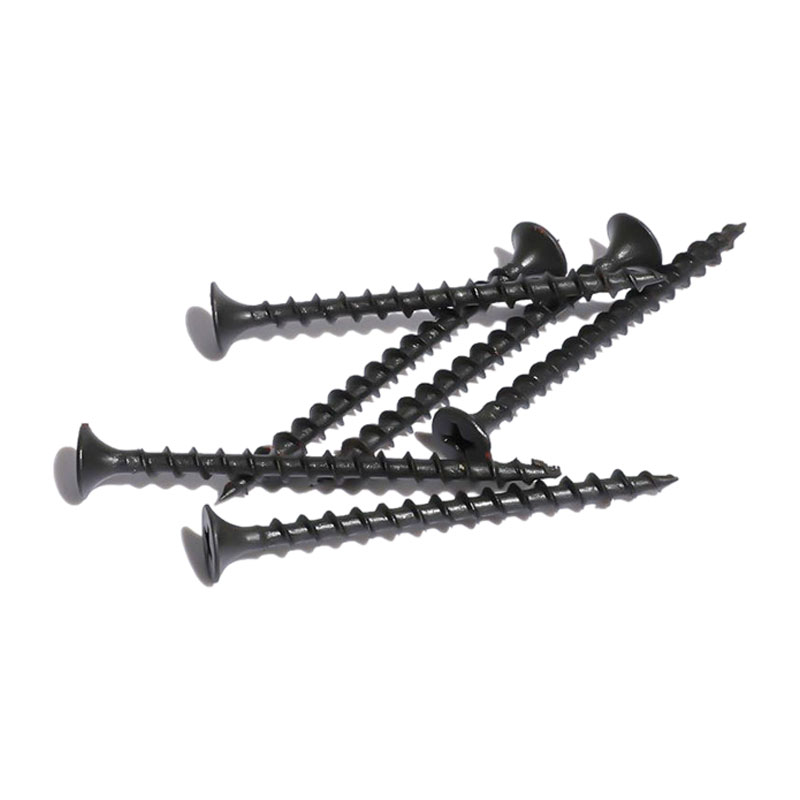 Phillips Bugle Head Coarse Thread Drywall Screws, Black PhosphateCoarse-thread black phosphate drywall screws with Phillips bugle head, designed to bite into softwood studs and drive quickly on production drywall work.View Product →
Fine thread is double-lead: the thread starts twice per revolution, so more turns engage the thin wall of a steel stud as the screw seats. The body is slimmer, which reduces the chance of the head snapping off at the torque limit of a drywall gun.
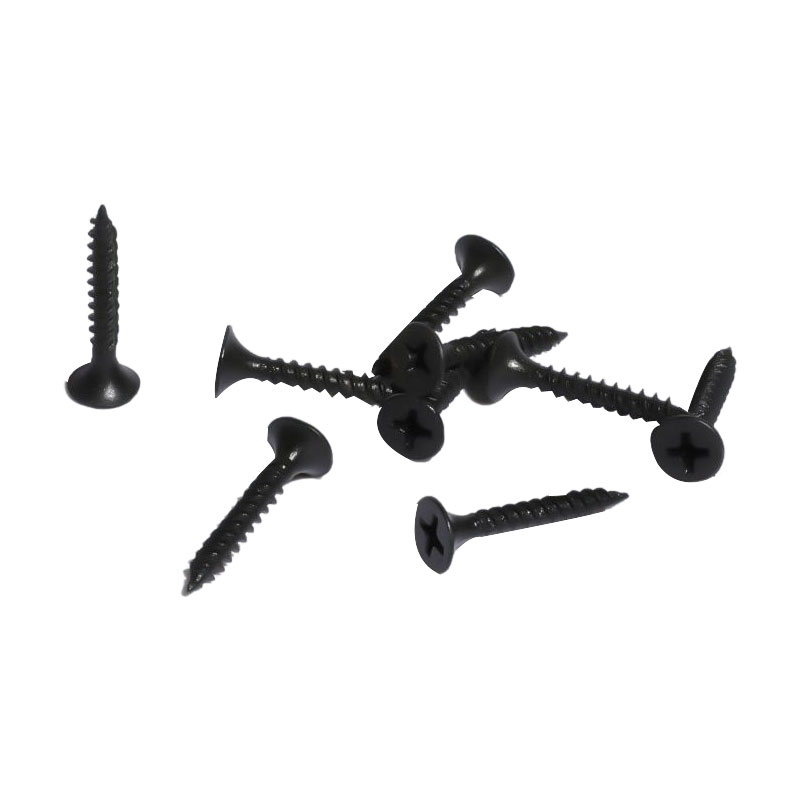 Phillips Bugle Head Fine Thread Gypsum Board Screws, Black PhosphateFine-thread black phosphate gypsum board screws with Phillips bugle head, suited to steel studs where more thread engagement helps prevent snapping.View Product →
- Coarse thread (Type W): wood studs, wood furring, and plywood backup. Strips out in 25-gauge steel.
- Fine thread (Type S): steel studs from 25 to 20 gauge. Strips out quickly in softwood.
- Type G: gypsum board to gypsum board only, blunt point, no structural framing involved.
- Type S-12: 12 to 14 gauge steel, used on heavier channels and ceiling systems.
Projects that mix substrates, such as steel studs behind cement board in a wet area and wood studs behind standard board down the hall, need the two groups kept separate rather than blended. A short guide to matching drywall and cement board screws to each substrate is worth reading before the two lines are merged into one order.
Head, Drive, and Point: The Details That Decide Labor Cost
Head: Bugle, Not Flat
A bugle head flares gradually, so it compresses the paper facing instead of cutting it, and the fastener seats just below the surface without tearing the board. Head diameter matters more than most buyers expect: an undersized head pulls through under load, an oversized head will not sink flush and telegraphs through the joint compound.
Drive: Phillips Is Standard, Square and Torx Save Labor
A number 2 Phillips is the default and its cam-out is a built-in guardrail against over-driving. Square and Torx drives transfer torque with less cam-out, so bits last longer and heads strip less often. On a large job that difference shows up in bit consumption and rework, not in the unit price.
Point: Sharp, Drill, or Blunt
Sharp points are for wood. Self-drilling points are for steel from 20 gauge and heavier, where a pilot hole would otherwise be needed. Blunt Type G points are for board-to-board work. Hi-lo thread is reserved for assemblies where a shallow embedment has to hold, and it should not be substituted for standard thread without checking the assembly listing.
Coatings Decide Where the Screw Can Live
Black phosphate is a conversion coating, not corrosion protection. Its job is friction control, keeping driving torque consistent so a clutch setting stays repeatable from screw to screw. Indoors, in dry partitions, that is all that is required.
Where humidity is present, blue-white zinc plating is the next step up and offers limited salt-spray performance. Yellow zinc, a zinc chromate finish, is the common choice for kitchens, basements, and light trim on otherwise dry walls.
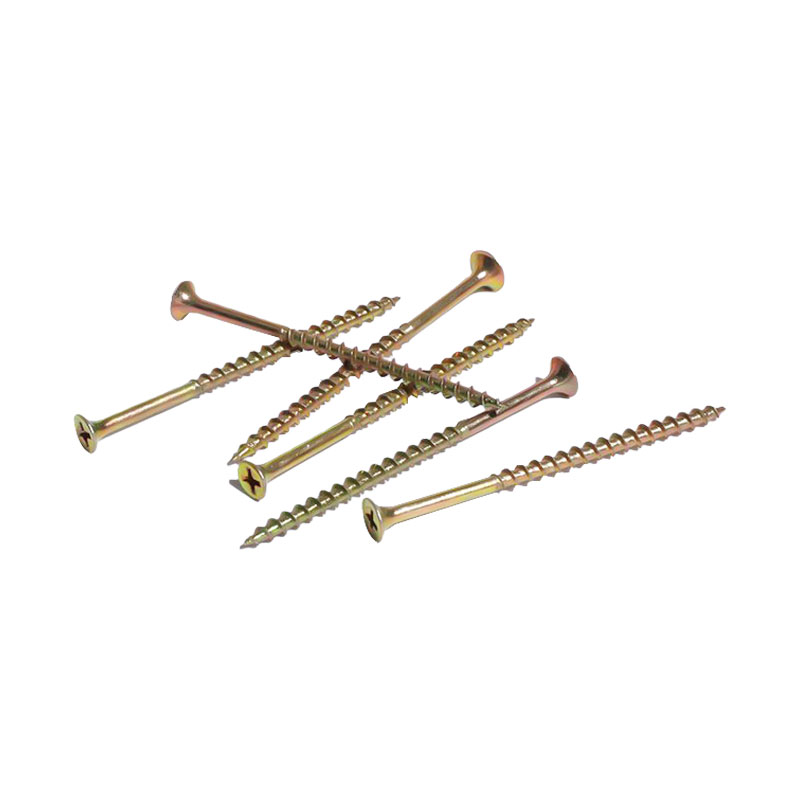 Phillips Bugle Head Yellow Zinc Plated Drywall ScrewsYellow zinc-plated drywall screws with Phillips bugle head, a common finish for kitchens, basements, and light trim on otherwise dry walls.View Product →
For exterior sheathing, soffits, and pressure-treated lumber, move to hot-dip galvanized, ceramic-coated, or 304 and 316 stainless steel. Treated lumber is the trap here: ACQ and CA formulations accelerate corrosion of zinc coatings, which is why many exterior failures appear as rust staining along a stud line rather than as a missing screw.
One coating per wall. A drywall gun set for phosphate screws will over-drive plated screws because the coating changes friction and torque. Mixing finishes on the same run is a quiet source of torn paper and broken heads.
Frequently Asked Questions
Q1: What size drywall screws do I need for 1/2 in. drywall?
Use 1-1/4 in. screws. Choose coarse thread for wood framing and fine thread for steel framing. It is the most widely stocked drywall screw length, and it leaves roughly 3/4 in. of thread engaged in a wood stud once the board is pulled tight.
Q2: Can I use fine-thread screws in wood studs?
They will drive, but they hold poorly. Fine thread is designed for 25 to 20 gauge steel; in softwood the thin, closely spaced threads cut through the fibers and strip at low torque. The reverse mistake, coarse thread in a steel stud, is worse because the deep thread cannot grip thin metal at all.
Q3: How far apart should drywall screws be placed?
Common practice on walls is 8 in. on center along panel edges and 12 in. on center in the field, with ceilings tightened to 8 in. in the field. Some fire-rated and moisture-resistant assemblies require closer spacing, so follow the published listing. A 4 ft. by 8 ft. sheet typically takes about 28 to 32 screws.
Q4: Do I need to dimple the head into the board?
Yes, but only slightly. The bugle head should sit just below the paper surface without breaking it. Too deep tears the paper and removes much of the holding value; too shallow leaves a proud head that will show through the joint compound.
Q5: Are black phosphate drywall screws rustproof?
No. Phosphate is a lubricant coating used to control driving torque and offers no meaningful corrosion protection, so it belongs in dry interior partitions only. For bathrooms, basements, exterior sheathing, or treated lumber, specify a zinc, ceramic, or stainless steel option.
Drywall screws are a low-cost item that behaves like an expensive one when the specification is wrong. Decide substrate, thickness, geometry, and coating in that order, carry those four decisions onto the purchase order, and verify one carton with a production drive test before the container ships. The screws will cost roughly the same either way. The labor behind them will not.