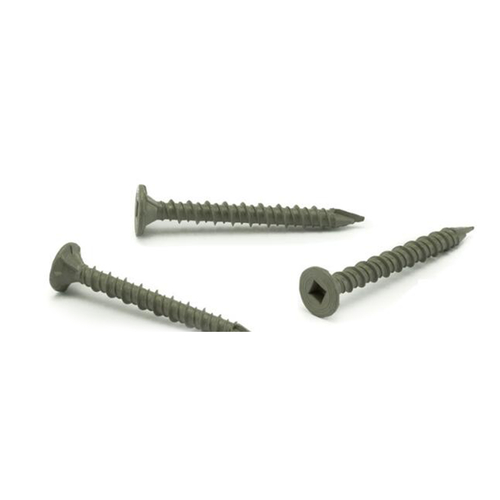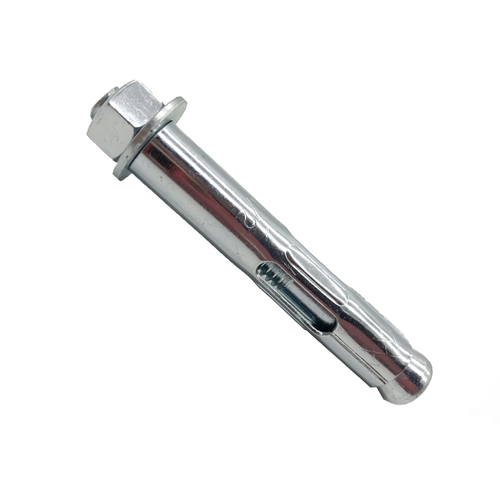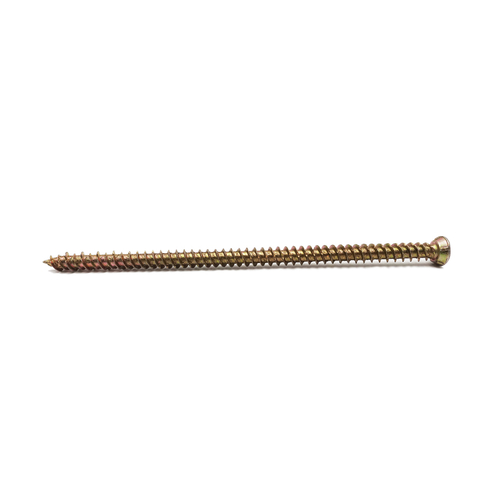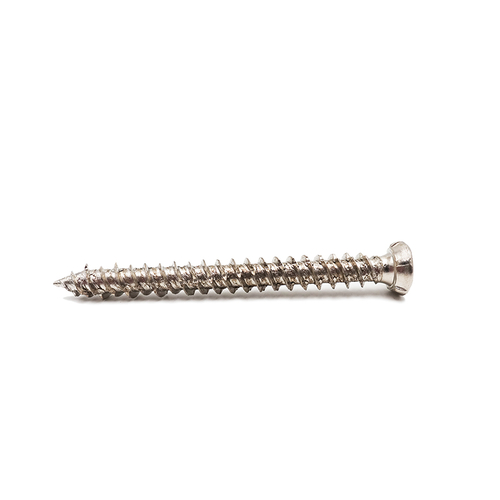
Fastening Particle Board Without Splitting or Stripping
Particle board and other engineered wood panels behave very differently from solid timber. The compressed wood particles and resin binder create a material that resists warping but is far less forgiving when a fastener is driven at the wrong angle, with the wrong pilot hole, or with the wrong thread profile. Choosing between a chipboard screws option and a general-purpose machine screws option is one of the first decisions that determines whether a joint holds for years or loosens after a few months of normal use.
This guide breaks down the practical differences between thread types, head profiles, and pilot hole sizing so that furniture builders, cabinet shops, and maintenance teams can select hardware based on the actual load and material conditions rather than guesswork.
Chipboard Screws Versus Machine Screws: Core Differences
The two fastener families are built for opposite jobs. A screws meant for panel work needs to cut its own path through particles and resin, while a machine-style fastener is designed to mate with a pre-formed thread in metal or a nut.
| Attribute | Chipboard and Panel Screws | Machine Screws |
|---|---|---|
| Thread type | Coarse, self-tapping | Fine, uniform machine thread |
| Typical base material | Particle board, MDF, plywood | Tapped metal, nuts, threaded inserts |
| Pilot hole requirement | Small pilot hole, self-cutting tip | Matching tapped hole, no self-cutting |
| Head style range | Pan, flat, countersunk | Pan, round, socket, flat |
| Common finish | Zinc, black oxide, UV coated | Zinc plated, stainless, passivated |
| Best use case | Furniture assembly, cabinetry, shelving | Metal brackets, hinges into threaded inserts |
In mixed assemblies, such as a metal bracket fastened to a particle board carcass, both families may appear in the same joint. The panel side takes a self-tapping fastener while the bracket side may use a short machine fastener into a threaded insert or nut plate.
Anatomy of a Wood Pan Head Screw
A pan head wood screws combines a low-profile domed head with a coarse, deep thread. The dome distributes clamping pressure across a wider surface than a countersunk head, which is useful when the panel face should not be recessed or when a decorative washer sits under the head.
Three features define how well this fastener performs in engineered wood:
- Thread depth: a deeper, coarser thread engages more of the compressed wood particles, increasing pull-out resistance.
- Shank diameter: matched to the recommended pilot hole so the thread bites without over-compressing the surrounding material.
- Tip geometry: a sharp, self-starting tip reduces the chance of the panel face chipping when the fastener begins to cut.
Selecting Screws for Particle Board Based on Load and Panel Density
Particle board density varies by manufacturing grade, and that density directly affects how much a fastener can be trusted to hold. Lower density panels used in flat-pack furniture behave differently under load than higher density panels used in commercial shelving or worktops.
When specifying screws for particle board, three variables should be checked together rather than in isolation: panel thickness, expected load direction, and edge distance from the fastener to the panel edge.
| Panel Thickness | Recommended Screw Length | Typical Application |
|---|---|---|
| 12 to 16 mm | 25 to 30 mm | Cabinet sides, drawer boxes |
| 18 to 22 mm | 35 to 40 mm | Shelving, worktop substrates |
| 25 mm and above | 45 to 50 mm | Structural panel joints, heavy shelving |
Edge distance matters as much as length. Driving a fastener too close to the panel edge concentrates stress in a small area of compressed particles, which is a common cause of edge blowout during assembly. A general guideline used by panel fabricators is to keep the fastener centerline at least three times the screws shank diameter away from the nearest edge.
Pilot Hole Sizing for a Number 10 Wood Screw
Skipping a pilot hole, or drilling one that is too small, is one of the most frequent causes of stripped panel threads. A pilot hole for #10 wood screws applications should be sized to the root diameter of the screws, not the outer thread diameter, so the thread still has material to bite into.
| Material | Recommended Pilot Bit | Notes |
|---|---|---|
| Softwood | 2.5 mm | Reduces splitting near grain edges |
| Hardwood | 3.0 mm | Prevents shank binding and head snap-off |
| Particle board | 3.2 mm | Compensates for lower density compaction |
| MDF | 3.0 mm | Fine particle structure needs a clean start |
For repeated production runs, drilling a test hole in an offcut of the same panel batch is worth the extra minute. Panel density can shift between production lots, and a pilot hole that worked cleanly on one sheet may be too tight or too loose on another.
Installing Anchor Screws for Wood: A Step-by-Step Sequence
Anchor screws for wood are typically used where a fastener needs to hold into end grain, into a panel edge, or into a substrate that will see repeated load cycles such as a door hinge or drawer slide. The installation sequence below reduces the two most common failure points: thread stripping and head snap-off from over-torquing.
- Mark the fastener centerline and confirm the edge distance is sufficient for the panel thickness.
- Drill the pilot hole to the correct root diameter, holding the drill perpendicular to the panel face.
- Start the screws by hand or at low driver speed until it engages the thread cleanly.
- Drive at a moderate, consistent speed until the head seats without over-compressing the surface.
- Inspect the joint for lateral play and re-tighten if the head has not fully seated.
A driver set to too high a torque is the most common cause of a stripped hole in particle board, since the compressed fibers can only resist so much rotational force before they shear around the thread. Setting the clutch on a driver to stop just as the head seats flush preserves holding strength for future disassembly and reassembly.
Comparing Pan, Flat, and Countersunk Head Profiles
Head shape affects both the finished appearance and the mechanical performance of the joint. Wood pan head screws, flat head wood screws, and countersunk wood screws each suit a different visual and structural requirement.
| Head Type | Sits Relative to Surface | Best Suited For |
|---|---|---|
| Pan head | Above the surface | Metal brackets, hinges, visible hardware joints |
| Flat head | Flush or slightly recessed | Furniture panels needing a smooth face |
| Countersunk | Fully recessed with a chamfered hole | Worktops, tabletops, painted or veneered panels |
Countersunk wood screws require a matching countersink bit or a combination pilot and countersink bit so the chamfer angle lines up with the head taper. A mismatched angle leaves the head either proud of the surface or sunk too deep, which can crack the surrounding veneer on a finished panel.
Coatings and High Tensile Options for Demanding Environments
Beyond thread geometry, the coating and base alloy of a fastener determine how it performs over time, especially in furniture that will be assembled and disassembled multiple times, such as flat-pack shelving or modular cabinetry.

- Zinc plated finishes offer general corrosion resistance for indoor furniture assembly.
- Black oxide finishes add a matte appearance often paired with dark panel finishes.
- UV coated finishes are formulated to resist color change from light exposure, which matters for hardware left visible on furniture edges.
- High tensile particle board fasteners use a harder core alloy, which reduces the risk of head snap-off when driving into denser panel stock or when repeated disassembly is expected.
Chipboard furniture screws intended for flat-pack or knock-down furniture are frequently specified with a slightly harder core than general carpentry screws, since these joints may be assembled, taken apart for shipping or storage, and reassembled several times without a fresh pilot hole each time.
Common Assembly Problems and How to Prevent Them
Stripped Pilot Hole
Usually caused by an oversized pilot hole or repeated removal and reinsertion. Switch to a slightly longer fastener seated into fresh material, or use a threaded insert for a repairable joint.
Head Snap-Off
Often the result of excessive driver torque or a pilot hole that is too small for the panel density. Reduce driver speed and confirm pilot hole sizing against the panel type.
Panel Edge Blowout
Occurs when the fastener sits too close to the panel edge. Increase edge distance and consider a shorter screws length for edge-mounted hardware.
Loose Joint After Reassembly
Common in flat-pack furniture disassembled multiple times. A specialized threaded wood hardware insert preserves the thread for repeated use.
Frequently Asked Questions
Q1: What is the difference between a chipboard screws and a standard wood screws?
A chipboard screws generally has a coarser, more uniform thread along most of its length and a sharper self-starting tip, which suits the compressed particle structure of engineered panels better than a traditional tapered wood screws thread.
Q2: Can machine screws be used directly in particle board?
Machine screws are designed to mate with a pre-cut thread, such as a nut or threaded insert, rather than to cut their own path. Driving one directly into particle board without a matching thread will usually result in a loose, unreliable joint.
Q3: How do I know if my pilot hole is the right size?
The pilot hole should match the root diameter of the screws, not the outer thread diameter. If the screws drives in with very little resistance, the hole is likely too large; if the driver stalls or the head begins to twist off, the hole is likely too small.
Q4: Do pan head screws need a countersink?
No. A pan head is designed to sit above the surface, so a countersink is not required. Countersinking is only needed for countersunk head profiles that must sit flush or recessed.
Q5: Why do some panel joints loosen after multiple disassemblies?
Each removal and reinsertion into the same pilot hole gradually wears down the surrounding particles. For furniture expected to be assembled and disassembled repeatedly, a threaded insert or a slightly longer fastener into fresh material helps maintain holding strength.