You need 20 gauge steel sheet, but the thickness is not one universal number. For carbon steel, it is 0.0359 inches, or 0.912 mm. For galvanized steel, it is closer to 0.0396 inches. For aluminum, it drops to 0.0320 inches. That difference of three to four thousandths of an inch decides whether your screws bite, your bends align, and your parts fit the drawing. For a fabricator or buyer, knowing the exact value behind the gauge label is the single best way to avoid rework and rejected shipments.
What 20 Gauge Steel Sheet Thickness Actually Means
The gauge system describes thickness through a negative relationship: a lower gauge number means a thicker sheet. A 10 gauge sheet is much heavier than a 24 gauge sheet, and 20 gauge sits comfortably in the middle. It is thick enough to hold its shape in an enclosure or cabinet panel, yet thin enough to form on standard brake presses.
For carbon steel, the accepted standard is 0.0359 inches or 0.912 mm. This is the value you will find on most reference charts and in supplier technical datasheets. The confusion comes when you compare across metal families. Each family uses its own gauge progression, so 20 gauge aluminum is not the same physical thickness as 20 gauge steel. Whenever a supplier quotes 20 gauge, ask for the decimal equivalent in millimeters to confirm it matches your project specification.
This is where a reliable gauge-to-thickness conversion reference becomes useful on the purchasing side. It gives you a quick way to validate supplier quotes and catch mismatches before material arrives.
20 Gauge Steel Thickness Across Different Metals
The following table shows the nominal thickness for 18, 20, 22, and 24 gauge across four metal families. This gives you context: 20 gauge is one step thinner than 18 gauge and one step thicker than 22 gauge.
| Gauge | Carbon Steel (in) | Carbon Steel (mm) | Galvanized (in) | Galvanized (mm) | Stainless (in) | Stainless (mm) | Aluminum (in) | Aluminum (mm) |
|---|---|---|---|---|---|---|---|---|
| 18 | 0.0478 | 1.214 | 0.0516 | 1.311 | 0.0480 | 1.219 | 0.0403 | 1.024 |
| 20 | 0.0359 | 0.912 | 0.0396 | 1.006 | 0.0355 | 0.902 | 0.0320 | 0.813 |
| 22 | 0.0299 | 0.759 | 0.0336 | 0.853 | 0.0312 | 0.792 | 0.0253 | 0.643 |
| 24 | 0.0239 | 0.607 | 0.0276 | 0.701 | 0.0239 | 0.607 | 0.0201 | 0.511 |
Notice the difference between carbon steel and galvanized steel at 20 gauge. The zinc coating adds roughly 0.0037 inches, which is why the galvanized sheet is physically thicker than the uncoated steel despite carrying the same gauge number.
Why Thickness Tolerances Matter in Practical Fabrication
Important: A difference of 0.003 inches between 20 gauge steel and 20 gauge galvanized steel might not seem significant, but it can affect screw thread engagement, bend deduction calculations, and nesting tolerances for stamped parts.
When you fasten sheet metal, the screw tip needs enough material to thread into. If the actual sheet is thinner than the drawing says, a self-drilling screw can chew through before the thread fully engages. If it is thicker, the screw may not reach the length required for a secure connection. This is why verifying the decimal thickness on receipt is just as important as confirming the gauge number.
In bending, a 0.003 inch thickness difference changes the bend radius and spring-back characteristics. For a large production run, that can push tolerances out of spec. Always ask the supplier for the exact decimal thickness and its tolerance range, then confirm your tooling and fasteners are set for that range.
Where 20 Gauge Steel Shows Up in Real Projects
20 gauge steel is a workhorse because it balances formability and strength. You will find it in a wide range of industries:
- HVAC Ductwork, plenums, and transition fittings
- Electrical Enclosure boxes, junction boxes, and control cabinets
- Automotive Body panels, floor pans, and structural repair sections
- Furniture Cabinet frames, shelving systems, and lockers
- Architecture Decorative cladding, sign frames, and column wraps
In each case, engineers choose 20 gauge when they need something that is still light enough for easy handling but rigid enough to hold its form under bending and light loads.
Selecting Fasteners for 20 Gauge Steel Sheets
Fastener selection for 20 gauge steel depends on whether you have access to both sides of the sheet and whether the joint needs to be weather-resistant. Here are the three most common scenarios.
For through-sheet fastening in HVAC and enclosure work, a hex washer head self-drilling screw with zinc plating is a practical all-around choice. The self-drilling tip pierces 20 gauge steel without a pilot hole, and the hex washer head handles substantial driving torque without slipping.
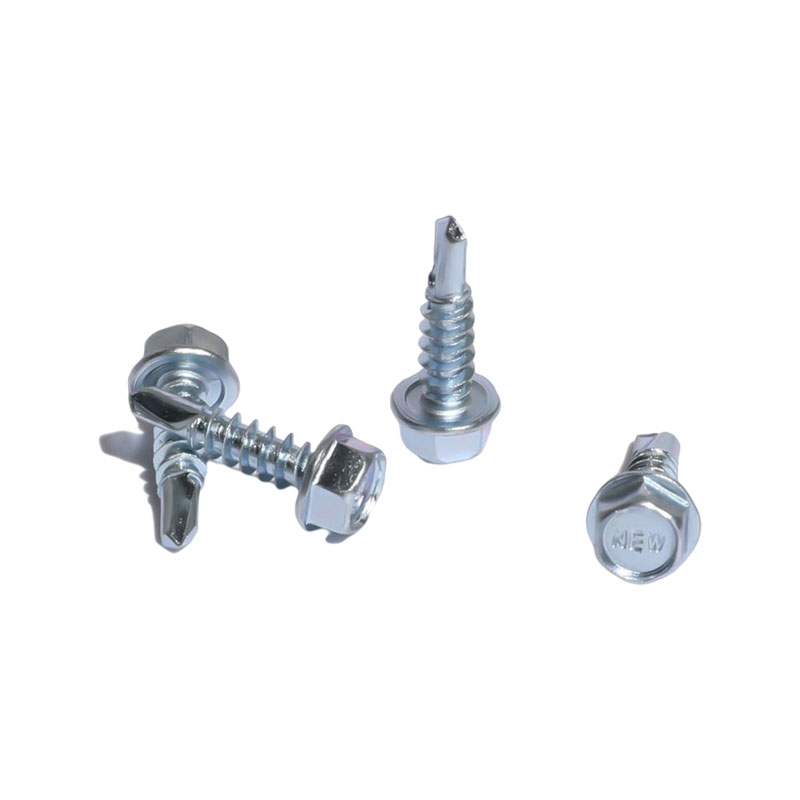 Hex washer head self drilling screw zinc platedRECESS: Philips,Square,TorxView Product →
When joining two 20 gauge sheets in lighter-duty cabinetry or when using nuts on the back side, Phillips wafer head sheet metal screws in black phosphated finish keep the surface profile low and resist rust in indoor environments.
 Phillips wafer head sheet metal screw black phosphatedSurface:black phosphate ,zinc plated ,Yellow Zinc plated, Ruspert,MagniView Product →
For exterior roof panels or any metal sheet exposed to rain, a hex washer head self-drilling screw with an EPDM washer provides a rubber seal that prevents water from penetrating the fastener hole. With 20 gauge steel, this combination works especially well because the sheet is rigid enough to hold the washer flat without deformation.
How to Verify the Thickness of Your 20 Gauge Steel
A supplier can label a sheet as 20 gauge, but the actual thickness is what your tooling sees. Use a digital caliper or a micrometer and take measurements at multiple points along the sheet, including the center and near the edges.
Check the coating as well. A galvanized sheet that measures 0.0396 inches includes the zinc layer, and the base steel underneath is closer to 0.0359 inches. If your fastening spec is based on base steel thickness, account for the coating in your calculations.
Record the measured values on a receiving report. If the consistency is poor, return the batch to the supplier before you cut or form it. A 0.001 inch variation across a single sheet is common, but a sheet that drops 0.005 inches thinner than nominal can cause loose fasteners and sloppy joints.
Frequently Asked Questions About 20 Gauge Steel Thickness
Q1: Is 20 gauge steel 0.0359 inches in carbon steel and stainless steel?
No. Carbon steel 20 gauge is 0.0359 inches (0.912 mm), while stainless steel 20 gauge is 0.0355 inches (0.902 mm). The difference is small but real, so always confirm which metal family your gauge refers to.
Q2: Do I need a pilot hole to drill through 20 gauge steel?
Not if you use a self-drilling screw. A self-drilling screw with a #2 or #3 drill point can pierce 20 gauge carbon steel and galvanized steel directly. For 20 gauge stainless steel, use a self-drilling screw specifically rated for stainless, or drill a pilot hole first.
Q3: Will 20 gauge steel rust if used outdoors?
Uncoated 20 gauge carbon steel will rust outdoors. For exterior applications, use galvanized steel, aluminum, or a painted finished product. Fasteners with EPDM washers also help seal the hole against moisture.