Understanding the Engineering Reality of Gauge Systems
In industrial manufacturing and mechanical design, precision is non-negotiable. Metal components must interface flawlessly to maintain structural integrity and prevent mechanical fatigue. A frequent challenge arises when working with thin-gauge components and specialized industrial components like a high-precision fastener. The term gauge refers to a traditional unit of measurement used to define the thickness of sheet metal and the wire diameters of specific mechanical components. However, gauge is not an absolute, universal linear scale. Instead, it is an empirical indexing system where a higher number denotes a thinner material measurement.
The origins of this system date back to early wire drawing industries, where the gauge number represented the number of sequential drawing passes required to reduce a metal rod down to its target thickness. Because every pass through a die squeezed the material thinner, thirty passes resulted in a far thinner profile than five passes. Today, this historical legacy requires engineers and fabricators to rely heavily on a detailed metal thickness gauge chart to prevent costly material mismatches, structural failures, or incorrect threading tolerances.
When specifying components for structural assemblies, heavy machinery, or electronic enclosures, understanding the precise relationship between standard sheet metal gauge thickness and actual dimensional limits in inches or millimeters is critical. Misinterpreting a 14 gauge steel thickness or a 16 gauge sheet metal thickness by even a fraction of a millimeter can alter the shear strength, tensile load limit, and overall weight distribution of an engineered assembly.
The Crucial Distiction Between Ferrous and Non-Ferrous Gauge Systems
One of the most dangerous traps in engineering design is assuming that a specific gauge number yields the exact same measurement across all metal types. This is fundamentally incorrect. The industrial manufacturing ecosystem utilizes distinct standardizing systems depending on the chemical composition and magnetic properties of the material being specified. When referencing a steel gauge thickness chart, the values differ significantly from those applied to aluminum, copper, or brass.
The two primary standards governing these dimensions are:
- Manufacturers Standard Gauge (MSG): This standard applies exclusively to carbon steel, alloy steel, and stainless steel. It is based on a nominal weight density of iron, calculated at 41.82 pounds per square foot per inch of thickness.
- Brown and Sharpe Gauge (B and S): Also widely designated as the American Wire Gauge (AWG) standard, this system governs non-ferrous metals such as aluminum, copper, brass, and bronze. It follows a geometric progression based on specific drawing ratios.
To visualize how these standards diverge, consider that a 10 gauge carbon steel sheet has a nominal thickness of 0.1345 inches. In stark contrast, a 10 gauge aluminum sheet measured via the Brown and Sharpe standard possesses a nominal thickness of 0.1019 inches. This creates a dimensional variance of more than thirty percent, which would completely invalidate a structural load calculation or render automated assembly machinery inoperable.
Visualizing the Standardized Gauge Dimensional Hierarchy
The following engineering diagram demonstrates the structural difference between standard gauge systems across common industrial applications. It shows how the same index number produces completely different structural realities when transitioning from carbon steel to non-ferrous aluminum profiles.
Comprehensive Gauge to Inches and Millimeters Conversion Matrix
When converting gauge to inches or calculating structural parameters via gauge to mm variables, referencing verified material schedules is critical. The master dataset below provides a highly cross-referenced sheet metal gauge thickness chart spanning from the heaviest heavy-duty structural plates down to ultra-thin precision shim configurations.
| Gauge Size | Carbon Steel (MSG) Inches | Carbon Steel (MSG) mm | Stainless Steel (MSG) Inches | Stainless Steel (MSG) mm | Aluminum (B and S) Inches | Aluminum (B and S) mm |
|---|---|---|---|---|---|---|
| 3 GA | 0.2391 | 6.07 | 0.2500 | 6.35 | 0.2294 | 5.83 |
| 4 GA | 0.2242 | 5.69 | 0.2344 | 5.95 | 0.2043 | 5.19 |
| 5 GA | 0.2092 | 5.31 | 0.2188 | 5.56 | 0.1819 | 4.62 |
| 6 GA | 0.1943 | 4.94 | 0.2031 | 5.16 | 0.1620 | 4.11 |
| 7 GA | 0.1793 | 4.55 | 0.1875 | 4.76 | 0.1443 | 3.67 |
| 8 GA | 0.1644 | 4.18 | 0.1719 | 4.37 | 0.1285 | 3.26 |
| 9 GA | 0.1495 | 3.80 | 0.1563 | 3.97 | 0.1144 | 2.91 |
| 10 GA | 0.1345 | 3.42 | 0.1406 | 3.57 | 0.1019 | 2.59 |
| 11 GA | 0.1196 | 3.04 | 0.1250 | 3.18 | 0.0907 | 2.30 |
| 12 GA | 0.1046 | 2.66 | 0.1094 | 2.78 | 0.0808 | 2.05 |
| 13 GA | 0.0897 | 2.28 | 0.0938 | 2.38 | 0.0720 | 1.83 |
| 14 GA | 0.0747 | 1.90 | 0.0781 | 1.98 | 0.0641 | 1.63 |
| 15 GA | 0.0673 | 1.71 | 0.0703 | 1.79 | 0.0571 | 1.45 |
| 16 GA | 0.0598 | 1.52 | 0.0625 | 1.59 | 0.0508 | 1.29 |
| 18 GA | 0.0478 | 1.21 | 0.0500 | 1.27 | 0.0403 | 1.02 |
| 20 GA | 0.0359 | 0.91 | 0.0375 | 0.95 | 0.0320 | 0.81 |
| 22 GA | 0.0299 | 0.76 | 0.0313 | 0.79 | 0.0253 | 0.64 |
| 24 GA | 0.0239 | 0.61 | 0.0250 | 0.64 | 0.0201 | 0.51 |
Deep Dive Analysis: 14 Gauge vs. 16 Gauge Sheet Metal Thickness
In mainstream sheet metal fabrication, few dimensions are specified more frequently than 14 gauge sheet metal thickness and 16 gauge sheet metal thickness. These two variants occupy the sweet spot for a massive percentage of industrial components, control enclosures, structural brackets, and heavy automotive panels. Selecting between them requires a delicate balancing act involving tensile strength, processing cost, structural rigidity, and weight limits.
14 Gauge Performance Profile
At a nominal thickness of 0.0747 inches (1.90 mm) for carbon steel, 14 gauge offers substantial structural structural stiffness. It is the preferred option when a sheet metal component must withstand sustained mechanical vibration, external impacts, or serve as a foundational load-bearing mount for automated hardware. However, this extra thickness makes manual forming or precision sharp radius bending more energy-intensive, requiring higher tonnage press brakes and heavy tooling configurations.
16 Gauge Performance Profile
Conversely, 16 gauge carbon steel sits at 0.0598 inches (1.52 mm). While it is roughly twenty percent thinner than 14 gauge, it offers superb structural integrity while dropping total assembly weight significantly. 16 gauge is highly workable, making it an excellent choice for complex, multi-bend electronic enclosures, intricate ductwork, and deep-drawn components. It responds beautifully to standard laser cutting paths, punching operations, and robotic welding lines without the risk of excessive thermal deformation.
Choosing the wrong gauge across these two thresholds results in immediate operational issues. If a design team mistakenly substitutes 16 gauge material where 14 gauge steel thickness was structurally required, the component may suffer from oil-canning—a phenomenon where flat metal surfaces flex and pop under shifting pressure loads. Conversely, over-engineering an assembly by upgrading from 16 to 14 gauge across an entire production run increases raw material costs by up to twenty-five percent and adds dead weight that can strain physical mounting frames and transit logistical limits.
Integrating Fastener Dimensions with Sheet Metal Thickness
A primary point of mechanical failure occurs at the junction point where a mechanical fastener passes through or anchors into a thin sheet metal substrate. Unlike joining thick machined blocks where a blind tapped hole can provide unlimited thread engagement, securing components to sheet metal requires strict adherence to sheet thickness limits to ensure joint longevity.
When analyzing industrial hardware sizes via a standard gauge size chart, engineers must focus heavily on the pitch of the mating threads. For a joint to achieve full mechanical holding capacity without stripping under rated torque loads, a general rule of thumb dictates that at least two full thread pitches must reside completely within the boundaries of the sheet metal thickness. If the sheet metal profile is thinner than this threshold, specialized hardware solutions must be integrated into the processing floor:
- Self-Clinching Nuts and Studs: These hardware units are pressed directly into pre-punched holes. Under high installation pressure, the cold sheet metal flows into a specialized annular groove on the hardware body, locking it permanently into place. This allows thin sheets, like a 16 gauge layout, to host high-load machine threads safely.
- Rivet Nuts (Blind Threaded Inserts): Installed from a single side of the workspace, these components are ideal for hollow profiles or tubed frames. The insert undergoes a controlled collapse on the back side of the sheet, creating an exceptionally robust internal thread.
- Flow Drilling (Thermal Friction Drilling): A high-speed rotating tungsten carbide tool generates extreme frictional heat, localizing plastic deformation in the sheet. Instead of cutting a hole, the material is pushed downward to form a thick vertical sleeve, increasing the effective thread path length by up to three times the initial sheet gauge profile.
The following cross-sectional diagram illustrates the physical dynamics of thread engagement across a standard sheet boundary. It shows why adequate sheet profile depth is critical to preventing thread shear failures when standard hardware is introduced to a structural assembly.
Advanced Metrology: Protocols for Measuring Gauge on the Shop Floor
Determining accurate sheet thickness or verifying structural wire parameters on a live production floor requires strict adherence to verified quality control protocols. Relying on simple visual estimates or degraded, uncalibrated instruments directly compromises the reliability of a final manufactured product. Quality inspection teams should deploy systematic inspection routines to guarantee that incoming raw materials match specified steel sheet gauge chart limits.
Step 1: Surface Preparation and Coating Removal. Before executing an administrative measurement, the target metal sheet surface must be completely free of protective oil films, scaling, slag, or post-processing coatings. Galvanization or industrial paint films add measurable thickness. For example, a heavy hot-dip galvanized layer can add up to 0.003 inches of thickness to a sheet profile. This artificial buildup can easily trick an inspector into misidentifying a thin 16 gauge profile as a 14 gauge sheet metal thickness layout, leading to structural non-conformance down the line.
Step 2: Micrometer Position Optimization. While standard digital calipers are acceptable for quick reference checks, formal material verification requires an anvil-style digital micrometer. Measurements must never be taken directly along the sheared outer perimeter of a raw sheet. The mechanical action of industrial punching or shear slicing leaves localized edge burrs and minor structural deformations that artificially inflate thickness readings. All micrometer probes should be positioned at least 0.50 inches (12.7 mm) inboard from any sheared edge to ensure access to a true, undistorted cross-section.
Step 3: Multi-Point Statistical Averaging. Large format sheets often present minor thickness variations due to roll-bend tolerances during mill processing. For absolute certainty, inspectors should record dimensions across a minimum of four distinct surface points, calculating an aggregate average to compare against the nominal limits defined in a steel sheet gauge chart.
How Sheet Gauge Selection Influences Fabrication Cost and Tool Wear
Material selection decisions ripples through every single asset operation on a modern fabrication floor. Choosing a specific layout from a steel gauge thickness chart directly determines tool wear rates, laser cutting cycle times, gas consumption profiles, and secondary structural manipulation limits.
| Fabrication Parameter | Thin Gauge Configurations (20 GA - 24 GA) | Medium Gauge Configurations (14 GA - 16 GA) | Heavy Gauge Configurations (3 GA - 10 GA) |
|---|---|---|---|
| Laser Cutting Speeds | Ultra-High Feed Rates / Minimal Gas Usage | Optimal Stabilized Feed Rates / Nitrogen Assist | Reduced Feed Rates / High-Pressure Oxygen Assist |
| Tooling and Die Wear | Minimal Tool Wear / Low Tonnage Required | Standard Progressive Tool Wear Profiles | Accelerated Punch Degradation / Heavy Tooling Required |
| Welding Complexity | High Burn-Through Risk / Requires Pulse MIG or TIG | Highly Stable Welding Window / Excellent Heat Tolerance | Requires Multi-Pass Beveling and Pre-Heating Cycles |
| Springback Factor | Low Elastic Elastic Recovery / Easy Overbending | Predictable Springback / Controlled Via CNC Brakes | High Resistance / Significant Machine Deflection Compensation |
Consider the practical application of laser cutting processes. Processing a 16 gauge sheet metal thickness profile requires significantly less laser energy, allowing CNC optics to traverse at linear feed rates exceeding hundreds of inches per minute using nitrogen as a shielding assist mechanism to yield clean, oxide-free edges. Stepping up to a heavy 8 gauge structural panel cuts the cutting feed rate by more than sixty percent and forces a transition to high-pressure oxygen assist gas, which introduces a surface oxide film that must be mechanically ground down before application of secondary powder coatings or structural welding operations.
Verifying Industrial Hardware Profiles
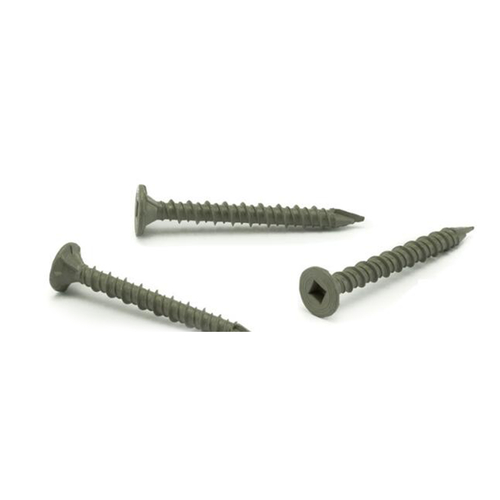
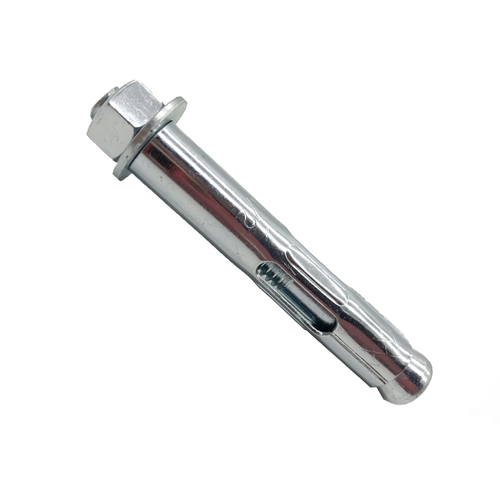
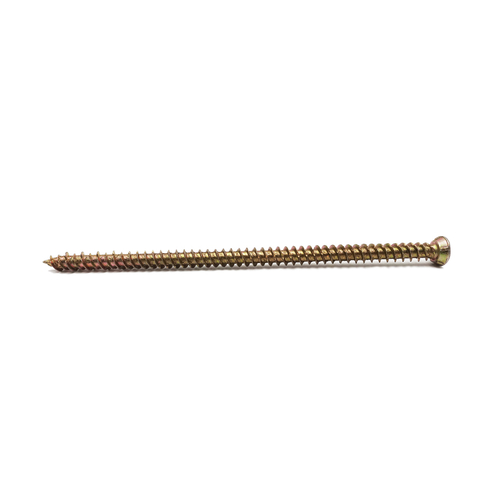
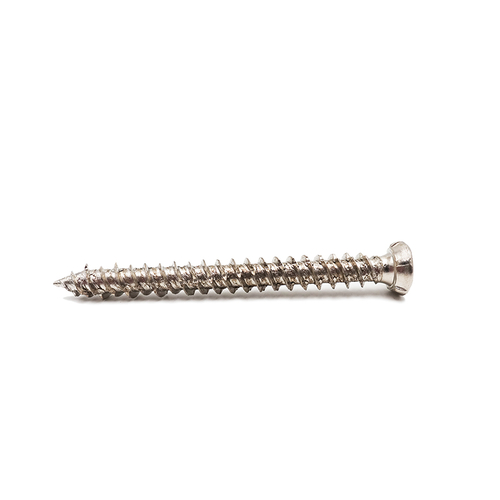
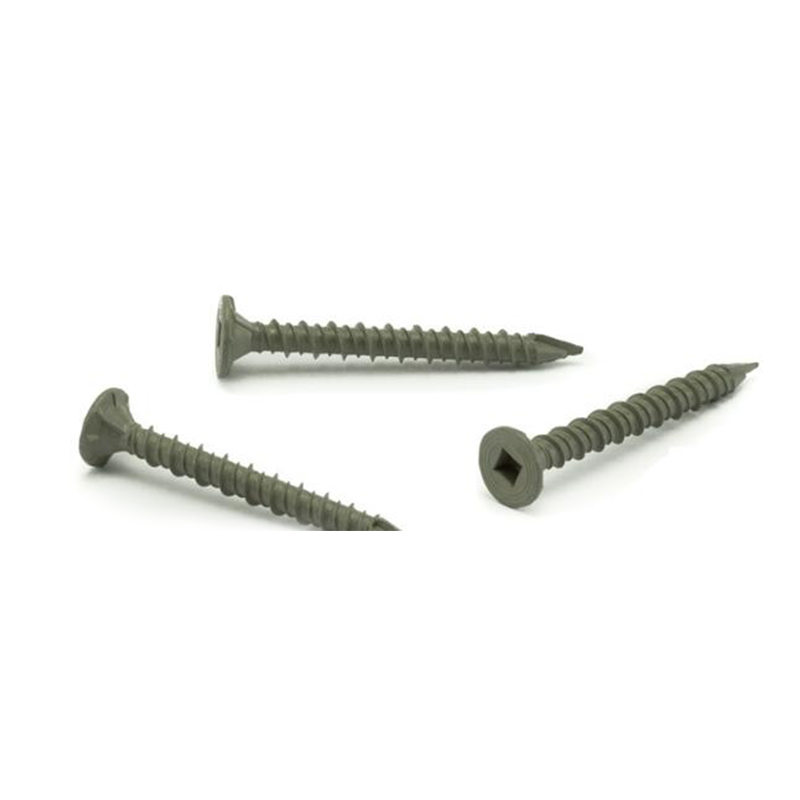
To guarantee absolute precision when managing incoming inventory, always cross-reference hardware dimensions and raw steel profiles using verified visual inspection standards. Below is a detailed technical reference detailing specialized mechanical thread configurations and metal sorting workflows used to eliminate shop floor non-conformance.
Frequently Asked Technical Questions
Q1: Why does a higher gauge number indicate a thinner material profile?
This inverse relationship is a direct artifact of the traditional wire-drawing manufacturing process. The gauge number historically recorded how many consecutive wire-drawing dies a raw material rod had to pass through to shrink its final cross-sectional profile. Each individual reduction pass squeezed the metal wire thinner. Consequently, a material that underwent twenty separate drawing runs (20 gauge) was significantly thinner than a rod that only passed through the drawing machinery four times (4 gauge).
Q2: Can I use the exact same gauge chart for stainless steel and carbon steel?
No. While both metals are governed by the Manufacturers Standard Gauge system, they possess distinct nominal values due to weight density variations between alloys. Stainless steel alloys contain heavy percentages of chromium and nickel, altering mass characteristics. Because of this, a 14 gauge stainless steel sheet measures exactly 0.0781 inches thick, whereas a 14 gauge carbon steel sheet tracks thinner at 0.0747 inches. Always verify your specific alloy profile before programming CNC cutting routines or purchasing mating hardware.
Q3: How do I choose between a 14 gauge and a 16 gauge profile for structural brackets?
The decision rests on calculated load demands, weight limitations, and manufacturing environment capabilities. A 14 gauge profile provides superior structural rigidity and a longer thread engagement path, making it ideal for assemblies subjected to constant mechanical vibration or external shear stresses. A 16 gauge alternative reduces total component weight by roughly twenty percent, slices down raw material procurement expenditures, and is much easier to form into intricate, multi-bend profiles on standard production tooling.
Q4: What happens if a mechanical fastener thread pitch is wider than the sheet metal profile thickness?
If a standard fastener thread pitch exceeds the sheet thickness, the joint will fail to achieve full mechanical lock because it cannot complete two full thread revolutions within the material boundary. When high assembly torque is applied, the single thin thread layer captured by the sheet will strip out completely, destroying the joint integrity. To resolve this without specifying heavier gauge sheets, you must deploy self-clinching nuts, rivet nuts, or leverage thermal friction drilling to expand the local thread path depth.
Q5: How does a zinc galvanized coating affect the physical thickness measurement of sheet metal?
Hot-dip galvanizing and electro-galvanizing add a structured sacrificial zinc protection layer over the substrate metal. This external coating layer typically adds anywhere from 0.001 to over 0.003 inches of thickness to each side of a raw profile. When utilizing a micrometer to verify an un-etched sample, you must subtract this known coating mass variance to uncover the true underlying sheet gauge index, ensuring accurate processing alignments on your stamping lines.