
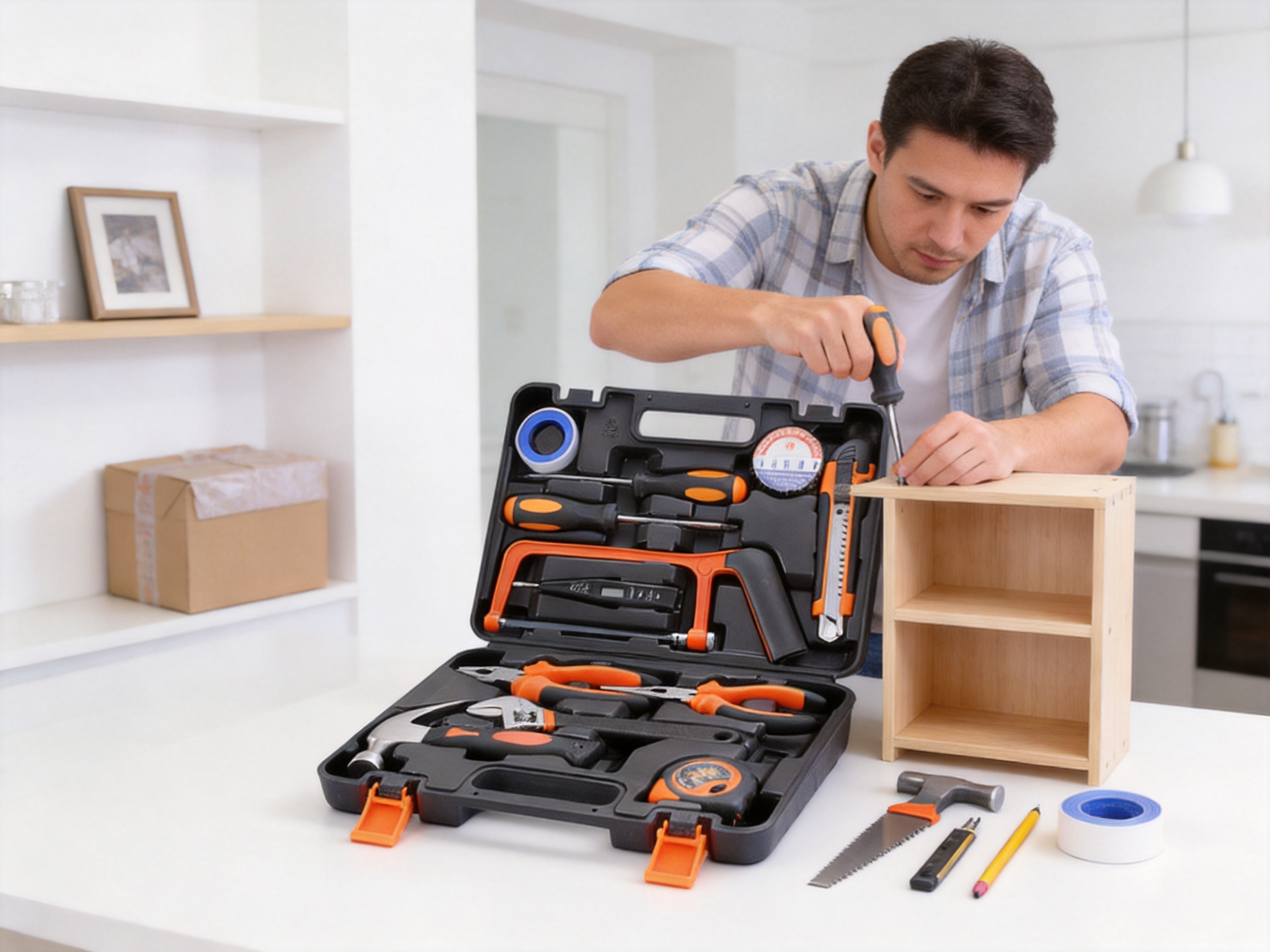
Home maintenance rarely requires a full professional workshop, but it often demands more than one or two basic tools. A loose screws, a leaking threaded connection, a damaged package, a rough edge, or a picture that needs hanging can quickly become inconvenient when the right tool is not available. The Multi-Function Home Repair Tool Set LZ000XM000013 is designed to answer this everyday need with a carefully organized selection of hand tools and maintenance accessories in one portable toolbox.
The set combines screwsdrivers, pliers, a wrench, a hammer, a mini saw, a utility knife, measuring tape, electrical tape, PTFE tape, and a test pencil. By bringing these items together, it provides a practical starting point for routine household repairs, furniture assembly, basic installation tasks, workshop preparation, apartment maintenance, and general do-it-yourself work.
Unlike a single-purpose tool, this multi-function set is intended to reduce the number of separate purchases required for common jobs. Its compact format also helps users store essential equipment in one location, making it easier to find and carry the tools when needed. For families, renters, homeowners, students, maintenance workers, and retailers seeking an accessible repair solution, the set offers a useful balance between variety, portability, and everyday functionality.
1. Product Overview and Intended Use
The Multi-Function Home Repair Tool Set is identified by product code LZ000XM000013 and belongs to the XM Set of Sets category. It is supplied as a toolbox-style package containing multiple hand tools and consumable repair accessories. The design concept is straightforward: provide the tools most frequently needed for light household work in a single organized product.
The set includes one piece of each of the following items: PTFE tape, cross screwsdriver, test pencil, vise, mini hammer, electrical tape, utility knife, slot screwsdriver, mini saw, long nose plier, adjustable wrench, three-meter measuring tape, and an outer toolbox. The combination covers fastening, gripping, measuring, cutting, light striking, basic electrical indication, and threaded-joint preparation.
| Component | Quantity | Primary Function |
|---|---|---|
| PTFE tape | 1 piece | Helps seal compatible threaded connections |
| Cross screwsdriver | 1 piece | Drives cross-head screws |
| Test pencil | 1 piece | Supports basic electrical presence checking when used correctly |
| Vise | 1 piece | Helps hold small workpieces securely |
| Mini hammer | 1 piece | Suitable for light striking and positioning tasks |
| Electrical tape | 1 piece | Provides basic insulating and bundling support |
| Utility knife | 1 piece | Cuts packaging, film, cardboard, and similar materials |
| Slot screwsdriver | 1 piece | Drives slotted screws |
| Mini saw | 1 piece | Handles light cutting work on suitable materials |
| Long nose plier | 1 piece | Grips, bends, and reaches into narrow spaces |
| Adjustable wrench | 1 piece | Works with a range of compatible nut and bolt sizes |
| Three-meter measuring tape | 1 piece | Measures objects, spaces, and installation distances |
| Toolbox outer box | 1 piece | Stores and transports the complete set |
Because the set combines tools with consumable accessories, it is more useful than a collection made only of drivers and pliers. PTFE tape and electrical tape can be required during the same repair in which a wrench or screwsdriver is used. The toolbox also allows the user to keep these smaller accessories together instead of storing them separately in drawers, bags, or cupboards.
2. Why a Multi-Function Set Is More Efficient Than Individual Purchases
Buying tools one at a time can lead to an incomplete assortment. A user may purchase a screwsdriver but later discover that pliers, a measuring tape, or an adjustable wrench is also necessary. This often creates repeated shopping trips, inconsistent storage, and additional expense. A complete starter set helps avoid that problem by bringing together several commonly used categories at the moment of purchase.
The advantage is especially clear for people moving into a new home or apartment. Furniture assembly, shelf installation, curtain fitting, light maintenance, package opening, and small adjustments may occur within the same week. Having a compact toolbox available makes it possible to respond to these tasks without relying on a neighbor, contractor, or emergency purchase.
For retailers, a multi-function tool set can also be easier to merchandise than a large number of separate low-value items. The product has a clear use case and can be positioned as a household starter kit, moving-in gift, seasonal maintenance product, workshop accessory, or practical promotional package. Its broad application range allows it to serve more than one customer segment.
Compared with highly specialized professional kits, this set is focused on accessibility. It does not attempt to replace every tool used in construction, automotive repair, electrical installation, or industrial maintenance. Instead, it concentrates on frequent light-duty tasks. That focus can be an advantage for users who want essential functionality without paying for a large collection of rarely used equipment.
The set also reduces the risk of tool incompatibility within a basic repair. A measuring tape can establish the required distance before drilling or assembling. A screwsdriver can tighten the fastener. Long nose pliers can hold a small component. An adjustable wrench can secure a nut. The hammer can assist with light positioning, while the utility knife and saw handle cutting requirements. The tools therefore support a simple workflow from measurement to adjustment and completion.

Multi-function home repair tool
3. Detailed Functionality of the Included Tools
3.1 Screwdrivers for Common Fasteners
The cross screwsdriver and slot screwsdriver address two of the most familiar screws head profiles. Cross-head screws are widely used in furniture, household fittings, appliances, brackets, and general hardware. Slotted screws remain common in older fixtures, simple assemblies, electrical components, and maintenance applications.
Providing both screwsdriver types improves the set’s practical coverage. A user is less likely to improvise with an unsuitable knife blade or other object, reducing the chance of damaging the screws head or the surrounding surface. Proper tool selection also supports more controlled tightening and loosening.
For best results, the screwsdriver tip should match the fastener profile and size as closely as possible. The tool should be held in line with the screws, and pressure should be applied steadily rather than at an angle. These basic practices help preserve the driver tip and minimize stripping.
3.2 Long Nose Pliers for Access and Control
Long nose pliers are valuable when a component is positioned in a narrow, recessed, or difficult-to-reach area. Their extended nose can help grip small parts, guide wire, bend light-gauge material, and retrieve objects from limited spaces. They can also assist with holding a nut, pin, or small fitting while another tool is used.
The inclusion of long nose pliers gives the set a level of access that a standard gripping tool may not provide. This is important in household fixtures, small mechanical assemblies, craft work, electronics-related handling, and general repair situations. Users should observe the tool’s intended capacity and avoid applying excessive force to hardened materials or live electrical conductors.
3.3 Adjustable Wrench for Flexible Fastening Work
An adjustable wrench can accommodate multiple compatible nut and bolt sizes, which makes it a practical choice for a compact kit. Instead of carrying many fixed-size wrenches for occasional household work, the user can adjust the jaw to fit the fastener.
The wrench is particularly useful for basic plumbing-related adjustments, furniture hardware, brackets, threaded fittings, and general mechanical maintenance. Correct use requires positioning the adjustable jaw firmly against the fastener and applying force in the appropriate direction. The jaw should be adjusted so that it does not move unnecessarily during operation.
3.4 Mini Hammer for Light Striking Tasks
The mini hammer is suited to light household work where a full-size hammer would be excessive. It can assist with positioning small components, tapping fittings into place, securing suitable nails, and completing minor assembly tasks.
Its smaller format contributes to portability and storage efficiency. It also gives users better control in confined areas, although all striking work should be performed with appropriate attention to hand placement, surrounding surfaces, and material strength. The mini hammer is not intended to replace heavy-duty demolition or professional framing equipment.
3.5 Measuring Tape for Accuracy Before Action
The three-meter measuring tape supports one of the most important principles in repair and installation: measure before cutting, drilling, fastening, or positioning. It can be used to check furniture dimensions, wall spacing, shelf alignment, package size, cable routes, and available storage space.
A measuring tape may appear simple, but its presence prevents many avoidable mistakes. An incorrectly positioned bracket, an undersized replacement part, or a cut made too short can create more work and material waste. Including a three-meter tape in the same case as the other tools encourages a more disciplined repair process.
3.6 Utility Knife and Mini Saw for Cutting Requirements
The utility knife is suitable for opening cartons, cutting packaging tape, trimming film, separating light materials, and performing similar controlled cutting tasks. It is especially useful in homes where deliveries and packaged products are frequently opened.
The mini saw extends cutting capability to appropriate lightweight materials that cannot be handled efficiently with a knife. Depending on the blade design and material being cut, it may support small trimming and repair jobs involving suitable wood, plastic, or other light materials. Users should select the correct cutting tool for the material and wear suitable protection when necessary.
3.7 PTFE Tape and Electrical Tape
PTFE tape is commonly used to support sealing on compatible threaded connections. When correctly applied to suitable threads, it can help reduce the risk of minor leakage in appropriate low-pressure applications. The threaded surfaces should be clean, and the tape should be wrapped in the correct direction so that it does not unwind during assembly.
Electrical tape can help insulate, bundle, label, or protect suitable wires and small components in basic maintenance situations. It should not be treated as a replacement for certified electrical connectors, professional electrical repair, or proper isolation procedures. The product’s inclusion is valuable because tape is frequently needed after a mechanical adjustment or cable-management task.
3.8 Test Pencil and Basic Electrical Awareness
The test pencil is intended to support basic electrical presence checking where the tool is appropriate and used according to its safety instructions. It can provide an initial indication during simple household inspection, but it should never be considered a substitute for a qualified electrician, a complete testing procedure, or formal confirmation that a circuit is safe.
Electrical work requires caution. Power should be isolated whenever possible, and users should never rely on a single indicator for high-risk work. The test pencil adds practical value to the set, but responsible use is essential.
3.9 Vise for Holding Small Workpieces
The included vise helps hold a small workpiece while the user measures, cuts, files, bends, or assembles it. Secure holding improves control and can reduce the likelihood of movement during light work. For a compact household kit, a small vise can be especially useful when both hands are needed for a repair operation.
The vise should be mounted or positioned securely according to its design and should only be used within its intended size and force range. It is best suited to light-duty holding rather than heavy industrial clamping.
4. Advantages Over Incomplete or Poorly Organized Tool Kits
Many low-cost tool assortments focus on quantity rather than useful coverage. They may include several similar drivers while omitting a measuring tape, gripping tool, wrench, cutting accessory, or storage case. The Multi-Function Home Repair Tool Set takes a more balanced approach by including tools from several functional categories.
Its first competitive advantage is application breadth. The buyer receives fastening tools, gripping equipment, measurement capability, cutting tools, light striking equipment, sealing materials, and storage in one package. This makes the product more capable for routine home maintenance than a small screwsdriver-only kit.
The second advantage is convenience. A complete kit is easier to keep in one known location. The toolbox outer box protects the assortment from being scattered across drawers and work surfaces. When a repair is needed, the user can take the case directly to the work area and return the tools after completion.
The third advantage is suitability for occasional users. Professional tradespeople may already own specialized tools, but occasional users often need a practical selection without studying a complicated catalog. The set provides a clear, understandable entry point for people who are building their first home maintenance collection.
The fourth advantage is suitability for distribution. Retailers and wholesalers can present the item as a complete solution rather than as a group of unrelated components. This simplifies product communication, packaging, shelf presentation, and customer decision-making.
The fifth advantage is the combination of reusable tools and consumable accessories. Screwdrivers, pliers, a wrench, a hammer, a vise, a saw, a knife, and measuring tape can be reused repeatedly. PTFE tape and electrical tape support immediate maintenance and can later be replenished as required. This creates a practical relationship between the initial purchase and future household use.
| Evaluation Area | Typical Incomplete Kit | Multi-Function Home Repair Tool Set |
|---|---|---|
| Fastening | May include only one driver type | Includes cross and slot screwsdrivers plus an adjustable wrench |
| Gripping | May omit pliers | Includes long nose pliers and a vise |
| Measuring | Often not included | Includes a three-meter measuring tape |
| Cutting | May include no cutting tool | Includes a utility knife and mini saw |
| Consumables | Usually limited | Includes PTFE tape and electrical tape |
| Storage | Loose or mixed components | Supplied with an outer toolbox |
| Household coverage | Focused on one task category | Supports several light maintenance categories |
5. Manufacturing Strengths and Production Approach
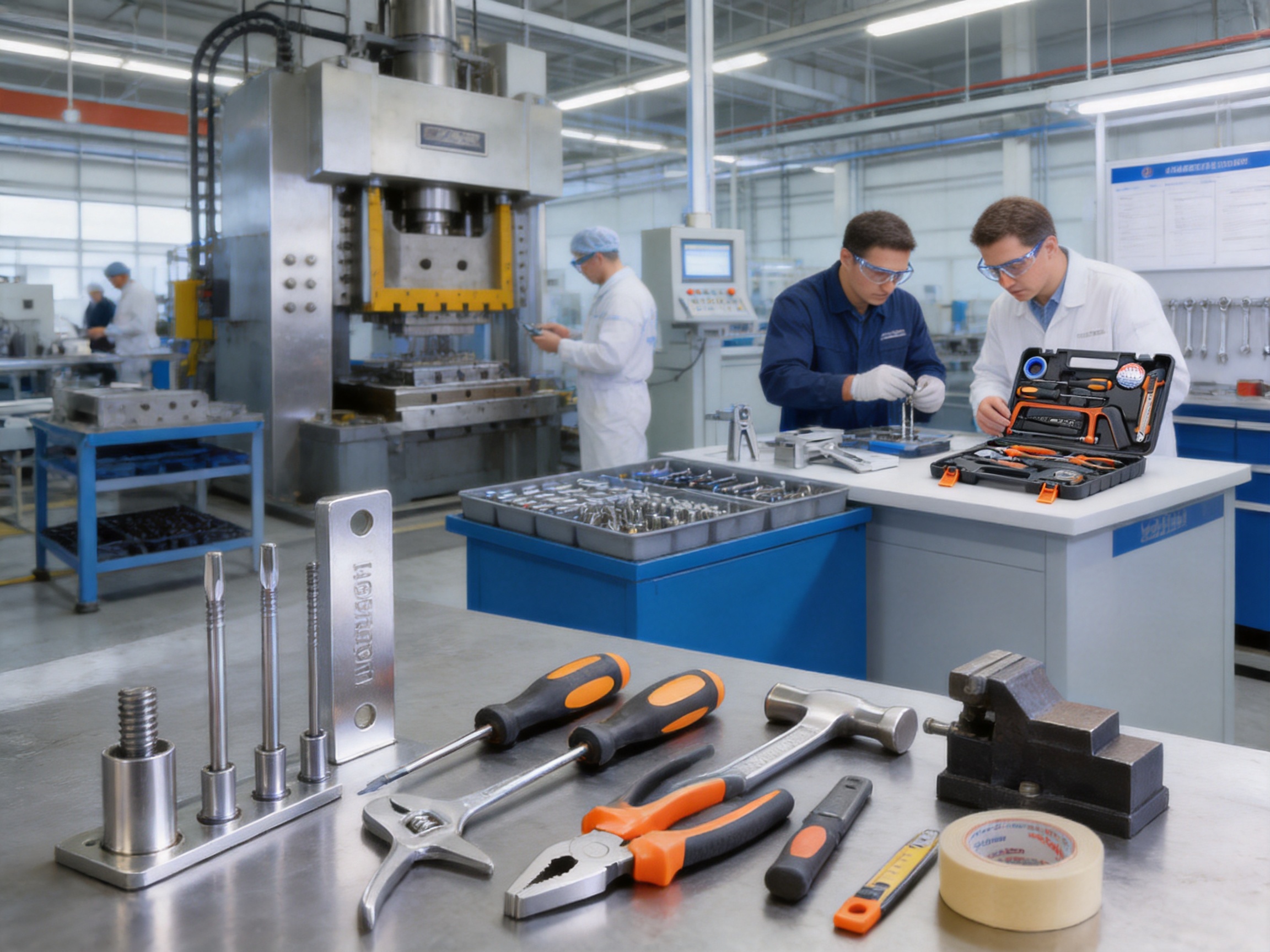
The value of a tool set depends not only on the number of components but also on how consistently those components are produced, inspected, assembled, and packaged. Lizhan Hardware Co., Ltd. operates within the hardware, fastener, stamping parts, packaging, and home-tool sectors. This product background provides a useful manufacturing foundation for a multi-component household repair kit.
A multi-function set requires coordination across several product types. Metal components such as pliers, wrench parts, hammer heads, vise components, saw frames, and screwsdriver shafts require suitable forming, machining, finishing, and inspection. Plastic or composite parts require controlled molding or forming, dimensional review, and visual checking. Tape products and packaging require separate attention to winding, adhesion, labeling, and presentation.
The company’s experience with stamping parts is relevant because stamping is widely used to create repeatable metal components from sheet material. A controlled stamping process can produce consistent shapes efficiently when dies, material thickness, press settings, and inspection standards are properly managed. Stamped components may be used in brackets, covers, clips, structural supports, and other hardware elements associated with tool products and packaging.
Stamping is only one stage of a reliable tool manufacturing process. Depending on the component, additional operations may include cutting, bending, forming, drilling, threading, grinding, deburring, surface treatment, assembly, and functional inspection. Each stage affects the final user experience. A tool that has the correct general shape but rough edges, poor alignment, weak joints, or inconsistent movement will not perform as expected.
For a set containing several different tools, manufacturing strength also means managing component compatibility. Screwdriver handles must be securely connected to shafts. Pliers must open and close with appropriate alignment. The wrench jaw must adjust smoothly enough for normal household use. The tape must retract and measure clearly. The toolbox must hold the contents in a practical arrangement. A coordinated quality system helps ensure that the complete package works as a product rather than as a random collection of items.
Production planning is another important strength. A supplier serving international customers may need to manage different order quantities, packaging requirements, inspection arrangements, carton specifications, and delivery schedules. The company’s China factory and Thailand warehouse structure can support a supply model that combines manufacturing capability with regional logistics access. This can be useful for importers, distributors, and retailers seeking a stable source for household hardware products.
The presence of a Thailand warehouse may provide advantages for customers serving Southeast Asian markets, subject to individual order arrangements and stock availability. A regional warehouse can potentially support shorter domestic or regional delivery routes, more flexible replenishment, and improved distribution responsiveness compared with a supply chain relying exclusively on long-distance shipment from the manufacturing site.
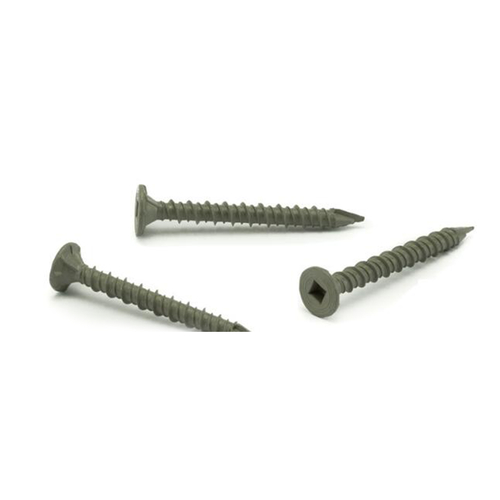
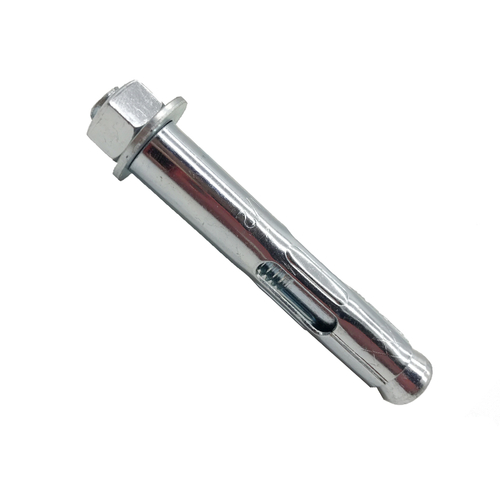
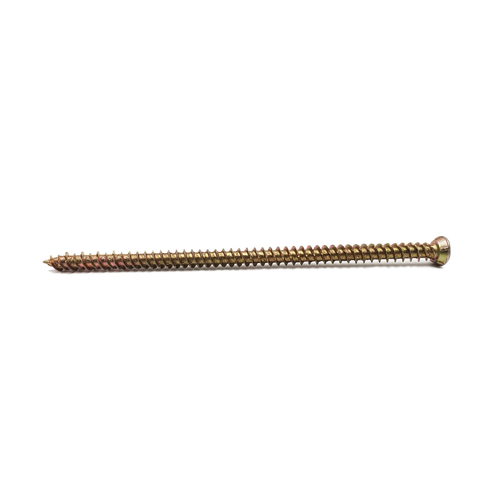
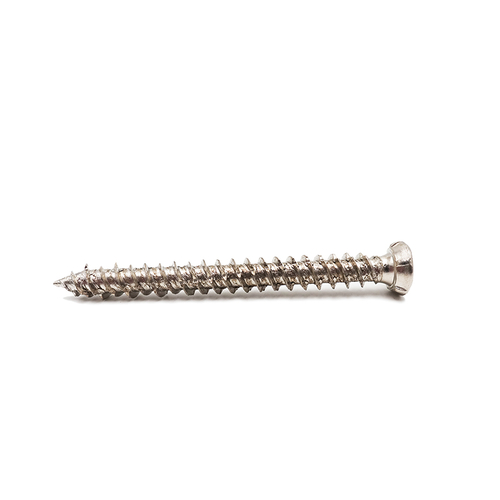
The company’s product scope also indicates familiarity with related hardware categories, including screws and other fasteners. This broader knowledge is helpful because hand tools are frequently used alongside fasteners. Understanding the dimensions, profiles, materials, and applications of screws can support better product matching between repair tools and the hardware used in furniture, construction, packaging, and household installation.
6. Quality Control Considerations for a Multi-Component Product
Quality control for this product should be considered at several levels: incoming materials, individual components, assembly, complete-set verification, packaging, and shipment readiness. Since the set contains many different items, checking only one component would not provide a complete evaluation.
6.1 Incoming Material Control
Metal stock should be reviewed for thickness, surface condition, grade requirements, and suitability for the intended forming or machining operation. Plastic components should be checked for appearance, dimensional stability, and freedom from visible defects. Tape materials should be assessed for winding, adhesion, backing condition, and packaging compatibility.
6.2 Dimensional and Visual Inspection
Dimensional inspection helps confirm that components remain within the required design range. This may include tool length, handle fit, jaw alignment, tape length, toolbox dimensions, and packaging clearance. Visual inspection can identify burrs, cracks, sharp unintended edges, poor surface finish, incomplete printing, or damage caused during handling.
6.3 Functional Inspection
Functional checks should reflect how the product will be used. Screwdrivers should be inspected for secure shaft installation and suitable tip formation. Pliers should open and close correctly, with the jaws meeting appropriately. The adjustable wrench should move through its intended adjustment range. The measuring tape should extend, retract, and display readable measurement markings. The utility knife and saw should be checked for correct assembly and secure blade retention.
For the toolbox, the relevant checks include closure, handle attachment, internal arrangement, and the ability to contain the listed components. Packaging inspection should confirm that the full assortment is present and that smaller accessories have not been omitted.
6.4 Assembly and Packing Verification
Set assembly is a critical stage because a product can contain individually acceptable items but still fail if the final package is incomplete. A packing checklist or barcode-based verification system can help confirm that each listed component has been included. The outer carton should protect the toolbox from crushing, moisture exposure, and excessive movement during transport.
Clear product identification also supports inventory accuracy. The product code LZ000XM000013 can be used as a reference for communication, ordering, warehouse handling, and documentation. Consistent identification reduces the possibility of mixing similar sets or shipping an incorrect configuration.
7. Manufacturing Process from Concept to Finished Set
7.1 Product Planning
The manufacturing process begins with defining the intended user and application range. For this set, the target use is light household repair and general maintenance. That purpose determines the selection of tools, the compact case format, the approximate quantity of each item, and the balance between reusable equipment and consumable accessories.
7.2 Tool and Component Design
Each component should be designed with its function, ergonomics, storage position, and manufacturing method in mind. A screwsdriver handle must provide a practical grip. Pliers require coordinated pivot movement. The adjustable wrench requires a jaw and adjustment mechanism that work together. The toolbox needs sufficient internal clearance while remaining compact enough for storage and transport.
7.3 Metal Forming and Stamping
Where stamped metal parts are used, sheet material is placed into a die or forming system that creates the required profile. Bending, punching, and shaping operations can be combined or performed in stages. Tooling accuracy is important because dimensional variation can affect assembly and function.
A well-managed stamping process offers repeatability and production efficiency. It is especially valuable for medium- and high-volume orders where consistent component geometry is important. After stamping, parts may require deburring, additional forming, drilling, surface treatment, or assembly with other components.
7.4 Machining and Finishing
Some components may require machining to create threads, adjustment surfaces, pivot holes, cutting edges, or other functional details. Grinding and finishing can improve edge condition and surface consistency. Proper finishing is not merely cosmetic; it can influence safety, movement, corrosion resistance, and user comfort.
7.5 Component Assembly
Assembly joins individual parts into usable tools. Pliers require a pivot connection, screwsdrivers require secure shaft-to-handle integration, and adjustable wrenches require correct installation of the adjustment mechanism. The vise and toolbox also require their components to be joined and checked for movement or closure.
7.6 Set Integration
After individual tool production, all components are brought together as a complete set. At this stage, the manufacturing team can verify that the product assortment is complete, that each item fits its assigned storage location, and that the package can be opened and closed without unnecessary difficulty.
7.7 Packaging and Logistics Preparation
The final package should protect tools from surface damage and prevent loose movement during transportation. Packaging also communicates the product’s application and contents to distributors and end users. For international supply, cartons, labels, documentation, and palletization must be coordinated with the requirements of the destination market and logistics provider.
8. Buyer Benefits for Different Customer Groups
8.1 Homeowners
Homeowners can use the set for furniture adjustments, basic fixture maintenance, package opening, measuring, small repairs, and general household organization. Since the toolbox combines many frequently used items, it can serve as a central maintenance kit for the home.
8.2 Renters and Students
Renters and students often need a small tool collection but have limited storage space. The compact toolbox can provide essential coverage without requiring a large workshop cabinet. It is also practical for dormitory rooms, rented apartments, temporary housing, and relocation.
8.3 Property Managers
Property managers may need multiple kits for routine inspection and light maintenance. A standardized set can simplify purchasing and ensure that staff members have access to a common group of tools. The toolbox format also supports easier movement between rooms or buildings.
8.4 Retailers and Distributors
Retailers can position the set in home improvement, hardware, seasonal maintenance, moving supplies, or gift-oriented sections. Distributors may also combine it with fasteners, furniture hardware, plumbing accessories, or household storage products. Its broad relevance gives it greater merchandising flexibility than a highly specialized tool.
8.5 Promotional and Project Packages
Organizations involved in housing projects, rental furnishing, maintenance programs, or community initiatives may use multi-function tool sets as practical support products. The broad tool selection can be more useful to recipients than a single-purpose promotional item.
9. Responsible Use and Maintenance
Although the set is designed for convenience, safe and effective use depends on selecting the correct tool for each task. A screwsdriver should not be used as a pry bar, a wrench should not be struck with a hammer unless specifically designed for that purpose, and a utility knife should be closed or secured when not in use.
Before electrical work, power should be isolated whenever possible. The test pencil should be used only according to its instructions and should not be treated as the sole proof that a circuit is safe. PTFE tape should be applied only to appropriate threaded connections, and electrical tape should not replace proper electrical repair methods.
Tools should be wiped clean after use and stored in the toolbox. Cutting tools should be kept away from children and handled with care. Moving parts, including plier pivots and adjustable wrench mechanisms, should be kept free from excessive dirt. Any component that becomes damaged, loose, cracked, or unsafe should be removed from service.
Good maintenance extends the useful life of the set. Organized storage also prevents loss. Since small accessories can easily disappear in a busy household, returning every component to the case after each task is an important habit.
10. Why the Product Is Suitable for Wholesale and OEM-Oriented Supply
A multi-function set can be attractive to wholesale buyers because it combines multiple product categories into one stock-keeping unit. Instead of ordering separate quantities of a screwsdriver, tape, wrench, pliers, and toolbox, a buyer can offer a complete package with a single product identity.
The company’s hardware manufacturing background can support discussions about component selection, packaging structure, order quantity, and product configuration. Buyers may also benefit from working with a supplier familiar with fasteners, stamped parts, and related hardware, because this can make it easier to develop complementary assortments or coordinated product lines.
For importers, the combination of a China manufacturing base and a Thailand warehouse may offer logistical flexibility, depending on stock status, destination, and commercial terms. A supply partner with more than one operational location can potentially provide options for production planning and regional distribution.
Wholesale buyers should confirm the exact component specification, packaging design, inspection requirements, labeling, carton dimensions, and order terms before placing an order. They should also clarify whether customization is available for packaging, branding, instruction sheets, color, component quantities, or market-specific compliance requirements.
The product code LZ000XM000013 provides a clear reference point for these conversations. Maintaining the same code across quotations, purchase orders, inspection documents, and shipment records helps reduce misunderstandings between buyer, factory, warehouse, and logistics provider.
11. Product Positioning in the Home Tool Market
The home tool market includes inexpensive single tools, professional tool systems, decorative gift boxes, emergency repair kits, and broad household maintenance assortments. The Multi-Function Home Repair Tool Set occupies the practical middle ground between a minimal emergency tool and a large professional kit.
Its strongest market position is based on usefulness rather than excessive quantity. The set contains a selection that many households can understand and use. It does not overwhelm the buyer with dozens of specialized attachments, yet it offers more functional coverage than a basic driver set.
The toolbox presentation also helps communicate readiness. A buyer can see that the product is designed for storage, movement, and repeated access. This is important for consumers who may not own a dedicated workshop or who need a tool solution that fits in a cabinet, closet, vehicle, or utility area.
Compared with unorganized assortments, the set offers stronger perceived value because the components work together as a maintenance system. The measuring tape supports planning, the fastener tools support assembly, the gripping tools support control, the cutting tools support preparation, and the tapes support finishing and sealing tasks.
12. Frequently Asked Questions
Q1: What is included in the Multi-Function Home Repair Tool Set?
The set includes PTFE tape, a cross screwsdriver, a test pencil, a vise, a mini hammer, electrical tape, a utility knife, a slot screwsdriver, a mini saw, long nose pliers, an adjustable wrench, a three-meter measuring tape, and an outer toolbox. Each listed item is supplied in one-piece quantity according to the provided product composition.
Q2: Is this set intended for professional industrial work?
The set is primarily intended for household repair, light maintenance, furniture assembly, basic installation, and general do-it-yourself tasks. Professional users may find it useful as a portable supplementary kit, but heavy industrial, automotive, construction, or high-risk electrical work may require specialized tools and certified equipment.
Q3: What makes the set more useful than a screwsdriver-only kit?
It includes several additional functional categories: gripping, measuring, cutting, light striking, sealing, basic electrical indication, and storage. This broader combination allows the user to complete more steps of a typical repair without purchasing separate tools.
Q4: Can the adjustable wrench replace a full set of fixed-size wrenches?
The adjustable wrench can cover a range of compatible fastener sizes and is convenient for household use. However, it does not eliminate the need for fixed-size or specialized wrenches in applications where precise fit, high torque, or professional standards are required.
Q5: What is the purpose of the PTFE tape?
PTFE tape is used to support sealing on suitable threaded connections. It must be applied correctly and should not be considered a universal solution for all leaks or pressure systems. Professional advice may be necessary for complex plumbing or high-pressure applications.
Q6: Is the test pencil suitable for all electrical work?
No. The test pencil is intended for basic checking when used correctly, but it is not a substitute for safe isolation procedures, professional test equipment, or a qualified electrician. Users should follow all applicable safety instructions.
Q7: Who manufactures this product?
The product is supplied by Lizhan Hardware Co., Ltd., a hardware manufacturer and supplier with product categories that include home tools, fasteners, stamping parts, and packaging. The company operates a China factory location and a Thailand warehouse location.
Q8: What production strengths support this product?
The company’s stated hardware scope includes stamping parts and related products. A multi-component tool set can benefit from capabilities in metal forming, machining, finishing, assembly, inspection, packaging, and logistics coordination. Buyers should confirm detailed process capabilities and quality requirements directly for each order.
Q9: Is the toolbox useful for storage after purchase?
Yes. The outer toolbox is intended to keep the included tools together and make the set easier to carry. Returning the tools to the case after use can reduce loss and help maintain an organized household repair area.
Q10: Is the product suitable for wholesale orders?
Yes. The complete-set format is suitable for retailers, distributors, property maintenance programs, household hardware sellers, and project purchasing. Wholesale buyers should confirm order quantity, packaging, labeling, inspection, delivery location, and customization requirements before ordering.
Q11: What should buyers confirm before purchasing in bulk?
Buyers should confirm the exact component list, material specifications, dimensions, packaging configuration, product markings, carton information, inspection standards, delivery terms, and available stock or production schedule. If the product is intended for a regulated market, any applicable compliance documentation should also be reviewed.
Q12: How should the tools be maintained?
Keep the tools clean and dry, inspect them for damage, protect cutting edges, keep moving parts free from debris, and return all components to the toolbox after use. Replace damaged items rather than continuing to use tools that may create a safety risk.
13. Conclusion
The Multi-Function Home Repair Tool Set LZ000XM000013 provides a practical response to the everyday need for accessible household maintenance equipment. Its value comes from the relationship between its components: screwsdrivers handle common fasteners, pliers and the vise provide control, the adjustable wrench supports varied fittings, the hammer assists with light striking, the measuring tape improves accuracy, and the knife and saw cover basic cutting requirements. PTFE tape and electrical tape add useful consumable support, while the toolbox keeps the complete assortment organized.
Compared with incomplete or poorly organized kits, the product offers broader household coverage in a compact and understandable format. It is suitable for homeowners, renters, students, property managers, retailers, distributors, and organizations seeking a practical general-purpose repair package.
The manufacturing foundation behind the product is also important. Lizhan Hardware Co., Ltd.’s involvement in hardware, fasteners, stamping parts, packaging, and home tools supports a production model that can coordinate metal forming, machining, finishing, assembly, inspection, packaging, and logistics. The China factory provides a manufacturing base, while the Thailand warehouse may support regional distribution needs depending on order conditions and inventory availability.
For buyers seeking a reliable household tool assortment, the strongest advantages are functional variety, organized storage, convenient handling, and the potential supply support of an established hardware-focused manufacturer. With appropriate use, regular maintenance, and proper safety practices, the set can become a useful everyday resource for routine repairs and home improvement tasks.
References
1. General principles of hand-tool selection, safe use, storage, and maintenance.
2. Standard practices for measuring, fastening, gripping, cutting, and light household repair.
3. General manufacturing principles for metal stamping, forming, machining, deburring, surface finishing, and assembly.
4. Quality-control practices for multi-component consumer hardware products.
5. Packaging and logistics considerations for boxed tool assortments and international distribution.
6. Product information supplied for the Multi-Function Home Repair Tool Set, product code LZ000XM000013.