Drywall screws are small components with a major influence on the quality, speed, and durability of interior construction work. A screw must penetrate the board efficiently, hold securely in the supporting material, resist premature corrosion, and remain compatible with professional installation tools. When the fastener is used in large quantities, consistency becomes just as important as individual strength. Variations in head shape, thread geometry, recess quality, coating, or dimensional accuracy can lead to installation delays, damaged boards, loose joints, and unnecessary material waste.
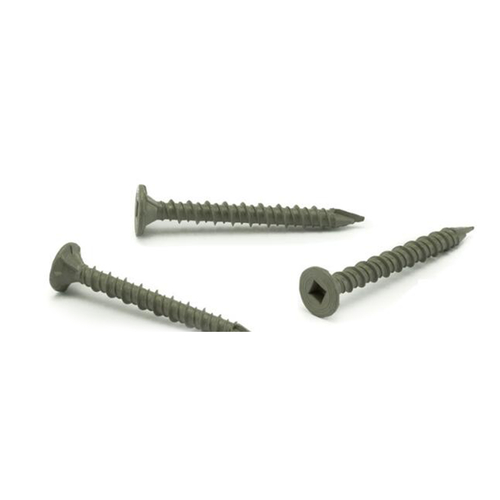
The Phillips bugle head drywall screw with a grey phosphated finish is designed for fastening gypsum board and related interior panels to suitable substrates. Its configuration combines a bugle-shaped head, a recessed Phillips drive, a hardened carbon-steel body, and a protective phosphate surface. The result is a practical fastening solution for contractors, distributors, furniture and interior fitting manufacturers, and project buyers who need dependable performance across repeated installation operations.
This product is manufactured from C1022A carbon steel and is available in a broad range of diameters, lengths, thread forms, recess options, and finishes. The standard product concept focuses on efficient penetration, controlled countersinking, reliable bit engagement, and a clean finished surface. Grey phosphate is particularly suitable where a low-reflective appearance and basic corrosion protection are required for dry indoor applications.
The following guide explains the product’s design, material selection, production range, surface treatment, installation behavior, quality considerations, and purchasing advantages. It also describes how an experienced fastener manufacturer can support customized specifications, stable supply, and consistent batch performance.
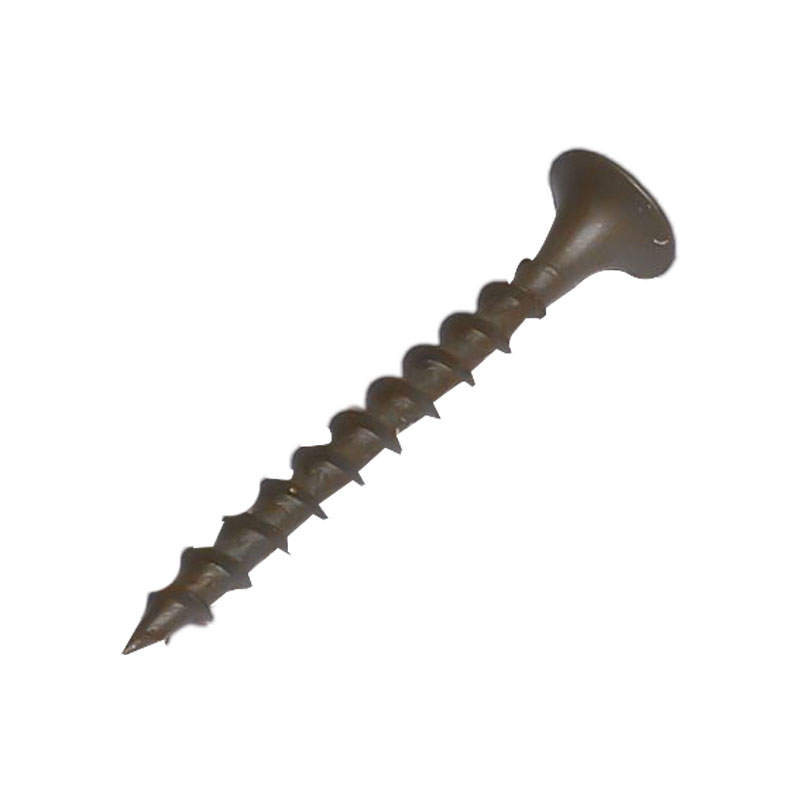
Phillips bugle head drywall screw grey phosphated
Product Overview
The Phillips bugle head drywall screw is a specialized self-tapping fastener intended primarily for fixing drywall panels, gypsum boards, plasterboards, and similar sheet materials. Its geometry is not accidental. Every major feature contributes to a specific installation requirement.
The bugle head has a broad, smoothly curved underside that distributes pressure around the point of contact with the board. Unlike a conventional pan head, the bugle profile is designed to sit partially below the surface without creating an excessively large or sharply cut depression. When installed correctly, the head produces a neat recess that can be covered with joint compound or finishing material.
The Phillips recess provides a familiar drive interface for widely used installation tools. It allows the operator to position the screw quickly and apply rotational force through a standard cross-shaped bit. Correct recess formation and dimensional consistency are essential because poor engagement can cause cam-out, damaged bits, damaged screw heads, and inconsistent installation depth.
The screw body is produced from C1022A carbon steel. This material is commonly selected for drywall fasteners because it offers a practical balance of strength, formability, thread-rolling performance, and suitability for heat treatment. The final mechanical properties depend on the complete manufacturing process, including wire preparation, heading, point formation, thread rolling, heat treatment, surface finishing, inspection, and packaging.
The grey phosphated finish provides a dark grey to grey-black appearance and a low-gloss surface. Phosphate coatings are conversion coatings rather than thick metallic plating. Their main functions are to improve surface condition, provide basic corrosion resistance in suitable indoor environments, support a compatible appearance, and create a useful base for certain additional treatments when specified.
Key Product Specifications
| Specification | Available Range or Option | Practical Significance |
|---|---|---|
| Product type | Phillips bugle head drywall screw | Suitable for drywall and interior panel fastening |
| Material | C1022A carbon steel | Supports efficient forming, thread production, and required fastener strength |
| Diameters | #6-3.5, #8-4.2, #10-4.8, #12-5.5, #14-6.3 | Provides choices for different board, substrate, and holding requirements |
| Head style | Bugle head | Helps distribute load and produce a suitable countersunk finish |
| Drive recess | Phillips; square and Torx also available | Allows adaptation to customer tools and installation preferences |
| Thread options | Fine thread and coarse thread | Permits selection according to metal or wood substrate conditions |
| Finish options | Grey or black phosphate, zinc plated, yellow zinc plated, Dacromet, Ruspert, and Magni | Supports different appearance, corrosion, and project requirements |
| Common use | Drywall, gypsum board, plasterboard, and related interior panels | Designed for efficient sheet-material installation |
Dimensions should always be selected according to the board thickness, substrate type, required embedment, local standards, and project specifications. The listed diameter range allows distributors and professional users to offer several product classes rather than relying on one universal screw size.
Why the Bugle Head Matters
A drywall fastener must hold the board firmly while avoiding unnecessary damage to the paper face or panel core. The bugle head helps achieve this balance through its curved profile and relatively broad bearing area. As the screw is driven, the underside of the head gradually presses into the board rather than cutting a severe circular trench.
This design supports a smooth finishing process. When the screw head is positioned slightly below the board surface without breaking the paper layer, joint compound can be applied over the fastener with less risk of visible protrusion. A properly formed recess also reduces the need for extensive finishing correction.
The bugle head can provide advantages over generic pan-head or round-head screws in drywall applications. A pan head may remain too prominent after installation, while an overly aggressive countersunk design may tear the board surface. The bugle profile is a purpose-oriented compromise between seating, load distribution, and surface preparation.
Head geometry must be supported by consistent manufacturing. If the head diameter, underside curve, or head height varies significantly, installation depth may become unpredictable. Some screws may remain proud of the board while others may penetrate too deeply. Advanced cold heading equipment, controlled tooling, and in-process inspection help reduce these variations.
Phillips Recess Performance
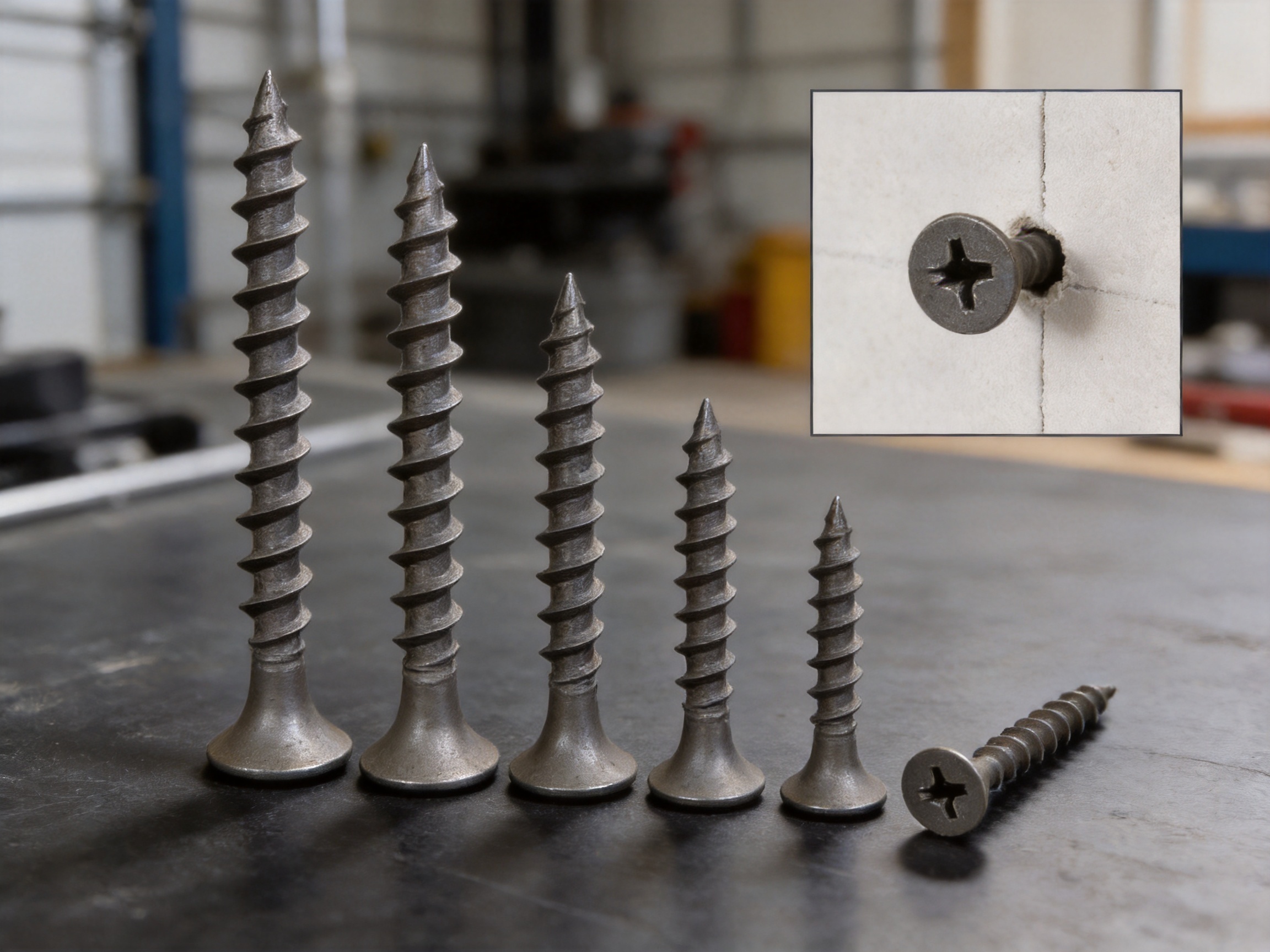
The Phillips drive recess is one of the most recognizable features of this drywall screw. Its cross-shaped design is compatible with common hand drivers, electric screwdrivers, impact drivers, and automated fastening equipment. For high-volume drywall installation, the recess must provide stable contact between the bit and the screw head during rapid driving.
Good recess performance depends on several factors. The recess depth must be sufficient for proper bit seating. The four drive wings must be formed clearly and symmetrically. The surrounding head material must have adequate hardness to resist deformation. The recess must also remain free of excessive coating buildup, oil contamination, and forming defects.
Compared with low-quality alternatives, a consistently formed Phillips recess can reduce bit slippage and cam-out. This can improve installation speed and reduce the frequency of discarded screws. It may also protect the board surface from accidental impact when the driver bit jumps out of a poorly formed recess.
For buyers using automated or semi-automated equipment, consistent recess dimensions are particularly important. A machine that feeds and drives thousands of screws per shift depends on predictable head geometry. Small variations can affect feeding, bit engagement, torque transfer, and the final seating position.
Although Phillips is the standard configuration described for this product, square and Torx recesses can also be supplied. These alternative recesses may be selected where a project requires higher resistance to cam-out, specific tool compatibility, or a standardized internal fastening system. The final recess should be matched with the customer’s tooling, installation speed, and application requirements.
Material Selection: C1022A Carbon Steel
C1022A is a widely used carbon-steel grade for screws and other cold-formed fasteners. It is suitable for producing a screw body with the required combination of ductility during forming and strength after processing. The material is compatible with heading, point formation, thread rolling, and heat-treatment operations when the process is properly controlled.
Material selection influences both productivity and finished fastener performance. Steel that is too soft may produce weak threads, distorted heads, or poor resistance to driving torque. Steel that is too hard before forming may increase tool wear, cause cracking, or make the manufacturing process unstable. C1022A provides a practical base for controlled production across common drywall screw sizes.
The material also supports efficient thread formation. Drywall screws are commonly produced by rolling threads rather than cutting them. Thread rolling displaces material to form the thread profile, preserving a continuous grain flow around the thread and supporting efficient large-scale production. It can also provide a cleaner and more consistent thread than poorly controlled cutting operations.
Material traceability is an important part of professional fastener supply. A reliable manufacturing system should connect incoming wire or coil material with production batches, inspection records, heat-treatment conditions, coating records, and packaging information. Traceability helps the supplier investigate quality questions and supports more organized purchasing for distributors and project contractors.
Thread Options for Different Substrates
The product is available with fine-thread and coarse-thread configurations. Selecting the correct thread form is essential because drywall boards may be fixed to different supporting structures, including wood studs, light-gauge metal framing, and other suitable substrates.
Coarse-thread Configuration
Coarse-thread drywall screws generally have a larger thread pitch and deeper thread form. They are commonly associated with wood-based supports and applications where the fastener must develop holding power through a relatively soft substrate. The open thread spacing can also help clear material during driving.
When used in an appropriate wood substrate, a coarse thread can provide efficient bite and practical withdrawal resistance. The exact holding performance depends on wood species, density, pilot conditions, embedment depth, screw diameter, board thickness, and installation quality.
Fine-thread Configuration
Fine-thread drywall screws have a smaller pitch and are commonly selected for metal framing or thinner metal components. The thread form is intended to engage the supporting material with more frequent contact points. This can be useful when the screw must create or engage threads in a light-gauge steel profile.
Fine thread should not automatically be treated as a universal choice for every metal application. The thickness and strength of the framing, the presence of a preformed hole, the screw point, and project requirements all affect performance. Buyers should specify the substrate and intended installation method when requesting a quotation.
Offering both thread types gives the product a practical advantage over suppliers that provide only one standard configuration. It allows contractors and distributors to select a screw more closely aligned with the actual building system rather than adapting the application to an unsuitable fastener.

Grey Phosphated Surface Finish
The grey phosphated finish is widely used for drywall screws intended for dry interior conditions. Its subdued color is visually compatible with dark or neutral fasteners, tools, and construction materials. The low-reflective appearance can also be helpful where a bright metallic surface is undesirable during installation or handling.
Phosphate treatment forms a conversion layer on the steel surface. The process normally includes cleaning, surface preparation, chemical treatment, rinsing, drying, and, where specified, oiling or supplementary conditioning. The quality of the final coating depends on bath control, temperature, treatment time, surface cleanliness, rinsing, drying, and handling after treatment.
The coating can improve basic resistance to atmospheric oxidation compared with unprotected carbon steel, but it should not be regarded as equivalent to a heavy corrosion-resistant plating system. Grey phosphated drywall screws are generally best suited to dry indoor areas, protected construction environments, and applications where the finished fastener is not exposed to persistent moisture or aggressive chemicals.
For more demanding environments, alternative finishes can be considered. Zinc plating may be selected for a brighter appearance and a different level of basic corrosion protection. Yellow zinc offers a recognizable colored finish. Dacromet, Ruspert, and Magni systems may be considered when project specifications call for enhanced corrosion resistance or a particular coating technology. The appropriate finish should be determined by exposure conditions, applicable standards, cost targets, and customer requirements.
Finish consistency is important for both appearance and performance. Uneven color, bare areas, excessive powder, residue, or poor adhesion can indicate problems in cleaning, chemical treatment, rinsing, or drying. A professional production system should include visual inspection and, where required, additional coating verification appropriate to the specified finish.
Manufacturing Process
The performance of a drywall screw is determined by the complete manufacturing chain rather than by a single operation. A stable process normally begins with material preparation and continues through forming, thread production, heat treatment, finishing, inspection, and packing.
Wire Preparation
Steel wire is prepared to meet the dimensional and surface requirements of the heading process. The wire may be cleaned, drawn, straightened, and cut into suitable blanks. Diameter control at this stage affects the volume of material available for forming the head and shank.
Clean material supports stable forming and reduces the risk of surface defects. Incoming material should be checked against the purchase specification, including dimensions, surface condition, identification, and relevant material documentation where required by the order.
Cold Heading
Cold heading forms the screw head and establishes the basic shank configuration. The cut blank is placed into a die and shaped under controlled pressure. For a Phillips bugle head screw, this operation must form the head profile, head thickness, transition area, and drive recess preparation with precision.
Tooling design is central to this stage. Dies and punches must be selected for the material grade, screw diameter, head geometry, and production speed. Regular tooling inspection helps prevent worn recess features, irregular head contours, cracking, and dimensional drift.
Point Formation
The point is formed to support penetration into the intended board and substrate. A suitable point can reduce starting torque and help the screw begin cutting or forming its path efficiently. Point geometry should be matched with the thread type and application.
For drywall screws, point consistency affects installation speed and the ability of the screw to enter the board and supporting frame without excessive force. Poorly formed points may cause wandering, delayed engagement, or increased risk of board damage.
Thread Rolling
Thread rolling forms the external thread by pressing the screw blank between dies. This method is highly suitable for volume screw production because it is efficient and can produce consistent thread profiles when the equipment and tooling are properly maintained.
Thread rolling also avoids removing material in the same way as thread cutting. The resulting profile can support efficient engagement with wood or metal substrates. Thread crest, root, pitch, major diameter, and thread length must remain within the applicable product or customer requirements.
Heat Treatment
Heat treatment is used to achieve the required balance of hardness, strength, and toughness. A drywall screw must be strong enough to penetrate and hold while retaining sufficient resistance to brittle failure during driving. Excessive hardness can be undesirable if it makes the screw prone to snapping under installation stress.
Process control may include monitoring heating conditions, atmosphere, quenching, tempering, and cooling. The correct treatment depends on the material, screw size, final mechanical requirement, and customer specification. Testing can include hardness checks, torque-related evaluations, and other mechanical assessments where applicable.
Surface Treatment
After forming and heat treatment, the screws are cleaned and treated with the selected finish. For grey phosphate, surface preparation is especially important because oil, scale, oxidation, and residues can interfere with coating formation.
Finishing equipment should be operated with controlled chemical conditions and suitable production records. After treatment, screws should be dried and handled in a way that prevents unnecessary contamination or mechanical damage. If an oil or supplementary protective treatment is specified, it should be applied consistently and checked for coverage.
Sorting and Packaging
Finished screws are sorted to remove obvious defects and may be checked by weight, count, or automated equipment. Packaging can be adapted to distributor boxes, contractor packs, bulk cartons, plastic containers, or other agreed formats. Correct labeling should identify the product type, diameter, length, thread, finish, quantity, batch information, and any customer-specific details.
Stable packaging is more than a logistics issue. It protects the coating, reduces mixing risk, and allows distributors to manage inventory efficiently. Clear identification is especially important when several diameters and thread types have similar appearances.
Quality Control and Inspection
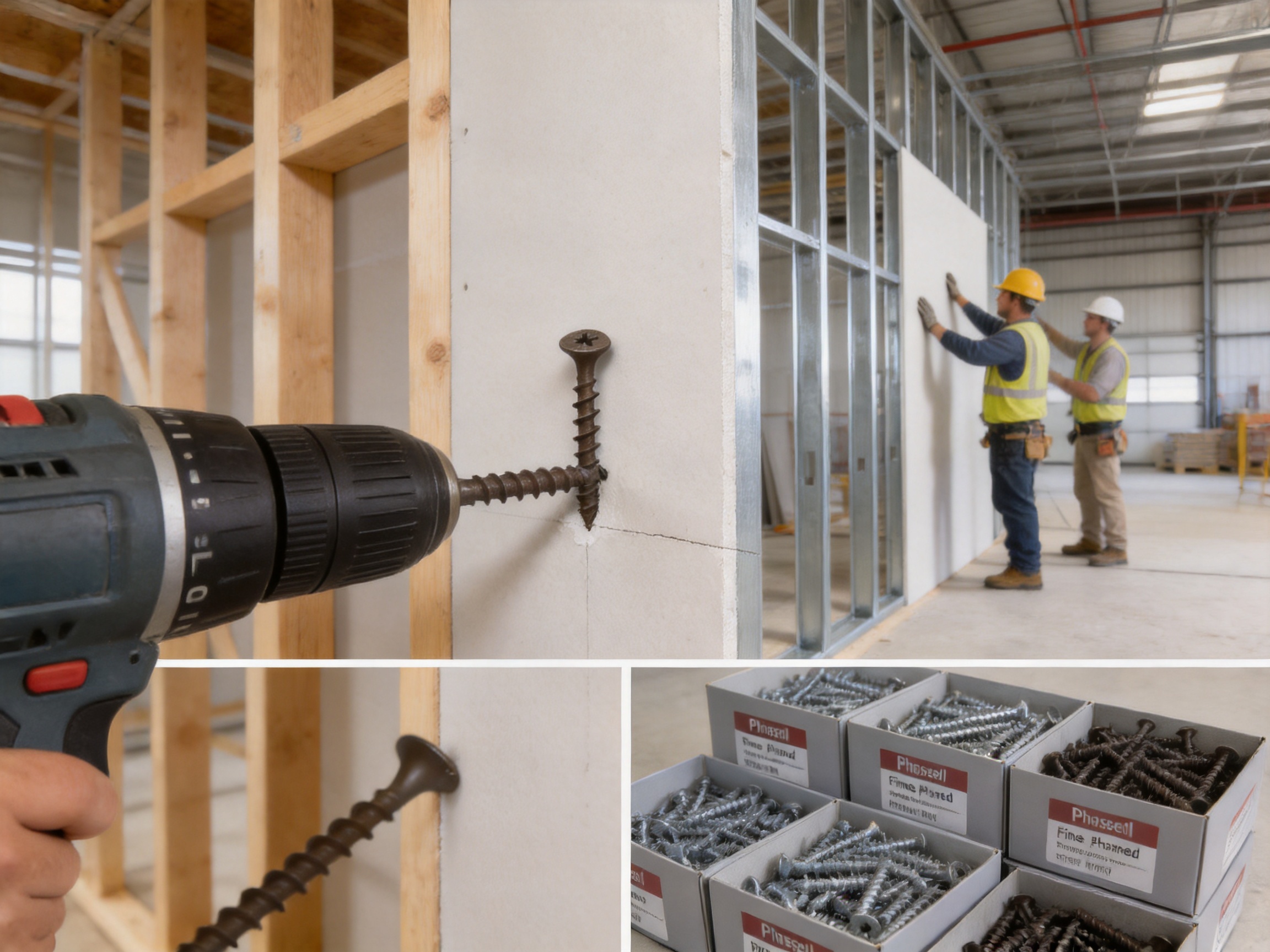
Quality control should begin before production and continue until the packed goods are released. A comprehensive inspection approach reduces the chance that a dimensional or surface problem will reach the customer.
Dimensional Inspection
Typical dimensional checks include overall length, shank diameter, head diameter, head height, recess dimensions, thread length, thread pitch, and point geometry. Measuring equipment must be suitable for the tolerance and regularly maintained or calibrated according to the manufacturer’s quality system.
Length selection is particularly important for drywall work. The screw must pass through the board and engage the supporting structure to an appropriate depth without unnecessary penetration into concealed services or other materials. The available production range includes several common diameter groups and length categories, allowing project buyers to specify a more suitable combination.
Visual Inspection
Visual checks can identify damaged heads, incomplete recesses, bent shanks, cracks, burrs, abnormal points, thread defects, coating variation, and contamination. Although visual inspection cannot replace mechanical testing, it remains an effective way to remove obvious nonconforming pieces.
Drive Testing
Drive testing evaluates whether the screw can be installed with the intended bit and equipment. The test may consider starting behavior, bit engagement, driving torque, seating depth, recess integrity, and the appearance of the installed head. Testing should use a representative board and substrate combination where practical.
A screw that meets dimensional requirements but performs poorly during driving may still create problems in the field. For this reason, functional testing is valuable when developing a new size, changing tooling, introducing a different coating, or supplying a customized specification.
Coating Inspection
Coating evaluation may include appearance, coverage, adhesion, and corrosion-related testing appropriate to the finish and customer requirement. Grey phosphate is generally selected for protected or dry environments, so the product description and packaging should clearly communicate its intended use.
Responsible product selection prevents misuse. A drywall screw designed for indoor applications should not be promoted as a universal exterior or marine fastener without supporting data and an appropriate corrosion-resistant finish.
Advantages Compared with Generic Alternatives
The product offers several practical advantages when compared with inconsistent or non-specialized drywall screws.
Purpose-Designed Head Geometry
The bugle head is developed for board fastening and finishing work. It helps create a controlled recess and distributes pressure over a broader area than some narrow-head alternatives. This can support cleaner installation and reduce finishing effort when the screw is driven to the correct depth.
Flexible Drive Choices
Phillips is widely recognized and easy to source, while square and Torx options can be made available for customers seeking alternative drive performance. This flexibility is useful for importers, regional distributors, and contractors with different tool systems.
Multiple Thread Options
Coarse and fine threads allow the screw to be matched to wood and metal framing conditions. A supplier capable of producing both options can support a more complete drywall fastening range and reduce the need for buyers to coordinate with several sources.
Broad Size Selection
The available diameters from #6 through #14 cover light-duty to heavier drywall fastening requirements within the product family. Different sizes can be selected according to board thickness, frame material, holding needs, installation equipment, and local purchasing preferences.
Finish Adaptability
Grey phosphate is suitable for many dry indoor applications, while black phosphate, zinc, yellow zinc, Dacromet, Ruspert, and Magni finishes provide additional choices. This range helps buyers align the fastener with appearance expectations, exposure conditions, and project specifications.
Manufacturing Coordination
When heading, thread rolling, heat treatment, finishing, inspection, and packaging are coordinated within an experienced manufacturing system, the customer can receive more consistent products and clearer technical communication. This is particularly valuable for repeat orders where batch-to-batch stability matters.
Application Guidance
Before installation, confirm that the screw diameter, length, thread type, recess, and finish match the project requirements. The supporting structure must be suitable for the selected fastener. The screw should be long enough to obtain appropriate engagement without being unnecessarily long for the application.
Use a properly matched Phillips bit for Phillips screws. A worn or undersized bit increases the risk of cam-out and recess damage. For high-speed installation, use a driver with appropriate torque and depth control. Excessive driving force can tear the board paper, strip the recess, or bury the head too deeply.
The head should normally be seated slightly below the board surface while keeping the facing paper substantially intact. A screw driven too shallow may remain visible or interfere with finishing. A screw driven too deeply may weaken the board surface and reduce the quality of the connection.
Spacing and edge distance should follow the applicable board manufacturer’s instructions, building practice, and project specification. Fastener performance depends not only on the screw but also on board type, frame spacing, substrate quality, installation pattern, environmental conditions, and workmanship.
Grey phosphated screws should be stored in clean, dry conditions. Avoid prolonged exposure to rain, condensation, standing water, salt spray, and aggressive chemicals. Use older stock first where appropriate, and keep packaging closed until the product is needed to help preserve surface condition.
Purchasing and Specification Checklist
Professional buyers should provide complete information when requesting a quotation or placing an order. A clear specification reduces the risk of receiving a visually similar but technically different product.
| Item to Confirm | Questions for the Buyer |
|---|---|
| Head design | Is the required head specifically a bugle head? |
| Drive recess | Is Phillips required, or would square or Torx be preferred? |
| Diameter | Which size is required: #6, #8, #10, #12, or #14? |
| Length | What board thickness and substrate engagement are required? |
| Thread | Should the screw use coarse thread or fine thread? |
| Material | Is C1022A acceptable, and are specific mechanical requirements applicable? |
| Finish | Is grey phosphate required, or is another coating suitable? |
| Packaging | What quantity, box style, labeling, and pallet arrangement are needed? |
| Inspection | Are samples, inspection reports, or special testing required? |
Buyers should also clarify whether the requested length notation follows a particular regional or customer standard. Product dimensions can be expressed differently in catalogs, drawings, packaging, and purchase orders. A technical drawing or approved sample is helpful when the order is critical.
Support for Distributors and Project Suppliers
Distributors benefit from a product family that covers several common drywall screw requirements. Stocking multiple diameters, thread types, and finishes allows a distributor to serve contractors working on different framing systems and interior construction projects.
Clear product classification also improves inventory management. Each item should be separated by diameter, length, thread, drive, and finish. Similar-looking screws should not be combined unless the packaging and internal controls clearly prevent identification errors.
Project suppliers may require more than a standard catalog item. They may need a particular recess, coating, packaging count, label language, carton marking, or delivery arrangement. A manufacturer with flexible production planning can often coordinate these details more efficiently than a trading source that depends entirely on external production.
For repeat customers, production records and batch communication can support supply continuity. Forecasts, planned order quantities, packaging requirements, and delivery schedules should be discussed early, especially for large projects or seasonal construction demand.
Manufacturing Strengths
An experienced screw manufacturer’s strength is reflected in process integration. The ability to coordinate raw material sourcing, cold heading, thread rolling, heat treatment, surface treatment, inspection, and shipment provides better control than treating each step as an unrelated activity.
Manufacturing flexibility is another important strength. The product range includes different diameters, thread forms, recesses, and surface finishes. This indicates a production system capable of adapting tooling, process settings, and packaging to varied customer requirements.
Quality consistency is supported by repeatable production methods. Controlled tooling, documented process parameters, inspection checkpoints, and batch identification help reduce random variation. These practices are particularly important for fasteners because a small dimensional difference can affect installation behavior when multiplied across thousands of pieces.
Communication also contributes to manufacturing performance. Technical questions about substrate, coating, packaging, quantity, and testing should be answered before production begins. A supplier that asks for complete specifications is better positioned to prevent misunderstandings than one that accepts an incomplete description without clarification.
Production capacity should not be judged only by machinery quantity. Effective capacity also depends on tooling availability, skilled operators, maintenance, raw material planning, coating coordination, inspection capability, warehouse organization, and shipping preparation. These factors determine whether a supplier can deliver the correct product on time and in consistent condition.
Environmental and Handling Considerations
Carbon-steel fasteners are durable products that require relatively little material compared with many larger construction components, but responsible manufacturing still requires attention to energy use, chemical management, wastewater control, packaging, and production waste.
Cold forming and thread rolling can support efficient material utilization because the screw is shaped rather than extensively machined from a larger piece. Proper process control can reduce scrap caused by malformed heads, incomplete threads, or coating defects.
Surface treatment requires responsible chemical handling. Phosphate and other coating processes should be managed with suitable workplace controls, waste treatment procedures, and environmental practices. Customers with specific sustainability or compliance requirements should communicate them before production so that the supplier can evaluate appropriate documentation and process arrangements.
Packaging can also be optimized. Durable cartons and internal packaging should protect the screws without creating unnecessary material use. For large-volume customers, packaging sizes can be reviewed to improve warehouse handling, reduce repacking, and support efficient transport.
Common Problems and Their Prevention
Cam-Out During Driving
Cam-out may result from a worn bit, incorrect bit size, poor recess formation, excessive driving angle, or unsuitable torque. Use the correct bit, maintain alignment, and verify recess quality during incoming inspection and production testing.
Head Breaking or Deformation
Head failure can be associated with excessive torque, incorrect heat treatment, material defects, or tool wear during heading. A controlled heat-treatment process and regular head inspection help reduce this risk.
Paper Tearing
Paper tearing is often caused by excessive driving depth, unsuitable driver settings, a damaged head profile, or installation at an inappropriate angle. Depth-control tools and consistent bugle head geometry support better results.
Corrosion or Surface Discoloration
Corrosion may occur when the screw is stored in damp conditions, exposed to condensation, or used in an environment beyond the capability of the grey phosphate finish. Select a more suitable coating for humid or corrosive conditions and protect stock during storage and transport.
Loose Fastening
Loose fastening can result from insufficient embedment, an unsuitable thread type, damaged framing, incorrect screw length, or poor installation technique. The product should be selected according to the actual substrate and installed in accordance with accepted construction practice.
Q&A
What is a grey phosphated drywall screw?
It is a carbon-steel drywall screw with a bugle head, recessed drive, and grey phosphate conversion coating. It is primarily intended for dry indoor fastening applications where a low-reflective dark finish and basic corrosion protection are suitable.
Why is a bugle head used for drywall?
The bugle head helps distribute pressure around the board and allows the screw to form a controlled recess when correctly installed. This supports a smoother finishing surface than a prominent conventional head.
Is Phillips the only available drive option?
No. Phillips is the principal configuration described, but square and Torx recesses can also be available. The correct option depends on tool compatibility, project preference, and desired driving behavior.
What is the difference between coarse and fine thread?
Coarse thread is commonly selected for suitable wood substrates, while fine thread is often used with light-gauge metal framing. The final selection should consider the exact substrate, thickness, installation method, and project specification.
What does C1022A mean?
C1022A identifies a carbon-steel material commonly used in screw production. It offers a practical combination of formability and strength when processed through controlled heading, thread rolling, and heat treatment.
Can grey phosphated screws be used outdoors?
They should not be treated as universal outdoor fasteners. Grey phosphate is generally more appropriate for dry, protected indoor conditions. Outdoor, humid, coastal, or chemically aggressive environments may require a more corrosion-resistant coating and a separate application review.
How should the screw length be selected?
Select the length according to board thickness, substrate type, required embedment, and project practice. The screw must engage the supporting material adequately without unnecessary penetration. A technical drawing or application description should be provided for exact recommendations.
What diameters are available?
The listed production range includes #6-3.5, #8-4.2, #10-4.8, #12-5.5, and #14-6.3. Availability of a particular diameter and length should be confirmed for the requested order quantity and specification.
Can the finish be changed from grey phosphate?
Yes. Available alternatives include black phosphate, zinc plated, yellow zinc plated, Dacromet, Ruspert, and Magni finishes. The choice should reflect corrosion exposure, appearance, performance requirements, and budget.
What quality information should a buyer request?
The buyer may request dimensional information, material details, coating requirements, sample approval, packaging specifications, batch identification, and any applicable inspection or test documentation. The precise documents depend on the order and customer requirements.
Are these screws suitable for automated installation?
They can be suitable for powered or automated installation when the recess, dimensions, packaging, driver, and equipment are correctly matched. Functional testing is recommended for high-speed or specialized automated systems.
How should the screws be stored?
Keep them sealed in a clean, dry, covered area away from condensation, water, salt, and aggressive chemicals. Protect cartons from damage and maintain clear separation between different diameters, lengths, threads, and finishes.
Conclusion
The Phillips bugle head drywall screw with grey phosphated finish is a practical fastening solution for dry interior construction and related panel installation. Its value comes from the interaction of several features: a board-friendly bugle head, a familiar Phillips recess, C1022A carbon-steel construction, selectable coarse or fine threads, a broad dimensional range, and a subdued phosphate finish.
Compared with generic fasteners, a purpose-designed drywall screw can offer better installation compatibility, more predictable seating, easier finishing, and broader specification flexibility. These benefits are strongest when the screw is selected for the correct substrate and installed with suitable tools and depth control.
Manufacturing quality is equally important. Controlled cold heading, accurate recess formation, consistent thread rolling, appropriate heat treatment, carefully managed phosphate treatment, dimensional inspection, functional testing, and protective packaging all contribute to dependable field performance.
For distributors, contractors, and project suppliers, the product’s range of diameters, lengths, thread options, recesses, and finishes supports a flexible sourcing strategy. By providing complete application details and confirming the required technical and packaging specifications, buyers can obtain a drywall screw solution that is better aligned with construction needs, supply planning, and long-term product consistency.
References
1. Fastener industry guidance on carbon-steel screw materials, cold heading, thread rolling, heat treatment, and dimensional inspection.
2. General construction practice for gypsum board, plasterboard, drywall framing, screw spacing, embedment, and finishing operations.
3. Technical literature concerning phosphate conversion coatings and their use on carbon-steel fasteners.
4. Engineering references covering Phillips, square, and Torx recessed drive systems.
5. Manufacturer and distributor guidance for selecting drywall screw diameter, length, thread type, coating, and packaging.
6. Quality-control principles for incoming material inspection, process monitoring, batch traceability, finished-product inspection, and functional drive testing.