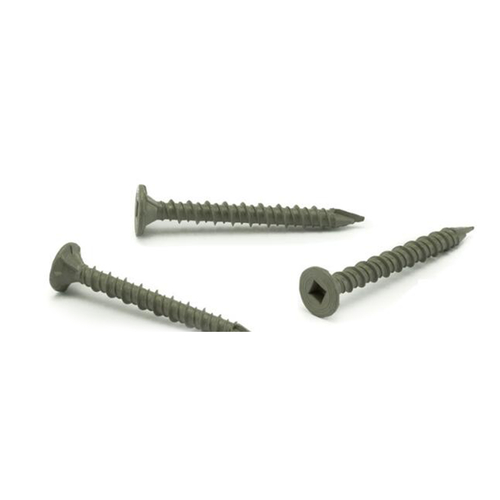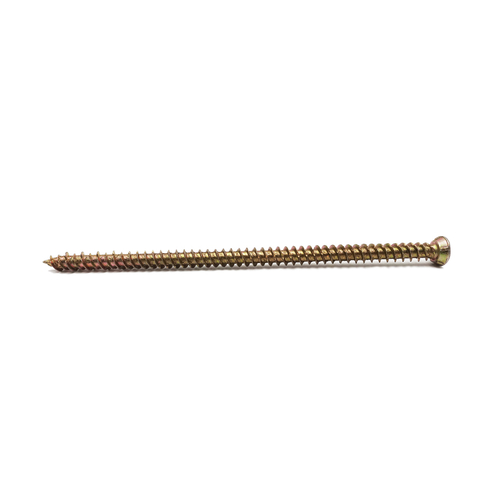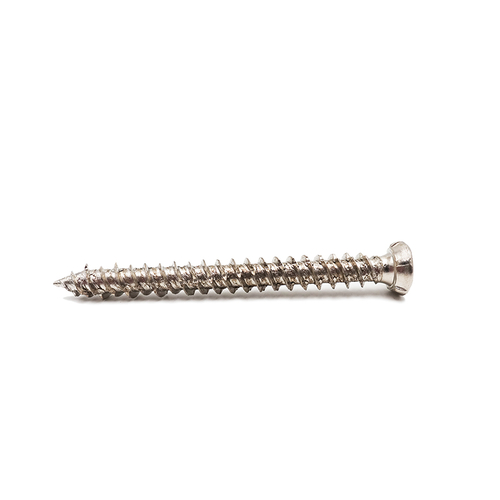
In modern construction, furniture manufacturing, container assembly, light-gauge steel framing, and general hardware production, the choice of fastener has a direct impact on installation speed, joint reliability, surface finish, and total project cost. The Phillips countersunk head self-drilling screw with wings #5 zinc plated is designed to solve a specific but common fastening challenge: joining wood or board materials to metal substrates while creating a flush, clean finish without pre-drilling in many applications.
This screw combines several functional features in one compact component. The countersunk head allows the screw to sit flush with the surface. The Phillips drive provides wide compatibility with common installation tools. The self-drilling point cuts its own pilot hole into metal. The wings enlarge the hole in wood or panel material before breaking off when they reach the metal layer. The zinc plated surface provides basic corrosion resistance and a bright, professional appearance. Together, these features reduce labor, improve installation consistency, and support efficient production.
Phillips csk head self drilling screw with wings #5 zinc plated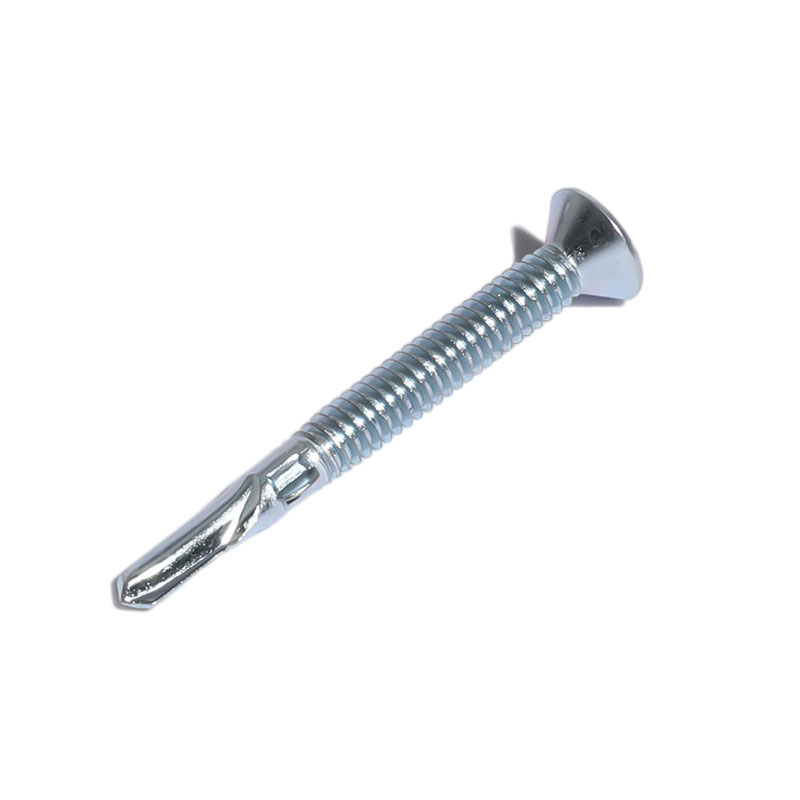
Product Overview
The Phillips countersunk head self-drilling screw with wings #5 zinc plated belongs to the drilling screws category. It is commonly produced from C1022A carbon steel and is suitable for applications where a wood, fiber cement board, plywood, composite board, or similar panel must be fixed onto steel or another metal base. The winged design makes it especially valuable in wood-to-metal fastening because it helps prevent thread engagement in the upper wood layer before the drilling point has penetrated the metal.
The product range can include several diameter options, such as #6-3.5, #8-4.2, #10-4.8, #12-5.5, and #14-6.3. In addition to Phillips recess, other recess options may include square and Torx. Head styles can include bugle head, hex washer head, flat head, pan head, wafer head, and pan framing head, depending on the target application. Surface treatments may include black phosphate, zinc plated, yellow zinc plated, Ruspert, and Magni coatings. Thread options can include BSD thread and CSD thread.
For the specific zinc plated winged countersunk version, the focus is on fast, clean, and reliable wood-to-metal installation. The product is engineered to reduce the number of installation steps and to produce an attractive flush finish. When used correctly, the screw drills, clears, taps, and clamps in a single operation.
Why the Winged Self-Drilling Design Matters
Traditional wood-to-metal fastening often requires several steps: drilling a clearance hole through the wood, drilling a pilot hole into the steel, countersinking the wood surface, and then driving a screw. Each step requires time, tools, alignment, and operator skill. In production environments, these steps multiply labor cost and increase the risk of error. A self-drilling screw with wings integrates these operations and can significantly simplify the workflow.
The wings are small projections positioned above the drill point. When the screw enters wood or board material, the wings cut a clearance path wider than the screw threads. This prevents the threads from biting into the wood too early. Without this clearance, the screw may lift the board, create a gap, or cause jacking between the wood and metal. The wings allow the screw to pass through the upper material smoothly until the drill point reaches the metal.
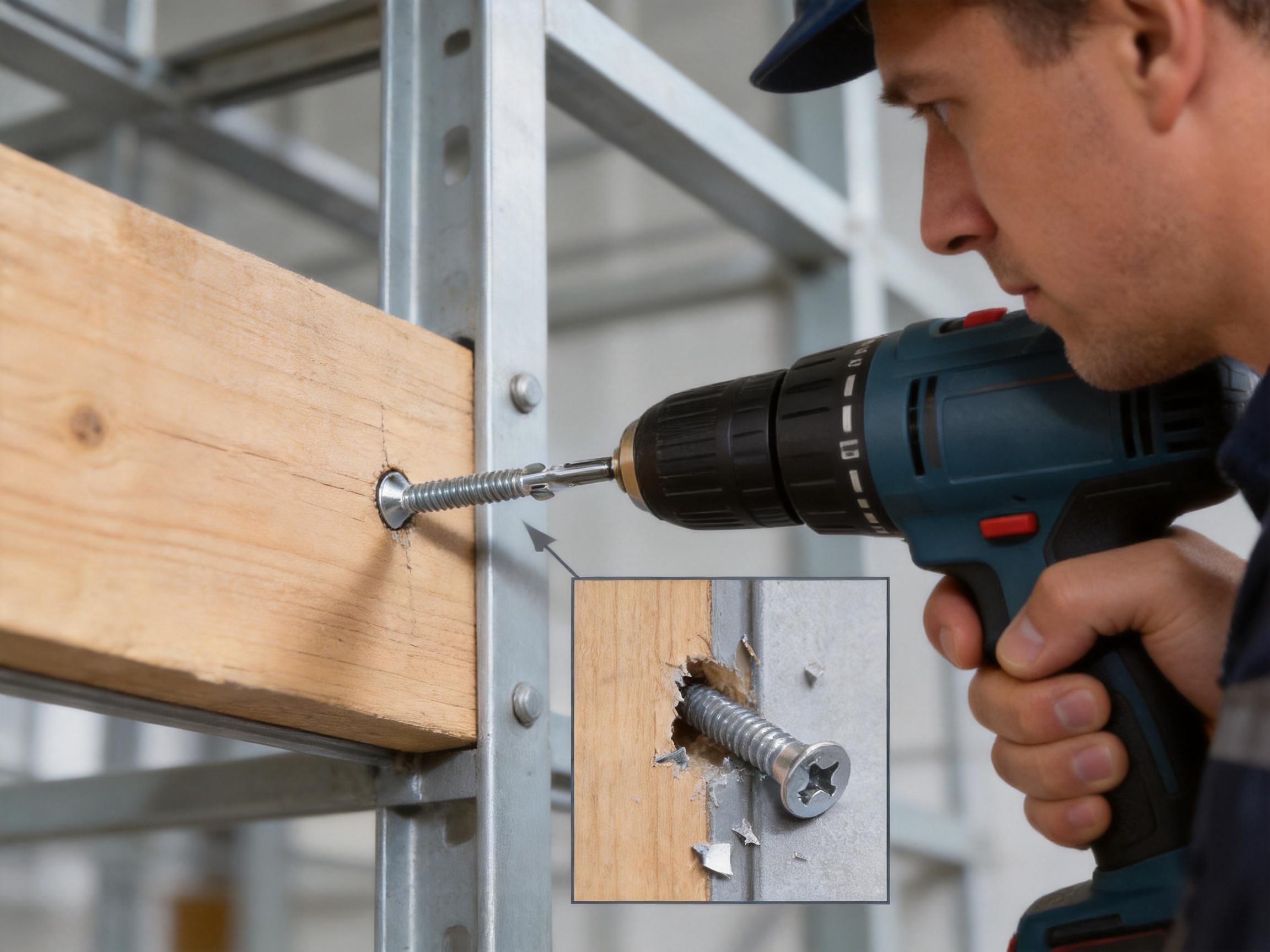
When the wings contact the metal surface, they are designed to break off. Once the wings break, the drill point penetrates the steel and the threads form or cut their mating path. The head then pulls the board tightly against the metal substrate. This process is one of the main advantages of a winged self-drilling screw over ordinary self-drilling screws used in wood-to-metal assembly.
Key Product Characteristics
| Feature | Description | Practical Benefit |
|---|---|---|
| Head Type | Countersunk flat head | Creates a flush surface and neat appearance after installation |
| Drive Type | Phillips recess | Compatible with widely available driving tools and bits |
| Point Type | Self-drilling point with #5 style drilling capability | Reduces or eliminates pre-drilling in suitable metal thicknesses |
| Wing Design | Integrated cutting wings above the drill point | Reams clearance in wood and reduces board jacking |
| Material | C1022A carbon steel | Provides strength and heat-treating capability for drilling performance |
| Surface | Zinc plated | Offers corrosion resistance and a clean metallic finish |
| Thread Options | BSD thread and CSD thread options | Supports different fastening requirements and substrate conditions |
| Standard Options | ASTM and DIN7504 related production references | Supports dimensional consistency and international acceptance |
Advantages Over Ordinary Fasteners
Compared with conventional wood screws, this self-drilling screw offers a major advantage when the lower substrate is metal. A standard wood screw cannot efficiently drill through steel, so pre-drilling is usually necessary. The self-drilling point on the winged screw reduces the need for a separate drilling operation. This saves time, improves alignment, and reduces tool changes during installation.
Compared with ordinary self-tapping screws, the winged self-drilling screw provides better performance in layered assemblies. A self-tapping screw may require a pre-drilled hole and may still engage the wood layer too aggressively. This can cause separation between the panel and metal frame. The winged design improves clamping because the upper board is cleared before the threads engage the lower metal.
Compared with non-winged self-drilling screws, this product is better suited to wood-to-metal fastening. Non-winged versions may work well in metal-to-metal applications but can create problems when passing through wood, plywood, or board materials. The wings help produce cleaner entry, lower friction in the upper layer, and more consistent final tightening.
Compared with low-grade fasteners made from inconsistent steel, a C1022A-based screw can offer more reliable heat treatment response. Drilling screws require a careful balance of hard point performance and overall toughness. If the point is too soft, it will not drill efficiently. If the screw is too brittle, it may break during driving. Proper material control is therefore a significant competitive advantage.
Compared with poorly plated screws, zinc plated screws made under controlled plating conditions provide better appearance and more consistent corrosion resistance. Zinc plating is not intended for every severe outdoor or marine environment, but it is a practical and economical finish for many indoor, dry, and moderate-duty applications. It also provides a clean look suitable for visible or semi-visible assemblies.
Flush Finish and Countersunk Head Performance
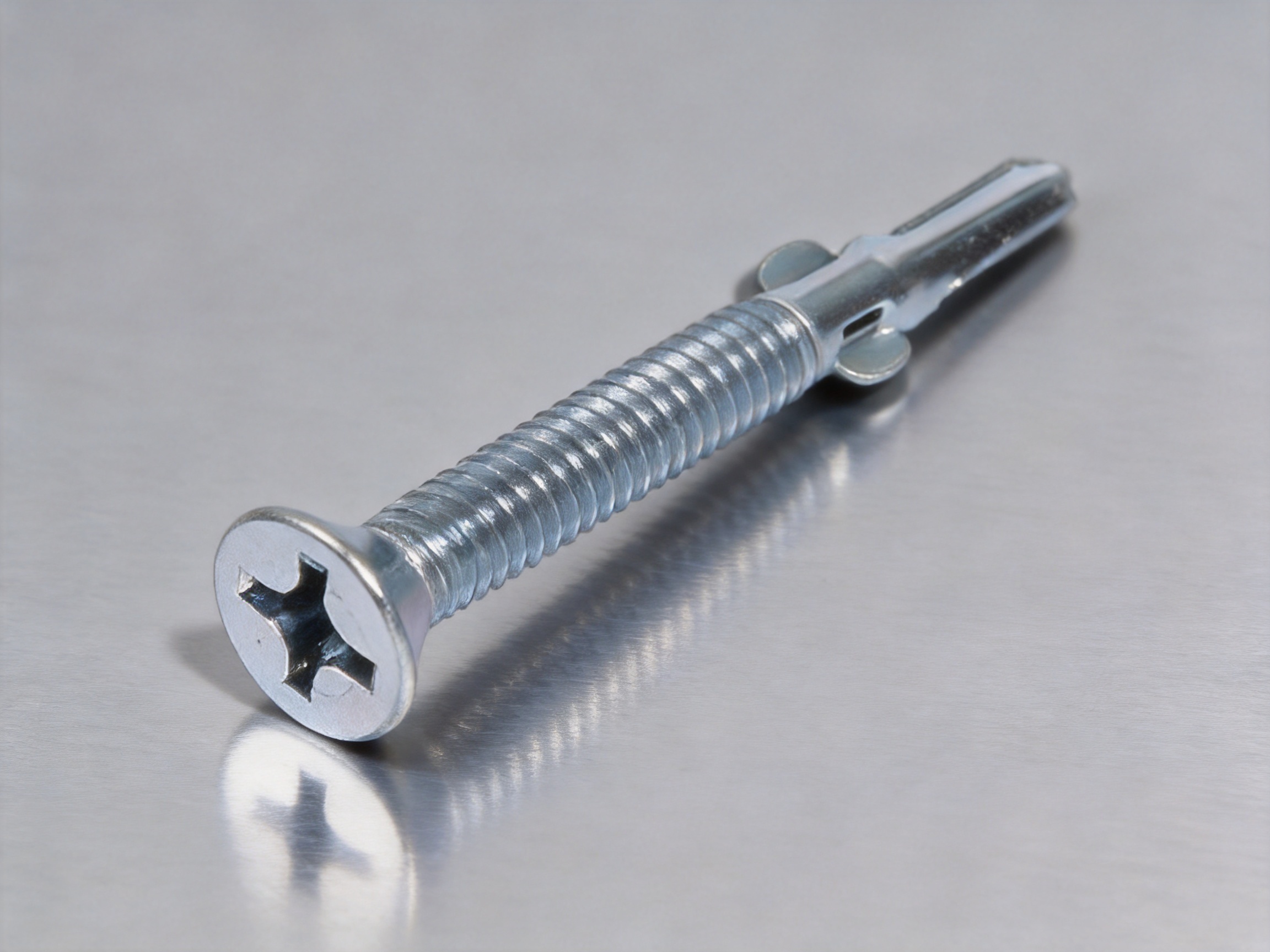
The countersunk head is one of the most important features of this screw. In applications such as cabinetry, furniture brackets, wood panels, flooring support, board-to-frame assembly, or decorative construction, protruding screw heads can interfere with function and appearance. A countersunk head is designed to seat into a prepared or self-formed recess so that the top of the screw becomes level with or slightly below the surrounding surface.
The flat, flush result can reduce snagging, improve safety, and create a professional finish. It is particularly useful when another layer of material will be placed over the fastened board or when the surface must remain smooth. With proper installation torque and suitable material density, the countersunk head provides both clamping and surface finish benefits.
In competitive terms, the head geometry must be manufactured with precision. If the countersunk angle is inconsistent, the screw may not seat properly. If the head is too thin, it may deform. If the recess is poorly formed, the bit may cam out and damage the surface. Advanced cold heading and punch control help ensure consistent head shape and recess depth.
Phillips Drive: Practical Compatibility
The Phillips recess remains one of the most widely used drive systems in global fastening applications. Its popularity comes from tool availability, simple operation, and broad compatibility with common electric and pneumatic screwdrivers. For many factories, assembly workshops, and construction sites, Phillips bits are already standard inventory, making this drive type convenient and cost-effective.
A well-made Phillips recess should have accurate depth, clean edges, and correct geometry. Poorly made recesses cause bit slippage, cam-out, surface scratches, and inconsistent torque transfer. For this reason, the manufacturing quality of the recess is more important than it may appear. High-quality tooling, controlled cold forming, and strict inspection help create a recess that supports stable driving.
Although square and Torx recesses may offer advantages in certain high-torque applications, Phillips remains a practical choice where universal use and tool convenience are priorities. The availability of alternative recesses also allows customers to select the best version for their market or assembly method.
Self-Drilling Point and #5 Drilling Capability
The self-drilling point is the cutting tool built into the screw. It is responsible for creating the hole in the metal substrate before the threads engage. A #5 style drilling point is generally associated with heavier drilling capacity than smaller point designs, making it suitable for applications that require penetration through thicker steel within the product’s intended range.
Effective self-drilling performance depends on point geometry, flute formation, heat treatment, hardness distribution, and surface finish. The point must be hard enough to cut metal, sharp enough to start quickly, and tough enough to resist breakage. If the drilling point overheats, dulls, or wanders, installation quality suffers. High-quality production reduces these problems by maintaining point accuracy and hardness.
The drilling process should produce chips cleanly and allow the screw to advance without excessive pressure. Proper driver speed, correct bit alignment, and matching the screw to the substrate thickness are important. When all factors are correct, the screw can provide fast penetration, good thread formation, and firm clamping in one operation.
Wing Function in Wood-to-Metal Assembly
The wings are not decorative; they are functional cutting elements. Their job is to create a clearance hole through the upper material. In wood, plywood, composite board, or similar panels, the wings remove enough material so the screw threads do not pull the panel upward while the drill point is still working on the metal. This is especially important when fastening boards onto steel frames.
When the wings reach the metal surface, they break away because the metal resistance exceeds the wing strength. After breakage, the threaded portion engages the metal. This allows the screw to pull the board down tightly. The result is better contact between materials, reduced gaps, and improved joint stability.
A competitive winged screw must have wings that are strong enough to ream wood but designed to break reliably at the correct stage. If the wings break too early, they may not create sufficient clearance. If they do not break, the screw may fail to drill or seat correctly. Controlled forming and material consistency are therefore essential to dependable wing performance.
Zinc Plated Surface Benefits
Zinc plating is a common and economical surface treatment for steel fasteners. It helps protect the carbon steel base from oxidation by providing a sacrificial metallic coating. In suitable environments, zinc plating extends service life and improves appearance. The bright or blue-white finish also gives the screw a clean, commercial look.
The effectiveness of zinc plating depends on surface preparation, plating thickness, passivation, drying, and post-treatment control. A well-plated screw should show even coverage, good adhesion, and minimal defects. Poor plating may result in patchy color, weak corrosion protection, or thread interference. Proper production control helps maintain both appearance and function.
For many indoor construction, furniture, hardware, and light industrial applications, zinc plating offers a strong balance of cost and performance. For more aggressive outdoor conditions, alternative coatings such as Ruspert or Magni may be considered, depending on customer requirements. The ability to supply multiple surface options is an important manufacturing advantage.
Material Strength: C1022A Carbon Steel
C1022A carbon steel is widely used for self-drilling and self-tapping screws because it can be cold formed and heat treated effectively. The material provides a suitable base for creating a hard drilling point and strong threads. Material selection is central to fastener performance because the screw must resist torsion, tensile stress, bending forces, and drilling heat during installation.
In high-quality screw manufacturing, raw wire is inspected for chemical composition, diameter accuracy, surface condition, and mechanical suitability. Consistency in wire quality reduces forming defects and improves heat treatment stability. If the raw material varies too much, finished screws may show inconsistent hardness, broken points, weak threads, or poor drive performance.
For a self-drilling screw, the relationship between surface hardness, core toughness, and point durability is critical. The point and thread surface must be hard enough to cut and form mating threads in metal. At the same time, the core must remain tough enough to avoid brittle fracture. This balance is achieved through controlled heat treatment and testing.
Manufacturing Process: From Wire to Finished Screw
Advanced manufacturing begins with wire preparation. Steel wire is selected according to specification, cleaned, and prepared for cold heading. The wire diameter must match the intended screw size. Any surface defects, scaling, or inconsistent diameter can affect heading quality and final screw strength. Reliable manufacturers apply incoming inspection before production begins.
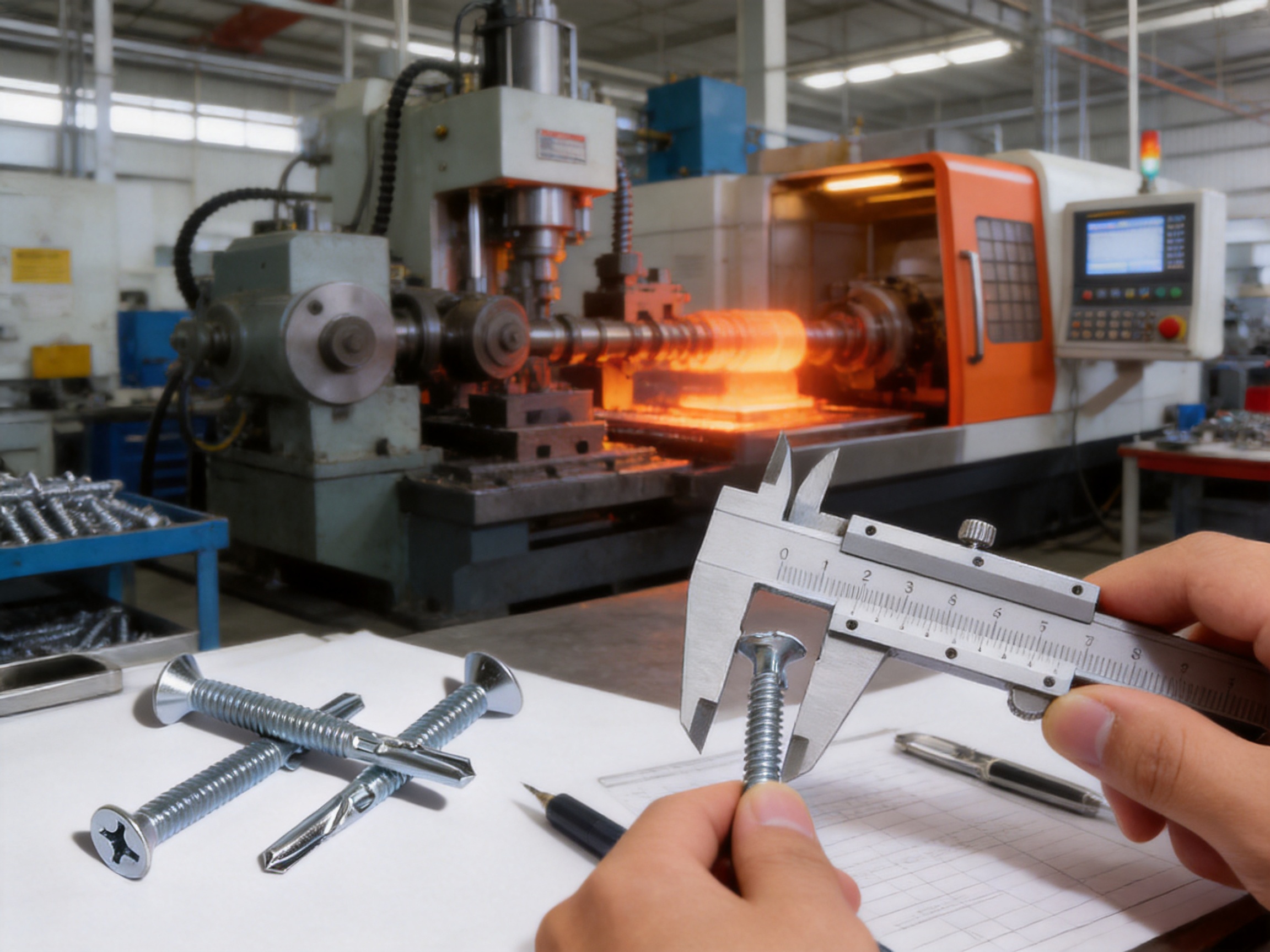
The next stage is cold heading. In this process, the wire is cut into blanks and formed under high pressure to create the screw head and recess. For countersunk screws, the head angle and head diameter must be controlled accurately. The Phillips recess is formed with a punch that must be precisely aligned and maintained. Worn tooling can produce shallow recesses, burrs, or deformation.
After heading, the drilling point and wings are formed. This stage requires careful die design and process stability. The point must have accurate cutting edges and proper flute geometry. The wings must be positioned correctly and formed with consistent dimensions. Small variations can affect drilling speed, break-off behavior, and wood clearance performance.
Thread rolling follows. Unlike cut threads, rolled threads are formed by pressing the blank between dies. This strengthens the thread surface through work hardening and improves material flow. Thread rolling must produce accurate pitch, thread height, and thread shape. For BSD or CSD thread versions, the die geometry is selected according to the desired fastening performance.
Heat treatment is one of the most important processes for self-drilling screws. The screws may undergo carburizing, quenching, and tempering to achieve the required hardness profile. The goal is to create a hard surface for drilling and thread forming while preserving a tough core. Temperature, time, furnace atmosphere, quenching medium, and tempering conditions must be controlled carefully.
After heat treatment, screws are cleaned and plated. Zinc plating typically includes degreasing, pickling, electroplating, passivation, and drying. When necessary, baking may be performed to reduce the risk of hydrogen embrittlement, especially for hardened fasteners. The final product is then inspected, sorted, packed, and prepared for shipment.
Manufacturing Strengths and Process Control
Lizhan Hardware Co., Ltd. operates with a product scope that includes machine screws, furniture screws, drilling screws, fasteners, packaging-related hardware, home tool components, and stamping parts. This broader manufacturing background supports practical knowledge of different fastening environments. A company that understands both screw production and end-use assembly can better optimize dimensions, materials, coatings, and packaging.
One important strength is the ability to produce a range of head styles, recess types, diameters, threads, and surface treatments. This flexibility allows customers to source related fasteners from one supplier rather than managing multiple vendors. It also supports customized solutions for different markets, such as furniture assembly, light steel construction, hardware distribution, and industrial packaging.
Process control is a major differentiator in screw manufacturing. Competitive pricing alone is not enough if the product causes installation failures. A strong manufacturer focuses on raw material verification, tooling maintenance, dimensional inspection, heat treatment control, plating quality, torque testing, drilling performance testing, and packaging integrity. Each step contributes to the reliability of the finished screw.
Modern production of self-drilling screws requires stable equipment and experienced technicians. Cold heading machines must run accurately at high speed. Thread rolling dies must be kept in good condition. Heat treatment furnaces must deliver uniform results. Plating lines must control thickness and appearance. Automated sorting can help remove defective parts and improve batch consistency.
Another strength is international production awareness. Standards such as ASTM and DIN7504-related references help guide dimensional and performance expectations. While specific project requirements may vary, working with recognized standards supports communication between manufacturer, distributor, and end user. It also improves confidence in global sourcing.
Quality Inspection and Testing
Quality inspection for a winged self-drilling screw should begin before production and continue through every major stage. Incoming wire inspection verifies raw material quality. In-process inspection checks head dimensions, recess formation, point geometry, wing shape, and thread accuracy. Final inspection confirms surface finish, packaging, and performance characteristics.
Dimensional testing may include overall length, head diameter, countersunk angle, thread outside diameter, thread pitch, point length, wing width, and recess depth. These dimensions directly affect installation. If the screw is too short, it may not achieve sufficient engagement. If the point is poorly formed, drilling may fail. If the wing width is wrong, wood clearance may be inadequate.
Mechanical testing may include hardness testing, torsional strength testing, drilling performance testing, and head pull-through evaluation. For self-drilling screws, drilling time and successful penetration are particularly important. A screw that looks correct but drills poorly is not acceptable. Practical testing in representative materials is essential.
Surface testing may include plating thickness measurement, adhesion evaluation, visual inspection, and corrosion resistance assessment through salt spray testing when required. Zinc plating quality should be consistent across the head, thread, point, and recess. Poor coverage in recesses or thread roots can reduce corrosion resistance.
Packaging inspection is also important. Screws are small but heavy in bulk, and damaged packaging can create losses during shipping. Proper labeling, carton strength, moisture control, and batch traceability help distributors and end users manage inventory. For export customers, clear packaging and stable supply are part of product value.
Installation Guidance
Correct installation is essential for achieving the full performance of the screw. The user should select the correct screw diameter and length for the combined thickness of the upper material and metal substrate. The screw must provide sufficient thread engagement in the metal while allowing the head to seat properly in the upper material.
The driver bit should match the Phillips recess accurately. A worn or incorrect bit can damage the recess and reduce torque transfer. The driver should be aligned with the screw axis to avoid wobbling, point walking, or recess stripping. Consistent pressure should be applied until the drill point penetrates the metal and the threads begin to engage.
Driver speed should be appropriate for the screw size and metal thickness. Excessive speed can generate heat, dull the point, damage the plating, or cause premature failure. Too little speed may reduce drilling efficiency. Many installation problems are caused not by the screw itself but by incorrect speed, pressure, or bit condition.
The screw should not be overdriven. Once the countersunk head is seated flush, additional torque may strip the threads in the metal, damage the board surface, or break the screw. Adjustable torque tools are recommended in production settings. Operators should test the installation on sample materials before large-scale use.
For dense hardwoods, very thick boards, unusual composites, or heavy steel, pre-testing is especially important. Although the screw is designed to reduce pre-drilling, every assembly has its own material behavior. Testing confirms drilling speed, wing performance, clamping force, and head seating quality.
Applications
The Phillips countersunk head self-drilling screw with wings #5 zinc plated is suitable for many wood-to-metal and board-to-metal fastening applications. It can be used in furniture frames, metal-backed panels, shelving systems, trailer interiors, container fit-outs, timber-to-steel connections, partition systems, and general hardware assembly. Its ability to drill and fasten in one operation makes it valuable wherever productivity matters.
In furniture and interior manufacturing, a flush head is often essential. The countersunk design keeps the surface smooth and visually acceptable. The zinc plated finish offers a clean appearance, while the winged self-drilling function supports faster assembly onto metal brackets or frames.
In construction and remodeling, the screw can help attach wood or board elements to light-gauge steel. The self-drilling point reduces preparation work, and the wings help avoid panel separation. Installers can work faster because fewer tools and fewer steps are required.
In packaging and industrial hardware, repeatable fastening is important. A screw that performs consistently reduces downtime and rework. When used with controlled drivers, winged self-drilling screws support efficient production lines and stable assembly quality.
Competitive Advantages for Distributors and End Users
For distributors, the product offers a practical combination of features that appeals to multiple customer groups. It is not limited to one narrow application. Wood-to-metal fastening is common across construction, furniture, equipment manufacturing, and maintenance markets. Stocking a reliable winged self-drilling screw can help distributors serve customers who need speed, clean finish, and dependable performance.
For contractors and installers, the major advantage is labor savings. Eliminating separate drilling and countersinking steps can reduce installation time. On large projects, even small time savings per screw become significant. Fewer operations also mean fewer chances for misalignment and fewer tool changes.
For manufacturers, the screw supports repeatability. In factory assembly, consistent fasteners improve line speed and reduce quality variation. A screw that drills smoothly, seats flush, and clamps reliably helps maintain production rhythm. Reduced rework and fewer rejected assemblies can lower total cost.
For end users, the final joint can be cleaner and more secure. A properly seated countersunk screw reduces protrusions and improves appearance. The zinc plated surface helps preserve the fastener in suitable environments. The metal engagement provides strong holding compared with fastening only into wood or board material.
Why Manufacturing Experience Matters
Self-drilling screws appear simple, but their performance depends on detailed engineering and process discipline. A small error in point shape can change drilling behavior. A shallow recess can cause bit slippage. Incorrect heat treatment can cause point dulling or screw breakage. Uneven plating can affect corrosion resistance and thread fit. Manufacturing experience helps prevent these issues.
Lizhan Hardware Co., Ltd. combines production capability with export-oriented service. The company’s contact channels, including email, phone, WhatsApp, and WeChat, support communication with international customers. The presence of a China factory and a Thailand warehouse can help serve different supply needs and improve regional responsiveness.
Advanced manufacturing strength is not only about machines; it is also about system control. Effective fastener production requires trained operators, stable raw material sourcing, accurate tooling, documented inspection, responsive sales support, and packaging suitable for transport. These factors help customers receive screws that perform consistently from batch to batch.
The ability to produce related fasteners, including machine screws and furniture screws, also helps customers consolidate sourcing. For buyers managing large product lines, supplier reliability is as important as unit price. A supplier that understands multiple fastener categories can provide better technical recommendations and more coordinated supply planning.
Surface Options Beyond Zinc Plating
Although this article focuses on the zinc plated version, different applications may require different coatings. Black phosphate is often used where a dark appearance or improved paint compatibility is desired. Yellow zinc plating provides a distinctive appearance and comparable basic protection. Ruspert and Magni coatings may offer enhanced corrosion resistance for more demanding environments.
Choosing the correct coating depends on exposure conditions, appearance requirements, corrosion expectations, compatibility with treated wood or other materials, and budget. Zinc plating is a common choice for economical protection, but it should not be selected blindly for severe outdoor or chemically aggressive applications. Technical consultation and testing are recommended when conditions are uncertain.
A manufacturer with multiple surface treatment options can help customers match fasteners to real operating environments. This reduces the risk of premature corrosion and improves project satisfaction. Coating selection is part of total fastening design, not merely a cosmetic decision.
Thread Design Considerations
Thread design affects holding power, drilling behavior, installation torque, and resistance to loosening. BSD and CSD thread options can be selected according to application needs. The correct thread should engage the metal substrate securely without requiring excessive torque. It should also work with the drill point to form a stable connection.
Thread rolling accuracy is critical. If thread height is too low, holding power may decline. If thread geometry is too aggressive, installation torque may become excessive. If pitch is inconsistent, the screw may bind or fail to clamp properly. High-quality thread rolling dies and inspection procedures help maintain consistent performance.
In wood-to-metal fastening, the thread must not aggressively engage the upper wood layer before the metal is drilled. This is why the wings are so important. Once the wings create clearance and break off, the threads can do their job in the metal substrate. The entire design works as a coordinated system.
Head Style and Recess Customization
The product family can include several head styles beyond countersunk heads. Bugle heads are often used for drywall or similar materials. Hex washer heads are popular where high driving torque and bearing area are required. Pan heads and wafer heads provide different surface contact and appearance characteristics. Pan framing heads are used in specific framing applications.
Recess options can include Phillips, square, and Torx. Phillips is widely accepted and economical. Square drives can improve torque transfer and reduce cam-out in some applications. Torx drives can offer excellent bit engagement for higher-performance assembly. The ability to offer these options allows customers to adapt the fastener to market preference and tool availability.
Customization is valuable because fastener performance depends on the full assembly, not only on the screw itself. Material thickness, board density, driver type, installation speed, corrosion environment, and appearance expectations all influence the ideal specification. A capable manufacturer can help align these factors.
Packaging and Supply Considerations
Fasteners are often purchased in large quantities, and packaging quality affects the customer experience. Good packaging protects the screws from moisture, contamination, and shipping damage. It also supports easy counting, storage, and distribution. For wholesalers and retailers, attractive and accurate packaging can improve inventory management and customer satisfaction.
Packaging options may include bulk cartons, small boxes, plastic containers, or customer-specific labeling. The right packaging depends on the sales channel and end-use environment. Industrial users may prefer bulk packaging, while retail customers may require smaller labeled boxes. Export customers may need strong cartons and pallets suitable for long-distance transportation.
Batch traceability is another important supply feature. If a customer has a technical question or quality concern, clear batch identification helps the manufacturer investigate and respond. This reflects a professional quality system and supports long-term cooperation.
Common Installation Problems and Prevention
One common problem is bit cam-out. This occurs when the driver bit slips from the Phillips recess. It can be caused by worn bits, incorrect bit size, poor alignment, excessive torque, or a low-quality recess. The solution is to use correct, sharp bits and maintain proper driving pressure. High-quality recess formation also reduces the risk.
Another problem is slow drilling. This may result from using the screw in metal that is too thick, applying insufficient pressure, using too low or too high driver speed, or selecting a screw with a damaged point. Testing the screw in the actual substrate before production is recommended. The selected screw must match the metal thickness.
Board jacking is a problem where the upper material lifts away from the metal substrate during installation. The winged design is specifically intended to reduce this issue. However, if the wings are damaged, the upper material is unusually dense, or installation technique is poor, jacking may still occur. Correct screw selection and consistent installation pressure help prevent it.
Overdriving can damage the countersunk seat, strip the metal thread, or reduce holding strength. Torque-controlled tools are the best solution in repetitive assembly. Installers should stop driving when the head becomes flush and the board is clamped firmly.
Environmental and Storage Recommendations
Zinc plated screws should be stored in dry, ventilated conditions. Exposure to moisture before installation can lead to white corrosion products on the zinc surface. While white rust does not always mean immediate functional failure, it affects appearance and can reduce customer confidence. Proper packaging and storage are important.
Screws should be kept away from acids, salts, and aggressive chemicals. If the application involves treated wood, coastal exposure, high humidity, or chemical contact, the coating should be evaluated carefully. Alternative coatings may be more appropriate for demanding environments.
Inventory should be rotated so older stock is used first. Cartons should remain sealed until needed. If screws are transferred to open bins, they should be protected from dust, moisture, and oil contamination. Clean fasteners install more reliably and maintain a better appearance.
Q&A Section
What is the main purpose of the wings on this screw?
The wings cut a clearance hole through wood or board material before the screw reaches the metal substrate. This reduces thread engagement in the upper layer and helps prevent board jacking. When the wings contact the metal, they break off so the drill point and threads can enter the metal.
Can this screw be used without pre-drilling?
In many suitable wood-to-metal applications, the self-drilling point can reduce or eliminate pre-drilling. However, performance depends on metal thickness, material hardness, screw size, driver speed, and installation pressure. Testing in actual materials is recommended before large-scale use.
Why use a countersunk head?
A countersunk head allows the screw to sit flush with the surface. This improves appearance, reduces snagging, and allows other materials to be placed over the fastened surface if needed. It is especially useful in furniture, panels, and interior assemblies.
What does zinc plating provide?
Zinc plating provides basic corrosion resistance and a clean metallic appearance. It is suitable for many indoor and moderate-duty applications. For severe outdoor, coastal, or chemical environments, stronger coatings such as Ruspert or Magni may be considered.
Why is C1022A carbon steel commonly used?
C1022A carbon steel can be cold formed and heat treated effectively. This makes it suitable for self-drilling screws that require a hard drilling point, strong threads, and a tough core. Proper heat treatment is essential for reliable performance.
What drive tools should be used?
A correctly sized Phillips bit should be used. The bit should be in good condition and aligned with the screw axis. Worn bits or poor alignment can damage the recess and reduce installation quality.
How does this screw compare with a normal self-drilling screw?
A normal self-drilling screw may work well for metal-to-metal fastening but can cause problems in wood-to-metal applications. The winged version creates clearance in the upper wood or board layer, helping the screw clamp the materials together more effectively.
What industries commonly use this type of screw?
Common users include furniture manufacturers, construction contractors, hardware distributors, panel fabricators, trailer and container interior builders, shelving producers, and general industrial assembly operations.
Can the screw be supplied with other recesses or coatings?
Yes, related production ranges may include Phillips, square, and Torx recesses, as well as black phosphate, zinc plated, yellow zinc plated, Ruspert, and Magni surface treatments. Selection depends on the application and customer requirements.
What should buyers consider when selecting screw length?
Buyers should consider the thickness of the upper material, the metal substrate thickness, required thread engagement, and the need for the countersunk head to seat properly. A screw that is too short may not hold securely, while one that is too long may be inefficient or unsuitable for the assembly.
Conclusion
The Phillips countersunk head self-drilling screw with wings #5 zinc plated is a specialized fastening solution designed for efficient wood-to-metal and board-to-metal assembly. Its value comes from the integration of a countersunk head, widely compatible Phillips recess, self-drilling point, clearance-cutting wings, strong C1022A steel, and zinc plated corrosion protection. Each feature contributes to faster installation, cleaner appearance, and more reliable clamping.
Its advantages over ordinary screws are clear. It can reduce pre-drilling, minimize board jacking, create a flush surface, and improve workflow efficiency. For distributors, it is a versatile product with broad market demand. For installers, it saves time. For manufacturers, it supports repeatable assembly. For end users, it provides a clean and dependable fastening result when properly selected and installed.
Behind the product, manufacturing quality determines real-world performance. Accurate cold heading, precise wing and point forming, controlled thread rolling, balanced heat treatment, consistent zinc plating, and strict inspection all matter. Lizhan Hardware Co., Ltd. offers production capability across drilling screws, machine screws, furniture screws, fasteners, packaging hardware, home tool components, and stamping parts, supporting customers with flexible specifications and practical manufacturing experience.
For buyers seeking a cost-effective, efficient, and well-engineered wood-to-metal fastener, the zinc plated Phillips countersunk head self-drilling screw with wings #5 is a strong choice. Properly manufactured and correctly applied, it can reduce labor, improve finish quality, and deliver dependable fastening performance across many industrial and construction applications.
References
ASTM International. Standard Specifications and Test Methods for Mechanical Fasteners.
DIN 7504. Self-Drilling Screws: Dimensions and Technical Requirements.
Industrial Fasteners Institute. Fastener Standards and Technical Data.
Budynas, R. G., and Nisbett, J. K. Shigley’s Mechanical Engineering Design.
Bickford, J. H. Introduction to the Design and Behavior of Bolted Joints.
ASM International. Heat Treating of Steel Fasteners and Carbon Steel Components.
Electroplating Engineering Handbook. Zinc Plating Processes and Corrosion Protection Principles.