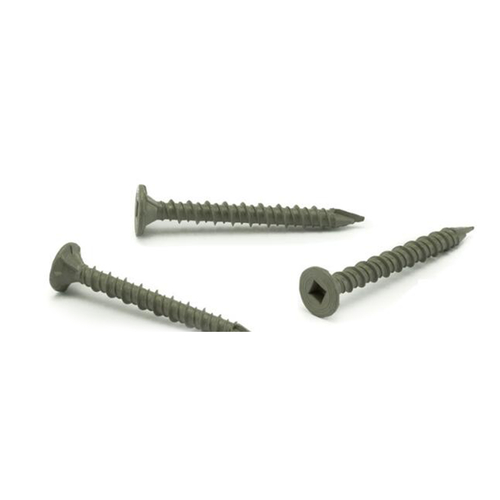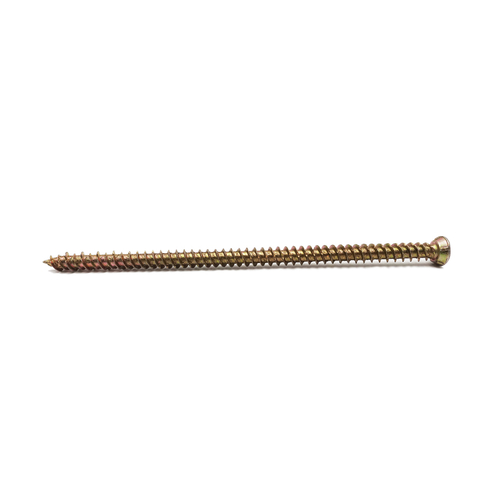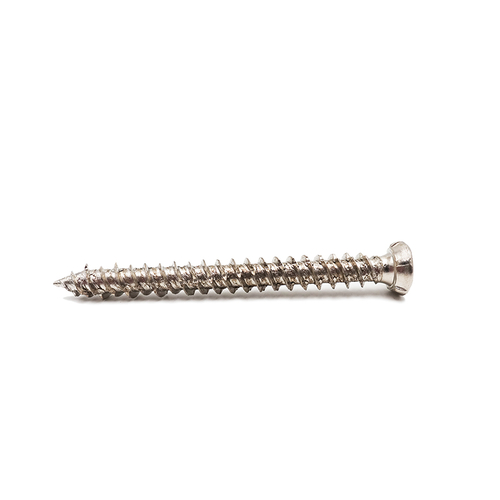
In modern interior construction, the drywall screw is a small component with a major responsibility. It must pull gypsum board tightly against wood or metal framing, sink cleanly below the surface without tearing the paper face, resist corrosion during storage and installation, and deliver consistent performance across thousands or even millions of fastening points. The Phillips drive bugle head drywall screw with black phosphated coarse thread is designed for exactly this purpose: fast, stable, repeatable fastening in drywall and related interior applications.
This article introduces the key features, production range, performance advantages, manufacturing strengths, quality controls, application guidance, and purchasing considerations for black phosphated bugle head drywall screws. It also explains how advanced screw manufacturing, stable raw material selection, thread forming, heat treatment, surface finishing, and packaging control help create a fastener that performs reliably in demanding construction environments.
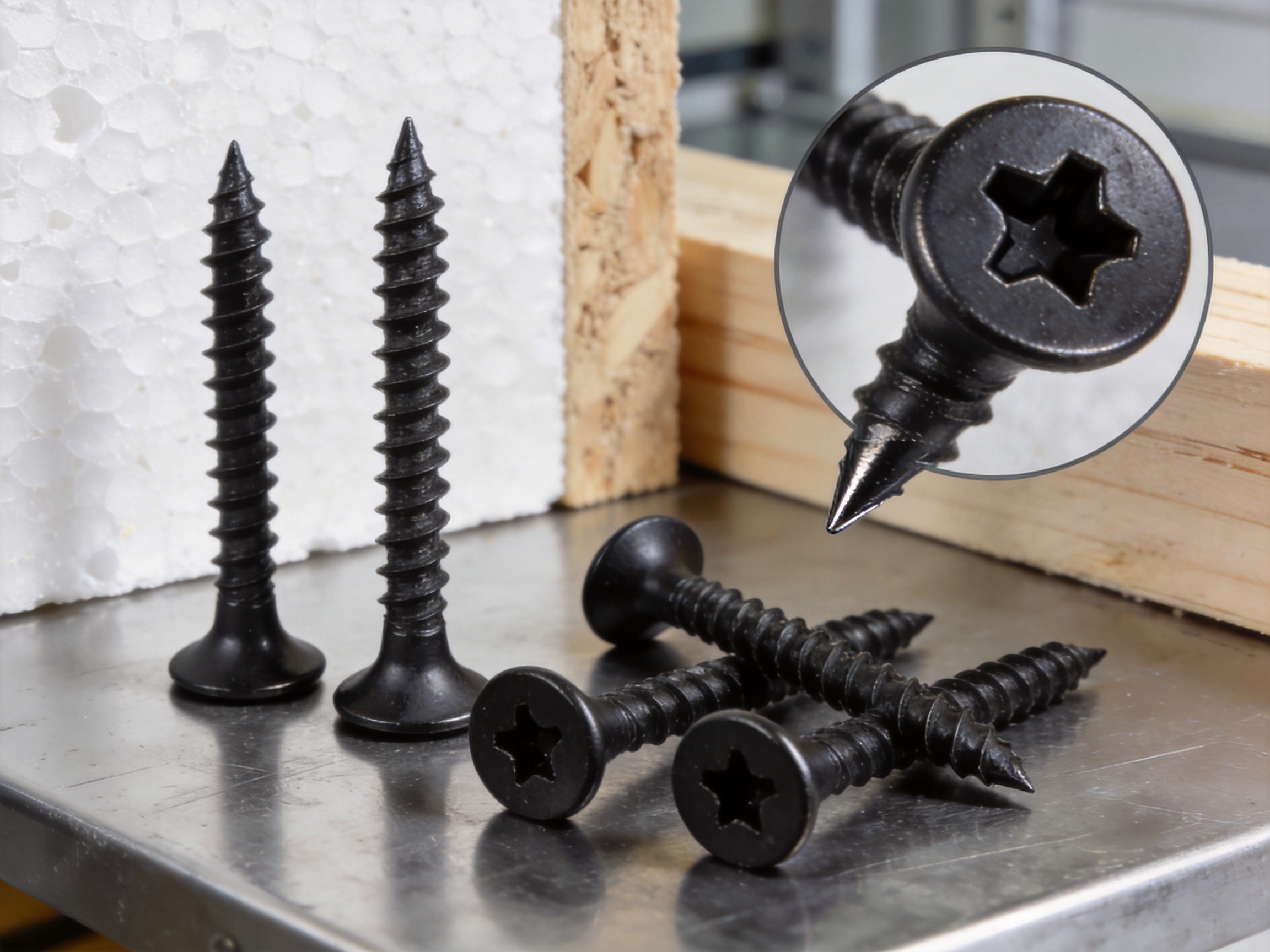
Product Overview
The product is a Phillips drive bugle head drywall screw made from C1022A carbon steel, commonly supplied with black phosphate surface treatment and available in fine thread or coarse thread versions. The standard product focus is the coarse thread type, which is widely used for attaching gypsum board to wood studs, timber frames, and other wood-based substrates. The bugle head design helps the screw seat neatly into drywall without damaging the surface, while the Phillips recess allows convenient installation with common driver bits.
The screw can also be manufactured with other recess types, including square drive and Torx drive, depending on the customer’s installation method, market preference, or project requirement. Diameter options include #6-3.5, #8-4.2, #10-4.8, #12-5.5, and #14-6.3. Surface finishes may include black phosphate, zinc plating, yellow zinc plating, Dacromet, Ruspert, and Magni. These options allow the same basic screw design to serve multiple regions, climates, storage conditions, and installation environments.
Although drywall screws appear simple, their performance depends on precise engineering. Head geometry, recess depth, shank diameter, thread pitch, point sharpness, hardness, torsional strength, coating adhesion, and packaging all affect jobsite efficiency. A high-quality drywall screw should drive quickly, hold firmly, reduce cam-out, resist head breakage, and provide a clean surface ready for joint compound and finishing.
Key Product Specifications
| Item | Available Options or Description |
|---|---|
| Product Type | Bugle head drywall screw |
| Drive / Recess | Phillips, square, Torx |
| Common Diameter Range | #6-3.5, #8-4.2, #10-4.8, #12-5.5, #14-6.3 |
| Head Type | Bugle head |
| Material Grade | C1022A carbon steel |
| Surface Treatment | Black phosphate, zinc plated, yellow zinc plated, Dacromet, Ruspert, Magni |
| Thread Options | Fine thread and coarse thread |
| Main Application | Drywall board fastening, interior construction, wood framing, general light-duty fastening |
| Typical Advantage | Clean countersinking, strong grip, efficient installation, stable quality |
Why the Bugle Head Matters
The bugle head is one of the most important features of a drywall screw. Unlike a flat countersunk head with a sharper underside angle, a bugle head has a curved transition between the head and shank. This curved profile spreads pressure more gradually when the screw enters the gypsum board. As a result, it helps prevent tearing, cracking, or crushing of the paper surface.
In drywall installation, the screw head must sit slightly below the board surface, but it must not break through the paper layer. The paper facing contributes significantly to board strength around the fastener. If the head cuts too deeply, holding strength is reduced and finishing quality can suffer. A well-formed bugle head allows the installer to achieve the ideal dimple: deep enough for compound coverage, but shallow enough to preserve board integrity.
Compared with poorly formed heads or inconsistent head diameters, a precision bugle head gives more predictable seating behavior. This matters on large projects because drywall installers often drive screws rapidly with automatic screw guns. If head shape varies, some screws may sit proud while others may overdrive. Consistent bugle geometry supports smoother installation, reduces rework, and improves the final wall or ceiling finish.
Phillips Drive Convenience and Installation Efficiency
The Phillips drive is widely recognized and easy to use. It is compatible with common bits, hand tools, electric screwdrivers, drywall screw guns, and automatic feeding systems. For construction teams, this compatibility reduces tool management complexity. Workers can obtain replacement bits easily, and training requirements remain low.
A high-quality Phillips recess must be formed with accurate depth, clean edges, and proper center alignment. If the recess is shallow or uneven, the driver bit may slip, causing cam-out, head damage, reduced installation speed, or surface scratches. If the recess is too deep or off-center, the head strength may be weakened or driving torque may become unstable. Precision forming is therefore essential.
Compared with low-cost screws that often suffer from inconsistent recess shape, a carefully manufactured Phillips drive drywall screw offers better bit engagement and more efficient torque transfer. This lowers the chance of stripping the recess and helps installers maintain speed across repeated fastening cycles.
Coarse Thread Performance for Wood Substrates
Coarse thread drywall screws are especially suitable for attaching gypsum board to wood studs and timber framing. The wider thread pitch bites aggressively into wood fibers, creating strong pull-in force and dependable holding strength. The screw advances quickly with fewer rotations, which helps improve installation speed on site.
For wood framing, a coarse thread design has several advantages over fine thread screws. It reduces driving time, improves grip in softer materials, and provides strong resistance against loosening under normal indoor service conditions. The thread shape is designed to cut and compress wood fibers without requiring pre-drilling in most common drywall applications.
Fine thread drywall screws are generally preferred for light-gauge metal studs, where closer thread spacing provides better engagement with thin steel. By offering both fine and coarse thread versions, the product range can support multiple building systems. However, for wood-based interior construction, the black phosphated coarse thread drywall screw remains one of the most practical and widely used solutions.
Black Phosphate Surface Treatment
Black phosphate is a traditional and popular surface treatment for drywall screws. It provides a dark, uniform appearance and moderate corrosion resistance suitable for many indoor applications. The phosphate layer also helps improve lubricity, allowing smoother driving and reducing friction during installation.
The black finish has practical value on construction sites. It makes the screw easy to identify as a drywall screw, and it is compatible with common interior finishing processes. When properly applied, black phosphate creates a consistent surface that supports storage stability and installation performance.
For projects requiring higher corrosion resistance, alternative coatings such as zinc plating, yellow zinc plating, Dacromet, Ruspert, and Magni may be selected. These finishes are useful when screws must withstand longer storage periods, transportation through humid regions, or applications where enhanced protective performance is requested. The ability to provide multiple coating systems gives buyers flexibility and helps match fastener performance to project needs.
C1022A Carbon Steel: A Reliable Material Choice
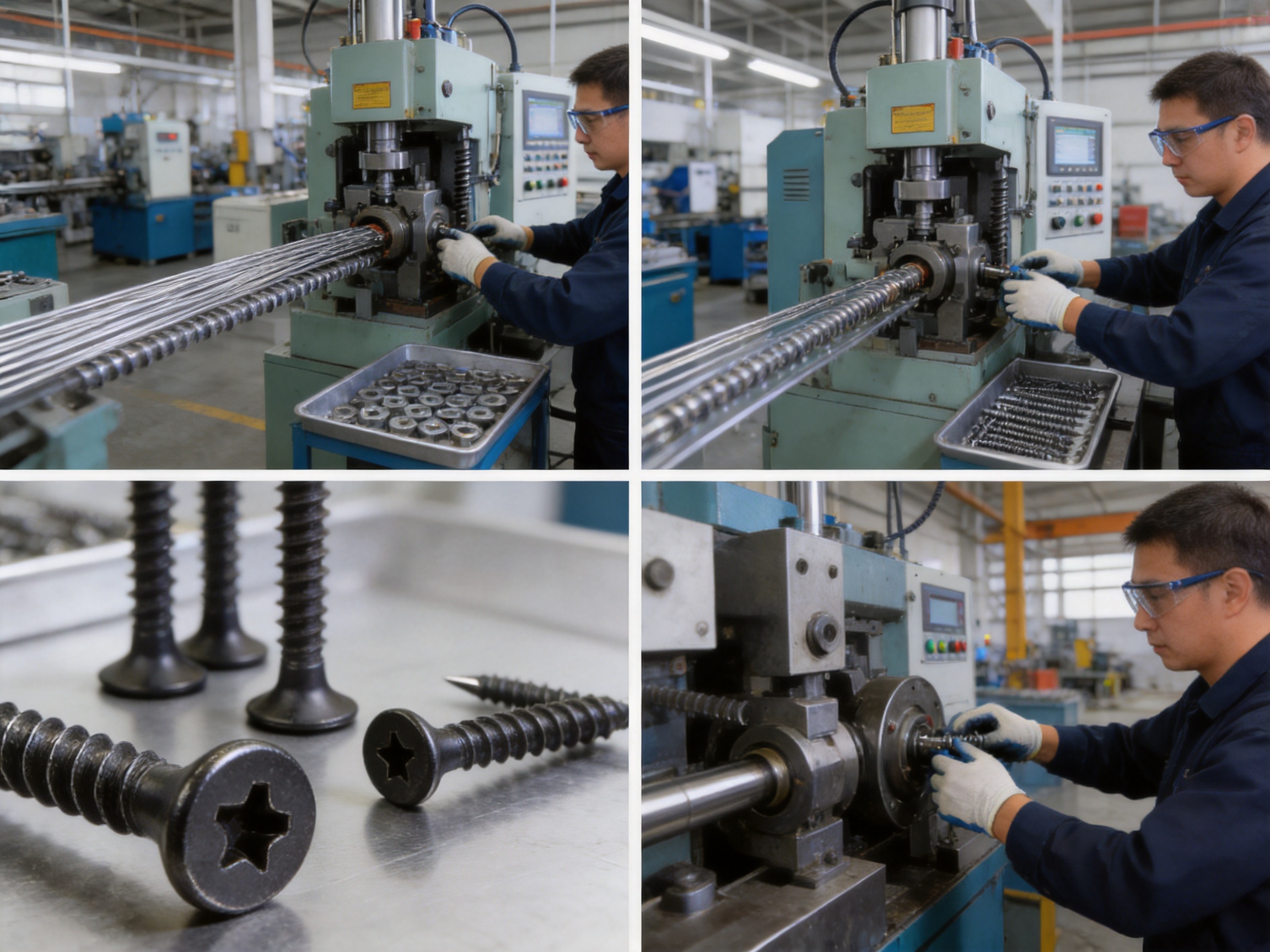
C1022A carbon steel is widely used in screw manufacturing because it offers a good balance of strength, formability, and heat-treatment response. During production, the wire must be ductile enough to undergo cold heading and thread rolling without cracking. After heat treatment, the screw must reach sufficient hardness and strength to penetrate substrates and resist breakage during driving.
Material consistency is critical. If carbon content, wire diameter, surface quality, or internal structure varies, finished screw performance may become unpredictable. High-quality production begins with controlled raw material selection. Wire should be inspected for diameter tolerance, surface defects, chemical composition, and mechanical properties before it enters manufacturing.
Compared with competitors that may rely on inconsistent raw material sources, a manufacturer with stable procurement and incoming material inspection can achieve better batch-to-batch uniformity. This means the screw’s driving behavior, hardness, torsional strength, and thread quality remain reliable from one shipment to the next.
Advanced Manufacturing Process
A high-performance drywall screw is produced through a sequence of controlled manufacturing steps. Each stage affects the final product, and each must be managed with proper equipment, tooling, inspection, and operator expertise.
Wire Drawing and Preparation
The process begins with steel wire. Wire drawing reduces the wire to the required diameter and improves dimensional accuracy. Surface condition is also important because defects on the wire can become cracks, folds, or weak points in the finished screw. Proper lubrication and drawing control help maintain a smooth wire surface suitable for cold heading.
Before heading, wire may be cleaned, coated, or prepared to improve forming performance. Stable wire feed is essential for high-speed production. Variations in wire diameter can affect head volume, shank consistency, thread rolling accuracy, and final strength.
Cold Heading
Cold heading forms the screw head and recess without heating the material to melting temperature. The wire is cut into blanks, and heading dies shape the head under high pressure. For a bugle head drywall screw, this stage must create the correct head diameter, curved underside, top profile, and recess foundation.
Precision tooling is crucial. If the die wears, the head may become uneven, oversized, undersized, or poorly shaped. Advanced manufacturers monitor die condition and replace tooling before defects become widespread. Consistent cold heading improves both appearance and mechanical performance.
Recess Forming
The Phillips recess must be accurately formed so that the driver bit fits securely. Recess forming requires alignment, correct punch geometry, proper force, and stable material flow. A clean recess reduces bit wobble and helps transfer torque efficiently.
Premium production pays close attention to recess depth, symmetry, and edge clarity. These details separate reliable drywall screws from lower-quality alternatives. A good recess helps installers drive screws faster and reduces frustration from slipping or stripped heads.
Thread Rolling
Thread rolling forms the screw threads by pressing the blank between hardened dies. Unlike cutting, rolling displaces material and can improve surface strength through work hardening. For drywall screws, thread rolling must produce sharp, consistent threads that bite effectively into the substrate.
The coarse thread must have correct pitch, depth, flank angle, and crest shape. If threads are too shallow, holding power decreases. If threads are too sharp or irregular, they may cause installation problems or increase the risk of breakage. Thread rolling dies must be maintained carefully to ensure consistent thread geometry throughout production.
Point Formation
The screw point helps the fastener start quickly and accurately. A sharp, well-centered point reduces wandering and makes installation easier. In drywall applications, the screw must pierce the board and engage the framing without excessive pressure.
Point consistency is especially important when screws are used in collated strips or automatic feeding systems. Poorly formed points can jam tools, slow installation, or damage board surfaces. Advanced inspection helps ensure that points are clean, centered, and suitable for rapid driving.
Heat Treatment
Heat treatment gives the screw the hardness and strength required for practical use. The process may include carburizing, quenching, and tempering depending on the specification. The goal is to achieve a hard surface for driving and thread performance while maintaining a core tough enough to resist snapping.
Improper heat treatment is one of the most common causes of screw failure. If screws are too soft, they may bend, strip, or fail to penetrate properly. If they are too brittle, heads may break during driving. Controlled furnace temperature, atmosphere, time, quenching medium, and tempering conditions are essential.
Manufacturers with advanced heat-treatment capability can maintain stable hardness distribution and reduce defects such as brittleness, decarburization, warping, and cracking. This creates a screw that drives smoothly and withstands normal installation torque.
Surface Finishing
After heat treatment, screws receive surface treatment. For black phosphated drywall screws, the process generally includes cleaning, activation, phosphating, rinsing, drying, and possible oiling or sealing. Each stage must be controlled to achieve uniform color, coating adhesion, and corrosion resistance.
Surface treatment affects both appearance and performance. Residues, uneven coating, rust spots, or poor drying can create customer complaints. A well-managed finishing line produces screws with a clean, consistent black surface and dependable storage performance.
Sorting and Inspection
Finished screws must be checked for dimensions, head quality, recess quality, thread shape, point condition, hardness, torsional strength, coating appearance, and packaging accuracy. Automated sorting can remove mixed parts, malformed screws, missing heads, bent shanks, or defective recesses. Manual inspection and laboratory testing provide additional assurance.
In competitive markets, inspection discipline is a major advantage. Buyers do not only need a low unit price; they need screws that reduce jobsite waste, tool damage, complaints, and project delays. Reliable quality control lowers the total cost of use.
Competitive Advantages Over Ordinary Drywall Screws
The black phosphated Phillips drive bugle head coarse thread drywall screw offers several advantages compared with lower-grade or less consistent alternatives.
Cleaner Countersinking
The bugle head shape helps the screw seat smoothly into drywall. Compared with screws that have poorly controlled head geometry, it reduces paper tearing and produces a cleaner surface for finishing.
Stronger Grip in Wood
The coarse thread design provides strong engagement in wood substrates. It pulls drywall panels tight against framing and resists loosening under normal indoor conditions.
Faster Installation
Coarse threads advance quickly, while the Phillips recess works with widely available tools. Good point sharpness and consistent thread rolling help installers drive screws rapidly and confidently.
Reduced Cam-Out and Recess Damage
A clean, accurately formed Phillips recess improves bit fit. This reduces slipping and helps maintain productivity, especially during repetitive screw driving.
Stable Mechanical Performance
C1022A carbon steel combined with controlled heat treatment gives the screw the strength needed for drywall fastening. Stable hardness and torsional properties reduce the risk of bending or head breakage.
Flexible Surface Options
While black phosphate is suitable for many standard indoor drywall applications, alternative coatings can be selected for higher corrosion resistance or special market requirements.
Consistent Batch Quality
Advanced production and inspection systems help maintain dimensional accuracy, surface quality, and packaging consistency. This is especially valuable for distributors, construction suppliers, and large contractors.
Company Manufacturing Strengths
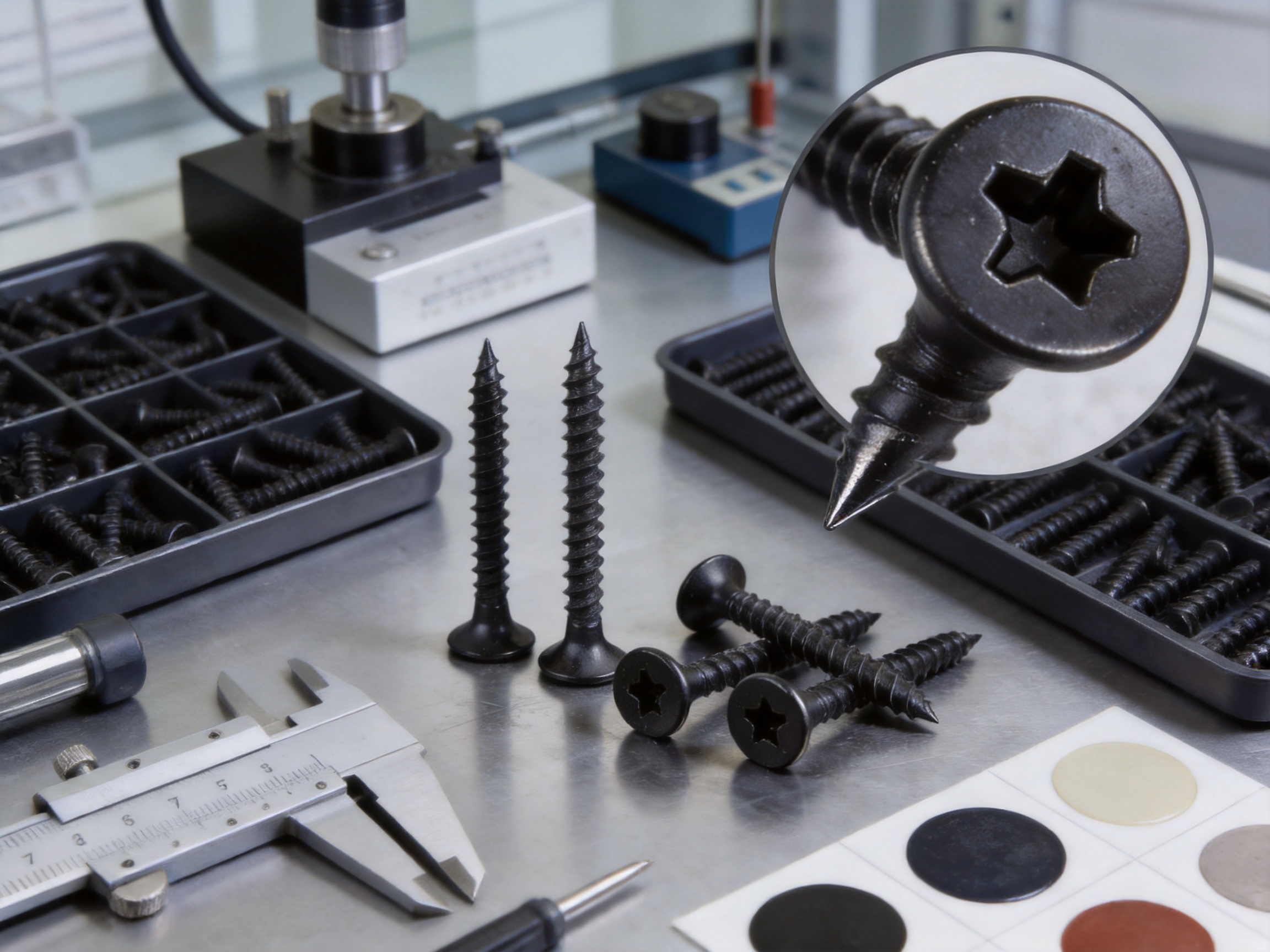
Lizhan Hardware Co., Ltd. operates as a fastener manufacturer and supplier with product categories covering new products, home tools, fasteners, packaging-related items, and stamping parts. Its screw product range includes drywall screws, machine screws, furniture screws, and related fastening solutions. The company serves customers requiring stable production, export support, and flexible product customization.
A key strength is the ability to supply multiple screw types and finishes from an integrated manufacturing platform. This allows buyers to consolidate sourcing and reduce the complexity of managing many suppliers. For drywall screws, the company can provide different recess designs, diameters, thread types, and surface treatments. Such flexibility is important for wholesalers and project suppliers serving multiple markets.
The company’s manufacturing strengths include controlled forming processes, screw production experience, surface treatment options, packaging capability, and export-oriented communication. With factory operations in Zhejiang, China, and warehouse support in Thailand, the company is positioned to serve both manufacturing-scale orders and regional distribution needs. This combination supports production efficiency and supply chain responsiveness.
Quality Control Throughout Production
Quality control must not be limited to final inspection. For drywall screws, quality begins with the steel wire and continues through every production step. The most effective quality systems monitor raw material, tooling, forming, heat treatment, coating, sorting, and packaging.
Incoming Material Inspection
Steel wire is checked for diameter, surface condition, and material suitability. Stable wire quality reduces downstream defects and improves forming consistency.
In-Process Dimensional Checks
During heading and thread rolling, operators check head diameter, length, shank diameter, recess shape, thread pitch, and point geometry. Early detection prevents large quantities of defective screws from being produced.
Hardness and Mechanical Testing
Heat-treated screws should be tested for hardness and torsional strength. These tests help confirm that the screw can withstand installation torque and perform reliably in use.
Surface Inspection
Black phosphate coating should be uniform, clean, and free from visible rust, stains, or heavy residues. Coating appearance matters because it reflects process control and affects customer confidence.
Packaging Verification
Correct labeling, quantity, carton strength, and moisture protection help ensure that screws arrive in usable condition. Packaging is especially important for export shipments, long-distance transport, and warehouse storage.
Applications in Interior Construction
Black phosphated coarse thread drywall screws are primarily used for fastening gypsum board to wood framing. They are common in residential buildings, commercial interiors, renovation projects, partition walls, ceilings, and general carpentry-related interior work.
In wall installation, screws must hold panels firmly while allowing the surface to be finished smoothly with joint compound. In ceiling installation, holding strength and proper spacing are especially important because gravity creates additional demand on the fasteners. In renovation work, ease of driving and reliable grip can improve speed when installers work around existing structures.
Although the main application is drywall fastening, these screws may also be used for certain light-duty wood-to-wood or board-to-wood applications where the head style and thread design are appropriate. However, they should not be substituted for structural screws unless the project specification allows it. Drywall screws are optimized for board fastening rather than heavy structural load-bearing applications.
Installation Guidance
Correct installation helps maximize screw performance. Even a high-quality screw can underperform if it is overdriven, underdriven, installed at the wrong spacing, or used with an unsuitable substrate.
The screw should be driven perpendicular to the board surface. Angled installation can damage the gypsum board and reduce holding strength. The head should sit slightly below the surface without breaking the paper. A drywall screw gun with adjustable depth control is recommended for consistent results.
For wood framing, coarse thread screws are generally preferred. The screw length should be selected so that adequate penetration into the framing is achieved. Too short a screw may not provide enough holding power, while an unnecessarily long screw may increase cost and installation effort.
Driver bits should be replaced when worn. A worn Phillips bit increases cam-out and can damage recesses. Proper tool maintenance improves productivity and helps preserve the appearance of the installed surface.
Packaging and Supply Considerations
Packaging is more than a container; it protects the product and supports distribution. Drywall screws are often supplied in bulk cartons, small boxes, plastic containers, or customized packages depending on market needs. Strong cartons, inner liners, accurate labels, and clean packing help prevent loss, contamination, and moisture damage.
For wholesalers and distributors, packaging consistency affects shelf presentation and inventory control. For contractors, clear labeling helps workers select the correct screw size quickly. For export customers, carton durability is essential because products may pass through several handling stages before reaching the final warehouse.
Lizhan Hardware Co., Ltd. provides packaging-related capability as part of its broader product categories. This helps support customized packing requirements, private label needs, and market-specific presentation. Buyers can request suitable packaging formats according to retail, wholesale, or project-based sales channels.
How to Select the Right Drywall Screw
When choosing a drywall screw, buyers should consider substrate type, board thickness, required length, coating, drive style, packaging, and installation method.
For wood studs, coarse thread black phosphated drywall screws are a common choice. For metal studs, fine thread versions are often more suitable. If higher corrosion resistance is required, zinc plated, Dacromet, Ruspert, or Magni-coated screws may be considered. If automatic installation equipment is used, screw consistency and packaging format become especially important.
Drive type should be selected according to tool availability and desired torque performance. Phillips drive is widely accepted and economical. Square drive can provide improved engagement in some markets. Torx drive can offer excellent torque transfer and reduced cam-out for specialized applications.
The correct diameter and length should match the project requirement. Common diameter options include #6-3.5, #8-4.2, #10-4.8, #12-5.5, and #14-6.3. The best choice depends on board thickness, framing material, local practice, and project specification.
Why Manufacturing Consistency Matters to Buyers
In fastener purchasing, the cheapest screw is not always the lowest-cost screw. Poor-quality screws can create hidden costs through breakage, stripped recesses, installation delays, rust complaints, inconsistent counts, damaged packaging, and rejected shipments. Contractors lose time when screws fail on site. Distributors lose credibility when customers receive inconsistent quality. Importers face additional costs when defective goods must be sorted, replaced, or discounted.
Consistent manufacturing reduces these risks. Screws with uniform dimensions feed better in tools, drive more smoothly, and create cleaner finishes. Stable heat treatment reduces breakage. Reliable surface treatment reduces corrosion complaints. Accurate packaging reduces inventory disputes. These advantages are especially important for large-volume buyers.
Compared with competitors that focus only on low pricing, a manufacturer emphasizing process control, material selection, and inspection can provide better long-term value. A reliable drywall screw improves productivity, reduces waste, and supports customer satisfaction.
Customization Options
Different markets may require different screw designs. Some customers prefer Phillips drive because it is common and economical. Others may request square or Torx drive for improved bit engagement. Some applications require fine thread instead of coarse thread. Some buyers require special coatings for corrosion resistance, appearance, or regional preference.
Customization may include diameter, length, recess type, thread type, coating, packaging, carton marking, and order quantity. For brand owners and distributors, customized packaging can strengthen market identity. For project suppliers, customized specifications can help meet tender requirements.
A manufacturer with broad screw production experience can support these variations while maintaining stable quality. This flexibility helps customers serve multiple sales channels with one coordinated supply source.
Environmental and Storage Considerations
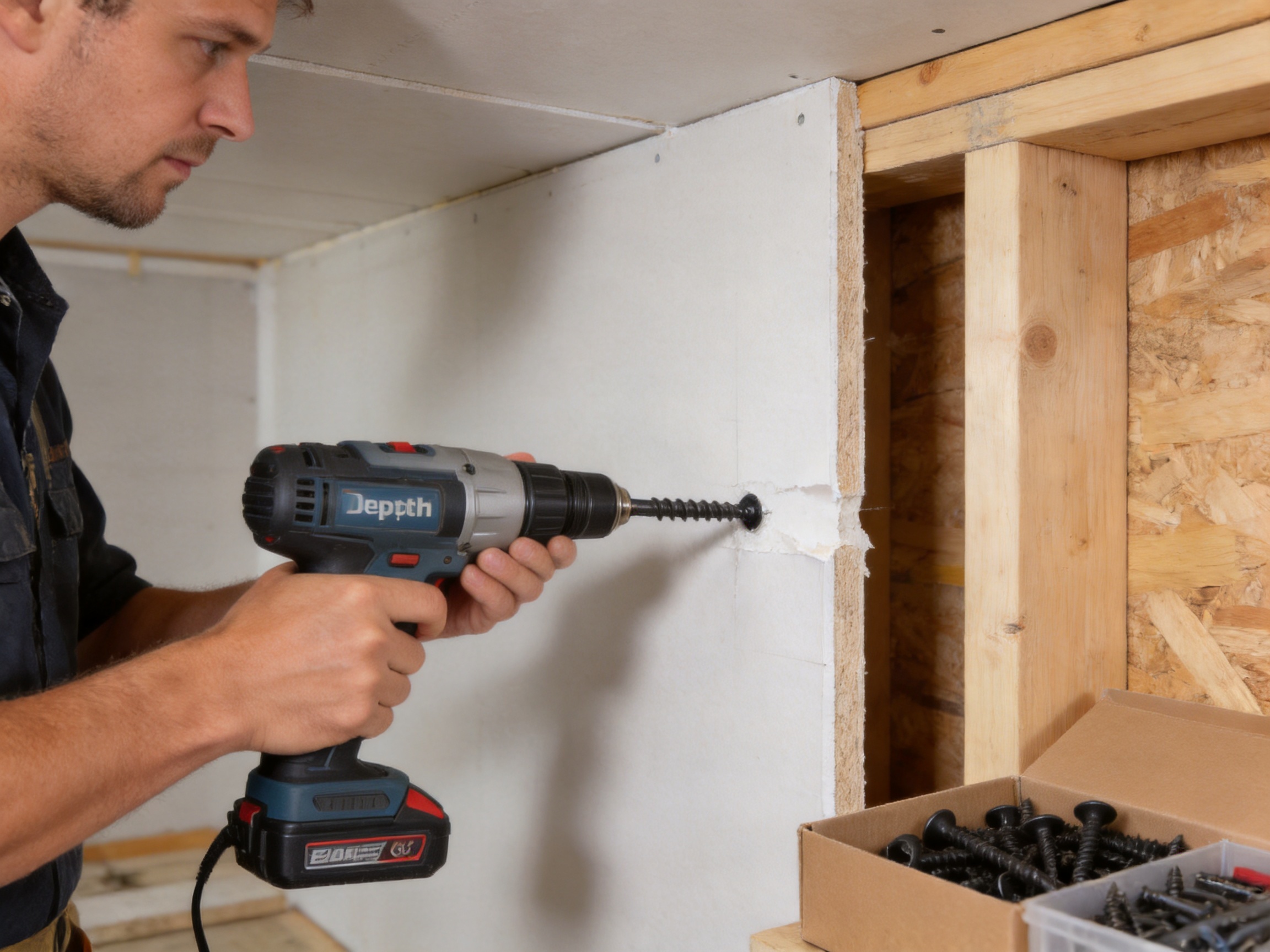
Drywall screws should be stored in a dry, ventilated area. Even coated screws can be affected by long-term exposure to moisture, condensation, salt air, or chemical vapors. Black phosphate screws are mainly intended for standard indoor dry environments. If the storage or application environment is humid, enhanced coatings should be considered.
Good packaging helps protect screws during transport and warehousing, but warehouse management remains important. Cartons should be kept off wet floors, protected from rain, and rotated according to inventory practice. Proper storage preserves coating appearance and prevents corrosion before installation.
Surface treatment selection should reflect the project environment. For typical interior drywall installation, black phosphate is often sufficient. For more demanding conditions, zinc-based or advanced coating systems may offer better protection.
Q&A Section
Q1: What is the main use of a black phosphated coarse thread drywall screw?
It is mainly used to fasten gypsum board to wood studs or timber framing in interior construction. The coarse thread provides strong grip in wood, and the bugle head helps the screw sit cleanly below the drywall surface.
Q2: Why is the bugle head important?
The bugle head has a curved underside that distributes pressure more gently than a sharp countersunk profile. This helps prevent tearing of the drywall paper and creates a smooth dimple for finishing compound.
Q3: Is Phillips drive the only available recess?
No. The product can be supplied with Phillips, square, or Torx recess options. Phillips is widely used because it is economical and compatible with common tools, while square and Torx drives may be selected for different torque and market preferences.
Q4: What material is used for these drywall screws?
The screws are made from C1022A carbon steel, a common screw manufacturing material that offers good formability before heat treatment and reliable strength after proper heat treatment.
Q5: What is the difference between coarse thread and fine thread drywall screws?
Coarse thread screws are generally used for wood framing because they bite strongly into wood fibers and drive quickly. Fine thread screws are commonly used for light-gauge metal studs because closer thread spacing engages thin metal more effectively.
Q6: What surface finishes are available?
Available surface treatments include black phosphate, zinc plating, yellow zinc plating, Dacromet, Ruspert, and Magni. Black phosphate is common for standard indoor drywall work, while other coatings may be chosen for higher corrosion resistance.
Q7: How can buyers reduce the risk of screw breakage?
Buyers should choose screws made from consistent material, controlled heat treatment, and verified mechanical testing. Correct installation tools and proper driver bits also reduce breakage and recess damage.
Q8: Can these screws be used for structural applications?
Drywall screws are designed primarily for attaching drywall and similar boards. They should not be used as structural fasteners unless approved by the project engineer or relevant specification.
Q9: Why does packaging matter for drywall screws?
Packaging protects screws from moisture, damage, and loss during transport and storage. Accurate labeling also helps distributors and installers identify the correct size and type quickly.
Q10: What advantages does Lizhan Hardware Co., Ltd. offer as a supplier?
The company offers flexible screw specifications, multiple surface treatments, packaging capability, manufacturing experience, and supply support from China factory operations with Thailand warehouse assistance. These strengths help customers obtain reliable products for wholesale, distribution, and project use.
Conclusion
The Phillips drive bugle head drywall screw with black phosphated coarse thread is a practical, efficient, and widely used fastening solution for interior drywall installation. Its value comes from the combination of a clean-seating bugle head, convenient Phillips drive, strong coarse thread, reliable C1022A steel, controlled heat treatment, and consistent black phosphate finish.
For contractors, the screw supports fast installation and clean finishing. For distributors and wholesalers, it offers strong market demand and flexible specification options. For project suppliers, it provides dependable performance when matched correctly to wood framing and standard indoor conditions.
Compared with ordinary low-grade screws, a well-manufactured drywall screw reduces installation problems, improves surface results, and lowers hidden costs related to breakage, cam-out, rust, and inconsistent quality. With advanced forming processes, controlled heat treatment, multiple coating choices, and packaging support, Lizhan Hardware Co., Ltd. is positioned to supply drywall screws that meet the expectations of modern construction and international fastener markets.
References
1. Industrial Fasteners Institute. Fastener Standards and Technical Guidance for Threaded Products.
2. ASTM International. Standard Specifications Related to Carbon Steel Fasteners and Coating Performance.
3. ISO Fastener Standards. Mechanical Properties, Thread Geometry, and Dimensional Control for Screws.
4. Gypsum Association. Recommended Practices for Gypsum Board Application and Finishing.
5. ASM International. Heat Treatment Principles for Carbon Steel Fasteners.
6. Surface Finishing Industry Technical Manuals. Phosphate Coatings, Zinc Plating, and Corrosion Protection Methods.