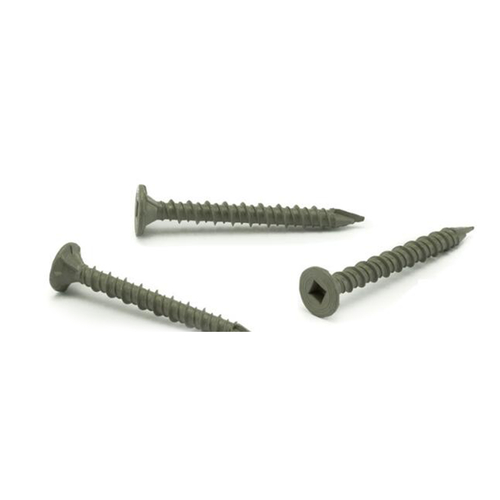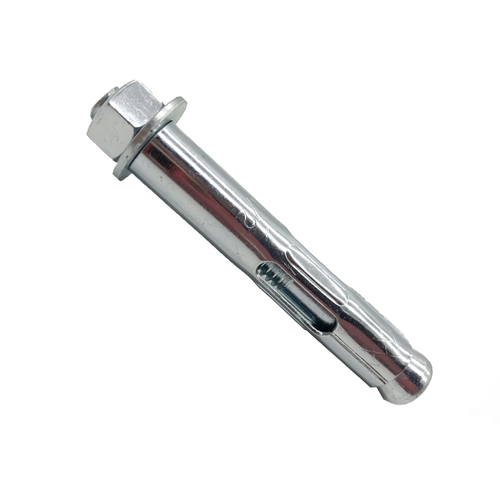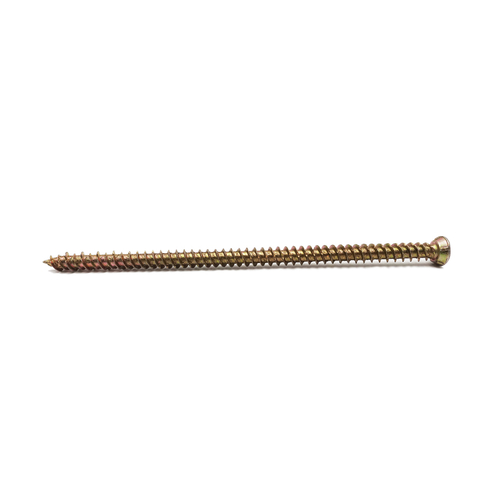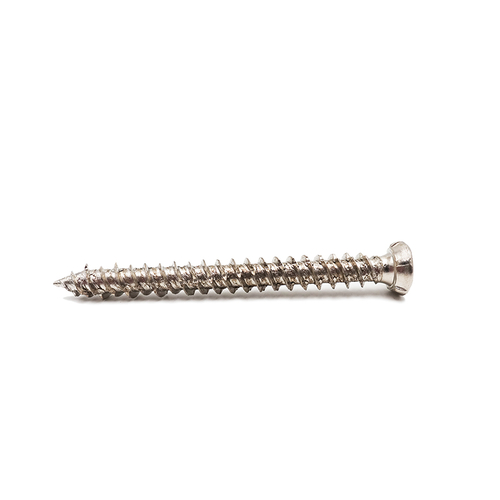
In modern woodworking, furniture assembly, interior finishing, and light construction, the fastener is often the smallest component in the project, yet it has a decisive influence on strength, installation speed, surface quality, and long-term reliability. The Phillips drive countersunk head chipboard screw with nibs, blue-white zinc plating, and Type 17 point is designed for precisely these demands. It combines a clean countersunk finish, efficient self-drilling performance in wood-based materials, dependable thread holding power, and a corrosion-resistant plated surface suitable for a wide range of indoor and protected applications.
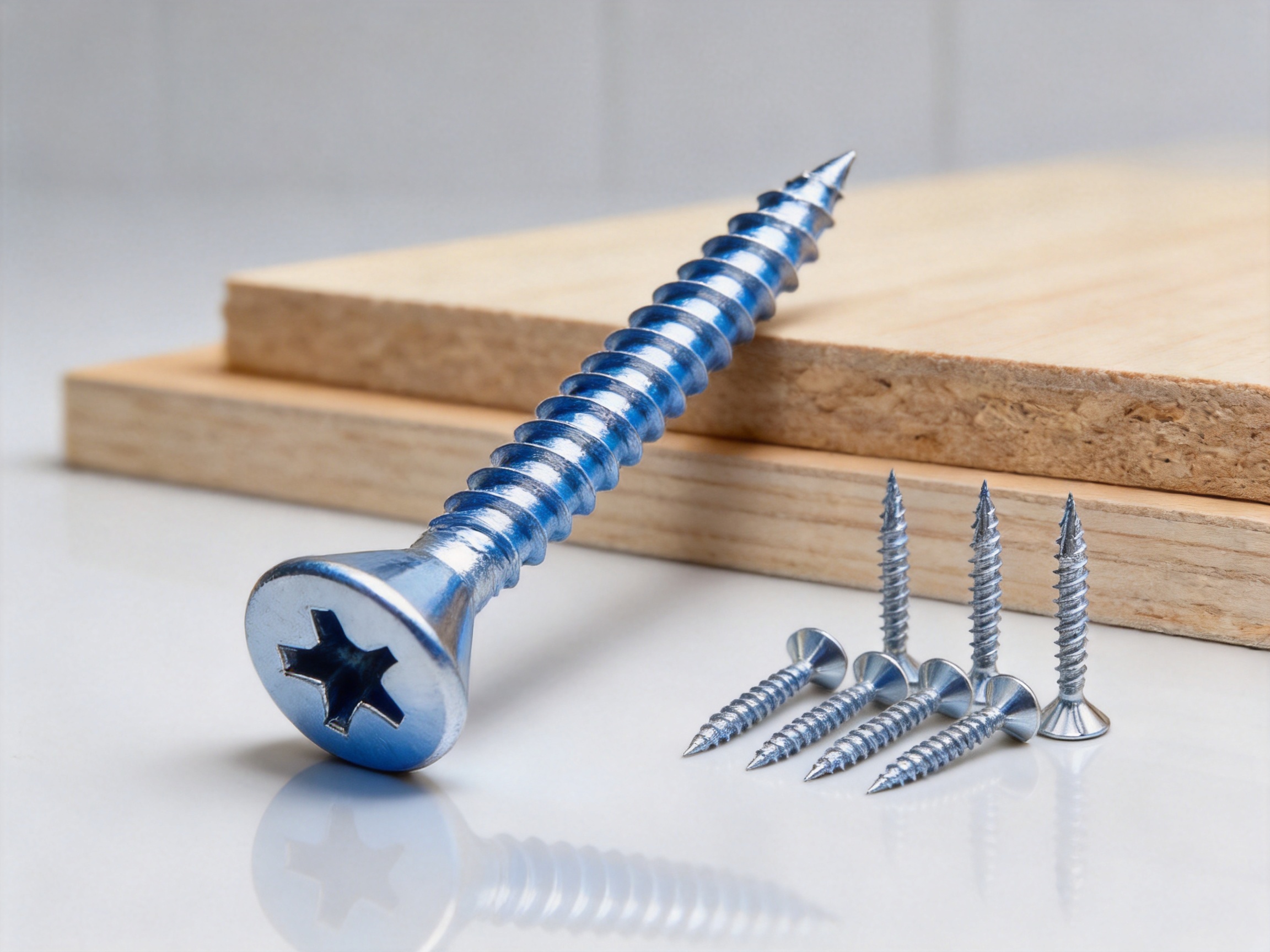
This screw is especially valuable for chipboard, particle board, MDF, plywood, softwood, furniture panels, and similar engineered wood materials. Its structure is not accidental: every feature serves a practical purpose. The Phillips recess supports easy compatibility with common installation tools. The countersunk head allows the screw to sit flush with the surface. The nibs under the head help ream the material and create a smoother seating action. The Type 17 point reduces splitting and improves bite at the start of installation. The blue-white zinc plated finish gives the screw a bright, professional appearance while improving resistance against oxidation during storage, transport, and use.
Lizhan Hardware Co., Ltd. manufactures screws and related fasteners with attention to material selection, forming accuracy, heat treatment, surface finishing, inspection, and packaging. The company’s production range includes different recess types such as Phillips, square, and Torx; diameters from small furniture sizes to larger construction sizes; bugle and countersunk head styles; and surface options including black phosphate, zinc plated, yellow zinc plated, Dacromet, Ruspert, Magni, and other finishes. This manufacturing breadth allows the product to be adapted to different markets, climates, assembly methods, and customer requirements.
Compared with ordinary screws that may cam out, split wood, sit unevenly, or show inconsistent plating, this chipboard screw is engineered to provide stable driving, clean finish, and repeatable performance. For distributors, furniture factories, hardware wholesalers, and construction material buyers, these advantages translate into fewer complaints, smoother assembly, better visual quality, and stronger confidence in batch-to-batch consistency.
Phillips drive countersunk head with nibs chipboard screw bule white zinc plated with type 17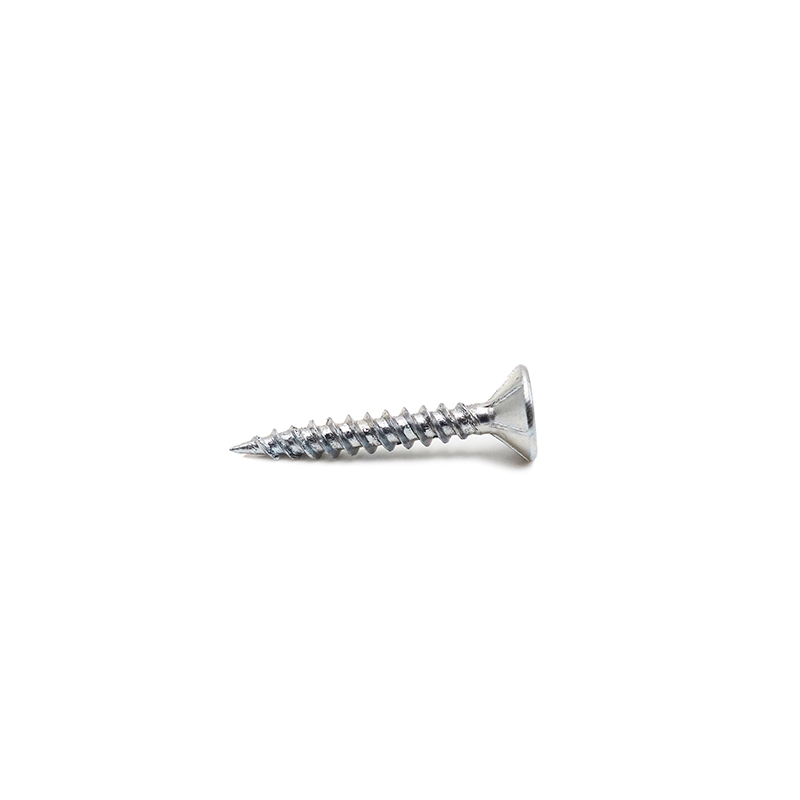
Product Overview
The Phillips drive countersunk head chipboard screw with nibs and Type 17 point is a specialized fastener intended for wood-based boards and related materials. It is typically produced from C1022A carbon steel, a widely used material for screws because it offers a good balance between formability during cold heading and mechanical performance after proper heat treatment. The screw can be supplied in common diameters such as #6, #8, #10, #12, and #14, corresponding approximately to 3.5 mm, 4.2 mm, 4.8 mm, 5.5 mm, and 6.3 mm size ranges depending on specification requirements.
The head is designed to be countersunk or bugle-shaped, allowing the screw to sink into wood or board materials without leaving a raised head. This is particularly important in furniture production, cabinet manufacturing, decorative panel installation, flooring underlayment, and other applications where a flat surface is required after fastening. The nibs positioned beneath the head assist in cutting or clearing material around the countersink area, helping the head seat more cleanly and reducing the force required to achieve a flush finish.
The Type 17 point is one of the most important features. Unlike a blunt point or standard sharp point, a Type 17 point includes a flute-like cutting slot near the tip. This slot helps remove wood fibers as the screw enters the material. As a result, the screw can start faster, reduce splitting risk, and lower driving torque. In production environments, lower torque means less tool stress, fewer stripped recesses, and improved operator efficiency.
The blue-white zinc plating provides a clean metallic appearance and a protective zinc layer. While zinc plating is not intended to replace heavy-duty outdoor coatings in harsh exposure, it performs well for indoor furniture, packaged hardware, cabinet components, shelving, light fixtures, and many protected building applications. The bright finish also improves product presentation, making it suitable for retail packs, kit assembly, and export distribution.
Key Specification Summary
| Feature | Available or Typical Option | Practical Benefit |
|---|---|---|
| Drive Recess | Phillips, with other options such as square or Torx available | Easy tool compatibility and flexible market adaptation |
| Head Type | Countersunk or bugle-style head with nibs | Flush seating and smoother surface finish |
| Material | C1022A carbon steel | Reliable forming, strength, and heat treatment response |
| Diameter Range | #6, #8, #10, #12, #14 | Suitable for furniture, boards, timber, and light construction |
| Point | Type 17 cutting point | Fast starting, reduced splitting, lower driving torque |
| Thread Options | Coarse thread and fine thread | Optimized grip for different substrates and assembly conditions |
| Surface Finish | Blue-white zinc plated; other finishes available | Clean appearance and corrosion resistance for protected use |
| Applications | Chipboard, MDF, plywood, softwood, furniture panels | Broad usability in furniture and interior construction |
Why the Design Matters
A screw is not simply a piece of threaded metal. In real assembly conditions, multiple variables interact: wood density, board composition, edge distance, tool speed, operator pressure, torque setting, pilot hole use, desired finish, and environmental exposure. A well-designed chipboard screw must control all of these variables as much as possible. The product discussed here does so through the combination of recess, head geometry, nibs, thread shape, point structure, steel grade, heat treatment, and surface plating.
The Phillips drive remains popular because it is widely recognized, easy to use, and compatible with standard bits. While square and Torx recesses may provide higher torque transfer in some applications, Phillips remains one of the most universal drive systems in global hardware markets. For wholesalers and contractors, this means reduced tool compatibility problems. For furniture kit suppliers, it means end users can assemble products with common screwdrivers or power tools.
The countersunk head is essential when the screw must finish flush or below the surface. In chipboard and MDF, an ordinary flat head or pan head would remain exposed and interfere with panel alignment, surface laminates, sliding components, or decorative covers. A countersunk head creates a neat and practical finish. When nibs are added under the head, the screw can cut its own seating area more smoothly, reducing mushrooming of board material and improving the appearance around the screw head.
The Type 17 point is especially advantageous in wood and engineered board. When a screw enters dense or layered material, pressure builds around the tip. Without relief, the material may split, swell, or force the screw off line. The cutting flute of the Type 17 point helps remove fibers and chips as the screw advances. This improves starting speed and reduces the need for pre-drilling in many applications. For high-volume assembly, the savings in labor time can be significant.
Advantages Over Ordinary Competing Screws
Many general-purpose screws look similar at first glance, but differences become clear during actual use. A low-grade screw may have inconsistent thread height, shallow recess depth, poor heat treatment, brittle behavior, weak plating adhesion, rough heads, or inaccurate points. These defects may not be obvious in a catalog image, but they lead to real problems: stripped drives, broken screws, uneven countersinking, rust spots, assembly delays, and customer dissatisfaction.
This chipboard screw offers several competitive advantages. First, the controlled recess geometry helps the driver bit seat properly. A recess that is too shallow increases cam-out, while a recess that is off-center causes wobbling and poor torque transfer. Accurate forming improves the driving experience and reduces damage to the screw head. This is particularly important for Phillips drive screws, where proper recess quality directly affects installation reliability.
Second, the head with nibs provides better surface finishing than ordinary countersunk heads without cutting features. In softwood, chipboard, and MDF, the material around the head can rise or tear when the head is forced into the surface. Nibs help cut the seating area, allowing the screw to settle with less surface disturbance. This is valuable when panels will remain visible, receive a decorative cap, or require tight contact with another component.
Third, the Type 17 point gives the screw faster penetration and improved control. Standard sharp-point screws may still work in wood, but they can require more pressure and may split boards near the edge. The Type 17 cutting point helps open a path into the material. In many assembly settings, this means fewer pilot holes, faster work, and more consistent fastening results.
Fourth, the blue-white zinc plated finish provides a bright and clean appearance that many buyers prefer for furniture hardware and retail packaging. A screw with uneven color, dark patches, poor coverage, or plating residue can make an entire product package look low quality. Consistent plating improves both technical protection and commercial presentation.
Fifth, production consistency is a major advantage. Lizhan Hardware Co., Ltd. focuses on stable manufacturing from wire selection to packaging. For buyers ordering repeated shipments, consistency matters as much as initial sample quality. A screw that performs well in a sample but varies in bulk production can cause major supply chain issues. Controlled production helps ensure that diameter, length, thread, head shape, point form, and finish remain within agreed specifications.
Material Strength: C1022A Carbon Steel
C1022A carbon steel is commonly used for self-tapping screws, chipboard screws, drywall screws, and other formed fasteners. It offers enough carbon content to respond well to heat treatment while still being formable during cold heading and thread rolling. This makes it suitable for manufacturing screws that need strong heads, durable threads, and reliable torsional performance.
The material selection matters because screws experience complex stresses. During installation, the drive recess must resist deformation, the shank must resist twisting, the thread must cut or form into the substrate, and the point must resist bending or dulling. After installation, the screw must maintain clamping force and resist loosening or fracture under service conditions. Poor-quality steel may crack during heading, produce weak threads, or break during driving.
Using controlled steel wire helps the manufacturer maintain uniform mechanical properties. Before forming, wire quality affects every later process. Surface defects, inconsistent diameter, or unsuitable hardness can lead to production instability. During cold heading, the wire is cut and shaped into the screw blank. A reliable material supports clean head formation and accurate recess creation. During thread rolling, the material must flow into the thread profile without tearing or excessive work hardening.
Heat treatment further enhances performance. Correct hardening and tempering can increase strength and wear resistance while controlling brittleness. If a screw is too soft, the recess may strip and the threads may deform. If it is too hard and brittle, it may snap under torque. A balanced process is essential for screws used in dense chipboard and furniture panels, where driving resistance can vary from one board type to another.
Recess Options and the Role of Phillips Drive
The production range includes Phillips, square, and Torx recesses, giving buyers flexibility for different markets. However, the Phillips drive remains a practical and widely used option. It is common in furniture assembly, hardware kits, interior installation, and general woodworking because tools are readily available and workers are familiar with the drive style.
A high-quality Phillips recess must have clean wings, accurate depth, centered alignment, and smooth forming. If the recess is poorly formed, the bit may ride out under torque. Cam-out damages the screw head, wears the driver bit, slows production, and can scar the workpiece surface. In automated or semi-automated assembly, recess consistency is even more important because the tool must engage quickly and repeatedly.
For customers who require higher torque transfer or reduced cam-out, square and Torx alternatives can be supplied. This flexibility is useful for private label programs, professional construction lines, and specialized furniture production. Nevertheless, the Phillips version remains one of the most economical and globally acceptable options, especially for distributors serving diverse users.
Countersunk Head with Nibs
The countersunk head allows the screw to finish flush with the surface. This feature is critical in woodworking because raised heads can interfere with hinges, brackets, drawer slides, laminate layers, panels, and decorative covers. A flush head also improves appearance, reducing the need for additional finishing work.
The nibs under the head are small but important cutting features. As the screw head approaches the surface, the nibs help remove material and create a cleaner recess. This reduces the pressure required to bury the head and minimizes surface swelling. In chipboard, where the material consists of compressed wood particles and resin, uncontrolled head seating can cause tearing or bulging. Nibs help reduce that risk.
Compared with ordinary countersunk screws without nibs, this design can improve installation speed and finish quality. Operators do not need to apply excessive pressure to force the head into the board. The screw itself assists in forming the final seating area. This is particularly useful when working with laminated panels, where surface damage is undesirable.
Type 17 Point Performance
The Type 17 point is designed for cutting action. Its slotted tip removes material as it enters, making it especially useful in wood and engineered wood products. The feature may appear simple, but it has a significant effect on driving behavior.
When a standard point enters wood, it pushes fibers aside. In some materials, this causes splitting, especially near edges or ends. In dense boards, the screw may require high torque to advance. The Type 17 point cuts and clears a path, reducing internal stress in the material. This can make installation smoother and help preserve board integrity.
In furniture factories and assembly lines, this performance can reduce cycle time. If fewer pilot holes are needed, production becomes faster and more economical. If screws start more easily, operators make fewer mistakes. If torque is lower, tools and bits last longer. These are practical benefits that directly affect manufacturing cost and final product quality.
Thread Design for Chipboard and Wood-Based Panels
Thread selection is another key factor. The product can be produced with fine or coarse thread depending on the application. Coarse threads are commonly preferred for chipboard, MDF, softwood, and particle board because they provide strong grip in softer or less dense material. Fine threads may be suitable for harder substrates or specific assembly requirements.
A good chipboard screw thread must balance holding power with ease of driving. If the thread is too aggressive, it may split the board or require excessive torque. If it is too shallow, holding strength may be insufficient. Accurate thread rolling ensures the profile remains consistent from one screw to the next. This consistency improves pull-out resistance, torque behavior, and clamping performance.
Thread rolling, rather than cutting, is widely used in screw production because it strengthens the material surface through cold forming and produces efficient high-volume output. The quality of thread rolling dies, machine setup, lubrication, and blank preparation all affect the final screw. Lizhan Hardware Co., Ltd. emphasizes controlled forming so that threads are sharp, consistent, and suitable for their intended material.
Blue-White Zinc Plating and Surface Protection
Surface finish influences both appearance and corrosion resistance. Blue-white zinc plating gives the screw a bright silver-like color with a clean tone. It is widely accepted in furniture hardware, indoor construction, cabinet assembly, and retail fastener products. The finish helps protect the steel from oxidation during storage and normal indoor use.
Good plating requires careful surface preparation. Screws must be cleaned to remove oils, scale, and residues before coating. The zinc layer must cover the head, recess, threads, and point evenly. After plating, passivation improves corrosion resistance and color stability. Poor plating may result in rough deposits, blocked recesses, hydrogen embrittlement risk, uneven color, or early rusting.
For more demanding environments, alternative finishes such as yellow zinc plated, black phosphate, Dacromet, Ruspert, and Magni may be considered. Each coating has different advantages. Black phosphate is common for drywall screws and provides good compatibility with certain applications. Dacromet, Ruspert, and Magni-type coatings are often selected for higher corrosion resistance. The ability to offer multiple finishes is a strength because buyers can match product performance to project requirements.
Manufacturing Process and Quality Control
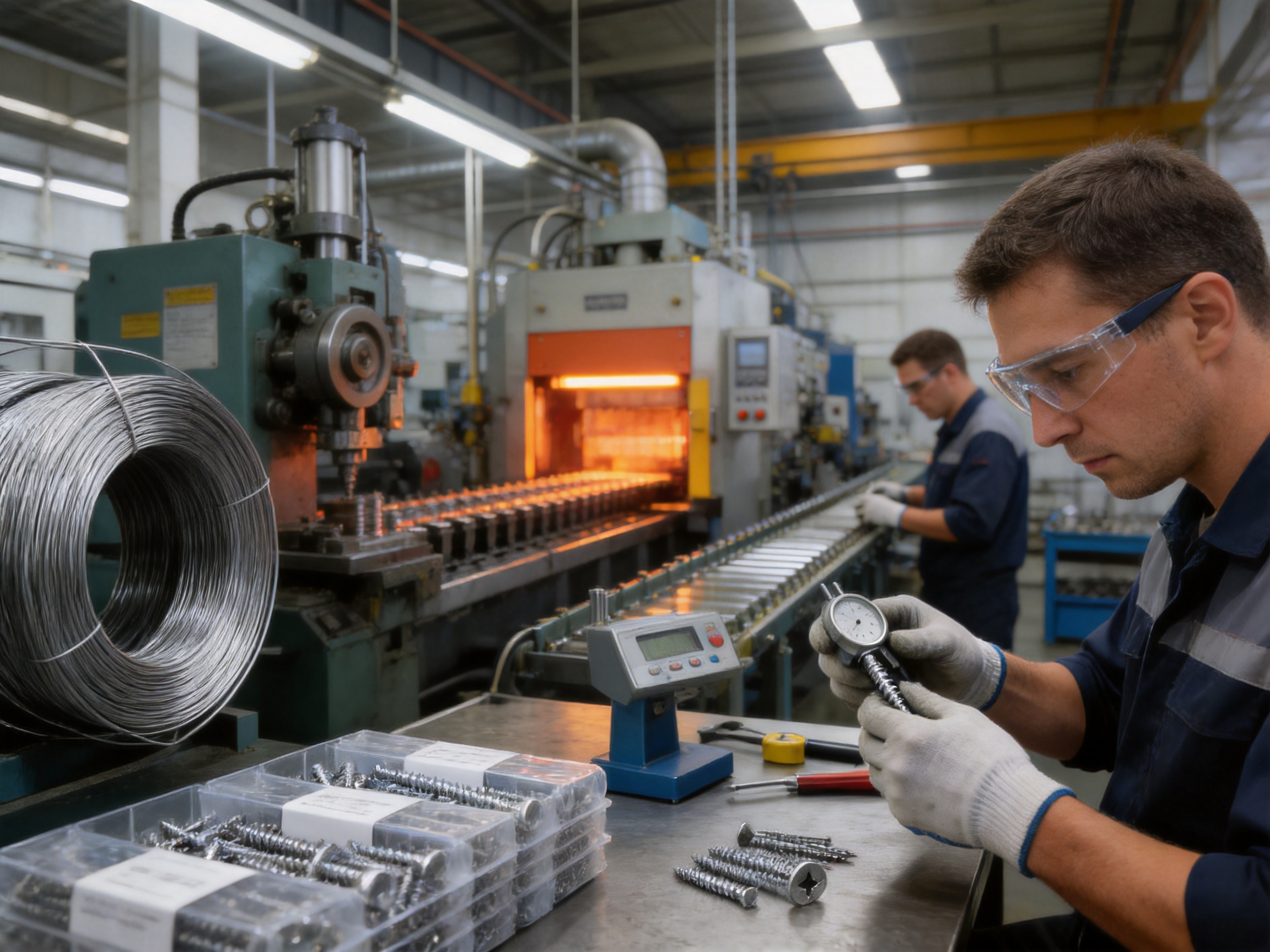
Advanced screw manufacturing is a sequence of controlled operations. The process begins with wire selection. The steel wire must meet requirements for chemical composition, diameter, surface condition, and mechanical behavior. Consistent wire quality supports stable cold heading and thread rolling.
The next step is wire drawing or preparation, where the material is brought to the required diameter and surface condition. Proper lubrication and cleaning are important because surface condition affects forming accuracy. The wire is then fed into heading machines, where it is cut into blanks and formed into the screw head shape. For this product, the heading process must create the countersunk or bugle profile, the Phillips recess, and the basic geometry required for nib formation.
After heading, the screw blank moves to thread rolling. Thread rolling dies press the thread shape into the shank. This operation must be carefully controlled to maintain diameter, pitch, thread height, and straightness. The Type 17 point may be formed through a cutting or forming process depending on equipment and specification. The tip must be sharp and consistent so that it performs properly in wood-based materials.
Heat treatment is used to improve strength. The screws are hardened and tempered to obtain the desired balance of hardness and toughness. Temperature control, furnace atmosphere, holding time, and quenching conditions all affect final performance. Improper heat treatment can create screws that are too soft, too brittle, or inconsistent across a batch. Reliable manufacturers monitor this process closely.
Surface treatment follows heat treatment. For blue-white zinc plating, the screws are cleaned, plated, passivated, dried, and inspected. Plating thickness, color, adhesion, and coverage are important quality points. The recess must remain usable, the threads must remain clean, and the coating must not interfere with installation.
Final inspection may include dimensional checks, recess inspection, thread gauge evaluation, hardness testing, torsion testing, drilling or driving trials, salt spray testing when required, visual inspection, and packaging verification. Packaging is also part of quality. Screws must be packed to prevent moisture exposure, mixing of sizes, label errors, and transport damage.
Company Manufacturing Strengths
Lizhan Hardware Co., Ltd. operates with a focus on fastener production for international customers. The company supplies products across categories including screws, home tools, fasteners, packaging-related hardware, and stamping parts. Its fastener range includes machine screws, furniture screws, drywall screws, chipboard screws, and related customized products.
One of the company’s strengths is production flexibility. Buyers may require different recesses, head shapes, diameters, lengths, threads, grades, finishes, and packaging styles. A manufacturer that can support these variations helps customers reduce sourcing complexity. Instead of working with many suppliers for similar screws, customers can consolidate orders and maintain more consistent quality control.
Another strength is experience with export supply. International buyers often need stable documentation, clear specifications, dependable packaging, and repeatable production quality. They may also require private label packaging, carton marking, barcode support, palletization, or mixed container planning. A factory familiar with these requirements can reduce communication problems and delivery risks.
The company’s presence with a China factory and Thailand warehouse offers practical logistical advantages. A manufacturing base in Zhejiang supports production capacity and access to industrial supply chains, while warehouse support in Thailand can improve regional distribution flexibility. For buyers in Southeast Asia and related markets, this can support faster response and more convenient supply planning.
Technical responsiveness is another important strength. Fastener buyers may not always need a standard catalog item. They may need a screw adjusted for a specific board density, coating requirement, recess preference, packaging count, or assembly condition. A capable manufacturer can review requirements and recommend suitable options, helping buyers avoid over-specification or under-performance.
Applications in Furniture and Interior Construction
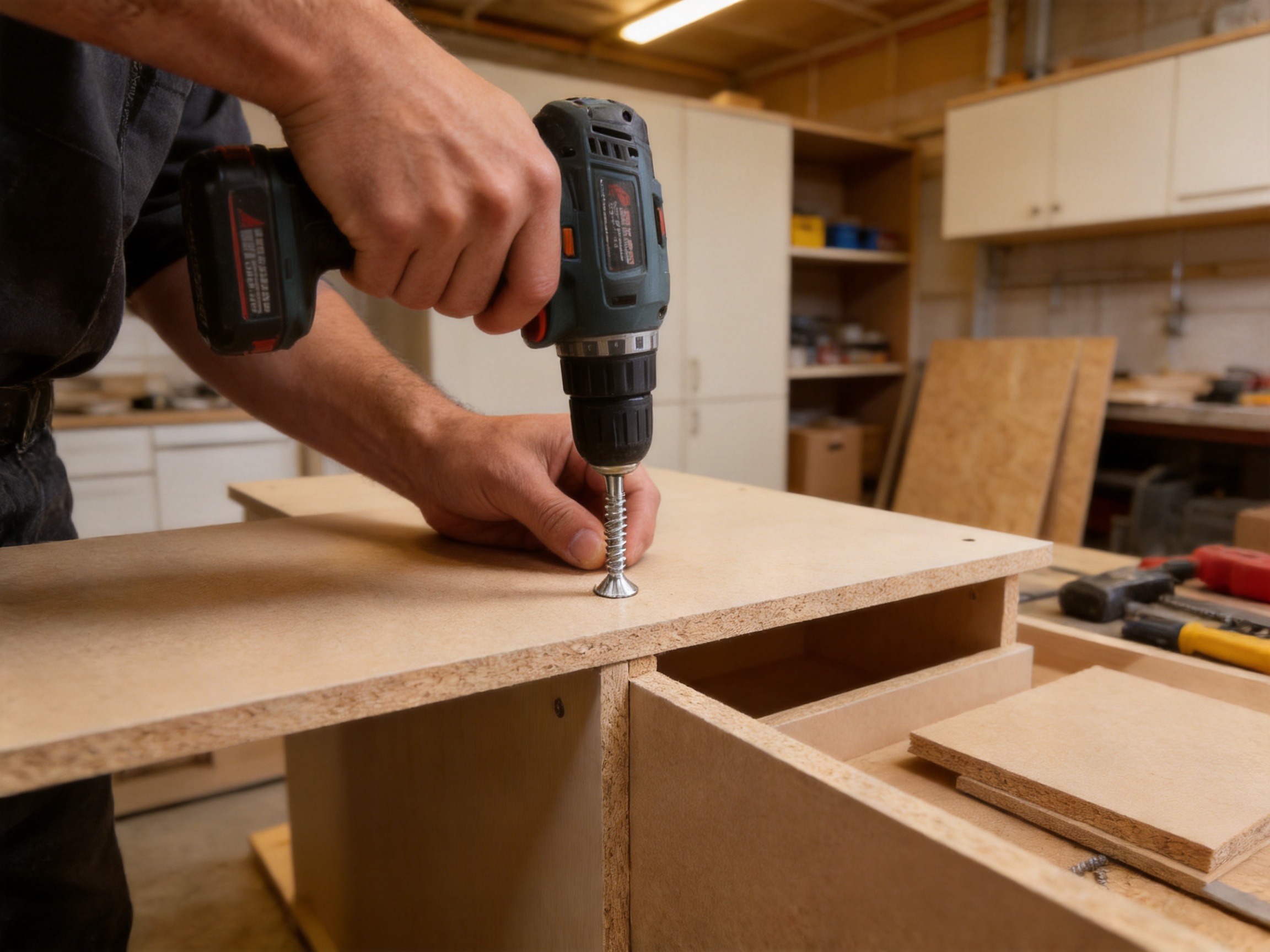
This chipboard screw is ideal for furniture manufacturing. Common applications include cabinet frames, shelves, wardrobes, drawers, bed frames, tables, office furniture, flat-pack furniture, and panel-to-panel connections. The countersunk head provides a neat finish, and the thread grips well in particle board and MDF. The Type 17 point reduces the chance of splitting when screws are placed near panel edges, though proper spacing should still be maintained.
In cabinet installation, the screw can be used for wood-based components, backing panels, and support strips. The flush head helps avoid interference with hardware. In shelving systems, strong thread engagement supports load-bearing joints when the screw size is properly selected. In decorative wooden panels, the clean seating action helps maintain visual quality.
For contractors and installers, the screw is useful because it starts quickly and drives smoothly. On job sites, time matters. Screws that require repeated pressure, slip from the bit, or split the material slow down the work and increase waste. A reliable Type 17 chipboard screw improves productivity and reduces frustration.
In packaged hardware kits, bright zinc plated screws are often preferred because they look clean and professional. Consumers judge quality partly by appearance. A well-finished screw inside a furniture kit supports confidence in the overall product. Consistent head shape and recess also make assembly easier for non-professional users.
Choosing the Right Size
Selecting the correct screw size depends on material thickness, load requirements, joint design, and whether a pilot hole is used. Smaller sizes such as #6 or #8 are commonly used for light furniture, thin panels, and hardware attachment. Larger sizes such as #10, #12, or #14 may be selected for heavier wood connections, thicker boards, or stronger fastening requirements.
Length selection should ensure adequate thread engagement without protruding through the far side of the material. For panel fastening, the screw should generally penetrate deeply enough to hold securely while avoiding breakthrough. In edge fastening, care must be taken to avoid splitting, especially in low-density chipboard or near the end of a board.
Thread type should also match the material. Coarse thread is usually preferred for chipboard and softwood because it grips more effectively in less dense substrates. Fine thread may be chosen for harder materials or special applications. If the buyer is unsure, sample testing in the actual material is recommended.
Installation Best Practices
Although the screw is designed for efficient installation, proper use still matters. The driver bit should match the Phillips recess size. A worn or incorrect bit increases cam-out and may damage the head. Power tools should be set to an appropriate speed and torque. Excessive torque can strip the board or overdrive the screw below the desired surface level.
For dense boards or near-edge applications, a pilot hole may still be beneficial, even with a Type 17 point. The screw reduces the need for pre-drilling in many cases, but material conditions vary. Laminated boards, brittle panels, or narrow edge distances may require additional care.
The screw should be driven straight to maintain maximum holding strength. Angled driving may enlarge the hole, damage the head seating area, or reduce clamping force. When a flush finish is required, operators should stop once the head is seated properly. Overdriving can crush chipboard fibers and weaken the joint.
Storage is also important. Zinc plated screws should be kept dry and protected from moisture, condensation, acids, and corrosive vapors. Proper storage preserves appearance and corrosion resistance before use.
Quality Advantages for Distributors and OEM Buyers
For distributors, a fastener must satisfy multiple customer groups. Contractors need reliable installation. Furniture factories need consistent dimensions. Retail buyers need good packaging and appearance. Export customers need stable supply. This product supports these requirements through practical design and controlled production.
Stable quality reduces after-sales issues. When screws strip, break, rust early, or vary in size, distributors face complaints and replacements. A well-manufactured screw protects reputation. It also allows distributors to position the product as a dependable option rather than a low-price commodity.
For OEM buyers, consistency is critical. A furniture factory may use thousands or millions of screws in production. Even a small defect rate can interrupt assembly lines. Screws must feed properly, drive consistently, and meet strength requirements. The combination of accurate forming, proper material, heat treatment, and finish control supports smooth OEM production.
Packaging customization can add value. Screws may be supplied in bulk cartons, small boxes, bags, blister packs, or furniture kit packages depending on buyer requirements. Clear labeling, size separation, and moisture-resistant packaging improve warehouse management and reduce assembly mistakes.
Comparison with Common Alternatives
Compared with standard wood screws, this chipboard screw is more optimized for engineered board materials. Standard wood screws may have thread geometry better suited for solid wood, while chipboard screws often use sharper and deeper threads for grip in particle-based substrates. The Type 17 point further improves penetration and reduces splitting.
Compared with drywall screws, chipboard screws are typically better suited for furniture and wood panel applications. Drywall screws are often designed for fastening gypsum board to wood or metal framing and may have bugle heads and phosphate coatings. While they can sometimes be used in wood, they are not always the best choice for furniture-grade chipboard connections. The plated chipboard screw offers better appearance and purpose-built board fastening performance.
Compared with low-cost generic screws, the advantages are found in details: cleaner recess, more consistent threads, better point formation, smoother head seating, more reliable plating, and improved packaging. These details may seem minor individually, but together they create a better user experience and lower total cost.
Compared with premium specialty drive screws such as Torx, the Phillips version offers wide compatibility and economical use. For many general furniture and construction applications, Phillips drive remains sufficient and convenient. Where higher torque or professional tool engagement is required, square or Torx options can be selected from the broader production range.
Sustainability and Efficiency Considerations
Fastener quality contributes to sustainability by reducing waste. Screws that fail during installation may damage boards, require replacement, and create scrap. A screw that drives correctly the first time helps conserve material and labor. In furniture production, reducing defective joints also extends product life, which is an important part of resource efficiency.
Efficient production processes also matter. Cold heading and thread rolling are highly material-efficient methods compared with machining. Thread rolling forms material rather than cutting it away, reducing waste and improving thread strength. Controlled heat treatment and plating reduce rework and rejected batches.
Packaging can be optimized according to buyer needs. Bulk packaging reduces packaging material for industrial users, while smaller retail packs improve convenience for end users. Proper packaging prevents corrosion and damage during shipping, which also reduces waste.
Q&A Section
What is the main use of this screw?
It is mainly used for fastening chipboard, particle board, MDF, plywood, softwood, furniture panels, cabinets, shelves, and interior wood-based components. Its countersunk head, nibs, and Type 17 point make it especially suitable for clean and efficient installation in engineered wood.
Why does the screw have nibs under the head?
The nibs help cut and clear material as the head seats into the board. This allows a smoother flush finish, reduces surface swelling, and lowers the force needed to countersink the screw.
What is the benefit of a Type 17 point?
The Type 17 point has a cutting slot that helps remove wood fibers during installation. It improves starting speed, reduces splitting risk, and lowers driving torque in many wood and board materials.
Is blue-white zinc plating suitable for outdoor use?
Blue-white zinc plating provides good protection for indoor and protected applications, but it is not the best choice for severe outdoor or highly corrosive environments. For demanding corrosion resistance, coatings such as Ruspert, Magni, Dacromet-type finishes, or other specified treatments may be more suitable.
Can this screw be supplied with other drive types?
Yes. In addition to Phillips drive, production options can include square and Torx recesses. The best choice depends on tool preference, torque requirements, market habits, and application conditions.
What material is commonly used for this product?
C1022A carbon steel is commonly used because it offers good formability during manufacturing and reliable mechanical performance after proper heat treatment.
Does the screw always eliminate the need for pilot holes?
Not always. The Type 17 point reduces the need for pilot holes in many applications, but pilot holes may still be recommended for dense materials, brittle boards, near-edge fastening, or precision assembly.
Why choose this product instead of ordinary low-cost screws?
This screw offers better driving behavior, cleaner countersinking, stronger suitability for chipboard, more consistent surface finish, and improved production reliability. The total value is higher because it reduces installation problems, material damage, and quality complaints.
Can the product be customized for OEM orders?
Yes. Diameter, length, recess, thread, surface finish, packaging, and labeling can be adjusted according to order requirements and technical feasibility.
What industries benefit most from this screw?
Furniture manufacturers, cabinet makers, hardware distributors, building material suppliers, interior contractors, shelving producers, and flat-pack furniture brands can all benefit from this screw’s balance of performance, appearance, and cost efficiency.
Conclusion
The Phillips drive countersunk head chipboard screw with nibs, blue-white zinc plating, and Type 17 point is a carefully engineered fastener for wood-based assembly. Its strength lies in the combination of practical features: a widely compatible Phillips recess, a flush countersunk head, cutting nibs for cleaner seating, a Type 17 point for faster starting and reduced splitting, strong C1022A steel, reliable thread options, and a clean zinc plated finish.
For users, the product improves installation speed, surface quality, and fastening reliability. For distributors, it offers broad market appeal and dependable repeat sales potential. For OEM manufacturers, it supports consistent assembly and reduced production interruptions. For furniture and interior construction applications, it provides a strong balance of performance, appearance, and value.
Lizhan Hardware Co., Ltd. strengthens the product with manufacturing capability, export experience, process control, surface treatment options, and flexible customization. From raw material selection to heading, thread rolling, heat treatment, plating, inspection, and packaging, each stage contributes to the final quality of the screw. In a competitive fastener market, these details create measurable advantages over ordinary screws.
A good fastener should save time, protect materials, and perform consistently. This chipboard screw is designed to do exactly that, making it a reliable choice for modern furniture production, hardware distribution, and interior wood fastening applications.
References
1. Industrial Fasteners Institute. Fastener Standards and Technical Data.
2. International Organization for Standardization. Mechanical Fasteners and Threaded Products Standards.
3. European Committee for Standardization. Fasteners: Mechanical Properties and Product Specifications.
4. Smith, R. Wood Joining and Fastening Methods in Furniture Manufacturing.
5. Brown, T. Surface Coatings for Steel Fasteners: Zinc Plating, Passivation, and Corrosion Protection.
6. Lee, M. Cold Heading and Thread Rolling Technology for Carbon Steel Screws.