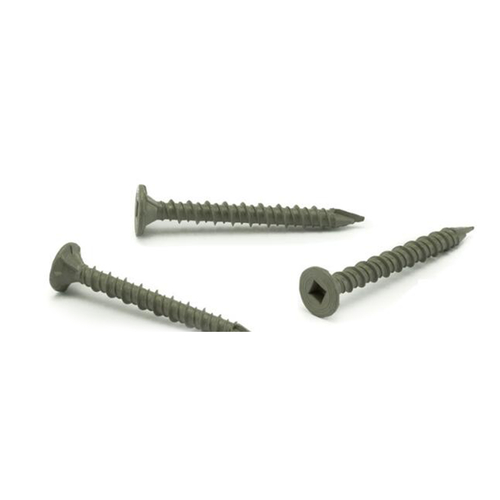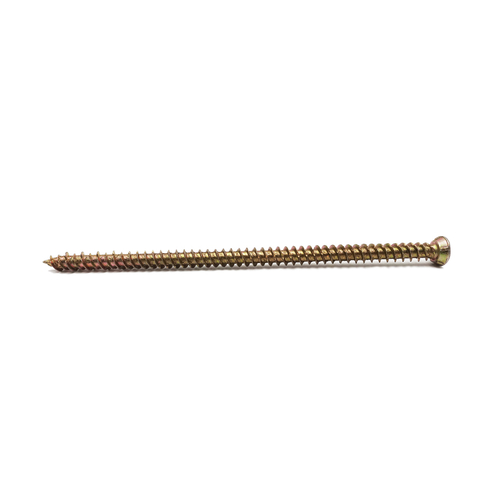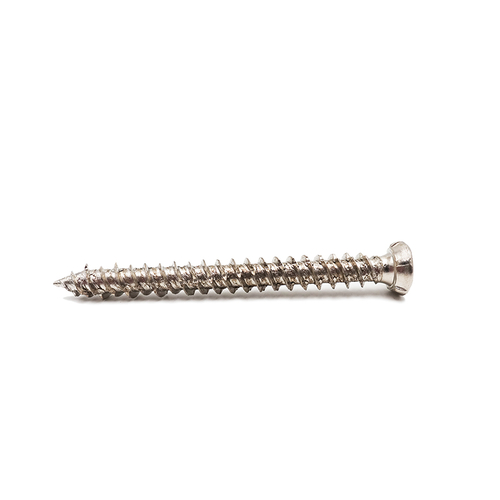
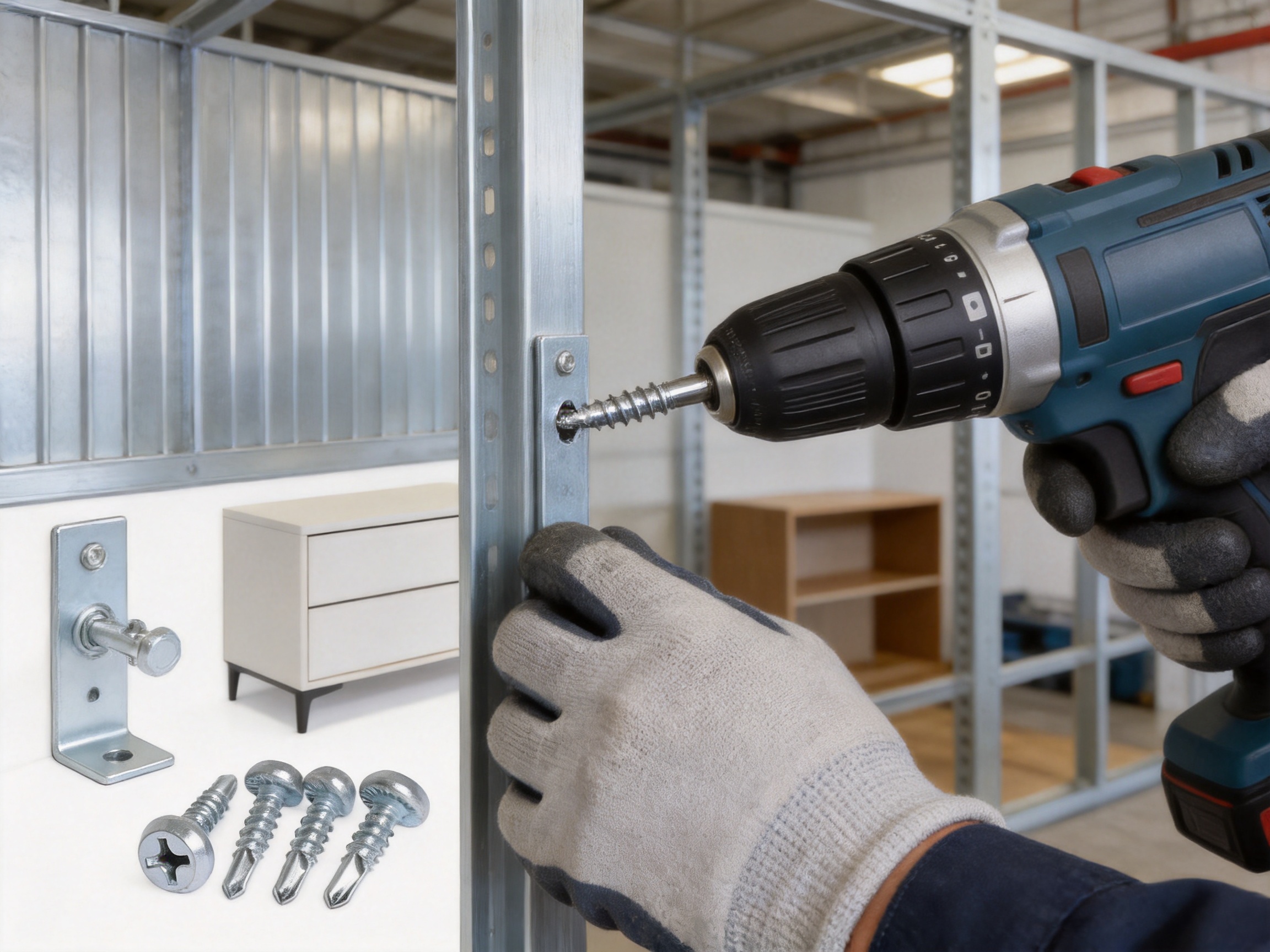
Phillips drive pan framing head self-drilling screws are engineered fastening components designed to create their own pilot hole while securing metal, wood, composite, and selected construction materials. By combining a sharp drilling point, a framing-style pan head, a Phillips recess, and a corrosion-resistant zinc-plated surface, this screw provides an efficient solution for installation tasks where speed, clean positioning, and reliable holding power are important.
Unlike ordinary machine screws or conventional tapping screws, a self-drilling screw can penetrate the workpiece without requiring a separately drilled pilot hole in many applications. The drilling point removes the need for an additional operation, while the thread forms a secure connection as the screw advances. This combination can reduce installation time, simplify tool requirements, and improve productivity on assembly lines and construction sites.
The Phillips drive pan framing head configuration is particularly useful when the fastener must sit securely against a mounting surface while maintaining a compact, professional appearance. The framing head offers a balanced bearing surface, and the Phillips recess supports common powered screwdrivers and installation tools. With zinc plating available for improved resistance to oxidation, the screw is suitable for a broad range of indoor and protected outdoor fastening applications.
Product Overview
The product is a Phillips drive pan framing head self-drilling screw with a zinc-plated finish. It is manufactured from C1022A carbon steel, a material commonly selected for cold heading, thread rolling, and fastener production because of its balance of strength, formability, and production consistency.
The screw is categorized as a drilling screw and belongs to a wider production range that includes multiple diameters, head styles, recess types, surface treatments, and thread configurations. This range allows distributors, contractors, furniture manufacturers, metal fabricators, and industrial buyers to select a suitable specification for different substrates and installation conditions.
The principal product characteristics include a Phillips drive, pan framing head, self-drilling point, zinc-plated surface, and C1022A material. Depending on the required design, related production options may include square or Torx recesses, bugle heads, hex washer heads, flat heads, wafer heads, and other pan head configurations.
| Product Feature | Specification or Option | Practical Benefit |
|---|---|---|
| Product type | Self-drilling screw | Creates a pilot hole during installation and reduces separate drilling operations |
| Drive recess | Phillips; square and Torx options may also be produced | Compatible with widely available power tools and driver bits |
| Head style | Pan framing head | Provides a broad bearing area with a compact framing profile |
| Material | C1022A carbon steel | Offers a useful combination of strength, formability, and manufacturing efficiency |
| Surface | Zinc plated | Improves resistance to ordinary atmospheric oxidation and provides a clean metallic finish |
| Diameter range | #6-3.5, #8-4.2, #10-4.8, #12-5.5, and #14-6.3 | Supports different material thicknesses, loads, and installation requirements |
| Standards | ASTM, DIN 7504K, DIN 7504P, and DIN 7504N options | Helps buyers align products with recognized dimensional and application references |
| Thread options | BSD thread and CSD thread | Allows selection according to substrate and drilling behavior |
How the Self-Drilling Design Works
A self-drilling screw is identified by its drilling point, which generally resembles a miniature drill bit. As rotational force is applied, the point penetrates the material and removes chips. Once the point has passed through the upper material, the screw thread engages with the hole and forms a mechanical connection.
This action is different from the operation of a standard self-tapping screw. A self-tapping screw may form its own thread, but it often requires a pre-drilled hole unless the point and design are specifically intended for drilling. A self-drilling screw integrates the drilling and thread-forming functions in one component, making it especially useful for repetitive fastening work.
The performance of the drilling point depends on several factors. Point geometry, hardness, cutting edge sharpness, thread design, material thickness, driver speed, and axial pressure all influence whether the screw penetrates efficiently. A correctly designed point should begin cutting without excessive wandering, maintain a stable path, and transition smoothly into the threaded portion.
The screw must also be matched to the material. Thin sheet metal, light-gauge steel, aluminum, wood, and composite panels may require different point and thread characteristics. For this reason, the availability of BSD and CSD thread configurations is valuable. Buyers can select a thread pattern that better fits the material and the required holding performance.
When installed correctly, the screw performs three primary tasks. First, the point drills through the upper layer. Second, the thread engages the material and develops holding power. Third, the head clamps the connected components together. The efficiency of the entire system depends on the interaction of all three areas rather than on the thread or head alone.
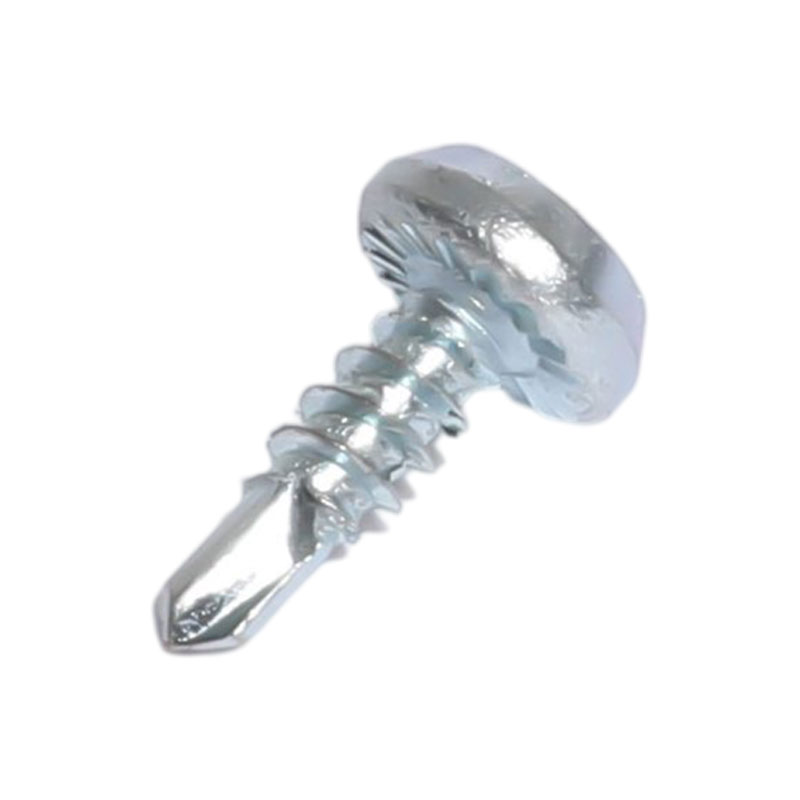
Phillips drive pan framing head self drilling screw zinc plated
Advantages of the Phillips Drive Pan Framing Head
Efficient Installation
The most immediate advantage is the reduction in installation steps. With a conventional screw, an operator may need to mark the location, select a drill bit, drill a pilot hole, clear debris, change tools, and then install the screw. A self-drilling screw can combine much of this work into a single operation.
This advantage is important in construction, interior fitting, metal assembly, furniture production, and maintenance work. Reducing tool changes can improve operator productivity and shorten assembly cycles. On a production line, even a small time saving per fastener can produce a significant improvement across thousands of units.
Compact Pan Framing Head
The pan framing head provides a practical compromise between bearing surface and compact appearance. It offers more surface contact than a very small head, helping distribute clamping pressure over the connected material. At the same time, its framing profile is suitable for applications where a large, highly visible head would be undesirable.
The head geometry can help the screw remain seated against the workpiece when the fastener is driven perpendicular to the surface. Proper seating supports consistent clamping and reduces the chance of an uneven connection. The final appearance is also cleaner than that of a bulky hex head in applications where a low-profile fastening point is preferred.
Widely Available Phillips Drive
The Phillips recess remains one of the most widely recognized drive systems in the fastening industry. Standard Phillips bits are available in many tool systems, and operators generally require little training to identify the correct driver. This can simplify purchasing, maintenance, and replacement planning.
For applications requiring additional drive engagement or improved resistance to cam-out, related versions can be produced with square or Torx recesses. However, the Phillips option remains a practical choice for many general fastening applications because of its broad compatibility and familiar installation method.
Zinc-Plated Surface
Zinc plating provides a protective metallic coating over the carbon steel substrate. The zinc layer acts as a barrier between the steel and the surrounding environment. It can also provide sacrificial protection in certain conditions, helping delay the onset of red rust when the coating remains intact.
The zinc-plated appearance is clean and commercially familiar. It is suitable for indoor construction, furniture, equipment assembly, general hardware, and protected applications where severe chemical or marine exposure is not expected. For more demanding environments, alternative finishes such as yellow zinc, black phosphate, Ruspert, or Magni may be considered according to the required corrosion performance.
Material Balance
C1022A carbon steel is widely used in screw manufacturing because it supports efficient forming and provides a dependable base for thread production. The material is suitable for processes such as cold heading and thread rolling, which can produce consistent dimensions at high volume.
Material selection affects more than tensile strength. It also influences head formation, thread accuracy, point production, surface finishing, and overall manufacturing yield. A steel grade that can be formed consistently helps reduce dimensional variation and supports reliable production across different batches.
Diameter and Configuration Options
The listed diameter range includes #6-3.5, #8-4.2, #10-4.8, #12-5.5, and #14-6.3. These designations allow the product to serve a broad range of applications, from lighter-duty sheet fastening to connections requiring a larger shank and greater thread engagement.
A smaller diameter may be appropriate when the connected material is thin and the required clamping force is moderate. It can also reduce the risk of splitting or excessive deformation in lightweight materials. A larger diameter may provide greater resistance to pull-out and shear when the substrate, material thickness, and load justify the additional size.
Diameter selection should not be based only on the expected load. The installer should consider material thickness, edge distance, clearance requirements, head visibility, driver access, drilling capacity, and the possibility of interference with components behind the workpiece.
Length is selected according to the combined thickness of the materials being joined and the required thread engagement. The provided production range does not specify a fixed length list, which allows length to be determined according to an individual order or application requirement. Buyers should provide the total grip thickness, substrate type, and any required penetration depth when requesting a quotation.
BSD and CSD Threads
BSD and CSD thread configurations support different application needs. Thread design affects cutting action, chip removal, installation torque, and holding performance. A thread that works well in thin metal may not be ideal for wood or thicker steel.
The choice between thread forms should be made in consultation with the manufacturer or technical supplier. Important details include the material being penetrated, whether the screw must drill through a metal layer, the thickness of that layer, the expected vibration, and whether the connection may need to be removed and reinstalled.
Manufacturing Process
Advanced fastener manufacturing is a sequence of controlled operations rather than a single forming step. Each stage contributes to the final performance of the screw. Lizhan Hardware Co., Ltd. manufactures drilling screws within a product range that includes multiple recesses, heads, diameters, standards, threads, and finishes.
Raw Material Preparation
Production begins with suitable carbon steel wire or rod. The incoming material must be checked for dimensions, surface condition, chemical composition, and suitability for forming. C1022A is selected for its compatibility with screw production and its ability to support consistent head and thread formation.
Material preparation may include descaling, cleaning, straightening, and controlled drawing. These operations help create a stable input condition for subsequent forming. Consistent wire diameter is particularly important because it affects the volume of material available for head formation and the final shank dimension.
Cold Heading
Cold heading forms the basic screw blank at room temperature using high-pressure dies. The process can shape the head and shank while maintaining efficient material utilization. For a pan framing head, the die must produce the intended head diameter, height, underside profile, and transition into the shank.
Accurate heading is essential because the head is responsible for clamping the assembled materials. A head that is too thin, too high, or unevenly formed may affect driver engagement, seating, appearance, or load distribution. Proper tooling design and regular die maintenance help maintain consistency throughout a production run.
Recess Forming
The Phillips drive recess is formed in the head using a controlled punching operation. Recess depth, geometry, symmetry, and alignment must be maintained so that the driver bit can engage properly.
A correctly formed recess helps transmit installation torque from the driver to the fastener. If the recess is shallow, distorted, or off-center, the bit may slip or cam out. Excessive force from the installer can then damage the head or the surrounding workpiece. Consistent recess production is therefore a major part of product quality.
Point Formation
The self-drilling point is formed to create a cutting tip capable of penetrating the specified material. The point geometry must balance sharpness with structural strength. A point that is too blunt may require excessive pressure and torque, while a point that is too thin or fragile may deform during installation.
Point length and shape are selected according to the intended standard and application. DIN 7504 references include different screw configurations, such as drilling screws with different head and point arrangements. The applicable design should be confirmed against the material and the required installation conditions.
Thread Rolling
Thread rolling forms the screw thread by pressing the blank between hardened dies. Unlike cutting a thread away from the material, thread rolling displaces material to create the thread profile. This process can produce strong, consistent threads and a smooth surface finish when controlled correctly.
Thread rolling requires accurate synchronization between the blank and the dies. The major diameter, pitch, flank shape, crest condition, and thread length must remain within the required tolerances. Proper rolling also helps ensure that the screw enters the substrate smoothly and develops repeatable engagement.
Heat Treatment
Depending on the specified performance requirements, heat treatment may be used to improve hardness and strength. The process must be controlled carefully because excessive hardness can reduce toughness, while insufficient hardness can affect drilling and thread performance.
For self-drilling screws, the relationship between point hardness, thread strength, and core toughness is especially important. The point must remain effective during drilling, but the screw should not become unnecessarily brittle. Controlled heating, quenching, tempering, and process monitoring help create a balanced finished product.
Surface Treatment
After forming and any required heat treatment, the screws are cleaned and prepared for surface finishing. Zinc plating is applied to improve corrosion resistance and provide the specified appearance. Cleaning and pretreatment are important because oil, scale, and residue can interfere with coating adhesion.
Coating thickness, coverage, color, and adhesion should be monitored according to the order requirements. Threads must remain functional after plating, and excessive buildup should be avoided. A properly controlled finish protects the steel while preserving the dimensional accuracy needed for installation.
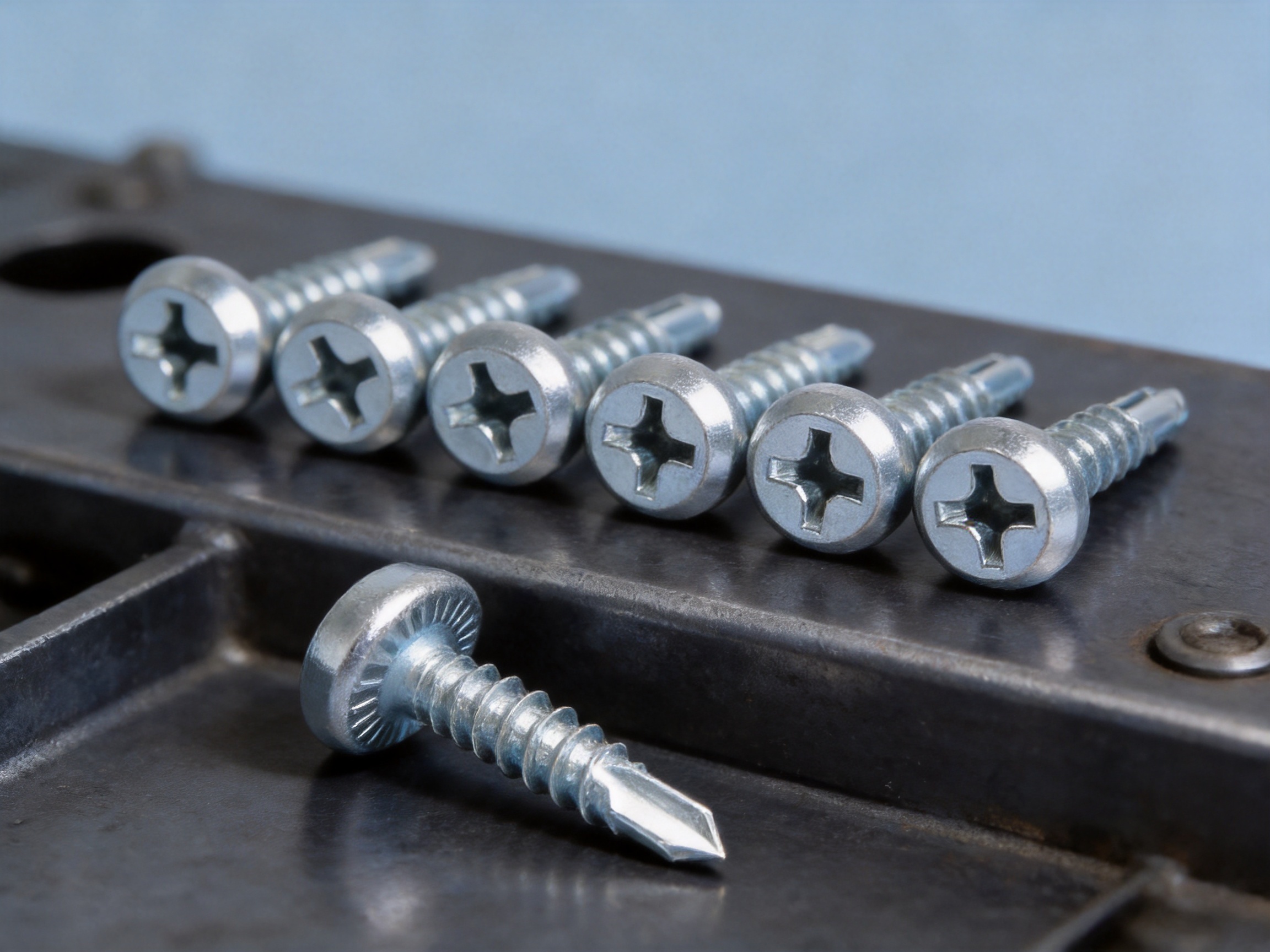
Quality Control and Production Strengths
A reliable supplier should evaluate the screw from multiple perspectives rather than relying only on visual inspection. Dimensional accuracy, drilling performance, drive engagement, thread quality, surface condition, and packaging integrity all contribute to customer satisfaction.
Dimensional Inspection
Dimensional inspection may include checking overall length, shank diameter, head diameter, head height, recess dimensions, point geometry, and thread characteristics. Gauges and calibrated measuring equipment support repeatable inspection results.
Dimensional control is important for automated assembly as well as manual installation. A small variation in head or recess geometry can affect driver engagement, while a variation in length can change penetration depth and the final connection strength.
Thread Inspection
Threads must be checked for correct pitch, profile, crest condition, and engagement. Thread gauges can help verify whether the screw conforms to the intended dimensional requirements. Visual inspection can identify damaged, incomplete, or contaminated threads.
Consistent threads improve installation torque and reduce the risk of premature stripping. They also help provide predictable holding power when the screw is installed into a suitable substrate.
Drilling Performance
Testing the drilling point in representative materials can reveal whether the screw starts cleanly, penetrates at the expected speed, and maintains its point without excessive deformation. Test conditions should reflect the intended application, including tool type, rotational speed, material thickness, and applied pressure.
Drilling performance should not be judged in isolation. A screw may drill quickly but fail to provide adequate thread engagement, or it may have strong threads but require excessive installation torque. A balanced design should perform effectively across drilling, engagement, and clamping stages.
Drive Engagement
The Phillips recess should be checked using the intended driver size. The bit should seat adequately without excessive looseness, and the recess should withstand ordinary installation torque. Proper drive engagement helps reduce cam-out, head damage, and inconsistent seating.
Coating Inspection
Zinc-plated screws should be inspected for uniform coverage, visible defects, stains, bare areas, and excessive buildup. Corrosion testing may be applied when required by the project or purchasing specification. The expected service environment should always be considered when selecting a surface finish.
Packaging Control
Packaging protects the screws from contamination, moisture, mixing, and mechanical damage during storage and transport. Correct labeling should identify the size, head style, drive, finish, quantity, and applicable specification. Good packaging also supports efficient warehouse management and reduces the chance of using the wrong fastener during installation.
Advantages Over Conventional Competitor Products
The competitive advantages of this screw are based on the integration of several useful features. A basic screw may offer only one or two of these characteristics, while this design combines self-drilling capability, a practical pan framing head, a familiar Phillips drive, C1022A steel, and zinc plating.
Compared with Ordinary Machine Screws
Machine screws normally require a prepared threaded hole or a nut. They are useful for machinery and precision assemblies, but they are not generally intended to drill through sheet material during installation. The self-drilling screw offers a faster solution when a separate nut or tapped hole is unnecessary.
Compared with Standard Wood Screws
Wood screws are optimized for wood grain and wood-based materials. They may not drill efficiently through metal skins or thin steel sections. A self-drilling screw with an appropriate point and thread configuration is more suitable when the connection includes metal or mixed materials.
Compared with Self-Tapping Screws
Self-tapping screws can form threads in a pre-drilled hole, but many require a separate pilot hole. The self-drilling point of this product can reduce that additional operation in suitable materials. This may improve productivity and reduce the risk of mismatching a drill bit with the screw size.
Compared with Bulky Hex Washer Head Screws
Hex washer head screws provide strong tool engagement and are useful for many metal construction tasks. However, their larger head profile may be more visible and may require a socket driver. The Phillips pan framing head offers a more compact profile and can be installed with common Phillips driver bits.
Compared with Lower-Grade Imported Fasteners
Inconsistent low-cost fasteners may have variation in point sharpness, head geometry, coating coverage, or thread accuracy. Such variation can produce installation delays, driver slippage, premature point failure, and inconsistent holding power.
A controlled manufacturing process using specified C1022A material, formed heads, rolled threads, defined standards, and surface treatment provides a stronger basis for repeatable performance. The value is not limited to the unit price. Reduced installation problems, fewer rejected parts, and more predictable assembly can lower the total cost of fastening.
Applications
Metal Framing
The pan framing head is suitable for connecting light-gauge metal framing components when the diameter, point, and thread are matched to the thickness and hardness of the steel. The screw can help secure brackets, channels, clips, and framing accessories.
Drywall and Interior Construction
Although different drywall applications may require specialized drywall screws, self-drilling framing screws can be useful for fastening metal studs, tracks, backing components, and auxiliary hardware. The selected head and surface should match the visible finish and the requirements of the installation.
Furniture and Cabinet Assembly
Furniture manufacturers may use compact self-drilling screws for metal brackets, hardware supports, frame components, and mixed-material assemblies. The Phillips drive is convenient for powered assembly tools, while the pan framing head provides a neat appearance in areas where the head remains visible.
Sheet Metal Fabrication
Fabricators can use these screws to attach thin sheet components, covers, brackets, and reinforcement pieces. The self-drilling point can improve productivity when many repeated fastening points are required.
Equipment and General Hardware
Equipment enclosures, light-duty supports, electrical cabinets, hardware fixtures, and maintenance assemblies may benefit from a compact zinc-plated self-drilling screw. The final selection should account for vibration, environmental exposure, load, and accessibility.
Packaging and Display Structures
Retail fixtures, display frames, storage structures, and packaging equipment can use self-drilling screws for quick assembly and adjustment. The zinc-plated finish provides a clean appearance for indoor applications, while the Phillips drive supports routine installation and disassembly.
Installation Recommendations
Before installation, confirm that the screw size, head style, thread type, and finish are compatible with the workpiece. The material thickness should be within the effective drilling capacity of the selected screw. If the material is unusually hard, thick, brittle, or layered, a trial installation should be performed.
Use a driver bit that matches the Phillips recess. The bit should be fully seated in the recess before applying pressure. A worn or incorrectly sized bit can cause cam-out, damage the recess, and prevent the head from seating correctly.
Apply steady axial pressure while starting the screw. Excessive pressure may damage the material or deform the point, while insufficient pressure may allow the screw to wander. Once the point has penetrated the material, maintain controlled speed until the head reaches the intended seating position.
Avoid overdriving. Excessive torque can strip the recess, deform the pan head, crush a thin substrate, or reduce the effective clamping force. In automated production, torque-controlled drivers can help produce more consistent results.
For connections exposed to vibration, confirm that the screw length and thread engagement are sufficient. Where necessary, the assembly design may include washers, locking features, sealants, or other measures. These accessories should be selected according to the engineering requirements rather than added automatically.
When using zinc-plated screws outdoors, consider the environment carefully. Zinc plating is suitable for many ordinary conditions, but severe humidity, salt spray, industrial chemicals, and continuous outdoor exposure may require a more resistant coating or stainless steel alternative.

Choosing the Correct Finish
Zinc plating is a general-purpose finish that provides a bright metallic appearance and improved resistance to ordinary corrosion. It is commonly selected for indoor construction, furniture, hardware, and protected assemblies.
Yellow zinc plating may be selected when a colored chromate-style appearance or additional corrosion performance is required, subject to the applicable environmental and regulatory requirements. Black phosphate is often chosen for appearance, paint compatibility, or specific interior applications.
Ruspert and Magni coatings may be considered when higher corrosion resistance, controlled friction, or specialized coating performance is required. The correct finish depends on exposure conditions, contact with dissimilar metals, temperature, chemical environment, appearance, and project specifications.
Buyers should avoid selecting a coating solely by color. Two finishes with similar appearances may provide different corrosion performance and friction characteristics. A technical review of the service environment is recommended for demanding applications.
Standards and Specification Considerations
The production range includes ASTM and DIN 7504 references, including DIN 7504K, DIN 7504P, and DIN 7504N. These references help define commonly recognized screw configurations and support communication between manufacturers, distributors, engineers, and end users.
Standards should be used as a starting point for specification, not as a substitute for application testing. The buyer should confirm the required diameter, length, head type, recess, drilling point, thread configuration, material, hardness, coating, and packaging requirements.
For larger projects, purchasing documentation should include drawings or technical data sheets where appropriate. Sample approval can help confirm fit, appearance, installation torque, drilling performance, and compatibility with the production equipment.
Standards may also differ in terminology and dimensional interpretation. For this reason, a clear product description is important. The order should identify the screw as a Phillips drive pan framing head self-drilling screw and should state the exact dimensions and finish required.
Supply and Customization Strengths
Lizhan Hardware Co., Ltd. offers a product range covering drilling screws, drywall screws, roofing screws, furniture screws, and related fastener categories. The range of recesses, head styles, diameters, threads, standards, and coatings allows the supplier to support different customer requirements rather than offering only one fixed configuration.
The company operates a factory in Haiyan, Jiaxing City, Zhejiang, China, together with a warehouse location in Chonburi, Thailand. This structure can support manufacturing coordination, inventory planning, and regional distribution for customers who require supply across different markets.
A supplier with both manufacturing and warehousing capability may provide advantages in order planning. Factory production can handle specification control and larger-volume manufacturing, while warehouse support may assist with stock availability, consolidated shipments, and regional delivery requirements.
Customization can involve more than changing the screw length. Depending on the order, buyers may discuss drive recess, head style, point type, thread configuration, coating, packaging, labeling, and applicable standard. Clear communication at the quotation stage helps prevent errors and ensures that production tooling and inspection criteria are aligned with the finished requirement.
Procurement Checklist
When purchasing this type of screw, the buyer should provide the required diameter and length. The diameter may be selected from the available #6, #8, #10, #12, or #14 range, while the length should correspond to the combined material thickness and the desired penetration.
The buyer should confirm the head style as pan framing head and the drive as Phillips. If a different recess is required for torque or automation reasons, square or Torx alternatives may be discussed.
The material should be stated as C1022A or another approved grade. If heat treatment, hardness, or mechanical performance requirements apply, they should be included in the purchasing specification.
The surface finish should be identified clearly as zinc plated, yellow zinc plated, black phosphate, Ruspert, Magni, or another required treatment. Corrosion requirements should be stated together with the expected service environment.
The customer should identify the substrate, including thin steel, aluminum, wood, composite board, or another material. This information helps the manufacturer recommend the appropriate point and thread configuration.
Packaging requirements should include bulk or small-box packing, quantity per carton, labeling language, barcode requirements, and palletization. For automated production, consistent quantity and packaging can be as important as the screw itself.
| Purchasing Item | Information to Confirm | Reason |
|---|---|---|
| Diameter | #6-3.5, #8-4.2, #10-4.8, #12-5.5, or #14-6.3 | Controls drilling capacity, holding area, and connection size |
| Length | Required finished length | Ensures adequate penetration without unwanted interference |
| Drive | Phillips or alternative recess | Matches available installation tools |
| Head | Pan framing head or another profile | Determines seating, appearance, and bearing area |
| Thread | BSD or CSD | Matches the substrate and installation behavior |
| Finish | Zinc plated or selected alternative | Determines corrosion resistance and appearance |
| Standard | ASTM or applicable DIN 7504 reference | Provides a recognized technical basis |
| Package | Bulk, box, carton, label, and quantity | Supports transport, storage, and production control |
Storage and Handling
Zinc-plated screws should be stored in a dry, clean, and reasonably well-ventilated area. Exposure to condensation, standing water, high humidity, or corrosive chemicals can damage the coating and reduce shelf life.
Packages should remain sealed until the screws are needed. If a carton is opened, it should be resealed or protected from moisture. Fasteners should not be stored directly on a damp floor, against a wet wall, or beside chemicals that may attack the surface finish.
Care should be taken when moving cartons or bins. Excessive impact can damage the heads, recesses, or plated surfaces. Mixing different sizes or finishes in a single container should be avoided because it can create picking errors and complicate traceability.
Before production use, operators should verify the package label and compare the screws with the work instruction. A quick visual check can identify an incorrect diameter, head style, finish, or thread before the parts enter the assembly process.
Environmental and Service Limitations
No plated carbon steel screw is suitable for every environment. Zinc plating improves protection but does not eliminate corrosion. Continuous exposure to salt water, high humidity, acids, alkaline chemicals, or industrial pollutants may require a more advanced coating or a corrosion-resistant alloy.
Contact between zinc-plated steel and dissimilar metals should also be evaluated. In wet conditions, galvanic effects can accelerate corrosion depending on the metals involved. The assembly design may require isolation, sealant, coating compatibility, or an alternative fastener material.
Temperature can affect both the coating and the mechanical behavior of the connection. Applications involving elevated temperatures, thermal cycling, or fire-rated construction should be reviewed against the project requirements.
For critical structural or safety-related applications, the screw should be selected using engineering calculations, recognized standards, and application-specific testing. General-purpose product information should not replace professional design verification.
Why Manufacturing Consistency Matters
Fasteners are small components, but a single inconsistent screw can interrupt an entire assembly process. A damaged Phillips recess can stop an automated driver. A blunt point can delay installation. An incorrectly plated thread can increase torque. A variation in length can create interference or insufficient engagement.
Manufacturing consistency reduces these risks. Stable raw materials, controlled heading, accurate recess forming, dependable thread rolling, suitable heat treatment, and uniform plating all contribute to a more predictable product.
Consistency also benefits distributors. When products from different orders remain dimensionally and visually similar, inventory management becomes easier. Customers can reorder with greater confidence, and the supplier can maintain a clearer production history.
The strongest competitive advantage is therefore not simply a low purchase price. It is the combination of product design, process control, inspection, packaging, and communication that delivers a screw capable of performing repeatedly in the customer’s application.
Frequently Asked Questions
What is a Phillips drive pan framing head self-drilling screw?
It is a screw with a Phillips recess, a pan-style framing head, and a drill-shaped point. The point can create a pilot hole in suitable materials as the screw is driven, while the thread forms the connection and the head clamps the joined components.
What material is used for this product?
The listed material is C1022A carbon steel. This grade is commonly used for fastener manufacturing because it supports forming, thread production, and balanced mechanical performance.
What does zinc plating do?
Zinc plating provides a protective surface layer that helps delay oxidation of the underlying steel. It also gives the screw a clean metallic appearance. The finish is suitable for many indoor and protected applications, but severe environments may require a different coating or material.
Which sizes are available?
The listed diameter range includes #6-3.5, #8-4.2, #10-4.8, #12-5.5, and #14-6.3. Required length should be confirmed according to the thickness of the materials being joined and the desired penetration.
Can the screw be made with another drive recess?
The production range includes Phillips, square, and Torx recess options. The required recess should be specified before quotation or production so that the correct tooling and inspection method can be applied.
What thread options are available?
The listed options include BSD thread and CSD thread. The most suitable thread depends on the substrate, material thickness, drilling conditions, and required holding performance.
Which standards may apply?
The production range references ASTM, DIN 7504K, DIN 7504P, and DIN 7504N. The exact standard should be confirmed according to the required head, point, dimensions, and application.
Can these screws be used outdoors?
They may be used in protected outdoor locations when the environmental exposure is moderate and the zinc-plated finish is appropriate. For marine, coastal, chemical, or continuously wet conditions, a more corrosion-resistant finish or material should be evaluated.
How should the correct length be selected?
The length should be based on the combined thickness of the connected materials, the required thread engagement, and the need to avoid interference behind the assembly. A sample installation is recommended when the application is new or critical.
What driver should be used?
A Phillips driver bit that matches the screw recess should be used. The bit must be in good condition and fully seated. For high-volume assembly, a controlled driver can help maintain consistent torque and seating.
What causes Phillips recess damage?
Common causes include using the wrong bit size, applying the driver at an angle, using excessive torque, operating at an unsuitable speed, or continuing to drive after the head has fully seated. Correct bit selection and controlled installation reduce these problems.
Can the product be customized?
Potential customization areas include diameter, length, head style, recess, thread, point, coating, standard, packaging, and labeling. Final availability depends on tooling, order volume, technical requirements, and approval of the specification.
What information should be included in an inquiry?
An inquiry should include the screw name, diameter, length, head type, drive recess, thread type, material, surface finish, standard, application material, estimated quantity, packaging requirement, and delivery destination.
Why is C1022A suitable for screw production?
C1022A offers a practical balance between formability and strength. It can support cold heading and thread rolling while providing a suitable steel base for a self-drilling fastener when the product is correctly processed and specified.
Are these screws suitable for every metal thickness?
No. Self-drilling capacity depends on the point design, screw size, material hardness, and thickness. The screw should be tested or selected according to the manufacturer’s drilling recommendations for the specific metal.
Conclusion
Phillips drive pan framing head self-drilling screws provide an efficient and versatile fastening solution for applications that require quick installation, compact head geometry, accessible tooling, and dependable corrosion protection. The self-drilling point can reduce the need for separate pilot-hole operations, while the Phillips recess supports widely available installation equipment.
The pan framing head offers a balanced combination of bearing area, compact appearance, and practical seating. C1022A carbon steel supports efficient manufacturing through controlled forming and thread production, and zinc plating improves the screw’s suitability for ordinary indoor and protected environments.
The broader production range, including multiple diameters, head styles, recesses, thread forms, standards, and surface finishes, enables the product to be adapted to different customer requirements. Through controlled raw material preparation, cold heading, recess forming, point production, thread rolling, heat treatment, plating, inspection, and packaging, Lizhan Hardware Co., Ltd. can support repeatable production for distributors and industrial buyers.
For the best results, buyers should specify the substrate, material thickness, diameter, length, thread, finish, standard, packaging, and service environment. When the screw is properly matched to the application and installed with the correct driver and torque, it can offer an effective balance of productivity, appearance, and fastening performance.
References
ASTM International. Standards and Test Methods for Steel Fasteners and Mechanical Properties.
DIN 7504. Self-Drilling Tapping Screws for General Fastening Applications.
Industrial Fasteners Institute. Fastener Manufacturing Practices and Installation Guidance.
American Society of Mechanical Engineers. General Principles of Threaded Fastener Design.
International Organization for Standardization. General Guidance for Corrosion Protection of Metallic Fasteners.
Manufacturer product range information for Phillips drive pan framing head self-drilling screws, C1022A carbon steel fasteners, drilling screw standards, thread options, and protective surface finishes.