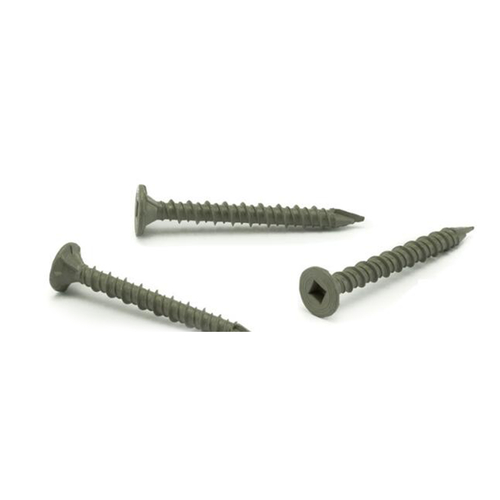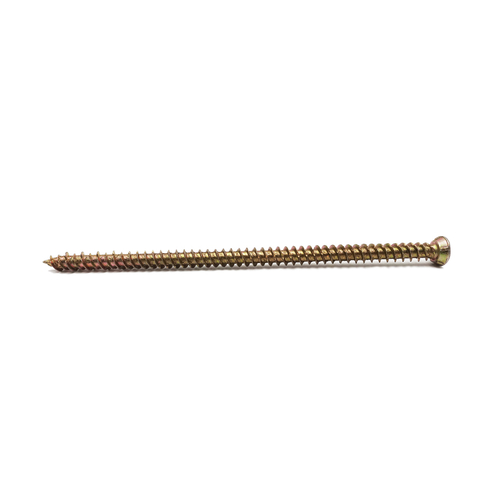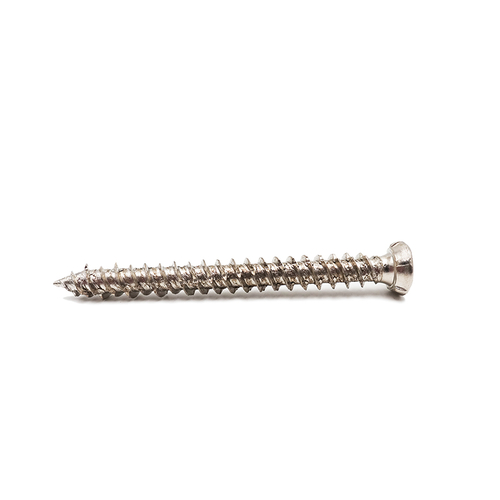
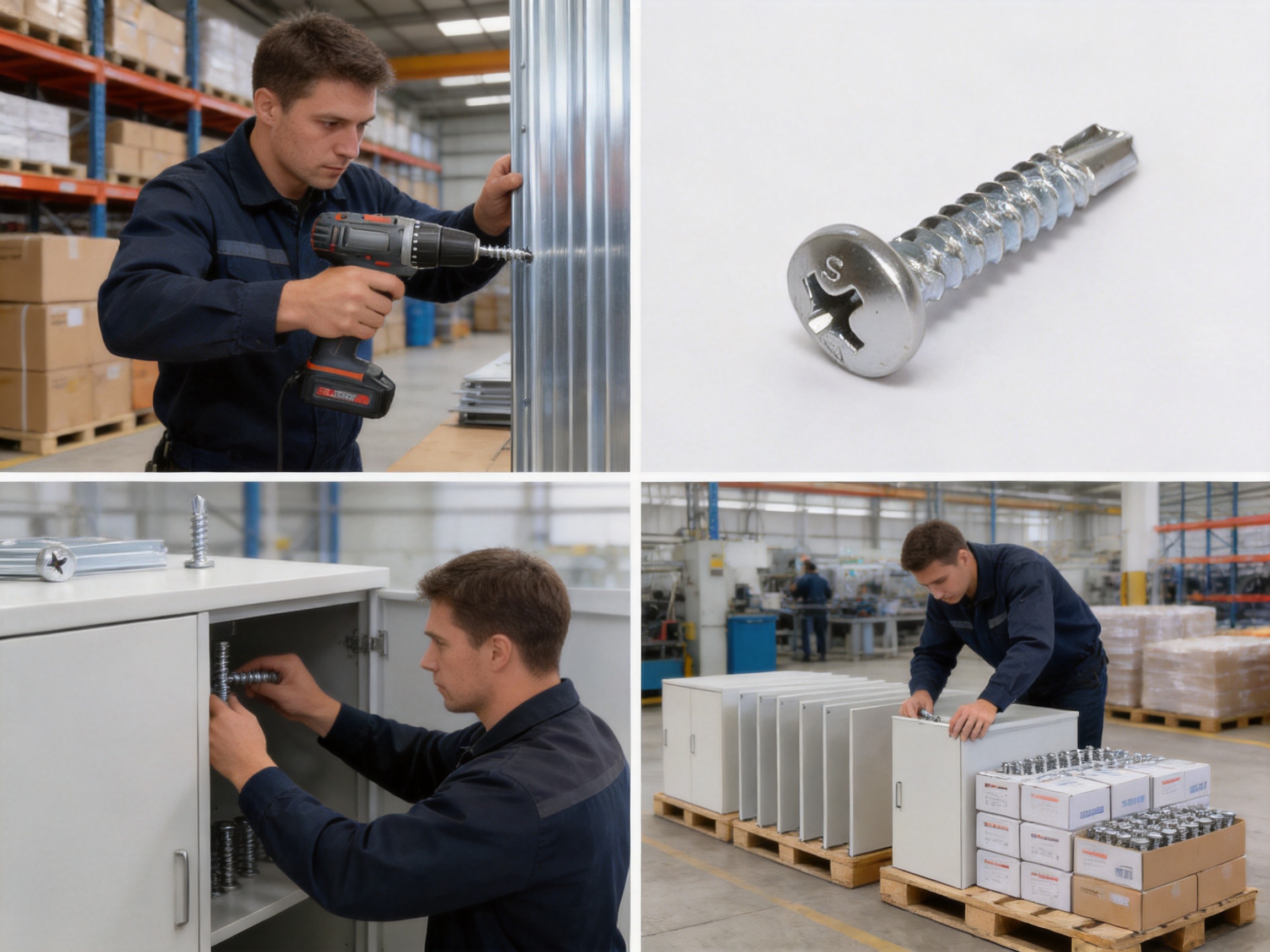
Phillips pan head self drilling screws are designed to fasten sheet metal, light structural steel, profiles, panels, boards, and other materials without requiring a separately drilled pilot hole in many common applications. Their integrated drilling point cuts through the receiving material, while the formed thread creates a secure mechanical connection. The pan head provides a broad bearing surface and a clean, familiar appearance, and the Phillips recess allows installation with widely available driving equipment.
For distributors, contractors, fabricators, and original equipment manufacturers, the value of a self drilling screw depends on more than its basic appearance. Product consistency, drilling performance, thread formation, head strength, coating durability, dimensional accuracy, packaging, and supply reliability all influence the total fastening result. A screw that drills quickly but strips at the recess, or one that has acceptable strength but inconsistent coating coverage, may increase labor costs and create premature installation problems.
The Phillips pan head self drilling screw range described in this article is manufactured from C1022A carbon steel and is available in several diameters, lengths, recess configurations, thread forms, finishes, and industry standards. This range allows buyers to select a fastening solution according to substrate thickness, corrosion environment, installation method, appearance requirements, and applicable technical specifications.
1. Product Overview
A self drilling screw combines three functions in one component. The drilling point forms or penetrates the initial hole, the thread engages the substrate, and the head clamps the attached material. This integrated design can reduce the number of installation steps compared with a conventional bolt-and-nut assembly or a standard machine screw used with a pre-drilled and tapped hole.
The pan head is a low-profile head style with a rounded top and a relatively wide underside. It is suitable when the fastener must remain visible but should present a neat and consistent surface. The head distributes clamping pressure over the attached component and can be used with many sheet metal and panel assemblies where a countersunk finish is not required.
The Phillips recess is one of the most commonly recognized drive systems in the fastening industry. It is compatible with manual screwdrivers, electric screwdrivers, pneumatic tools, and automated assembly equipment using the appropriate bit. The product range can also be supplied with square or Torx recesses when a project requires a different torque-transfer profile or drive preference.
The listed diameter range includes #6-3.5, #8-4.2, #10-4.8, #12-5.5, and #14-6.3. Depending on the selected diameter and specification, available lengths extend from 9.5 millimeters to 100 millimeters, or approximately 3/8 inch to 4 inches. This combination supports applications ranging from light sheet fastening to thicker panel and profile assemblies.
The screws are produced from C1022A carbon steel. This material is widely used for cold heading and screw manufacturing because it provides a practical balance of formability, strength, thread performance, and cost. The final mechanical properties depend on the manufacturing route, heat treatment, geometry, and applicable standard. For this reason, purchasers should select the relevant specification and request documentation when a project requires defined mechanical or coating performance.
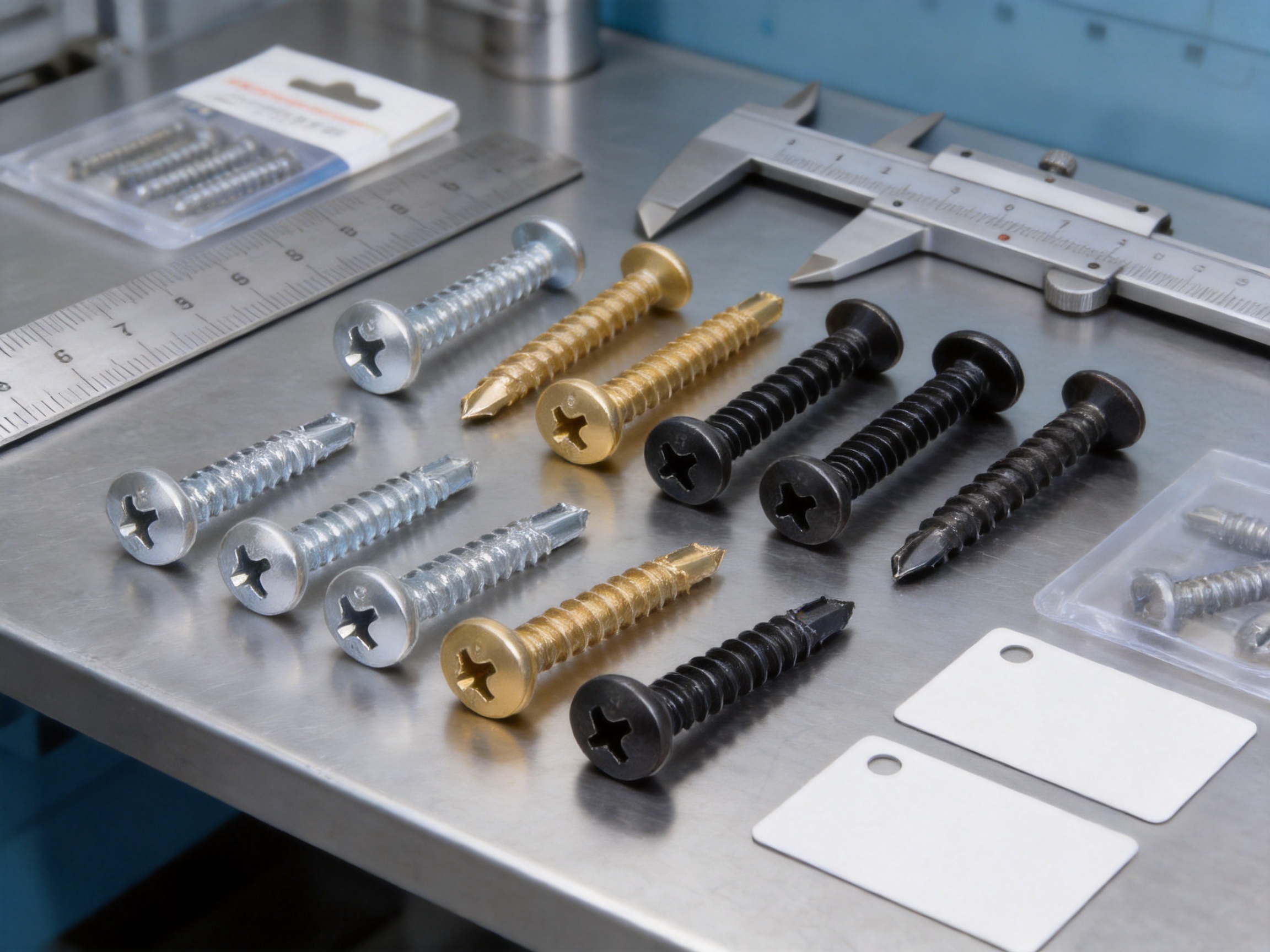
Available surface treatments include black phosphate, zinc plating, yellow zinc plating, Ruspert, and Magni finishes. These options allow the fastener to be matched to different requirements, including appearance, general indoor corrosion resistance, colored identification, outdoor exposure, and specialized coating performance.
The range includes BSD thread and CSD thread options. Thread selection is important because the correct thread form helps the screw advance efficiently, create a suitable engagement profile, and maintain clamping force in the intended substrate. The appropriate choice depends on the thickness and hardness of the materials being joined, the required drilling capacity, and the relevant technical standard.
2. Main Advantages of the Integrated Drilling Design
Reduced Installation Steps
The primary advantage of a self drilling screw is the integration of the drill point into the fastener. In many sheet metal applications, the installer does not need to mark the location, change to a separate drill bit, create a pilot hole, clear the hole, and then install a conventional screw. The self drilling screw can complete the initial penetration and fastening operation in one continuous sequence.
Fewer installation steps can improve productivity. This benefit becomes more significant when many fasteners are required across a roof panel, duct section, appliance enclosure, steel profile, or furniture component. Reduced tool changes can also simplify workstation organization and decrease the risk of using an incorrectly sized pilot hole.
Consistent Fastener Positioning
The drill point helps the fastener establish its own entry position. When the screw is installed with suitable axial pressure and rotational speed, the point can maintain contact with the intended location and begin cutting without the fastener wandering excessively. This feature is especially useful for thin metal assemblies, where a conventional drill bit may slide across a smooth surface.
Proper positioning still depends on the installer, the tool, the substrate, and the screw geometry. The screw should be held perpendicular to the work surface, and the selected drilling capacity should be suitable for the combined material thickness. A self drilling point is not a substitute for correct installation practice.
Efficient Thread Formation
After the drilling point passes through the outer material, the thread engages the receiving layer. Depending on the screw design and substrate, the thread may cut, form, or combine both actions to create a firm mechanical connection. Thread geometry influences installation torque, pull-out resistance, stripping behavior, and the ability of the screw to maintain clamping force.
BSD and CSD thread configurations provide options for different fastening conditions. Buyers should identify whether the application involves thin sheet, heavier gauge steel, layered panels, soft boards, or another material. Using the correct thread style can reduce installation resistance and improve the consistency of finished assemblies.
Broad Application Flexibility
The available diameter and length range provides flexibility for distributors and users who serve multiple industries. Smaller diameters are suitable for lighter components and thin-gauge materials, while larger diameters can provide increased thread engagement and clamping capability in heavier assemblies.
Length selection should account for the thickness of the attached materials, the thickness of the receiving material, the required thread engagement, and any clearance behind the assembly. An excessively long screw may interfere with internal components or create a visible projection, while an overly short screw may not develop adequate engagement.
3. Pan Head Performance and Practical Benefits
Pan head geometry is widely used because it offers a practical balance between appearance, bearing area, clearance, and installation convenience. The head sits above the surface rather than requiring a countersunk recess. This reduces preparation requirements and helps maintain the structural integrity of thin sheet materials that might not have sufficient thickness for countersinking.
The underside of the head presses the attached component against the substrate. A suitable bearing surface helps spread the load and reduces the possibility of the head pulling through a thin panel during normal assembly. The exact performance depends on head diameter, material thickness, tightening torque, washer use where applicable, and the mechanical properties of the joined materials.
Pan head screws are also visually consistent in exposed applications. Their rounded top can produce a cleaner appearance than a hex washer head when the finished product is intended for furniture, equipment housings, cabinets, interior fixtures, or light construction components. Where a project requires a particular visual result, zinc, yellow zinc, black phosphate, or another coating can be selected to complement the surrounding materials.
Compared with a countersunk screw, the pan head generally requires less preparation and is less dependent on exact countersink depth. Compared with some external hex head designs, it can offer a lower visual profile and a more compact appearance. Compared with a conventional machine screw, it can reduce the need for a pre-tapped hole when fastening suitable sheet or profile materials.
4. Phillips Recess and Drive Compatibility
The Phillips recess remains popular because it is familiar to installers and supported by a broad range of tools and bits. It is especially convenient for maintenance teams and general assembly operations that already stock Phillips drivers. The recess allows the bit to engage the screw head while the integrated point begins drilling.
Correct bit selection is essential. The bit size should match the recess, and a worn or damaged bit should be replaced. Excessive pressure at an incorrect angle can cause cam-out, recess damage, or a poorly seated screw. For automated or high-volume production, tool alignment, speed, feed pressure, and clutch settings should be controlled to maintain consistent installation quality.
Although the product title emphasizes the Phillips configuration, the available range also includes square and Torx recesses. Square and Torx drives may be considered when an application requires improved bit engagement, higher torque transfer, or reduced risk of driver slippage. The best recess depends on the customer’s tool base, assembly process, required torque, and market preference.
Offering multiple recess options is an advantage for a supplier serving varied markets. It allows the same general pan head and drilling screw concept to be adapted to different installation environments without forcing every customer to adopt a single drive system.
5. Material Selection: C1022A Carbon Steel
C1022A is a commonly selected carbon steel for self drilling screws and other cold-headed fasteners. It is suitable for forming operations and can be processed into heads, recesses, points, and threads with controlled tooling. The material provides a practical foundation for a product that must withstand drilling, thread engagement, tightening, and service loads.
Material selection affects the balance between hardness and toughness. The drilling point must be sufficiently hard and sharp to penetrate the intended substrate, while the head and threaded body must resist cracking, deformation, and premature fracture during installation. Manufacturing controls are therefore important because a suitable steel grade alone does not guarantee a suitable finished fastener.
For commercial applications, customers may require material certificates, dimensional records, mechanical test results, coating information, or inspection reports. These documents help connect the delivered batch with the stated material and production requirements. A clear specification also reduces uncertainty when the screws are used in regulated or quality-sensitive assemblies.
C1022A is not automatically suitable for every environment. Highly corrosive conditions, elevated temperatures, chemically aggressive exposure, or applications requiring stainless steel may require a different fastener material or a specialized coating system. Product selection should be based on the complete operating environment rather than on the screw shape alone.
6. Available Dimensions and Specification Choices
The diameter range from #6-3.5 through #14-6.3 allows users to select a fastener appropriate to the required clamping area and substrate. Smaller screws can minimize visual impact and are useful for light components. Larger sizes may be better suited to heavier panels, thicker profiles, or assemblies where higher thread engagement is required.
Lengths from 9.5 to 100 millimeters provide a broad selection for different stack-up conditions. Imperial equivalents from 3/8 inch to 4 inches support markets that specify inch-based dimensions. When ordering, customers should clearly identify the nominal diameter, length, head style, recess, thread type, finish, standard, and packaging requirement.
Nominal length is normally measured according to the applicable screw measurement convention. For a pan head screw, this is generally measured from the bearing surface beneath the head to the end of the point. Confirming the measurement method avoids mistakes when comparing drawings, catalogs, and samples from different suppliers.
Dimensional tolerances are important in automated assembly and interchangeable production. A consistent head diameter, recess depth, point geometry, overall length, and thread profile helps the screw perform predictably. It also supports accurate packaging counts and reduces the possibility of mixed specifications in a shipment.
| Specification Item | Available or Listed Option | Selection Consideration |
|---|---|---|
| Head style | Pan head | Choose when a broad bearing surface and visible low-profile head are appropriate. |
| Recess | Phillips, square, Torx | Match the drive to installation tools, torque requirements, and user preference. |
| Diameter | #6-3.5, #8-4.2, #10-4.8, #12-5.5, #14-6.3 | Select according to substrate, clamping need, and required engagement. |
| Length | 9.5-100 mm; approximately 3/8-4 in | Allow for material stack-up and sufficient engagement without unwanted projection. |
| Material | C1022A | Provides a common carbon steel base for formed and heat-treated screw production. |
| Thread | BSD thread, CSD thread | Match the thread form to material thickness and drilling conditions. |
| Surface finish | Black phosphate, zinc, yellow zinc, Ruspert, Magni | Choose according to appearance, corrosion exposure, and project requirements. |
| Referenced norms | ASTM, DIN 7504K, DIN 7504P, DIN 7504N | Confirm the exact standard, dimensions, and performance requirements before purchase. |
7. Surface Finishes and Corrosion Considerations
Surface treatment protects the steel surface, influences appearance, and can affect installation behavior. No single finish is ideal for every application. The correct choice depends on humidity, exposure, contact with chemicals, expected service life, color requirements, storage conditions, and the specifications of the end customer.
Black Phosphate
Black phosphate provides a dark, non-reflective appearance and is frequently selected for indoor assemblies, drywall-related products, furniture components, and applications where a black finish is preferred. It can provide a suitable base for certain additional treatments and may help with initial surface protection, but it should not be assumed to provide the same outdoor corrosion resistance as a specialized protective coating.
Zinc Plating
Zinc plating is widely used for general-purpose corrosion protection. It creates a zinc layer over the carbon steel surface and is available in a bright or conventional metallic appearance, depending on the process. Zinc-plated screws are commonly used in indoor construction, equipment assembly, light fabrication, and other environments with moderate exposure.
Yellow Zinc Plating
Yellow zinc plating offers a recognizable colored appearance and can help distinguish a product or specification in inventory. It is often selected for general fastening applications where a yellow or gold-toned finish is desired. The actual corrosion performance depends on coating thickness, passivation, post-treatment, handling, and the exposure conditions.
Ruspert and Magni Coatings
Ruspert and Magni are specialized coating options associated with enhanced corrosion protection and controlled coating performance in suitable applications. They may be considered for outdoor or more demanding conditions, subject to the exact coating grade and customer specification. Buyers should confirm the required salt spray performance, coating thickness, friction characteristics, and installation requirements before approving a finish.
Coating choice should be made together with fastener geometry and installation conditions. A coating that performs well in storage may behave differently during high-speed installation. Thread friction, drive torque, clamp load, and coating damage should all be considered. A reliable production system controls cleaning, coating application, curing, inspection, and packaging to reduce variation between batches.
Customers should also consider galvanic compatibility. When carbon steel screws are used with aluminum, stainless steel, coated steel, or dissimilar metals, moisture and electrical contact can contribute to galvanic corrosion. The application design, coating system, isolation methods, and environmental exposure should be reviewed by the responsible engineer.
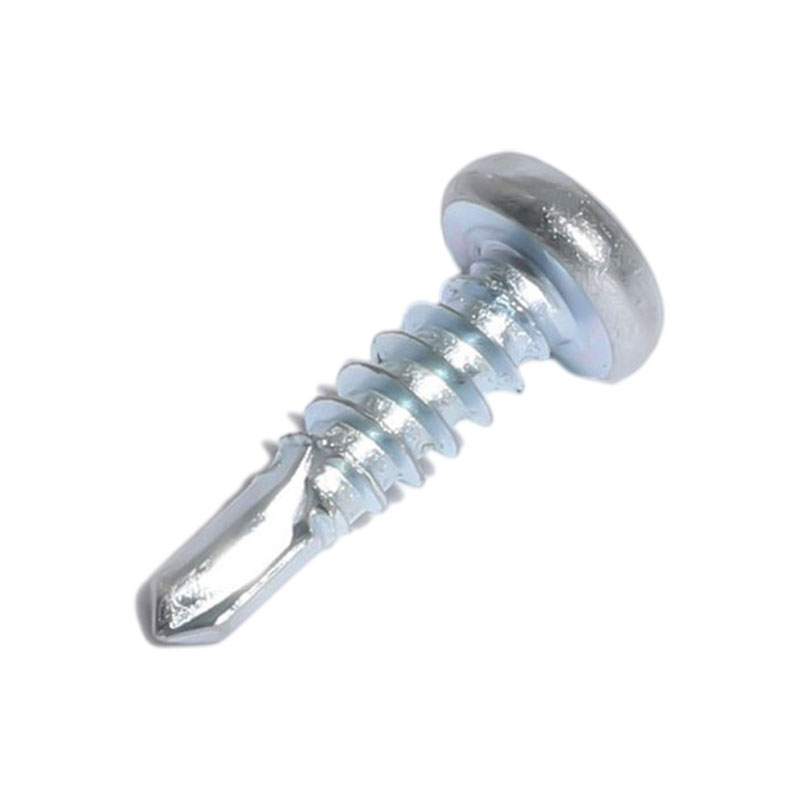
Phillips Pan Head Self Drilling Screws
8. Referenced Standards and Their Importance
The listed product range references ASTM requirements and DIN 7504K, DIN 7504P, and DIN 7504N. These references help identify recognized dimensional and functional categories for self drilling screws. However, a standard reference should always be read together with the exact product drawing and purchase specification.
DIN 7504 designations are commonly associated with self drilling screw forms. Different suffixes relate to head and point configurations, and the selected form should correspond to the drawing and application. A pan head product is often associated with the relevant pan head configuration, while other forms may be used for hexagonal washer heads or countersunk heads. Customers should verify the complete designation rather than relying on a general standard number.
ASTM references may be used by customers who purchase according to North American specifications. The applicable ASTM document can define dimensions, materials, mechanical properties, coating expectations, testing, or other requirements. Because the exact requirement varies by product type, the customer and supplier should confirm which ASTM specification applies to the order.
Standards improve communication among designers, manufacturers, distributors, and end users. They provide a common framework for dimensions and performance, but they do not remove the need for application engineering. A screw that complies with a dimensional standard may still be unsuitable if the substrate, exposure, installation torque, or required load differs from the standard’s intended use.
9. Manufacturing Process from Steel Wire to Finished Screw
A consistent self drilling screw begins with controlled raw material. Steel wire is selected according to the required grade and diameter, then inspected for surface condition, dimensional consistency, and suitability for cold heading. Proper incoming material control helps prevent problems that could later appear as head cracks, incomplete forming, thread defects, or inconsistent point hardness.
Wire Preparation
Wire preparation may include descaling, cleaning, coating, drawing, spheroidize annealing, and lubrication. These operations condition the wire for cold forming and help achieve the dimensional accuracy required for the finished screw. Lubrication is particularly important because it reduces friction between the material and forming dies while supporting stable production.
Cold Heading
Cold heading forms the screw blank and head through controlled deformation rather than machining the entire component from a solid bar. The process can efficiently produce large quantities while conserving material and maintaining repeatable geometry. The head shape, underside, shank, and initial point region are created through a sequence of die operations.
Tooling quality is central to cold heading. Dies and punches must be designed for the selected material, diameter, head style, and production speed. Wear monitoring is required because gradual tool wear can alter head diameter, recess geometry, point shape, or overall dimensions. Timely tool maintenance helps maintain consistency throughout a production run.
Recess Forming
The Phillips recess is formed in the head using a dedicated punch. The recess must have sufficient depth and accurate geometry to accept the correct driver bit. Poor alignment, excessive wear, or incorrect punch dimensions can create a recess that is shallow, asymmetric, or vulnerable to stripping.
For square or Torx options, the corresponding forming tools are used. Each drive type has different engagement surfaces and dimensional requirements. A manufacturing system that supports multiple recesses must maintain separate tooling control, identification, inspection, and changeover procedures to prevent mixed or incorrect drive configurations.
Point Forming
The drilling point is formed to create the cutting geometry required for the intended substrate. Point length, flute shape, tip angle, and transition to the thread all influence drilling speed and penetration behavior. The point must be sharp and symmetrical enough to initiate drilling while remaining structurally sound during installation.
Point geometry should be matched to the specified drilling capacity. A point intended for thin sheet is not automatically suitable for heavy structural steel. The supplier should provide or confirm the applicable drilling range when the customer’s application involves material thicknesses near the upper limit.
Thread Rolling
Threads are commonly formed by rolling rather than cutting. In thread rolling, the blank passes between hardened dies that displace material to create the thread profile. This process can produce a strong, continuous grain flow and a consistent thread form when the blank diameter, die geometry, lubrication, and machine settings are correctly controlled.
Thread rolling also improves production efficiency and reduces material waste. Inspection should verify major diameter, pitch, thread length, crest condition, flank profile, and engagement with a suitable gauge. The thread must transition correctly toward the drilling point so that the screw can advance without excessive interference or incomplete engagement.
Heat Treatment
Heat treatment can be applied to develop the required balance of hardness and strength. Self drilling screws need adequate point hardness for drilling and sufficient toughness in the body and head. An overly hard fastener may become brittle, while an under-hardened point may fail to penetrate the substrate efficiently.
Controlled furnace conditions, atmosphere management, quenching, tempering, and process records are important in heat treatment. The specific cycle depends on material, size, geometry, and required performance. Finished screws may be checked through hardness testing, dimensional inspection, torque testing, drilling trials, and other applicable methods.
Cleaning and Surface Treatment
Before coating, screws are cleaned to remove oil, scale, and residues from forming and heat treatment. Surface preparation influences coating adhesion and uniformity. The selected treatment is then applied according to the required finish, followed by rinsing, passivation, curing, or baking as appropriate.
Hydrogen-related risks should be considered for plated high-strength fasteners and other products where the coating process may introduce hydrogen. Appropriate process controls and post-treatment procedures can help reduce the risk of embrittlement. The actual controls depend on the fastener grade, hardness, coating process, and applicable customer requirements.
Sorting, Inspection, and Packaging
After finishing, screws may pass through visual inspection, dimensional checks, automated sorting, manual sampling, and functional tests. Inspection can identify mixed parts, damaged heads, incomplete threads, coating defects, bent points, and other nonconformities. The final product is then packed according to customer requirements, such as bulk cartons, small retail boxes, labeled bags, or palletized export cartons.
Packaging is part of product quality because it protects the finish and preserves product identification during transport and storage. Correct labels should identify diameter, length, head and recess type, thread, finish, standard, quantity, batch information, and destination requirements when applicable.
10. Manufacturing Strengths and Supply Capability
Lizhan Hardware Co., Ltd. supplies self drilling screws and related fastener products for international customers. Its product scope includes drilling screws, drywall screws, roofing screws, furniture screws, machine screws, and other hardware categories. This broader product capability can benefit buyers who want to consolidate several related fastener requirements through one supplier.
The stated production range demonstrates flexibility in screw dimensions, drive systems, surface finishes, and standards. A supplier that can manage multiple configurations can support distributors with different market requirements and help manufacturers maintain consistent product families across several assemblies.
Manufacturing strength should be evaluated through process control rather than product variety alone. Important indicators include stable raw material sourcing, controlled tooling, experienced cold heading, reliable thread rolling, appropriate heat treatment, coating process management, inspection records, traceability, and responsive technical communication.
The company’s factory location in Haiyan, Jiaxing, Zhejiang, supports production and export operations in one of China’s established hardware manufacturing regions. The listed Thailand warehouse in Chonburi provides an additional logistics position for customers in Thailand and nearby Southeast Asian markets. Local warehousing can help reduce replenishment time for stocked items and simplify regional order coordination.
For international buyers, a dual-location supply arrangement may provide practical advantages. Factory production can support customized specifications and larger orders, while a regional warehouse may support faster delivery of standard items. The actual availability, lead time, minimum order quantity, and stocking policy should be confirmed for each purchase order.
Technical communication is another important strength. Fastener performance depends on details that may not be visible in a simple product photograph. A capable supplier should be able to discuss substrate thickness, drilling capacity, thread selection, coating, packaging, standards, installation tools, and inspection requirements before production begins.
11. Advantages Compared with Generic Alternatives
Generic self drilling screws may appear similar, but differences in point geometry, material condition, heat treatment, thread accuracy, recess depth, and coating quality can affect installation and service performance. A controlled product range offers buyers a clearer basis for comparison and specification.
More Configuration Choices
The combination of five listed diameters, a broad length range, three recess choices, two thread options, and several finishes allows the product to be configured for more applications than a single standard item. This can reduce the need to adapt an assembly around an unsuitable screw.
Better Alignment between Product and Application
Offering BSD and CSD thread options allows the supplier to consider the substrate instead of treating every application as identical. Similarly, the choice between zinc, yellow zinc, black phosphate, Ruspert, and Magni finishes allows corrosion and appearance requirements to be addressed at the specification stage.
Reduced Risk from Uncontrolled Substitution
When product details are documented clearly, buyers can avoid receiving a screw with the correct nominal size but the wrong recess, thread, coating, or point. This is particularly important for automated production lines, where a small geometry difference can cause tool wear, installation failure, or downtime.
Potentially Lower Total Installation Cost
The integrated drilling point can reduce pilot drilling and tool-change requirements. The cost advantage should be evaluated across the entire installation process, including labor, tooling, rework, damaged components, and production speed. The lowest unit price is not always the lowest total fastening cost.
Support for Multiple Market Standards
ASTM and DIN references help the supplier communicate with customers operating under different regional specifications. This can be useful for distributors that serve both metric and imperial markets or manufacturers that export finished products to several countries.
12. Application Areas
Sheet Metal Fabrication
Self drilling screws are widely used to join light and medium-gauge sheet metal components. Examples include enclosures, covers, brackets, ductwork, electrical cabinets, equipment panels, and fabricated frames. The selected point and thread should match the material thickness and hardness.
Roofing and Exterior Panels
Fasteners used with roofing or exterior panels must be selected for the complete environmental exposure. Coating, sealing arrangements, washer compatibility, panel movement, and structural requirements should be considered. A pan head screw may be used for certain panel or trim assemblies, while other roofing designs may require a washered head or another specialized configuration.
HVAC and Duct Components
In HVAC work, screws may be used to connect sheet sections, cleats, access panels, brackets, and support components. Installation speed is valuable because large duct systems may require many repeated connections. The chosen finish should be compatible with indoor humidity and any chemical exposure associated with the installation.
Furniture and Cabinet Assembly
The pan head and available black or zinc finishes can suit furniture, shelving, storage systems, cabinets, and hardware assemblies. The screw should be selected according to the material, because thin sheet, particleboard, medium-density fiberboard, and solid wood each require different thread engagement behavior.
Appliance and Equipment Enclosures
Equipment manufacturers often require screws that provide repeatable installation in high-volume assembly. Phillips recesses are familiar to many production teams, while square and Torx alternatives can be considered where higher drive engagement is needed. Coating appearance may also be important when the fastener remains visible.
Light Steel and General Fabrication
For light steel profiles and brackets, a suitable self drilling screw can simplify assembly and reduce preparation time. The engineer should verify drilling capacity, edge distance, minimum material thickness, load requirements, and the possibility of backside interference before approving the design.
13. Installation Recommendations
Before installation, confirm that the screw specification matches the material and thickness. Check the diameter, length, thread, recess, point type, and coating. Inspect the screws for damaged heads, bent points, excessive coating buildup, or contamination that could affect driver engagement.
Use a driver bit that matches the recess exactly. A Phillips bit with the incorrect size may appear to engage but can slip under load. The bit should be seated fully in the recess, and the tool should remain aligned with the screw axis.
Start the screw at a controlled speed and apply sufficient axial pressure to keep the point engaged. Excessive speed can generate heat and damage the coating, while insufficient pressure can cause the bit to cam out. The ideal setting depends on the screw size, material thickness, tool type, and production method.
Do not continue driving after the head has reached the intended seating position. Overdriving can strip the recess, deform the pan head, crush a thin panel, or reduce the effective clamping force. For repetitive production, a clutch-controlled driver can help maintain consistent seating torque.
Maintain suitable edge distance. A screw placed too close to the edge of a sheet or profile may cause splitting, distortion, tearing, or reduced pull-out resistance. The appropriate distance depends on the substrate, thickness, screw diameter, and design load.
For coated or weather-exposed assemblies, avoid damaging the protective surface during installation. Scratches, excessive tightening, and contact with incompatible metals can create localized corrosion sites. Where a sealing washer or sealant is part of the assembly design, confirm its compatibility with the screw finish and service environment.
When the receiving material is thick or difficult to drill, verify that the screw’s drilling capacity is adequate. If the material exceeds the rated drilling range, a pre-drilled hole or a different fastener may be required. The use of excessive force to compensate for an unsuitable point can lead to breakage or tool damage.
14. Quality Control Points
Quality control should begin with raw materials and continue through shipping. Incoming wire should be checked for grade, diameter, surface condition, and documentation. Production samples should be evaluated for head dimensions, recess condition, point geometry, thread accuracy, and overall length.
Heat-treated parts require appropriate hardness and mechanical checks. Depending on the purchase specification, testing may include hardness, torsional strength, drilling performance, tensile behavior, and proof load. The test method should correspond to the applicable standard and the customer’s technical requirements.
Coating inspection may include visual examination, thickness measurement, adhesion evaluation, color comparison, and corrosion testing. Salt spray results can be useful for comparing coating performance, but they should not be interpreted as a direct prediction of service life in every field environment.
Functional drilling trials provide valuable information because they evaluate the complete screw rather than an isolated dimension. A trial can reveal whether the point penetrates efficiently, whether the thread advances smoothly, whether the recess withstands installation torque, and whether the head seats properly.
Automated optical sorting can support high-volume production by identifying dimensional and visual defects. Manual inspection remains useful for process verification, packaging checks, and investigation of unusual conditions. The most effective system combines preventive controls with final inspection rather than depending only on end-of-line sorting.
15. Packaging, Storage, and Distribution
Fasteners should be packed to prevent excessive abrasion, moisture exposure, and mixing of different specifications. Packaging materials should be strong enough for international transportation and suitable for the selected surface finish. Small packages may be useful for retail distribution, while bulk cartons are often more efficient for industrial customers.
Labels should be clear and durable. Each package should identify the product description, size, finish, quantity, batch or lot information, and any required standard. If several visually similar screws are stored together, distinctive labeling and physical separation can prevent picking errors.
Storage areas should be dry, clean, and protected from condensation. Large temperature changes can create moisture on metal surfaces, particularly when cartons are moved between cold and warm environments. Good stock rotation helps reduce long storage periods and ensures that packaging remains intact.
During distribution, cartons should be protected from crushing and water exposure. Regional warehousing can improve availability for regular customers, but warehouse stock must be managed carefully so that different finishes, lengths, and recesses are not confused.
16. Choosing the Correct Finish for the Job
For dry indoor applications, black phosphate or standard zinc plating may be appropriate depending on the desired appearance and corrosion requirement. Black phosphate can provide a dark visual match for certain products, while zinc plating offers a bright metallic appearance and general-purpose protection.
Yellow zinc may be selected when color identification or a warm metallic appearance is useful. It can also distinguish one product family from another in a warehouse or assembly environment.
For more demanding exposure, customers may investigate Ruspert or Magni coating options. The correct grade should be specified with measurable requirements, such as minimum coating performance, friction range, appearance, chemical resistance, and any restrictions related to installation torque or post-treatment.
Finish selection should also consider whether the screw will contact painted steel, galvanized steel, aluminum, or other materials. The coating must remain compatible with the assembly and should not create an unacceptable risk of galvanic corrosion or coating damage.
17. Ordering and Technical Specification Checklist
When requesting a quotation, customers should state the complete product description rather than only asking for a “self drilling screw.” The request should include pan head, Phillips recess, nominal diameter, length, material, thread type, surface finish, applicable standard, packaging, quantity, and destination.
A useful technical inquiry should also identify the material being drilled, the total thickness, the required drilling capacity, the expected environment, the installation tool, and whether the screw will remain visible. Photographs, drawings, or samples may be useful when the assembly has unusual geometry.
For repeat orders, retain an approved sample and a controlled specification. Changes to wire grade, heat treatment, coating, tooling, packaging, or subcontracted processing should be reviewed before implementation if they could affect product performance.
| Order Information | Why It Matters |
|---|---|
| Diameter and length | Determines clamping area, thread engagement, and clearance. |
| Phillips, square, or Torx recess | Ensures compatibility with the customer’s driver and assembly process. |
| BSD or CSD thread | Matches thread action to the receiving material and thickness. |
| Surface finish | Controls appearance, corrosion protection, and friction behavior. |
| Material and standard | Defines the expected manufacturing and performance basis. |
| Application substrate | Allows drilling capacity and point suitability to be evaluated. |
| Packaging and labeling | Supports warehouse control, production efficiency, and traceability. |
| Inspection documents | Provides evidence that the supplied batch meets the agreed requirements. |
18. Sustainability and Production Efficiency
Cold heading and thread rolling can use material efficiently compared with fully machining a screw from bar stock. Forming the head and thread through controlled deformation reduces the amount of removed material and supports high-volume production. Efficient production can reduce per-piece energy and material consumption, although the complete environmental impact depends on steel sourcing, heat treatment, coating, packaging, and transport.
A durable fastener can also support sustainability by reducing replacement, maintenance, and rework. Correct coating selection helps extend service life in the intended environment, while accurate dimensions reduce installation waste and rejected assemblies.
Packaging efficiency is another consideration. Industrial bulk packaging can reduce packaging material per screw, while smaller packages may be justified for retail handling or field service. The best packaging format balances protection, warehouse convenience, shipping efficiency, and customer handling requirements.
19. Common Problems and Their Causes
Recess Stripping
Recess stripping can result from an incorrect or worn bit, poor axial alignment, excessive torque, overdriving, inadequate recess depth, or a screw specification that does not match the installation tool. Using the correct bit and a controlled driver setting is the first corrective action.
Point Failure
A broken or deformed drilling point may indicate that the substrate is too thick or hard, the drilling speed is unsuitable, the screw has a material or heat-treatment problem, or excessive pressure was applied. Confirm the rated drilling capacity and use a point designed for the actual material.
Insufficient Thread Engagement
If the screw spins without developing adequate clamping force, the length may be insufficient, the receiving material may be too thin, or the thread type may be inappropriate. Review the material stack-up and select a screw that provides enough engagement without creating unwanted penetration.
Coating Damage
Scratched or flaked coating may result from poor handling, excessive bulk abrasion, improper curing, aggressive installation, or contact with incompatible materials. Packaging, coating process controls, and installation technique should be reviewed together.
Uneven Seating
An unevenly seated pan head can be caused by an angled driver, an irregular panel surface, a damaged head underside, or excessive installation speed. Maintaining perpendicular alignment and using suitable torque control can improve assembly consistency.
20. Why Supplier Selection Matters
Self drilling screws are small components, but they can influence the reliability and cost of a complete product. A supplier should therefore be evaluated on technical capability, process control, consistency, responsiveness, and logistics rather than price alone.
A manufacturer with an established product range can help customers compare diameters, lengths, finishes, and drive systems. This is valuable when a buyer is developing a new product or replacing an existing fastener with a more efficient design.
Production transparency is also important. Customers should be able to understand how raw materials are controlled, how threads and points are formed, how heat treatment is managed, how coatings are applied, and how finished screws are inspected. Clear answers to these questions create confidence in repeat supply.
Lizhan Hardware Co., Ltd. lists manufacturing and supply capabilities for self drilling screws, drywall screws, roofing screws, furniture screws, and related products. Its China factory and Thailand warehouse provide a combination of production and regional distribution resources. Customers can contact the sales team to discuss specifications, samples, packaging, and delivery requirements.

21. Frequently Asked Questions
What is a Phillips pan head self drilling screw?
It is a screw with a Phillips drive recess, a rounded pan head, and an integrated drilling point. The point can penetrate suitable sheet or profile materials, while the thread creates engagement in the receiving material.
What material are these screws made from?
The listed product range is made from C1022A carbon steel. The final performance depends on forming, heat treatment, thread and point geometry, coating, and the applicable specification.
What sizes are available?
The listed diameters are #6-3.5, #8-4.2, #10-4.8, #12-5.5, and #14-6.3. Lengths range from 9.5 to 100 millimeters, or approximately 3/8 inch to 4 inches.
Are Phillips recesses the only option?
No. The range also includes square and Torx recess options. The correct choice depends on the customer’s tools, required torque transfer, assembly process, and market preference.
What is the difference between BSD and CSD thread?
BSD and CSD identify different self drilling thread configurations. Their suitability depends on the substrate, material thickness, drilling conditions, and required engagement. The exact thread should be confirmed against the product drawing or technical specification.
Which surface finish should be selected?
Black phosphate and zinc plating are commonly considered for indoor or general-purpose applications, while yellow zinc may be selected for appearance or identification. Ruspert and Magni options may be considered for more demanding corrosion requirements, subject to the specific coating grade and test requirement.
Can these screws be used outdoors?
Outdoor suitability depends on the coating, exposure, substrate, installation design, and expected service life. A specialized coating may be more appropriate than basic phosphate or standard plating in humid or corrosive conditions. The application should be reviewed before selection.
Do self drilling screws eliminate the need for pilot holes in every application?
No. They can eliminate a separate pilot hole in many suitable sheet and profile applications, but thick, hard, brittle, or unusually configured materials may still require pre-drilling or another fastener type.
How should the screw be installed?
Use the correct driver bit, hold the tool perpendicular to the surface, apply controlled pressure, and stop when the head is properly seated. Avoid overdriving, excessive speed, and installation beyond the screw’s drilling capacity.
How can customers verify product consistency?
Customers can request samples, drawings, material information, inspection records, coating data, and functional test results as appropriate. Repeat orders should use an approved specification that identifies all critical characteristics.
Can the screws be supplied in different packaging formats?
Packaging can be discussed according to the customer’s distribution or production needs. Options may include bulk cartons, labeled bags, retail boxes, or other agreed formats. Quantity, labeling, and pallet requirements should be stated before production.
Does the supplier support international customers?
The company lists a factory in Zhejiang, China, and a warehouse in Chonburi, Thailand, together with sales contacts for international communication. Availability, delivery time, and regional stock should be confirmed for each order.
What information should be included in a quotation request?
Include diameter, length, pan head, recess, thread type, material, surface finish, standard, quantity, packaging, application material, thickness, required documents, and delivery location. Complete information helps the supplier provide a more accurate quotation and technical recommendation.
22. Conclusion
Phillips pan head self drilling screws provide an efficient fastening solution for many sheet metal, panel, profile, furniture, equipment, and light fabrication applications. Their integrated drilling point can reduce installation steps, the pan head provides practical bearing and a neat visible appearance, and the Phillips recess works with widely available tools.
The product range offers useful flexibility through diameters from #6-3.5 to #14-6.3, lengths from 9.5 to 100 millimeters, BSD and CSD thread options, Phillips, square, and Torx recesses, and several surface finishes. C1022A carbon steel provides a suitable manufacturing base when combined with controlled forming, thread rolling, heat treatment, point production, coating, inspection, and packaging.
The most important advantage over an uncontrolled generic alternative is the ability to match the screw to the complete application. Diameter, length, point, thread, recess, coating, standard, and packaging can be considered as one coordinated specification. This approach can improve installation consistency, reduce rework, support inventory control, and lower total fastening cost.
Lizhan Hardware Co., Ltd. combines a China manufacturing base with a Thailand warehouse and a broad fastener product portfolio. Buyers seeking a dependable supply of self drilling screws should discuss their application, technical requirements, finish, packaging, and inspection expectations with the supplier before placing an order.
References
ASTM International. Standards and Test Methods for Mechanical Fasteners.
Deutsches Institut für Normung. DIN 7504, Self Drilling Screws.
Industrial Fasteners Institute. Fastener Engineering and Installation Practices.
International Organization for Standardization. General Principles for Fastener Dimensions, Testing, and Quality Control.
ASM International. Materials Selection and Heat Treatment of Carbon Steel Fasteners.
Fastener Quality Act Guidance. Identification, Traceability, and Quality Considerations for Commercial Fasteners.
Manufacturer product specifications for C1022A Phillips pan head self drilling screws, including dimensions, finishes, thread configurations, and packaging requirements.