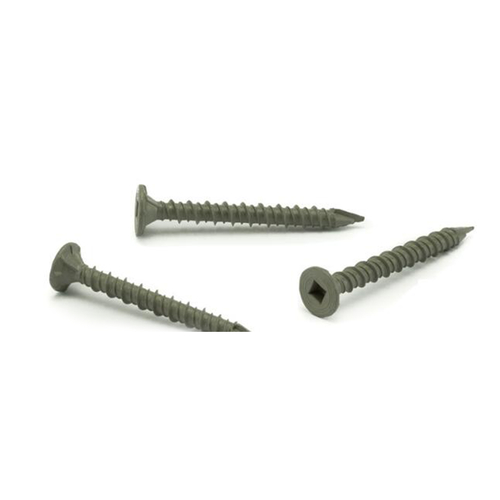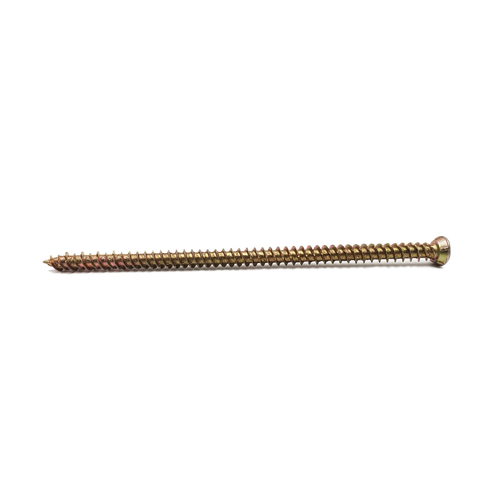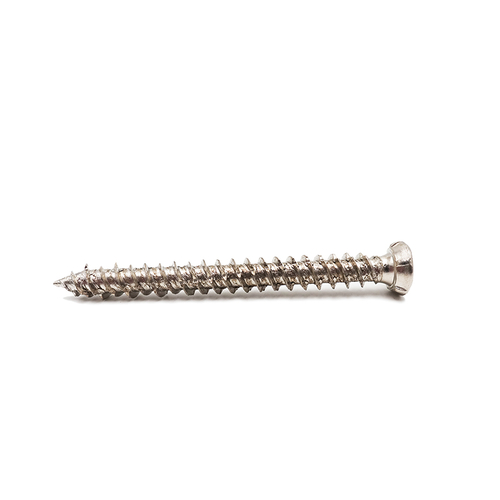
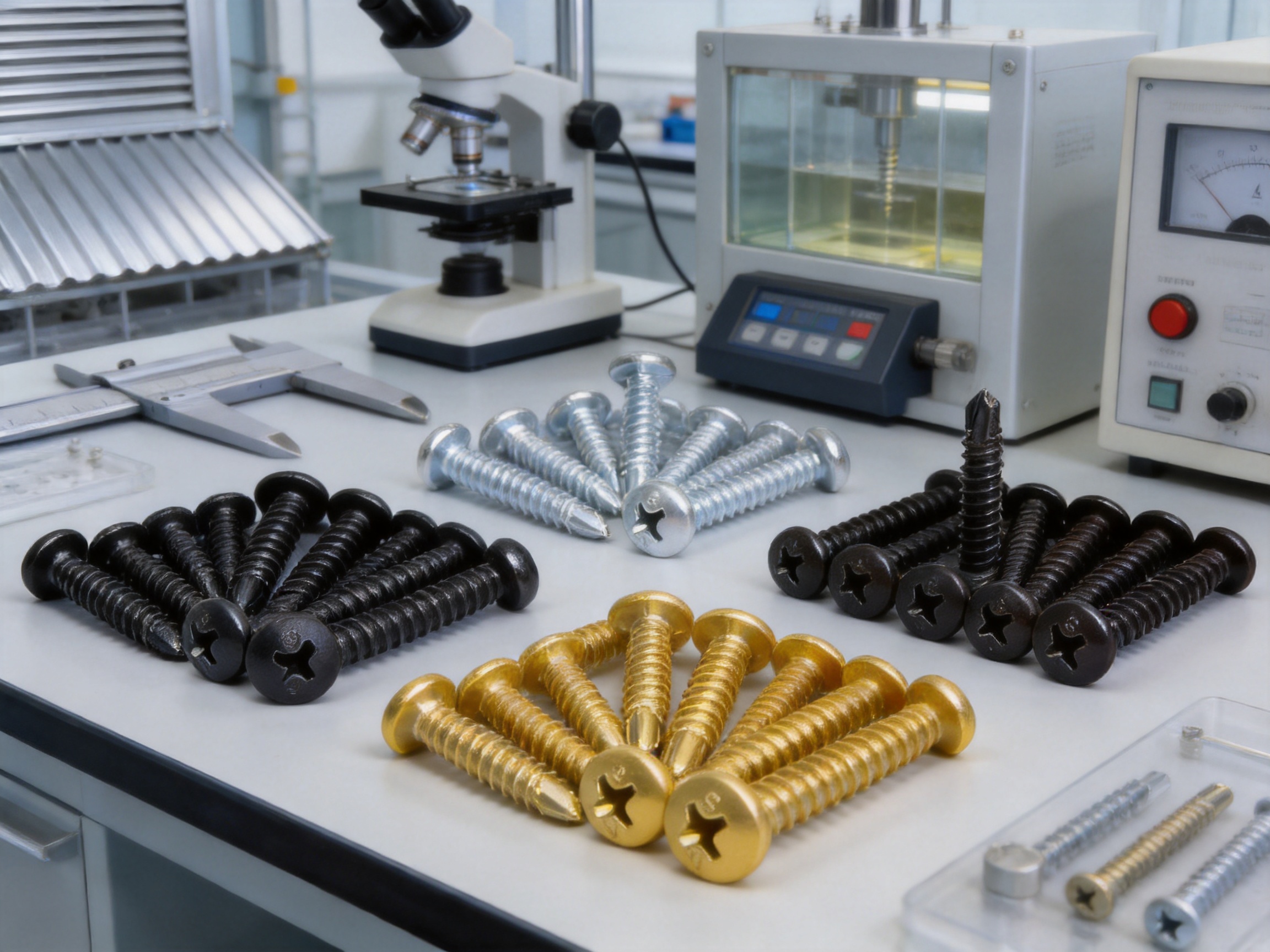
Phillips pan head self-drilling screws are designed to fasten metal, sheet materials, boards, and selected construction components without requiring a separate pilot hole. By combining a sharp drilling point, a formed machine-quality thread, and a pan-shaped Phillips head, these screws simplify installation while providing reliable clamping performance. They are widely used in metal fabrication, HVAC installation, roofing accessories, machinery assembly, furniture production, electrical work, and general construction.
This article examines the design, materials, manufacturing process, surface finishes, dimensional choices, installation practices, quality considerations, and application benefits of Phillips pan head self-drilling screws. It also explains how a specialized fastener manufacturer can improve product consistency through controlled wire selection, cold heading, thread rolling, point forming, heat treatment, surface finishing, inspection, and packaging.
The product range discussed here is manufactured from C1022A carbon steel and is available in several diameters, lengths, recess styles, thread configurations, and protective finishes. Standard options include Phillips, square, and Torx recesses; diameters from approximately 3.5 mm to 6.3 mm; lengths from approximately 9.5 mm to 100 mm; and finishes such as black phosphate, zinc plating, yellow zinc plating, Ruspert, and Magni coatings.
1. What Are Phillips Pan Head Self-Drilling Screws?
A Phillips pan head self-drilling screw is a threaded fastener with a self-drilling point and a rounded, slightly domed head. The drilling point cuts through thin or medium-gauge material, while the threads engage the newly formed hole and draw the components together. The Phillips recess in the head allows the screw to be driven with a commonly available Phillips driver bit.
The screw performs three operations in sequence. First, the drill point penetrates the surface. Second, the cutting portion enlarges and forms the hole to the required diameter. Third, the thread engages the material and creates clamping pressure. This integrated process reduces the number of tools and installation steps compared with a conventional bolt-and-nut connection or a screw that requires a separately drilled pilot hole.
The pan head provides a broad bearing surface in relation to the overall head height. This shape helps distribute downward force around the fastener opening and offers a neat, relatively low-profile appearance. It is suitable for applications where the head should remain visible but should not project excessively from the assembled surface.
Compared with a countersunk screw, a pan head screw does not require the material to be countersunk. This can be valuable when the substrate is thin, when installation speed is important, or when the installer wants to avoid weakening the material around the hole. The pan head is also useful for fastening brackets, panels, sheet metal, hardware fittings, and other components where a positive surface bearing area is desirable.
2. Main Product Specifications
The product range is configured for common industrial and construction requirements. The available nominal diameters include #6, #8, #10, #12, and #14, corresponding approximately to 3.5 mm, 4.2 mm, 4.8 mm, 5.5 mm, and 6.3 mm. Lengths generally range from 9.5 mm to 100 mm, or approximately 3/8 inch to 4 inches.
| Specification | Available Options | Application Significance |
|---|---|---|
| Head style | Pan head | Provides a broad bearing area and visible, low-profile fastening point |
| Drive recess | Phillips, square, Torx | Allows selection according to tooling, torque, and installation preference |
| Nominal diameter | #6, #8, #10, #12, #14 | Covers light-duty sheet fastening through larger structural accessory work |
| Length | 9.5–100 mm; 3/8–4 inches | Supports different material thicknesses and assembly depths |
| Base material | C1022A carbon steel | Provides a suitable combination of formability, strength, and production efficiency |
| Thread options | BSD thread, CSD thread | Supports different material engagement and drilling requirements |
| Surface finishes | Black phosphate, zinc plated, yellow zinc plated, Ruspert, Magni | Offers choices for appearance, corrosion protection, and environmental exposure |
| Reference standards | ASTM, DIN 7504K, DIN 7504P, DIN 7504N | Provides a reference framework for dimensional and functional selection |
Actual performance depends on the selected diameter, length, point style, thread geometry, substrate, coating, driver, installation speed, and environmental conditions. Buyers should confirm the required dimensions and performance values before placing a production order, especially for safety-critical or heavily loaded assemblies.
3. Advantages of the Pan Head Configuration
3.1 Broad Bearing Surface
The pan head spreads the bearing load over a larger area than a narrow or wafer-style head. This helps reduce the likelihood of the head pulling through a thin attached sheet when the correct screw size and tightening level are used. The head also gives the installer a clear visual indication that the screw is fully seated.
3.2 No Countersinking Required
Because the pan head sits on the surface, installation usually does not require a countersink operation. This saves time and reduces the number of tools needed at the worksite. It also avoids the risk of removing too much material around the hole, which can weaken thin sheet metal or create an uneven seating surface.
3.3 Suitable for Visible Assemblies
The rounded head creates a clean and familiar appearance for equipment panels, brackets, furniture hardware, electrical enclosures, and general metalwork. When combined with a matching plated finish, the screw can provide a consistent appearance across a completed assembly.
3.4 Compatibility with Common Drivers
The Phillips recess is widely recognized and supported by standard hand tools, electric screwdrivers, and automated fastening systems. For applications requiring higher torque transmission or improved resistance to bit cam-out, the same general product family can also be produced with square or Torx recesses.
4. Self-Drilling Performance
The self-drilling point is the defining feature of this fastener. Unlike a standard tapping screw, which may require a pre-drilled hole, a self-drilling screw forms its own entry hole. This can significantly improve productivity in repetitive assembly operations.
Point geometry must be matched to the target material. A point that is too short may fail to penetrate the substrate effectively. A point that is too long may increase installation time, leave excessive projection, or create an undesirable opening on the opposite side of a thin panel. The correct point design balances penetration speed, chip removal, thread engagement, and final clamping.
The cutting edges must be sufficiently sharp and uniform. Inconsistent point forming can cause variations in drilling time, excessive driver load, premature point failure, or uneven hole size. Advanced production control therefore checks point shape, concentricity, surface condition, and transition between the drill section and threaded section.
Self-drilling performance is also affected by the driver speed and axial pressure. Excessive speed can create heat and damage the coating, while insufficient pressure can cause the point to rub instead of cut. The installer should allow the drill point to establish penetration before applying full seating force.
In suitable sheet metal and light-gauge steel applications, the combination of drilling and tapping in one operation can reduce labor costs. The benefit is especially significant when many fasteners must be installed in a production line, on a construction site, or in a field maintenance operation.
5. C1022A Carbon Steel Material
C1022A is a widely used carbon steel grade for self-drilling screws and other cold-formed fasteners. It offers a practical balance between strength, toughness, formability, and availability. Its composition and processing characteristics make it suitable for forming heads, recesses, threads, and drilling points at high production volumes.
The material must be selected and controlled carefully because self-drilling screws require more than ordinary thread strength. The body must resist torsional loading during installation, the head must withstand drive torque, and the point must maintain cutting ability while entering the substrate. A suitable material condition helps the screw perform these functions without excessive breakage or deformation.
Material quality begins with incoming wire inspection. Important checks may include diameter, surface quality, chemical composition documentation, mechanical properties, and freedom from harmful defects. Consistent wire helps reduce variation during cold heading and improves the stability of later heat treatment.
The material is not a substitute for correct engineering selection. A carbon steel screw may require a protective coating for humid or corrosive conditions. In highly aggressive environments, the buyer may need to consider a more corrosion-resistant alloy or a specialized coating system. The selection should be based on exposure, service life, temperature, contact materials, and maintenance conditions.
6. Manufacturing Process
6.1 Raw Material Preparation
Production starts with carefully selected carbon steel wire. The wire is inspected for dimensional consistency, surface defects, and suitability for cold forming. Depending on the incoming condition, it may be cleaned, annealed, phosphated, or otherwise prepared to achieve the required forming behavior.
Stable raw material preparation supports every subsequent operation. If the wire varies significantly in diameter or hardness, the finished head, recess, thread, and point may also vary. A controlled material process therefore improves both production efficiency and finished product consistency.
6.2 Cold Heading
Cold heading forms the screw head and basic shank through controlled deformation rather than machining the entire shape from a solid bar. The process is efficient for high-volume production and can preserve favorable material flow around the head and shank.
During heading, the wire is cut into accurately controlled blanks. The blank is then transferred through a sequence of dies that form the pan head and prepare the recess area. Correct die design is essential because the head must achieve the specified outside diameter, height, bearing surface, and transition to the shank.
Cold heading can provide excellent repeatability when the equipment, tooling, lubrication, and material condition are properly controlled. It also minimizes unnecessary material waste compared with fully machining each screw.
6.3 Recess Formation
The Phillips recess is formed in the head using a specialized punch. The recess depth, flank shape, point position, and alignment must be maintained within controlled limits. A poorly formed recess can cause driver slipping, cam-out, incomplete seating, or damage to the head during installation.
For customers requiring alternative drive systems, square and Torx recesses may be produced using compatible tooling. These options can improve torque transfer and may be preferred in automated assembly or high-volume installation environments.
6.4 Thread Rolling
Threads are generally produced by rolling rather than cutting. In thread rolling, the partially formed blank passes between hardened dies that displace material and form the thread profile. This process creates a continuous thread structure and can provide efficient, high-volume production.
Thread rolling requires accurate control of blank diameter, die condition, pitch, lead, crest, root, and thread length. The resulting thread must engage the target material effectively without creating excessive driving resistance. For self-drilling screws, thread geometry is coordinated with the drilling point so that the screw transitions smoothly from cutting to engagement.
BSD and CSD thread configurations offer different engagement characteristics. The appropriate choice depends on the substrate, material thickness, required installation speed, and desired holding performance. Buyers should specify the thread form rather than assuming that all self-drilling screws behave identically.
6.5 Point Forming
The drilling point is formed after or during the main heading and thread operations, depending on the production line design. Point length, cutting edge geometry, flute shape, and concentricity are carefully controlled.
Point inspection is particularly important because the point is responsible for the initial penetration. Variations can cause different drilling times and inconsistent performance. A high-quality point should be centered with the shank, free of cracks, and formed with clean cutting edges.
6.6 Heat Treatment
Heat treatment develops the mechanical properties required for driving and service. The process must achieve a suitable balance between hardness and toughness. Excessive hardness may increase brittleness and the risk of breakage, while insufficient hardness may lead to thread deformation, point wear, or head damage.
Controlled atmosphere furnaces help reduce scale and provide more consistent results. Production monitoring may include furnace temperature, belt speed, atmosphere condition, quenching parameters, tempering temperature, and batch traceability. Mechanical testing can then verify hardness, torque resistance, and other relevant properties.
6.7 Surface Preparation and Coating
Before coating, screws are cleaned to remove oil, scale, and processing residues. Surface preparation affects coating adhesion and corrosion performance. The selected finish must be applied evenly to the head, thread, shank, and drilling point without blocking the recess or changing the functional dimensions excessively.
Finishing options include black phosphate, zinc plating, yellow zinc plating, Ruspert, and Magni systems. Each finish provides a different combination of appearance, corrosion resistance, friction behavior, and environmental suitability.
6.8 Final Inspection and Packaging
Finished screws are inspected for dimensions, thread condition, point quality, head shape, recess integrity, surface appearance, and packaging accuracy. Depending on customer requirements, inspection may include sampling plans, visual checks, dimensional measurement, coating thickness testing, salt spray testing, torque testing, drilling tests, and mechanical evaluation.
Packaging should protect the screws from moisture, contamination, impact, and mixing of sizes. Clear labeling is important for distributors and end users. Labels may identify diameter, length, drive type, finish, quantity, batch information, and applicable standard reference.
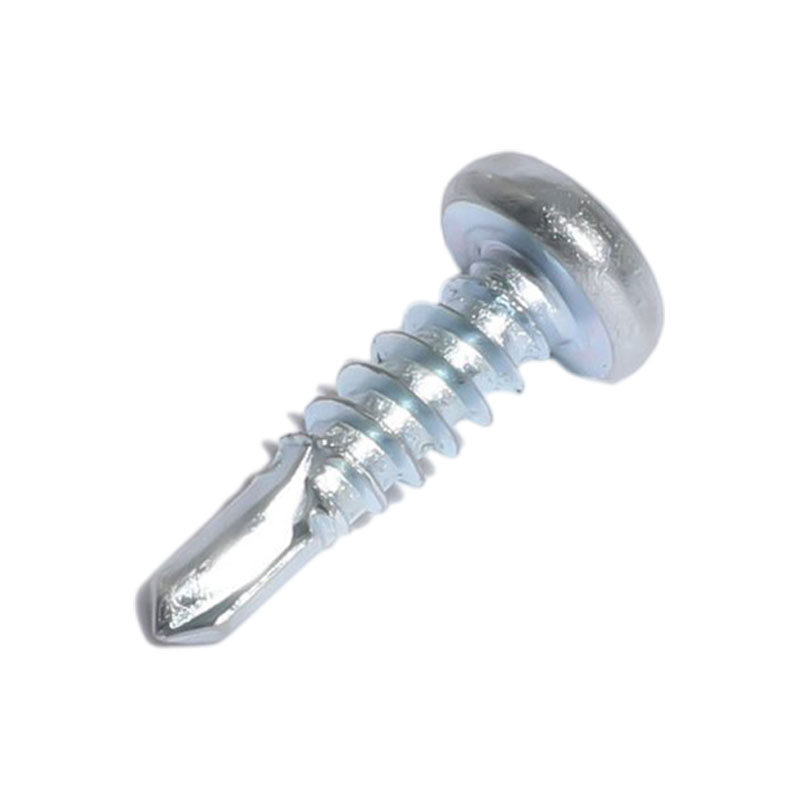
Phillips Pan Head Self Drilling Screws
7. Surface Finish Options
7.1 Black Phosphate
Black phosphate provides a dark, non-reflective appearance and can support paint or additional finishing systems. It is commonly selected for interior applications, drywall-related work, general fabrication, and situations where a black appearance is preferred.
Black phosphate alone should not automatically be treated as a high-level corrosion barrier. Its suitability depends on the environment and whether supplementary oil or protective treatment is applied. For outdoor, humid, or chemically exposed conditions, a more robust coating may be appropriate.
7.2 Zinc Plating
Zinc plating provides a bright metallic appearance and sacrificial corrosion protection. The zinc layer preferentially corrodes before the underlying steel, helping extend service life in normal indoor and moderately humid conditions.
Plated screws should be stored in a dry, ventilated environment. Condensation, trapped moisture, and contact with incompatible chemicals can reduce coating performance. Proper post-treatment and passivation can further improve corrosion resistance and appearance.
7.3 Yellow Zinc Plating
Yellow zinc plating offers a distinctive gold or yellow appearance and provides corrosion protection comparable in principle to other zinc-based systems. It is often selected when color identification, traditional appearance, or a warmer finish is desired.
The finish should be selected based on actual exposure rather than appearance alone. If the assembly will be exposed to continuous moisture, salt, industrial chemicals, or outdoor weather, the buyer should request suitable test data and confirm the required service level.
7.4 Ruspert Coating
Ruspert-type coatings generally combine a metallic base layer with a protective surface layer. They are used where enhanced corrosion resistance and controlled friction are required. The coating can be a practical option for exterior construction accessories, roofing-related hardware, and applications exposed to more demanding conditions than ordinary indoor assembly.
Coating thickness and color can vary by specification. The buyer should confirm the required color, corrosion test duration, friction characteristics, and compatibility with the installation tool.
7.5 Magni Coating
Magni coating systems are engineered finishes that may provide corrosion protection, controlled friction, and improved consistency in demanding applications. The exact performance depends on the specific coating system, base layer, topcoat, thickness, curing process, and environmental exposure.
For customers requiring a particular Magni specification, the purchase order should identify the precise coating designation rather than referring only to the general brand family. This avoids confusion between different coating grades and performance levels.
8. Competitive Advantages
8.1 Integrated Drilling and Fastening
The most important advantage over ordinary machine screws or standard tapping screws is the integrated drilling function. The installer can often complete the connection in one operation, reducing pilot drilling, tool changes, and handling time.
In high-volume applications, even a small reduction in installation time can produce meaningful savings. Fewer operations also reduce the chance of using the wrong pilot-hole diameter or misaligning the separate drilling step.
8.2 Broad Size Range
A range from approximately #6 to #14 and from 9.5 mm to 100 mm allows distributors and industrial buyers to serve multiple applications from one product family. Smaller sizes are useful for light sheet work and compact hardware, while larger diameters and longer lengths can support brackets, profiles, assemblies, and thicker material combinations.
A broad range also helps standardize purchasing. Instead of sourcing unrelated screw designs from several suppliers, a buyer can often consolidate common requirements under a coordinated specification and packaging system.
8.3 Multiple Drive Options
Phillips remains highly accessible because drivers are widely available. Square and Torx options provide alternatives for applications where improved torque transmission, reduced cam-out, or automated installation is more important.
This flexibility is useful for manufacturers serving several markets. A customer may choose Phillips for general distribution, Torx for professional installation, and square recesses for a particular assembly line or regional preference.
8.4 Multiple Corrosion Protection Choices
The availability of black phosphate, zinc, yellow zinc, Ruspert, and Magni finishes allows the screw to be matched to the environment and appearance requirements. This is more effective than using a single finish for every application.
Finish selection can also influence inventory strategy. A distributor may stock economical zinc-plated screws for indoor work and higher-performance coated screws for exterior or industrial customers.
8.5 Production Flexibility
A manufacturer with cold heading, thread rolling, heat treatment, finishing coordination, inspection, and packaging capabilities can respond more effectively to different customer specifications. Flexible production supports private labeling, mixed size orders, customized packaging, alternative recesses, and scheduled repeat supply.
8.6 Factory and Warehouse Support
The manufacturing operation is based in China, with warehouse support in Thailand. This structure can help serve customers in different regions through a combination of factory production and regional inventory management. A nearby warehouse may reduce replenishment time for selected products and simplify distribution planning.
9. Comparison with Other Fastener Types
| Fastener Type | Requires Pilot Hole? | Typical Strength | Key Limitation |
|---|---|---|---|
| Phillips pan head self-drilling screw | Usually no separate pilot hole | Fast installation and versatile sheet fastening | Performance depends strongly on point and driver control |
| Standard tapping screw | Often yes, depending on substrate | Reliable thread engagement after hole preparation | Requires an additional drilling operation |
| Machine screw | Yes, normally used with a tapped hole or nut | Good for designed threaded assemblies | Not suitable for direct drilling into most sheet materials |
| Wood screw | Designed primarily for wood and wood-based materials | Effective in timber and similar substrates | Thread and point may not suit metal-to-metal fastening |
| Rivet | Requires prepared holes | Permanent mechanical joint | Removal and service access are more difficult |
| Bolt and nut | Requires aligned clearance holes | High clamping capability and serviceability | Needs access to both sides and more assembly components |
The self-drilling screw is not universally superior to every alternative. Bolts may be better for high-load structural joints, rivets may be preferred for permanent sheet assemblies, and machine screws may be necessary where a precision tapped hole already exists. The principal advantage of the self-drilling screw is efficient direct fastening into suitable materials with minimal preparation.
10. Application Areas
10.1 Sheet Metal Fabrication
Fabricators use self-drilling screws to join panels, brackets, channels, covers, trims, and light-gauge profiles. The pan head offers a stable bearing surface, while the drilling point reduces preparation time.
10.2 HVAC and Ductwork
In HVAC installation, the screws may be used to secure sheet metal components, access panels, support hardware, and ancillary fittings. The selected coating should reflect whether the installation is indoors, outdoors, in a humid plant room, or in a chemically aggressive environment.
10.3 Roofing Accessories
Self-drilling screws are frequently used with metal roofing accessories, flashings, trims, brackets, and support components. For exterior use, corrosion protection is particularly important. The fastener must also be selected to suit the material thickness and expected weather exposure.
10.4 Furniture and Hardware
In furniture production, the screw can join metal brackets, reinforcement plates, frames, fittings, and selected composite components. A pan head may be suitable when the head remains visible or when a flush countersunk connection is not required.
10.5 Electrical Enclosures
Manufacturers of electrical cabinets and control boxes may use small-diameter self-drilling screws for panels, cable management hardware, mounting clips, and internal accessories. The drive type and coating should be selected to support reliable assembly without damaging the enclosure finish.
10.6 General Machinery and Equipment
Equipment manufacturers can use the screws for non-critical guards, covers, brackets, and sheet-metal subassemblies. Where vibration is present, the assembly design should consider thread engagement, tightening torque, joint stiffness, and any required locking method.
11. Selecting the Correct Screw
11.1 Diameter
The diameter should provide adequate thread engagement and head bearing without unnecessarily enlarging the opening. Smaller screws are appropriate for light components, while larger diameters may be required for thicker material, higher pull-out resistance, or increased clamping force.
11.2 Length
The screw should pass through the attached material and achieve sufficient engagement in the supporting material. Excessive length can create unwanted projection or interference behind the assembly. Insufficient length may produce weak engagement or incomplete thread formation.
As a general selection principle, measure the combined thickness of the materials and add the required engagement length. The exact amount depends on the substrate, thread design, joint loading, and application standard.
11.3 Thread Type
BSD and CSD threads should be selected according to the material and connection design. The thread must balance cutting action with holding power. A coarse thread may be preferred in certain thin or softer materials, while another thread geometry may be more suitable for harder sheet metal.
11.4 Drive Recess
Phillips is a practical general-purpose choice. Square and Torx recesses may be preferable where high installation torque, reduced bit slipping, or automated assembly is important. The chosen recess must be matched with a properly sized driver bit.
11.5 Coating
Indoor dry applications may require only a basic finish. Humid areas, exterior assemblies, coastal environments, and industrial facilities may require enhanced coating performance. The customer should specify corrosion expectations, appearance requirements, and any relevant test method.
12. Installation Best Practices
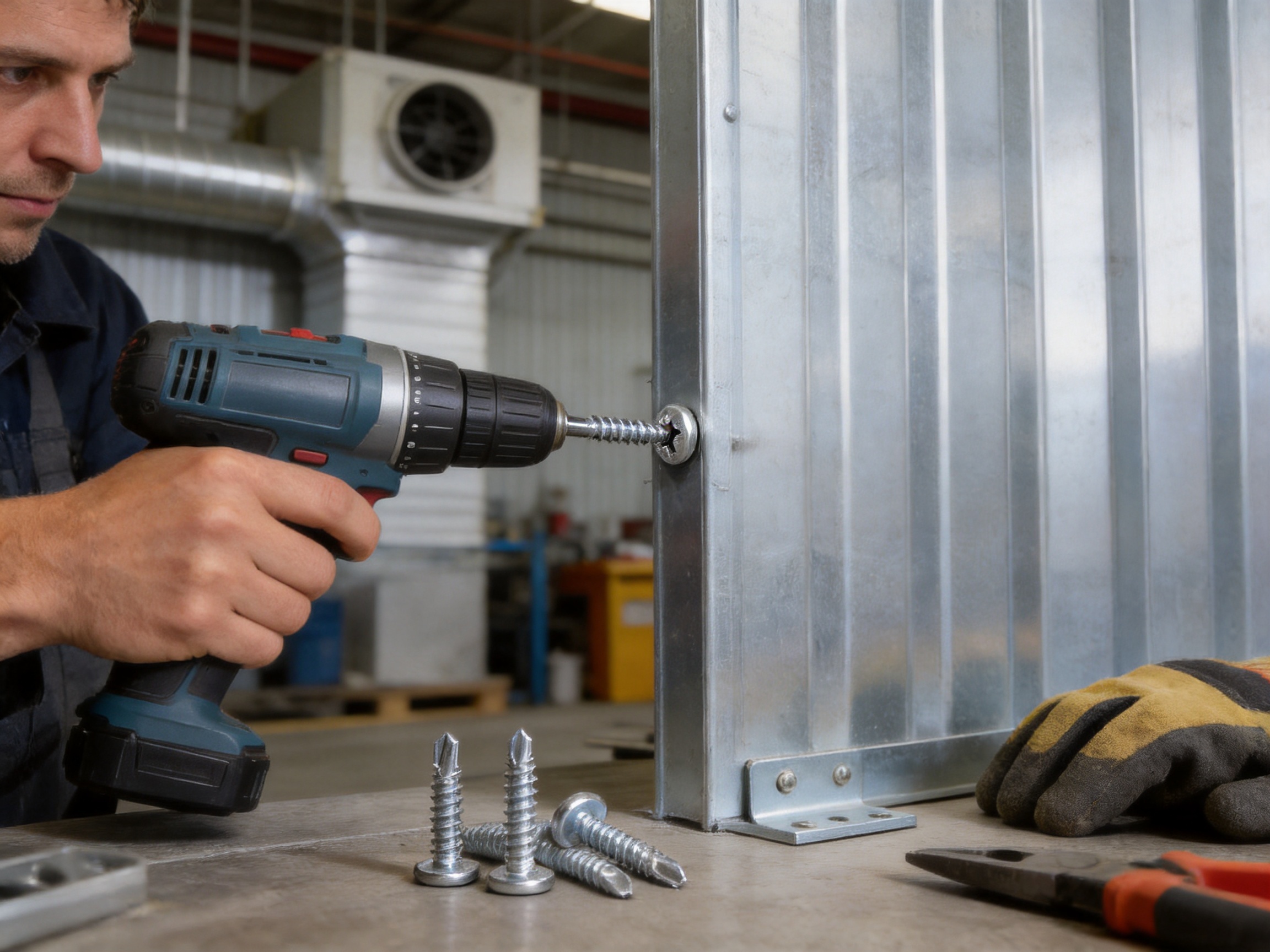
Use the correct driver bit and ensure that it is not excessively worn. A worn bit can damage the Phillips recess and increase cam-out. Keep the driver aligned with the screw axis throughout drilling and seating.
Begin at a controlled speed that allows the point to cut into the material. Excessive speed may generate heat, strip the recess, or damage the coating. Excessive downward force can also deform the point or cause the screw to break before the threads engage.
Once the threads have engaged, continue until the pan head is seated firmly against the surface. Avoid over-tightening. Excessive torque can strip the substrate, distort the head, damage the coating, or reduce the effective clamping force by crushing the attached material.
For production lines, establish a repeatable driver setting. Automatic screwdrivers should be checked for bit wear, torque accuracy, speed, feed alignment, and screw presentation. Periodic testing can identify changes in drilling time or installation torque before they become widespread defects.
When fastening coated sheet materials, avoid unnecessary damage to the surface. If the coating is scratched during installation, the exposed area may become a starting point for corrosion. In outdoor applications, the joint may require an appropriate sealant, washer, or additional corrosion-control method depending on the assembly design.
13. Quality Control and Testing
13.1 Dimensional Inspection
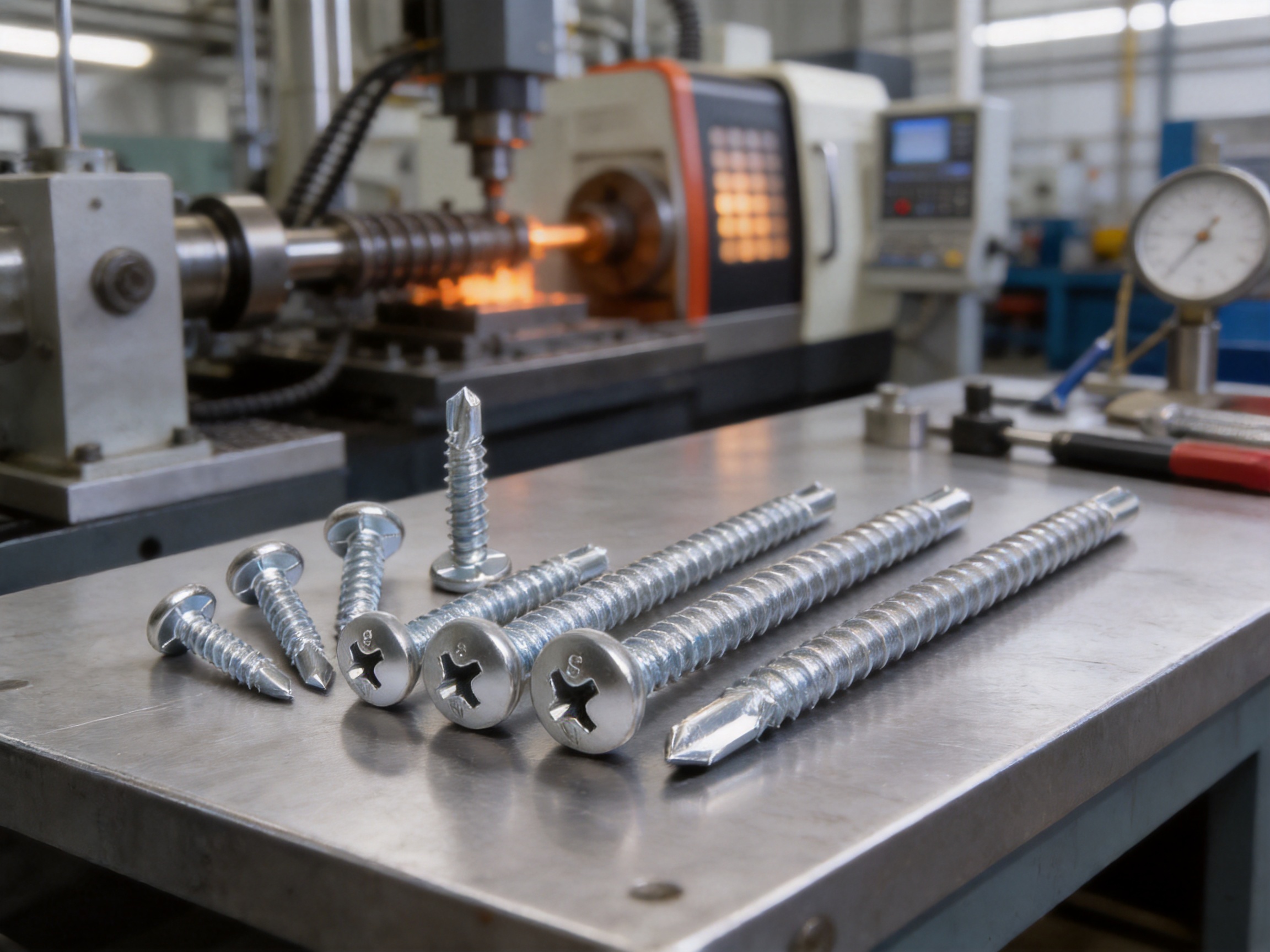
Dimensional inspection confirms the screw diameter, length, head diameter, head height, recess dimensions, thread length, point length, and overall concentricity. Accurate dimensions help ensure compatibility with automated equipment and predictable installation results.
13.2 Thread Inspection
Thread gauges and optical inspection systems may be used to check pitch, profile, major diameter, minor diameter, and functional engagement. The thread should be clean and continuous, without excessive burrs, folds, cracks, or damaged crests.
13.3 Recess Inspection
The recess must accept the specified driver bit correctly. Inspection should identify incomplete forming, excessive burrs, off-center positioning, shallow depth, or deformation that could cause cam-out.
13.4 Mechanical Testing
Mechanical testing may include hardness, torsional resistance, tensile performance, head integrity, and drilling capability. The exact test program should be based on the applicable standard, customer specification, and intended application.
13.5 Coating and Corrosion Testing
Coating evaluation may include visual inspection, thickness measurement, adhesion checks, and corrosion testing. Salt spray testing can provide comparative information, but laboratory results should not be interpreted as an exact prediction of every field environment.
13.6 Functional Drilling Tests
A functional drilling test evaluates whether the screw penetrates the specified substrate within an acceptable time and without excessive point damage. It may also assess thread engagement, seating behavior, driver performance, and the condition of the finished coating.
14. Manufacturing Strengths of a Specialized Supplier
A specialized fastener supplier can add value beyond the production of individual screws. Engineering support helps customers select the correct diameter, length, thread, point, recess, and coating. This reduces the risk of ordering a visually similar product that performs poorly in the actual substrate.
Integrated process management improves consistency. When raw material preparation, forming, thread rolling, heat treatment, finishing coordination, inspection, and packaging are managed under a controlled quality system, process changes can be traced more effectively.
Production flexibility is also important. Different customers may require different drive recesses, finishes, packaging quantities, labels, or standards. A supplier experienced in export fasteners can coordinate these details while maintaining product identification and batch control.
Quality communication is another strength. Technical drawings, samples, inspection reports, coating requirements, and application information should be reviewed before mass production. Clear communication reduces misunderstandings about nominal sizes, inch and metric dimensions, color, coating designation, and standard references.
For international customers, the combination of a China factory and Thailand warehouse can support both manufacturing scale and regional supply responsiveness. The practical benefit depends on stock availability, product selection, shipping arrangements, and order planning, but the structure provides additional options for distributors and industrial buyers.
15. Storage and Handling
Store screws in a clean, dry, and ventilated location. Avoid direct contact with water, condensation, salt, acids, alkalis, and aggressive chemicals. Keep cartons off the floor and protect them from damage caused by forklifts or heavy stacking.
Temperature changes can cause condensation inside unopened packaging. Allow cold cartons to reach the storage-room temperature before opening them in a humid environment. Use older stock first when practical and maintain clear batch identification.
Different coatings should be kept separated and clearly labeled. Mixing similar-looking screws with different diameters or lengths can create serious installation problems. Good warehouse organization should distinguish size, length, drive type, finish, thread, batch, and packaging quantity.
16. Sustainability and Production Efficiency
Cold heading and thread rolling are efficient manufacturing methods because they produce large quantities with limited material waste compared with machining each screw from bar stock. Efficient forming also supports consistent cycle times and predictable production planning.
Reducing installation steps can lower the total resource consumption of an assembly. A self-drilling screw may eliminate a separate drill bit operation, reduce tool changes, and shorten labor time. These benefits should be evaluated across the complete assembly process rather than only by unit price.
Coating selection can also support longer service life. A screw that remains functional in its intended environment for a longer period may reduce replacement, maintenance, and material waste. However, the coating should not be specified beyond the actual need, because unnecessary high-performance finishes may increase cost and processing complexity.
17. Common Purchasing Questions
Q1: What material are these screws made from?
They are produced from C1022A carbon steel, a common fastener material selected for its balance of formability, strength, and suitability for self-drilling screw production.
Q2: What sizes are available?
The listed diameter range includes #6, #8, #10, #12, and #14, approximately corresponding to 3.5 mm, 4.2 mm, 4.8 mm, 5.5 mm, and 6.3 mm. Lengths generally range from 9.5 mm to 100 mm, or approximately 3/8 inch to 4 inches.
Q3: Are Phillips recesses the only option?
No. The range can include Phillips, square, and Torx recesses. Phillips is widely used, while square and Torx may provide improved torque transfer for selected applications.
Q4: What does the pan head do?
The pan head provides a broad bearing surface and a rounded, visible profile. It does not normally require a countersunk hole and is suitable for many sheet-metal, equipment, furniture, and hardware applications.
Q5: Do these screws require a pilot hole?
They are designed to drill their own hole in suitable materials. However, material thickness, hardness, coating, screw size, and installation equipment affect performance. A trial installation is recommended for unfamiliar substrates.
Q6: What is the difference between BSD and CSD threads?
BSD and CSD are different thread configurations intended for different engagement and drilling conditions. The best choice depends on the material, thickness, required holding power, and installation method.
Q7: Which coating is best for outdoor use?
There is no universal answer because outdoor exposure varies. Zinc, yellow zinc, Ruspert, and Magni finishes may be selected according to the required corrosion resistance. For coastal, industrial, or continuously wet environments, request coating specifications and test data before selection.
Q8: Can these screws be used for structural connections?
They may be suitable for some non-critical structural accessories and sheet-metal assemblies, but they should not be used for a structural application unless the product and joint have been specifically designed, tested, and approved for that purpose.
Q9: How can installation problems be reduced?
Use the correct driver bit, maintain axial alignment, control speed and torque, avoid over-tightening, and confirm that the screw is suitable for the substrate. Regularly replace worn bits and verify automated driver settings.
Q10: What information should be included in an inquiry?
Provide the required diameter, length, drive recess, thread type, point style, surface finish, quantity, packaging, target material, application environment, standard reference, and any inspection or certification requirements.
Q11: Can customized packaging be supplied?
Packaging requirements should be discussed before production. Options may include bulk cartons, small retail boxes, labeled bags, private-label packaging, barcode labels, and batch identification, subject to order quantity and production arrangements.
Q12: Why is coating consistency important?
Uneven coating can affect corrosion protection, appearance, friction, recess fit, and thread engagement. Controlled cleaning, coating, curing, inspection, and packaging help maintain consistent performance across the batch.
18. Recommended Specification Checklist
Before ordering Phillips pan head self-drilling screws, define the substrate and its thickness. Identify whether the screw will penetrate mild steel, galvanized sheet, aluminum, composite board, or another material. The material affects point selection, thread engagement, and installation torque.
Specify the nominal diameter and length in either metric or inch terminology, and make sure the two systems are not mixed unintentionally. Confirm whether the required recess is Phillips, square, or Torx. If Phillips is required, specify the expected driver size when relevant.
Identify the thread configuration, finish, color, corrosion requirement, packaging quantity, labeling format, and reference standard. If the screw will be used in automated equipment, provide information about bowl feeding, driver type, torque range, and screw presentation.
For new applications, request samples for drilling and assembly trials. Test the screw in the actual substrate, with the intended driver and installation settings. Check drilling time, seating, head condition, thread engagement, holding performance, and coating appearance.
19. Why Product Selection Should Be Application-Based
Fasteners that appear identical may perform differently because of variations in point geometry, thread form, steel condition, heat treatment, coating, and dimensional control. Selecting only by price or appearance can lead to installation delays, premature corrosion, damaged heads, or inconsistent holding power.
An application-based approach considers the complete joint. The designer should evaluate the materials being joined, the expected loads, the environment, the desired service life, the installation equipment, and the consequences of fastener failure.
This approach also helps prevent over-specification. A very expensive coating or unusually large screw may not provide meaningful additional value if the assembly is indoors and lightly loaded. Conversely, an economical finish may be unsuitable for a wet or corrosive environment.
20. Conclusion
Phillips pan head self-drilling screws offer a practical combination of drilling capability, thread engagement, broad head bearing, and widely available installation tooling. Their ability to drill and fasten in one operation makes them particularly valuable for sheet metal, equipment panels, HVAC components, furniture hardware, roofing accessories, electrical enclosures, and general fabrication.
The product range supports multiple diameters, lengths, recesses, thread configurations, and surface finishes. C1022A carbon steel provides a suitable foundation for cold forming, thread rolling, heat treatment, and point development. Manufacturing quality depends on controlling every stage, from wire selection and heading through recess forming, thread rolling, point forming, heat treatment, coating, inspection, and packaging.
The manufacturing capabilities of Lizhan Hardware Co., Ltd. include production in China and warehouse support in Thailand, providing a combination of factory manufacturing and regional supply coordination. Its product offering is supported by options for Phillips, square, and Torx recesses; BSD and CSD threads; and several surface finishes for different appearance and corrosion requirements.
For the best results, buyers should select the screw based on the substrate, material thickness, environmental exposure, installation equipment, required service life, and applicable standard. A properly specified and consistently manufactured self-drilling screw can reduce assembly time, simplify inventory, improve installation productivity, and provide dependable fastening performance.
References
ASTM International. Standards and guidance relating to carbon steel fasteners, mechanical testing, dimensional control, and corrosion evaluation.
Deutsches Institut für Normung. DIN 7504 series, self-drilling tapping screws for metal applications.
International Organization for Standardization. General principles for fastener dimensions, mechanical properties, coatings, inspection, and quality management.
Industrial Fasteners Institute. Technical guidance on screw materials, thread rolling, mechanical performance, and installation practices.
ASM International. Reference materials on carbon steel processing, cold forming, heat treatment, and surface engineering.
Engineering documentation for C1022A carbon steel wire, self-drilling screw production, zinc-based finishes, phosphate coatings, Ruspert systems, and Magni coating systems.