Phillips Wafer Head Self-Drilling Screws: Performance, Finish, and Manufacturing Advantages
Phillips wafer head self-drilling screws are designed for fast, efficient fastening in applications where installers need a broad bearing surface, a low-profile appearance, and the ability to create their own pilot hole. The product combines a Phillips recess, a wafer-style head, a self-drilling point, and a corrosion-resistant surface treatment. This combination makes the screw suitable for sheet metal, light-gauge steel, drywall-related construction, interior fit-out, furniture components, electrical installations, and many general industrial fastening tasks.
Unlike an ordinary tapping screw, a self-drilling screw can penetrate many thin metal substrates without requiring a separate pre-drilling operation. The drilling point cuts through the material, while the threads form or engage the internal thread needed to secure the assembly. This can reduce installation time, simplify job-site logistics, and improve productivity in repetitive fastening operations.
The Phillips wafer head configuration offers another important advantage. Its relatively wide head distributes clamping pressure over a larger area than a narrow pan head, while its shallow profile can provide a neat finish and reduce interference with adjacent components. The design is particularly useful when the fastener must hold thin sheet material securely without appearing excessively prominent.
Produced from C1022A carbon steel and available in several diameters, lengths, recess styles, head configurations, and surface finishes, this screw family can be adapted to different customer specifications. Standard options include Phillips, square, and Torx recesses; black phosphate, zinc-plated, yellow-zinc-plated, Ruspert, and Magni finishes; and BSD or CSD thread forms. The range also includes related head styles such as bugle head, hex washer head, flat head, pan head, and pan framing head.
This article explains the product’s construction, operating principles, material characteristics, finish options, manufacturing process, quality controls, application benefits, and purchasing considerations. It also examines why a specialized manufacturer with an integrated factory and testing capability can provide advantages over general-purpose fastener suppliers.
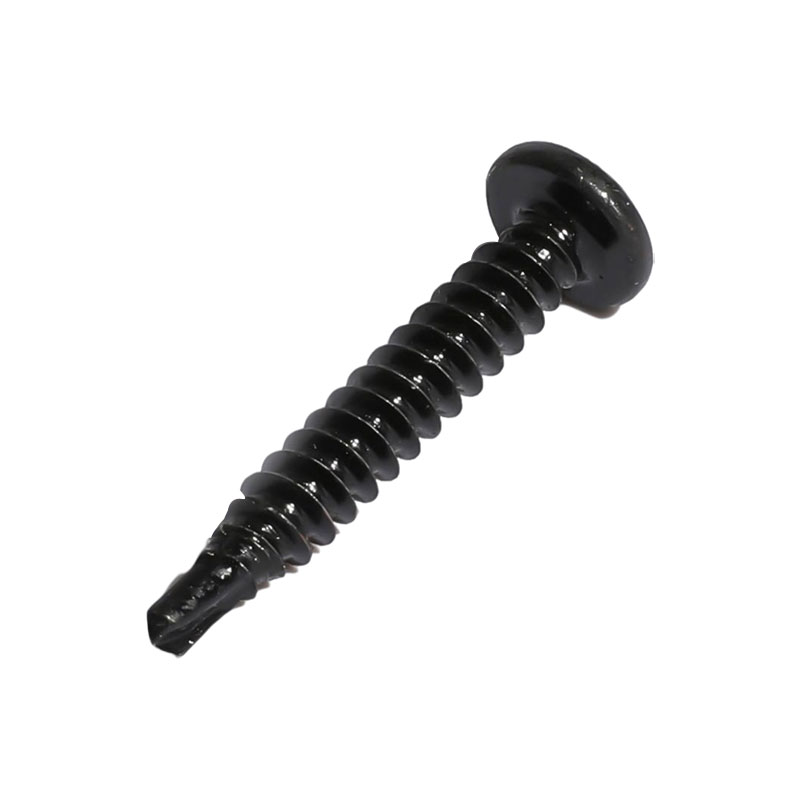
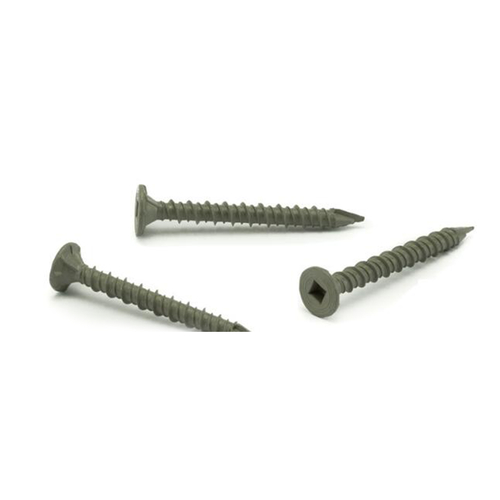
Phillips wafer head self drilling screws black ruspert
1. Product Overview
A Phillips wafer head self-drilling screw is a thread-forming fastener with an integrated drilling point. The drilling point is shaped to penetrate a designated range of sheet materials, while the thread behind the point engages the substrate and draws the materials together. The wafer head sits against the surface of the attached component and provides the clamping force required for a stable connection.
The Phillips recess is formed in the top of the head and is designed for use with a matching Phillips driver bit. It supports fast installation with common electric screwdrivers and production tools. For users who require improved bit engagement or higher resistance to cam-out, square and Torx recesses can also be supplied within the broader product range.
The wafer head is a distinguishing feature of this product. Compared with a conventional flat head, it does not require a countersunk hole in many applications. Compared with a high-profile hex washer head, it presents a lower visual profile and can be more convenient where clearance is limited. Its broad underside helps distribute force across the fastened sheet, reducing the likelihood of localized deformation when the screw is correctly installed.
The screw is generally supplied in a black surface appearance when black phosphate or a dark Ruspert treatment is selected. The precise appearance, coating structure, corrosion resistance, and recommended use depend on the chosen finish. Customers should therefore specify not only “black” but also the required coating system, performance expectation, packaging standard, and test requirements.
| Product characteristic | Available or typical option | Practical benefit |
|---|---|---|
| Recess | Phillips, square, or Torx | Compatibility with different installation tools and torque requirements |
| Material | C1022A carbon steel | Suitable strength and formability for cold heading and thread production |
| Diameter range | #6-3.5, #8-4.2, #10-4.8, #12-5.5, #14-6.3 | Selection for different material thicknesses and holding requirements |
| Head options | Wafer, bugle, pan, flat, hex washer, pan framing | Adaptation to different assembly designs |
| Thread options | BSD and CSD | Matching the drilling point and substrate requirements |
| Surface options | Black phosphate, zinc, yellow zinc, Ruspert, Magni | Choice of appearance, corrosion protection, and application performance |
| Standards | ASTM and DIN 7504 series | Reference points for dimensions, design, and product verification |
2. Main Advantages Over Conventional Fasteners
2.1 Integrated drilling and fastening
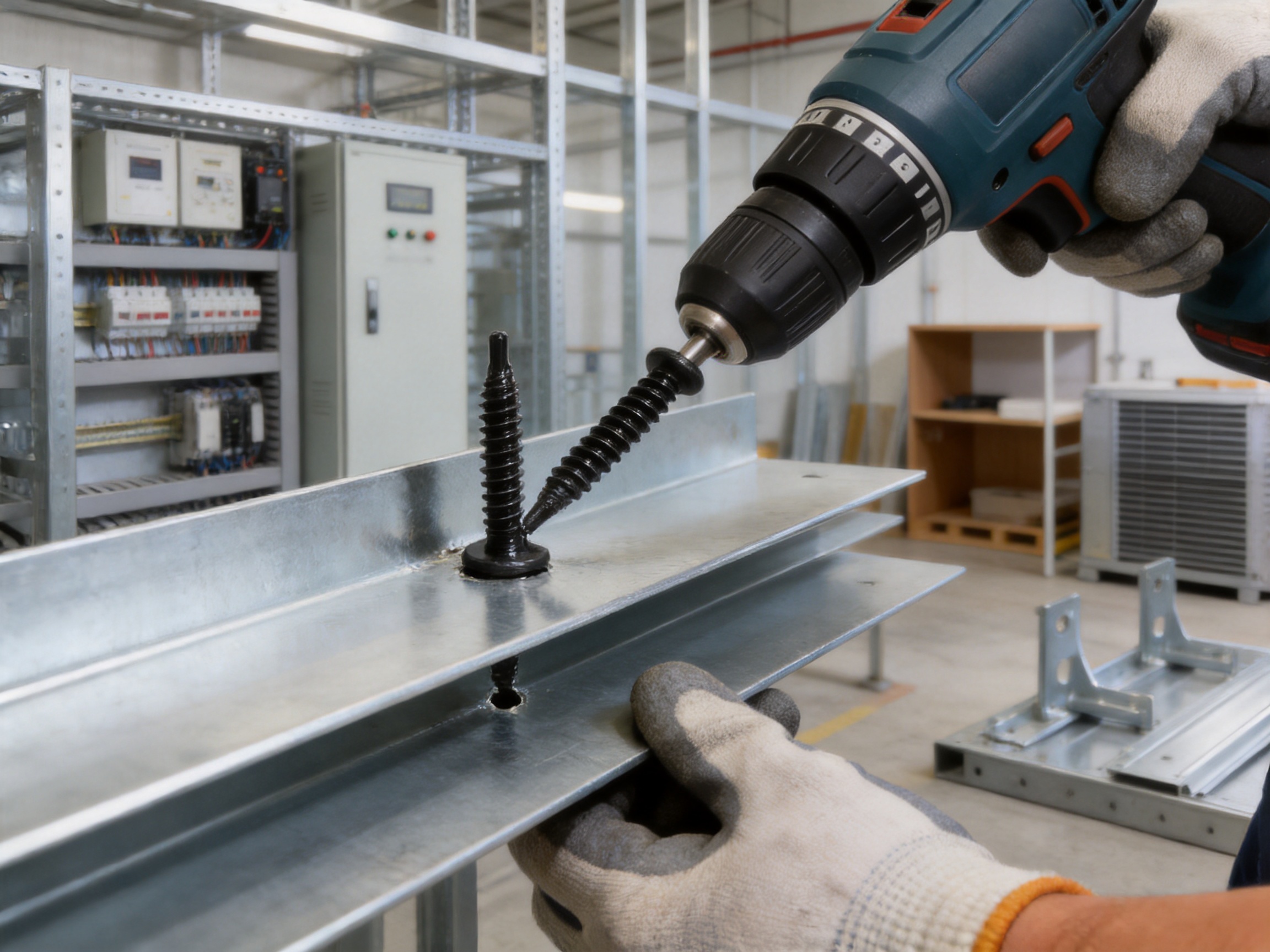
The most obvious advantage is the integrated drilling point. With a conventional screw, the installer may need to mark the hole, select a drill bit, pre-drill the material, clear chips, and then install the screw. A self-drilling screw combines several of these operations into one fastening cycle. This is especially valuable in high-volume assembly, metal framing, HVAC work, electrical cabinet production, and interior construction.
Fewer installation steps can reduce labor requirements and make the assembly process easier to standardize. It can also reduce the number of tools required at the work location. When a suitable screw size and drilling point are selected, the operator can use one controlled driving operation to penetrate the material and secure the joint.
2.2 Broad wafer head bearing area
The wafer head spreads the load over a relatively broad surface area. This is useful for thin sheet materials that may be susceptible to pull-through or local distortion. The head can help hold the component firmly while maintaining a comparatively discreet appearance.
In applications where the head must remain visible, the wafer style can offer a cleaner appearance than a large hex washer head. In applications with limited clearance, the lower profile can also help reduce interference with covers, trim, sliding components, or neighboring assemblies.
2.3 Flexible size and finish selection
A single screw specification cannot meet every fastening requirement. Material thickness, joint design, exposure conditions, installation equipment, and appearance expectations all influence the correct choice. The available diameter range from approximately #6 to #14 provides options for light-duty and more demanding sheet-material connections.
Finish selection adds another layer of flexibility. Black phosphate is often selected for a dark appearance and general indoor applications. Zinc and yellow zinc offer familiar protective finishes for many general-purpose uses. Ruspert and Magni coatings may be selected when customers require a more engineered corrosion-protection system or a specific coating specification.
2.4 Compatibility with common installation equipment
Phillips recesses are widely recognized and can be installed with commonly available driver bits. This helps contractors and production operators avoid specialized tooling in routine applications. Where the assembly requires more controlled torque transmission, square or Torx versions can be considered.
Correct bit selection remains important. A properly matched driver bit improves engagement, reduces recess damage, and supports consistent seating. For automated or semi-automated production, the screw can also be evaluated for feeding, orientation, and driver compatibility.
2.5 Suitable balance of hardness and formability
C1022A carbon steel is widely used in screw manufacturing because it provides a practical balance between strength, cold-forming capability, thread integrity, and cost. The material can be processed through heading, pointing, thread rolling, and finishing operations when the production parameters are properly controlled.
For a self-drilling screw, the drilling point must be sufficiently hard and accurately formed to penetrate the intended substrate. At the same time, the head and threaded body must maintain adequate toughness so that the screw does not fail during installation. Material selection and heat-treatment control are therefore essential to product reliability.
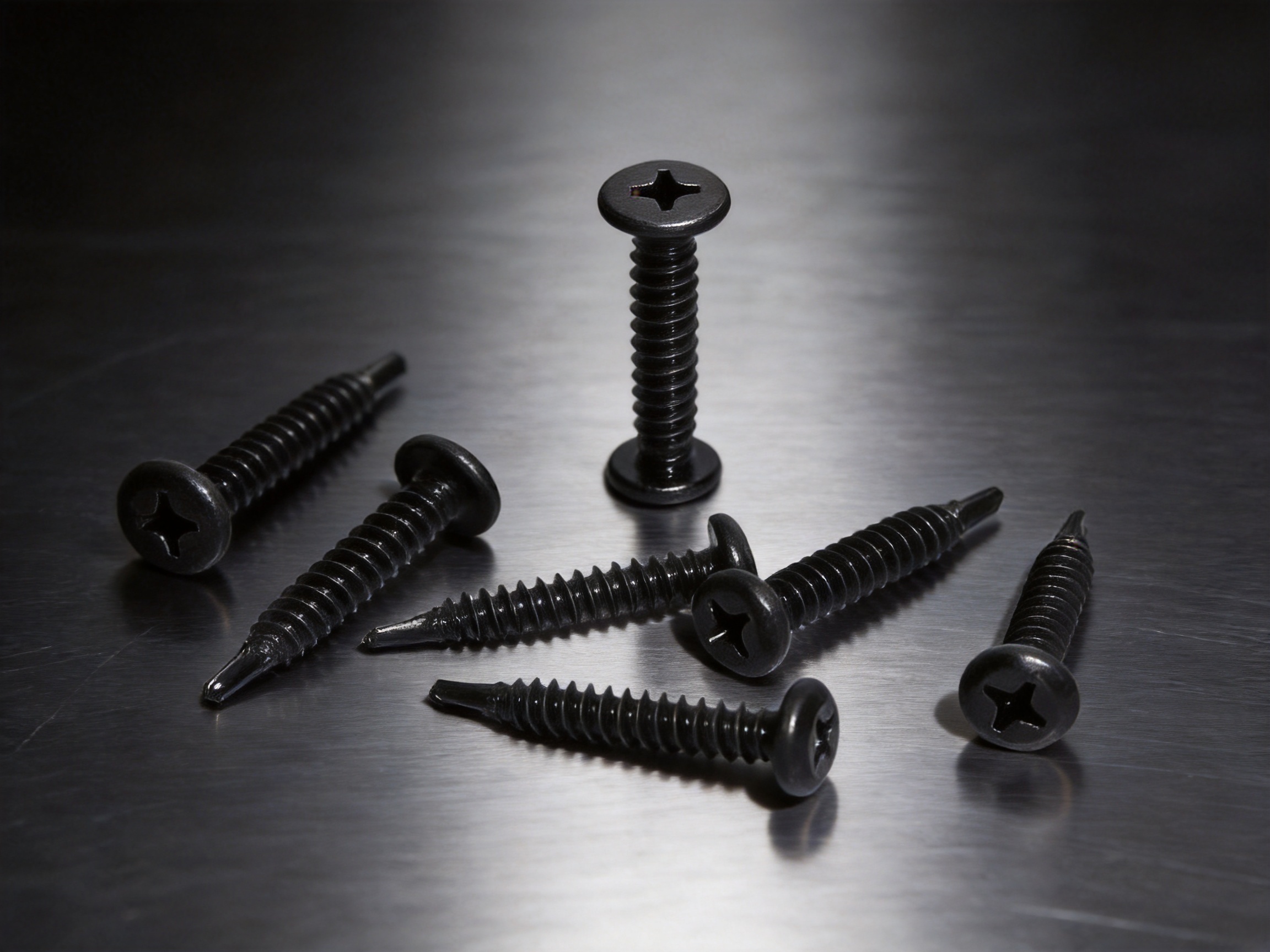
3. Product Dimensions and Configuration Options
The listed diameter range includes #6-3.5, #8-4.2, #10-4.8, #12-5.5, and #14-6.3. The first designation commonly identifies an inch-based screw size, while the metric value indicates an approximate nominal diameter in millimeters. Customers should confirm the preferred dimensional system and exact tolerances before placing a production order.
Length is normally selected according to the combined thickness of the materials being joined, the required thread engagement, and the geometry of the drilling point. Since the supplied product information does not define a fixed length range, length should be confirmed against the customer’s drawing, sample, bill of materials, or application requirement.
The screw can be manufactured with different head styles in addition to the wafer head. Bugle heads are commonly used where a smooth transition into board materials is needed. Hex washer heads provide external wrench or socket engagement and a wide bearing surface. Flat heads are useful when a flush finish is required and a countersunk seat is available. Pan heads and pan framing heads are suitable for other sheet-metal and general fastening designs.
Thread selection is another important consideration. BSD and CSD thread forms are available for different drilling and material-engagement requirements. The correct thread form should be selected together with the screw diameter, point geometry, substrate type, and material thickness. A screw that drills effectively but has an unsuitable thread may not deliver the required pull-out resistance or clamping stability.
| Selection factor | Questions to confirm | Why it matters |
|---|---|---|
| Substrate | Is the material steel sheet, aluminum, board, plastic, or a mixed assembly? | Determines point design, thread form, and installation behavior |
| Material thickness | What is the total thickness and how many layers are being joined? | Determines required drilling capacity and screw length |
| Head style | Is a low-profile, flush, broad-bearing, or external-drive head required? | Influences appearance, clearance, and load distribution |
| Recess | Will installers use Phillips, square, or Torx bits? | Influences driving efficiency and resistance to cam-out |
| Environment | Is the assembly indoors, outdoors, humid, industrial, or chemically exposed? | Determines the appropriate surface treatment |
| Installation method | Will the screws be manually installed, automatically fed, or torque-controlled? | Influences tolerances, packaging, and process validation |
4. Surface Finishes and Corrosion Protection
4.1 Black phosphate
Black phosphate provides a dark, non-reflective appearance that is often preferred in drywall-related construction, interior framing, cabinetry, furniture hardware, and applications where the screw should visually blend with black or dark components. It can also provide a useful base for additional treatment or lubrication, depending on the specified system.
Black phosphate should not automatically be treated as equivalent to a high-performance outdoor corrosion system. The appropriate service environment, salt exposure, humidity, and storage conditions must be reviewed before selection. For demanding exterior or industrial applications, the customer may prefer Ruspert, Magni, or another specified corrosion-resistant coating.
4.2 Zinc plating and yellow zinc plating
Zinc-plated screws provide a familiar metallic appearance and a level of sacrificial corrosion protection suitable for many general-purpose applications. Yellow zinc plating adds a characteristic yellow or iridescent appearance and may be selected for identification, appearance, or a particular customer specification.
The performance of a zinc-plated product depends on coating thickness, passivation, handling, storage, and environmental exposure. Customers should specify the required coating class or test expectation rather than relying only on color. Packaging should also protect the finished screws from moisture and contamination during transportation and storage.
4.3 Ruspert coating
Ruspert is a multi-layer coating system commonly selected when a dark appearance and improved corrosion resistance are required. The coating can provide a more engineered surface solution than a basic decorative finish, subject to the exact coating grade and test standard specified by the customer.
For a black Ruspert wafer head self-drilling screw, the visual combination of the dark coating and low-profile head can be attractive in visible assemblies. It may be used where appearance, corrosion resistance, and reliable fastening must be considered together. The exact color, coating thickness, friction characteristics, and corrosion test performance should be confirmed in the product specification.
4.4 Magni coating
Magni coatings are selected for applications requiring specialized corrosion protection, controlled friction, or a defined coating performance. Such systems may be appropriate for customers with strict technical requirements, assembly torque specifications, or higher environmental demands.
Because coating systems can influence installation torque and clamp-load consistency, the finish should be validated with the selected driver, substrate, and assembly process. A coating that performs well in a corrosion test may still require process adjustment if its friction characteristics differ from those of a standard plated product.
Lizhan Hardware provides several surface options so customers can align appearance and performance with the application rather than selecting a single finish for every project. This flexibility is a significant advantage for distributors, importers, construction suppliers, and OEM customers managing multiple product lines.

5. Manufacturing Process
5.1 Wire preparation and material control
Manufacturing begins with incoming raw material control. C1022A wire must be checked for diameter, surface condition, chemical consistency, and suitability for cold heading. Proper material preparation helps prevent cracks, laps, inclusions, and dimensional variation during later operations.
Wire may be processed through cleaning, drawing, or other preparation steps to achieve the required dimensional accuracy. Lubrication must be controlled because it affects forming stability, tool life, surface quality, and the consistency of the finished head and shank.
5.2 Cold heading
Cold heading forms the screw head and basic shank geometry under controlled pressure. The wafer head profile, head diameter, recess area, and transition to the body are established during this stage. High-quality heading dies are necessary to produce a consistent head shape without excessive burrs, cracks, or uneven material flow.
For a wafer head, dimensional control is especially important because the bearing surface must remain stable and the recess must be centered. An off-center recess can reduce bit engagement and create installation problems. The head underside must also be formed cleanly so that the screw seats evenly against the component.
5.3 Recess forming
The Phillips recess is formed with dedicated tooling designed to produce the required geometry and depth. Tool wear can gradually affect recess dimensions, so production lines should monitor the recess profile and replace or maintain tooling at defined intervals.
Where square or Torx versions are ordered, the corresponding recess tooling is used. Each recess style has different engagement characteristics, and each requires appropriate inspection methods. The selected recess must be matched to the customer’s driver system and packaging configuration.
5.4 Point forming
The self-drilling point is formed to create the cutting action needed for the specified substrate range. Point geometry includes the tip shape, cutting edges, flute profile, and transition into the thread. These features must work together to start penetration, remove material, and allow the screw to advance without excessive driving force.
A consistent point is critical to product performance. If the point is too blunt, the screw may require excessive pressure or fail to penetrate the substrate. If it is incorrectly shaped, the screw may wander, generate excessive heat, or produce an irregular hole. Manufacturing controls therefore need to cover point length, symmetry, cutting edge condition, and overall concentricity.
5.5 Heat treatment
Heat treatment is used to develop the required hardness and mechanical properties. Self-drilling screws must balance several competing requirements: the point needs sufficient hardness for drilling, the threaded body needs strength for load transfer, and the head needs adequate toughness to resist cracking during driving.
Controlled heating, quenching, tempering, and process monitoring help produce a consistent property profile. The exact heat-treatment cycle depends on the material, screw size, design, and required performance. Testing may include hardness checks, torque testing, drilling tests, and visual inspection for defects related to heat treatment.
5.6 Thread rolling
Threads are typically produced by rolling rather than cutting. Thread rolling displaces material to create the thread profile and can produce strong, continuous grain flow around the thread. It also supports efficient production and good dimensional repeatability when the dies and blank dimensions are correctly controlled.
The thread must be synchronized with the drilling point and shank geometry. Poor alignment can affect starting performance, torque, and the final seating of the screw. Thread inspection may include checking major diameter, pitch, flank form, gauge acceptance, and visual surface condition.
5.7 Surface treatment
After forming, heat treatment, and cleaning, the screws receive the specified surface treatment. The process may include degreasing, cleaning, coating, passivation, curing, drying, or other controlled stages. The coating must cover the head, shank, thread, and point consistently without blocking the recess or producing excessive buildup that interferes with installation.
Surface treatment control is important not only for corrosion resistance but also for appearance and assembly performance. Variations in coating thickness can influence thread fit, driving torque, and the seating behavior of the wafer head. A professional production system therefore evaluates the coating as part of the complete screw, not as an isolated cosmetic step.
5.8 Sorting, inspection, and packing
Finished screws are sorted and inspected before packing. Sorting can remove mixed sizes, damaged pieces, coating defects, malformed heads, and point irregularities. Packaging is selected according to customer requirements and distribution channels, including bulk cartons, small boxes, labeled bags, or customized retail packaging.
Accurate labeling is particularly important for distributors carrying multiple sizes and finishes. Labels should identify the product description, diameter, length, quantity, finish, batch information, and any relevant customer code. Good packaging reduces the risk of mix-ups and protects the surface during transportation and storage.
6. Quality Assurance and Testing Strengths
A reliable self-drilling screw requires more than attractive appearance. It must start drilling consistently, form a secure thread, achieve the required seating condition, and resist failure during installation and service. For this reason, production quality should be evaluated through multiple checkpoints rather than a single final inspection.
Lizhan Hardware is described as an ISO 9001:2015-certified manufacturer with an own factory and testing laboratory. This quality-management structure supports documented processes, traceability, corrective action, and continuous process improvement. A factory-based testing capability can also make it easier to investigate customer feedback and verify adjustments during development.
| Inspection area | Typical verification | Purpose |
|---|---|---|
| Dimensions | Diameter, length, head diameter, head height, point dimensions | Confirms compliance with drawings and order specifications |
| Recess | Phillips geometry, depth, centering, bit engagement | Supports reliable driving and reduces recess damage |
| Thread | Pitch, profile, gauge fit, surface condition | Ensures proper substrate engagement and assembly consistency |
| Hardness | Point, case, or overall hardness as applicable | Balances drilling capability and resistance to driving failure |
| Drilling performance | Penetration time, starting behavior, hole quality, driving torque | Verifies performance in the intended material range |
| Coating | Appearance, adhesion, coverage, thickness, corrosion testing where specified | Confirms surface treatment and environmental suitability |
| Packaging | Quantity, labeling, carton condition, batch identification | Protects logistics accuracy and product traceability |
Testing should be performed against the customer’s specification and the relevant standard. ASTM references and the DIN 7504 series may be used as technical reference points, but the precise applicable requirements should be confirmed for each product configuration. Standards do not eliminate the need to consider the actual substrate, installation tool, coating, and service environment.
For OEM and ODM projects, samples can be evaluated before mass production. Sample approval is useful when the customer requires a special wafer profile, a customized point, a particular finish shade, a nonstandard recess, or a defined packaging format. Drawings and physical samples can be used together to reduce ambiguity.
7. Application Areas
7.1 Sheet-metal construction
The screw is suitable for joining light-gauge sheet-metal components when the thickness and strength of the substrate are within the selected point’s capability. The self-drilling action can simplify installation in metal framing, ductwork, electrical enclosures, appliance components, and general fabrication.
7.2 Interior construction and drywall-related work
Dark finishes such as black phosphate are often selected for interior construction and drywall-related applications where a low-visibility screw is preferred. The wafer head can provide a broad bearing surface for suitable thin components, while the Phillips recess supports common job-site tools.
Application suitability must be evaluated carefully when the screw is used directly with gypsum board or other brittle materials. A bugle head may be more appropriate where the screw needs to seat into board material, while the wafer head may be better suited to attaching thin metal accessories, tracks, brackets, or framing components.
7.3 Furniture and cabinetry
Furniture manufacturers may use dark wafer head screws for metal brackets, hardware attachments, frames, panels, and internal components. The low-profile appearance can be useful when the screw remains visible, and the broad head can help stabilize thin metal parts.
For furniture applications, appearance, recess quality, packaging, and repeatable driving torque are especially important. A supplier capable of providing multiple finishes and custom packaging can support both factory production and aftermarket distribution.
7.4 Electrical and mechanical assemblies
Electrical cabinets, control panels, light fixtures, brackets, and small mechanical assemblies often require compact fasteners that can join thin metal parts efficiently. The product’s size range and recess options make it possible to select a configuration that fits the available clearance and assembly equipment.
7.5 General industrial fastening
Industrial OEMs may use self-drilling screws in assemblies where a separate nut, tapped hole, or pre-drilled operation would increase cost or complexity. The screw can be evaluated for automated feeding, torque-controlled installation, and batch traceability when production volumes justify process optimization.
8. Why Manufacturer Capability Matters
Fastener quality is influenced by many linked operations. A supplier that only purchases finished screws may have limited ability to adjust point geometry, head dimensions, thread form, heat treatment, or coating behavior. By contrast, a manufacturer with direct control over production can respond more effectively to technical feedback and customer-specific requirements.
Lizhan Hardware operates a China factory and a Thailand warehouse, providing a combination of manufacturing capability and regional distribution support. The China facility is located in Haiyan, Jiaxing, Zhejiang, an area known for fastener production and supply-chain access. The Thailand warehouse can support stocking and delivery arrangements for customers serving Southeast Asian markets.
The company reports approximately 20 years of export experience and serves markets including the Americas, Europe, and Japan. Export experience can be valuable because international customers often require consistent documentation, export packaging, inspection records, and communication across different standards and purchasing practices.
OEM and ODM support is another important strength. Customers may submit drawings or samples for evaluation rather than limiting their orders to catalog configurations. This can be useful for private-label distributors, construction-product brands, hardware wholesalers, and manufacturers that need a special combination of head, recess, thread, point, coating, length, and packaging.
A factory and testing laboratory also support product development. If a customer reports excessive installation torque, poor drilling performance, coating damage, or inconsistent seating, the supplier can review the relevant process stages and identify possible causes. This level of technical response is more difficult when the supply chain is fragmented among unrelated forming, heat-treatment, coating, and packaging companies.
9. Advantages for Distributors and Importers
Distributors often need a product range rather than one isolated screw. The availability of multiple diameters, head styles, finishes, recesses, and thread options allows a distributor to build a coherent line for construction, hardware, furniture, and industrial customers.
Consistent product naming and packaging can improve inventory management. Each size and finish should be clearly identified so warehouse personnel and customers can distinguish black phosphate from black Ruspert, or Phillips from Torx, without opening the package. Batch information can also support customer service and quality tracking.
Importers may benefit from the combination of factory production and Thailand warehousing. Depending on destination, order size, and inventory planning, regional stock may reduce replenishment time or support smaller delivery quantities. Logistics arrangements should be discussed during quotation because availability and lead time depend on product configuration and order schedule.
Private-label packaging can help distributors present the product under their own market identity. The screw itself can remain based on a proven manufacturing platform while the label, carton, bag, and product code are adapted to the distributor’s sales channel. Packaging requirements should be agreed before production, including artwork, language, barcode, quantity, carton markings, and pallet configuration.
10. Installation Recommendations
Select the screw diameter and length based on the substrate, combined material thickness, required engagement, and load condition. Do not choose a screw solely by visual appearance. The selected point must be capable of penetrating the material, and the thread must provide sufficient engagement after penetration.
Use a driver bit that matches the recess precisely. A worn or undersized Phillips bit can damage the recess, reduce torque transmission, and cause premature cam-out. In production environments, replace worn bits according to a defined maintenance schedule.
Apply sufficient axial pressure during the initial drilling stage, but avoid excessive force once the screw has penetrated the material. Excessive pressure can deform thin sheet, damage the head, or cause the screw to break. Controlled speed and torque are recommended where repeatability is important.
Keep the screw aligned with the intended fastening direction. Angled installation can enlarge the hole, reduce thread engagement, and create uneven loading beneath the wafer head. The head should seat firmly against the component without crushing or distorting the material.
For coated screws, avoid unnecessary contact with abrasive surfaces before installation. Damaged coating can reduce corrosion resistance, especially in humid or outdoor environments. Store cartons in a dry location and protect them from condensation, standing water, chemicals, and excessive temperature changes.
Where the assembly is safety-critical, exposed to severe corrosion, or subject to vibration, the complete joint should be tested. Fastener performance depends on the interaction between the screw, substrate, joint design, installation torque, coating, and service conditions.
11. Comparison with Alternative Screw Designs
Compared with a standard pan head self-tapping screw, the self-drilling version can reduce or eliminate the need for a pre-drilled pilot hole in suitable sheet materials. This can improve productivity, although the correct drilling capacity must be verified for the specific substrate.
Compared with a flat head screw, the wafer head generally requires less preparation of the mating surface because it is intended to sit on top of the component rather than fully countersink into it. This can simplify assembly, but it may not be suitable when a completely flush surface is mandatory.
Compared with a hex washer head screw, the Phillips wafer head can offer a lower-profile appearance and compatibility with common driver bits. The hex washer head may still be preferred for higher torque installation, external wrench access, or applications requiring a particularly large bearing surface.
Compared with a basic black phosphate screw, a black Ruspert screw may offer a more specialized coating solution when corrosion resistance and finish performance are more demanding. The correct comparison must be based on coating grade, test method, environment, and customer specification rather than color alone.
Compared with a low-cost, uncontrolled fastener, a screw produced through documented forming, heat treatment, thread rolling, coating, inspection, and sorting processes can offer better dimensional consistency and lower variation between batches. This is particularly important for automated assembly and customers selling under their own brand.
12. Purchasing Checklist
Before requesting a quotation, provide the desired diameter and length, head style, recess type, thread form, material or grade, surface finish, standard reference, packaging method, and estimated annual quantity. A drawing or sample is recommended for nonstandard requirements.
Describe the application material and thickness. A supplier can make a more useful recommendation when it knows whether the screw will penetrate mild steel, galvanized sheet, aluminum, board, or a mixed material assembly.
Specify the corrosion environment. Indoor dry storage, humid interiors, sheltered exterior locations, coastal exposure, industrial atmosphere, and direct weather exposure may require different coating systems. If a salt-spray result or other corrosion test is required, state the test method and acceptance criteria in advance.
Confirm whether the screw will be installed manually, with a handheld electric tool, by pneumatic equipment, or through an automated line. Installation equipment affects recess selection, torque requirements, packaging, and feeding performance.
Ask for pre-production samples when the order involves a new coating, customized head, special point, private-label packaging, or critical assembly. Sample evaluation can identify fit and performance issues before mass production.
| Purchasing item | Information to provide |
|---|---|
| Basic specification | Diameter, length, head, recess, thread, and point type |
| Material | C1022A or another required grade, with any mechanical requirements |
| Finish | Black phosphate, zinc, yellow zinc, Ruspert, Magni, or another specified system |
| Standard | Applicable ASTM, DIN 7504, drawing, or customer standard |
| Application | Substrate, thickness, environment, load, and installation method |
| Quality documents | Inspection report, material record, coating report, or sample approval requirements |
| Packaging | Bulk, bagged, boxed, labeled, private-label, palletized, or customized |
| Logistics | Destination, delivery schedule, warehouse requirements, and order quantity |
13. Frequently Asked Questions
Q1: What is the main function of the drilling point?
The drilling point allows the screw to penetrate suitable sheet material and create the opening needed for thread engagement. It reduces the need for a separate pre-drilling operation, but its capacity depends on point design, screw size, material type, and material thickness.
Q2: Why choose a wafer head?
A wafer head provides a broad bearing surface with a relatively low profile. It can help distribute clamping pressure across thin components and can produce a neat appearance where the screw remains visible. It is not automatically the best choice for every application; flat, bugle, pan, or hex washer heads may be more suitable for different joint designs.
Q3: Is black Ruspert the same as black phosphate?
No. They are different surface-treatment systems. Both may produce a dark appearance, but their coating structure, corrosion performance, friction characteristics, and application recommendations can differ. The required finish should be specified by its coating system and performance criteria, not by color alone.
Q4: What material is used for these screws?
The listed product range uses C1022A carbon steel. This grade is commonly selected for screw production because it supports cold forming, thread production, and the mechanical balance needed for self-drilling fasteners.
Q5: Which recess options are available?
The product range includes Phillips, square, and Torx recesses. The Phillips version is suitable for common driver tools, while square and Torx options may be selected when the customer requires different engagement or torque-transfer characteristics.
Q6: Which standards can be referenced?
The listed standards include ASTM references and DIN 7504K, DIN 7504P, and DIN 7504N. The exact standard should be confirmed according to the selected head, point, dimensions, and customer market. A drawing or approved sample should supplement the standard where special requirements apply.
Q7: Can the screw be customized?
OEM and ODM production can be arranged according to drawings or samples. Customization may include diameter, length, head style, recess, thread, point, finish, packaging, labeling, and customer coding. Feasibility should be reviewed before quotation and confirmed through samples where necessary.
Q8: How should the correct length be selected?
Length should be selected according to the total thickness of the joined materials, the required thread engagement, and the drilling-point geometry. The actual application should be tested because excessive length may interfere with internal components, while insufficient length may reduce holding strength.
Q9: Can the screws be used outdoors?
Outdoor suitability depends on the chosen coating, exposure level, substrate, joint design, and required service life. Zinc, black phosphate, Ruspert, and Magni finishes do not provide identical performance. Customers should specify the expected environment and request the appropriate corrosion-performance documentation.
Q10: What quality support can a manufacturer provide?
A professional manufacturer can provide dimensional inspection, material control, hardness testing, drilling-performance evaluation, coating checks, packaging verification, and batch traceability as applicable. Lizhan Hardware is described as ISO 9001:2015 certified and equipped with its own factory and testing laboratory.
Q11: Is the Phillips version suitable for automated assembly?
It may be suitable, provided the screw dimensions, recess, packaging, and feeding method are compatible with the equipment. Automated assembly should be validated for bit engagement, screw orientation, driving torque, seating depth, and cycle time.
Q12: What information should be included in an inquiry?
Include the screw size, length, head and recess, thread and point type, finish, standard, quantity, application material, packaging, destination, and delivery requirement. A drawing or sample is helpful for custom products.
14. Overall Product Value
The Phillips wafer head self-drilling screw offers a practical combination of installation efficiency, low-profile design, broad bearing area, and specification flexibility. Its integrated drilling point can reduce assembly steps, while the wafer head can support clean and stable fastening of suitable thin materials. The availability of multiple diameters, head forms, recesses, thread styles, and finishes allows the product family to serve diverse construction, furniture, electrical, and industrial requirements.
The product’s value depends on more than its basic design. C1022A material, controlled cold heading, accurate recess formation, consistent drilling-point geometry, heat treatment, thread rolling, surface treatment, inspection, and reliable packaging all contribute to final performance. These manufacturing stages must work together to produce a screw that installs smoothly and performs consistently from batch to batch.
Lizhan Hardware’s factory-based production model, testing laboratory, ISO 9001:2015 certification, export experience, OEM and ODM capability, and regional warehouse support provide useful advantages for professional buyers. Customers can request standard products or develop a tailored specification through drawings and samples. The ability to select among black phosphate, zinc, yellow zinc, Ruspert, and Magni finishes also allows the product to be matched to both functional and appearance requirements.
For the best result, the screw should be selected as part of a complete joint design. Substrate, thickness, coating, installation equipment, torque, head style, and environmental exposure should all be considered. With the correct specification and manufacturing controls, a black Phillips wafer head self-drilling screw can provide an efficient and dependable fastening solution for a wide range of professional applications.
References
ASTM International. Standards and Test Methods for Mechanical Fasteners and Coated Steel Products.
DIN 7504. Self-Drilling Tapping Screws with Drilling Points, Recesses, and Head Configurations.
ISO 9001. Quality Management Systems—Requirements.
Industrial Fasteners Institute. General Technical Guidance for Screw Materials, Threads, Driving Torque, and Fastener Performance.
Engineering Practice References. Carbon Steel Wire, Cold Heading, Thread Rolling, Heat Treatment, and Surface Finishing for Industrial Screws.
Manufacturer Product Information. Phillips Wafer Head Self-Drilling Screw Product Range, C1022A Material, Available Recesses, Head Styles, Thread Forms, and Surface Treatments.