Modern households need tools that are compact, reliable, easy to control, and powerful enough to complete common repair, installation, and improvement tasks without requiring a professional workshop. The rechargeable radio drill home tool, product code LZ000RD000001, is designed for exactly that purpose. It combines cordless convenience, adjustable speed control, forward and reverse rotation, and multi-function drilling capability in a tool intended for everyday home use. Whether the task is assembling furniture, drilling pilot holes, installing shelves, tightening or removing fasteners, or handling light maintenance projects, this rechargeable electric drill offers a balanced solution for users who want dependable performance without unnecessary complexity.
The product belongs to a wider home tool, fastener, package, and stamping parts ecosystem, which is important because a drill is not only a standalone machine. Its value depends on how well the housing, internal components, chuck, switch system, motor output, accessories, packaging, and quality control process work together. A household drill must feel comfortable in the hand, respond accurately to speed changes, rotate smoothly in both directions, and maintain stable power under practical working conditions. This tool is positioned as a multi-function rechargeable radio drill for home applications, with high power output intended to make work more efficient and reduce the physical effort required for drilling in various materials.
In a competitive market crowded with low-cost cordless drills, the key difference is not only whether a drill can rotate. The real difference is whether it performs consistently, remains user-friendly, supports accurate control, and is produced through disciplined manufacturing. Lizhan Hardware Co., Ltd. brings hardware manufacturing knowledge into the development of this home tool, drawing on experience in fasteners, stamping parts, packaging, and product assembly. This industrial background supports a more practical understanding of how homeowners and trade users interact with screws, panels, brackets, frames, furniture parts, and metal or plastic components in real applications.
Rechargeable radio drill home tool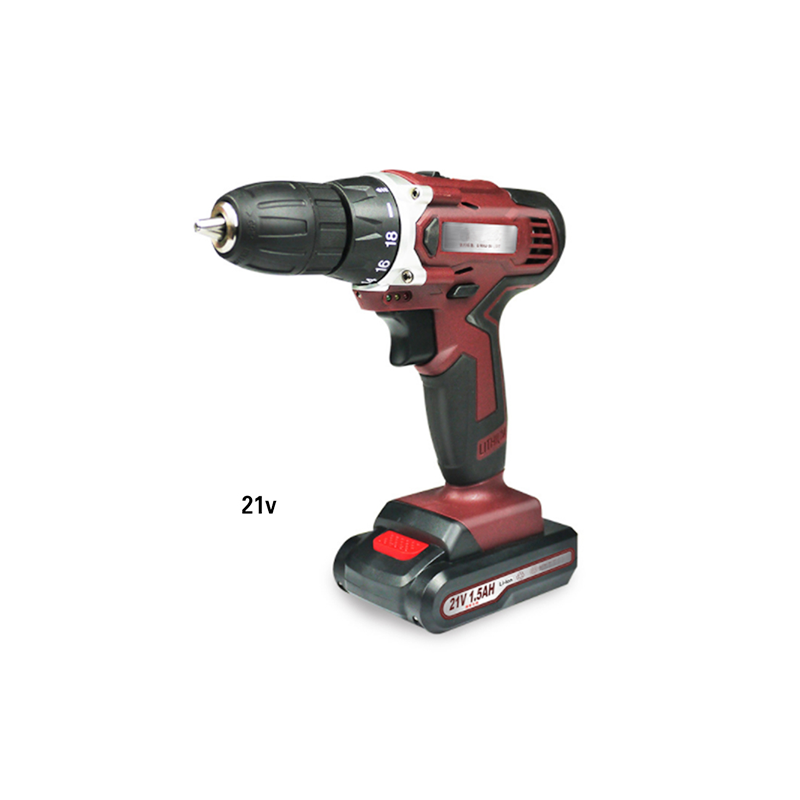
Product Overview
The rechargeable radio drill home tool is a cordless electric hand tool designed for household drilling and fastening tasks. Its rechargeable design helps users avoid the restrictions of a power cord, making it easier to work in tight corners, on ladders, around furniture, or in outdoor household spaces where a wall outlet may not be nearby. The tool is suitable for drilling holes in various materials commonly encountered at home, and its adjustable speed function allows the user to adapt the output according to the task.
Forward and reverse rotation are important features for a home drill. Forward rotation is used for drilling and driving screws into materials, while reverse rotation is used for removing screws or withdrawing the drill bit when needed. This simple directional control makes the tool more versatile than a basic single-direction device. For homeowners who often assemble flat-pack furniture, maintain cabinets, install curtain rods, repair fixtures, or adjust hardware, the reverse function is essential.
The adjustable speed capability gives the tool a stronger advantage over simple on-off drills. Different materials and accessories require different speeds. A lower speed can provide better control when starting a hole, driving screws, or working with delicate materials. A higher speed can improve efficiency when drilling through suitable materials. This flexibility helps reduce damage to the workpiece and improves the user experience, especially for non-professional users who need a forgiving and controllable tool.
High power output is another important characteristic. A household drill should not feel weak when used for everyday tasks. Insufficient torque and unstable output can cause the bit to slip, slow down, or stop during drilling, which wastes time and can damage screws or surfaces. By emphasizing efficient output, this rechargeable drill aims to provide the strength needed for typical home applications while maintaining the convenience and portability expected from a cordless hand tool.
Why a Rechargeable Home Drill Matters
Home maintenance has changed significantly over the last decade. More people now handle small installation and repair tasks themselves, including furniture assembly, wall-mounted storage installation, decorative fitting, hinge adjustment, and light renovation. A dependable rechargeable drill is one of the most useful tools for this environment because it combines drilling and fastening functions in one device. Instead of using manual screwdrivers for every task, users can work faster and with more consistent results.
A rechargeable drill is also safer and more convenient in many household situations because it reduces cable clutter. Cords can become obstacles on floors, stairs, and work surfaces. They may also limit reach and require extension cables, which add inconvenience. A cordless rechargeable tool allows the user to move freely between rooms and work at different angles. This is especially helpful when drilling above shoulder height, working inside cabinets, or moving between multiple installation points.
For occasional users, tool readiness is a major advantage. A rechargeable drill can be stored with its accessories and used whenever a task arises. The user does not need a large compressor, a dedicated power station, or heavy equipment. This practicality makes the product suitable for apartments, houses, rental properties, workshops, and small maintenance teams. It offers a useful balance between portability and productivity.
The value of a rechargeable drill also increases when it is paired with proper accessories and fasteners. Since the company has background in fasteners and hardware, the product can be understood not just as a rotating machine, but as part of a complete fastening and installation workflow. The correct drill bit, screw, anchor, washer, or bracket can make the difference between a strong installation and a poor one. This broader hardware perspective helps the drill fit real household requirements rather than existing only as an isolated electrical product.
Core Advantages Over Competitor Products
One of the main advantages of this rechargeable radio drill is its practical combination of multi-function use, speed control, forward and reverse operation, and household-friendly handling. Some competing tools focus heavily on appearance but provide limited control. Others may offer power but feel too bulky for ordinary home users. This product is designed to meet the needs of common household drilling and fastening work, emphasizing ease of use and efficient performance.
Compared with low-end single-speed drills, adjustable speed gives the user much better control. When driving screws into furniture boards, excessive speed can damage the screw head or strip the material. When drilling a clean starter hole, a slower speed helps guide the bit and prevents wandering. When speed is needed, the user can increase output for faster drilling. This flexibility makes one tool suitable for more tasks, reducing the need for multiple specialized devices.
Compared with corded drills, the rechargeable design improves mobility. While corded tools can provide continuous power, they are often less convenient for small household jobs. Users may spend more time finding an outlet and arranging cables than actually completing the task. A rechargeable drill allows faster setup and easier movement, which is important for home users who value convenience and quick results.
Compared with many compact screwdrivers, this product offers a stronger drilling-oriented function. Small electric screwdrivers are useful for light fastening, but they may struggle when making holes or working with more resistant materials. A rechargeable drill with higher power output can handle a wider range of household duties. This makes it a more complete home tool for users who want one device that can drill, drive, and remove screws.
Another advantage is the company’s manufacturing foundation. Products made by suppliers with experience in hardware, stamping parts, fasteners, and packaging can benefit from better integration between mechanical structure, accessory compatibility, and shipping protection. A drill must not only operate well when new; it must also arrive safely, include properly matched parts, and maintain acceptable performance through repeated use. Manufacturing discipline plays a major role in this outcome.
Application Scenarios in the Home
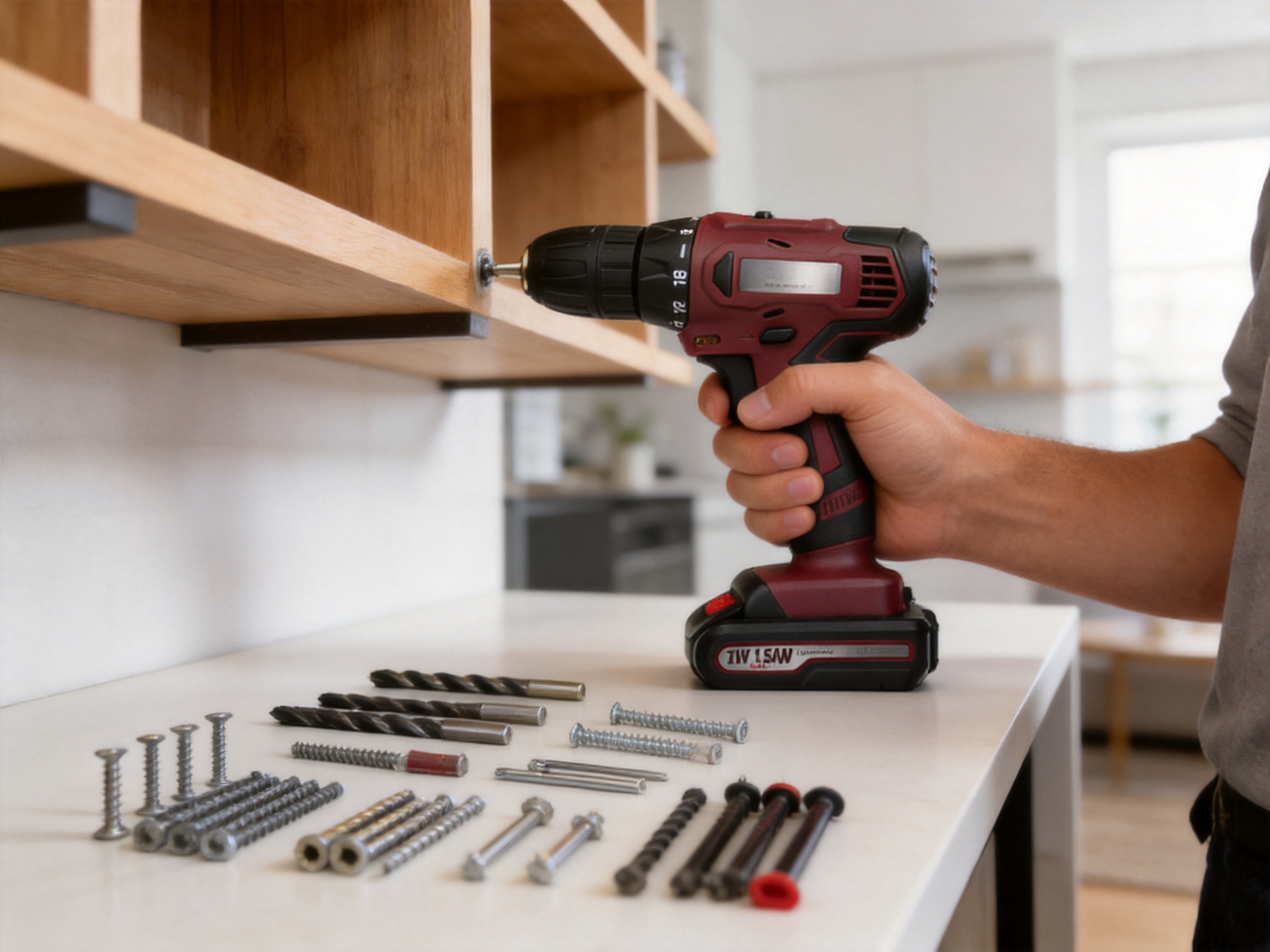
The rechargeable radio drill home tool is suitable for many everyday tasks. In furniture assembly, it can drive screws faster and more evenly than a manual screwdriver. Adjustable speed helps prevent over-tightening, while reverse rotation allows easy correction if a screw is misaligned. This is especially useful for wardrobes, shelves, cabinets, desks, chairs, and storage units.
In wall installation tasks, the drill can help create pilot holes for brackets, hooks, curtain rods, and light fixtures, depending on the material and selected bit. When used correctly with suitable anchors and fasteners, it supports more stable installation. Homeowners often need to mount items securely but may not want a heavy industrial drill. A rechargeable home drill provides a practical middle ground.
In repair and maintenance work, the tool can remove old screws, adjust hinges, tighten loose fixtures, and assist with minor upgrades. Door hardware, handles, cabinet slides, drawer tracks, and household accessories often require periodic adjustment. Reverse rotation is particularly useful in these cases because old screws may need to be removed before replacement.
The tool can also support hobby and craft work. Users working with wood panels, light plastic parts, DIY decorations, storage boxes, and small household projects benefit from a drill that is easy to control. Smooth speed regulation improves accuracy, while cordless operation allows users to work on a bench, balcony, garage area, or temporary workspace without being tied to an outlet.
For property maintenance teams, landlords, and small service providers, a rechargeable drill can improve efficiency during routine work. Tasks such as replacing fittings, assembling units, adjusting locks, or preparing installation points become faster. A portable tool that can be carried between locations helps reduce downtime and improves response speed.
Technical and Functional Highlights
The product’s major functional highlights include rechargeable cordless operation, adjustable speed, forward and reverse rotation, and high power output for efficient household work. These features are not isolated specifications; they work together to improve real use. Cordless operation gives mobility, speed adjustment gives control, directional rotation gives versatility, and output strength gives productivity.
The adjustable speed system is particularly valuable because drilling and fastening are not identical operations. Drilling often requires stable rotation and enough speed to cut material cleanly. Screw driving requires more control, especially near the end of the fastening process. If a tool rotates too quickly at the wrong moment, it may damage the screw, the surface, or the internal thread. A drill that allows speed adjustment gives users the ability to work with more confidence.
Forward and reverse rotation also extend the usable range of the tool. In forward mode, the drill can drive bits and screws into material. In reverse mode, it can remove screws or release a bit that has become tight in the workpiece. This capability is standard in better household drills but is still a key difference compared with simpler rotating tools. For home users, it means fewer interruptions and less need for manual correction.
High power output improves work efficiency because the user can complete tasks with fewer pauses and less manual pressure. Power must be balanced with control, however. A home drill should not be overly aggressive, especially when used by beginners. The design intention of this product is to provide practical power while retaining household usability. That balance is important for comfort and safety.
The overall hand tool format makes it easy to store, carry, and use. Unlike large workshop machinery, a rechargeable home drill can fit in a drawer, cabinet, tool case, or service bag. It can be kept ready for sudden repairs or planned projects. This convenience is one reason rechargeable drills remain among the most popular home tools worldwide.
Product Feature Table
| Feature | Practical Benefit | Advantage for the User |
|---|---|---|
| Rechargeable cordless design | Allows operation without a fixed power cable | Improves mobility in rooms, cabinets, corners, and outdoor household areas |
| Adjustable speed | Supports different drilling and fastening conditions | Helps improve control, accuracy, and surface protection |
| Forward and reverse rotation | Enables screw driving, screw removal, and bit release | Makes the tool more versatile for assembly and repair |
| High power output | Provides stronger working efficiency for common materials | Reduces effort and improves productivity during household tasks |
| Multi-function home tool design | Combines drilling and fastening support in one device | Reduces the need for multiple separate tools |
| Hardware manufacturing background | Connects tool design with fastener and component knowledge | Supports more practical use in real installation scenarios |
Manufacturing Strength Behind the Product
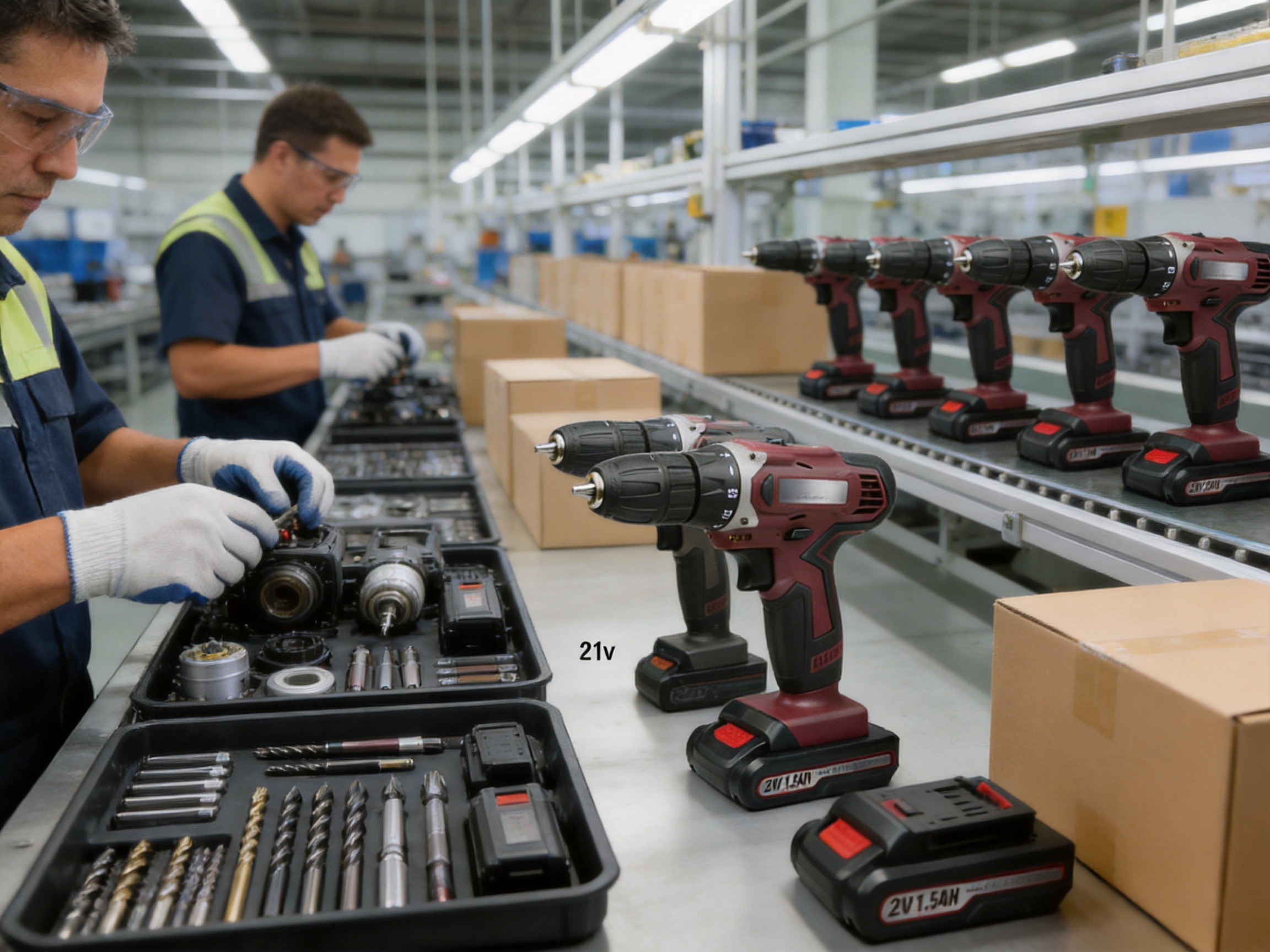
A reliable tool begins long before final assembly. The strength of a rechargeable drill depends on design planning, component selection, metal forming, plastic housing preparation, motor integration, switch assembly, battery management, accessory matching, inspection, packaging, and logistics. Lizhan Hardware Co., Ltd. operates in a manufacturing environment connected with home tools, fasteners, packaging, and stamping parts, which supports a comprehensive production mindset.
Stamping parts are important in many tool and hardware products because they provide shaped metal components with repeatable dimensions. Precision stamping can be used for brackets, contacts, clips, internal supports, and other metal parts depending on the product structure. Consistent stamping quality contributes to stable assembly and long-term reliability. If metal components vary too much, the finished tool may suffer from poor fit, vibration, misalignment, or inconsistent electrical contact.
Fastener knowledge is equally important. Every tool contains screws and mechanical joints, and every user also depends on external fasteners for real work. A manufacturer familiar with machine screws, furniture screws, and general hardware has a stronger understanding of torque, thread engagement, head design, material compatibility, and installation behavior. This knowledge can influence how a drill is built and how it is positioned for end users.
Packaging is another strength that should not be underestimated. Cordless tools often travel through long supply chains before reaching users. They may be handled in warehouses, transported by truck or sea, stored in retail or distribution centers, and delivered to job sites or homes. Strong packaging protects the tool, accessories, and surface finish from damage. Good packaging also improves the user’s first impression and helps keep accessories organized.
The company’s China factory location in Haiyan, Jiaxing City, Zhejiang, and its Thailand warehouse in Chonburi support production and distribution advantages. A manufacturing base in Zhejiang provides access to established industrial supply chains, while overseas warehousing can improve regional responsiveness. For buyers, this can mean better support for shipment planning, inventory preparation, and international order coordination.
Advanced Process Control and Quality Management
Advanced manufacturing is not only about having machinery. It is about controlling each step so that the final product performs as expected. For a rechargeable drill, process control can include incoming material inspection, dimensional checking of metal and plastic components, motor performance testing, switch function testing, battery charging verification, rotational direction testing, speed response evaluation, torque-related checking, noise observation, vibration monitoring, appearance inspection, accessory confirmation, and package drop-resistance planning.
Incoming inspection is the first line of defense. Components such as housings, switches, motors, battery cells, charging elements, screws, chucks, gears, and accessory parts must meet suitable specifications before assembly. If poor materials enter production, final testing becomes more difficult and costly. A disciplined supplier controls quality from the beginning rather than relying only on final inspection.
During assembly, accurate alignment matters. A cordless drill contains rotating parts that must run smoothly. Poor alignment can lead to vibration, uneven wear, heat generation, and reduced user comfort. Production teams must ensure that internal components are fitted correctly and that fastening points are tightened properly. This is where hardware assembly experience and fastening knowledge become important.
Electrical and functional testing are essential. The tool must charge correctly, respond to the trigger or speed control system, rotate in the selected direction, and maintain stable operation. Reverse and forward functions should switch reliably. The drill should not feel erratic or unstable under normal use. Testing helps ensure that each unit meets practical performance expectations before packaging.
Appearance and ergonomic inspection also matter. A home tool is handled directly by the user, so surface finish, grip comfort, switch feel, and visible assembly quality affect confidence. Sharp edges, loose parts, or poor molding marks can reduce perceived quality. A well-made drill should look and feel dependable before it is even switched on.
How the Drill Supports Better Work Efficiency
Efficiency in household work is not simply about maximum speed. True efficiency means completing the task correctly with fewer mistakes, less fatigue, less setup time, and fewer tool changes. The rechargeable radio drill supports this type of efficiency through cordless mobility, adjustable speed, multi-function use, and practical power output.
For example, when assembling furniture, a user may need to drive dozens of screws. Manual screwdrivers can cause wrist fatigue and uneven tightening. A powered drill shortens the process and makes the work more consistent. With speed control, the user can slow down near the final tightening point to avoid damaging the furniture board. If a screw needs to be removed, reverse rotation solves the problem immediately.
When installing accessories around the home, the user often moves between different positions. A corded drill requires constant cable management. A rechargeable drill can move with the user. This reduces interruptions and makes it easier to work in awkward locations, such as inside closets, near ceilings, behind appliances, or on balconies.
The drill also helps improve project confidence. Many home users hesitate to begin repair or installation work because they lack the right tool. A multi-function rechargeable drill lowers the barrier. It is not as intimidating as heavy industrial equipment, but it is more capable than a manual screwdriver. This middle position makes it especially attractive for households that want independence in basic maintenance.
Material Compatibility and Responsible Use
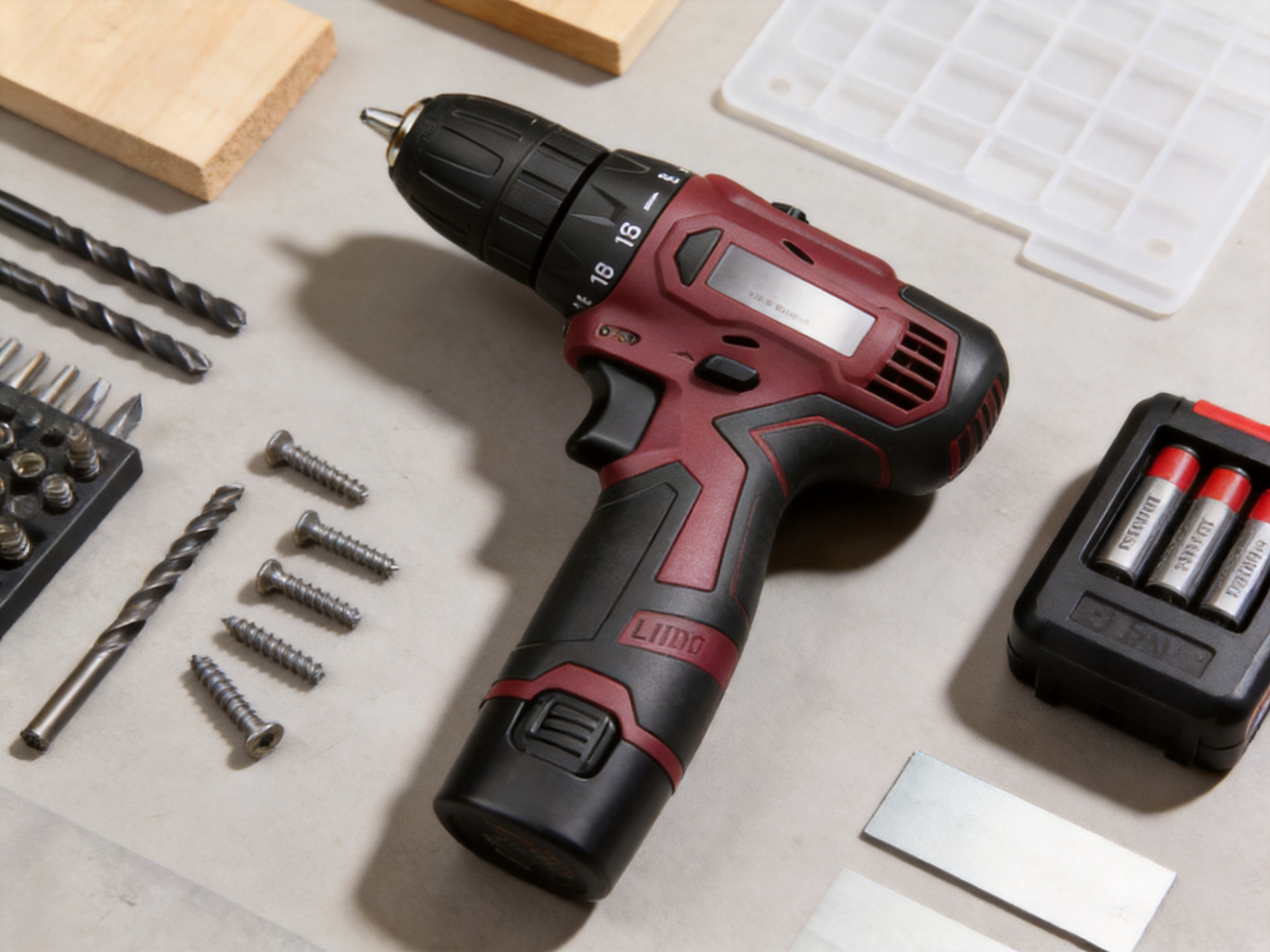
The product is described as suitable for drilling holes in various materials at home. In practical terms, users should always choose the correct bit and working method for each material. Wood, plastic, composite boards, soft metal, and wall surfaces require different accessories and speeds. A tool’s performance depends not only on motor output but also on proper bit selection and user technique.
For wood and furniture boards, a sharp wood bit or pilot hole method can improve accuracy and reduce splitting. For plastic, lower speed and controlled pressure help avoid melting or cracking. For light metal applications, suitable metal bits and careful drilling pressure are important. For wall materials, users should identify the wall type and choose appropriate anchors and bits. Hard masonry or concrete may require specialized equipment depending on the task.
Responsible use also means avoiding overload. A household rechargeable drill is designed for practical home applications, not continuous heavy industrial drilling. Users should allow the tool to rest if it becomes hot and should not force the bit through material. Letting the tool work at the correct speed with the right accessory improves results and extends service life.
Safety practices are also important. Users should wear eye protection when drilling, secure loose workpieces, keep hands away from rotating parts, and ensure that walls do not contain hidden electrical wires or pipes before drilling. The tool’s convenience should be matched with careful operation.
Design for Homeowners, DIY Users, and Maintenance Teams
The rechargeable radio drill home tool is designed for a broad user group. Homeowners appreciate its convenience for occasional tasks. DIY users value its flexibility for projects. Maintenance teams benefit from its portability and ability to handle repeated small jobs. This broad appeal comes from a feature set that addresses common work needs rather than serving only one narrow application.
For beginners, the most important qualities are control, simplicity, and confidence. Adjustable speed helps beginners avoid sudden aggressive rotation. Forward and reverse operation is easy to understand. Cordless design reduces setup complexity. A tool that feels approachable encourages users to complete more tasks themselves.
For experienced DIY users, versatility is more important. They may use the drill for furniture modification, storage construction, bracket installation, garden accessories, light repair work, or hobby projects. A compact rechargeable drill can become one of the most frequently used tools in their collection because it is quick to pick up and easy to apply.
For maintenance users, reliability and convenience matter most. A tool that can be carried between rooms or properties and used for different fastening tasks saves time. It can be paired with suitable bit sets, screws, anchors, and hardware accessories to form a compact service kit.
Integration with Fasteners and Hardware Solutions
One of the strongest practical advantages of this product is its relationship to the hardware and fastener industry. Drilling and fastening are connected operations. A drill creates the hole or drives the screw, but the final holding strength depends on the fastener, material, and installation technique. A company with experience in machine screws, furniture screws, and general hardware can better understand the real conditions in which a drill is used.
Furniture screws, for instance, must be driven with appropriate torque. Too little force leaves the joint loose; too much force strips the board or damages the screw head. Adjustable speed helps the user manage this process. Machine screws often require clean alignment and controlled driving, especially when threading into metal inserts or prepared holes. Reverse rotation allows correction if threading begins incorrectly.
Stamping parts also connect to household installation. Brackets, plates, clips, hinges, and support components are often produced by stamping processes. A drill is frequently used to install these parts. Understanding stamped hardware helps the manufacturer appreciate how drilling tools interact with installation accessories in real applications.
This integrated view creates value for distributors and buyers who want more than a single product. A rechargeable drill can be supplied as part of a broader home tool and hardware program. The company’s category coverage, including new products, home tools, fasteners, packaging, and stamping parts, supports product line expansion and complementary sourcing.
Packaging and Presentation Advantages
Packaging is often treated as an afterthought, but for tools it is a key part of quality. A rechargeable drill may include the main tool, accessories, charging components, documentation, and protective inserts. Each part must remain secure during transport. Poor packaging can lead to scratches, broken accessories, missing parts, or disappointed customers.
Effective packaging should protect the tool from vibration and impact. It should also make the product easy to identify, store, and distribute. For retail or wholesale buyers, clear and reliable packaging reduces complaints and improves inventory handling. For end users, organized packaging makes the tool feel more complete and professional.
Because the company works within the package category as well as hardware products, it can approach packaging with practical manufacturing awareness. Good packaging must balance protection, cost, appearance, and logistics efficiency. It should be strong enough for transport while avoiding unnecessary bulk. This balance supports both customer satisfaction and supply chain performance.
Competitive Position in the Home Tool Market
The rechargeable home tool market includes many options, from very small electric screwdrivers to high-end professional cordless drills. This product is positioned as a practical household solution that offers more capability than a basic screwdriver while remaining approachable for home users. Its feature combination makes it suitable for buyers who want a dependable everyday drill without excessive complexity.
In comparison with ultra-low-cost tools, the main advantage is a more complete functional profile. Adjustable speed, forward and reverse rotation, and efficient power output provide real working benefits. A tool that lacks these features may appear inexpensive at first but can frustrate users during actual tasks. Better control reduces errors and improves user satisfaction.
In comparison with heavy professional drills, the advantage is household convenience. Professional tools may provide very high torque and advanced features, but they can be heavier, more expensive, and unnecessary for ordinary home work. A home-focused rechargeable drill offers a better match for users who need regular practical performance rather than job-site intensity.
In comparison with generic private-label products, the company’s hardware manufacturing background strengthens credibility. Buyers often want suppliers who understand metal parts, fasteners, assembly, and packaging. This knowledge supports more stable product development and reduces the risk of mismatched components or weak after-sales support.
Supply and Service Strength
For international buyers, product quality is only one part of supplier evaluation. Communication, production planning, packaging coordination, shipping support, and after-sales responsiveness also matter. Lizhan Hardware Co., Ltd. provides contact channels including email, phone, WhatsApp, and WeChat communication, with Shawn listed as the contact person. This accessibility can help buyers clarify product details, discuss orders, and coordinate cooperation.
The company address includes a China factory in Wanghai town, Haiyan, Jiaxing City, Zhejiang, and a Thailand warehouse in Banbueng, Chonburi. This structure can support manufacturing and distribution planning for customers in different regions. A warehouse presence outside China may help with stock coordination and regional logistics depending on order arrangements.
Supplier strength also comes from product category diversity. Since the company is associated with new products, home tools, fasteners, packages, and stamping parts, it may support customers who want to develop broader hardware assortments. Instead of sourcing each item from an unrelated supplier, buyers may benefit from working with a manufacturer that understands multiple connected categories.
Quality Expectations for Buyers
When evaluating a rechargeable drill, buyers should consider several quality expectations. The tool should start smoothly, maintain stable rotation, switch direction reliably, and respond predictably to speed adjustment. The housing should be properly assembled, without loose parts or uncomfortable edges. The chuck or bit holding system should secure accessories appropriately for household tasks. The battery and charging system should be checked according to applicable product requirements.
Buyers should also review packaging quality, accessory completeness, appearance standards, and user documentation. A good product is easier to sell when it arrives complete and clearly presented. Missing accessories or unclear instructions can create avoidable customer service issues.
Another important expectation is consistency between samples and bulk orders. Advanced manufacturing processes should ensure that mass-produced units match approved samples in appearance, function, packaging, and performance range. This requires controlled procurement, assembly standards, and inspection procedures.
For long-term cooperation, buyers may also discuss customization needs, including packaging design, accessory configurations, product labeling, and market-specific requirements. A manufacturer with hardware and packaging experience is better positioned to support these discussions.
Maintenance Tips for Longer Service Life
Proper maintenance helps users get better performance from a rechargeable drill. After use, the tool should be cleaned of dust and debris, especially around ventilation areas, the chuck, and the switch region. Bits should be removed and stored properly to prevent rust or damage. The tool should be kept in a dry location away from excessive heat, moisture, and direct impact.
Battery care is also important. Users should charge the tool according to the supplied instructions and avoid storing it completely discharged for long periods if the battery type requires maintenance charging. The charger should be kept dry and used only as intended. If the tool shows unusual heat, smell, noise, or charging behavior, it should be inspected before further use.
During operation, users should avoid forcing the tool. If drilling becomes difficult, the correct response is to check the bit, material, speed, and pressure. A dull bit can make even a powerful drill feel weak. Using the right accessory reduces strain on the motor and improves the finished result.
Fasteners should also be matched correctly. A damaged screw head, wrong bit size, or unsuitable screw type can cause slipping and poor installation. Since the tool is part of a broader fastening workflow, good results depend on both the drill and the hardware being used.
Environmental and Practical Efficiency Considerations
A rechargeable home drill can support more sustainable practical behavior by helping users repair, adjust, and maintain household items instead of replacing them prematurely. Loose furniture, damaged hinges, unstable brackets, and small installation issues can often be fixed with basic tools. When a household has a reliable drill available, repair becomes easier and more likely.
Efficient power use also matters. Cordless tools should deliver useful work without unnecessary energy waste. While exact energy performance depends on battery and motor configuration, the general advantage of a well-designed rechargeable tool is that it provides power where needed and can be stored for repeated use. Users should charge responsibly and follow battery care instructions to support longer product life.
Durable packaging and organized accessories can reduce loss and damage. If users keep bits, chargers, and the tool together, they are less likely to purchase replacements unnecessarily. A well-packaged tool that survives shipping without damage also reduces waste related to returns and replacement shipments.
Why Manufacturing Experience Matters More Than Appearance Alone
Many cordless drills look similar from the outside. A bright housing, comfortable shape, and attractive package can create a positive first impression. However, real quality depends on what happens inside the product and throughout the manufacturing process. Internal fit, switch quality, motor alignment, gear engagement, battery safety, screw fastening, and inspection discipline determine whether the tool remains satisfying after repeated use.
A manufacturer connected to hardware production understands that small details matter. A screw that is too soft may strip. A stamped component that is slightly misaligned may affect assembly. A plastic part with poor dimensional stability may create gaps. A poorly selected accessory may reduce tool performance. These details are not always visible in product photographs, but they determine long-term value.
This is why the company’s experience in fasteners, stamping parts, packaging, and home tools is relevant to the rechargeable radio drill. The product is not only an electrical device; it is a mechanical and hardware product. It must endure hand pressure, torque reaction, vibration, accessory changes, transport, storage, and repeated household use. Manufacturing knowledge across related categories improves the chance of producing a tool that performs consistently.
Q&A Section
What is the rechargeable radio drill home tool used for?
It is used for common household drilling and fastening tasks, including furniture assembly, pilot hole drilling, screw driving, screw removal, fixture installation, cabinet adjustment, and light repair work. It is designed as a practical multi-function rechargeable hand tool for home applications.
What makes this drill different from a basic electric screwdriver?
A basic electric screwdriver is mainly intended for light fastening. This rechargeable drill provides broader drilling and fastening capability, adjustable speed, forward and reverse rotation, and higher power output for more efficient household work. It is more versatile for users who need both drilling and screw-related functions.
Why is adjustable speed important?
Adjustable speed allows the user to match the tool’s output to the task. Lower speed improves control when starting holes or driving screws, while higher speed can improve drilling efficiency in suitable materials. This helps reduce mistakes, protect surfaces, and improve work quality.
What is the benefit of forward and reverse rotation?
Forward rotation is used for drilling and driving screws. Reverse rotation is used for removing screws or backing out a drill bit. This feature makes the tool more useful for assembly, repair, correction, and maintenance work.
Can the drill be used on different materials?
Yes, it is intended for drilling holes in various household materials. Users should choose the correct drill bit and speed for each material, such as wood, plastic, composite board, soft metal, or certain wall surfaces. For very hard materials, specialized tools or accessories may be required.
Why is cordless rechargeable operation useful?
Cordless operation allows the user to work without being limited by a power cable. This improves mobility, reduces setup time, and makes it easier to work in tight spaces, on furniture, near ceilings, or in areas where electrical outlets are inconvenient.
How does the company’s fastener background improve the product?
Fastener knowledge helps the manufacturer understand torque, screw engagement, furniture assembly, machine screw use, and installation requirements. This practical hardware experience supports better product positioning and helps the drill work effectively in real fastening applications.
Why is packaging important for a rechargeable drill?
Packaging protects the tool, accessories, and charging components during transportation and storage. Good packaging reduces damage, keeps parts organized, improves presentation, and supports better customer satisfaction.
Is this drill suitable for professional industrial use?
The product is positioned primarily as a household rechargeable drill for home tool applications. It can support maintenance and light service work, but users should select heavier professional equipment for continuous industrial drilling or demanding job-site conditions.
How should users maintain the drill?
Users should keep the tool clean and dry, store accessories properly, follow charging instructions, avoid overloading the motor, use correct bits and fasteners, and stop using the tool if unusual heat, smell, sound, or charging behavior occurs.
Conclusion
The rechargeable radio drill home tool LZ000RD000001 is a practical solution for modern households and maintenance users who need cordless convenience, adjustable speed, forward and reverse rotation, and efficient power output. Its value lies in the balance between usability and performance. It is simple enough for ordinary home users but versatile enough to support a wide range of drilling and fastening tasks.
Compared with basic screwdrivers, it offers broader function. Compared with corded drills, it offers better mobility. Compared with heavy professional tools, it offers more household-friendly convenience. These advantages make it a strong option for furniture assembly, repair work, fixture installation, hobby projects, and general home maintenance.
The manufacturing background behind the product further strengthens its market position. Lizhan Hardware Co., Ltd. operates in connected categories such as home tools, fasteners, packaging, and stamping parts, giving it practical knowledge of the full hardware workflow. This experience supports better component integration, assembly discipline, packaging protection, and product usefulness. For buyers seeking a rechargeable drill supported by hardware manufacturing insight, this product offers a compelling combination of function, convenience, and supplier capability.
References
International Electrotechnical Commission. Safety of Motor-Operated Electric Tools, Transportable Tools and Lawn and Garden Machinery.
International Organization for Standardization. Quality Management Systems: Fundamentals and Vocabulary.
Tool Engineering Handbook. Principles of Drilling, Fastening, Torque Control, and Hand Tool Design.
Modern Manufacturing Processes. Metal Stamping, Assembly Control, Packaging Protection, and Product Inspection Methods.
Battery Powered Hand Tool Design Guide. Practical Considerations for Rechargeable Tool Performance, Storage, and User Safety.