Introduction
A dependable screwdriver set is one of the most useful tools in a home, workshop, maintenance room, assembly line, or professional service kit. Although screwdrivers are simple hand tools, their design has a direct effect on fastening accuracy, user comfort, work efficiency, and the service life of the fastener. A poorly balanced screwdriver may slip, damage the screw head, or cause hand fatigue. By contrast, a well-designed set with comfortable handles, accurately formed tips, and consistent dimensional quality can make everyday fastening work faster, safer, and more reliable.
The Rubber and Plastic Handle Screwdriver Set is designed to meet these practical needs. It combines the durability and structural stability of plastic with the comfort and grip advantages of a rubberized handle surface. The result is a versatile hand-tool solution for household repairs, furniture assembly, workshop maintenance, equipment installation, and general fastening applications.
This product is supplied by Lizhan Hardware Co., Ltd., a hardware manufacturer with production and supply operations in China and warehouse support in Thailand. The company’s wider product portfolio includes fasteners, self-drilling screws, drywall screws, sheet metal screws, roofing screws, furniture screws, stamping parts, metal hooks, and related hardware products. This background in metal forming, fastener production, tooling, and hardware quality control provides a useful manufacturing foundation for producing complementary hand tools such as screwdriver sets.
The value of this screwdriver set is not limited to its appearance. Its advantages come from the relationship between handle design, tip accuracy, shaft construction, manufacturing control, product selection, and packaging. For distributors, importers, hardware retailers, furniture manufacturers, maintenance companies, and end users, these factors determine whether a screwdriver set becomes a dependable long-term product or merely an inexpensive item with inconsistent performance.

Rubber and plastic handle screwsdriver set
Product Overview
The Rubber and Plastic Handle Screwdriver Set is a multi-piece hand-tool kit intended for common screwdriving tasks. Each screwdriver consists of a shaped handle, a metal shaft, and a working tip designed to engage with a compatible screw head. Different sizes and tip configurations allow users to select a suitable tool for the fastening job instead of relying on one screwdriver for every application.
The product category is commonly associated with household tools and general hardware. It can be used for tightening or loosening screws in furniture, cabinets, appliances, fixtures, electrical housings, workshop equipment, toys, storage systems, and many other products. The set format is particularly useful because users can keep several commonly required sizes together in one package.
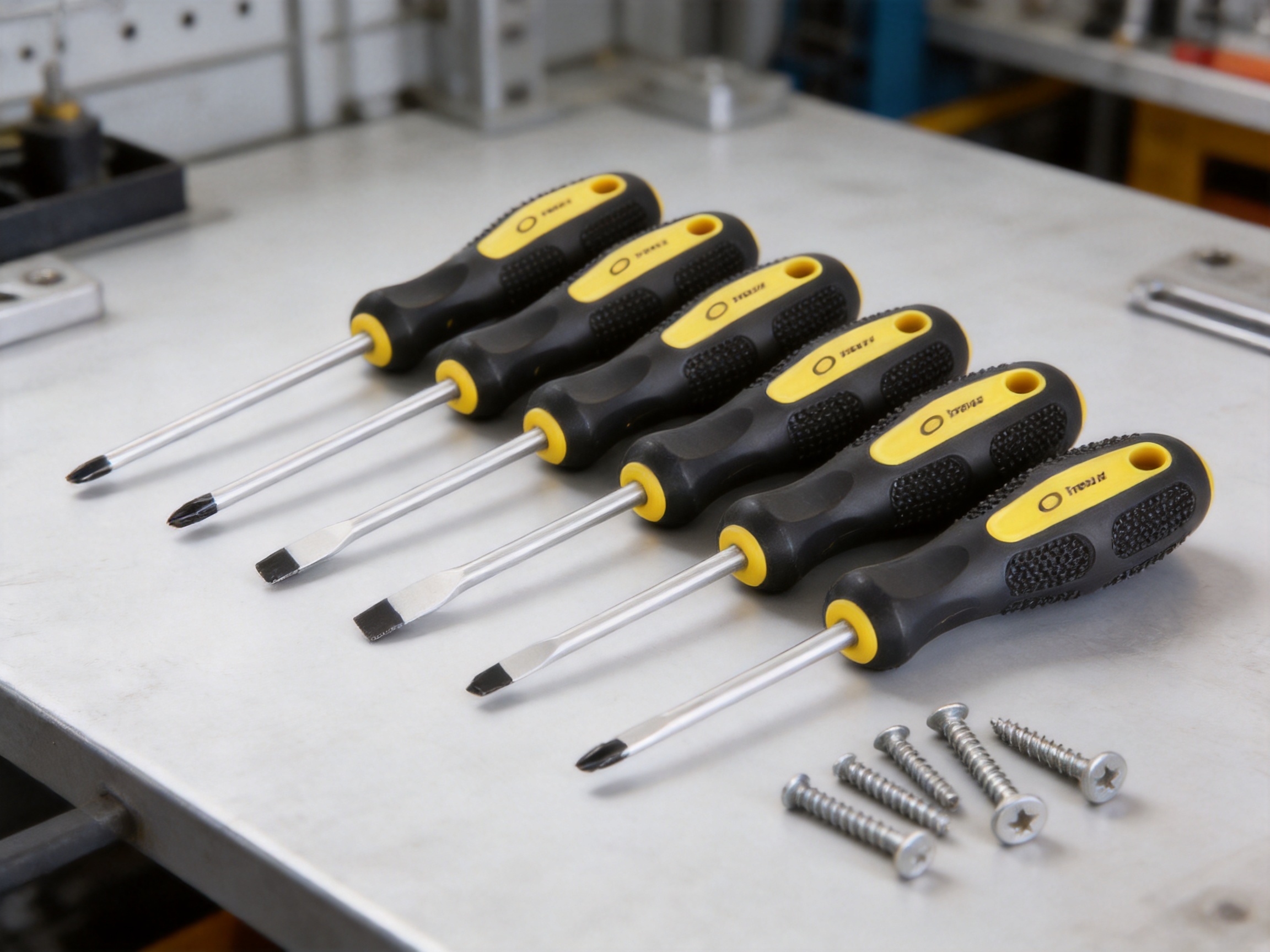
The handle uses a combination of rubber and plastic. The plastic portion provides a firm internal structure and supports the connection between the handle and shaft. The rubber portion contributes a softer contact surface that can improve comfort, grip, and control. This two-material approach is more practical than using a completely rigid plastic handle for applications that require repeated hand force.
A screwdriver handle must perform several functions at the same time. It must hold the shaft securely, transfer torque efficiently, resist cracking under ordinary use, remain comfortable during repeated operation, and provide enough surface friction to reduce slipping. The combination of plastic and rubber is well suited to these requirements because the two materials can be selected and arranged according to their different mechanical roles.
The set is suitable for professional and non-professional users. A home user may need it for assembling furniture or repairing a cabinet hinge. A maintenance worker may use it for equipment covers, access panels, and general adjustment work. A furniture or hardware business may include it as part of an installation kit. A retailer may offer it as an accessible, practical tool set for customers who need a basic range of screwdrivers without purchasing each tool separately.
Key Product Advantages
Comfortable Rubberized Grip
The most visible advantage of the product is its rubber and plastic handle construction. A hard, smooth handle can become uncomfortable when the user applies repeated torque. A rubberized outer surface helps create a more secure contact area between the hand and the tool. This can reduce unnecessary sliding and help the user maintain better control during fastening.
Grip comfort is important even for short jobs. Users often work in different positions, including overhead, inside cabinets, around machinery, or in narrow maintenance areas. In these situations, a handle that feels secure can be easier to control than one with a completely smooth surface. The rubberized design also supports a more natural hand position, particularly when the user needs to make several turns before the screw is fully tightened or removed.
Compared with basic all-plastic screwdrivers, a rubberized handle may provide a more pleasant tactile experience. Compared with highly specialized professional tools, it can offer a practical balance between cost and everyday usability. This makes the set appropriate for a broad customer base rather than only one specific trade.
Balanced Torque Transfer
Torque transfer is the ability of the handle to deliver turning force to the shaft and screw. A handle that is too small may be difficult to turn, while a handle that is poorly shaped may cause the user’s hand to shift during operation. The contoured rubber and plastic construction is intended to give the user a stable area for applying force.
A stable handle does not eliminate the need to select the correct screwdriver tip. However, when the tip matches the screw head, a comfortable handle can make it easier to maintain alignment and apply controlled pressure. This helps reduce cam-out, which occurs when the screwdriver slips out of the screw recess during rotation. Lower slip risk can protect both the tool tip and the screw head from premature damage.
For furniture assembly and household repair, controlled torque is often more valuable than extreme torque capacity. Many screws are installed into wood, plastic, thin sheet metal, or composite panels. Excessive force may strip the thread or damage the material. A handle that supports measured control helps users complete the task without unnecessarily over-tightening the fastener.
Useful Range in One Set
A multi-piece set gives users access to different tool sizes and tip types in one organized purchase. This is more convenient than buying individual screwdrivers only after a particular need appears. It also helps reduce interruptions during assembly and maintenance work.
For retailers and distributors, a set can be easier to merchandise and explain than a large collection of loose tools. Customers can quickly understand that the package is intended to cover common screwdriving requirements. For businesses, the set format can simplify storage, inventory management, and distribution.
The set can also be used as a starter tool kit. New homeowners, students, workshop users, rental-property maintenance teams, and small businesses often need a basic set that offers practical coverage without the cost or complexity of a highly specialized professional tool system.
Suitable for Everyday Applications
The product is designed for general fastening work rather than a single narrow application. Typical uses may include assembling tables, chairs, shelves, cabinets, storage units, handles, hinges, brackets, signs, and light fixtures. It may also be used for opening covers, adjusting hardware, installing fittings, and performing routine maintenance.
Its broad usefulness creates opportunities across several distribution channels. Hardware stores can sell the set to individual consumers. Furniture suppliers can offer it as an installation accessory. Online retailers can present it as a practical home maintenance product. Industrial suppliers can include it in general-purpose maintenance assortments. Promotional and project-supply businesses can also use the product where a functional, reusable tool is preferred.
Practical Cost-to-Performance Position
One of the strongest competitive benefits of a rubber and plastic handle screwdriver set is its balance between usability and affordability. Not every customer requires insulated tools, interchangeable precision blades, impact-rated shafts, or specialist torque equipment. For many ordinary jobs, a well-made standard set provides sufficient performance at a more accessible price.
A cost-effective product should not be understood as a product made without quality control. Rather, it should use an efficient design and manufacturing process to deliver the features most users actually need. The combination of common sizes, durable handle construction, standard metal shafts, and organized packaging can help control production and distribution costs while preserving everyday functionality.
Handle Design and User Experience
Role of the Plastic Core
The plastic part of the handle forms the structural body around the shaft connection. It gives the handle its overall shape and helps maintain dimensional stability. A suitable engineering or tool-grade plastic can provide a consistent form that is easy to mold, repeatable in production, and resistant to ordinary handling impacts.
The plastic core also helps control the relationship between the shaft and the outer grip. If this connection is not properly designed, the handle may loosen, rotate independently, or crack under use. For this reason, handle molding and shaft insertion must be coordinated carefully. The internal cavity, shaft geometry, and material flow all contribute to the final strength of the tool.
Role of the Rubber Surface
The rubber section adds softness and friction where the hand makes contact. Depending on the design, it may cover selected grip zones, create textured areas, or form a continuous outer layer. These surfaces can provide greater control than polished plastic, particularly when the user’s hands are dry, slightly oily, or exposed to workshop dust.
Rubberized materials also allow designers to create contrasting colors and visual zones. Although appearance is not a substitute for performance, clear color separation can help users identify the grip area, organize different tools, and recognize the product quickly in a retail display or toolbox.
Ergonomic Form
An ergonomic handle should support the hand without creating sharp pressure points. Rounded edges, carefully selected diameters, and a shape that fits the palm can help distribute force across a wider contact area. This is especially useful when the user must repeat the same motion many times.
Ergonomics also concerns tool control. The user should be able to keep the screwdriver aligned with the screw head while turning. A handle that is too narrow may require excessive finger pressure, while one that is too large may be difficult for users with smaller hands. A practical set can address this by including different handle sizes or by selecting a general-purpose shape that is comfortable for a broad range of users.
Shaft and Tip Performance
The working shaft and tip are the parts that directly contact the fastener. Their dimensional accuracy, hardness, surface condition, and connection to the handle affect the service performance of the complete screwdriver. Even an excellent handle cannot compensate for a tip that does not fit the screw head correctly.
Tip geometry should correspond to the intended screw profile. Common profiles include slotted, Phillips, Pozidriv, Torx, hexagonal, and other specialized forms. The exact assortment depends on the product configuration and target market. A distributor should confirm the available tip types and sizes before placing an order, especially when serving a market with established preferences for particular screw standards.
Accurate tip dimensions help maximize contact between the screwdriver and fastener. Proper contact can reduce the risk of slipping, rounding, or damaging the recess. It can also make it easier for the user to apply force along the centerline of the screw. This is particularly important when working with furniture screws, sheet metal screws, and general-purpose hardware fasteners.
The shaft should also be straight and securely fitted. A bent shaft can affect alignment and make the tool difficult to use. A loose shaft may reduce confidence and create a safety concern. Manufacturing controls should therefore include dimensional inspection, visual checks, and functional evaluation of the connection between shaft and handle.
Manufacturing Strengths and Production Capabilities
Lizhan Hardware Co., Ltd. operates from a China factory at No. 2 Yuanrun Park, DaiFeng Road, Wanghai Town, Haiyan, Jiaxing City, Zhejiang, with warehouse support in Banbueng, Chonburi, Thailand. This structure offers a combination of manufacturing capability and regional logistics support. The China facility can support production and coordination, while the Thailand warehouse can help serve customers and distribution channels that require closer regional inventory access.
The company’s experience with screws, fasteners, metal hooks, and stamping parts is relevant to the production of hand tools because these product categories depend on many of the same fundamental manufacturing disciplines. They require material control, forming accuracy, tooling maintenance, surface treatment, inspection, packaging, and reliable order coordination.
Tooling and Mold Control
Handle production commonly depends on molds that define the product’s outer shape, grip pattern, dimensions, and material interface. Consistent mold condition is important because wear or damage may cause variations in handle size, surface texture, or part alignment. A manufacturer with experience in hardware tooling can establish inspection and maintenance routines that help keep production stable.
For rubber and plastic handles, mold design must account for material flow, shrinkage, parting lines, insert placement, and cooling. If two materials are used in a combined construction, the interface between them must be considered during product development. Good tooling practice helps reduce flash, uneven edges, incomplete filling, and visible defects.
Plastic Molding and Rubber Overmolding
The plastic component may be formed through an injection molding process, in which heated plastic is injected into a prepared mold cavity. The process allows manufacturers to produce repeated shapes with consistent dimensions. Important variables include material preparation, injection pressure, temperature, holding time, cooling time, and mold condition.
The rubberized portion may be applied through a secondary molding or overmolding process, depending on the handle design. Overmolding requires accurate positioning of the plastic core and reliable bonding or mechanical interlocking between the materials. Production staff must control the interface carefully so that the grip does not peel, shift, or separate during normal use.
Although the exact material formulation and process parameters depend on the production specification, the general objective is consistent: the handle should remain firmly assembled, comfortable to hold, and visually uniform across the set. Process control is more important than simply selecting a soft outer material, because an attractive surface has limited value if the connection lacks durability.
Metal Forming and Shaft Preparation
The company’s fastener and stamping background supports expertise in metal preparation and forming. Screwdriver shafts may require cutting, shaping, grinding, heat treatment, surface finishing, and tip forming. Each operation can influence the final performance of the tool.
Cutting and straightening establish the basic shaft dimensions. Tip forming or grinding creates the working profile. Heat treatment may be used to develop the required balance of hardness and toughness, although the exact treatment depends on the selected steel and product requirements. Surface finishing can help provide a clean appearance and protect the metal from ordinary environmental exposure.
The shaft must be hard enough to resist rapid wear at the tip but tough enough to avoid brittle failure during normal torque application. A tool that is excessively soft may round quickly. A tool that is excessively hard but poorly balanced may be more vulnerable to cracking. Production engineering therefore requires a suitable relationship between material, geometry, heat treatment, and intended application.
Fastener Manufacturing Experience
Lizhan Hardware Co., Ltd. identifies sheet metal screws, self-drilling screws, drywall screws, roofing screws, and furniture screws among its product strengths. These products require knowledge of thread geometry, head formation, material selection, tooling, coating, and inspection. Such experience can support the development of screwdriver sets because the tool and fastener must work together.
Understanding screw production helps a manufacturer recognize the importance of tip compatibility. For example, a screw head must be formed with a recess that can accept a corresponding driver profile. If the driver tip is dimensionally inconsistent, the fastener may be damaged even when the screw itself meets its specifications. A company active in the fastener sector is well positioned to appreciate this interaction across the complete fastening system.
Inspection and Quality Control
Quality control should be applied at several stages rather than only at final packing. Incoming materials may be checked for appearance, dimensions, and consistency. During production, operators and inspectors can monitor molded handle quality, shaft dimensions, tip shape, surface condition, and assembly security. Finished products can then be reviewed for function, appearance, assortment, and packaging accuracy.
Typical checks for a screwdriver set may include visual inspection for cracks, flash, scratches, exposed defects, incomplete rubber coverage, or poor alignment. Dimensional checks can confirm shaft length, handle size, and tip profile. Assembly checks can evaluate whether the shaft remains securely fixed in the handle. Functional checks may involve controlled turning or torque testing according to the customer’s specification.
For export customers, documentation and inspection requirements may vary by market. A manufacturer should therefore confirm the buyer’s technical specifications, labeling requirements, packaging standards, sampling plan, and any required test reports before mass production. Clear communication helps prevent misunderstandings and supports consistent quality from the first order to repeat orders.

How the Product Compares with Basic Alternatives
| Comparison Factor | Rubber and Plastic Handle Screwdriver Set | Basic All-Plastic Set | Individual Loose Screwdrivers | Specialized Premium Tool System |
|---|---|---|---|---|
| Grip comfort | Rubberized contact areas can improve comfort and control | May feel hard or slippery during repeated use | Depends on the individual tool design | Usually high, but at a higher purchase cost |
| Range of use | Several common tools supplied together | Often suitable for basic household tasks | Range must be built separately | May include extensive professional coverage |
| Purchase convenience | One package provides an organized assortment | Convenient for simple tasks | Requires separate selection and purchase | May involve complex selection |
| Cost positioning | Balanced everyday value | Usually low initial cost | Varies by brand and quantity | Generally higher investment |
| Target users | Homes, workshops, maintenance, furniture, and general hardware | Occasional household users | Users who need specific tools only | Professional technicians and specialized trades |
| Storage and merchandising | Suitable for organized packaging and retail presentation | Usually easy to store | Loose tools can be harder to manage | Often supplied in cases or systems |
The comparison shows that the product occupies a practical middle position. It provides more grip-oriented design than the simplest all-plastic tool, greater convenience than purchasing loose screwdrivers, and a more accessible cost structure than a highly specialized professional system. This positioning can be attractive to buyers who want dependable daily functionality without paying for features they may rarely use.
Competitive advantage should be evaluated in relation to the intended application. A general-purpose screwdriver set is not designed to replace insulated electrical tools, precision electronics drivers, impact drivers, or calibrated torque tools. Its strength is versatility for ordinary fastening work. Clear positioning allows retailers and distributors to present the product accurately and build customer trust.
Applications in Different Markets
Household Maintenance
Homes contain many screw-fastened items, including furniture, drawer slides, cabinet handles, hinges, brackets, locks, storage systems, and small appliances. A screwdriver set stored in a convenient location can help users complete routine tasks without calling a service provider for every minor adjustment.
The rubberized handle is useful for users who may not work with tools every day. A comfortable grip can make the product less intimidating and easier to control. The set format also helps family members identify the correct tool for a common screw type.
Furniture Assembly
Furniture assembly frequently involves multiple screws and repeated tightening. Users may need to work with particleboard, fiberboard, solid wood, metal brackets, and mixed hardware. A set containing different screwdriver sizes can help match the supplied fasteners and reduce the temptation to use an unsuitable tool.
Furniture retailers and manufacturers may also consider the product as an accessory or installation support item. When included with a project package, a screwdriver set can improve the customer’s assembly experience. When sold separately, it can generate an additional product category for retailers serving home improvement customers.
Workshop and Maintenance Use
Small workshops and maintenance departments often need general-purpose tools available at multiple workstations. A compact set can be assigned to repair benches, assembly areas, service carts, or storage cabinets. The tools can support routine work on brackets, covers, fixtures, fasteners, and equipment components.
In these environments, durability and repeatability matter. The tool may be used more often than it would be in a household, so purchasing teams should confirm the intended work intensity and select a specification that matches the application. The manufacturer can discuss shaft material, tip configuration, handle design, packaging, and inspection requirements with commercial buyers.
Hardware Distribution
Distributors need products that are easy to describe, stock, and supply to several customer groups. A rubber and plastic handle screwdriver set fits naturally within home tool, hand tool, hardware, and general maintenance categories. Its broad application range can support sales through hardware stores, building material suppliers, furniture accessory distributors, and online marketplaces.
Packaging should communicate the contents clearly. Product labels may identify the number of pieces, tip types, sizes, materials, and intended applications. Accurate packaging reduces customer confusion and supports efficient inventory management. Buyers should also confirm carton dimensions, quantity per carton, barcode requirements, and private-label options when planning commercial distribution.
Packaging, Presentation, and Supply Support
Packaging protects the tools during transport and provides a communication platform at the point of sale. A suitable package should hold each screwdriver securely, prevent excessive movement, and allow the customer to understand the set contents. The choice of bag, blister, box, tray, or retail carton depends on the target market and customer requirements.
For export orders, packaging must also consider shipping conditions. Tools may pass through multiple handling stages, warehouses, containers, and delivery networks. Internal support should prevent the tips from damaging the package or contacting one another excessively. Outer cartons should be selected according to product weight, stacking conditions, and expected transport distance.
Lizhan Hardware Co., Ltd. can coordinate product communication through its sales contacts, including Shawn and the company sales team. Customers may use the listed telephone, WhatsApp, WeChat, and email channels to discuss product specifications, order quantities, packaging, delivery arrangements, and customized requirements. The Thailand warehouse may also be relevant for regional supply planning, subject to inventory and commercial confirmation.
Buyers should provide a clear purchase specification before production. Important information may include the required screwdriver types, sizes, handle colors, logo or private-label requirements, packaging format, test expectations, carton markings, order quantity, delivery destination, and preferred inspection procedure. A complete specification makes it easier for the manufacturer to provide an accurate quotation and production plan.
Recommended Purchasing and Evaluation Process
Step One: Define the Intended Use
Begin by identifying who will use the set and what types of fasteners are most common in the target application. A household set may prioritize broad coverage and comfortable handling. A furniture customer may require profiles that match supplied assembly screws. A maintenance department may need more emphasis on shaft strength, repeated use, and clear tool identification.
Step Two: Confirm the Assortment
Request a detailed list of the included pieces. The product title describes a screwdriver set, but the exact number of pieces, tip types, shaft lengths, and sizes should be confirmed with the supplier. This is particularly important for wholesale and private-label orders, where the assortment may be adjusted according to customer requirements.
Step Three: Review Samples
Samples allow buyers to evaluate handle comfort, surface texture, shaft alignment, tip accuracy, assembly security, and overall appearance. A sample should be tested with representative screws rather than inspected only visually. Users can compare the fit of the tip, the ease of turning, and the stability of the handle under ordinary force.
Step Four: Confirm Quality Requirements
Quality expectations should be written clearly. They may include acceptable appearance limits, handle material requirements, tip dimensions, shaft finish, logo placement, packaging standards, and sampling procedures. If the product will be sold under a private label, artwork and labeling approvals should be completed before mass production.
Step Five: Align Production and Logistics
Order quantity, lead time, delivery location, shipping terms, carton configuration, and documentation should be confirmed in advance. Customers serving Southeast Asia or nearby markets may discuss whether Thailand warehouse support is suitable for their supply plan. Other customers may arrange direct shipment from the China factory.
A professional purchasing process benefits both sides. The buyer receives a product aligned with its market, while the manufacturer can plan materials, tooling, production capacity, inspection, and packaging more effectively.
Care and Safe Use
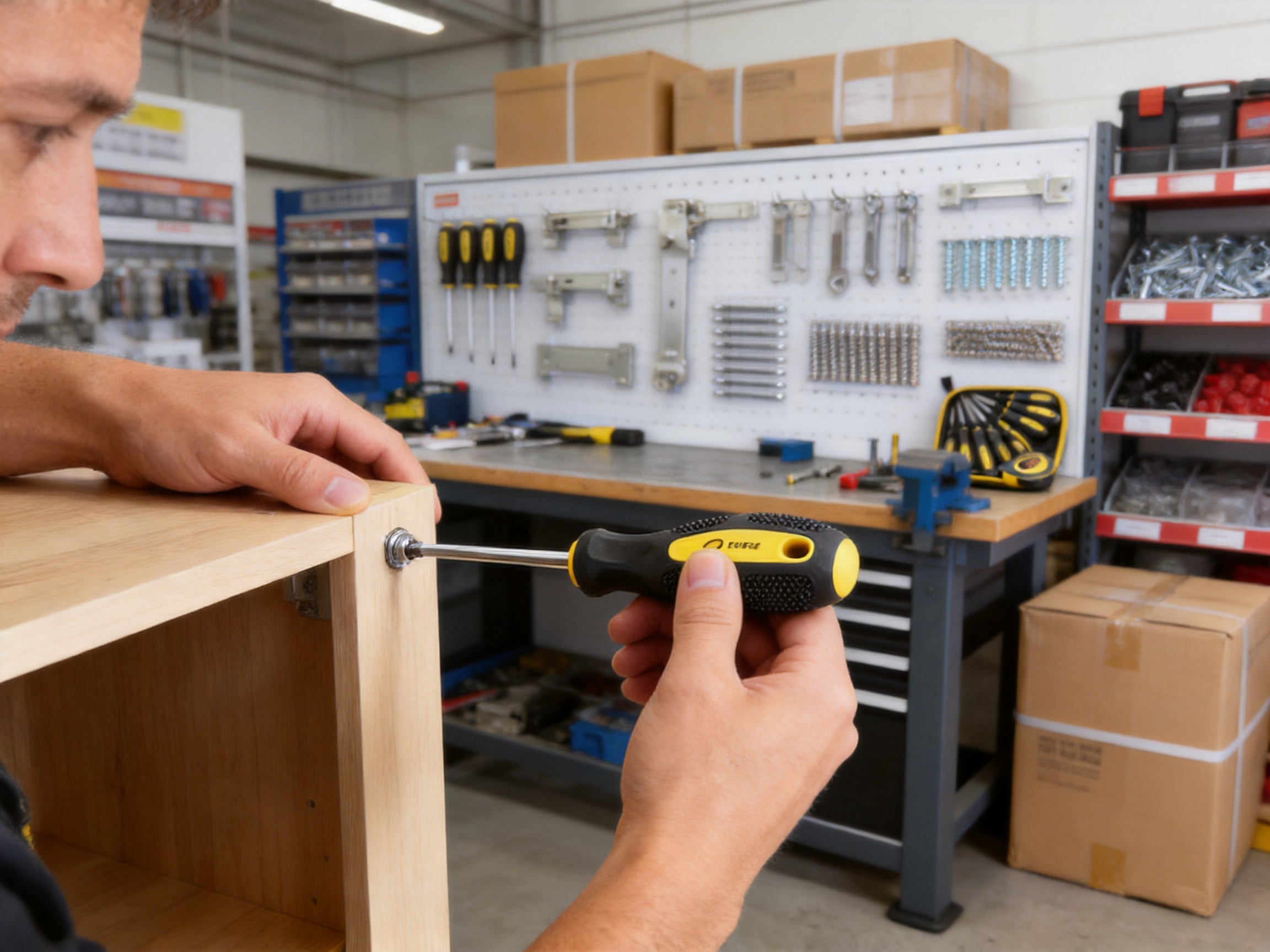
Users should select a screwdriver tip that matches the screw head as closely as possible. Using a slotted screwdriver on an incompatible recess, or using a tip that is too small, can increase slipping and damage. The screwdriver should be held in line with the screw whenever the work area allows.
The tool should not be used as a chisel, pry bar, punch, or striking tool unless it has been specifically designed and marked for that purpose. Striking an ordinary screwdriver may damage the handle, bend the shaft, or create a safety hazard. Users should also avoid applying excessive force when the screw is seized. A suitable penetrating product, correct fastener tool, or specialized driver may be more appropriate.
After use, the screwdrivers should be kept clean and dry. Oil, dust, and chemical residue can affect grip and surface condition. Storing the set together helps prevent loss and makes it easier to select the correct tool. If a handle becomes cracked, a shaft becomes bent, or a tip becomes severely worn, the tool should be removed from service.
Why Manufacturing Transparency Matters
For distributors and industrial buyers, product quality is closely related to manufacturing transparency. A reliable supplier should be able to explain the product structure, material choices, production stages, inspection approach, packaging method, and logistics plan. This information allows the buyer to evaluate not only the sample but also the repeatability of future orders.
Lizhan Hardware Co., Ltd.’s combined focus on fasteners, stamping parts, metal hooks, and related hardware provides a broad manufacturing context. The company can approach the screwdriver set as part of a larger hardware supply program rather than as an isolated consumer item. This may be useful for customers who want to source hand tools together with screws, furniture hardware, sheet metal fasteners, or other metal components.
Manufacturing strength is also reflected in the ability to communicate with different types of customers. A small retailer may need product photographs, packaging information, and a basic quotation. An importer may need carton data, loading details, and inspection coordination. An industrial buyer may need a controlled specification, samples, test records, and repeat-order consistency. A supplier with experience across hardware categories is better prepared to address these different requirements.
Environmental and Efficiency Considerations
Efficient manufacturing can reduce material waste, production rework, and unnecessary transport. Accurate molds reduce defective molded parts. Stable metal forming reduces scrap. Organized packaging can improve carton utilization and reduce damage in transit. These measures are commercially beneficial and may also support more responsible resource use.
Buyers can contribute by selecting packaging that is appropriate for the market rather than unnecessarily excessive. They can also request consolidated shipments, optimize carton quantities, and plan repeat orders to reduce fragmented logistics. Product durability is another important consideration: a tool that remains useful over a longer period does not need to be replaced as frequently as a tool with poor grip or weak assembly.
Specific environmental claims should be verified against the actual materials, processes, and documentation available for the order. Customers who require recycled content, restricted-substance compliance, recyclable packaging, or other sustainability criteria should communicate these requirements before production so that the manufacturer can evaluate feasibility and provide supporting information.
Frequently Asked Questions
What is included in the Rubber and Plastic Handle Screwdriver Set?
The set is a multi-piece collection of screwdrivers with rubber and plastic handles. The exact number of pieces, tip profiles, and sizes should be confirmed with Lizhan Hardware Co., Ltd. for the selected configuration or customer order.
What is the main advantage of the rubber and plastic handle?
The plastic section provides structural support, while the rubberized section can improve grip comfort and handling control. This combination offers a practical alternative to a completely rigid plastic handle.
Is this screwdriver set suitable for professional use?
It is suitable for general professional tasks such as workshop maintenance, furniture installation, hardware assembly, and routine repair. Buyers with highly specialized requirements, such as electrical insulation, precision electronics work, calibrated torque, or impact driving, should confirm whether a specialized tool is required.
Can the product be used for furniture assembly?
Yes. The set is appropriate for many furniture assembly tasks, including cabinets, shelves, tables, chairs, hinges, handles, and brackets. Users should select a tip that matches the supplied fastener and avoid excessive torque that could damage wood or composite panels.
Can the screwdriver set be customized?
Customization may be possible for assortment, handle color, logo, packaging, labeling, and order presentation. Requirements should be discussed with the supplier before quotation and production. The final options depend on order quantity, tooling, artwork, materials, and technical feasibility.
How should buyers evaluate a sample?
A buyer should inspect the handle surface, rubber-to-plastic interface, shaft alignment, tip shape, finish, and overall assembly. The sample should also be tested with representative screws to assess fit, control, turning comfort, and resistance to ordinary use.
What manufacturing processes support the product?
Depending on the product specification, production may include plastic molding, rubber overmolding or secondary grip formation, metal cutting, shaft preparation, tip forming, surface finishing, handle assembly, inspection, and packaging. The exact process sequence should be confirmed for the selected design.
Where is the product manufactured?
Lizhan Hardware Co., Ltd. lists a China factory in Haiyan, Jiaxing City, Zhejiang, and a Thailand warehouse in Chonburi. Customers should confirm the specific production and shipping arrangement for each order.
What other products does the company supply?
The company identifies fasteners and related hardware such as sheet metal screws, self-drilling screws, drywall screws, roofing screws, furniture screws, stamping parts, and metal hooks. Customers may discuss combined sourcing opportunities with the sales team.
How can customers request information?
Customers can contact the company through the listed sales contacts, email, telephone, WhatsApp, or WeChat channels. Shawn and the sales office can discuss specifications, samples, packaging, quantities, and delivery requirements.
Conclusion
The Rubber and Plastic Handle Screwdriver Set offers a practical combination of comfort, control, assortment convenience, and everyday versatility. Its rubberized grip can improve handling compared with basic rigid plastic tools, while the plastic core provides a stable structure for the shaft connection. Supplied as a set, it is convenient for homes, workshops, furniture assembly, maintenance departments, hardware retailers, and general tool distributors.
The product’s competitive position comes from balance. It is more comfortable and user-oriented than the simplest low-cost screwdriver, more convenient than purchasing loose tools, and generally more accessible than a specialized professional system. Its value is strengthened when the shaft, tip, handle, assembly, and packaging are manufactured under consistent process control.
Lizhan Hardware Co., Ltd. brings relevant experience from fasteners, stamping parts, metal hooks, and other hardware products. Its China manufacturing base and Thailand warehouse support can provide a foundation for production coordination and regional supply planning. Through mold control, plastic and rubber forming, metal preparation, assembly inspection, packaging management, and customer communication, the company can support buyers seeking a dependable general-purpose screwdriver set.
For the best result, buyers should confirm the exact assortment, materials, dimensions, packaging, inspection requirements, and delivery plan before placing an order. When the product specification is matched to the intended market, this screwdriver set can become a useful and commercially attractive addition to a hardware or home-tool portfolio.
References
1. General principles of hand-tool ergonomics and manual torque application.
2. Standard practices for screwdriver tip and screw-recess compatibility.
3. General injection-molding principles for plastic tool handles.
4. General overmolding and two-material handle design practices.
5. Manufacturing quality-control methods for metal shafts, formed tips, and assembled hand tools.
6. General packaging and logistics principles for hardware products.
7. Product and company information supplied by Lizhan Hardware Co., Ltd.