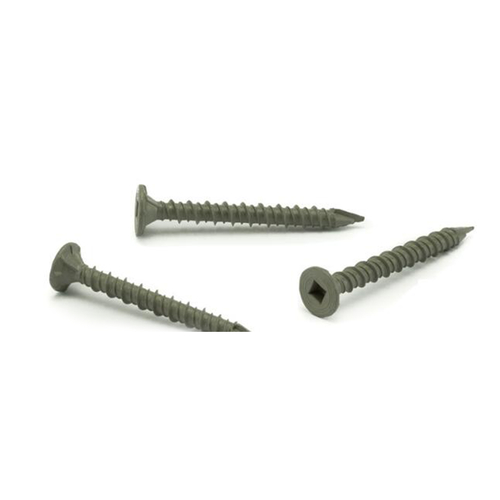
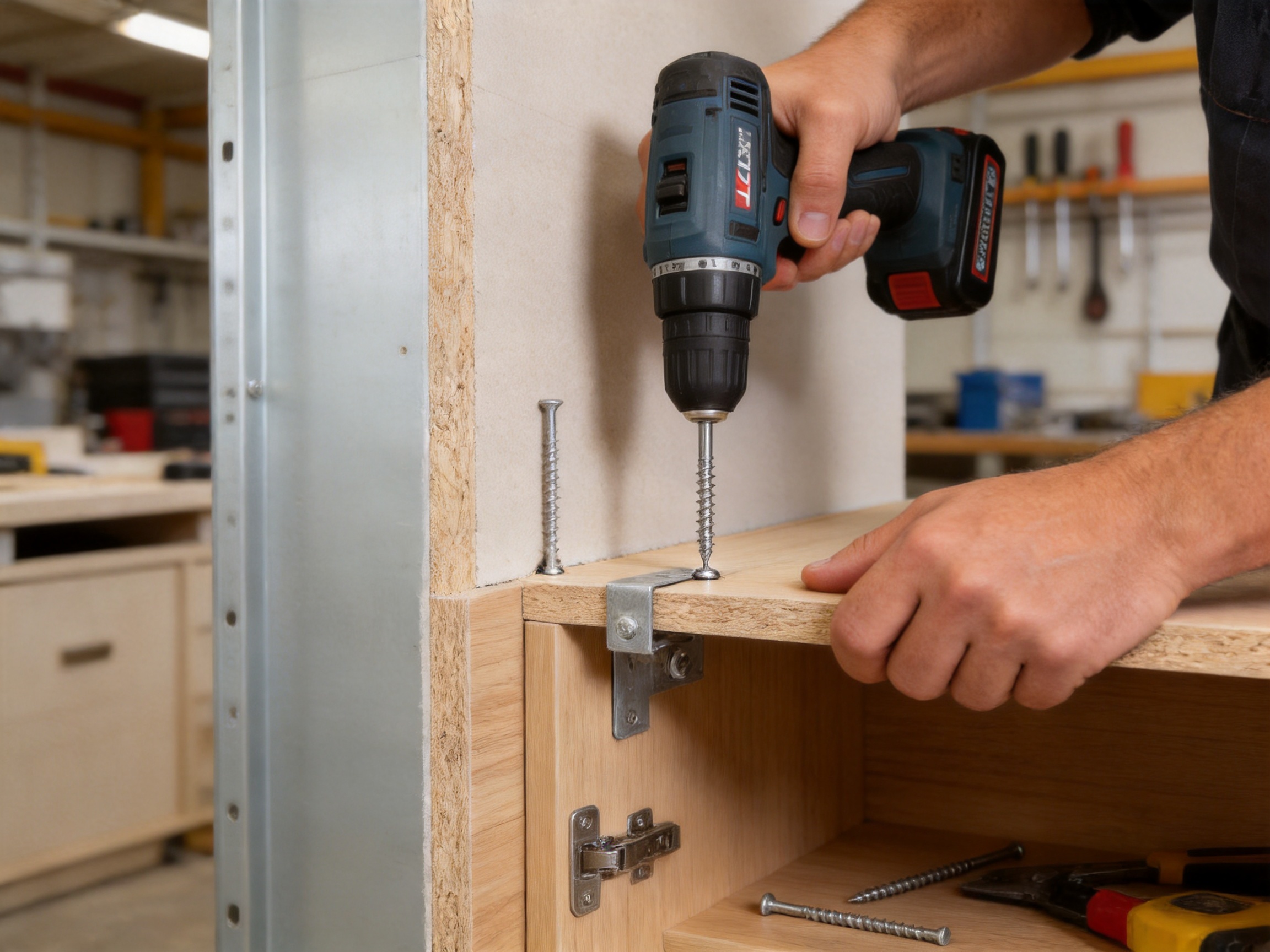
Fasteners used in furniture, drywall, interior construction, sheet-metal assembly, and general maintenance must do more than simply hold two materials together. They must start reliably, drive efficiently, resist corrosion, provide a consistent finished appearance, and remain available in a range of diameters and lengths. The square drive small flat head self-tapping screw with a Type 17 point is designed for applications where controlled installation, clean engagement, and dependable holding performance are important.
This screw is available with a square recess and can also be produced with other common drive configurations, including Phillips and Torx. It is manufactured from C1022A carbon steel and may be supplied with blue-white zinc plating, standard zinc plating, yellow zinc plating, black phosphate, Dacromet, Ruspert, or Magni finishes, depending on the required environment and appearance. The product range covers several diameters and practical length groups, allowing distributors, furniture manufacturers, contractors, and industrial users to select a configuration suited to their assembly process.
Although the product title identifies a small flat head design, the listed production range also specifies a bugle head. Because head geometry affects countersinking, surface appearance, and material compatibility, purchasers should confirm the required head profile, recess, point, diameter, and length before placing an order. This flexibility is one of the important characteristics of a professional screw supplier: the product can be matched to the actual application rather than treated as a single fixed configuration.
Product Overview
A self-tapping screw forms or cuts its own mating thread as it enters a prepared or unprepared substrate. Depending on the material, the installer may drive the screw directly into the workpiece or use a pilot hole. The Type 17 point is commonly associated with a sharp, flute-like cutting design intended to improve starting performance and help remove material during penetration, particularly in wood-based products and certain composite materials.
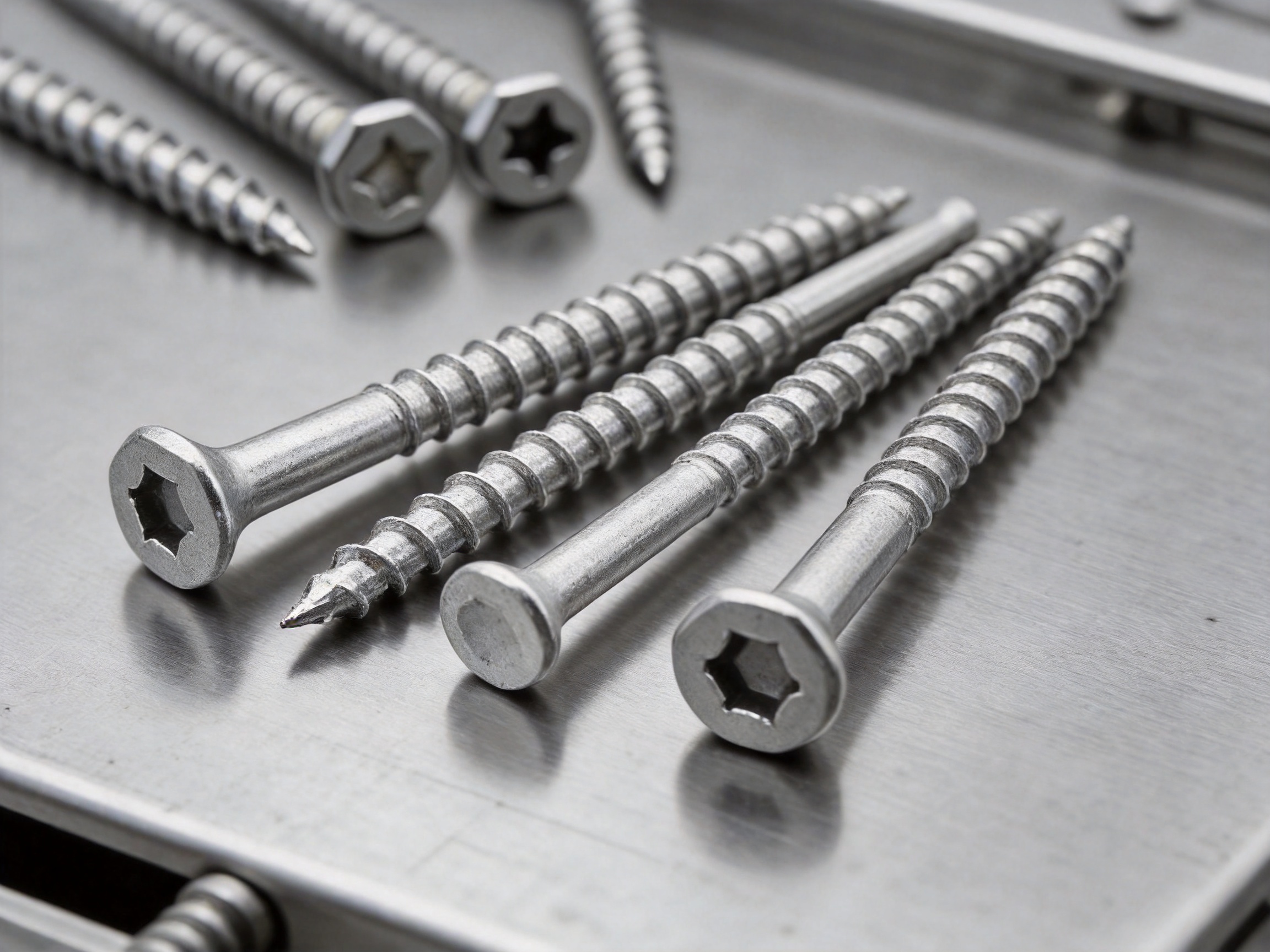
The square drive recess provides positive engagement between the driver bit and the screw head. Compared with a conventional cross recess, a square drive can help reduce bit cam-out during installation, especially when the installer applies axial pressure and controlled torque. This can be valuable in repetitive production environments where thousands of screws may be installed during a single shift.
The screw may be supplied with a small flat head or a bugle head according to the final specification. A small flat head is useful when a relatively low-profile finish is required. A bugle head has a curved underside that can distribute pressure over a wider area and is widely used in drywall and panel applications. The choice should be based on the substrate, required appearance, desired countersinking behavior, and the equipment used during installation.
Blue-white zinc plating provides a bright metallic appearance and a basic level of corrosion protection for indoor or moderately controlled environments. It is also frequently selected for furniture hardware and general assembly because it offers a clean, uniform finish. For more demanding conditions, alternative coatings such as yellow zinc, black phosphate, Ruspert, Dacromet, or Magni can be considered.
| Characteristic | Available or Listed Specification | Application Consideration |
|---|---|---|
| Product type | Self-tapping screw with Type 17 point | Suitable for selected wood, panel, drywall, furniture, and light assembly applications |
| Drive options | Square, Phillips, and Torx | Choose according to tooling, torque requirements, and customer preference |
| Material | C1022A carbon steel | Provides a practical balance of strength, formability, and production consistency |
| Diameter range | #6, #8, #10, #12, and #14; approximately 3.5 to 6.3 mm | Allows selection based on holding demand and substrate thickness |
| Head options | Small flat head or bugle head according to confirmed order specification | Head shape influences countersinking, appearance, and seating behavior |
| Thread options | Fine thread and coarse thread | Thread selection should match the substrate and required holding performance |
| Surface options | Blue-white zinc, zinc, yellow zinc, black phosphate, Dacromet, Ruspert, and Magni | Finish should be selected according to corrosion exposure and appearance |
| Length groups | Product-specific groups from approximately 7.9 to 12.4 mm in the listed range | Exact length and tolerance should be confirmed on the production drawing |
Material Selection: C1022A Carbon Steel
C1022A is a widely used carbon steel grade for screw production. It offers the combination of strength, ductility, and cold-forming capability required for heading, thread rolling, and point formation. The material is suitable for producing screws with consistent geometry while maintaining an economical price structure for volume orders.
For a self-tapping screw, material selection affects several performance characteristics. The screw must be hard enough to penetrate the target material and form a usable thread. At the same time, it must retain enough toughness to resist excessive brittleness during driving. If the steel is too soft, the point may deform, the thread may strip, or the drive recess may be damaged. If the finished screw is excessively hard or improperly processed, the risk of cracking or breakage may increase.
The use of C1022A allows the manufacturer to develop a controlled heat-treatment process that supports the requirements of common construction and furniture applications. Heat treatment must be managed carefully because it influences core hardness, surface hardness, tensile behavior, and resistance to torsional failure. A stable process helps ensure that screws from different production batches have similar installation characteristics.
Material traceability is also important for professional buyers. A reliable supply chain should identify incoming wire or steel material, production batch, heat-treatment batch, coating batch, and final inspection records. This information supports quality investigations and gives distributors greater confidence when the product is supplied to multiple downstream customers.
Type 17 Point Design
The point is one of the most important features of a self-tapping screw. A Type 17 point generally incorporates a sharp starting tip and a cutting channel that helps the screw begin penetration and remove displaced material. This design can reduce the amount of initial force required from the operator and may help minimize splitting in suitable wood or panel substrates when the screw is correctly selected.
In furniture and cabinet assembly, a screw that starts quickly can improve productivity and reduce the need for pre-drilling. This is particularly useful when components are assembled with electric or battery-powered tools. The operator can position the screw, apply moderate pressure, and allow the Type 17 point to establish the hole before the threads engage fully.
Point performance depends on more than geometry alone. The substrate density, moisture content, panel construction, screw diameter, thread form, installation speed, and driver torque all influence the result. A point that performs well in softwood may behave differently in hardwood, laminated particleboard, medium-density fiberboard, or a thin metal section. For this reason, application testing is recommended before large-scale production approval.
The Type 17 point can also complement coarse-thread designs in wood and panel products. Coarse threads generally provide a larger thread profile and faster engagement in softer materials. Fine threads may be preferred for certain thin materials or applications requiring more threads per unit length. The correct combination of point and thread should be specified together rather than selected independently.
Square Drive Performance
The square drive is designed to provide a stable interface between the screw recess and the driver bit. The straight-sided recess helps the bit remain seated when the installer applies pressure along the screw axis. This can reduce the tendency of the bit to climb out of the recess, commonly known as cam-out.
Reduced cam-out can produce several practical advantages. It may help protect the visible surface around the screw head, reduce damage to driver bits, improve operator comfort, and support more consistent installation torque. In automated or semi-automated production, positive bit engagement can also improve cycle stability and reduce interruptions caused by dropped or damaged screws.
Square drive screws are often appreciated in furniture production because they can be started and driven with one hand when the correct bit is used. This may simplify assembly of panels, brackets, cleats, frames, and other components. The recess is also easy to inspect visually, allowing operators to identify damaged or incorrectly formed heads before installation.
The driver bit must match the screw recess accurately. A worn, undersized, or incorrect bit can create the same installation problems that users associate with poor screw quality. Professional users should establish a bit replacement schedule and maintain appropriate driver settings. Correct alignment, suitable rotational speed, and controlled downward pressure are essential for obtaining the full benefit of the square drive.
Phillips and Torx versions may be selected when the customer’s existing tooling or market preference requires them. The manufacturer’s stated production range includes Phillips, square, and Torx recesses, giving buyers a practical way to standardize different products within one supply relationship.

Square drive small flat head self tapping screws bule white zinc plated with type 17
Head Geometry and Seating Behavior
Head design determines how the screw transfers clamping force to the assembled material. It also affects the final appearance, the risk of surface damage, and the ability of the screw to sit flush or partially recessed. The listed product information refers to both a small flat head and a bugle head, so the final head style should be confirmed on the technical drawing or purchase order.
A small flat head is appropriate when the application calls for a compact head diameter and a relatively low visual profile. It may be used in furniture, light hardware, panels, and other assemblies where the head must remain unobtrusive. Depending on the material, a countersunk or preformed recess may be used to allow the head to sit flush with the surface.
A bugle head has a curved underside that transitions gradually into the shank. This geometry is commonly used for drywall and panel applications because it can spread contact pressure and reduce the abrupt wedging effect associated with some countersunk heads. When driven correctly, the head can create a controlled depression without excessively tearing the facing paper or surface layer.
Head seating should always be controlled. Overdriving can damage the substrate, reduce the effective clamping area, deform the recess, or weaken the connection. Underdriving may leave the head proud of the surface or fail to create adequate contact between the assembled parts. Automatic drivers should be adjusted for speed, torque, and depth control, while hand installation should use a suitable bit and consistent pressure.
For customers requiring a particular head diameter, underside angle, head height, or recess depth, a drawing and sample approval process is recommended. These details are especially important when the screw is used with countersunk metal brackets, decorative caps, hinges, or automated feeding equipment.
Blue-White Zinc-Plated Surface
Blue-white zinc plating is selected by many users because it offers a bright, clean appearance together with basic corrosion protection. The coating is formed by depositing zinc onto the steel surface, after which a conversion treatment may be applied to improve appearance and corrosion resistance. The resulting finish is generally more neutral and less yellow than yellow zinc.
For indoor furniture, cabinetry, drywall work, packaging equipment, and general assembly, blue-white zinc can provide an attractive balance between function and cost. The silver-blue appearance is compatible with many metal fittings and does not draw excessive attention when used on light-colored panels or painted components.
Zinc plating is not a substitute for stainless steel or a coating designed for continuous outdoor exposure. Actual corrosion resistance depends on plating thickness, conversion treatment, storage conditions, handling, and the environment in which the screw is installed. Salt spray, high humidity, condensation, industrial chemicals, and contact with dissimilar metals can influence service life.
Packaging is part of surface protection. Screws should be stored in dry conditions and protected from condensation. Cartons or boxes should not be placed directly on damp floors, and long-term exposure to high humidity should be avoided. When a product is shipped through changing climates, appropriate packaging and moisture control can help preserve the finish until installation.
Alternative Surface Treatments
The product range includes several surface options, allowing the screw to be matched to different corrosion and appearance requirements.
Standard Zinc Plating
Standard zinc plating is commonly used for general indoor applications. It provides a familiar metallic appearance and a basic barrier against oxidation. It is often selected when cost efficiency and broad availability are more important than maximum corrosion performance.
Yellow Zinc Plating
Yellow zinc plating has a yellow or gold-toned appearance created through the conversion treatment. It may offer a different level of corrosion protection from blue-white zinc depending on the specific process and coating thickness. It is frequently used where the color helps distinguish the fastener or where a warmer metallic appearance is preferred.
Black Phosphate
Black phosphate creates a dark, non-reflective surface often associated with drywall screws and interior construction products. It can provide useful surface characteristics for certain applications, but it is generally intended for dry indoor environments unless supplemented by another protective system.
Dacromet
Dacromet-type coatings are used when enhanced corrosion resistance is required compared with basic electroplated finishes. The coating is applied as a controlled protective layer and can be considered for applications exposed to greater humidity or more demanding service conditions. The exact performance depends on the approved coating system and process specification.
Ruspert
Ruspert coatings are multilayer systems designed to improve corrosion resistance and provide a controlled appearance. They are often considered for exterior or semi-exterior fastening applications where a more robust coating is required. The final selection should be based on the expected exposure, installation method, and customer testing requirements.
Magni
Magni coating systems may be selected for applications requiring specialized corrosion protection, friction control, or a specific appearance. Since coating performance varies by system, the buyer should confirm the exact coating designation, thickness, color, and test standard before approval.
The availability of multiple finishes is a competitive advantage because it allows one manufacturer to support different product lines without forcing the customer to change suppliers. A distributor can source bright zinc screws for indoor furniture, black phosphate screws for drywall, and a more protective coating for exterior assemblies through a coordinated purchasing program.
Diameter and Length Selection
The listed diameter range includes #6, #8, #10, #12, and #14 sizes, corresponding approximately to 3.5, 4.2, 4.8, 5.5, and 6.3 millimeters. The actual nominal dimensions, thread outside diameter, head dimensions, and tolerances should be verified against the applicable drawing or customer standard.
A smaller diameter may be suitable for light-duty panels, trim components, thin furniture parts, and applications where a discreet head is desired. A larger diameter may provide increased clamping capability and a greater thread cross-sectional area. However, selecting the largest possible screw is not always the best solution. Excessive diameter can split wood, damage thin panels, interfere with internal components, or create an unnecessarily large visible mark.
Length selection should provide adequate thread engagement without penetrating through the assembled parts. The listed length groups include approximately 7.9 to 8.4 millimeters for certain #6, #7, and #8 configurations, approximately 8.6 to 9.2 millimeters for #10, and approximately 11.8 to 12.4 millimeters for #12 and #14. These figures are presented as production ranges in the supplied information, and exact finished dimensions should be confirmed before ordering.
When calculating the required length, users should consider the thickness of the upper component, the depth of the lower component, the head seating requirement, and any countersink or washer effect. The screw should engage enough material to create a stable connection while avoiding breakthrough. Sample installation tests are especially valuable when the screw is used in laminated boards or components with hidden electrical, mechanical, or decorative elements.
Fine Thread and Coarse Thread Choices
Both fine-thread and coarse-thread versions are included in the production range. Thread selection should reflect the material rather than being based solely on nominal diameter.
Coarse threads are commonly selected for wood, softwood, particleboard, medium-density fiberboard, and other relatively soft substrates. The deeper and more widely spaced thread profile can provide rapid engagement and effective material displacement. Coarse threads are also useful when high installation speed is important.
Fine threads provide more thread engagements over a given length and may be suitable for thinner materials, sheet-metal applications, or substrates where a finer thread profile produces better control. They can also be useful where the material is sufficiently dense and the connection requires a more gradual engagement pattern.
Neither thread type is universally superior. Performance depends on thread geometry, point shape, material hardness, pilot-hole size, driving speed, and clamping conditions. A professional supplier should help the customer compare the options through samples and application tests instead of recommending one thread form for every project.
Manufacturing Process
The performance of a self-tapping screw begins with consistent manufacturing. A typical production route includes raw-material inspection, wire preparation, cold heading, thread rolling, point formation, heat treatment, surface finishing, inspection, packaging, and shipment. Each stage contributes to the final dimensional accuracy and installation behavior.
Raw-Material Preparation
Steel wire is selected according to the required material grade and screw dimensions. Incoming material should be checked for size, surface condition, chemical composition where required, and suitability for cold forming. Proper lubrication and wire preparation support stable heading and reduce the likelihood of surface defects.
Cold Heading
In the heading process, cut lengths of wire are formed under pressure to create the screw head and initial shank geometry. The process can produce high volumes efficiently and supports consistent head dimensions when tooling is properly maintained. The square, Phillips, or Torx recess is formed during the heading sequence using dedicated tooling.
Tool design and maintenance are critical. Worn punches can produce recesses with insufficient depth, rounded corners, incorrect alignment, or inconsistent dimensions. These defects may not be obvious during casual visual inspection but can cause poor bit engagement during installation. Regular tooling checks help maintain stable production.
Thread Rolling
Unlike cutting a thread from the shank, thread rolling forms the thread profile by displacing material between dies. This process can produce strong thread geometry and a smooth, continuous surface. It also supports high-volume production and reduces material waste compared with some cutting methods.
Thread-rolling dies must be matched to the specified pitch, diameter, and thread form. Incorrect setup can lead to incomplete threads, excessive diameter, damaged crests, or variation in thread length. The thread must also align correctly with the point and head so that the screw enters the substrate without abnormal resistance.
Point Formation
The Type 17 point is formed through a controlled heading or pointing operation, depending on the production equipment and screw design. The tip must be sharp and centered, while the cutting channel must be formed consistently. Point variation can influence starting torque, penetration, splitting behavior, and final holding performance.
Heat Treatment
Heat treatment develops the mechanical properties required for installation. The process must balance hardness and toughness. A suitable surface condition helps the point and threads enter the substrate, while sufficient core toughness helps the screw resist torsional loading from the driver.
Process control may include monitoring furnace temperature, atmosphere, conveyor speed, quenching conditions, tempering conditions, and batch identification. Finished parts can be sampled for hardness, torque performance, tensile properties, or other customer-specified requirements.
Surface Finishing
After heat treatment, screws may undergo cleaning, plating, conversion treatment, coating, drying, and inspection. The surface must be clean enough to receive the coating evenly. Excessive coating buildup can affect thread fit and drive recess dimensions, while insufficient coverage can reduce corrosion protection.
Coating selection should be connected to the final application. The manufacturer’s broad finish range enables the same base screw design to be adapted for indoor furniture, drywall, general hardware, and more demanding environmental conditions.
Final Inspection and Packaging
Final inspection may include dimensional checks, visual examination, recess verification, thread inspection, coating evaluation, and sampling for mechanical performance. Packaging should protect the parts from impact, contamination, and moisture while also allowing the customer to identify size, finish, batch, and quantity quickly.
Quality Control and Production Strengths
A major advantage of an experienced screw manufacturer is the ability to coordinate multiple technical variables under one quality system. The screw must not only meet a nominal diameter; the head, recess, point, thread, material, heat treatment, and finish must work together.
For this product, important inspection points include the following:
Head diameter and height should be checked because they influence seating and appearance. The underside profile should be verified when the screw is specified as flat head or bugle head. Recess dimensions should be measured to ensure reliable engagement with the designated driver bit.
Thread outside diameter, pitch, thread length, and crest condition should be controlled. A thread gauge or equivalent inspection method can help identify incomplete or damaged threads. The Type 17 point should be checked for centering, sharpness, and consistency.
Surface treatment should be inspected for uniformity, color, adhesion, and visible defects. For buyers with specific corrosion requirements, the coating specification and test method should be recorded in the order documentation. Different finishes should not be treated as interchangeable without confirming their intended performance.
Packaging quantity and labeling also require attention. Incorrect labeling can create costly assembly errors even when the screws themselves are within specification. Clear identification by diameter, length, thread, head, drive, finish, and batch helps customers manage inventory and avoid mixing similar products.
The manufacturer’s location in Haiyan, Jiaxing, Zhejiang, provides access to a region known for hardware and fastener manufacturing. In addition to the China factory address, the business identifies a warehouse location in Chonburi, Thailand. A regional warehouse can be valuable for customers serving Southeast Asian markets because it may support shorter delivery routes, local stock planning, and more convenient distribution.
The company also communicates with customers through sales offices and international messaging channels. For technical purchases, the most important benefit is not the communication channel itself but the ability to discuss drawings, samples, packaging, coating requirements, and inspection expectations before mass production.
Advantages Over Generic Competitive Products
Many self-tapping screws appear similar when viewed in a catalog. However, important differences can emerge during installation and long-term use. The product described here offers several potential advantages over generic alternatives when the specification is correctly matched to the application.
Positive Drive Engagement
The square recess can provide more positive bit engagement than a basic cross recess in applications where cam-out is a concern. This may reduce installation interruptions, protect the work surface, and support better operator productivity.
Type 17 Starting Performance
The Type 17 point is designed to initiate penetration efficiently and manage displaced material. Compared with a simple sharp point, a correctly formed Type 17 point may provide more controlled starting behavior in suitable wood and panel products.
Multiple Head and Drive Configurations
The ability to select square, Phillips, or Torx drives and to confirm small flat head or bugle head geometry gives buyers more control over the final product. This is preferable to accepting a generic screw whose head or drive does not match the assembly equipment.
Broad Surface-Finish Selection
Blue-white zinc is suitable for many indoor applications, while yellow zinc, black phosphate, Dacromet, Ruspert, and Magni options can address different appearance or corrosion requirements. This range allows customers to standardize procurement while still using application-specific finishes.
Several Diameter and Thread Options
The availability of #6 through #14 sizes and both fine and coarse threads supports a broader product program. Customers can select a relatively discreet screw for light-duty work or a larger size for greater clamping demand without changing to an unrelated supplier.
Manufacturing Integration
Integrated control of heading, recess formation, thread rolling, point production, heat treatment, coating, and inspection can improve consistency compared with products purchased through several disconnected sources. A coordinated manufacturer is better positioned to investigate issues because production information is available across the entire process.
Support for Wholesale and OEM Requirements
Distributors, furniture factories, drywall contractors, and hardware importers often require repeatable packaging, private labeling, mixed specifications, or scheduled production. A manufacturer with a broad product range can support these requirements more effectively than a small trading source that only offers standard catalog items.
Applications
Furniture Assembly
The screw can be used in selected furniture and cabinet applications involving wood, engineered panels, brackets, and light hardware. The square drive is particularly practical when the assembly line uses electric drivers. Coarse threads and the Type 17 point may be appropriate for many wood-based materials, subject to testing.
Drywall and Interior Panels
Bugle-head versions are commonly associated with drywall and panel installation. The curved head underside can help the screw seat into the facing material when driving depth is correctly controlled. Black phosphate is often selected for dry interior work, while zinc-plated versions may be preferred when a bright finish or different corrosion performance is required.
Sheet-Metal and Light Hardware
Self-tapping screws can be used in selected sheet-metal and light hardware assemblies. Fine thread may be considered for thin metal sections, although the correct point, thread profile, and pilot-hole condition must be verified. The screw should not be used beyond its design capability or substituted for a structural fastener without engineering approval.
Packaging and General Equipment
Packaging machinery, display fixtures, light equipment, and maintenance assemblies may use small self-tapping screws where quick installation and compact head dimensions are important. Bright zinc finishes can complement painted or plated hardware and provide a clean appearance in indoor environments.
Home Improvement
Home improvement users may select these screws for repairs, cabinet components, interior panels, trim supports, and general fastening. Packaging should clearly identify the size, drive type, finish, and recommended substrate so that the end user can choose an appropriate product.
Installation Recommendations
Before production installation, confirm the substrate, screw diameter, thread type, point design, head profile, and surface finish. A sample test should be conducted using the intended driver bit and equipment. The test should assess starting behavior, driving torque, seating, visible surface damage, stripping, and pull-out or holding performance where relevant.
Use a driver bit that matches the square recess precisely. A bit with worn corners can damage the recess and reduce torque transfer. The bit should be aligned with the screw axis, and the operator should apply enough axial pressure to maintain engagement without forcing the screw excessively.
Set the driver speed and torque according to the substrate. High speed can increase productivity but may also generate heat, damage the surface, or overdrive the head. Torque-control or depth-control systems are recommended for repetitive work.
When working with wood or engineered panels, evaluate whether a pilot hole is required. The Type 17 point may reduce or eliminate pre-drilling in some materials, but dense hardwoods, laminated panels, narrow edges, and parts close to the end of a board may still benefit from a pilot hole.
Do not mix screws with different finishes, lengths, or thread types in the same unlabeled container. Similar-looking screws can behave differently during installation. Good inventory control protects production quality and reduces the risk of incorrect fastener selection.
Purchasing and Specification Checklist
Buyers should provide a complete specification when requesting a quotation. The required information should include the nominal diameter, exact length, head type, head diameter if critical, drive recess, point design, thread type, material grade, surface finish, packaging quantity, and inspection requirements.
Because the product information includes both “small flat head” and “bugle head,” the head profile should receive special attention. A technical drawing, physical sample, or reference standard can prevent misunderstanding. The same approach should be used for blue-white zinc terminology, since different markets may use slightly different descriptions for bright zinc finishes.
Customers should also state whether the screws will be used indoors, outdoors, in humid storage, near salt air, or in contact with treated timber. This information helps the supplier recommend an appropriate surface treatment rather than automatically selecting standard zinc plating.
For high-volume orders, request a pre-production sample or first-article approval. Confirm fit with the actual driver bit, feeder, countersink, and assembly material. Approval should include visual appearance and functional testing, not only dimensional inspection.
Packaging requirements may include bulk cartons, small retail boxes, plastic bags, labeled master cartons, bar codes, private labels, or mixed pallets. Agree on quantity tolerance, carton markings, pallet configuration, and shipping documentation before production begins.
Why Manufacturer Collaboration Matters
Fastener performance is application-dependent. A screw that is excellent for a furniture panel may not be appropriate for a steel enclosure or an exterior deck. Collaboration with the manufacturer allows the customer to explain the actual assembly conditions and receive a product configuration based on those conditions.
The company’s stated range includes screws for sheet metal, self-drilling applications, furniture, roofing, drywall, and other hardware categories. This broader capability can be useful to purchasing departments seeking supplier consolidation. Instead of managing separate suppliers for every screw family, a customer may be able to coordinate several related products through one experienced fastener source.
International customers may also benefit from the combination of China-based manufacturing and a Thailand warehouse location. Availability, stock levels, and delivery arrangements should be discussed for each project, but regional warehousing can support more responsive supply planning in Southeast Asia.
Technical communication should include drawings, photographs, samples, and written acceptance criteria. Clear documentation protects both parties and makes it easier to repeat the same specification on future orders.

Q&A
What is a Type 17 self-tapping point?
A Type 17 point is a pointed screw-tip design that commonly includes a cutting feature or flute. It is intended to help the screw start penetration and remove displaced material in suitable substrates, particularly wood and engineered panels. Actual performance depends on the point geometry and the material being fastened.
What is the advantage of a square drive?
A square drive provides positive contact between the recess and the driver bit. It can help reduce cam-out, improve torque transfer, and support more consistent installation when the correct bit is used. Proper alignment and a non-worn bit remain essential.
Is this screw a flat-head or bugle-head screw?
The supplied product information refers to a small flat head in the title and a bugle head in the listed production range. These are different head profiles. The purchaser should confirm the required design through a drawing or sample before ordering.
What material is used to make the screw?
The listed material is C1022A carbon steel. This grade is widely used for screw production because it supports cold forming, thread production, heat treatment, and practical mechanical performance.
What does blue-white zinc plated mean?
Blue-white zinc plating is a bright zinc finish with a neutral silver-blue appearance. It provides basic corrosion protection for many indoor and moderately controlled applications. It should not be assumed to provide the same protection as a specialized exterior coating or stainless steel.
Can the screw be supplied with other finishes?
Yes. The listed options include standard zinc plating, yellow zinc plating, black phosphate, Dacromet, Ruspert, and Magni, in addition to blue-white zinc. The correct finish depends on the environment, appearance, and corrosion requirements.
Which thread should be selected for furniture?
Coarse thread is often selected for wood and engineered panels, while fine thread may be suitable for particular dense materials or thin sections. The best choice depends on the substrate, pilot-hole condition, screw diameter, and required holding performance. Testing is recommended.
Which sizes are available?
The listed diameters include #6, #8, #10, #12, and #14, approximately corresponding to 3.5, 4.2, 4.8, 5.5, and 6.3 millimeters. Exact dimensions and tolerances should be confirmed in the product drawing.
What lengths are listed?
The supplied range identifies approximately 7.9 to 8.4 millimeters for certain #6, #7, and #8 configurations, approximately 8.6 to 9.2 millimeters for #10, and approximately 11.8 to 12.4 millimeters for #12 and #14. Buyers should confirm the exact nominal length and tolerance before purchase.
Can these screws be used outdoors?
Outdoor use depends on the selected coating, exposure, substrate, and service conditions. Basic blue-white zinc and black phosphate are generally associated with indoor or controlled environments. Ruspert, Dacromet, Magni, or another specified protective system may be more appropriate for demanding conditions, subject to testing and technical approval.
Does the Type 17 point eliminate the need for pilot holes?
Not always. The point can improve starting performance, but pilot holes may still be necessary in hardwood, dense panels, narrow edges, laminated materials, or applications where splitting must be minimized. A practical installation test should determine the correct method.
How can installation damage be reduced?
Use the correct driver bit, maintain axial alignment, set appropriate torque and speed, and avoid overdriving. Inspect the bit regularly and replace it when the engagement surfaces become worn.
What information should be included in an inquiry?
Provide diameter, length, head profile, drive type, point, thread type, material, surface finish, quantity, packaging, application, and any inspection or testing requirements. A drawing or sample is recommended when the head shape or coating appearance is critical.
Can the manufacturer support customized orders?
The broad range of drives, diameters, threads, head styles, lengths, and finishes indicates support for application-specific orders. Custom requirements should be reviewed through drawings, samples, tooling discussion, minimum order quantities, and production approval.
Conclusion
The square drive self-tapping screw with a Type 17 point combines practical installation features with a broad range of configurable specifications. Its C1022A carbon steel construction supports efficient production and balanced mechanical performance. The square recess can improve driver engagement, while the Type 17 point can support fast starting in suitable wood and panel materials.
Blue-white zinc plating offers a clean appearance and basic corrosion protection for many indoor applications. Alternative finishes provide additional choices for appearance and environmental resistance. Diameters from #6 through #14, fine and coarse thread options, and several drive configurations allow the screw to be adapted to furniture, drywall, home improvement, packaging, light hardware, and general assembly work.
The product’s principal advantage over a generic screw is not one isolated feature. It is the combination of controlled material selection, point geometry, head and drive choices, surface-finish flexibility, manufacturing integration, and application-focused support. Customers should confirm the head profile carefully because the supplied information references both small flat head and bugle head designs.
With appropriate specification, inspection, installation tooling, and coating selection, this screw can provide a reliable and economical fastening solution for distributors, manufacturers, contractors, and industrial users requiring repeatable quality and flexible supply.
References
1. Product specification and production-range information supplied for the self-tapping screw product.
2. General principles of carbon-steel fastener manufacturing, including cold heading, thread rolling, heat treatment, and surface finishing.
3. General engineering guidance for screw selection in wood, engineered panels, drywall, sheet metal, and furniture assembly.
4. General technical principles of zinc plating, conversion coatings, phosphate coatings, and multilayer corrosion-protection systems.
5. General installation practice for powered screwdrivers, driver-bit engagement, torque control, and countersunk or bugle-head fasteners.