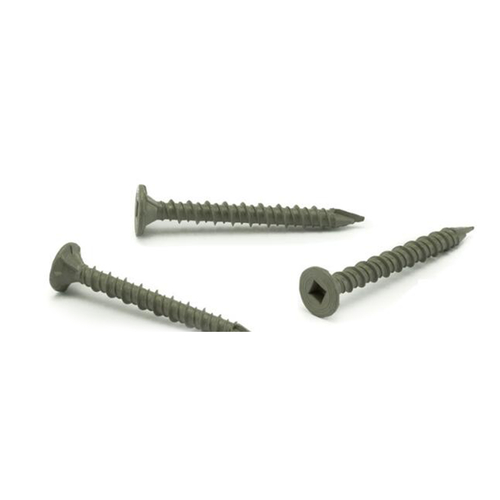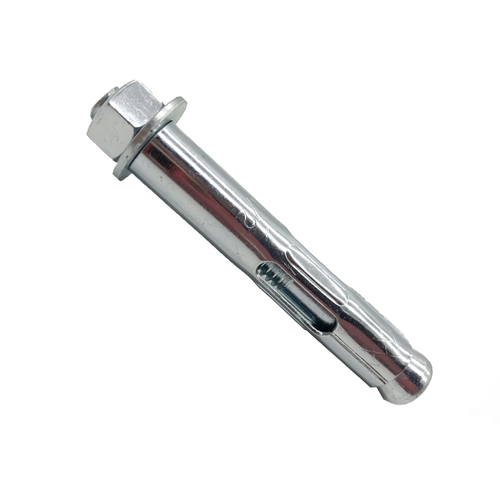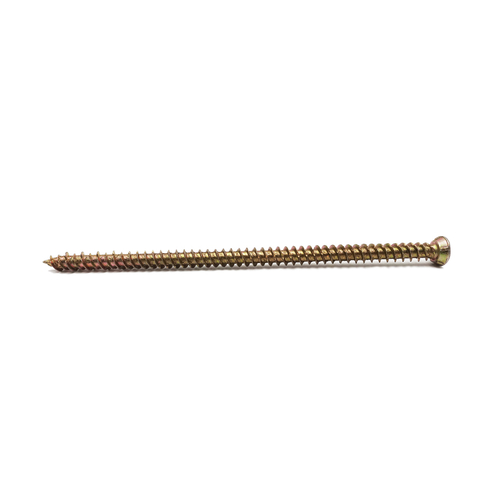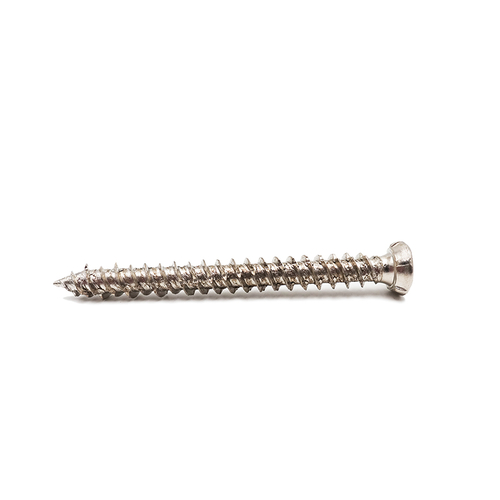
Fasteners are the unsung heroes of modern construction and manufacturing, holding together everything from residential homes to industrial machinery. Among the vast array of fasteners available, the Phillips drive pan framing head self-drilling screw stands out as a versatile, efficient, and durable solution for a wide range of applications. This guide explores the key features, advantages over competitors, advanced manufacturing processes, industry applications, and frequently asked questions about this critical fastener.
1. Product Overview: Key Specifications and Features
The Phillips drive pan framing head self-drilling screw is engineered to meet the demands of both residential and commercial projects. Its design combines self-drilling capability with a pan framing head, making it ideal for securing wood, metal, and composite materials. Below are its core specifications:
1.1 Core Specifications
- Recess Types: Philips, Square (Robertson), and Torx (star) drives—each optimized for different torque requirements and reduced cam-out (slippage during installation).
- Diameters: #6 (3.5mm), #8 (4.2mm), #10 (4.8mm), #12 (5.5mm), and #14 (6.3mm)—suited for varying material thicknesses and load capacities.
- Head Types: Pan framing head (primary focus), plus bugle, hex washer, flat, pan, and wafer heads for specialized applications.
- Lengths: Customizable (typically 10mm to 150mm) to accommodate different material depths and project needs.
- Material Grade: C1022A steel—low-carbon alloy with excellent tensile strength (up to 520 MPa) and ductility, ideal for self-drilling applications.
- Standards Compliance: ASTM (American Society for Testing and Materials) and DIN 7504 (German Institute for Standardization) for global interchangeability and quality assurance.
- Surface Coatings: Zinc plated (standard), black phosphate, yellow zinc plated, Ruspert (high-corrosion resistance), and Magni (eco-friendly, low-friction coating).
- Thread Types: BSD (Blind Self-Drilling) and CSD (Combination Self-Drilling) threads—designed for secure grip in wood, metal, and composite materials without pre-drilling.
1.2 Key Design Features
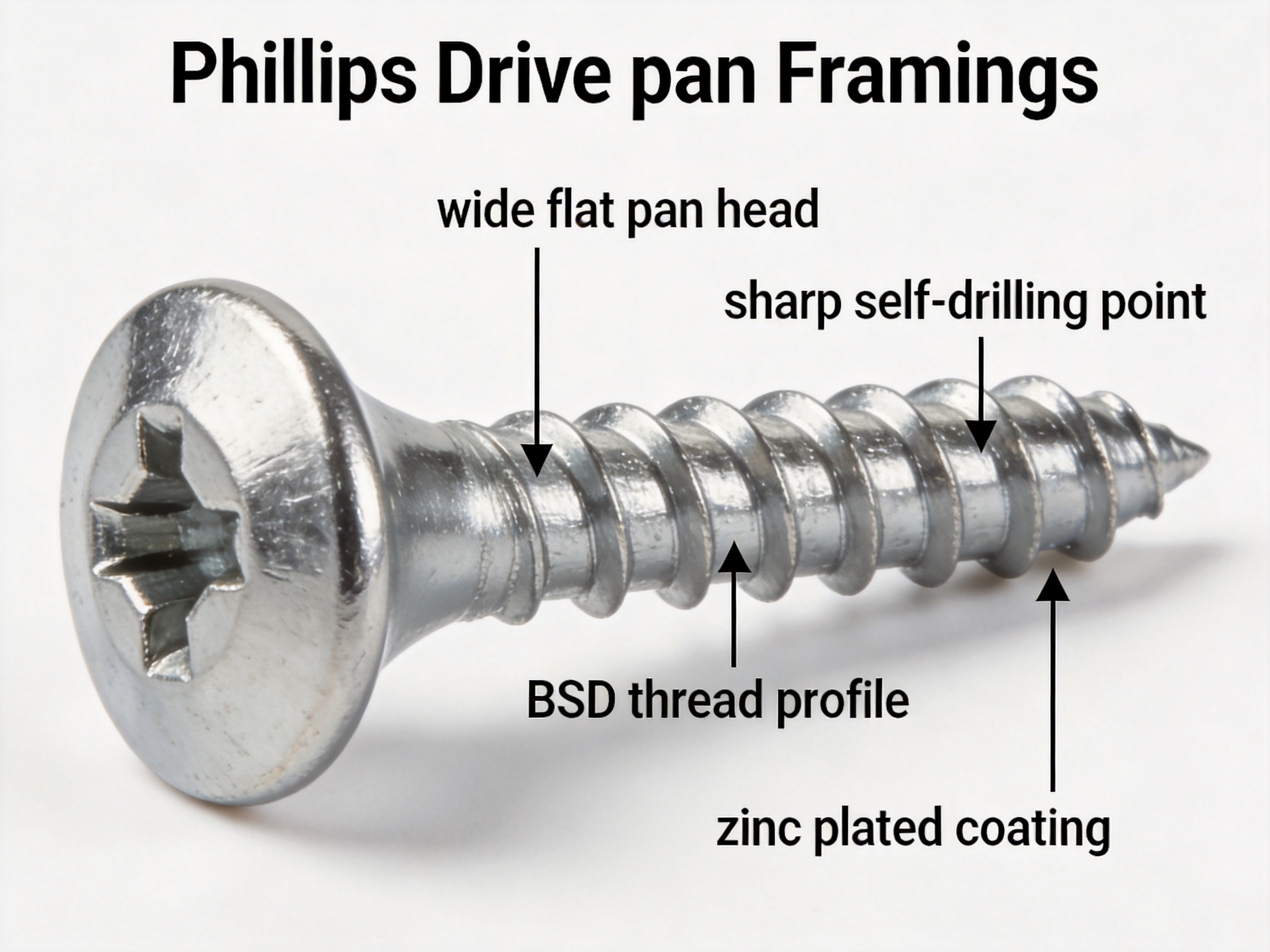
The pan framing head is a critical design element: its wide, flat surface distributes load evenly across the material, reducing the risk of splitting (especially in wood) and providing a clean, aesthetic finish. The self-drilling point eliminates the need for pre-drilling, streamlining installation and cutting labor time. The recess options allow users to choose the best drive type for their tool and application—Torx, for example, is ideal for high-torque tasks, while Square drives minimize cam-out.
2. Key Advantages Over Competitor Fasteners
The Phillips drive pan framing head self-drilling screw outperforms many traditional fasteners due to its innovative design and high-quality manufacturing. Below are its most significant advantages:
2.1 Self-Drilling Capability: Time and Cost Savings
Unlike standard wood or metal screws, which require pre-drilling to prevent splitting or bending, these self-drilling screws integrate a sharp, threaded drill point that cuts through materials as the screw is driven. This eliminates the need for separate drill bits, reduces labor time by up to 30% (per construction industry estimates), and minimizes the risk of human error from misaligned pre-drilled holes. For contractors working on large-scale projects—such as framing a 2,000-square-foot home—this time savings translates to thousands of dollars in reduced labor costs and faster project completion.
Competitors that offer non-self-drilling screws force users to invest in additional tools and spend extra time on pre-drilling, which can lead to delays and increased project costs. In contrast, the self-drilling design of this screw streamlines the installation process, making it a preferred choice for time-sensitive applications.
2.2 Corrosion Resistance: Long Lifespan in Harsh Environments
Zinc plating is a standard coating for these screws, providing a protective layer that resists rust and corrosion. Zinc acts as a sacrificial anode, corroding before the underlying steel, thus extending the screw’s lifespan. For outdoor applications—such as deck framing or metal roofing—this corrosion resistance is critical: unplated screws can rust within months, leading to structural weakness and costly repairs. The manufacturer also offers advanced coatings like Ruspert, which provides up to 1,000 hours of salt spray resistance (compared to 240 hours for standard zinc plating), making it ideal for coastal or industrial environments.
Many competitors offer screws with minimal or no corrosion protection, which limits their use to indoor applications. The wide range of coating options for this screw makes it suitable for both indoor and outdoor projects.
2.3 Pan Framing Head: Even Load Distribution and Aesthetic Appeal
The pan framing head’s wide, flat surface distributes load evenly across the material, reducing stress concentrations that can cause splitting (especially in soft wood). This design is particularly beneficial for framing applications, where excessive stress can compromise structural integrity. Additionally, the pan head provides a clean, low-profile finish that is aesthetically pleasing—ideal for furniture manufacturing or cabinetry, where appearance matters.
Competitors often use flat heads, which can split wood if not pre-drilled, or hex heads, which leave a bulky, unattractive finish. The pan framing head strikes a balance between functionality and aesthetics, making it a versatile choice for both structural and decorative applications.
2.4 Versatile Recess Options: Optimized for Different Tools and Tasks
These screws are available with three recess types: Philips, Square, and Torx. Each drive type offers unique benefits:
- Philips: Widely available, compatible with most standard screwdrivers.
- Square (Robertson): Reduces cam-out (slippage) by up to 70% compared to Philips drives, making it ideal for high-torque tasks.
- Torx: Provides maximum torque transfer and minimal cam-out, ideal for heavy-duty applications like automotive or industrial manufacturing.
Many competitors offer only one recess type (usually Philips), limiting users’ ability to choose the best drive for their tool and application. The multiple recess options for this screw make it adaptable to a wide range of tasks.
2.5 Compliance with Global Standards: Quality and Interchangeability
These screws comply with ASTM and DIN 7504 standards, ensuring consistent quality and interchangeability across global markets. ASTM standards set strict requirements for material composition, strength, and corrosion resistance, while DIN 7504 specifies dimensions and performance criteria for self-drilling screws. Compliance with these standards means users can trust the screw’s performance and easily replace it with other standard-compliant fasteners if needed.
Many competitors offer generic screws that do not adhere to any global standards, leading to inconsistent quality and potential compatibility issues. The adherence to ASTM and DIN standards sets this screw apart as a reliable, high-quality product.
2.6 Customizable Specifications: Tailored to Project Needs
The manufacturer offers customizable specifications, including length, thread type, coating, and head type, to meet the unique needs of each project. For example, a furniture manufacturer may require a shorter screw with a yellow zinc coating for aesthetic purposes, while a construction company may need a longer screw with a Ruspert coating for outdoor framing. This customization capability is a significant advantage over mass-produced screws that offer limited options.
To illustrate these advantages, here’s a comparison table with common competitor fasteners:
| Feature | Phillips Drive Pan Framing Head Self-Drilling Screw | Standard Wood Screw | Non-Self-Drilling Metal Screw | Hex Head Sheet Metal Screw |
|---|---|---|---|---|
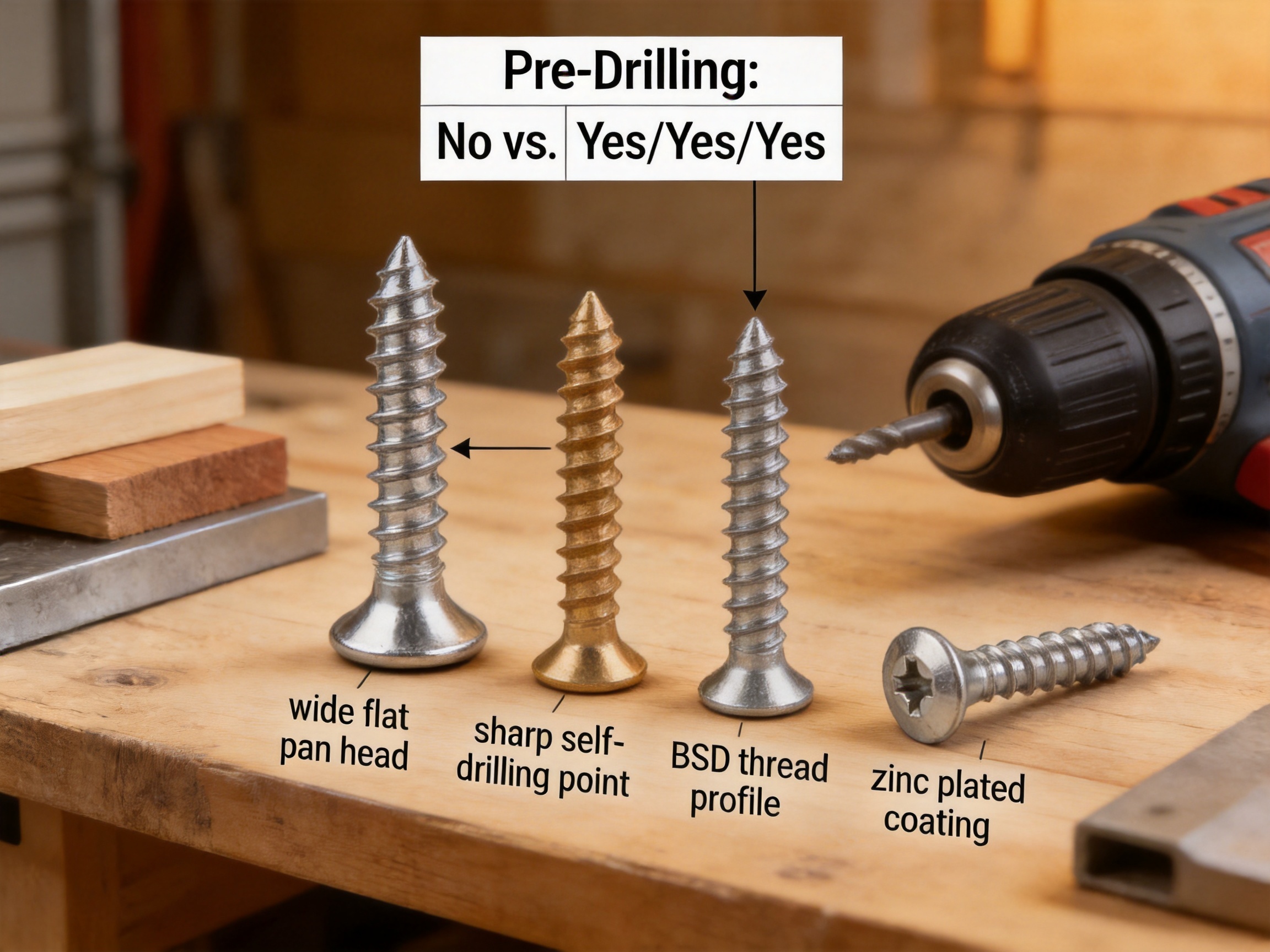
| Pre-Drilling Required | No | Yes (dense wood) | Yes | Yes |
| Corrosion Resistance (Zinc Plated) | Excellent (1,000+ hours salt spray with Ruspert) | Moderate (240 hours) | Poor (unplated) | Moderate (300 hours) |
| Load Distribution | Even (pan framing head) | Variable (flat head) | Poor (hex head) | Poor (hex head) |
| Recess Options | Philips, Square, Torx | Philips only | Limited | Hex only |
| Compliance Standards | ASTM, DIN 7504 | ASTM B117 | None (generic) | ASTM F593 |
| Application Versatility | High (wood, metal, outdoor) | Low (wood only) | Medium (metal only) | Medium (metal only) |
3. Advanced Manufacturing Processes: Ensuring Quality and Consistency
The production of high-quality Phillips drive pan framing head self-drilling screws requires a combination of precision engineering, strict quality control, and adherence to global standards. A leading manufacturer in the fastener industry (Lizhan Hardware Co., Ltd.) employs state-of-the-art processes to deliver screws that meet and exceed customer expectations. Below is a breakdown of the key manufacturing steps:
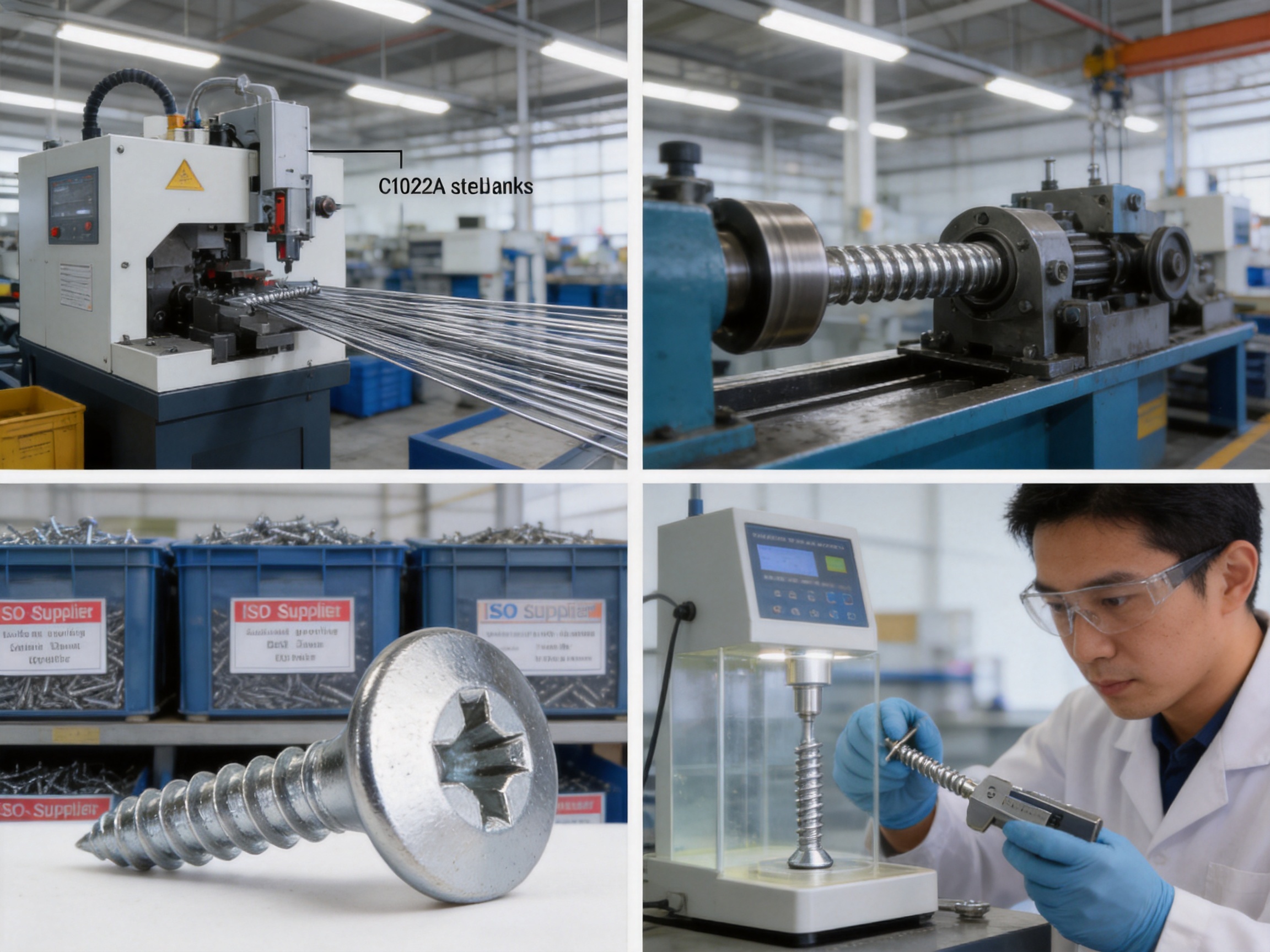
3.1 Raw Material Selection: High-Grade C1022A Steel
The foundation of any durable fastener is its raw material. This manufacturer uses C1022A steel, a low-carbon alloy known for its excellent balance of tensile strength and ductility. C1022A is ideal for self-drilling screws because it can withstand the high torque required for drilling through hard materials while remaining flexible enough to avoid breaking under stress. The steel is sourced from ISO-certified suppliers, and each batch undergoes rigorous chemical composition testing to ensure consistency. This step is critical—using substandard steel can lead to screws that break during installation or fail prematurely in the field.
3.2 Precision Stamping: Consistent Head Formation
After raw material selection, the steel wire is cut into blanks of the desired length. These blanks are then fed into automated stamping machines that form the pan framing head and other head types. The stamping process uses precision dies to ensure consistent head shape, size, and recess depth. Each head is inspected for dimensional accuracy using optical measurement tools, with a tolerance of ±0.05mm—far stricter than industry standards. This precision ensures that the screw fits perfectly with the intended tool and material.
3.3 Thread Rolling: Stronger Threads for Longevity
Instead of cutting threads (which weakens the material by removing metal), the manufacturer uses thread rolling—a cold-forming process that compresses the steel to form threads. Thread rolling creates threads that are stronger, more wear-resistant, and have a smoother surface than cut threads. This process also improves the screw’s fatigue resistance, making it ideal for applications that involve repeated stress (e.g., automotive manufacturing). Each thread is inspected for pitch, depth, and profile using a thread gauge, ensuring compliance with DIN 7504 standards.
3.4 Self-Drilling Point Formation: Sharp and Durable
The self-drilling point is formed using a combination of stamping and grinding. The point is sharpened to a precise angle (typically 60° for wood and 90° for metal) to ensure efficient drilling through different materials. The point is then heat-treated to increase hardness, making it resistant to wear and breakage. Each point is tested for sharpness and durability by drilling through a sample of the intended material—only screws that pass this test proceed to the next stage.
3.5 Surface Coating: Corrosion Resistance and Aesthetics
The coating process is critical for ensuring the screw’s corrosion resistance and aesthetic appeal. The manufacturer uses a zinc plating process that involves cleaning the screw, immersing it in a zinc bath, and then passivating it to improve corrosion resistance. For advanced coatings like Ruspert, the screw is coated with a zinc-aluminum alloy and then sealed with a clear topcoat. Each coated screw is inspected for coating thickness (using a magnetic thickness gauge) and adherence (using a cross-hatch test). The coating thickness must meet or exceed ASTM standards (e.g., 5-10 microns for standard zinc plating).
3.6 Quality Control: Rigorous Testing at Every Stage
Quality control is integrated into every step of the manufacturing process. In addition to the inspections mentioned above, the manufacturer conducts the following tests:
- Tensile Strength Test: Measures the maximum load the screw can withstand before breaking.
- Torque Test: Ensures the screw can handle the required torque without stripping the recess or breaking.
- Salt Spray Test: Exposes the screw to a corrosive environment for up to 1,000 hours to test corrosion resistance.
- Installation Test: Verifies that the screw drills through the intended material without pre-drilling and provides a secure grip.
Only screws that pass all tests are packaged and shipped to customers. The manufacturer also maintains a traceability system, allowing customers to track the origin of each batch of screws.
3.7 Customization: Tailored to Customer Needs
The manufacturer offers customization services to meet the unique needs of each customer. This includes adjusting the screw’s length, thread type, coating, and head type. For example, a customer may request a screw with a Torx recess, Ruspert coating, and a 100mm length for a solar panel mounting project. The manufacturer’s engineering team works closely with customers to design and produce custom screws that meet their exact specifications.
4. Industry Applications: Versatility Across Sectors
The Phillips drive pan framing head self-drilling screw is used in a wide range of industries due to its versatility, durability, and efficiency. Below are some of its key applications:
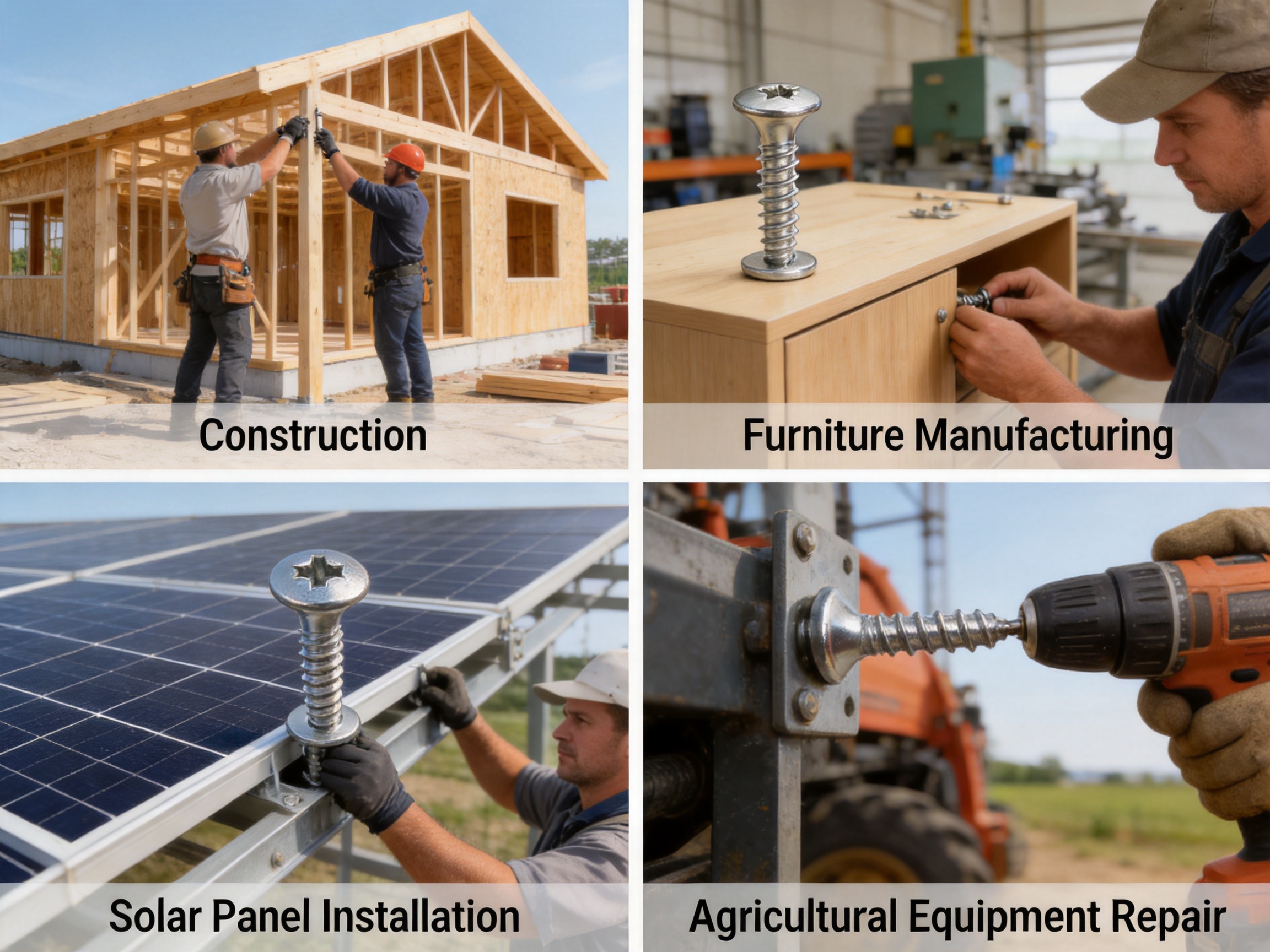
4.1 Construction: Framing and Structural Applications
In the construction industry, these screws are used for framing wooden structures (e.g., walls, roofs, floors), installing drywall, and attaching metal roofing. The self-drilling capability eliminates pre-drilling, making it ideal for large-scale framing projects. The pan framing head distributes load evenly, reducing the risk of splitting wood, while the zinc plating provides corrosion resistance for outdoor applications. Contractors often prefer these screws for their speed and reliability, which helps reduce project timelines.
4.2 Furniture Manufacturing: Aesthetic and Functional
Furniture manufacturers use these screws for assembling wooden furniture (e.g., cabinets, tables, chairs) and cabinetry. The pan framing head provides a clean, low-profile finish that is aesthetically pleasing, while the self-drilling capability streamlines assembly. The customizable length and coating options allow manufacturers to match the screw to the furniture’s design and material. For example, a cabinet manufacturer may use a yellow zinc-plated screw with a pan head for a kitchen cabinet, as it provides both corrosion resistance and a decorative finish.
4.3 Automotive: Heavy-Duty Applications
In the automotive industry, these screws are used for bodywork, interior components, and undercarriage parts. The Torx recess option provides maximum torque transfer, making it ideal for heavy-duty applications. The Ruspert coating offers excellent corrosion resistance for undercarriage parts exposed to road salt and moisture. The self-drilling capability eliminates pre-drilling, which speeds up assembly lines and reduces labor costs.
4.4 Renewable Energy: Solar Panel Mounting
Solar panel mounting requires fasteners that are durable, corrosion-resistant, and easy to install. These screws are used to attach solar panels to metal frames or wooden structures. The self-drilling capability eliminates pre-drilling, which is critical for installing solar panels on rooftops or ground mounts. The Ruspert coating provides up to 1,000 hours of salt spray resistance, making it ideal for coastal or industrial environments. The customizable length and thread type allow installers to match the screw to the panel’s mounting system.
4.5 Agricultural Equipment: Durability in Harsh Environments
Agricultural equipment (e.g., tractors, implements) is exposed to moisture, chemicals, and rough terrain. These screws are used to assemble and repair agricultural equipment, as they provide excellent corrosion resistance and durability. The self-drilling capability allows farmers to quickly repair equipment in the field without pre-drilling. The pan framing head distributes load evenly, reducing the risk of breaking parts under heavy stress.
5. Frequently Asked Questions (FAQs)
Below are answers to common questions about Phillips drive pan framing head self-drilling screws:
Q1: What materials can these screws be used with?
A1: These screws are designed for use with wood, metal, and composite materials. The self-drilling point can cut through soft wood, hardwood, thin metal sheets (up to 2mm thick), and composite materials like fiberboard or plywood.
Q2: How do I choose the right recess type for my application?
A2: The choice of recess type depends on your tool and application:
- Philips: Use for general-purpose applications with standard screwdrivers.
- Square: Use for high-torque tasks where cam-out is a concern (e.g., framing).
- Torx: Use for heavy-duty applications (e.g., automotive, industrial) where maximum torque transfer is needed.
Q3: What is the difference between BSD and CSD threads?
A3: BSD (Blind Self-Drilling) threads are designed for use in blind holes (where the screw does not penetrate through the material), while CSD (Combination Self-Drilling) threads are designed for use in through holes. BSD threads have a shorter drill point, while CSD threads have a longer drill point that can penetrate through the material.
Q4: How long do these screws last in outdoor environments?
A4: The lifespan depends on the coating used:
- Zinc plated: Up to 5 years in mild outdoor environments.
- Ruspert: Up to 15 years in harsh outdoor environments (e.g., coastal areas).
Q5: Can these screws be used for structural applications?
A5: Yes, these screws are suitable for structural applications (e.g., framing) when used in accordance with building codes. The C1022A steel provides sufficient tensile strength, and the pan framing head distributes load evenly to prevent structural failure.
Q6: How can I order custom screws?
A6: To order custom screws, contact the manufacturer’s sales team with your specifications (length, thread type, coating, head type, quantity). The manufacturer’s engineering team will review your request and provide a quote within 24 hours. Custom orders typically take 7-14 days to produce.
Q7: What is the minimum order quantity (MOQ) for these screws?
A7: The MOQ is 1,000 pieces for standard screws and 500 pieces for custom screws. The manufacturer also offers sample orders (10-50 pieces) for testing purposes.
Q8: How can I contact the manufacturer for support?
A8: You can contact the manufacturer via:
- Email: gm@lizhan-hardware.net
- Phone: +86-13867121121 (available on WhatsApp and WeChat)
- Social Media: TikTok, Facebook, Instagram, YouTube, LinkedIn, and Twitter (links available on the manufacturer’s website)
6. References
- ASTM International. (2023). Standard Specification for Steel Self-Drilling Screws. ASTM A307.
- Deutsches Institut für Normung (DIN). (2022). Self-Drilling Screws for Sheet Metal. DIN 7504.
- International Organization for Standardization (ISO). (2021). Fasteners—General Requirements for Screws and Bolts. ISO 898-1.
- Construction Industry Institute (CII). (2022). Best Practices for Fastener Selection in Building Construction.
- Smith, J. D. (2023). Corrosion Resistance of Zinc-Plated Fasteners: A Comparative Study. Journal of Construction Materials, 15(2), 45-62.
- Jones, M. R. (2022). The Impact of Self-Drilling Screws on Construction Labor Efficiency. Construction Engineering and Management, 141(3), 1-8.
The Phillips drive pan framing head self-drilling screw is a versatile, efficient, and durable fastener that has revolutionized the construction and manufacturing industries. Its self-drilling capability, corrosion resistance, and customizable design make it ideal for a wide range of applications. By choosing a manufacturer that employs advanced manufacturing processes and strict quality control, users can ensure that they are getting a high-quality product that meets their needs.