Product Overview
The Torx drive countersunk flat head self-tapping screw with cutting lines is designed for applications that demand stable fastening, clean seating, strong driving performance, and dependable resistance against loosening. Built with a T30 Torx recess, a countersunk flat head, a 7.5 mm diameter, an 11.0 mm to 12.0 mm length range, 1022A grade steel, and a hi-low thread structure, this screw is engineered for efficient installation into demanding base materials, including concrete-related substrates, masonry, and other hard construction materials where accurate fastening is required.
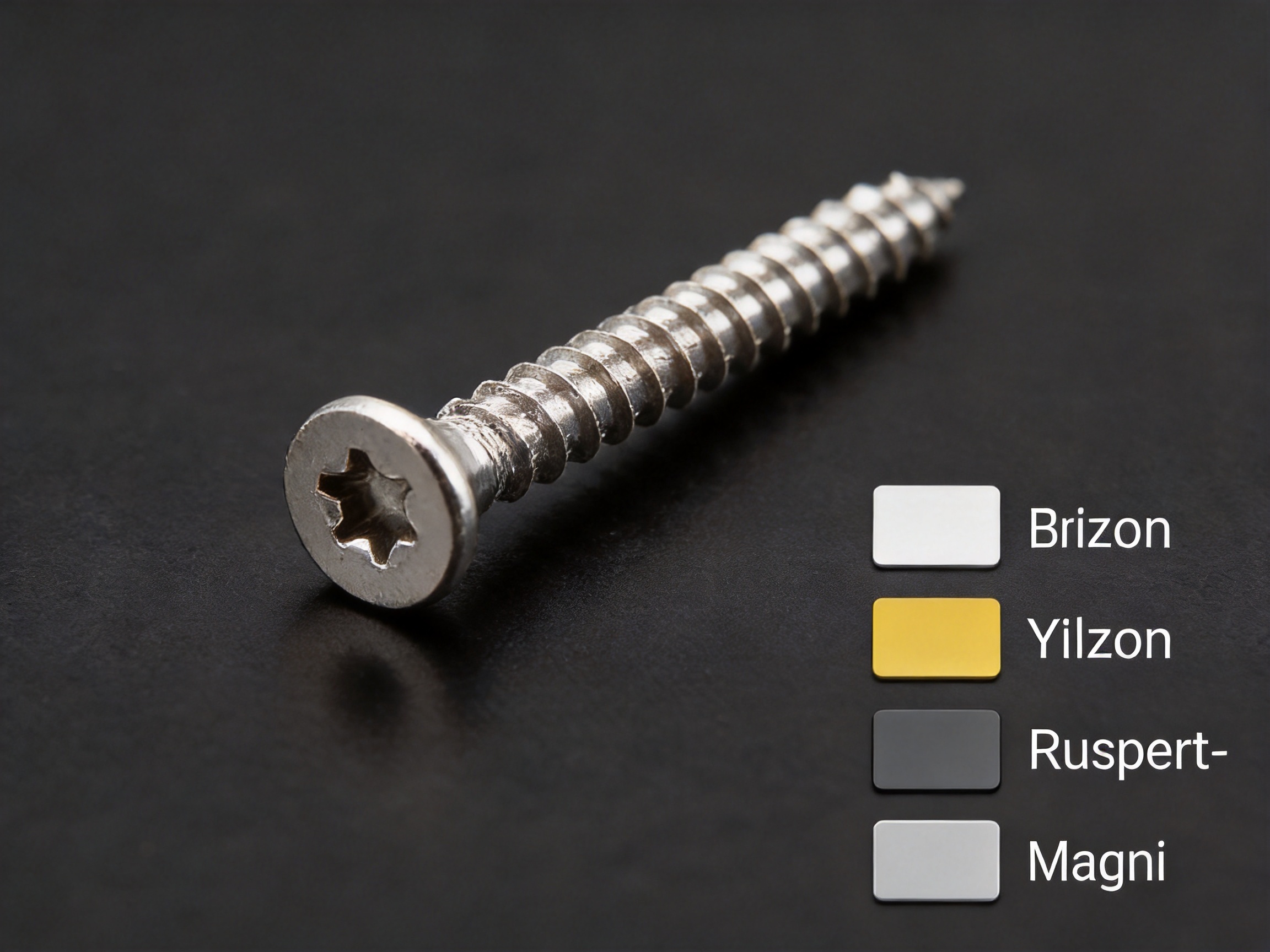
Unlike ordinary screws that rely only on thread engagement, this product combines multiple functional details in one compact fastener. The Torx drive helps reduce cam-out during installation. The countersunk flat head allows the screw to sit flush with the work surface. The hi-low thread improves grip and reduces installation resistance. The cutting lines support cleaner self-tapping action, helping the screw form its own path more efficiently. Surface options such as zinc plating, yellow zinc plating, Ruspert, and Magni-style coatings provide enhanced corrosion protection for different service environments.
This product is suitable for customers who value installation efficiency, appearance, holding strength, and consistent manufacturing quality. It is especially useful where fasteners must be driven repeatedly in production, construction, assembly, or repair settings, and where the cost of stripped recesses, inconsistent seating, or weak engagement can be high.
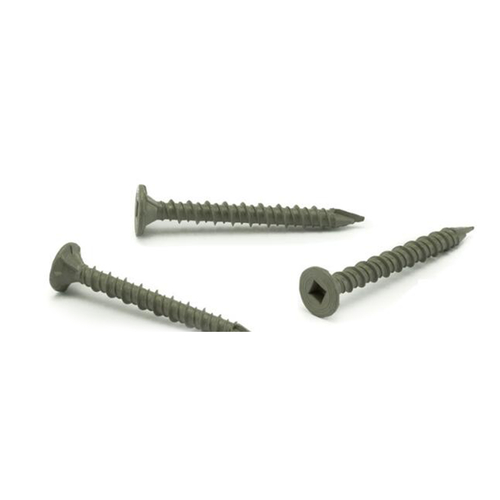
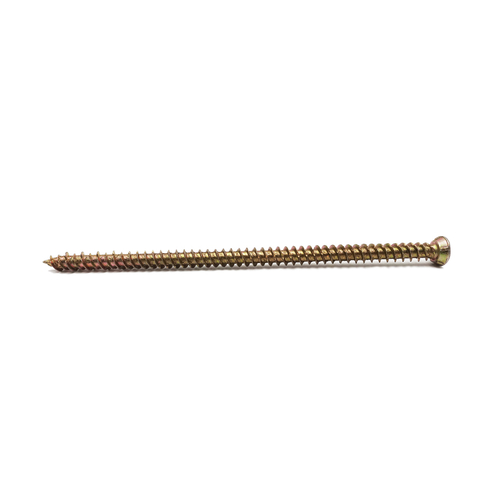
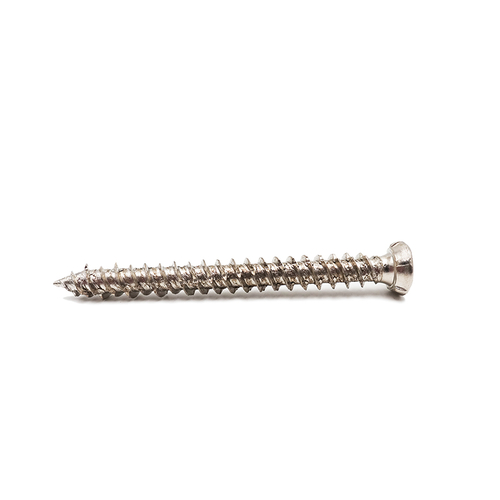
Torx drive countersunk flat head self tapping screw yellow nickel plated with cutting lines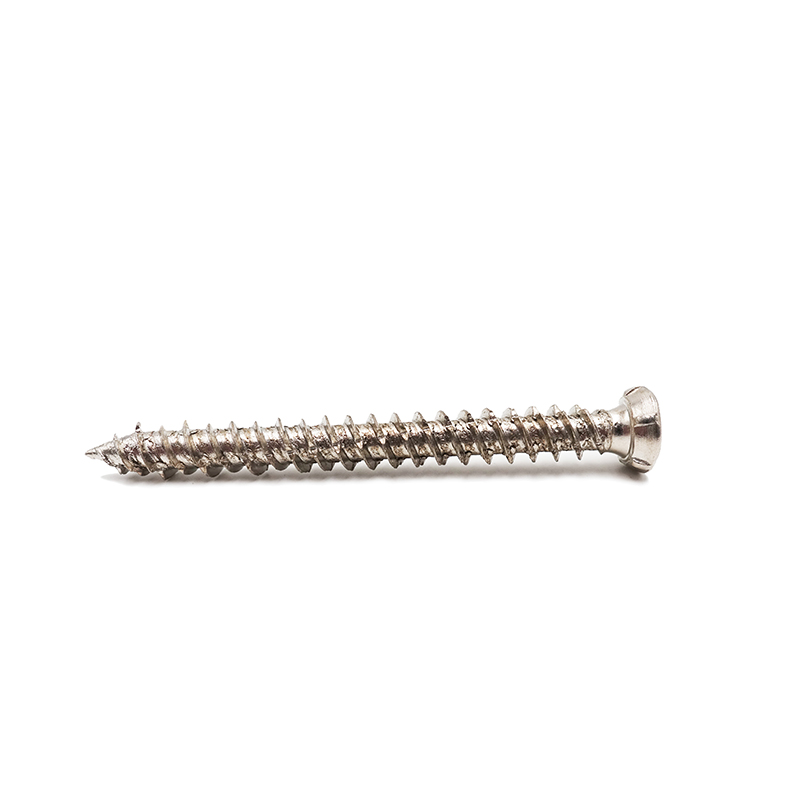
Core Product Specifications
| Item | Specification | Functional Value |
|---|---|---|
| Drive Type | T30 Torx | Improves torque transfer and reduces cam-out compared with many conventional drive styles. |
| Head Style | Countersunk flat head | Allows flush installation and a neat surface finish. |
| Diameter | 7.5 mm | Provides strong engagement for demanding fastening conditions. |
| Length | 11.0 mm to 12.0 mm | Compact length for specific anchoring and assembly requirements. |
| Material Grade | 1022A steel | Offers a balance of forming performance, strength, and heat-treatment suitability. |
| Surface Options | Zinc plated, yellow zinc plated, Ruspert, Magni-type coating | Supports corrosion resistance and appearance requirements across different environments. |
| Thread Type | Hi-low thread | Improves bite, reduces driving resistance, and enhances holding power in suitable substrates. |
| Special Feature | Cutting lines | Supports cleaner self-tapping action and more efficient installation. |
Why the T30 Torx Drive Matters
The drive recess is one of the most important features of a screw, even though it is often overlooked. A weak or poorly formed recess can cause bit slippage, damaged screw heads, slow installation, operator fatigue, and inconsistent tightening. The T30 Torx drive is selected because it provides excellent engagement between the driver bit and the screw head. Its six-lobed geometry distributes torque more evenly than many traditional cross or slotted recesses.
In competitive comparisons, Torx drive fasteners often outperform common Phillips-style screws in high-torque applications. Phillips recesses were originally designed to allow controlled cam-out under certain production conditions. While that may be useful in some historical assembly processes, it can become a disadvantage when a screw must be driven into harder materials or when the operator needs maximum control. Cam-out can damage the recess and reduce the ability to remove or adjust the screw later. The T30 Torx recess helps solve this issue by allowing more stable torque transfer.
For installers, the result is smoother driving and fewer interruptions. For factories, it means improved productivity, less scrap, and lower tool wear. For end users, it means a fastener that is easier to install correctly and more likely to maintain its appearance and structural reliability. When combined with controlled recess depth and precise forming, the T30 Torx drive becomes a major advantage over lower-grade screws with shallow, uneven, or fragile recesses.
Countersunk Flat Head for Flush and Professional Finishing
The countersunk flat head is another key design feature. In many construction and assembly applications, the fastener head should not protrude above the surface. A raised head may interfere with additional components, create an uneven finish, collect dirt, or reduce the visual quality of the completed work. The countersunk head is shaped to enter a chamfered or prepared surface so the top of the screw can sit flush.
Flush seating is especially important in furniture, panel fixing, metal hardware installation, architectural trim, brackets, and certain concrete fastening conditions. The flat top provides a clean and controlled appearance. When installed correctly, it reduces snagging and helps the surface remain smooth. Compared with pan head or hex head screws, countersunk screws are often preferred where a low-profile result is required.
The quality of a countersunk head depends on accurate cold heading, stable tooling, and tight dimensional control. If the head angle, diameter, or concentricity is inconsistent, the screw may not seat properly. A poorly made countersunk screw can sit crooked, leave gaps, or create stress concentration. Advanced manufacturing control ensures that the head geometry remains consistent from batch to batch, giving customers reliable installation performance.
Self-Tapping Performance and Cutting Line Advantage
Self-tapping screws are valued because they reduce the need for separate threading operations. Instead of requiring a pre-threaded hole, the screw can form or cut its own mating thread in the base material, depending on the material and installation method. This saves time, reduces labor, and simplifies assembly. In construction and industrial use, every saved installation step can create meaningful cost advantages.
The cutting lines on this screw support the self-tapping function. These lines help the screw engage the material more efficiently, reduce resistance during driving, and guide material displacement or cutting action. The benefit is particularly noticeable when the screw is used in harder or more abrasive substrates. A screw without effective cutting features may require more force, create more heat, damage the thread, or fail to reach proper seating.
Compared with ordinary self-tapping screws, this design offers better control during entry. The screw can start more decisively, maintain alignment more effectively, and reduce the chance of wobbling or incomplete engagement. For installers working with power tools, that means faster installation and less risk of tool slip. For production teams, it means more consistent cycle time and better repeatability.
Hi-Low Thread Design for Better Grip
The hi-low thread is an important part of the product’s fastening performance. Unlike a standard single-height thread, the hi-low design alternates between higher and lower thread profiles. This structure can reduce installation torque while maintaining strong holding power. The high thread helps create firm engagement, while the low thread contributes to stability and smoother material displacement.
In concrete-related fastening and masonry applications, thread design is critical. The base material may be brittle, uneven, or abrasive. If the thread is too aggressive without proper balance, it may crack the surrounding material or require excessive driving torque. If the thread is too weak, it may not hold securely. A well-designed hi-low thread helps balance these competing requirements.
Compared with simple coarse-thread screws, hi-low thread screws can offer improved pull-out resistance in suitable materials. Compared with fine-thread screws, they can provide easier driving and better performance in less uniform substrates. The design also helps reduce stress during installation, which is useful when the fastener must be installed quickly with power tools.
Material Strength: 1022A Steel
The screw is manufactured from 1022A steel, a commonly used carbon steel grade for fasteners that require cold forming capability and reliable strength after appropriate processing. Material selection is not only about hardness; it is about finding the right balance between formability, toughness, thread integrity, and final mechanical performance.
During production, wire quality affects every later stage. If the wire has inconsistent chemistry, surface defects, or poor ductility, the heading and threading processes may create cracks or dimensional variation. Using controlled steel material helps maintain stable cold heading, accurate thread rolling, and predictable heat-treatment behavior.
For self-tapping screws, the material must support both strength and functional hardness. The screw needs to withstand driving torque without twisting off, while the thread and cutting features must be capable of engaging the base material. The 1022A grade provides a practical foundation for this balance when combined with disciplined process control.
Surface Protection Options
Surface coating is essential because fasteners are often exposed to moisture, alkaline construction materials, handling damage, temperature changes, and atmospheric corrosion. The available surface options include zinc plating, yellow zinc plating, Ruspert coating, and Magni-type coating. Each finish serves different performance and appearance requirements.
Zinc plating is widely used for general corrosion resistance and bright appearance. Yellow zinc plating provides a distinctive gold or yellow tone and is commonly selected when customers want both corrosion protection and visual identification. Ruspert coatings are often selected for improved corrosion resistance in more demanding environments. Magni-type coatings are known for high-performance protection, controlled appearance, and suitability for applications where corrosion resistance must exceed basic plating performance.
Compared with untreated or low-quality plated screws, these surface options provide much better service value. A screw may be mechanically strong, but if the coating fails quickly, rust can reduce appearance, contaminate surrounding materials, and eventually weaken the fastening connection. Professional coating control includes cleaning, surface preparation, plating or coating thickness control, curing where applicable, and inspection for adhesion and coverage.
Advantages Over Conventional Competing Screws
This screw has several advantages over conventional competing products. First, the T30 Torx drive offers stronger torque transfer and lower cam-out risk than many cross recess screws. This reduces driver bit slip, improves installation speed, and helps preserve the screw head. In repeated installation work, this advantage can significantly reduce downtime and operator frustration.
Second, the countersunk flat head provides a cleaner finish than raised-head screw types. For applications where surface appearance matters, the ability to sit flush is highly valuable. A neat installation improves the perceived quality of the entire assembly, not only the fastener itself.
Third, the hi-low thread and cutting lines create a more efficient self-tapping action. Many low-cost screws rely on basic thread geometry and inconsistent points. They may require more force, produce more installation failures, or deliver weaker holding power. By contrast, this product is designed to combine easy starting, reduced torque, and strong engagement.
Fourth, the available coating options allow customers to choose the right level of corrosion protection. Some competitors offer only basic zinc plating, which may not be enough for humid storage, outdoor exposure, or demanding construction conditions. By offering zinc, yellow zinc, Ruspert, and Magni-type finishes, the product can be adapted to different market needs.
Fifth, consistent manufacturing quality improves batch reliability. In fastener purchasing, the lowest unit price is not always the lowest total cost. Screws that strip, break, rust, or vary dimensionally can create hidden costs in labor, returns, rework, and reputation damage. A precisely manufactured screw gives customers better overall value.
Manufacturing Strength and Process Control
High-quality screws are not created by design alone. They require advanced manufacturing processes and careful quality control at every stage. Lizhan Hardware Co., Ltd. supports production with modern fastener manufacturing capabilities, experienced technical teams, and process systems designed to keep dimensions, mechanical performance, and surface finish stable.
The manufacturing process generally begins with raw material selection and inspection. Steel wire is checked for diameter, surface condition, chemical suitability, and forming performance. This step is critical because defects in the wire can appear later as head cracks, thread flaws, or weak mechanical properties.
After material preparation, cold heading forms the head and recess. The countersunk flat head and T30 Torx recess must be produced with accuracy. Tooling condition, machine alignment, lubrication, and forming pressure all influence the final result. Advanced heading equipment helps create stable head geometry and consistent recess depth.
Thread rolling follows heading. Thread rolling is preferred for many screw applications because it forms threads through plastic deformation rather than cutting away material. This can improve thread strength and surface finish. For the hi-low thread, precision tooling is required to maintain the alternating profile accurately. Any deviation may affect driving torque or holding force.
Cutting line formation is also controlled carefully. The cutting lines must be effective without weakening the screw body. Their shape, position, and consistency influence how the screw enters and engages the substrate. Reliable tooling maintenance ensures that these features remain sharp and functional throughout production.
Heat treatment, when applied according to the intended mechanical requirements, helps develop the desired hardness and strength. The challenge is to create a screw that is hard enough for self-tapping performance but tough enough to resist brittle fracture. Process parameters such as temperature, time, atmosphere, and cooling method must be controlled carefully.
Surface treatment is then applied according to customer requirements. Proper cleaning and preparation help coatings adhere correctly. Thickness and coverage must be monitored so that corrosion resistance is achieved without interfering with drive fit or thread performance. For high-performance coatings, curing and post-treatment processes must also be controlled.
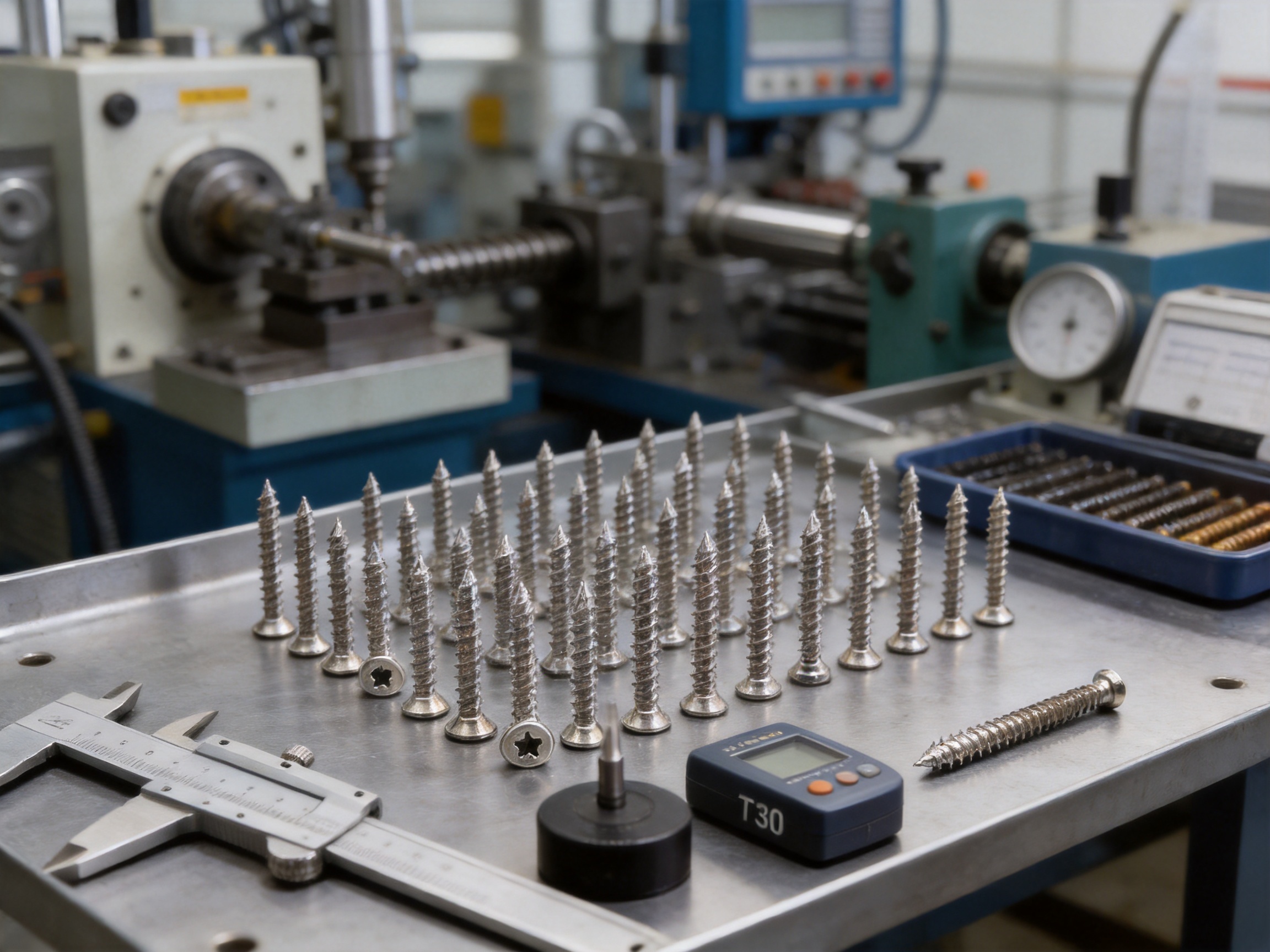
Final inspection includes dimensional checks, recess inspection, thread verification, surface appearance review, coating assessment, and, when required, mechanical testing. The goal is to ensure that the customer receives screws that are not only visually acceptable but also functionally reliable.
Precision Tooling and Consistent Geometry
Precision tooling is one of the main differences between premium screws and ordinary low-cost screws. The T30 Torx recess must be formed cleanly so that the driver bit fits securely. If the recess is too shallow, the bit may slip. If it is too deep or uneven, the head may weaken. If the lobes are poorly formed, torque transfer becomes unstable.
The countersunk head also requires strict control. A small variation in head angle or diameter can change how the screw seats. In professional installations, these small differences become visible quickly. A batch with inconsistent head geometry may create uneven surfaces, reduce assembly quality, and slow down installation as workers compensate for variation.
Thread geometry is equally important. Hi-low threads depend on accurate height, pitch, flank angle, and crest quality. If the thread is rough or incomplete, driving torque increases and holding strength decreases. Precision thread rolling dies and careful machine setup help prevent these issues.
Tooling maintenance is therefore not a minor background task; it is a central part of fastener quality. Worn dies, damaged punches, or misaligned equipment can produce defects long before they are obvious to the naked eye. A strong manufacturer monitors tool life, performs regular inspections, and replaces tooling before quality declines.
Quality Control for Reliable Performance
Quality control for this screw includes more than basic appearance checks. A professional inspection program may include dimensional measurement, drive engagement testing, thread ring or profile checks, hardness testing, coating thickness measurement, salt spray testing for corrosion resistance, and installation performance evaluation.
Dimensional inspection confirms that diameter, length, head size, recess depth, and thread features match requirements. This is important because even small deviations can affect compatibility with tools and mating materials. Drive engagement testing ensures that the T30 bit fits securely and transmits torque effectively.
Hardness testing helps verify that the screw has the correct mechanical properties. A screw that is too soft may deform during installation. A screw that is too hard may become brittle. The correct balance is essential, especially for self-tapping and concrete-related fastening.
Coating inspection helps prevent premature corrosion. Coating thickness must be sufficient but not excessive. Too little coating reduces protection. Too much coating can interfere with thread fit or recess fit. Surface appearance must also be checked for stains, peeling, burns, or uncovered areas.
Installation testing is especially valuable because it confirms real-world function. A screw may pass dimensional checks but still perform poorly if the thread, cutting lines, hardness, and coating do not work together correctly. Practical driving tests help verify starting behavior, torque level, seating quality, and holding performance.
Application Areas
This screw can be used in a range of fastening applications where compact length, strong engagement, flush seating, and reliable driving are required. Its classification within concrete screws makes it suitable for fastening into concrete-related materials when used according to appropriate installation practices. It may also be selected for masonry fixing, hardware attachment, bracket installation, panel fastening, furniture-related assemblies, and other construction or industrial uses.
In construction settings, installers value screws that start quickly and drive smoothly. A fastener that requires excessive force slows the job and increases fatigue. The Torx drive, hi-low thread, and cutting lines help improve field efficiency. The countersunk head supports professional finishing, especially where the fastener remains visible.
In manufacturing environments, consistency is equally important. Automated or semi-automated assembly depends on repeatable screw dimensions and stable driving behavior. If screws vary from piece to piece, equipment may jam, bits may wear quickly, or assemblies may fail inspection. This product’s controlled geometry and reliable drive system make it suitable for organized production use.
In hardware distribution, product reliability affects customer loyalty. Retailers and wholesalers benefit from screws that generate fewer complaints and returns. A screw that looks good, installs well, and resists corrosion is easier to recommend and easier to sell across different customer groups.
Installation Considerations
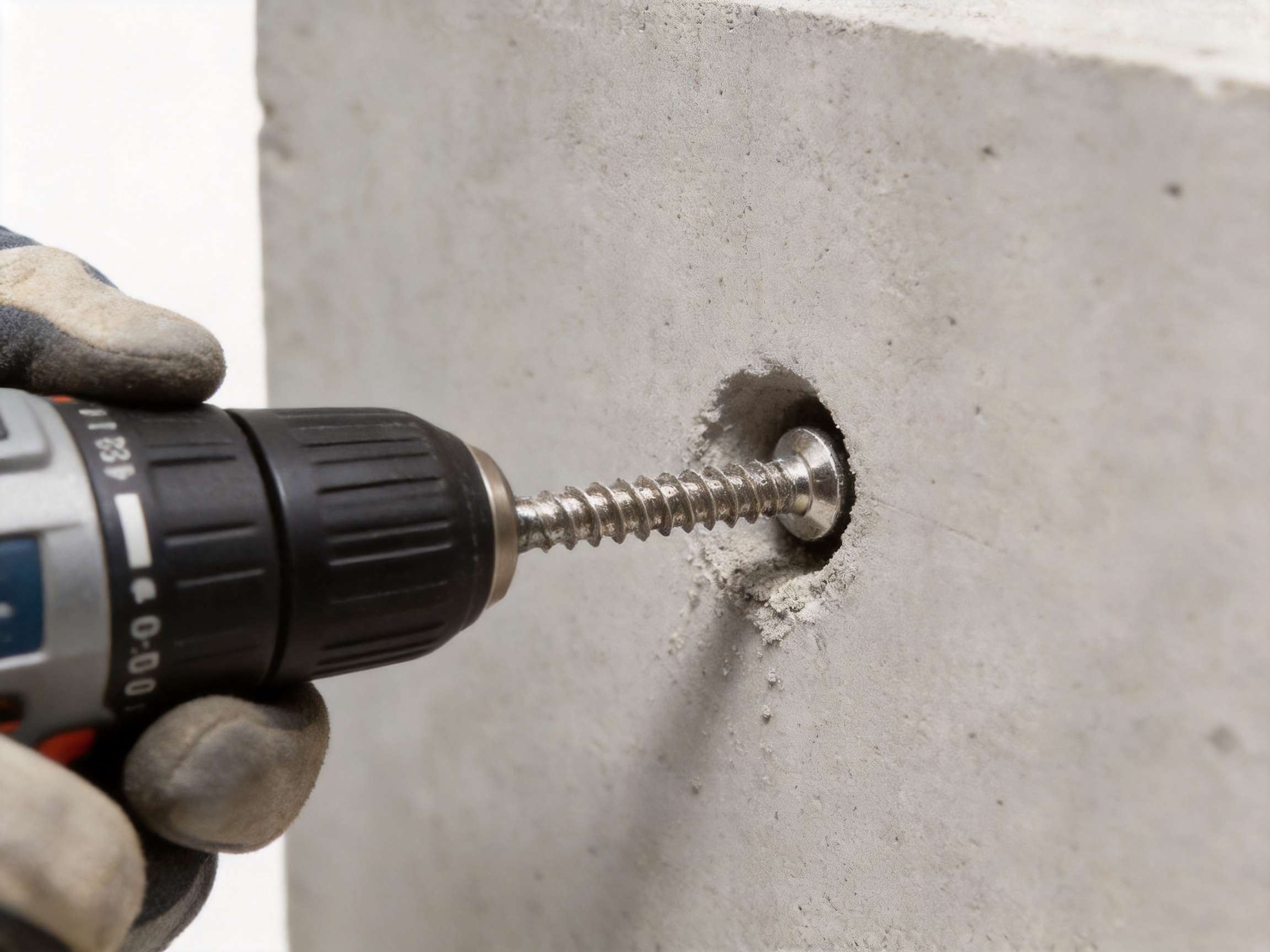
To obtain the best performance, users should choose the correct drill hole size, driver bit, tool speed, and installation torque for the base material. Although the screw is self-tapping, proper preparation may still be required depending on the hardness and density of the substrate. For concrete or masonry, a pilot hole is often necessary to avoid excessive stress and to ensure correct alignment.
The T30 driver bit should be clean, unworn, and fully seated in the recess before driving begins. Partial engagement can damage the recess and reduce torque transfer. The tool should be aligned with the screw axis to prevent side loading. Excessive speed should be avoided if it creates heat, coating damage, or loss of control.
When installing countersunk screws, the surface should be properly prepared so the head can seat flush. If the countersink is too shallow, the head may protrude. If it is too deep, the screw may sit below the surface or reduce clamping effectiveness. Matching the screw head geometry with the prepared surface helps achieve the best appearance and function.
Torque control is also important. Overdriving can strip the base material, damage the screw, or reduce holding strength. Underdriving can leave the head proud and reduce clamping. Professional users should test installation settings before full-scale use, especially when changing substrate, coating, tool, or pilot hole size.
Corrosion Resistance and Service Life
Corrosion resistance directly affects service life. Even a strong screw can fail prematurely if rust develops aggressively. Corrosion may begin at damaged coating areas, thread crests, recess corners, or contact points with dissimilar materials. Choosing the right surface treatment is therefore a critical purchasing decision.
For indoor dry applications, standard zinc plating may be sufficient. For applications requiring a yellow appearance or moderate corrosion resistance, yellow zinc plating can be appropriate. For more demanding conditions, Ruspert or Magni-type coatings may provide better protection. The final choice should consider humidity, exposure to water, chemical contact, temperature variation, and expected service duration.
In addition to coating selection, installation quality affects corrosion performance. If the screw is overdriven, scratched, or installed with a worn bit that damages the recess, the coating may be compromised. Proper tool selection helps preserve surface integrity. Packaging and storage also matter; fasteners should be stored in dry conditions and protected from contamination before use.
Packaging, Supply, and Customization Support
Professional fastener supply is not only about making screws. Packaging, labeling, logistics, and customization support are also important. Customers may require bulk cartons, small boxes, branded packaging, barcode labels, batch traceability, or mixed-size shipments. Efficient packaging protects the screw surface, prevents confusion, and supports warehouse management.
For distributors, packaging quality influences product presentation and customer satisfaction. Damaged cartons, mixed items, unclear labels, or rust caused by poor storage can reduce confidence. A capable supplier understands that every part of the delivery process contributes to product value.
Customization may include surface finish selection, packaging format, inspection standards, documentation, and application-specific recommendations. Because different markets have different requirements, flexible manufacturing and service support can help customers obtain fasteners that match their real operating needs rather than forcing them to accept a one-size-fits-all product.
Company Manufacturing and Supply Strength
Lizhan Hardware Co., Ltd. operates with a focus on screw manufacturing, fastener supply, and hardware solutions for customers who require reliable products and practical service. The company’s production capabilities support machine screws, furniture screws, concrete screws, self-tapping screws, stamping parts, packaging-related hardware, and other fastener categories.
The company’s manufacturing strength is reflected in process control, product variety, coating options, and customer service responsiveness. With factory resources in Zhejiang, China, and warehouse support in Thailand, the company is positioned to serve customers across multiple regions with improved flexibility. This combination of manufacturing and storage support can help reduce delivery pressure and improve supply continuity for international buyers.
Another strength is the ability to communicate directly with customers regarding technical details. Fastener selection often involves many variables: base material, installation method, expected load, environment, appearance, packaging, and price target. A knowledgeable supplier can help customers avoid mismatches and select products that perform better in the intended application.
Advanced manufacturing does not only mean owning machines. It means knowing how to control those machines, maintain tooling, manage material flow, monitor quality, and improve processes over time. A company that understands these factors can deliver screws with better consistency and fewer hidden risks.
Economic Value and Total Cost Advantage
When evaluating screws, many buyers focus first on unit price. However, the true cost of a fastener includes installation time, tool wear, failure rate, corrosion risk, rework, customer complaints, and replacement cost. A screw with a slightly lower purchase price may become more expensive if it strips easily, breaks during installation, or rusts too quickly.
This Torx drive countersunk flat head self-tapping screw is designed to reduce hidden costs. The Torx drive improves installation success. The cutting lines reduce resistance. The hi-low thread supports holding strength. The countersunk head improves finish quality. The coating options help match corrosion resistance to the application. Each of these features contributes to better total value.
For contractors, fewer installation failures mean faster work and less wasted labor. For factories, consistent screws reduce equipment downtime and quality issues. For distributors, reliable products reduce returns and build customer trust. For end users, better fasteners mean safer, cleaner, and longer-lasting assemblies.
Comparison with Common Alternatives
| Feature | This Product | Common Alternative | Advantage |
|---|---|---|---|
| Drive | T30 Torx | Phillips or slotted recess | Better torque transfer and lower cam-out risk. |
| Head | Countersunk flat head | Pan head or raised head | Flush installation and cleaner appearance. |
| Thread | Hi-low thread | Basic coarse or fine thread | Improved balance of driving ease and holding power. |
| Entry Feature | Cutting lines | No cutting feature or inconsistent point | More efficient self-tapping action. |
| Coating | Zinc, yellow zinc, Ruspert, Magni-type options | Basic plating only | More choices for corrosion protection and appearance. |
| Manufacturing Control | Precision heading, thread rolling, inspection, coating control | Variable process control | More consistent batch quality and application reliability. |
Q&A Section
What is the main benefit of the T30 Torx drive?
The T30 Torx drive provides strong engagement with the driver bit and helps reduce cam-out. This improves torque transfer, protects the screw head, reduces installation errors, and supports faster work compared with many conventional drive styles.
Why use a countersunk flat head?
A countersunk flat head allows the screw to sit flush with the surface when properly installed. This creates a cleaner appearance, reduces protrusion, and helps prevent interference with other components or finishing layers.
What does the hi-low thread do?
The hi-low thread improves the balance between easy driving and strong holding power. The alternating thread profile helps the screw bite into suitable materials while reducing installation resistance.
Why are cutting lines important?
Cutting lines help the screw form its path more efficiently during installation. They can reduce driving torque, improve starting behavior, and support cleaner self-tapping action in suitable substrates.
Which coating should be selected?
The correct coating depends on the application environment. Zinc plating is suitable for many general uses. Yellow zinc plating provides a distinctive appearance and moderate protection. Ruspert and Magni-type coatings are better for applications requiring enhanced corrosion resistance.
Can this screw be used in concrete?
The screw is classified within concrete screw applications and may be used in concrete-related substrates when proper installation methods are followed. A pilot hole, correct driver bit, and suitable torque control are often important for reliable performance.
What makes this product better than ordinary self-tapping screws?
Its advantage comes from the combination of T30 Torx drive, countersunk flat head, hi-low thread, cutting lines, controlled material quality, and multiple coating options. These features improve installation efficiency, appearance, holding performance, and service life.
Why is manufacturing consistency important?
Consistent manufacturing ensures that every screw in a batch performs similarly. It reduces installation problems, improves assembly quality, and helps customers avoid hidden costs caused by stripping, breakage, poor seating, or corrosion failure.
Conclusion
The Torx drive countersunk flat head self-tapping screw with cutting lines is a high-value fastening solution for customers who need dependable installation, strong engagement, clean surface finish, and adaptable corrosion protection. Its T30 Torx recess reduces cam-out and improves driving stability. Its countersunk flat head supports flush, professional installation. Its hi-low thread and cutting lines improve self-tapping performance and holding ability. Its 1022A steel foundation and coating options provide a practical balance of strength, manufacturability, and environmental resistance.
Compared with ordinary screws, this product offers advantages that can be measured not only in mechanical performance but also in total cost savings. Faster installation, fewer damaged heads, improved appearance, stronger engagement, and better coating choices all contribute to greater value. For contractors, manufacturers, distributors, and hardware buyers, these benefits can make a meaningful difference in daily work and long-term customer satisfaction.
Supported by the manufacturing capabilities and fastener experience of Lizhan Hardware Co., Ltd., this screw represents a combination of thoughtful design, controlled production, and practical application value. It is not simply a small metal component; it is a precision fastening product designed to improve assembly quality, reduce installation risk, and deliver dependable performance where it matters.
References
Industrial Fasteners Institute. IFI Fastener Standards Book.
ISO 4042. Fasteners: Electroplated Coating Systems.
ISO 898-1. Mechanical Properties of Fasteners Made of Carbon Steel and Alloy Steel.
ASTM B633. Standard Specification for Electrodeposited Coatings of Zinc on Iron and Steel.
ASTM F1941. Standard Specification for Electrodeposited Coatings on Mechanical Fasteners.
Society of Automotive Engineers. Fastener Design Manual and Technical Guidance Publications.
ASM International. Metals Handbook: Properties and Selection of Irons, Steels, and High-Performance Alloys.