Understanding the Core Differences in Fastener Engineering
Selecting the appropriate fastener is a critical factor in determining the long-term durability of any wall or subfloor installation. While a screws might appear to be a simple piece of threaded metal, its engineering dictates how it performs under specific environmental stresses, shear forces, and material densities. Misapplying a fastener, such as utilizing standard interior screws in a high-moisture tile backup system, can lead to catastrophic structural failure, shifting tiles, and compromised integrity.
Two of the most frequently utilized fasteners in residential and commercial construction are specialized framing screws designed for gypsum and those engineered for dense cementitious panels. These fasteners are not interchangeable. They feature distinct metallurgical compositions, coating technologies, thread designs, and head profiles configured to interact with specific substrates. Utilizing the wrong product can result in snapping during installation, rapid corrosion, or structural withdrawal over time.
Cement Board Performance
Requires alkalization-resistant coatings to prevent chemical degradation when embedded in damp, alkaline cementitious matrices.
Standard Drywall Performance
Optimized for rapid penetration through paper facing and soft gypsum cores without tearing the outer protective layer.
The Engineering Behind cement board screws
Tile backer boards are composed of dense, abrasive cementitious material often reinforced with fiberglass mesh. Driving a standard fastener into this substrate creates massive friction and introduces the metal to an intensely alkaline environment. Specialized cement board screws are explicitly manufactured to withstand these conditions and provide a lasting mechanical hold.
The primary distinguishing feature of high-quality screws for cement board installations is their corrosion-resistant coating. These fasteners are typically treated with a specialized ceramic or zinc-chromate finish. This protective layer is formulated to resist the corrosive nature of the alkalis present in Portland cement. Without this coating, standard steel oxidized rapidly, leading to rust-jacking, where the expanding rust exerts outward pressure, cracking the surrounding tile grout.
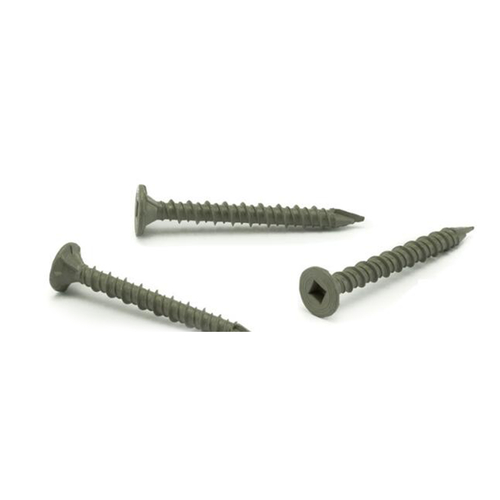
Head geometry is another critical engineering variation. Unlike the curved head of gypsum fasteners, a premium backer-on cement board screws design incorporates a flat wafer head featuring specialized ribs or nibs on the underside. As the fastener enters the dense substrate, these tiny metal nibs score the cement panel, carving out a slight recess. This allows the wafer head to sit perfectly flush or slightly countersunk without fracturing the brittle edges of the board. This flush profile is mandatory for applying thin-set mortar evenly during subsequent tiling stages.
Furthermore, these fasteners feature prominent, deep threads that provide superior pull-out resistance in both wood and light-gauge steel framing. The thread pitch is calculated to pull the rigid sheet tight against the studwork, eliminating any deflection or independent movement of the substrate when weight is applied via stone or ceramic tiles.
The Structural Profile of drywall screws
Gypsum panels are significantly softer and less dense than cementitious panels, requiring an entirely different mechanical fastening approach. A standard drywall screws is highly optimized for speed of installation and specific sheet-to-framing tension dynamics. These fasteners generally feature a black phosphate or yellow zinc finish, designed almost exclusively for interior environments shielded from chronic humidity.
The signature characteristic of a standard gypsum fastener is the bugle head screws profile. The smooth, concave curvature under the head is engineered to compress the outer paper facing of the drywall panel gently without slicing it. The paper skin provides a substantial portion of the structural panel's sheer strength. If a fastener punctures the paper completely, the soft core offers little resistance, resulting in a structural failure known as a blow-through. The bugle head creates a uniform dimple that can be cleanly filled with joint compound.
When selecting these fasteners, understanding precise drywall screws dimensions is vital for structural compliance. The diameter is typically specified by a gauge number, with #6 and #8 being the industry standards. The length must be selected based on the thickness of the panel layer to ensure adequate penetration into the vertical studs or overhead joists.
Thread types are split cleanly into two functional categories:
- Coarse threads: Engineered with sharp, widely spaced flights for gripping wood fibers effectively.
- Fine threads: Engineered with dual or closely spaced pitches designed to cut cleanly through cold-formed steel framing.
Direct Comparison: Material, Coatings, and Dimensions
To fully grasp why these fasteners cannot be substituted for one another, it is helpful to contrast their technical parameters directly. Driving a black phosphate gypsum fastener into an exterior or wet-area cement board will rapidly lead to structural degradation due to chemical oxidation. Conversely, driving a heavy, ribbed cement fastener into gypsum will shred the paper face, ruining the holding power.
| Engineering Feature | Cement Board Fasteners | Drywall Fasteners |
|---|---|---|
| Primary Head Profile | Flat Wafer Head with Countersinking Nibs | Smooth Curved Bugle Head |
| Standard Surface Treatment | Alkali-Resistant Ceramic or High-Grade Zinc | Black Phosphate or Oil Finish |
| Substrate Compatibility | Portland Cement Board, Fiber-Cement Panels | Gypsum Wallboard, Plasterboard Panels |
| Corrosion Resistance Rating | High (Withstands continuous damp environments) | Low (Strictly limited to dry interior spaces) |
| Common Gauge Sizes | #8, #9, #10 Heavy-Duty Diameters | #6, #7, #8 Standard Structural Diameters |
The dimensional variations demonstrate that structural fasteners are customized for load distribution. Cement panels are heavy and brittle, demanding a broader wafer head to distribute clamping force over a larger area. Drywall sheets are lighter, relying on the tensile strength of the paper face wrapped under a dimpled bugle head configuration.
Industrial Fastener Visual Presentation
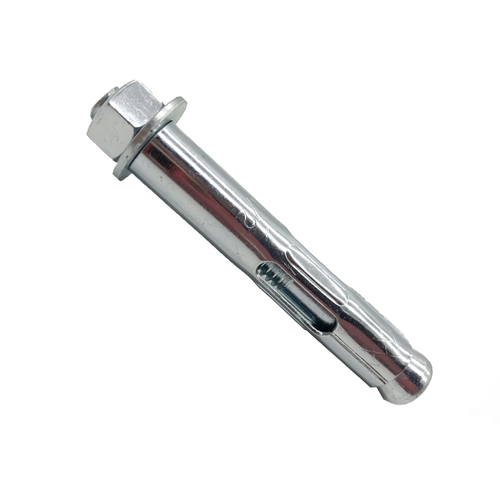
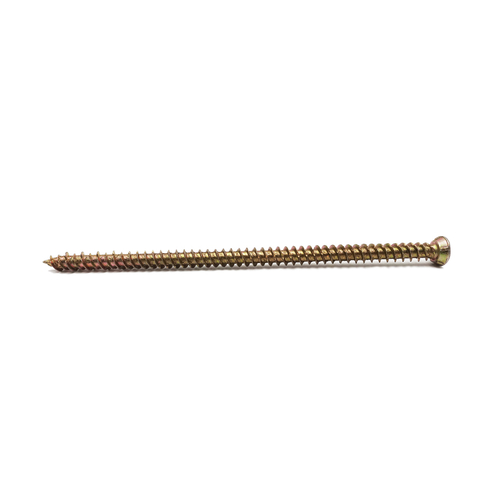
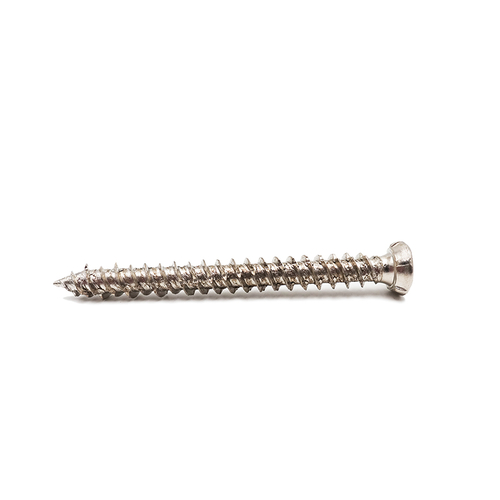
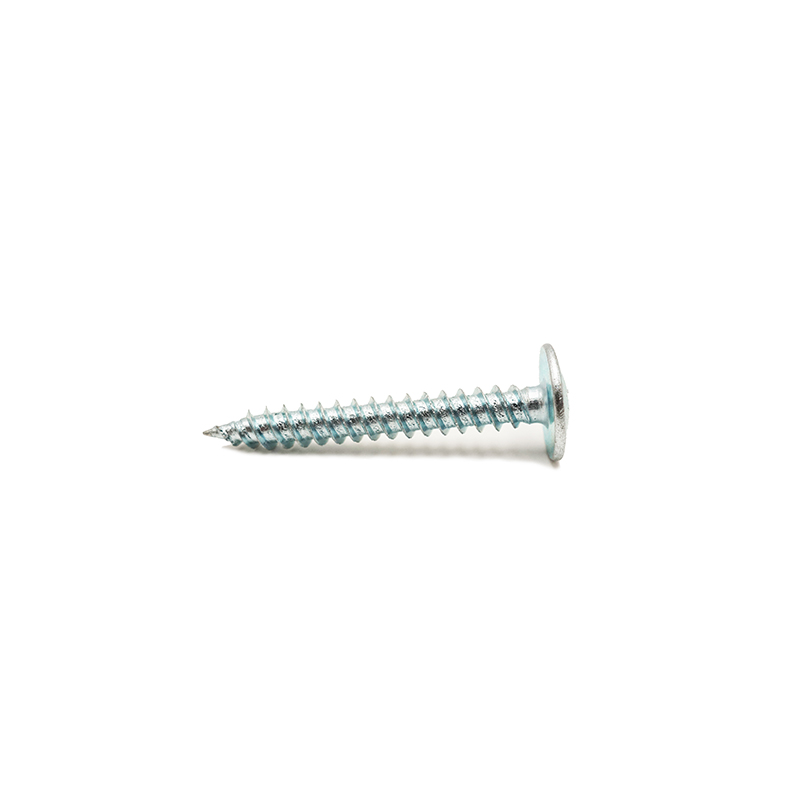
In commercial manufacturing and distribution, consistency in thread formation and surface treatment thickness determines the failure rate on heavy-duty jobsites. Below is a detailed view of high-quality industrial manufacturing fasteners showing precise thread consistency and structural optimization.
Best Fastening Practices for Standard Drywall Systems
When executing interior wall framing with standard gypsum board, structural integrity and aesthetic finish depend entirely on choosing the correct length and spacing. A frequent point of confusion among installers is determining exactly what size drywall screws for 1/2 drywall are required by building regulations. For standard half-inch thick sheets installed on residential wood framing, a 1-1/4 inch length is the absolute minimum standard.
This selection ensures that the fastener penetrates at least 3/4 of an inch into the solid wood studwork. If the framing consists of heavy-gauge steel studs, a 1-inch fine-thread fastener is acceptable, as the metal threads lock securely into the steel flange without needing deep penetration. For thicker 5/8-inch fire-rated drywall panels, the length must scale up accordingly to 1-5/8 inches to preserve the same structural anchoring depth.
A crucial rule of thumb for professional drywall installation: structural integrity is not achieved by over-driving. The fastener must dimple the surface paper by exactly 1/32 of an inch. If the paper breaks, the holding capability drops by more than 80 percent, necessitating the installation of a secondary fastener driven two inches away.
Equally important is calculating the density of your fastening grid. When considering how many drywall screws per sheet are required for a standard 4x8 foot panel on a wall vertical layout, field and edge spacing protocols must be strictly followed. For residential wood stud configurations spaced 16 inches on-center, a professional layout dictates a maximum spacing of 12 inches along the vertical edges and 12 inches throughout the interior field studs.
This mathematical layout yields approximately 28 to 32 fasteners per single 4x8 foot sheet. If installing panels horizontally on ceiling joists, the spacing must tighten to every 12 inches across the field to combat the constant gravitational downward pull. Utilizing a specialized depth-sensitive nosecone on an industrial screws gun guarantees that every single fastener reaches its optimal depth configuration without manual errors.
Best Fastening Practices for Cement Backer Boards
Installing a robust, deflection-free moisture barrier system for tiled showers, floors, and heavy backsplashes demands specialized stabilization procedures. The mechanical connection created by driving a high-quality backer on cement board application requires different spatial tolerances than gypsum framing. Because cement board lacks structural elasticity, the fasteners must be driven carefully to prevent edge blowouts.
Before driving any structural fasteners, a thick bed of modified thin-set mortar should be combed across the subfloor or wall substrate using a 1/4-inch notched trowel. While the mortar is wet, the cement panels are bedded into place. The primary role of the mechanical fastener here is to provide intense, uniform clamping force while the mortar transitions from a paste to a crystalline solid matrix.
Fastener spacing for cement panels is noticeably tighter than drywall configurations. Fasteners must be driven every 8 inches along both the perimeter edges and the interior field studs. Crucially, a fastener should never be driven closer than 1/2-inch from the outer edge of a cement panel. Driving a heavy wafer head too close to the raw edge will cause the rigid core material to cleave or shatter, completely ruining the local load-carrying capacity.
For horizontal installations, selecting the correct subfloor screws ensures that structural floor bounce does not disrupt tile grout lines over time. When anchoring 1/4-inch or 1/2-inch cement board to a structural plywood subfloor, the fasteners must not penetrate completely through the underlying primary floor joists. The fasteners must pull the cement sheet and plywood subfloor into an inseparable composite unit, preventing independent shifting when subjected to heavy foot traffic loads.
Consequences of Misapplying Structural Fasteners
Using an incorrect fastener often produces failure modes that remain hidden until the finish work is fully completed, making remediation extremely costly. When a standard black-phosphate drywall fastener is driven into a wet-area cement board installation, a chemical process known as environmental stress corrosion cracking begins almost immediately. The damp environment accelerates rust development on unprotected carbon steel, causing the screws to swell up to several times its original structural diameter.
This volumetric expansion exerts extreme pressure on the dense, unyielding cement core. This often results in localized fracturing or structural failure at the screws head connection. Concurrently, the structural core of the rusted fastener loses its shear strength, eventually snapping under normal load variations. This allows the wall panel to flex outward, fracturing the waterproof tile grout lines and allowing hidden moisture to degrade the wood or steel framing behind the wall system.
Another severe issue is head pop-ups caused by poor seating or subfloor shifting. If a subfloor installation uses standard drywall fasteners instead of specialized, heavy-gauge wood-to-metal subfloor hardware, the high sheer forces will quickly shear the heads right off the shank. The remaining panels will rub against the loose steel shafts, producing annoying squeaks and leading to broken floor tiles.
Structural Layout and Selection Blueprint
To guarantee field operations remain free of code compliance issues and structural defects, structural installation teams should adhere to a strict selection protocol based on the design parameters of the assembly.
Verify Environmental Exposure
Identify if the system will experience direct moisture exposure or relative humidity over 70 percent. Wet spaces absolutely mandate ceramic-coated, alkali-resistant hardware.
Match Substrate to Head Profile
Use concave bugle heads exclusively for soft gypsum faces to dimple the paper layer. Use flat wafer heads with cutting nibs for high-density cement boards.
Calculate Framing Penetration Depth
Ensure a minimum of 3/4-inch penetration into timber studs or structural subfloors, and at least 3 full thread pitches clear past cold-formed light-gauge steel flanges.
By strictly enforcing these engineering rules, material waste is cut significantly, structural re-work is eliminated, and the finished surfaces remain visually flawless and structurally sound for their entire intended lifespan.
Frequently Asked Technical Questions
Q1: Can standard drywall screws be utilized to secure cement board if they are coated?
No. Standard gypsum fasteners cannot be used for cement panels regardless of surface treatment. Beyond the risk of corrosion, their smooth bugle head profile lacks the cutting nibs required to carve a recess into dense cement. Forcing a bugle head into a cement panel will crack the panel edges or leave the head sitting proud, preventing thin-set mortar from being applied flat.
Q2: What is the exact reason drywall screws break when driven into cement panels?
Gypsum fasteners are typically made of hardened carbon steel, which makes them strong but brittle under shear stress. The friction and resistance of driving into dense, aggregate-filled cement panels exceed the torsional shear limits of a thin gauge screws, causing the shank to snap near the head during installation.
Q3: How far into a wood stud should a cement board fastener penetrate?
A high-quality structural cement panel fastener must achieve a minimum penetration depth of 3/4 of an inch into solid wood framing members. For a standard half-inch thick cement backing sheet, this means using a minimum fastener length of 1-1/4 inches to ensure reliable long-term holding power.
Q4: Does the thread pitch change based on the type of metal framing studs used?
Yes. Fine-thread fasteners should be used for cold-formed steel framing from 20 to 25 gauge, as the tight thread spacing ensures a secure friction grip in thin metal. For heavy-duty structural steel studs thicker than 14 gauge, self-drilling tip fasteners are required to pierce the metal flange cleanly.
Q5: Why is a broken paper layer on a drywall sheet considered an installation failure?
The structural stability of a gypsum wall system relies heavily on the tension provided by its outer paper facing. If a bugle head is over-driven and punctures that paper, the screws head is left anchoring only the soft, chalky interior gypsum core. This allows the sheet to easily rattle or pull away from the wall framing under minimal force.