A buyer in Rotterdam receives a line item that reads "self drilling screws, 4.8 x 25 mm, hex washer head, zinc plated." No grade, no hardness, no case depth. Three suppliers quote, and two of them ship screws whose heads strip on the first purlin. The gap between those quotations is almost always the material and its heat treatment, and it is the one variable a simple price comparison never shows you.
The short answer: case-hardened low-carbon steel such as C1022 or C1018 covers roughly eight out of ten self-drilling screw jobs and drills steel up to about 6 mm. Stainless steel takes over only when corrosion, not strength, drives the decision – 410 where you still need a hardened drill point, 304 and 316 where chlorides are present and the steel being joined is thin. The rest of this page explains where those boundaries sit and what to write on a purchase order so a supplier cannot choose for you.
Self Drilling Screw Material Options at a Glance
| Material | Drill point hardness | Practical drilling range | Corrosion without coating | Relative cost |
|---|---|---|---|---|
| Case-hardened low carbon steel (C1018, C1022) | 550-700 HV surface, 270-350 HV core | Steel 0.8-6.0 mm | Low | 1x |
| Through-hardened medium carbon steel | 400-500 HV throughout | Decking, thicker sections | Low | 1.2x |
| 410 martensitic stainless | 450-500 HV at the point | Up to 1.5-2.0 mm | Moderate | 3-4x |
| 304 austenitic stainless | Cannot be hardened | Up to 1.0-1.5 mm | High | 4-6x |
| 316 austenitic stainless | Cannot be hardened | Up to 1.0-1.5 mm | Very high, chlorides included | 5-7x |
Read this as a set of trade-offs rather than a ranking. The physical rule behind the whole table is simple: the drill point must be harder than the metal it cuts, and it must stay harder while the tip temperature rises during drilling. Carbon steel reaches that state through carburizing; 410 reaches it through martensitic hardening; 304 and 316 cannot reach it at all, which is why stainless self-drilling screws rely on point geometry and work hardening and are limited to thin sheet.
Point size follows the same logic. As a rough reference, a #1 point suits sheet up to about 1.0 mm, a #2 point is routinely quoted up to 3.2 mm, a #3 point up to 6.0 mm, and heavier #4 and #5 points are reserved for thick structural sections. Material and point number must always be specified together.
Carbon Steel: The Default Self Drilling Screw Material
C1022 and C1018 wire grades
C1022 is a killed low-carbon steel with controlled silicon and aluminium content, chosen because it cold-heads cleanly into complex shapes such as hex washer, wafer and framing heads, then responds predictably to carburizing. C1018 behaves similarly and appears in many legacy specifications. Both are inexpensive, weldable, and produce a consistent drill point when the heat treatment line is under control, which is why they dominate roofing, purlin, framing and general sheet metal work.
Case depth, not just surface hardness
A common mistake is to approve a sample because the surface reads 550-700 HV on a hardness tester. Two screws with identical surface hardness can behave completely differently, because case depth controls how long the point keeps cutting. Typical case depths for #10 to #14 screws sit between 0.10 mm and 0.25 mm. Below roughly 0.08 mm the point dulls after a handful of boards; too deep and the screw becomes brittle, so the shank snaps instead of the head stripping. Core hardness usually lands between 270 HV and 350 HV, which sets the torsional strength of the shank and the drive recess.
Verification is straightforward and should be part of lot release: a hardness traverse on a sectioned screw, a torque-to-failure test on a calibrated driver, and a timed drilling test into a defined stack such as two sheets of 1.5 mm mild steel. Buyers who want a wider view of point selection and coating variables can review this practical self-drilling screw selection guide before freezing a specification.
Stainless Steel Self Drilling Screw Material Options
410 stainless: the hardenable option
410 is a martensitic, magnetic stainless grade that can be heat treated to roughly 450-500 HV at the point, so it drills light-gauge steel and aluminium trim without pre-drilling. It resists atmospheric corrosion far better than uncoated carbon steel and is the usual answer for coastal trim, facade components and food-adjacent environments where drilling capacity up to about 2 mm is enough. Passivation after manufacturing matters; unpassivated 410 can show surface rust in aggressive chloride exposure even though the base metal is intact.
304 and 316: corrosion first, drilling capacity second
Austenitic grades cannot be hardened by heat treatment. Their drill points work by geometry and local work hardening, which caps them at roughly 1.0-1.5 mm of sheet. Where that limit is acceptable, 304 delivers strong general corrosion resistance, and 316 adds 2-3% molybdenum for chloride-heavy sites such as pools, desalination plants and marine docks. Expect to pay four to seven times the carbon steel price for the same size.
Watch the galvanic pairing
Stainless screws driven into aluminium or into galvanized steel create a bimetallic couple. In wet or salty conditions the less noble metal corrodes, often before the screw shows any sign of trouble. Insulating washers under the head, or a system-matched combination of fastener and substrate, removes most of that risk.
Coatings Decide Service Life, Not the Steel Grade
Many purchase orders that say "stainless" would be better served by a coating upgrade on carbon steel. Clear or blue-white zinc plating at 5-8 µm typically holds 72-96 hours in neutral salt spray; yellow trivalent zinc reaches roughly 120-200 hours; mechanically applied zinc goes thicker still; hot-dip galvanizing at 40-50 µm commonly exceeds 500 hours; and ceramic-based barrier coatings such as Ruspert are quoted in the 500-1000 hour range. Black phosphate is a finish for indoor appearance and paint adhesion, not a corrosion system, and it is usually oiled for that reason.
On metal roofing, the washer is part of the material decision as much as the plating is. A zinc-plated hex washer head screw with a bonded EPDM washer seals the penetration, so water runs off the panel instead of into the purlin cavity.
Two rules keep the corrosion budget honest. First, salt spray hours must be stated with the test standard and accept/reject allowance, not as a single number. Second, coating thickness tolerances belong on the drawing, because a 3 µm shortfall can halve service life on a coastal site.
Matching Material to Substrate and Site Conditions
- Metal roofing over purlins, exterior: case-hardened C1022, zinc or barrier coating, hex washer head with EPDM washer, #2 or #3 point.
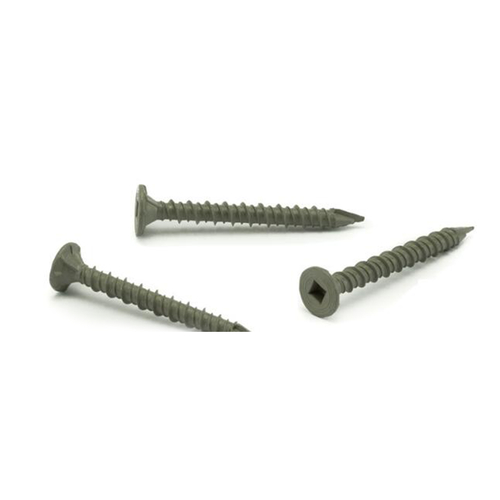
- Metal to timber: screws with wings ream the timber so the metal sheet pulls down tight instead of jacking. A countersunk head with wings in zinc plating is the standard pairing, and the full self-drilling screw range covers these head and tail combinations.
- Interior metal framing and partition studs: black phosphated wafer or pan head screws, where appearance and low reflectivity matter more than coating durability.
- Aluminium panels: match the fastener carefully; stainless against aluminium needs isolation, while coated steel against aluminium needs a barrier washer.
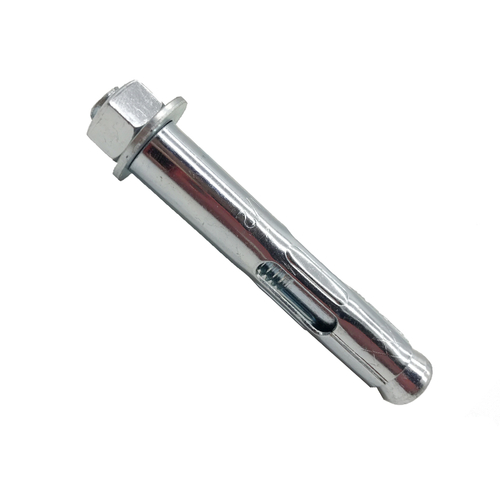
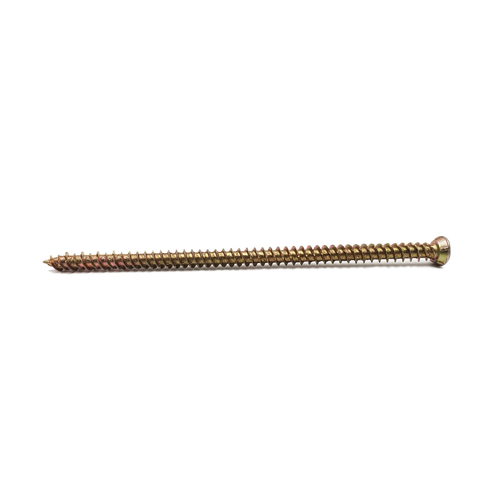
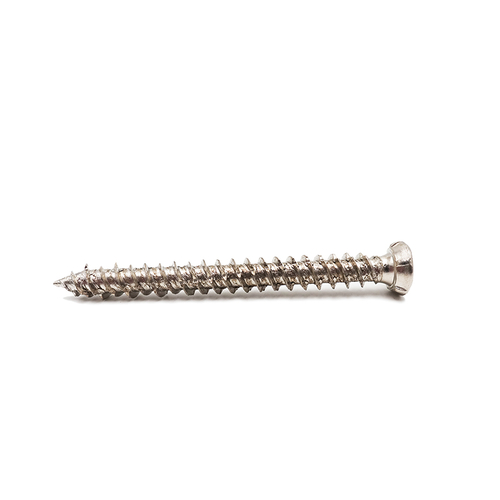
- Concrete and masonry: not a self-drilling job at all. Concrete screws and anchors are the correct family, and specifying a self-drilling screw here is a common and expensive shortcut.
For metal-to-timber assemblies, a countersunk self-drilling screw with wings in zinc plating handles the reaming and the sealing in one pass.
 Phillips Countersunk Self-Drilling Screws with Wings, Zinc PlatedZinc-plated Phillips countersunk self-drilling screws with wings are intended for self-drilling applications, including metal-to-timber assemblies where reaming and sealing matter.View Product →
For interior framing runs where heads should disappear into the substrate and no weather exposure exists, a black phosphated wafer head screw keeps the cost low and the finish discreet.
 Phillips Wafer Head Self-Drilling Screws with Black RuspertFor interior framing runs needing a discreet wafer head, this Phillips self-drilling screw is specified with a black Ruspert finish for self-drilling applications.View Product →
What to Put on the Purchase Order
Material ambiguity is resolved on paper, not in a warehouse argument. A self-drilling screw specification that can be quoted and inspected without interpretation includes:
- Wire grade and material family, for example C1022 case-hardened carbon steel or 410 stainless.
- Surface hardness range in HV or HRC and core hardness range, plus minimum case depth in millimetres.
- Point number and a stated maximum drilling capacity in mild steel.
- Thread type and pitch, head style, drive recess and washer requirement.
- Coating type, coating thickness in µm, and salt spray hours with the test standard.
- Minimum torque-to-failure value in Nm for the finished screw.
- Sampling plan and inspection reports for hardness, torque, salt spray and drilling time.
- Packaging, quantity per box, carton marking, and country-of-origin labelling.
Tolerances should be explicit rather than implied. Length and diameter tolerances of ±1.0 mm and ±0.1 mm respectively are common for construction screws, while coating thickness typically carries a ±2 µm band. When a supplier cannot state those numbers, the material grade on the drawing is decorative.
Frequently Asked Questions
Q1: What is the most common material for self drilling screws?
Case-hardened low-carbon steel, usually C1022 or C1018, finished with zinc plating. It offers a combination of drill point hardness, torsional strength and cost that no other material family matches for general construction work.
Q2: Are all self drilling screws hardened?
No. Carbon steel self-drilling screws are case-hardened to create a hard point over a tougher core. Austenitic stainless screws such as 304 and 316 cannot be hardened, so their points depend on geometry and are limited to thin sheet, typically under about 1.5 mm.
Q3: Can I use 304 stainless screws in aluminium frames?
You can, but the galvanic couple between stainless and aluminium will attack the aluminium in wet or salty conditions. Either use an insulating washer under the head or choose a fastener and substrate combination from the same corrosion family.
Q4: Is stainless steel always the better choice outdoors?
Not always. In coastal or chemically aggressive locations 304 or 316 is a sound investment, but in ordinary exterior exposure a barrier-coated or hot-dip galvanized carbon steel screw usually delivers comparable service life at a fraction of the cost.
Q5: Can self drilling screws be used in concrete?
No. Their points are designed to cut thin metal, not masonry. Concrete screws and expansion anchors such as sleeve and wedge anchors are the correct products for concrete, brick and block substrates.
Sourcing Notes for Importers
Material grades, case depths and coating systems are catalogued per SKU rather than treated as options, which is what allows a distributor to reorder the same screw two years later and receive the same drilling performance. LIZHAN, the trade name of Hangzhou Lizhan Hardware, has manufactured fasteners since 2007, states more than 100 machines and over 10,000 tonnes of annual capacity, and draws on more than 20 years of export experience serving importers, wholesalers and distributors across different national standards.
When a specification names the grade, the hardness and the coating, the material question stops being a negotiation and becomes a repeatable line on a purchase order. That is the point at which price comparisons finally mean something.