
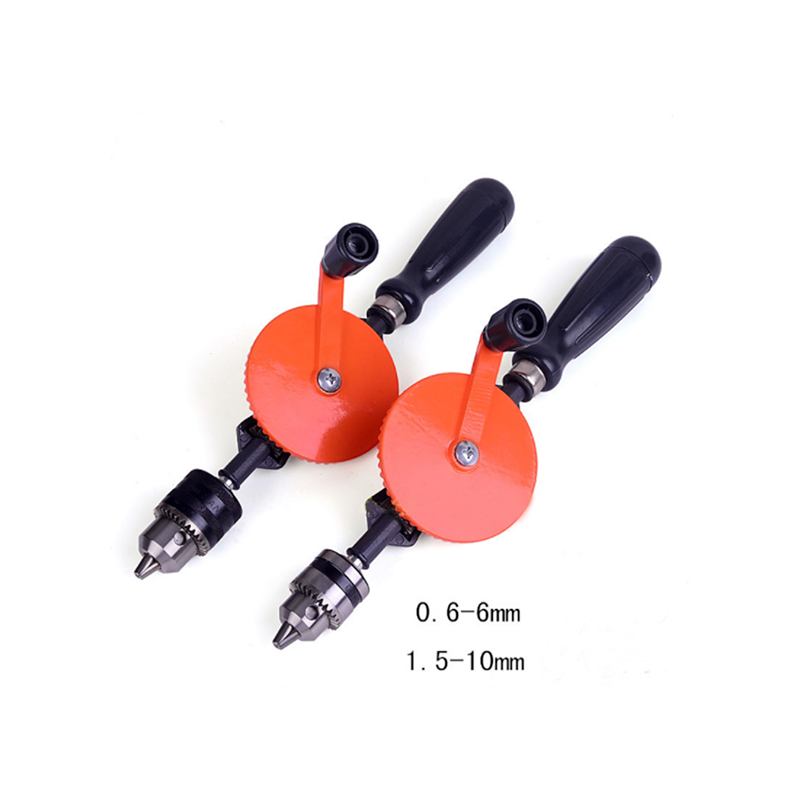
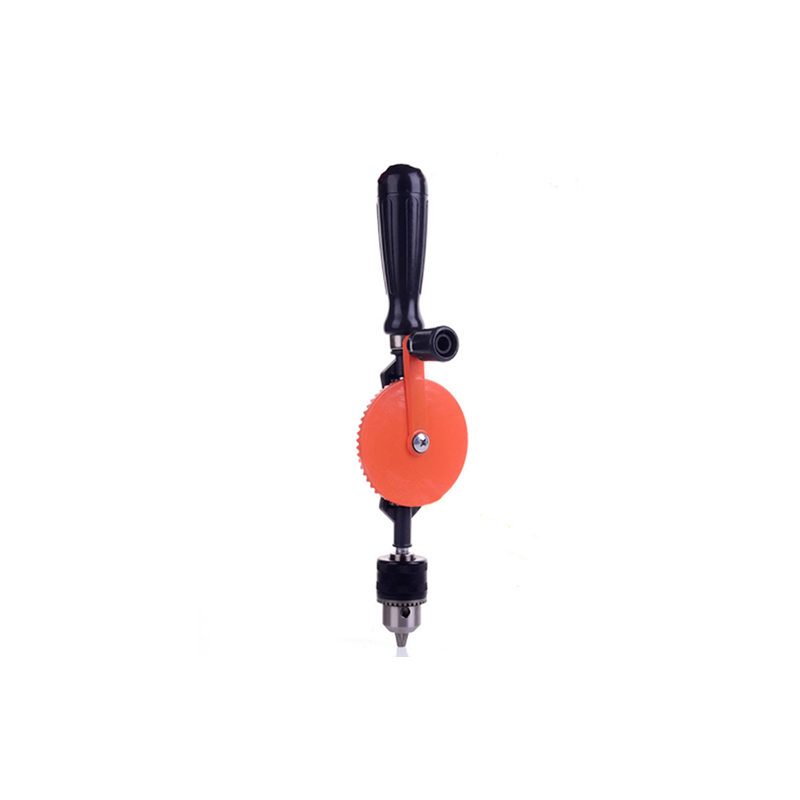
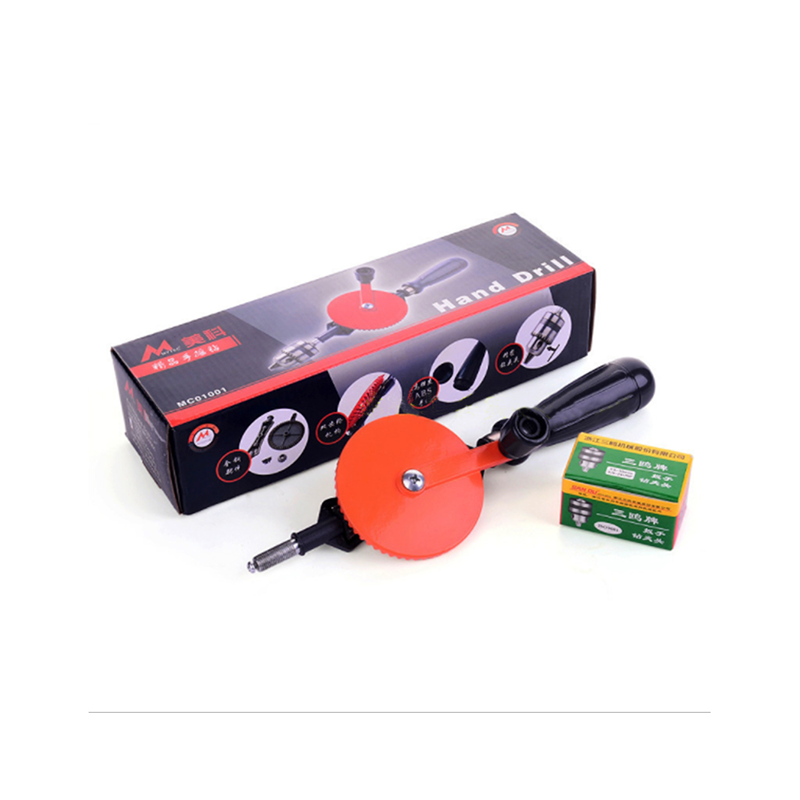
The Hand Crank Drill for DIY and Model Making is a manually operated drilling tool built for controlled, low-torque work on light and soft materials. Instead of relying on an electric motor, the tool transmits force through an internal dual-gear mechanism, which lets the operator regulate rotation speed and drilling position directly by hand. This manual operation removes the risks associated with sudden power engagement, overheating, or uncontrolled torque that are sometimes encountered with electric drills.
The tool is commonly used in home workshops, model-making projects, small-scale repairs, prototyping, and educational or training environments where precise, gentle drilling is required. It is suited to materials such as wood, bamboo, soft sheet metal, copper, aluminum, plastic, PVC, acrylic, fiberglass board, and circuit board, offering a practical option where portability, control, and operating safety are prioritized over drilling speed.
The drill is offered in two clamping specifications to match different bit sizes and working needs. The table below summarizes the clamping range, outline dimensions, and packaged weight for each version.
Clamping range: 0.6 to 6 mm
Outline size (with chuck): 30 x 8.2 x 7 cm
Gross package weight: about 650 g
Clamping range: 1.5 to 10 mm
Outline size (with chuck): 31 x 8.2 x 7 cm
Gross package weight: about 710 g
Because the tool does not use motorized power, drilling speed and torque are limited by hand strength, which makes it best suited to soft or medium-density materials rather than hardened or high-density ones.
Manual drilling removes the risk of motor overheating or sudden loss of control, but it also produces lower torque and drilling speed than an electric drill. Material selection should account for this reduced cutting force.
The comparison below outlines general operating differences between manually powered drills and standard electric drills, based on common industry characteristics rather than a specific product model.
| Aspect | Hand Crank Drill | Electric Drill |
| Power source | Manual force | Electric motor |
| Drilling speed | Low | High |
| Torque output | Limited | High |
| Control precision | High, direct manual feedback | Moderate, motor-driven |
| Operating safety | Lower risk of kickback or overheating | Requires more caution with speed and torque |
| Power dependency | None | Requires electricity or battery |
| Suitable materials | Soft to medium-density materials | Wide range including hard materials |
No. The tool operates entirely through manual hand-wheel rotation and does not need any external power source.
The 1/4 inch version accepts bits from 0.6 to 6 mm, and the 3/8 inch version accepts bits from 1.5 to 10 mm.
It is suitable for soft sheet metal, copper, and aluminum, but it is not recommended for hard metal, tile, masonry, or concrete due to limited manual torque.
It uses a key-operated chuck similar to those found on standard electric drills, which allows even, centered tightening of the bit.
Check for dust or debris in the gear housing and apply a small amount of lubricant to the gears and moving joints.
No additional accessory is needed. The handle is hollow by design and can hold a spare drill chuck internally.
If you are interested in our products or have any questions, please consult us.
 Contact us
 No.2 Yuanrun Park, DaiFeng Road , Wanghai town, Haiyan, Jiaxing City, Zhejiang (China Factory). / 18 M.1 T.BANBUENG A.BANBUENG CHONBURI 20170 (Thailand Warehouse)
 314300
 gm@lizhan-hardware.net
 (Sales office):+86-18767197112 (WHATSAPP, WECHAT)
(Sales office): Sophia@lizhan-hardware.net
 www.lizhan-hardware.net
Copyright © Lizhan Hardware Co., Ltd. All Rights Reserved. Furniture Hardware Screws Manufacturer